Free Termite Inspection: What's Included and What to Expect
A termite inspection free of charge is a no-fee visual check of the accessible parts of your home by a licensed pest control technician. In most cases it really is free, because the company does not bill you for the visit. It is still a courtesy that leads to a quote, not the formal report a lender or buyer asks for. Take it when you suspect termites or have never had your home checked, and read what it covers before you book.
At Defender Termite & Pest Management, we have inspected homes in the Sacramento area since 1999. We also repair the wood that termites damage, so we see what happens after the inspection, not just during it. That gives us a clear view of what a quick walkthrough can catch, what only a full written report can document, and where homeowners get surprised.
This article explains why a free inspection is worth taking and what it includes and leaves out. It covers how to book and prepare for one, how to tell a fair visit from a sales pitch, and what you can check yourself before anyone arrives.
Why a free termite inspection is worth taking
A free termite inspection is worth taking when you see possible signs of termites or simply do not know the condition of your home's wood. It costs nothing upfront and puts a trained person in your attic, garage and sub-area. Termite damage is generally not covered by standard homeowners insurance, so finding it early is the cheapest way to deal with it.
Is it really free?
Yes, "free" almost always means no upfront fee for the visit . The company absorbs the cost because it hopes to earn treatment or repair work if it finds something. National brands such as Terminix and Orkin advertise a free first inspection, and local companies often do the same.
Free does not mean independent. The technician works for a company that sells treatment, so you should treat the findings as a proposal to verify , not a verdict. You can listen, take the written findings, and say no. A reputable company will not charge you for the visit afterward.
A free inspection costs you nothing to accept and nothing to decline, as long as you stay in charge of the decision.
What it is good for
A free visit is best for answering three questions. Do you have termites at all? Which type are they? And how far has it spread? The type matters because drywood termites live inside the wood and need no soil contact. They can sit in an attic or eave for years. Subterranean termites come up from the ground. The two are treated differently.
It also works as a baseline. If you have never had the home checked, a first visit tells you what is normal for your house and what to watch.
When it is not enough
If you are buying or selling a home, a free walkthrough will not satisfy the transaction. Escrow and lenders usually want the formal written report described below. In that case, plan on a paid inspection and treat any free visit as a bonus opinion.
What a free termite inspection includes and what it skips
A free termite inspection covers the visible, reachable areas of your home, usually in under an hour or so, and ends with a verbal or informal summary. It skips anything hidden, and it normally does not produce the official report used in a property sale.
What the technician checks
Expect the technician to work through the places termites and wood decay show up first. Most visits include:
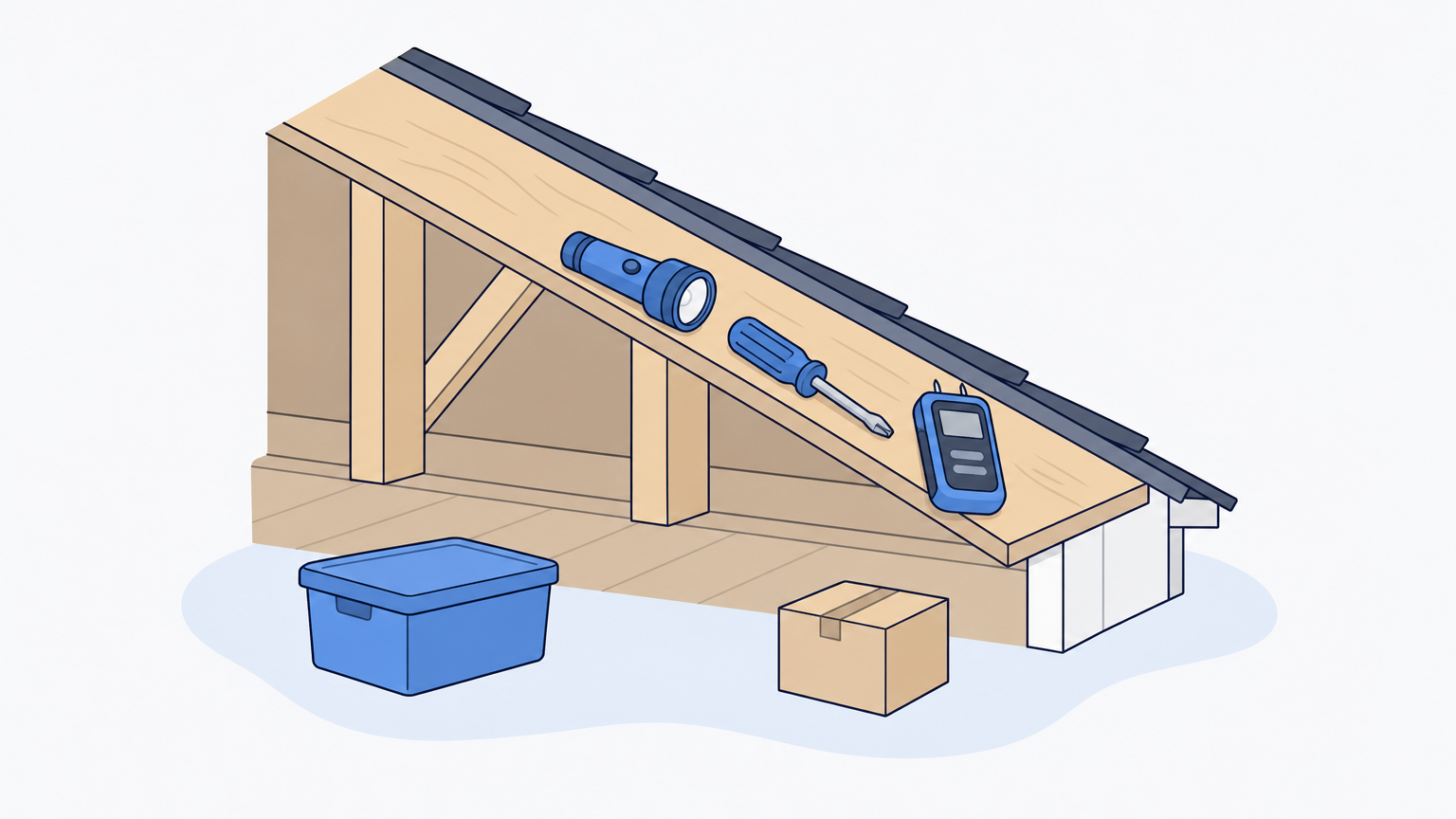
- Attic framing and roof eaves, where drywood termites often start
- The garage, including wood framing and stored-item areas that can be reached
- The sub-area or crawl space, foundation and wood close to soil
- Window and door frames, trim and fascia boards
- Decks, porches, steps and fences that touch the house
- Signs of moisture, such as leaks, stains or soft wood
The tools are simple: a flashlight, a probing tool such as a screwdriver, and often a moisture meter. A good technician taps on wood, probes suspect spots, and shows you what they find.
Free walkthrough versus formal report
The difference that matters most is the paperwork. This table sets the two side by side.
| Free inspection | Formal inspection report | |
|---|---|---|
| Purpose | Check a concern, prepare a quote | Document the home's condition for a transaction or work order |
| Output | Verbal or informal summary | Written report with findings and recommendations |
| Accepted by lenders and escrow | Usually no | Yes |
| Typical time | Often under an hour | About 1.5 to 2 hours at Defender |
| Cost | $0 upfront | Often $75 to $300 depending on the home and company |
In California, the formal document is the Wood Destroying Pests and Organisms Inspection Report . It separates findings into active infestations or infections, and conditions likely to lead to them, and it may call for further inspection of areas the inspector could not reach. Our termite inspection produces that report and may cover termites, wood destroying beetles, carpenter ants, carpenter bees and wood destroying fungi. The fee range above is a general guide, so ask any company for its exact price.
What no inspection can see
A visual inspection cannot look behind drywall, inside sealed wall voids, or under stored items that block access. A clear result means no visible evidence in the accessible areas that day. It is not a guarantee that no hidden activity exists. If an area was blocked, ask the technician to note it so you know what remains unchecked.
How to find, book and prepare for a free inspection
To get a free termite inspection near you, search for licensed companies in your city, confirm the license, ask whether your visit qualifies as free, and book a time when you can be home. The preparation takes about 15 minutes and makes the visit more useful.
Finding and vetting a company
Start with companies that work in your area, whether you are in Sacramento, Roseville, Folsom, Elk Grove or Vacaville. In California, pest control companies and their inspectors must be licensed by the Structural Pest Control Board , and you can look up a license on the board's website. Ask for proof of insurance too. Whether you prefer a local family-owned company or a national one, the license and the written findings matter more than the brand.
Before you commit, ask these questions on the phone:
- Is the visit free and without obligation for my situation (a homeowner concern, not a real estate sale)?
- Who performs it, and are they licensed?
- How long will it take?
- Will I get written findings and photos, or only a verbal summary?
- If you find something, will you give me a written proposal with options?
At Defender, you can reach the termite inspection line at (916) 836-8083. Ask about the fee for your situation, because a courtesy walkthrough and a formal report are priced differently.
Preparing for the visit
Clear access is the biggest factor in how much the technician can see. Before the appointment:
- Unlock or clear the attic hatch, the crawl space door and the garage walls.
- Move stored boxes and furniture away from the areas you can, such as under sinks and along exterior walls.
- Write down anything you have noticed, such as piles of tiny pellets, bubbling paint or a hollow-sounding board, and photograph it.
- Note any past leaks, roof repairs or earlier termite treatment, and find the paperwork if you have it.
- Be home, so the technician can show you findings in person.
The better the access and your notes, the less of the inspection is wasted on moving boxes.
How to tell a fair free inspection from a sales pitch
A fair free inspection ends with specific findings you can see, a written proposal with options, and no pressure to sign on the spot. A sales pitch ends with a vague warning, one expensive option and a deadline. You can tell them apart by what the technician shows you and what you get on paper.
What a fair visit looks like
Look for a technician who points to the evidence and explains it. They should name the pest, show where it is, and tell you what is active and what is old damage. You should receive written findings with photos , not only a verbal summary. Fair proposals offer more than one route when more than one is reasonable, such as treating one area or treating the whole structure. They also give you time to compare.
Warning signs include:
- A cold-call or door-to-door "free inspection" you did not request
- Claims that termites are "everywhere" with nothing shown to you
- A single whole-house option for what looks like a small problem
- A price that is only spoken, not written
- Pressure to sign today or lose a discount
A worked example for comparing quotes
Say a free visit turns up activity, and you get two proposals. Bid A is $600 upfront plus $50 a month for monitoring. Bid B is a $1,100 one-time treatment with a multi-year guarantee. These figures are illustrative, but the method is real. Bid A costs $600 plus 12 × $50, or $1,200 in year one , and $2,400 over three years. Bid B costs $1,100 once. The cheaper-looking monthly plan is the more expensive one over time, unless it covers something Bid B does not. Compare the total cost over the same period and what each one guarantees.
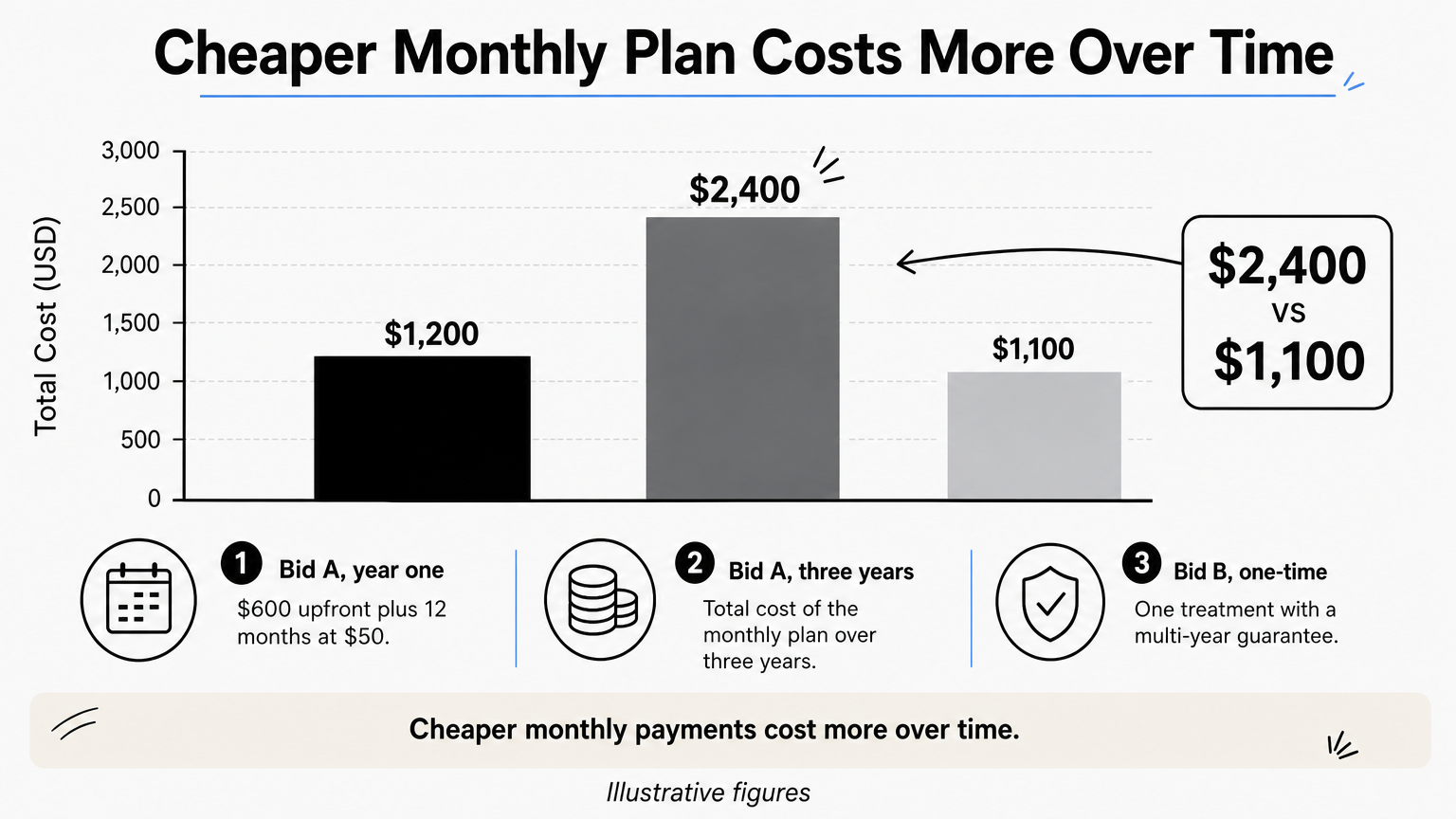
Compare quotes by total cost over the same number of years, not by the first number you hear.
What the treatment options mean
If the inspection finds an infestation, the proposal usually falls into one of a few types. Localized treatment targets a limited area. Structural fumigation treats the whole home. Our fumigations use sulfuryl fluoride gas (Vikane), take 3 to 5 days, and carry a two-year guarantee from completion. We subcontract the fumigation itself to a reputable fumigation company. Liquid soil and barrier treatments for subterranean termites typically last up to 5 years.
Damage is a separate question from treatment. Killing termites does not fix the wood they weakened, so ask whether the company repairs it. We do, and our wood repair work carries a one-year warranty, which saves you from hiring a second contractor.
Can you check for termites yourself first?
Yes. A 10-minute self-check before the visit helps you point the technician to the right spots, but it only finds visible signs and cannot replace a licensed inspection. Termites can be active for a long time before anything shows.
What to look for
Know the common signs, because each one points to a different pest:
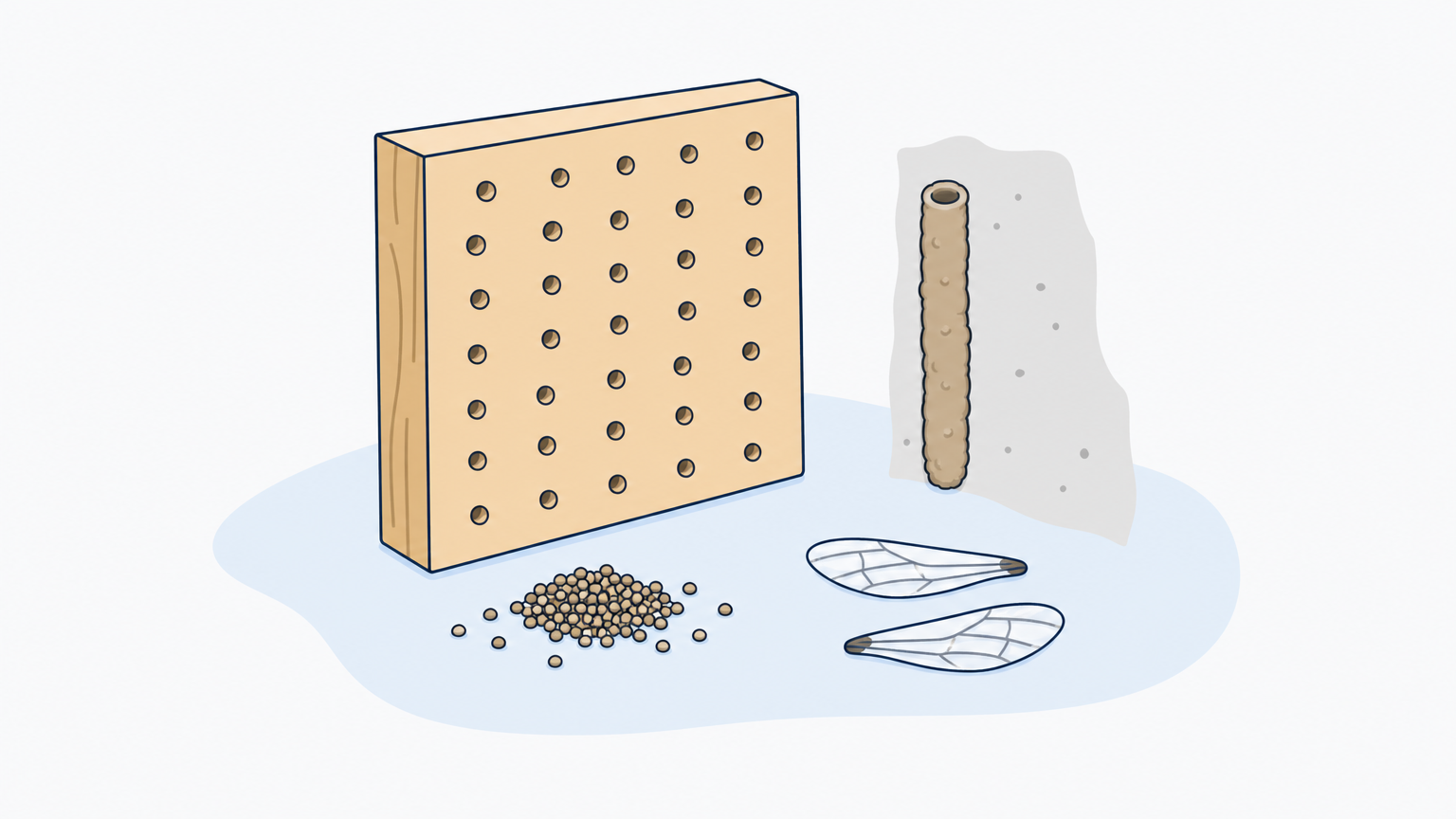
- Frass pellets: tiny, hard, six-sided pellets that look like sand or coffee grounds, a sign of drywood termites, often piled below small holes in wood
- Mud tubes: pencil-width earthen tunnels on foundation walls, a sign of subterranean termites
- Discarded wings: small, matching wings on windowsills or near lights after a swarm
- Hollow or soft wood: a board that sounds papery when tapped, or paint that bubbles or sags
- Moisture damage: stains, soft spots or dry rot, which attract termites and need repair either way
Where and how to check
Use a flashlight and a screwdriver. Check the attic along the rafters and near the eaves, the garage framing, window and door frames, the fascia boards, and any wood that touches soil, such as deck posts and fence connections. Tap suspect wood gently and probe soft spots. Take photos and note the location, then give them to the technician.
If you find pellets, mud tubes or wings, call a licensed company rather than disturbing the area. Spraying or scraping can scatter evidence and make the inspection harder.
A self-check tells you where to point the inspector, not whether your home is clear.
Booking your free termite inspection
A free termite inspection is worth taking when you want a licensed second look at your home's wood, as long as you know it is a visual check and a quote, not a formal report. Confirm the license, ask what you will get in writing, and compare any proposal by total cost and guarantee. If you are buying or selling, book the formal report instead.
If you are in the Sacramento area and want an inspector to look at your home, contact Defender Termite & Pest Management to ask about your inspection and request a quote. We are licensed and insured, we guarantee satisfaction on our services, and we take emergency calls around the clock.