Annual Termite Inspection: Do You Need One? Costs Explained
An annual termite inspection is a yearly visit from a licensed inspector who checks the inside, outside, attic and crawl space of your home for wood-destroying pests and the conditions that attract them. For most homeowners in Northern California, it is worth doing. The visit often costs little or nothing, the law does not require it outside a sale or refinance, and it is the most dependable way to catch a hidden colony while the damage is still small.
Termites eat wood from the inside out, so a damaged beam can look perfectly sound. Homeowners insurance typically does not cover the repair, and termites cause an estimated $5 billion in damage a year across the U.S. A trained inspector once a year beats a quick look around the garage.
This article explains why the yearly visit matters, what an inspector actually checks, what you should expect to pay, and how to prepare so the hour is well spent. It comes from Defender Termite & Pest Management, a family-owned Sacramento company that has offered pest control and termite services since 1999.
Why an annual termite inspection is worth doing
A yearly inspection is worth the money because termite damage stays hidden, repairs are expensive, and insurance rarely pays for them. The inspection itself is cheap by comparison, so you are buying early warning.
Termites hide the damage until it is advanced
Termites feed inside the wood, so a beam can look intact while it is hollow . Subterranean colonies are active around the clock. By the time you see a swarm or a soft spot in a floor, the colony has usually been feeding for a long while.
You can and should look around yourself. Still, an untrained eye often misses mud tubes in a crawl space or a thin line of frass behind a baseboard. Swarmers are most common in spring and summer, and a small pile of wings on a window sill is easy to sweep away without a second thought.
Older homes carry more risk, and raised foundations with crawl spaces give termites easy, dark access to wood. Even a brand new home can get termites, so age is not a free pass.
Is it required, and is every year the right interval?
No law requires an inspection on a home you own and live in. A sale or refinance is different. Lenders commonly ask for a termite clearance, and the report typically must be dated within 30 days of closing. VA loans also require a wood destroying insect inspection in areas where termite probability is moderate to very heavy.
How often you need one depends on your house. Some sources say every one to two years is enough. My position is yearly if any of these apply:
- Your home is older or has a raised foundation or crawl space.
- Wood touches soil, or you have firewood, planters or mulch against the walls.
- You have had termites before.
- You have a treatment warranty that depends on annual renewal.
If you are asking whether you should get termite protection yearly, the answer is yes when a warranty is involved, because skipping the renewal can end the coverage. A newer home with a clean first report can reasonably stretch to every two years.
Termites hide the damage, so a yearly inspection is how you find it while it is still a small repair.
What an annual termite inspection checks
A termite inspection is a visual check of every accessible part of your property for wood-destroying pests, damage and moisture problems. It does not mean opening walls, and it does not test your whole house with instruments.
Areas and signs the inspector looks for
The inspector works through the interior and exterior of the home. That means attic, garage, porches, patios, decks, and the subarea (crawl space or basement) if you have one. Inside, they check baseboards, window and door frames, cabinets, bathrooms and kitchens, where leaks feed both termites and decay fungi.
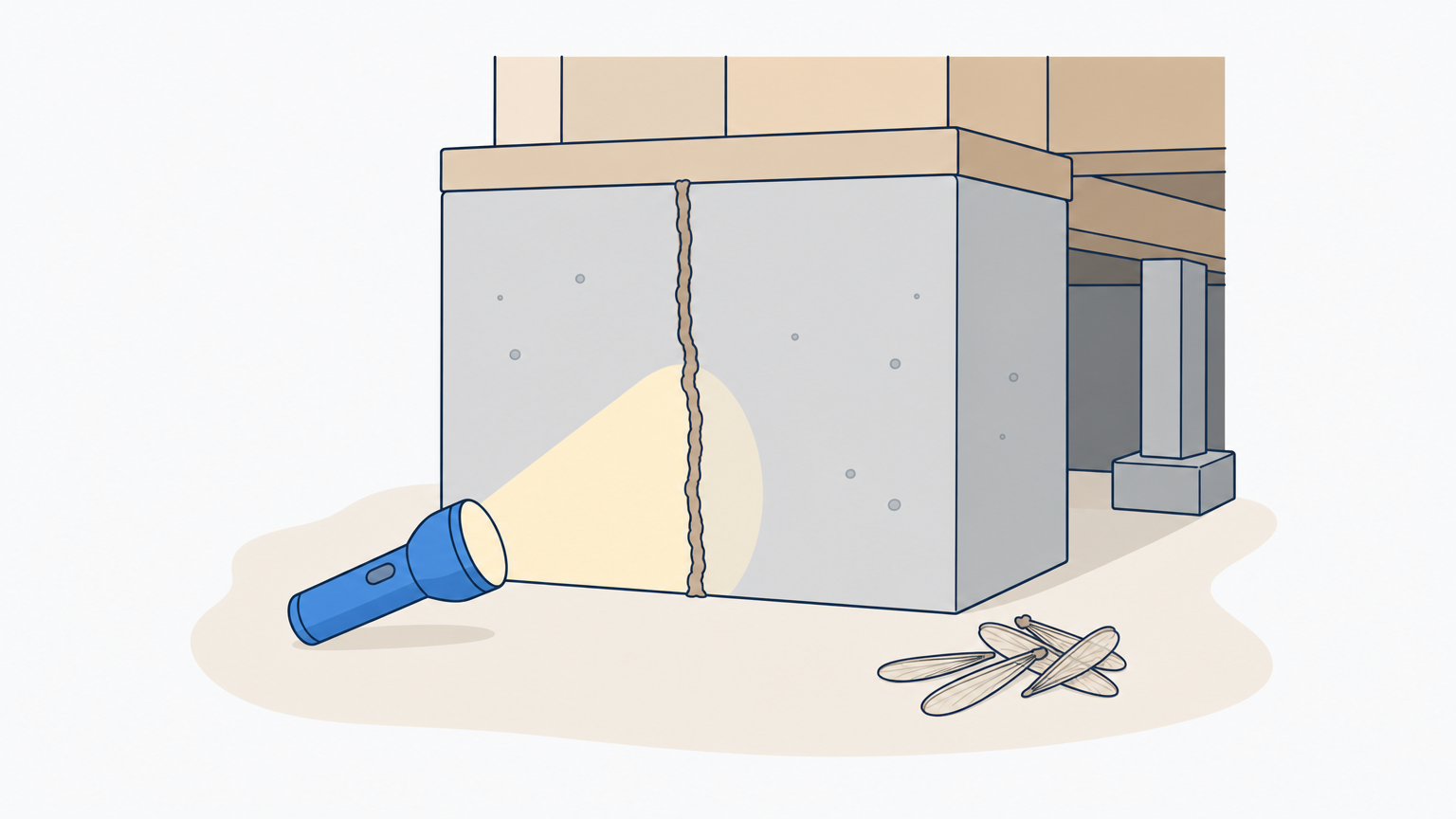
Do inspectors check every room? They check every area they can reach and see. If storage blocks a wall or the crawl space opening is covered, that area becomes a limitation in the report instead of a clean result, which is why preparation matters.
| Sign | What it looks like | What it points to |
|---|---|---|
| Mud tubes | Pencil-width earthen tunnels on foundations or beams | Subterranean termites |
| Frass | Hard, gritty pellets, like coffee grounds | Drywood termites |
| Discarded wings | Thin, papery wings near windows or on floors | A recent swarm |
| Hollow wood | A dull, papery sound when you tap it | Feeding inside the wood |
| Bubbling paint | Blistered or buckled paint | Moisture or termite activity |
| Live insects | Pale workers or winged swarmers | Active infestation |
How long it takes and what you receive
A typical inspection at Defender takes about 45 minutes to an hour and a half , depending on the size and condition of the home and property. A large lot, a big crawl space or active findings can add time.
You then get a written report. Under California law, no termite company can do work on your property until an inspection is done and a written report is delivered, and a written contract is required for the work. The report can cover termites, wood destroying beetles, carpenter ants, carpenter bees and wood destroying fungi, along with damage and conditions that may lead to problems. Ask for photos and the termite species , since the species decides the treatment.
The report matters more than the visit, because it tells you what is there, what is at risk and what your options are.
What an annual termite inspection costs
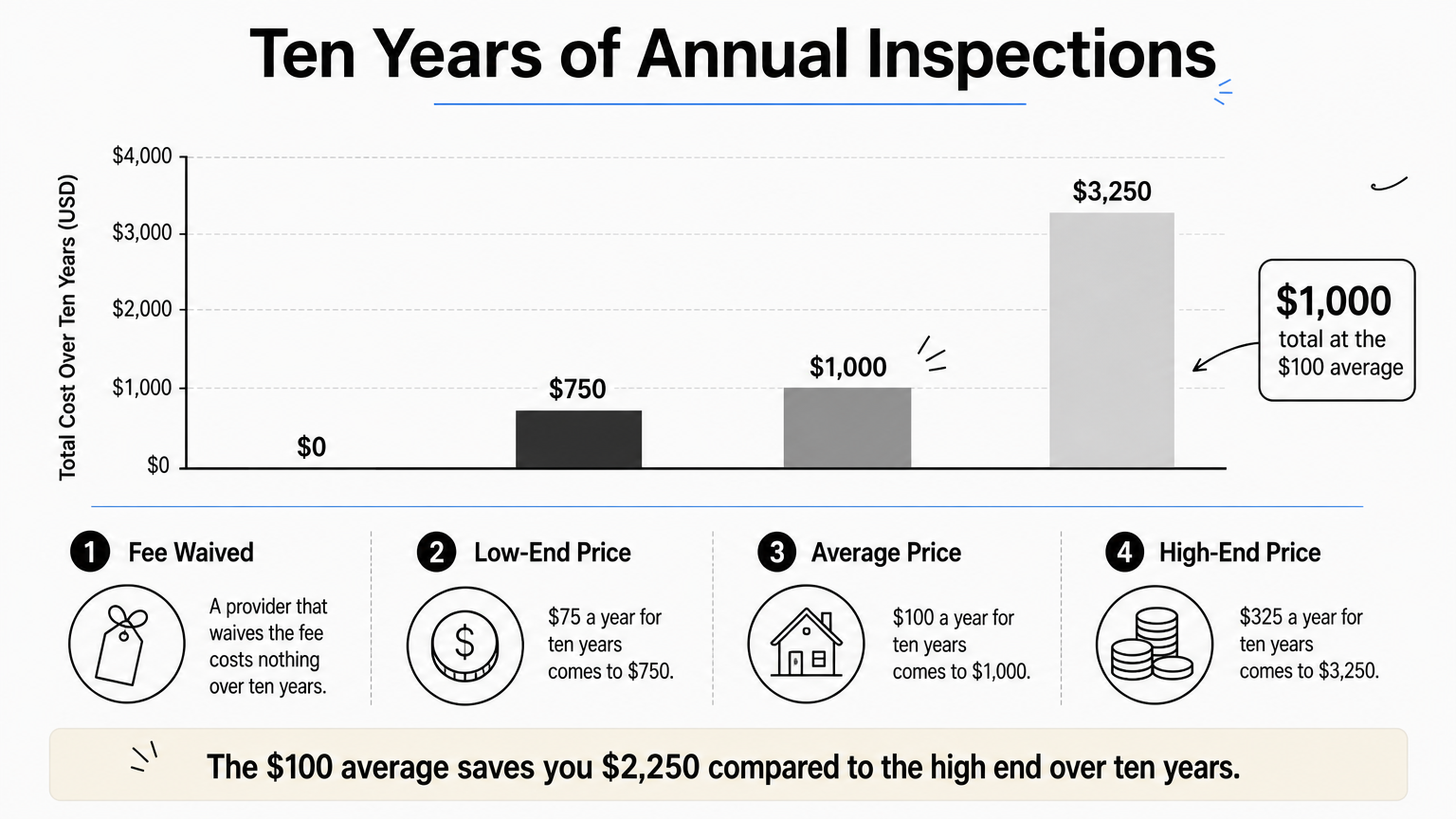
A standalone termite inspection averages about $100 and typically falls between $75 and $325. Many pest control companies waive the fee for an annual inspection, so you may pay nothing.
Typical price ranges
The national figures below come from HomeAdvisor data as reported by U.S. News. Homeowners also report paying as little as $75 a year for an inspection plan and around $200 for a one-time visit, so quotes vary.
| Situation | Typical cost |
|---|---|
| Annual inspection through a pest company | Often free or waived |
| Standalone inspection, average | About $100 |
| Standalone inspection, range | $75 to $325 |
| Inspection for a sale or refinance | Within the same range, and may include the lender letter |
Price rises with the size of the home, how hard the subarea is to reach, and whether you need paperwork for a lender. Treatment is a separate cost and depends on the findings. At Defender, treatment quotes are free estimates.
A worked example
Say you own a home for ten years. At the $100 average, annual inspections cost $1,000 total . At the top of the range, $325 a year comes to $3,250 . At the bottom, $75 a year comes to $750. If your provider waives the annual fee, the total is $0.
Even the high end is a known, spread-out cost. A missed colony is an unknown cost that insurance typically will not cover. For current pricing on your home, call the termite inspections line at (916) 836-8083.
Ten years of inspections costs somewhere between nothing and a few thousand dollars, while a missed colony is a bill you cannot predict.
How to prepare and use your annual termite inspection
You get the most from an inspection by giving the inspector full access and acting on what the report says. Preparation takes about 15 minutes.
Before the inspector arrives
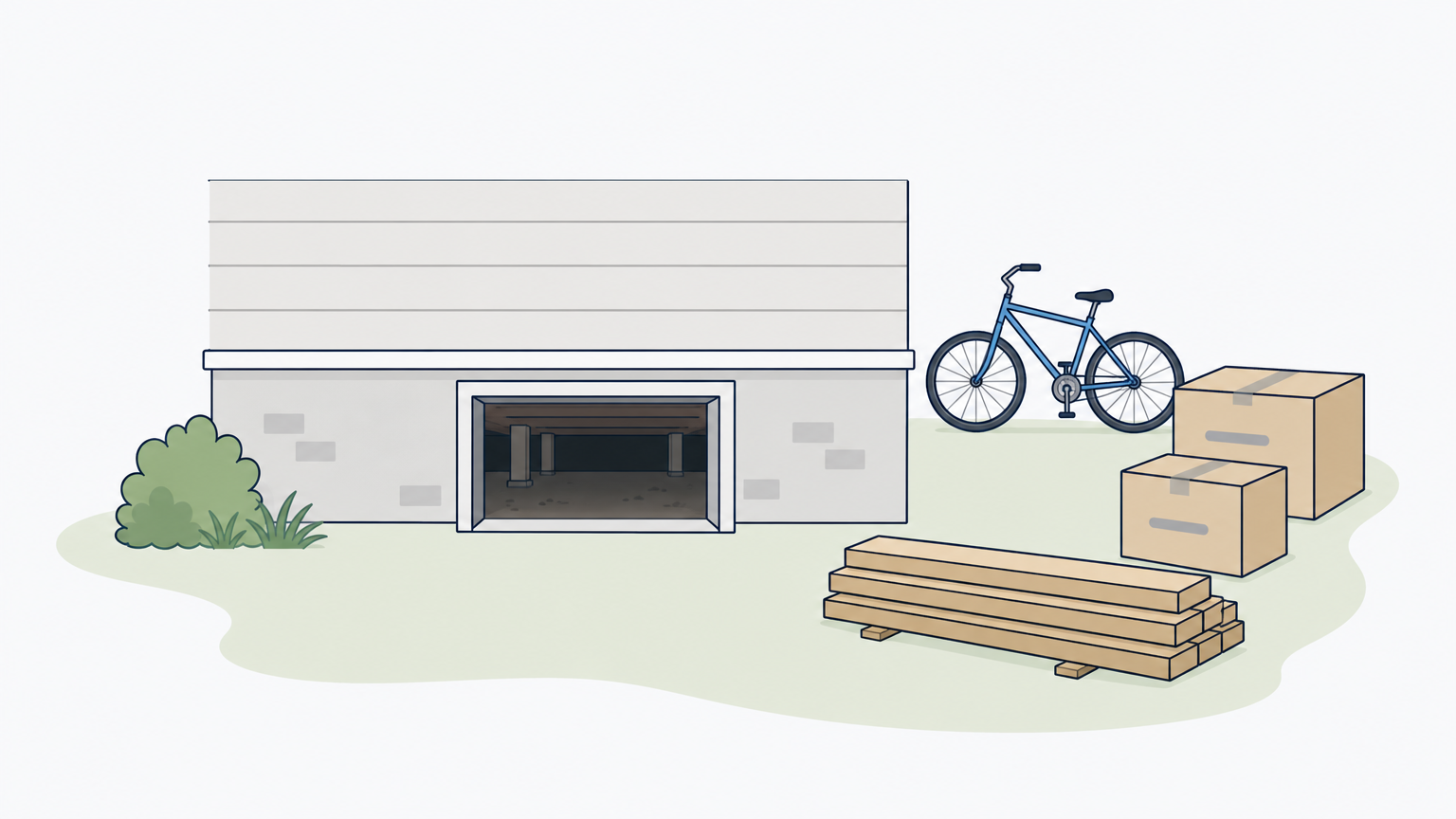
Clear the paths first. The inspector needs access to all walls, so move storage away from the perimeter, from garage walls and from under sinks. For a raised foundation home, the inspector goes under the house, so do not block the subarea access opening with boxes, lumber or a stored bike.
Then write down what you have noticed. Note any wings, droppings, soft wood, leaks or paint blisters, and where you saw them. This tells the inspector where to look first.
After the report and between visits
Read the report for three things: active infestation, damage, and conditions that invite termites, such as leaks, wet crawl spaces or wood touching soil. Ask which species was found and for photos of each finding.
If treatment is recommended, the options depend on the pest. They include soil and barrier treatments that last up to about five years, baiting stations, localized treatment for some drywood cases, and fumigation. Fumigation typically takes 3 to 5 days. Ask for a written contract and a follow-up plan. Damaged wood may also need repair, and fixing the moisture problem behind it helps prevent a repeat.
Between visits, keep the inspection results working for you:
- Divert water from the foundation with working gutters and downspouts.
- Keep firewood, lumber and mulch away from the house.
- Trim shrubs and branches back from the walls.
- Check your crawl space ventilation and look for new mud tubes each spring.
The inspection only pays off when you clear access beforehand and fix the conditions the report flags afterward.
Make it a yearly habit
An annual termite inspection is a short, inexpensive check that finds damage you cannot see. It is not legally required for most homeowners, but in Northern California it is the safest default, especially for older homes, crawl spaces and any home with a treatment warranty. Plan on about an hour, a written report and a cost between free and a few hundred dollars.
Clear access, ask for photos and the species, and act on the conditions the report flags. If you want a licensed Sacramento inspector to look at your home, book a termite inspection with Defender and get a clear written report with your options.