How Often Should You Get A Termite Inspection? Our Advice
Since 1999, our team has inspected thousands of homes across the Greater Sacramento area. We've seen firsthand how a simple, routine inspection can mean the difference between a clean bill of health and tens of thousands of dollars in structural repair. Geography, construction type, previous treatments, and even your home's age all play a role in how frequently you need a professional to check things out .
Most homeowners don't think about termites until they see damage, and by that point, the colony has been feeding for months or even years. So how often should you get a termite inspection , and what determines the right schedule for your property? These are questions we hear almost every week at Defender Termite & Pest Management.
In this article, we'll share our honest recommendations based on over two decades of field experience, not generic advice pulled from a textbook. We'll walk you through the factors that affect inspection frequency , what to expect during the process, and how to know if your situation calls for more frequent monitoring . Whether you're a first-time homeowner or managing multiple properties, this guide will help you make a confident, informed decision.
What a termite inspection checks and why it matters
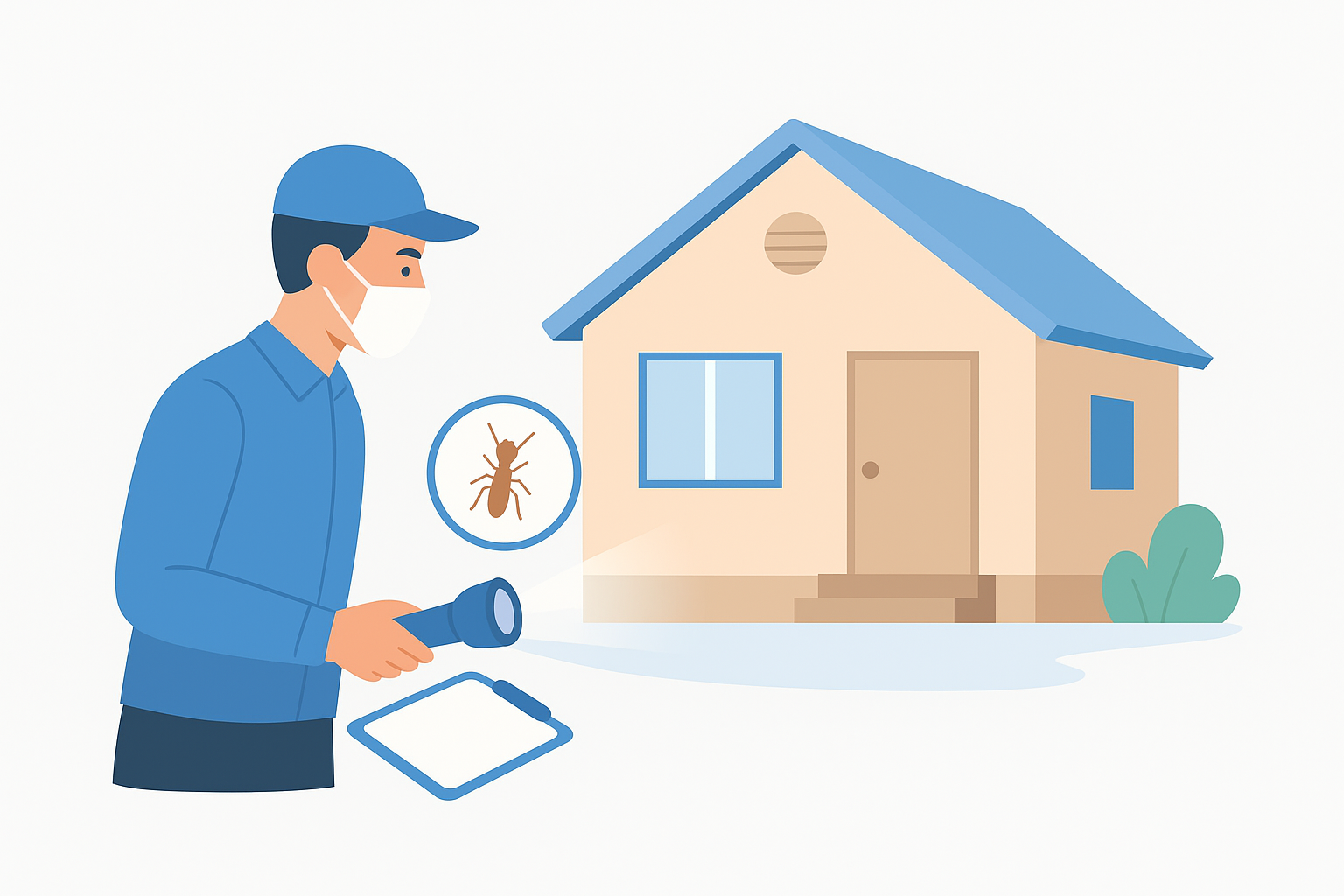
A professional termite inspection is a systematic, hands-on evaluation of your home's structure to detect active colonies, existing damage, and conditions that make your property vulnerable to future infestations. An inspector physically checks areas that are invisible or difficult to access during a normal walkthrough, including crawl spaces, attic framing, foundation walls, sub-floor supports, and the interior of garage structures. Understanding what goes into this process helps explain why routine scheduling matters far more than most homeowners expect.
What inspectors examine during the visit
A licensed inspector looks for evidence of both subterranean and drywood termites, since each species attacks your home in a different way. Subterranean termites build mud tubes along your foundation and prefer entry through soil contact points, while drywood termites nest directly inside the wood they feed on. Inspectors probe window frames, door casings, floor joists, and attic beams for soft spots, hollow sounds, and frass, which is the powdery droppings termites leave behind as they feed. They also flag conducive conditions like wood-to-soil contact, moisture intrusion near the foundation, and gaps in your exterior that give termites a direct path inside.
Common areas your inspector will examine include:
- Foundation perimeter and crawl space
- Attic framing and roof supports
- Sub-floor joists and support beams
- Window and door frames
- Garage walls and structural wood
Even when no active infestation is found, identifying conducive conditions during an inspection can prevent a future colony from establishing in your home.
Why catching termites early saves you money
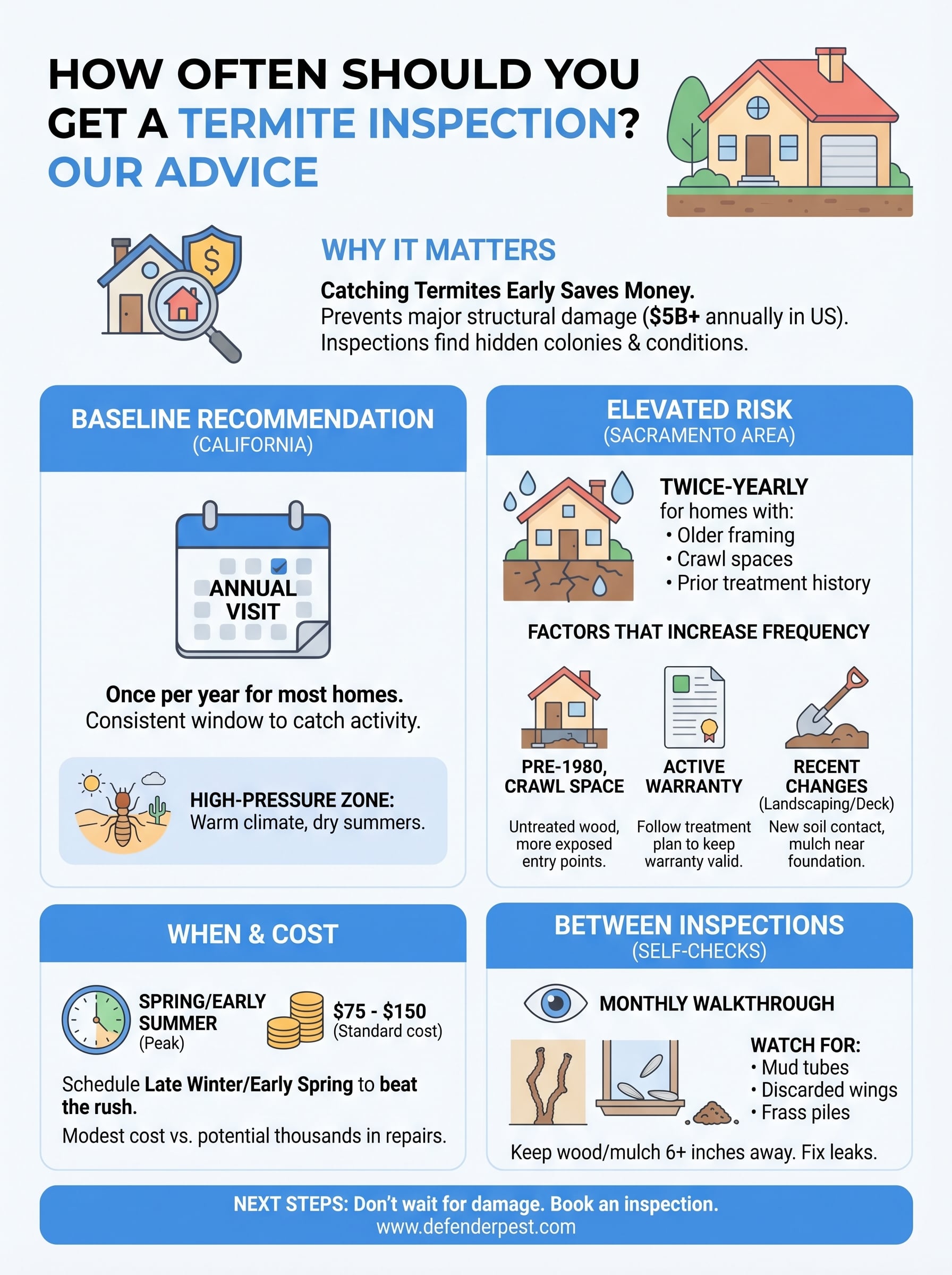
Termites cause an estimated $5 billion in property damage across the United States every year, and most homeowner insurance policies do not cover that damage. A colony can work silently inside your walls for three to five years before you notice any visible signs. By the time structural framing is compromised , repairs often run into thousands of dollars, and some situations require partial wall or floor demolition just to access the affected wood. Scheduling regular inspections gives a professional the chance to catch a small, contained problem before it grows into a major structural repair. Asking yourself how often should you get a termite inspection is directly tied to how much risk you are willing to carry as a homeowner.
How often to schedule an inspection in California
California sits in one of the highest termite-pressure zones in the country. The warm climate and dry summers in the Sacramento region create year-round active conditions for both subterranean and drywood termites, which means your home faces exposure in every season. For California homeowners, the question of how often should you get a termite inspection has a fairly clear starting point from industry professionals.
The standard recommendation for most homeowners
For most residential properties in California, annual inspections are the baseline recommendation . A once-per-year visit gives a licensed inspector a consistent window to catch any new activity before it becomes a significant problem. If your home has no treatment history and sits in a lower-risk area with no wood-to-soil contact, an annual check is often sufficient to stay ahead of potential infestations.
Skipping even one year can give a small, undetected colony enough time to cause damage that requires structural repair rather than simple treatment.
Why Sacramento-area homes face elevated exposure
Homes in the Sacramento Valley, Roseville, Folsom, and surrounding areas deal with specific soil and moisture conditions that favor subterranean termite activity. The combination of clay-heavy soil, seasonal rain, and warm temperatures gives termites reliable access points near foundations and crawl spaces. Many pest professionals in this region recommend moving to a twice-yearly schedule if your home has older wood framing, a crawl space, or a prior treatment history.
Factors that change the schedule
Annual inspections work well as a baseline, but several conditions specific to your property can push that schedule closer together. Your home's age, construction type, treatment history, and local environment all influence how often should you get a termite inspection at your address versus the house next door.
Your home's age and construction type
Older homes, particularly those built before 1980, often use untreated wood framing that termites can penetrate more easily than modern pressure-treated lumber. If your home has a crawl space rather than a slab foundation, you have more exposed wood near soil, which creates additional entry points. Homes with these characteristics benefit from inspections every six months rather than once a year.
Prior treatment history and active warranties
If your home has been treated before, your treatment plan may already specify a required inspection interval to keep your warranty valid. Skipping an inspection that your warranty requires can void your coverage and leave you without protection if a new colony appears. Check the paperwork from your last treatment and confirm the schedule your provider outlined.
Missing a warranty-required inspection is one of the most common and avoidable mistakes homeowners make after a termite treatment.
Recent landscaping or construction changes
Adding wood mulch near your foundation , building a deck, or completing any renovation that involves new soil contact points can increase your exposure almost overnight. After significant changes to your property, scheduling an inspection sooner than your normal cycle is a straightforward way to catch problems before they develop.
When to book and what it costs
Knowing when to schedule your inspection is just as important as knowing how often. Most pest professionals see their busiest booking windows in spring and early summer, when termite swarms are most active in Northern California. Scheduling in late winter or early spring puts you ahead of that rush and gives your inspector a chance to catch early-season activity before a colony gets established.
The right time of year to schedule
Spring is the peak season for subterranean termite swarms in the Sacramento region, but drywood termites can be active year-round in California's mild climate. Booking your inspection in February or March means you get a faster appointment, more scheduling flexibility, and a clear picture of your home's condition heading into the highest-risk months. If you recently purchased a home or had construction work done, book immediately rather than waiting for a specific season.
Scheduling your inspection before peak swarm season gives you time to act on any findings before termites have a chance to establish new colonies.
What you can expect to pay
For most residential properties in the Sacramento area, a standard termite inspection runs between $75 and $150 . Some companies offer free inspections when you are also requesting a treatment quote. The cost is modest when you consider how often should you get a termite inspection compared to the potential repair bills a missed infestation can generate. Larger properties or those requiring crawl space access may fall at the higher end of that range.
What to do between professional inspections
Scheduling regular professional visits handles the deep evaluation, but your own observations between appointments play a real role in catching problems early. You don't need specialized equipment to spot common warning signs. A basic monthly walkthrough of your foundation perimeter and visible wood structures takes less than fifteen minutes and can flag issues before your next scheduled inspection arrives.
Signs of activity to watch for
Pay close attention to mud tubes along your foundation walls , discarded wings near window sills, and small piles of frass near baseboards or door frames. These are the most visible signs that termite activity is underway inside your home. If you spot any of them, contact a pest professional immediately rather than waiting for your next scheduled visit.
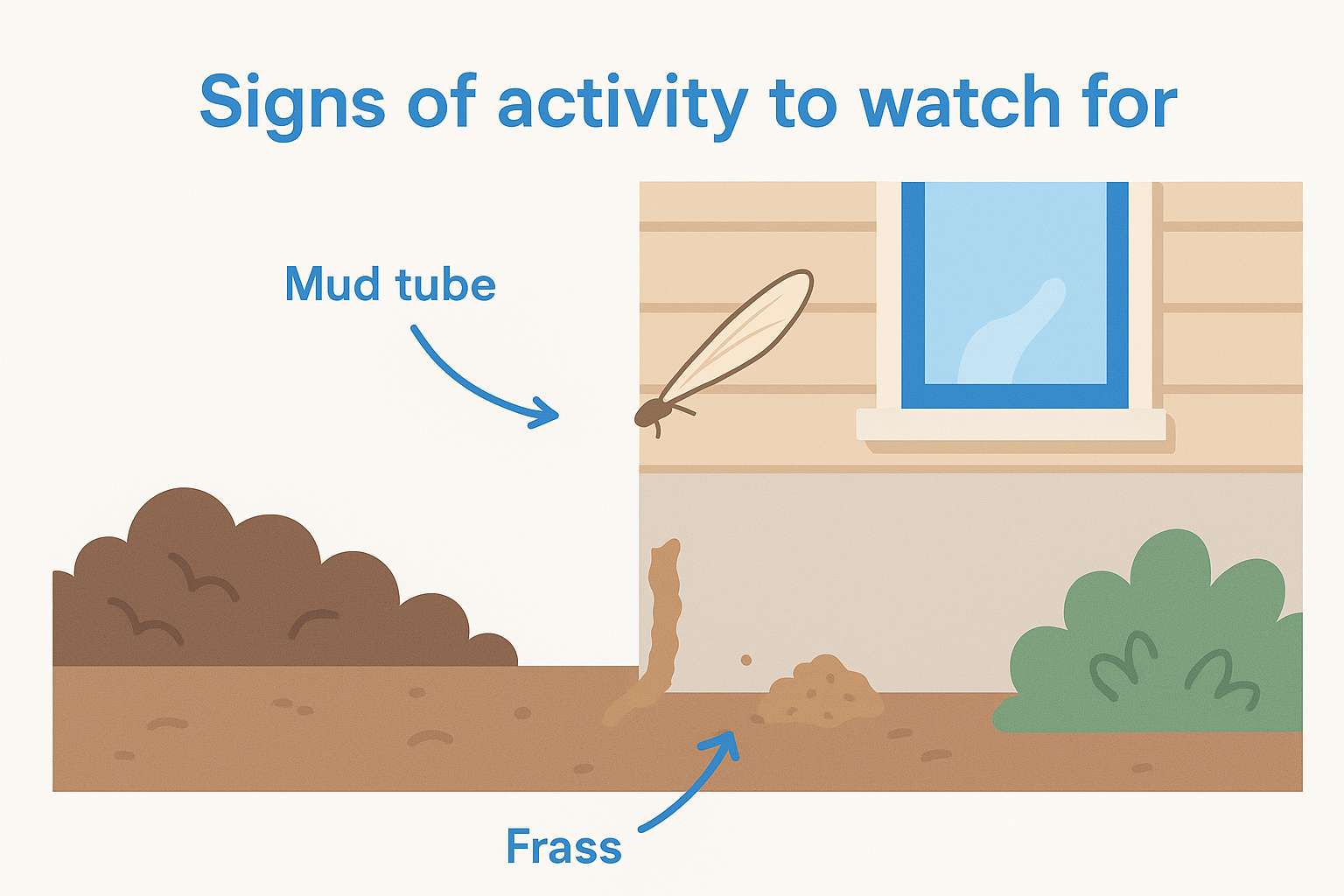
Finding mud tubes or frass between inspections is a reason to call your pest company right away, regardless of how often should you get a termite inspection on your normal schedule.
Simple habits that reduce your risk
Keeping wood mulch at least six inches away from your foundation and fixing leaks that create moisture near structural wood are two of the most effective steps you can take on your own. Termites follow moisture, so removing water intrusion points around your crawl space, gutters, and exterior walls eliminates one of the primary conditions that draw them toward your home.
Storing firewood directly against your house or leaving wood debris near your foundation creates easy entry points. Move stored wood away from exterior walls and clear any rotting material from your yard to reduce exposure between visits.
Next steps to protect your home
Regular inspections are the most straightforward way to stay ahead of termite damage, and the right schedule depends on your property's age, location, and treatment history . For most Sacramento-area homeowners, annual inspections are the baseline, but homes with crawl spaces, older framing, or prior treatments often benefit from more frequent visits. Now that you understand how often should you get a termite inspection for your specific situation, the next move is to get a professional on-site to assess your actual risk.
Waiting until you see damage is the most expensive approach you can take. Booking an inspection today costs a fraction of what structural repairs run, and it gives you a clear picture of where your home stands heading into peak swarm season. Contact Defender Termite & Pest Management to schedule your inspection and get an honest assessment from a team that has protected Sacramento homes since 1999.