Mosquito Control Near Me: 5 Ways to Treat Your Yard
The best mosquito control near me is a licensed provider that treats the shrubs, fences, and shaded spots where mosquitoes rest, repeats the job about every three weeks, and tells you in writing what it will spray. A local pest company suits you if you want one team for the whole property. A mosquito-only franchise suits you if you want a tight, season-long schedule. A lawn care add-on works if you already pay for lawn visits. A public vector district fits you when breeding water is the real problem, and DIY fits a small yard and a free weekend.
The hard part is comparing providers, not finding them. A search for mosquito control returns franchises from other cities, quotes that mix per-visit and per-season pricing, and promises that all sound alike. Meanwhile a mosquito can breed in a bottle cap of water, so a yard that looks tidy can still be producing bites.
This guide covers five ways to get your yard treated in the Sacramento area. Defender Termite & Pest Management, a family-owned Sacramento company since 1999, comes first because it is our own option, and we say plainly where it fits and where a specialist may suit you better. Every option gets the same breakdown: how it works, who it suits, and what to ask.
1. Defender Termite & Pest Management
How it works
Defender is a local, family-owned pest company. Its residential program starts with a free inspection of your home and yard to pinpoint nests, entry points, and harborage areas. A customized plan follows, built on Integrated Pest Management (IPM), which pairs targeted treatment with fixing the conditions that attract pests.
The Year-Round Pest Management Program begins within 30 days of your first treatment. It includes exterior inspection and treatment every other month . Mosquitoes bite on a faster clock than that, so ask how mosquito coverage would be scheduled before you sign.
A good provider starts with an inspection of your yard, not with a price.
Who it suits
Defender fits homeowners who want one licensed, insured local company for pests in general, not only mosquitoes. It also helps if rodents, ants, or termites are on your list, since Defender handles those and takes 24/7 emergency calls.
- Good fit: a home with more than one pest problem.
- Weaker fit: a yard that needs only a strict three-week mosquito barrier. Confirm the mosquito schedule with Defender first.
Cost and what to ask
The estimate is free, and the price depends on your property and on whether you choose a monthly or bimonthly plan . Defender also offers a pest free guarantee, so read exactly what it covers.
- Does my plan include mosquito treatment, and how often?
- Which parts of the yard get sprayed?
- What does the guarantee promise, and for how long?
2. National mosquito-control franchises
How it works
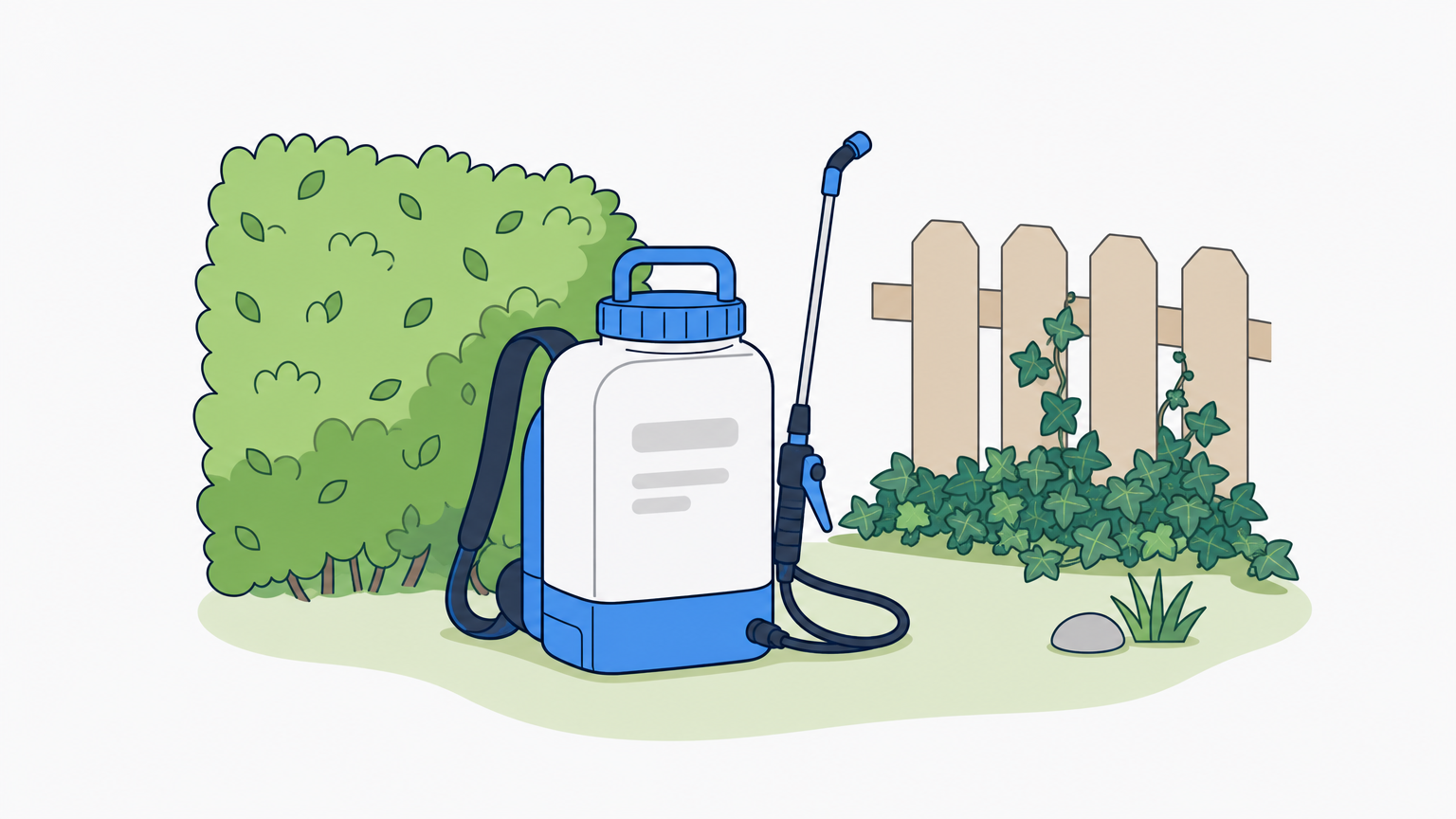
Mosquito-only franchises run a barrier-spray routine. A technician sprays the foliage, fence lines, and shaded areas where mosquitoes rest. The treatment lasts up to about three weeks, so plans repeat on a 21-day cycle . A visit often takes 10 to 20 minutes, and most providers want the spray dry, around 30 minutes, before pets and kids return.
Many also sell essential-oil treatments, one-time event sprays before a party, and traps or misting systems. The EPA's mosquito control page explains product types and safe use.
Mosquito spray works on a three-week clock, so the schedule matters as much as the product.
Who it suits
Franchises suit you when mosquitoes are your only complaint and you want a fixed schedule with a re-treatment promise. Territory matters, because a brand that appears in your search may serve a different city.
- Confirm the territory covers your address.
- Look for a re-treatment window in the guarantee, often around two weeks.
Cost and what to ask
Pricing is per visit , set by yard size, dense vegetation, and water features, and most companies quote after seeing the property. Season plans cover most of the warm months, so visits add up quickly (the worked example below shows how).
- Is there a contract, or can I cancel anytime?
- Which product do you use, and will you avoid flowering plants that bees visit?
- Is the quote per visit or for the whole season?
3. Lawn care companies with mosquito add-ons
How it works
Some lawn companies bolt a mosquito spray onto routine visits. It is convenient, but ask where the spray goes . Mosquitoes rest in shrubs, ivy, and under decks, not on mowed turf.
Many lawn programs also visit less often than every three weeks. Barrier spray fades in about three, so gaps in protection appear between visits unless the company adds extra stops.
A lawn visit that sprays grass instead of shrubs treats the wrong place.
Who it suits
This route suits you if you already have a lawn service and mosquitoes are a mild annoyance, not a daily fight. It is a poor fit for yards with heavy shade, tall hedges, or a creek nearby.
- Good fit: open lawn, light pressure, existing customer.
- Weaker fit: dense planting or standing water close by.
Cost and what to ask
An add-on usually costs less per visit than a specialist, but you pay for fewer treated days. Ask for the visit schedule in writing, because that decides whether you are really covered.
- How many days apart are the mosquito visits?
- Do you spray shrubs, fences, and under decks?
- Will you re-treat if mosquitoes return between visits?
4. Your local mosquito and vector control district
How it works
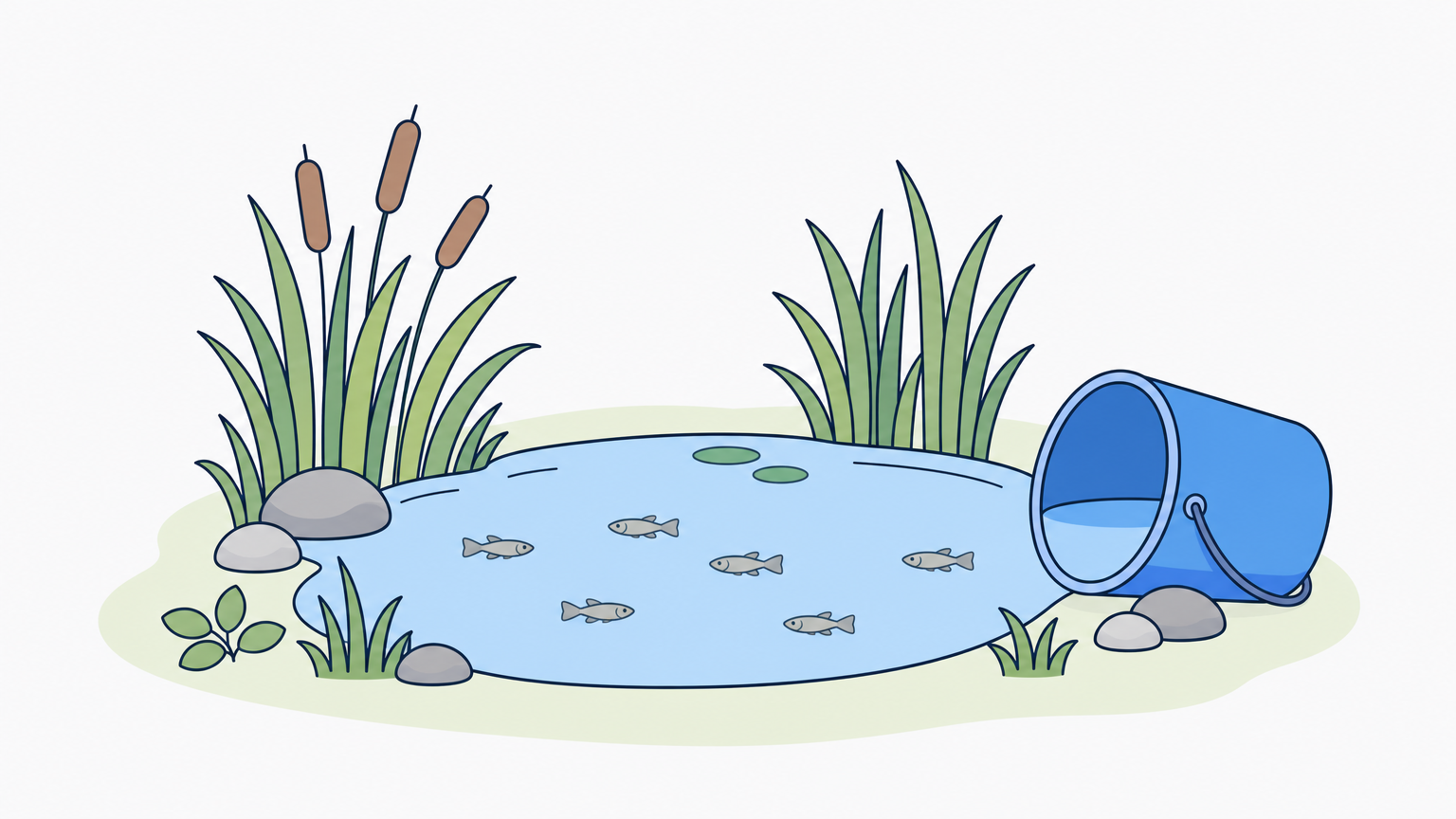
The Sacramento-Yolo Mosquito and Vector Control District is the public agency for Sacramento and Yolo counties . It monitors mosquito populations, tests for diseases such as West Nile virus, and treats breeding water. Residents can report problems and request inspections.
Do not expect it to spray your hedges. Its focus is breeding sources and public health , such as a neglected pool or a standing-water complaint. Ask whether free mosquitofish are available for your pond.
Stop the breeding water first, and every spray works better.
Who it suits
The district is the right first call if bites seem to come from a neighbor's green pool , an irrigation ditch, or a pond. It also suits anyone who wants a free, no-pressure opinion before paying a private company.
- Good fit: a nearby water source you cannot control.
- Weaker fit: you want your own yard sprayed on a schedule.
Cost and what to ask
It is a public service, so there is typically no direct fee for reports and inspections. Your time goes into documenting the problem with the address and photos of the water.
- How do I report the water source?
- What can I fix on my own property?
- Is mosquitofish available for my pond?
5. DIY yard treatments and traps
How it works
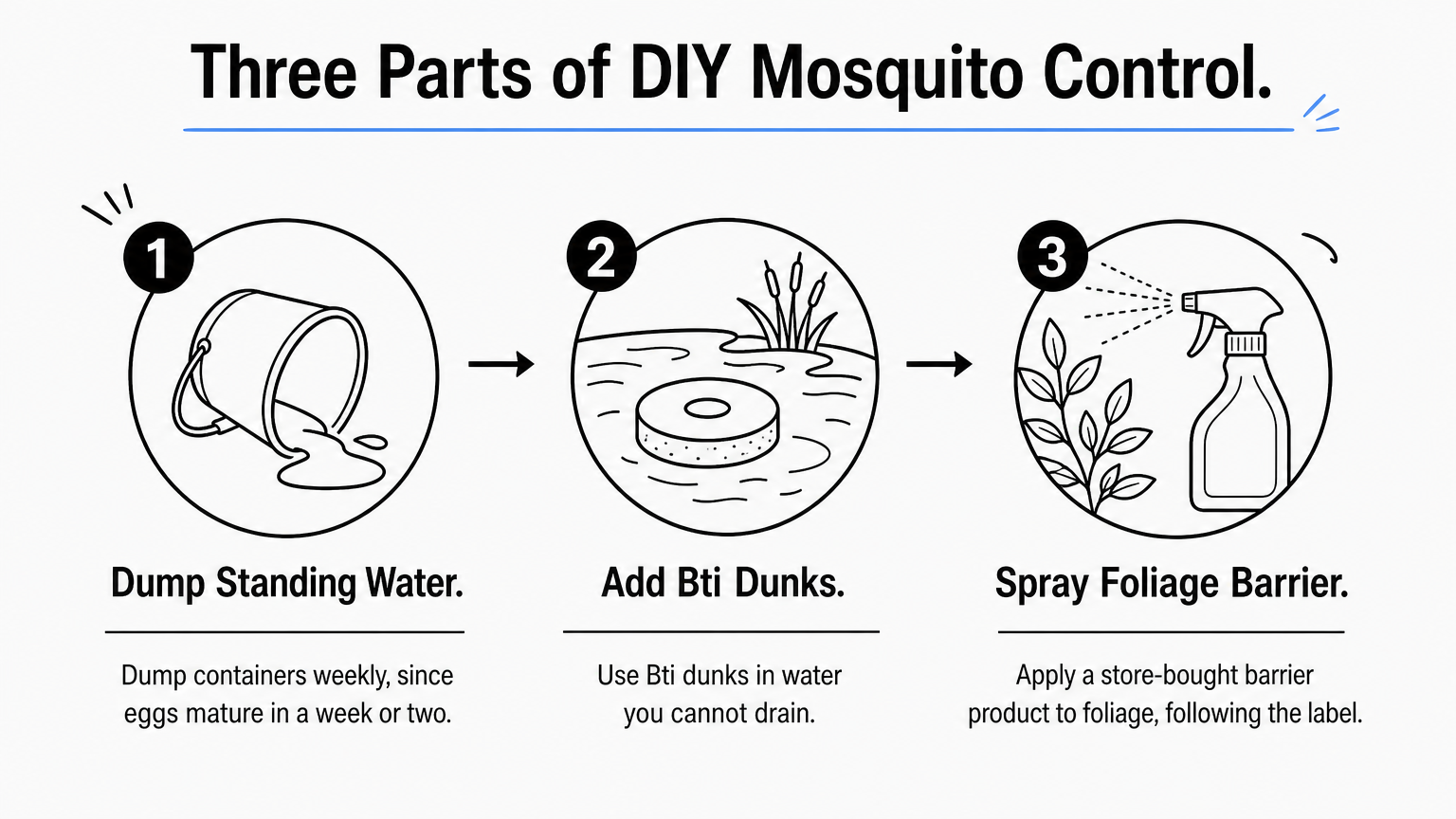
Read the product label before every use. Keep spray off flowering plants that bees visit , and keep pets and kids away until it dries.
DIY costs less in dollars and more in weekends.
Who it suits
DIY suits a small, open yard , a tight budget, and someone comfortable with a sprayer. It struggles on large lots, tall trees, and dense hedges, where you cannot reach the leaf undersides where mosquitoes rest.
- Good fit: small yard, light pressure, spare time.
- Weaker fit: big lot or an event date you cannot miss.
Cost and what to ask
Upfront cost is the lowest of the five options, but you buy the sprayer, product, and refills and repeat the work all season. Ask yourself three things before you start.
- Can I reach under decks and the underside of leaves?
- Will I repeat treatment on the label's schedule?
- Do I know where my neighbors' water sits?
How the five options compare on timing and cost
The biggest difference between these options is how often they treat and what they treat. Cost follows from that, so compare visit rhythm before you compare price.
Side-by-side comparison
The table lines up the five options on the factors that decide results. Use it to match the schedule to your yard , not the other way around.
| Option | Visit rhythm | What it treats | Best for |
|---|---|---|---|
| Defender | Exterior service every other month in the year-round program; confirm mosquito schedule | Home and yard, many pests | Multi-pest homes |
| Mosquito franchise | About every 21 days | Foliage and shaded areas | Mosquito-only, strict schedule |
| Lawn care add-on | Follows lawn visits | Varies, often turf | Existing lawn customers |
| Vector district | When you report a problem | Breeding water | Neighbor or standing-water issues |
| DIY | Per product label | What you can reach | Small yards |
Compare visit rhythm first, because a cheaper visit that happens less often protects fewer days.
A worked example: one season of barrier spraying
Take a $100 per-visit quote every 21 days. This number is for illustration, so swap in your own. A seven-month season is about 214 days, which gives roughly 10 visits and $1,000 . A nine-month season is about 270 days, or about 13 visits and $1,300 .
Now compare a $60 add-on every six weeks. Over 214 days that is about 5 visits and $300. Each treatment covers about 21 days, so you are protected for roughly 105 of 214 days, about half. The cheaper plan costs 30% of the price and covers 50% of the days.
Pick the option that matches your yard
Start with the water. If a neighbor's pool or a ditch feeds the problem, call the district first, and empty your own containers weekly. Then choose by schedule: a three-week barrier cycle for heavy mosquito pressure, a pest company if you want the whole property covered, or DIY if the yard is small.
If you want a local, licensed team to inspect your home and yard and build a customized plan, you can request a free inspection and estimate from Defender. Tell them mosquitoes are the priority, and ask how often they would treat.