VA Termite Inspection Requirements By State And Cost
If you're buying or refinancing a home with a VA loan, there's a good chance you'll need a termite inspection before closing. The VA termite inspection requirements vary depending on where the property is located, not every state or county requires one, and the rules around who pays for the inspection can differ too.
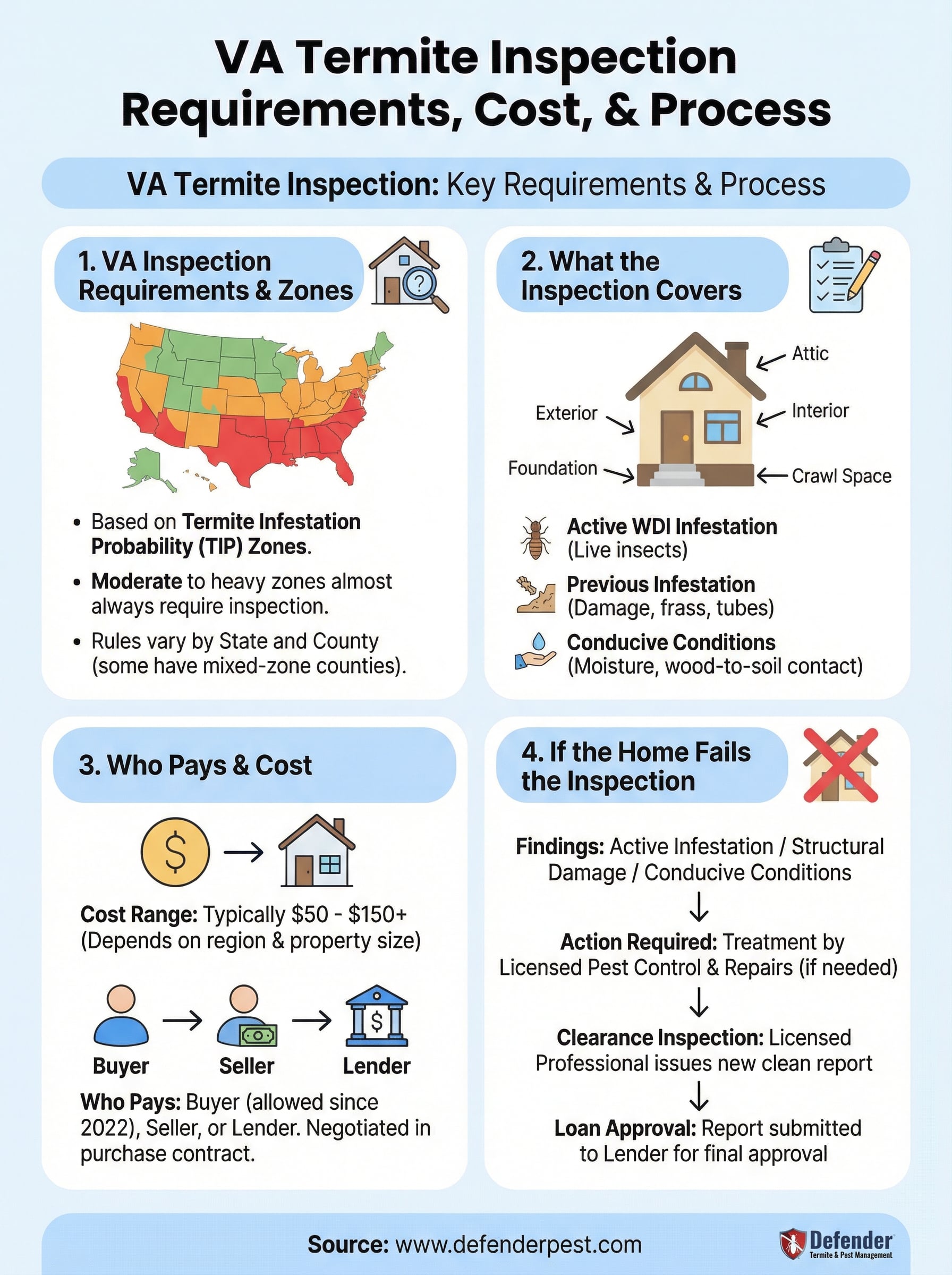
The U.S. Department of Veterans Affairs bases these requirements on termite infestation probability zones mapped by the Termite Infestation Probability (TIP) Zone Map. Properties in areas with moderate to heavy termite activity almost always require an inspection. Properties in low-risk zones may not. Either way, knowing your state's specific rules ahead of time prevents last-minute surprises that can delay or derail a closing .
At Defender Termite & Pest Management, we've performed thousands of wood-destroying insect inspections across the Greater Sacramento area since 1999. We handle VA-compliant inspections regularly and understand what lenders and appraisers expect to see on the report. This article breaks down the state-by-state requirements , what the inspection covers, who typically pays, and how much you should expect to spend.
What a VA termite inspection is and what it covers
A VA termite inspection is a formal assessment of a property for wood-destroying insects (WDI) and the damage they cause. The VA requires this inspection as part of its loan approval process because termite damage can compromise a home's structural integrity , which directly affects the value of the collateral backing your loan. The lender needs confirmation that the home is structurally sound before they approve your financing.
This is not the same as a general home inspection. A VA termite inspection focuses specifically on evidence of active infestations , past damage, and conditions that make a property vulnerable to future wood-destroying insect activity. The inspector follows a specific reporting format , and the results go directly to your lender and the VA appraiser as a formal part of the loan file.
The Difference Between a VA Termite Inspection and a General Home Inspection
Most buyers schedule a general home inspection, which covers the roof, HVAC, plumbing, electrical systems, and overall condition of the property. A VA-specific wood-destroying insect inspection is narrower in scope but carries significant weight in the loan approval process, and your general home inspector cannot fulfill this requirement on your behalf.
Only a licensed pest control professional completing a VA-compliant WDI report can satisfy the VA termite inspection requirements, regardless of what a general home inspection may note about visible damage.
Your lender will not accept a general home inspection as a substitute. The VA requires the inspection to be completed and signed by a licensed pest control operator in most states, and the report must follow an approved format, typically the NPMA-33 form issued by the National Pest Management Association or a state-equivalent document.
What the Inspector Actually Looks For
When the inspector visits the property, they examine all accessible areas of the home for signs of wood-destroying insects. This includes subterranean termites, drywood termites, carpenter ants, carpenter bees, and wood-boring beetles. The inspection covers interior spaces, the exterior perimeter , the foundation, crawl spaces, garages, and any attached structures like decks or fences connected to the main dwelling.
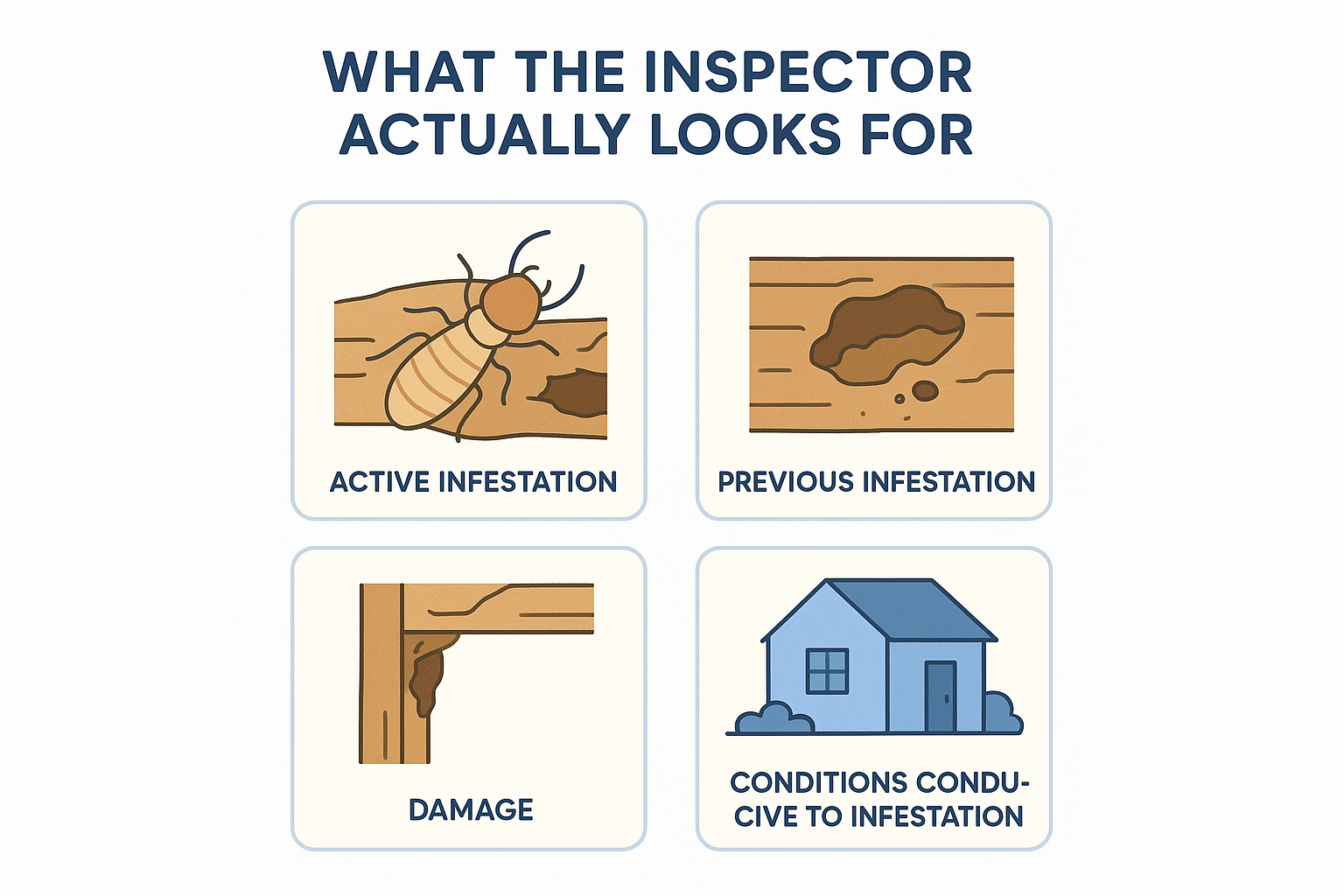
The inspector documents findings across four key categories:
- Active infestation : Live insects are present and actively damaging the wood.
- Previous infestation : Evidence of past activity exists, such as frass, mud tubes, or hollowed wood, but no live insects are currently visible.
- Damage : Structural or non-structural wood has been compromised by WDI activity.
- Conditions conducive to infestation : Issues like wood-to-soil contact, excessive moisture, or wood debris near the foundation that increase the risk of future infestation.
Each finding requires a clear notation on the report, and your lender reviews all of them before proceeding with your loan.
The Wood-Destroying Insect Report
The completed report is a formal document your lender and the VA appraiser rely on to assess the property's condition. In most cases, the report uses the NPMA-33 form , which is the standard WDI inspection report recognized across the country. Some states have their own approved forms, but the information captured follows the same structure.
The report must include the inspector's license number , the date of the inspection, the property address, and a clear notation of all findings. If the inspector finds evidence of active infestation or structural damage, your lender will typically require treatment and, in some cases, repairs before your loan can close.
When the VA requires a termite inspection
The VA does not require a termite inspection on every single loan, but the rule applies broadly enough that most VA purchase loans in moderate-to-high risk areas will trigger the requirement. The primary driver is the Termite Infestation Probability (TIP) Zone assigned to the property's location. If the home sits in a zone rated moderate, heavy, or very heavy for termite activity, your lender is required to order a WDI inspection before the loan can close.
Loan Types That Trigger the Requirement
Purchase loans and VA-guaranteed refinances both fall under the VA termite inspection requirements when the property sits in a covered zone. New construction loans backed by the VA also require documentation showing the builder applied preventative termite treatment during construction, which is separate from the standard inspection process but still part of the overall WDI compliance picture.
If you are refinancing with a VA loan, check with your lender early. Some refinance transactions still require a current WDI report, and an outdated inspection from your original purchase will not satisfy the lender's requirements.
Your loan type determines whether the inspection is mandatory or discretionary. For standard VA purchase transactions , an inspection is almost always required in states that fall within TIP Zones 1 and 2. For refinances, the requirement depends on the loan program and your lender's internal guidelines .
Property Types and Conditions
Single-family homes, condominiums, and manufactured housing approved for VA financing all fall under the inspection requirements when the property sits in a covered zone. The VA also flags specific property conditions that make an inspection mandatory regardless of zone, including visible evidence of wood-destroying insect activity noted by the VA appraiser during the property assessment.
If the appraiser notes anything suspicious during the appraisal, they can require a WDI inspection even in areas that would not otherwise mandate one. Treat any appraiser comment about moisture, wood damage, or pest-conducive conditions as a strong signal that a full WDI inspection will be required before your closing can proceed .
VA termite inspection rules by state and county
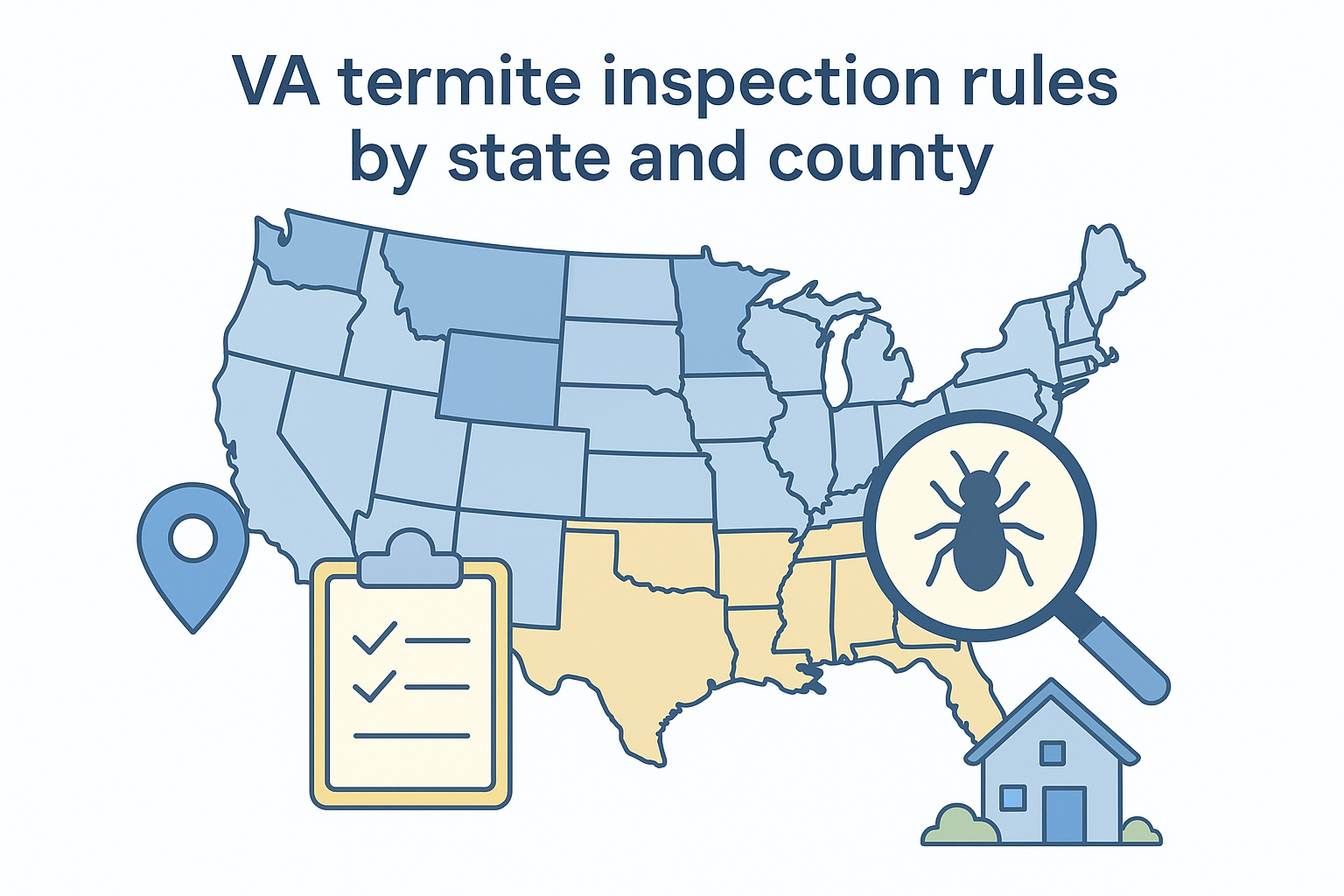
The VA uses the Termite Infestation Probability (TIP) Zone Map to determine where inspections are mandatory. States in TIP Zones 1 and 2, which cover most of the South, Southeast, and parts of the West Coast, almost always require a WDI inspection on every VA purchase loan. The VA termite inspection requirements apply at the state level in many cases, but some states go further by adding county-specific rules that override the broader state default.
States That Always Require an Inspection
Several states sit entirely or mostly within high-risk TIP zones, meaning every VA loan transaction in those states triggers a mandatory termite inspection before closing. These include Alabama, Arkansas, Florida, Georgia, Louisiana, Mississippi, South Carolina, and Texas. California falls into this category as well, with most counties classified as moderate to heavy risk , including Sacramento, Placer, and El Dorado counties.
If your property is in California, assume a WDI inspection is required on your VA loan unless your lender explicitly confirms otherwise.
States With County-Level Requirements
Some states use a mixed-zone structure where certain counties require inspections and others do not. Virginia, North Carolina, Tennessee, and Oklahoma all have counties that fall across multiple TIP zones, meaning your specific county determines whether the inspection is mandatory on your loan. Lenders in these states typically pull the TIP zone for the exact property address rather than applying a statewide blanket rule.
States like Montana, North Dakota, and Alaska sit entirely in TIP Zone 3 , classified as slight-to-no termite activity . Lenders in those states generally skip the WDI requirement unless the VA appraiser flags visible evidence of wood damage or pest-conducive conditions during the property visit.
How to Confirm Your State's Current Requirements
Your lender's underwriter is your best starting point for confirming your property's specific TIP zone and whether an inspection applies. You can also reference the VA Lender's Handbook, Chapter 12, which outlines geographic requirements and approved inspection forms by state. Confirming the requirement early in your loan process prevents last-minute inspection orders from pushing your closing date. Ask your lender to pull the zone classification for your exact address before you schedule anything else.
VA termite inspection cost and who pays
The cost of a VA termite inspection is relatively modest compared to other closing costs, but who pays for it is where buyers sometimes run into confusion. Under older VA loan guidelines, the veteran buyer was prohibited from paying for certain closing costs, including the WDI inspection fee , which meant sellers often picked up the tab. That rule has since been relaxed, and the current policy gives buyers more flexibility heading into closing.
What a VA Termite Inspection Typically Costs
Most VA-compliant WDI inspections run between $50 and $150 for a standard single-family home, though prices vary by region, property size, and the pest control company you hire. In higher cost-of-living areas like the Sacramento metro, expect to pay toward the upper end of that range. Properties with crawl spaces, large square footage, or multiple structures on the lot can push the price higher since the inspector spends more time covering all accessible areas.
Getting a quote from your inspector before the inspection date keeps you from being surprised by the final bill, especially if the property has features that add to the scope of work.
Who Pays for the VA Termite Inspection
The VA updated its fee rules in 2022 , and buyers can now pay for their own WDI inspection in all states. Before that change, veterans in certain states were restricted from paying this fee directly, which required sellers or lenders to cover it. Under the current VA termite inspection requirements , the cost can be paid by the buyer, seller, lender, or real estate agent, and your purchase contract typically spells out who covers it.
Sellers in competitive markets often agree to pay the inspection fee as part of negotiations, particularly when the buyer requests it upfront. Your real estate agent can build this into the offer terms early, so you're not left haggling over it during the final stages of closing. Either way, the dollar amount is small enough that it rarely stalls a transaction, but confirming who pays before you order the inspection avoids any ambiguity later.
How the inspection works and report requirements
Once your lender orders the inspection, a licensed pest control operator contacts you or the seller's agent to schedule a visit. The inspector needs full access to all accessible areas of the property, including interior rooms, the attic, crawl spaces, the garage, and the complete exterior perimeter. Restricting access to any of these areas produces an incomplete report, which your lender will not accept as satisfying the loan requirements.
Scheduling and Property Access
Your real estate agent or the listing agent typically coordinates property access on the scheduled day. Make sure all interior spaces are unlocked, including utility closets, storage rooms, and any areas near the foundation or crawl space entry points. If the inspector cannot reach the crawl space or a portion of the attic, the report will flag those areas as unobservable , which often prompts your lender to require a second visit before your closing can move forward.
What the Inspector Does On-Site
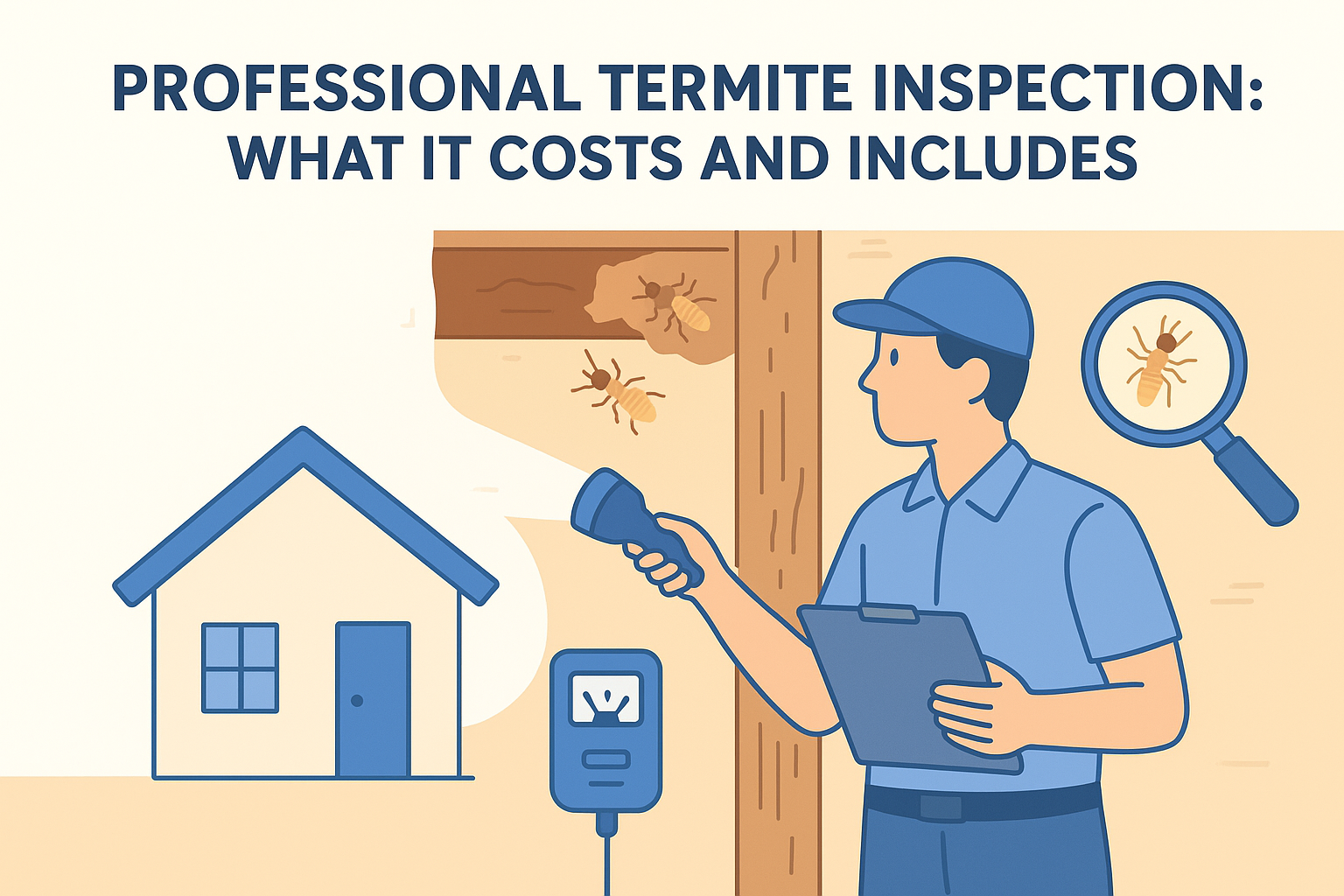
The inspector walks the entire property and probes accessible wood surfaces to detect soft spots, hollow sounds, or frass that signal WDI activity. They also look for mud tubes along foundation walls , damaged wood near soil contact points, and moisture conditions that create favorable environments for termites and other wood-destroying insects. A typical inspection on a single-family home takes between 45 minutes and two hours, depending on the property's size, layout, and the number of structures that require coverage.
The Completed Report and Submission Requirements
After the visit, the inspector completes the NPMA-33 form or the state-approved equivalent, signs it, and includes their license number. This document records every finding across four categories: active infestation, previous infestation, structural or non-structural damage, and conditions conducive to future activity. Satisfying the VA termite inspection requirements means the inspector submits this report directly to your lender so it can be reviewed alongside the VA appraisal before your loan moves to underwriting.
Save a copy of the completed WDI report after closing, since lenders and title companies may request it if you refinance or sell the property in the future.
What happens if the home fails the inspection
A failed WDI inspection does not automatically kill your VA loan, but it does add steps to your closing process that you need to address before your lender will move forward. When the inspector finds active infestation, structural damage, or conditions conducive to WDI activity , your lender receives a report that flags the property as non-compliant. At that point, the loan cannot proceed until the issues are resolved and a clearance report confirms the property meets the standards required under the VA termite inspection requirements .
Treatment and Repair Requirements
Your lender will require a licensed pest control company to treat the active infestation before the loan advances. Once treatment is complete, the same inspector or another licensed operator returns to perform a clearance inspection and issue a new report confirming the infestation has been eliminated. If the original inspection also identified structural damage, the VA appraiser may require a wood repair contractor to complete repairs before the clearance inspection takes place.
Lenders will not accept a verbal confirmation of treatment. You need a written clearance report from a licensed pest control operator before your file can advance to underwriting.
The types of findings that require action before closing typically fall into three categories:
- Active infestation : Treatment is mandatory, followed by a clearance inspection.
- Structural damage : Repairs are required in most cases, particularly when load-bearing wood is affected.
- Conducive conditions : Correction may be required depending on severity and lender guidelines.
Negotiating After a Failed Inspection
Who pays for treatment and repairs is a negotiation between buyer and seller, just like any other repair request. In most transactions, buyers request that sellers cover the cost of treatment and required repairs as a condition of the sale continuing. Sellers can agree, negotiate a credit toward closing costs, or refuse, which gives you the option to walk away if the purchase contract includes the proper contingency language.
Your real estate agent should include a WDI inspection contingency in the offer so you retain the right to renegotiate or exit the contract without losing your earnest money if the inspection turns up significant problems.
Conclusion
Understanding the VA termite inspection requirements before you start the loan process saves you time, money, and stress at the closing table. The rules vary by state and county, the cost is manageable, and knowing what to expect from the inspection itself puts you in a stronger position to negotiate repairs or treatment if the home comes back with findings.
Your best move is to confirm your property's TIP zone early, get your inspection scheduled from a licensed pest control operator , and keep a copy of the completed WDI report after closing. Failing the inspection is not a deal-breaker, but you need to act quickly to keep your timeline on track.
If your property is in the Sacramento area and you need a VA-compliant wood-destroying insect inspection , our team at Defender Termite & Pest Management is ready to help. Request a termite inspection quote and we'll get you scheduled fast.