
What Attracts Fleas in the House? Causes and Fixes
You find a flea on your dog, then another on the carpet, and suddenly you're scratching your own ankle wondering how this happened. Understanding what attracts fleas in the house is the first step to stopping the cycle instead of just treating symptoms every few weeks. Fleas don't show up randomly. They follow warmth, blood hosts, and the right humidity, and once they find those conditions indoors, they settle in fast.
The short answer is that fleas come inside on pets, wildlife, or even on your own shoes and clothing, then stay because your home offers consistent warmth , food in the form of blood meals, and hiding spots in carpet fibers, pet bedding, and baseboard cracks. Humidity above 50 percent and temperatures in the 70s create ideal breeding conditions, which is common in Sacramento homes during summer and early fall.
In this article, we'll break down the specific household triggers that draw fleas in, from untreated pets and yard vegetation to secondhand furniture and wildlife activity near your foundation. We'll also cover practical fixes you can start today, plus when it makes sense to call in professional pest control before a few fleas turn into a full infestation.
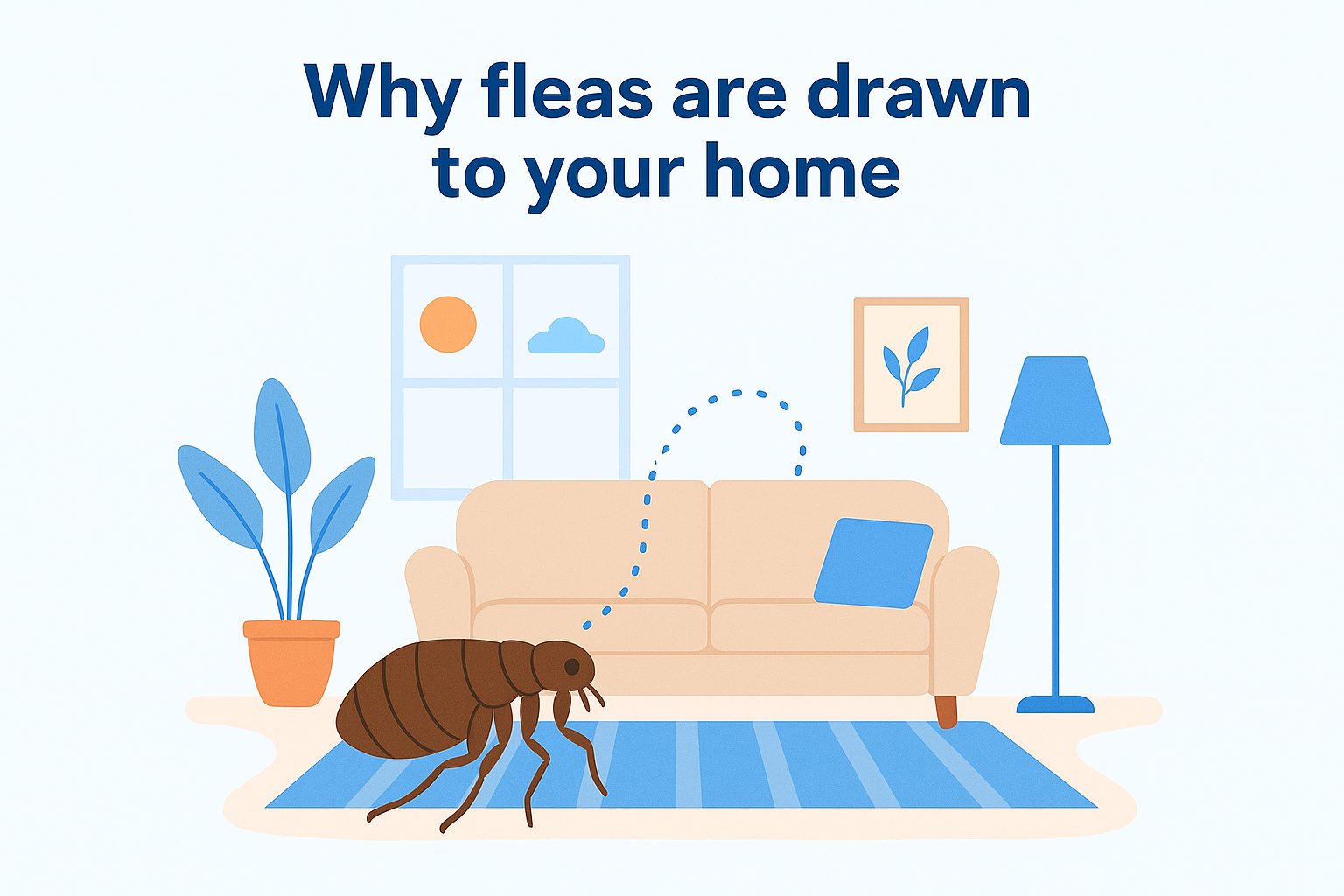
Why fleas are drawn to your home
Fleas aren't picky, but they are practical. They need a blood source , a warm environment, and enough moisture to survive between meals, and a typical Sacramento home checks every box during the warmer months. Once a single pregnant flea hitches a ride indoors, she can lay up to 50 eggs a day, which is why what starts as one itchy ankle turns into a household problem within weeks.
Warmth and humidity do the heavy lifting
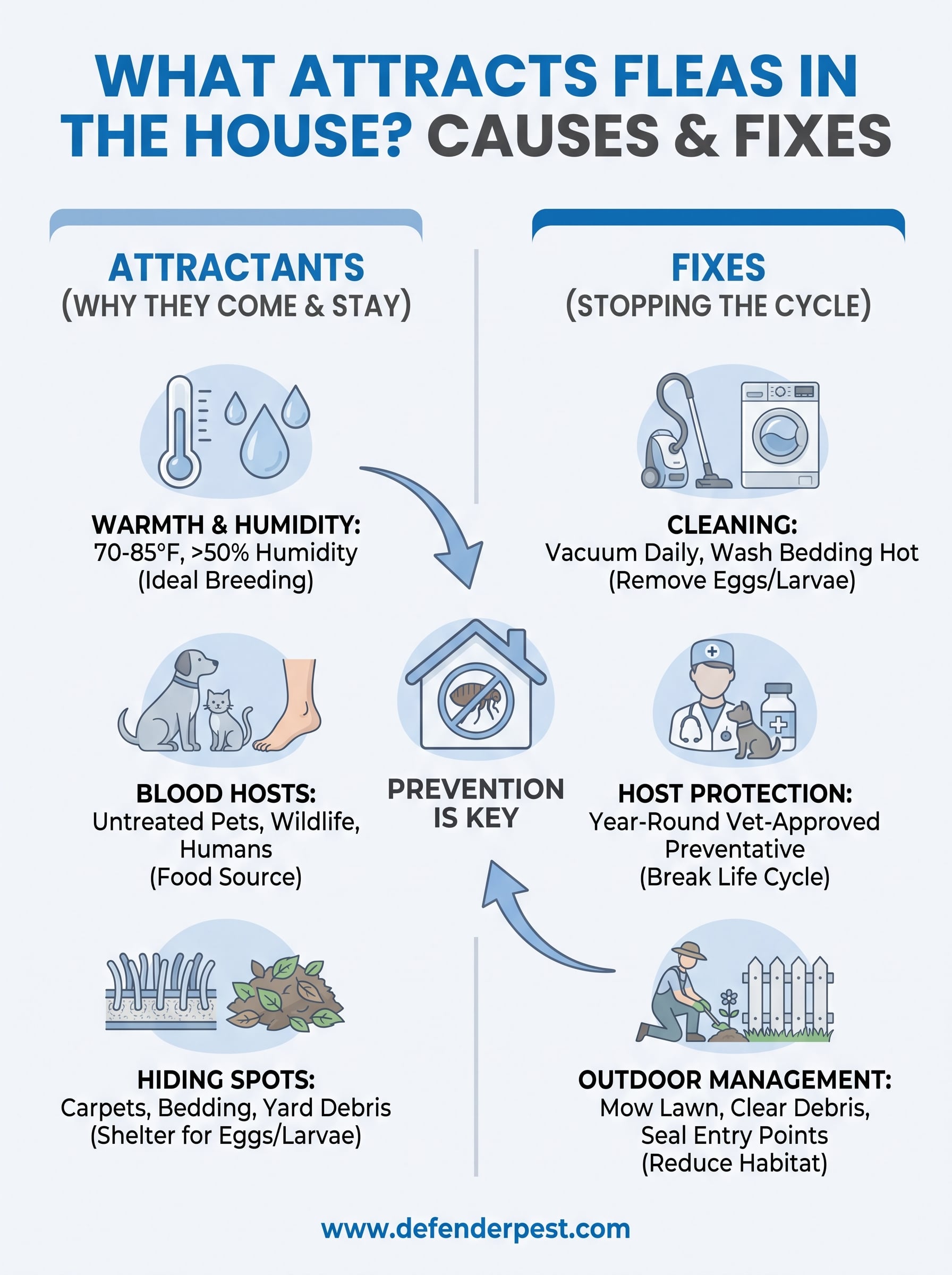
Fleas thrive in temperatures between 70 and 85 degrees Fahrenheit with humidity above 50 percent, conditions your living room hits year-round thanks to central heating and air conditioning. Basements, crawl spaces, and poorly ventilated laundry rooms often run even more humid than the rest of the house, giving flea eggs and larvae a stable place to develop away from foot traffic.
Fleas don't invade your home by accident. They stay because the temperature, humidity, and food supply match what they need to reproduce.
Pets and blood meals keep them fed
Dogs and cats are the most common entry point, but fleas will also feed on humans when a preferred host isn't available. Untreated pets that spend time outdoors, visit dog parks, or interact with strays bring fleas inside on their fur, and those fleas jump off long before you ever see them.
Organic debris gives eggs a place to hatch
Flea eggs fall off your pet wherever they walk, then settle into carpet fibers, upholstery seams, and pet bedding. Piles of leaves, grass clippings, and firewood stacked against the house create outdoor nurseries too, since larvae feed on organic debris and flea dirt before maturing into biting adults. The table below shows where fleas tend to concentrate and why.
| Location | Why fleas gather there |
|---|---|
| Pet bedding | Warm, humid, close to a host |
| Carpet and rugs | Dark fibers trap eggs and larvae |
| Yard debris piles | Shade and moisture support development |
| Crawl spaces | Consistent humidity year-round |
Understanding these draws matters because treating the symptom, a flea bite or a scratching pet, without addressing the underlying conditions just resets the clock on the infestation.
How to identify and remove flea attractants
Spotting a flea problem early saves you weeks of frustration later. A flea comb inspection on your pet, done over a white towel or paper plate, is the fastest way to confirm an infestation. If the comb pulls out small dark specks that turn reddish-brown when wet, that's flea dirt, which means digested blood, not just dust.
Check the areas fleas prefer first
Carpeted rooms, pet beds, and upholstered furniture near where your pet naps are the first places to inspect. Dark, low-traffic corners under couches and beds give fleas the shade and stillness they need to complete their life cycle undisturbed.
Removing flea attractants works only when you treat the pet, the home, and the yard at the same time.
Remove the conditions, not just the fleas
Once you've confirmed an infestation, focus on cutting off what's feeding it. Vacuuming daily for at least two weeks pulls eggs and larvae out of carpet fibers before they mature, and washing pet bedding in hot water does the same for fabric.
- Vacuum carpets, rugs, and furniture edges daily, then empty the canister outside
- Wash pet bedding, blankets, and your own linens in hot water weekly
- Mow the lawn short and clear leaf piles or woodpiles near the foundation
- Treat pets with a veterinarian-approved flea preventative year-round, not just in summer
- Seal cracks around baseboards and crawl space vents where debris collects
Consistency matters more than intensity here. Skipping even one of these steps for a week gives surviving eggs enough time to hatch and restart the cycle you just interrupted.
Common sources of fleas in and around the house
Fleas rarely originate inside your home. They hitch a ride in from somewhere else, then settle into the conditions we covered above. Knowing the common entry points helps you close the door on repeat infestations instead of just treating the same rooms over and over.
Wildlife and strays near your property
Raccoons, opossums, feral cats, and squirrels carry fleas into your yard even if you don't own a pet. Wildlife activity near your foundation , especially under decks, sheds, or crawl spaces, drops flea eggs that hatch and wait for a host to walk by, whether that's your dog or you. If you notice animal droppings, disturbed insulation, or matted nesting material outdoors, treat that as a flea source, not just a nuisance animal problem.
Most flea infestations start outside your house, not inside it.
Secondhand items and shared spaces
Used furniture, rugs, and mattresses can carry flea eggs from a previous home, especially if the item sat in a garage or storage unit. Secondhand furniture is one of the most overlooked culprits homeowners bring in themselves. Apartment living adds another layer, since fleas move easily between units through shared carpeted hallways, laundry rooms, or a neighbor's untreated pet.
Your own yard and shoes
Tall grass, shaded flower beds, and moisture-retaining mulch give fleas a place to wait for a host outdoors before they ever reach your door. Walking through infested grass lets eggs and adult fleas cling to your shoes and pant legs, which means your own shoes can be the transport method even when your pets never leave the yard.
Warning signs of a growing flea problem
Fleas rarely announce themselves with a single bite. By the time you notice a pattern, dozens of eggs are already hatching somewhere in your carpet or pet bedding. Catching the early warning signs early keeps a manageable problem from turning into a room-by-room infestation that takes weeks to clear.
Bites and skin reactions
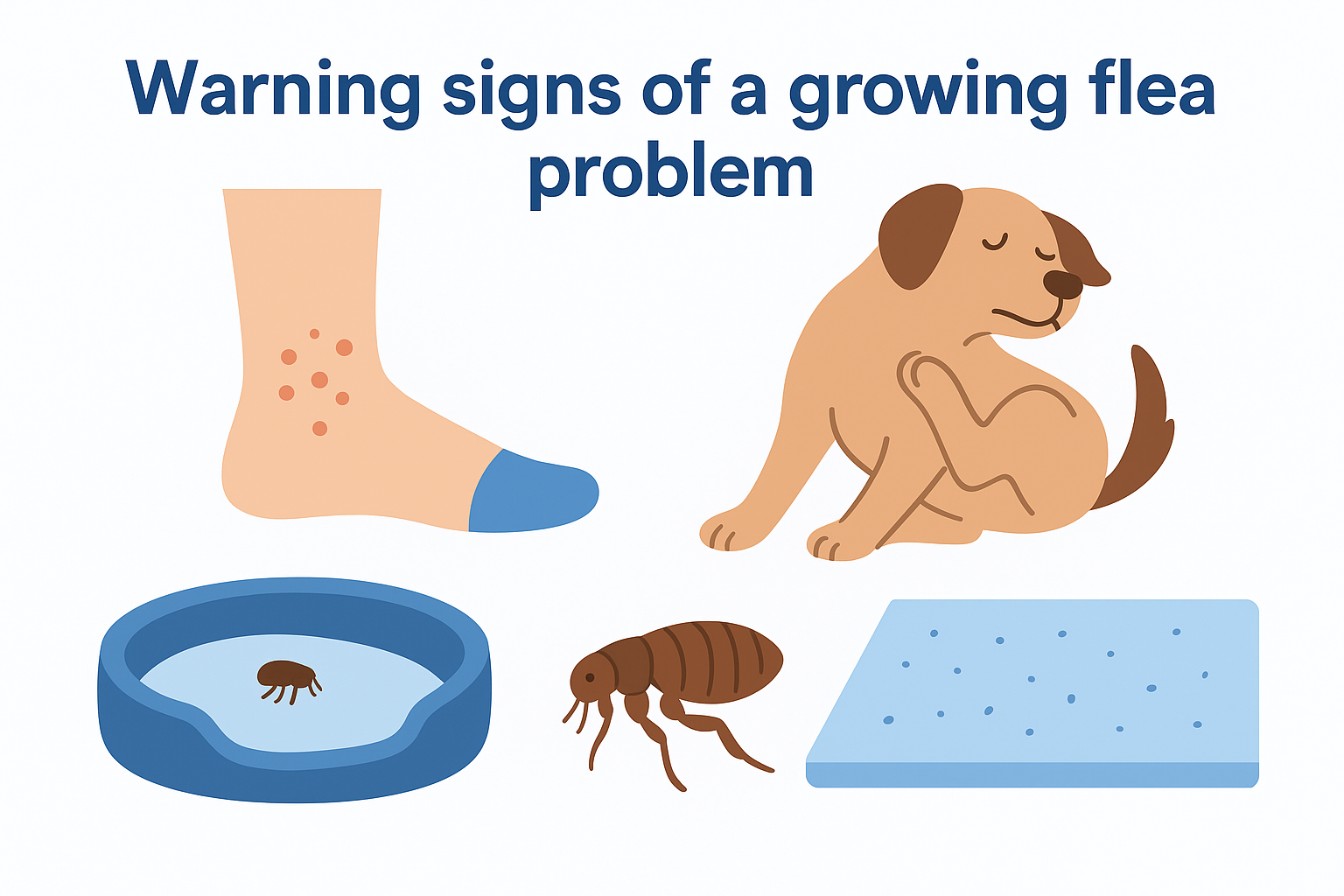
Clusters of small, red, intensely itchy bites around the ankles and lower legs are the clearest sign you're dealing with fleas rather than mosquitoes or bedbugs. Pets scratching excessively , chewing at their fur, or developing bald patches near the tail base often show symptoms before you ever feel a bite yourself. Cats in particular groom aggressively enough to hide flea dirt, so a sudden increase in shedding or skin irritation deserves a closer look.
If you're seeing bites on more than one family member or pet, the infestation has already spread past a single source.
Signs around the home
Beyond bites, a handful of physical clues point to a growing problem before it gets out of hand:
- Small dark specks on pet bedding, carpet, or socks that turn reddish when wet (flea dirt)
- Tiny dark insects jumping when you walk across carpet, especially at dusk
- Pets suddenly avoiding certain rooms or refusing to lie in their usual spots
- Visible flea eggs, which look like tiny white grains near baseboards or furniture legs
Spotting several of these at once usually means the population has moved past the pet and into your carpets, furniture, and yard.
When to call a professional pest control service
Some flea problems clear up with two weeks of vacuuming, hot-water laundry, and a good pet preventative. Others don't, and pushing through with store-bought sprays just burns time while the population keeps breeding in spots you can't reach. If you've followed the removal steps above for two full weeks and you're still seeing bites, flea dirt, or jumping insects, that's your signal to bring in professional pest control rather than restart the same cycle.
Signs the infestation is beyond DIY control
A few situations call for a licensed technician instead of another trip to the hardware store:
- Fleas persist after two-plus weeks of consistent vacuuming, washing, and pet treatment
- Multiple rooms or multiple pets are affected at once
- You're finding flea dirt in crawl spaces, wall voids, or areas you can't fully clean yourself
- Wildlife activity near the foundation keeps reintroducing fleas from outside
- Anyone in the household has an allergic reaction to bites, such as swelling or spreading rash
A persistent infestation after two weeks of consistent effort almost always means the source is somewhere you can't reach on your own.
What a professional treatment actually involves
A pest control visit typically combines an inspection of the yard, foundation, and interior hot spots with targeted treatment for adult fleas, larvae, and eggs, since spraying only visible fleas leaves the next generation intact. Licensed technicians use products and application methods that reach carpet fibers, baseboard cracks, and crawl spaces without the guesswork of consumer sprays, and they can identify wildlife entry points a homeowner might miss entirely. If your infestation traces back to rodents or wildlife near the foundation, a provider who handles both pest and rodent control, like Defender Termite and Pest Management, can address the whole source in one visit instead of two separate calls.
Keeping your home flea-free for good
Fleas find their way into your house because the conditions are right, not because your home did anything wrong. Warmth, humidity, pets, and a little organic debris are all it takes, and those same factors point directly to the fix. Consistent prevention beats reactive treatment every time: vacuum on a schedule, keep pets on year-round preventatives, and clear the yard debris that gives fleas a place to wait outdoors.
Getting there means treating your pet, your home, and your yard together, not one at a time. Skip a step and surviving eggs will restart the cycle within days. If you've worked through the fixes above and you're still finding bites, flea dirt, or jumping insects after two weeks, the source is likely somewhere you can't reach on your own. That's when a professional inspection pays for itself in time saved.
Request a free quote from Defender Termite and Pest Management and get a technician out to find the source before it spreads any further.