8 Pet Safe Flea Treatment for House Options That Work Fast
You spot your dog scratching nonstop, and then you notice tiny dark specks bouncing across your couch cushions. Fleas have moved in, and now you need a pet safe flea treatment for house use that actually kills them without putting your animals at risk. The problem is, many store-bought sprays and foggers contain chemicals like pyrethroids and organophosphates that can be toxic to cats, dogs, birds, and other household pets.
At Defender Termite & Pest Management, we've handled flea infestations across Sacramento-area homes since 1999. One thing we see constantly: homeowners who tried a harsh chemical treatment first, panicked when their pet got sick, and then called us to fix the situation properly. Flea control doesn't have to be a gamble between effectiveness and your pet's safety. There are methods and products that deliver results without the toxic trade-off .
This article breaks down eight options, from natural remedies to professional-grade solutions, that eliminate fleas fast while keeping your pets safe. We'll cover what works, what doesn't , and when it makes sense to call in a professional instead of going the DIY route.
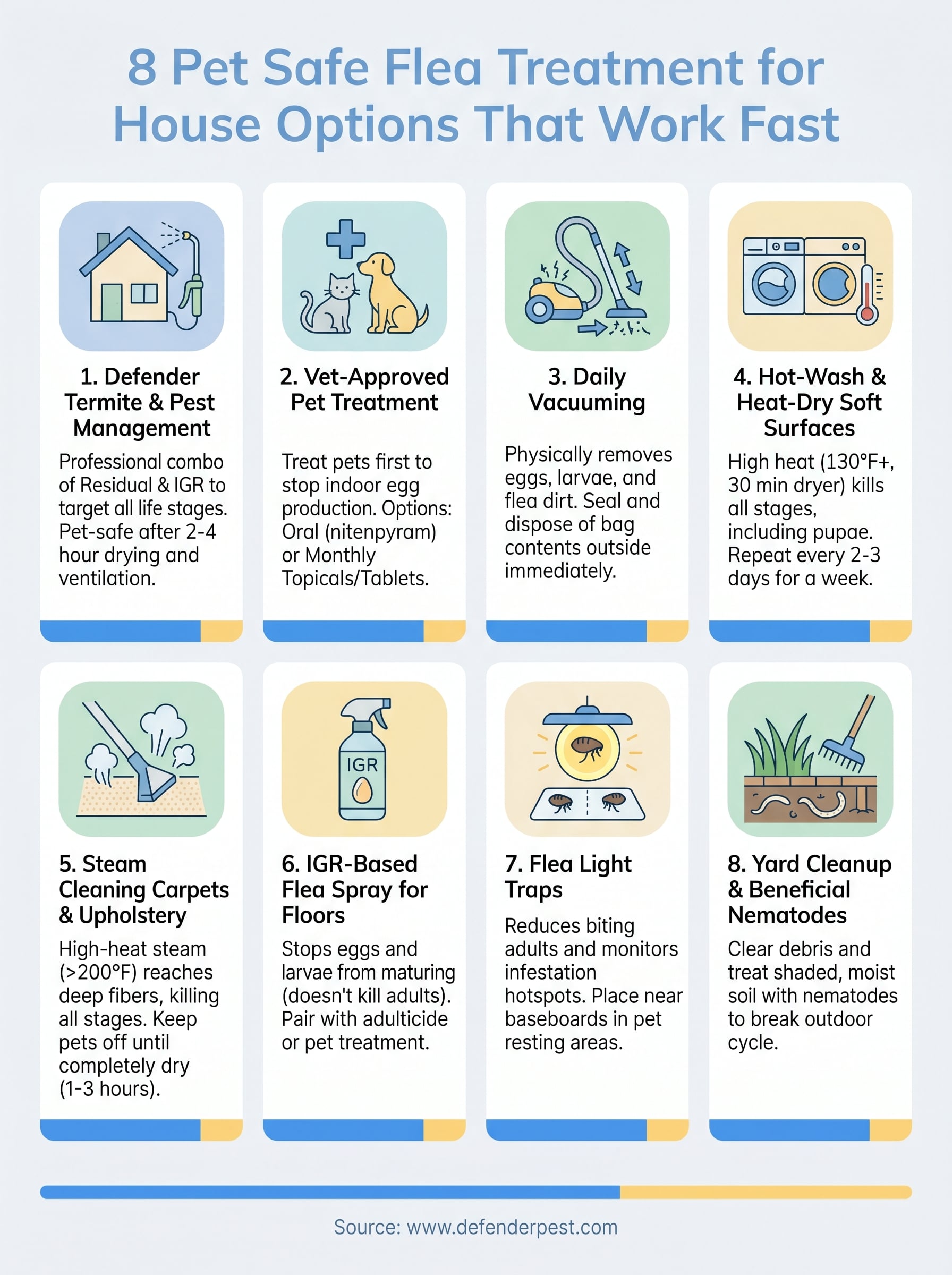
1. Defender Termite & Pest Management flea treatment
When an infestation has spread through multiple rooms, professional treatment is the most reliable way to break the flea life cycle all at once. Our team at Defender handles the full picture, targeting adults, larvae, eggs, and pupae in a single coordinated visit rather than leaving you to manage multiple products over several weeks.
What technicians do and why it works
Our technicians apply a combination of residual insecticide and insect growth regulator (IGR) to floors, baseboards, carpet edges, and furniture bases throughout your home. The residual kills adult fleas on contact, while the IGR stops eggs and larvae from developing into new biting adults. This two-product strategy is what separates a professional treatment from a store-bought spray that only targets one stage of the life cycle. Without hitting multiple stages at once, infestations typically bounce back within days.
How we keep treatment pet-safe
We use EPA-registered products formulated specifically for use inside homes with pets. Before we begin, we ask you to remove your pets and their bedding from the treatment area entirely. Once the application dries, typically within two to four hours , your pets can return without risk of contact with wet product. We follow label instructions to the letter, including ventilation requirements that DIY applicators frequently overlook.
Respecting the re-entry window is the single most important safety step. Letting the product dry fully before pets return removes the primary route of exposure.
How fast you'll see results and how long it lasts
Most homeowners notice a significant drop in flea activity within 24 to 48 hours of treatment. Some adult fleas may continue to emerge for up to two weeks as pupae hatch, since no available product penetrates the pupal casing. A single professional treatment typically holds for 30 to 90 days , and we recommend scheduling a follow-up if activity persists beyond the two-week window.
Typical cost range in Sacramento-area homes
Treatment cost in the Sacramento area generally falls between $150 and $350 for a standard residential home, depending on square footage and room count. Larger homes or heavy infestations push toward the higher end. When you factor in multiple rounds of store-bought products that miss larval and egg stages, professional treatment is often the more economical pet safe flea treatment for house situations where the infestation is already well established.
2. Vet-approved flea treatment for pets
Before you treat a single square foot of carpet, treat your pets first . Every untreated animal in your home acts as a mobile flea host, continuously reseeding your floors, furniture, and bedding with new eggs. Skipping this step makes every other pet safe flea treatment for house method far less effective.
Why treating pets first stops the indoor infestation
Adult fleas spend most of their time on your pet, not on your floors. When you remove that host, egg production drops immediately , and the infestation stops growing while your other treatments catch up. Without this step, you are cleaning up behind a problem that keeps generating new fleas daily.
Treating your pets and your home on the same day gives you the best chance of breaking the flea life cycle in a single coordinated effort.
Fast options that vets commonly recommend
Vets commonly recommend oral flea treatments like nitenpyram for fast knockdown, since they start killing adult fleas within 30 minutes. For ongoing prevention, topical or oral monthly preventatives such as fipronil-based spot-ons or isoxazoline tablets keep fleas from reestablishing on your pet after your home treatment.
Pet safety notes for cats, dogs, puppies, and kittens
Never use dog-labeled flea products on cats , as permethrin is toxic to felines. Puppies and kittens under 8 weeks require age-appropriate products; always confirm the minimum weight and age on the label before applying anything.
Typical cost range and how often to repeat
Vet-prescribed flea treatments typically run $15 to $60 per pet per month , depending on the product and your pet's size. Most require monthly reapplication for three consecutive months to fully break the cycle.
3. Daily vacuuming with proper disposal
Vacuuming is one of the most underrated pet safe flea treatment for house strategies you can use between professional visits or alongside other methods. Done correctly and consistently, it physically removes multiple flea life stages from your home before they develop into biting adults.
What vacuuming removes in the flea life cycle
A vacuum pulls up flea eggs, larvae, and flea dirt (dried blood that larvae feed on) from carpet fibers and floor crevices. Removing flea dirt alone cuts off the larval food supply, which slows the infestation significantly. Research from the University of California shows that vacuuming kills up to 96% of adult fleas and a high percentage of larvae in a single pass.
Vacuuming daily during an active infestation does more damage to the flea life cycle than vacuuming occasionally with more effort.
Where to vacuum for the biggest impact
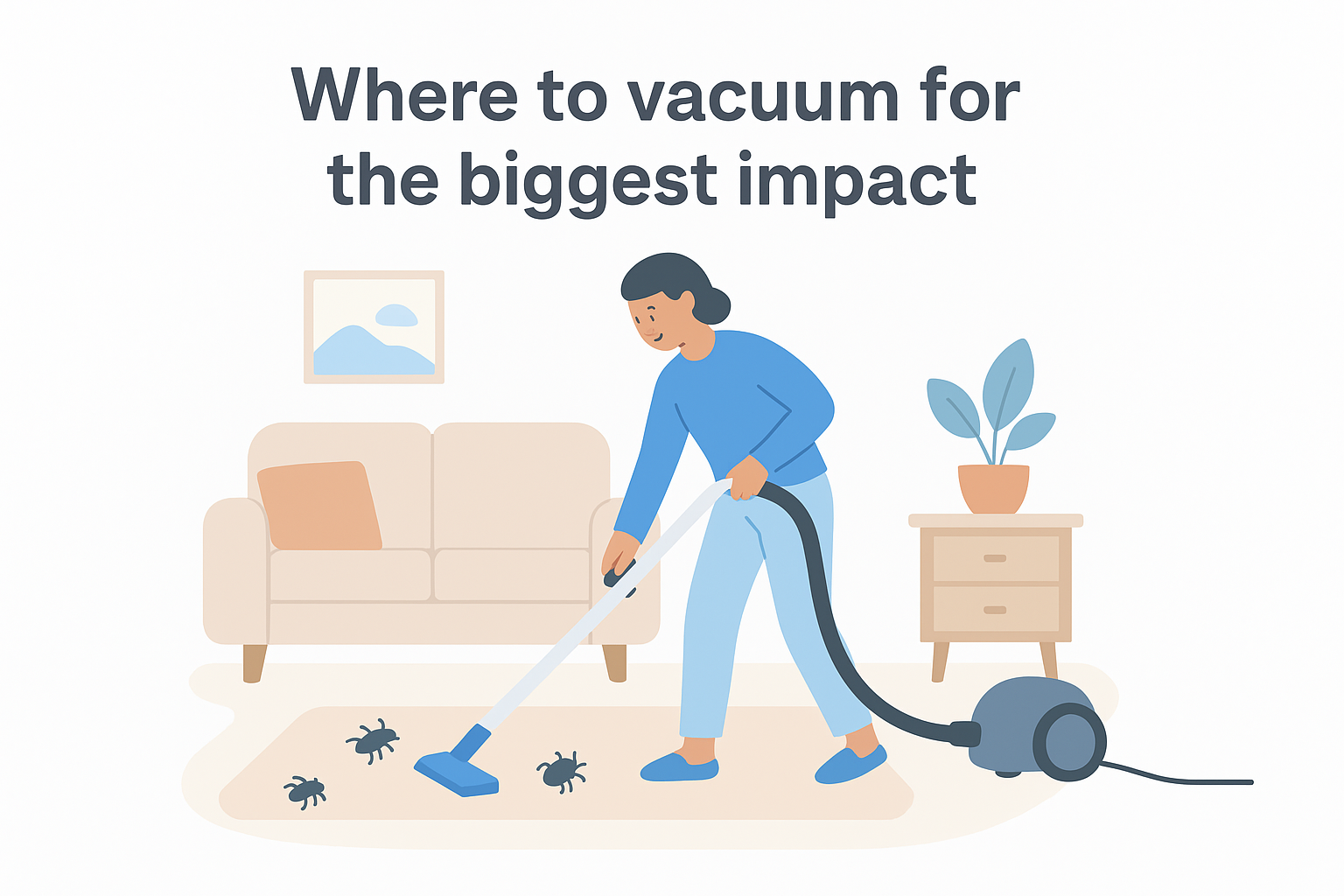
Focus on carpet edges, under furniture, and anywhere your pet rests regularly , including couch cushions and dog bed areas. These spots accumulate the highest concentrations of eggs. Run the vacuum slowly and in multiple directions over each area to lift embedded debris from carpet pile.
Pet-safe handling of vacuum bags and canisters
Seal disposable bags immediately after vacuuming and place them in an outdoor trash bin. For bagless models, empty the canister outside into a sealed plastic bag before discarding. This prevents fleas from crawling back out and re-infesting your floors.
Cost and time to do it right
Vacuuming costs nothing beyond 15 to 30 minutes of daily effort during the active treatment window. If your vacuum filter needs replacement, standard HEPA filters run $10 to $30 , which is well worth the improved suction efficiency.
4. Hot-wash and heat-dry all soft surfaces
Laundry is one of the most effective and completely chemical-free steps you can take as part of a pet safe flea treatment for house strategy. Heat is lethal to all flea life stages, including the heat-resistant pupae that most sprays cannot penetrate.
What to wash and why heat matters
Washing alone doesn't finish the job. You need the dryer set to high heat for at least 30 minutes to kill eggs, larvae, and pupae hiding in fabric fibers. A wash temperature of 130°F or higher combined with a full drying cycle eliminates every life stage your vacuum missed.
The dryer does more work than the washing machine. Heat, not soap, is what kills fleas.
A 7-day laundry plan that breaks the cycle
Strip and wash all pet bedding, throw blankets, couch covers, and floor rugs on day one. Repeat for any soft surfaces your pet contacts regularly every two to three days for the first week. This rolling schedule keeps newly hatched larvae from rebuilding before your other treatments catch up.
Pet-safe detergent and fabric care tips
Use fragrance-free, dye-free detergents to avoid skin irritation on pets who return to freshly washed bedding. Check care labels on wool, silk, or delicate items that cannot handle high heat, and set those aside for steam cleaning instead.
Cost range and what you may need to replace
Most laundry costs stay under $5 to $10 in utilities per full treatment week. Heavily infested fabric items, especially older pet beds with foam interiors , are often better replaced than repeatedly washed.
5. Steam cleaning carpets and upholstery
Steam cleaning adds another layer to your pet safe flea treatment for house plan by using high heat and moisture to reach flea life stages buried deeper than a vacuum can reach.
Why steam helps when vacuuming is not enough
Vacuuming lifts surface-level debris, but flea eggs and larvae lodge deep in carpet pile and upholstery seams where suction cannot fully reach. A steam cleaner delivers temperatures above 200°F directly into fabric fibers , killing every life stage on contact, including heat-resistant pupae that topical sprays cannot penetrate.
Steam reaches areas vacuuming misses and eliminates all flea life stages without introducing any chemicals into your home.
The best rooms and materials to steam clean first
Start with rooms where your pet spends the most time , typically the living room and any bedroom where pets sleep. Wall-to-wall carpets and upholstered furniture hold the greatest concentration of flea eggs and larvae, so target those before moving on to area rugs and stairs.
Pet-safe timing so paws never touch damp fibers
Keep pets out of any steam-cleaned room until all surfaces are completely dry, which takes one to three hours depending on ventilation. Open windows and run a fan to shorten dry time and prevent moisture buildup in carpet padding.
Run a second pass 48 hours after the first to catch any newly hatched larvae that emerged after your initial treatment.
Cost range for rentals vs. professional cleaning
Renting a steam cleaner runs $30 to $60 per day at most hardware stores. Hiring a professional service costs $100 to $250 for a standard home, depending on room count and whether upholstery is included.
6. IGR-based flea spray for floors and furniture
An insect growth regulator, or IGR , is one of the most effective components in a pet safe flea treatment for house plan because it targets the roughly 95% of the infestation living off your pet as eggs and larvae. Products containing methoprene or pyriproxyfen disrupt flea development at the hormonal level, preventing immature fleas from ever reaching the biting adult stage.
What an IGR does and what it does not do
An IGR stops eggs and larvae from maturing into adults, but it does not kill the adult fleas already active in your home. You need to pair it with a residual adulticide or a vet-prescribed pet treatment to address both the adults present now and the developing population underneath them.
Combining an IGR with an adulticide handles both the current adult population and the developing stages at the same time.
How to choose a product label that fits a pet home
Look for products that list methoprene or pyriproxyfen as active ingredients and carry an EPA registration number on the label. Read the restrictions carefully for use around cats, birds, or aquariums , since some formulations require extra precautions for specific animals.
Safe application, ventilation, and re-entry timing
Apply the spray directly to carpet, baseboards, and furniture bases with all pets removed from the treatment area. Open windows during application and allow two to four hours of full ventilation before letting pets back into the room.
Cost range and how often to reapply
Most IGR-based sprays cost $15 to $40 per bottle and cover 2,000 square feet or more per application. Reapply every 30 to 60 days for three consecutive months to fully break the flea life cycle.
7. Flea light traps for indoor hotspots
Flea light traps won't eliminate an infestation on their own, but they give you a fast way to reduce biting pressure while your other treatments work through the flea life cycle. They also function as reliable monitoring tools , showing you exactly which rooms still have active flea populations.
How traps reduce biting pressure fast
Flea traps use a warm light bulb and a sticky adhesive pad to mimic the heat signature of a resting host. Adult fleas jump toward the light and get trapped on the pad before they can bite your pets or lay more eggs. Deploying traps during the first week of treatment intercepts adults emerging from pupae , which are the stage most resistant to sprays and IGRs.
Traps catch the adults your sprays haven't reached yet, cutting the biting population faster than treatments alone.
Where to place traps for best capture rates
Set traps on the floor in rooms where your pet sleeps or rests most , since those areas hold the highest concentration of newly hatched adults. Position each trap near baseboards rather than in the center of a room to intercept fleas moving along the edges where eggs typically accumulate.
Pet-safe placement and electrical safety
Keep traps out of direct reach of curious pets by placing them behind furniture or in corners. Use only traps with enclosed bulbs to prevent paws from touching hot surfaces.
Cost range and what results to expect
Basic flea light traps run $8 to $20 each , and replacement sticky pads cost $5 to $10 per pack . Expect to capture the most fleas in the first three to five days , with catches dropping as your other pet safe flea treatment for house methods reduce the overall population.
8. Yard cleanup and beneficial nematodes
Your pet safe flea treatment for house plan is incomplete without addressing the yard. Fleas living in your landscaping restart the indoor infestation cycle every time your pet steps outside and comes back in, undoing the work your interior treatments have done.
How outdoor fleas restart indoor problems
Fleas use shaded, humid areas in your yard as breeding grounds between host contacts. Each time your pet goes outside and returns, they carry new adults and eggs onto your floors, furniture, and bedding.
Treating inside while ignoring the yard is like mopping the floor with the faucet still running.
Quick yard fixes that reduce flea habitat
Mow your lawn short and clear leaf litter, brush piles, and wood debris where fleas shelter from direct sunlight. The spots that need the most attention include:
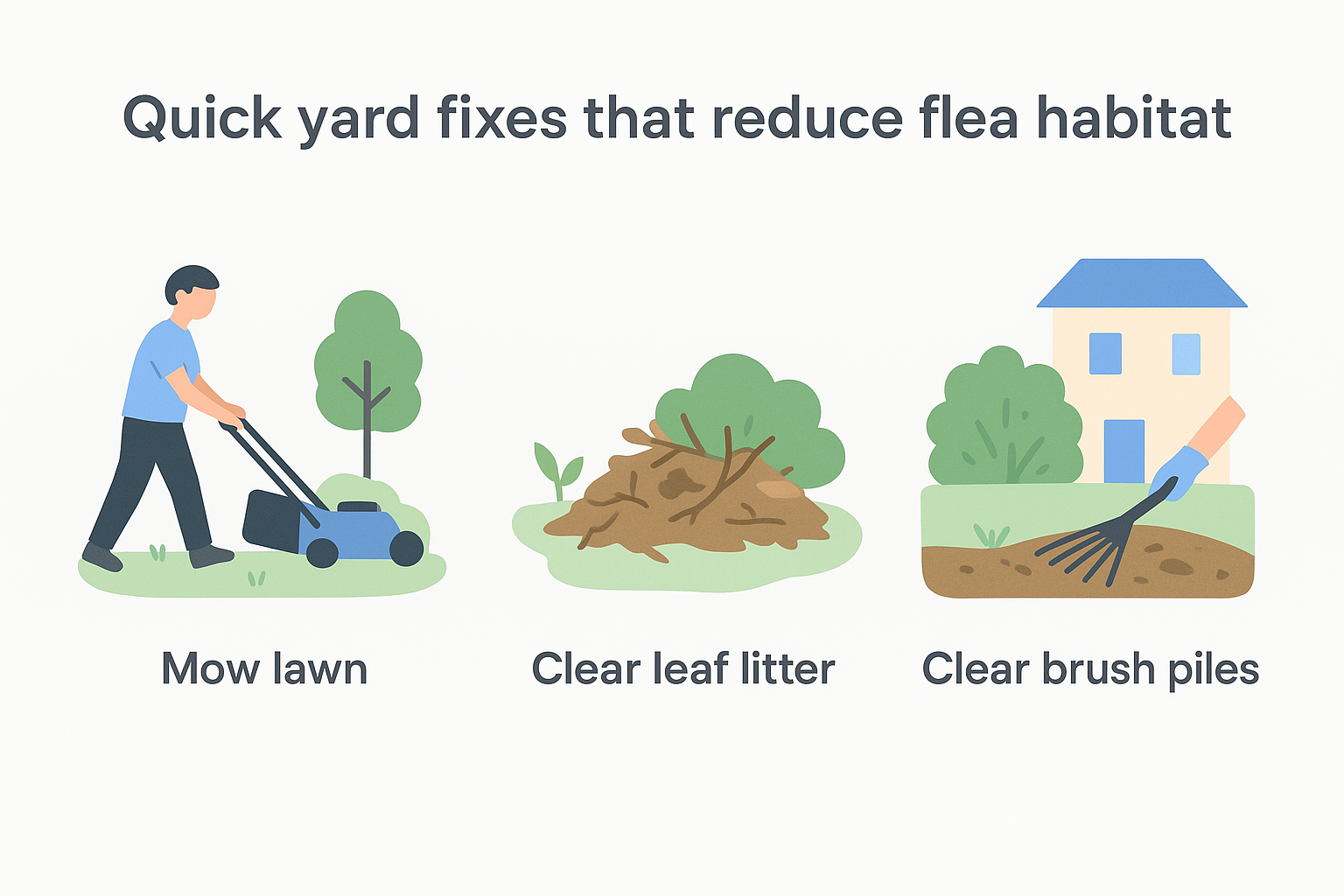
- Shaded soil under decks and porches
- Dense shrubs along fence lines
- Ground cover near doorways your pet passes through daily
When nematodes help and where to apply them
Beneficial nematodes (Steinernema carpocapsae) are microscopic organisms that kill flea larvae in soil without harming pets, children, or plants. Apply them to shaded, moist soil under decks, along fence lines, and in garden beds your pet uses frequently.
Water the application area before and after you apply nematodes to activate and sustain them in the soil properly.
Cost range and timing by season in Northern California
Nematode products cost $15 to $30 per application and cover up to 3,200 square feet. Apply them in spring and early fall when Sacramento-area soil temperatures sit between 55°F and 85°F.
Avoid applying nematodes during Sacramento's summer heat above 90°F , which kills them before they can establish. May and September are typically the most reliable treatment windows in Northern California.
Your next steps
You now have eight methods that cover every stage of the flea life cycle without putting your pets at risk. The most effective approach combines multiple methods at the same time : treat your pets through your vet, vacuum and launder daily, and apply an IGR spray to floors and furniture. Handle the yard to cut off the reinfestation route.
For infestations that have spread through multiple rooms or multiple pets , the fastest path to a flea-free home is a coordinated professional treatment. Trying to manage a heavy infestation with store-bought products alone usually costs more time and money than it saves.
If you are in the Sacramento area and need a reliable pet safe flea treatment for house that protects your pets while eliminating every life stage, contact Defender Termite & Pest Management to schedule a treatment visit. We have handled flea infestations across Northern California since 1999 and can get your home back to normal fast.