
How to Prevent Earwigs in the House: 9 Proven Tips
You flip on the bathroom light at night and spot a dark, pincer-tailed bug scurrying under the sink. Earwigs look intimidating, but they're mostly harmless to people. That doesn't make them welcome guests. Learning how to prevent earwigs in the house starts with understanding why they're there in the first place: moisture, mulch, and tiny gaps around your foundation.
The short answer is that earwigs invade homes chasing damp, dark hiding spots, so prevention means cutting off moisture sources and sealing the entry points they use to slip inside. Fix a leaky hose bib, clear damp leaf piles against your siding, and caulk gaps around windows and utility lines, and you remove most of the reasons they'd bother coming in. Consistent habitat management beats spraying after the fact every time.
Below, we walk through nine proven tips we've used across hundreds of Sacramento-area homes, from managing outdoor moisture and lawn debris to targeted perimeter treatments. If these steps don't fully solve a persistent problem, our team at Defender Termite and Pest Management handles that kind of infestation daily and can step in with lasting pest control.
Why earwigs sneak into your home
Earwigs are nocturnal, and they need moisture to survive since their bodies dry out fast in open air. During the day, they wedge themselves into any tight, damp space they can find: under mulch, beneath stacked firewood, inside rolled-up garden hoses, or behind loose siding. Sacramento's dry summers push them toward the one thing your property offers that the surrounding landscape doesn't: irrigated lawns, shaded flower beds, and leaky spigots. Once dusk hits, they head out to feed on decaying plant matter, aphids, and the occasional soft fruit, then look for the nearest crack to disappear into before sunrise.
Your house often looks like a better hiding spot than whatever they were using outside. Foundation cracks, gaps under doors, torn window screens, and unsealed vents all give earwigs a straight shot indoors. They're not trying to build a colony in your walls the way termites or ants might. Earwigs are opportunists. They wander in following moisture and shade, then get stuck once they're past your threshold. That's why you tend to find them in bathrooms, laundry rooms, and basements: rooms that stay humid and dim most of the day.
Earwigs don't invade on purpose. They follow damp, dark paths until one happens to lead through your door.
Exterior lighting plays a role too. Porch lights and window glow attract the insects earwigs feed on, and the earwigs follow. A single unsealed gap near a lit entryway can turn into a nightly parade if the conditions outside get uncomfortable enough. Landscaping choices matter as much as construction quality here. Thick ground cover pressed against your siding, overflowing gutters, and mulch beds that never fully dry out all recreate the exact microclimate earwigs prefer. Understanding this pattern is the whole point of prevention: you're not fighting an infestation, you're removing the reasons they'd choose your home over the yard next door.
Step 1. Eliminate moisture around your home
Moisture control is the single biggest lever you have against earwigs, since it's the resource they can't live without. Walk your property after dark with a flashlight and note every damp spot: dripping hose bibs, pooling water under AC units, low spots in the lawn that never drain. Fix those first, because every other prevention step works better once the water source is gone.
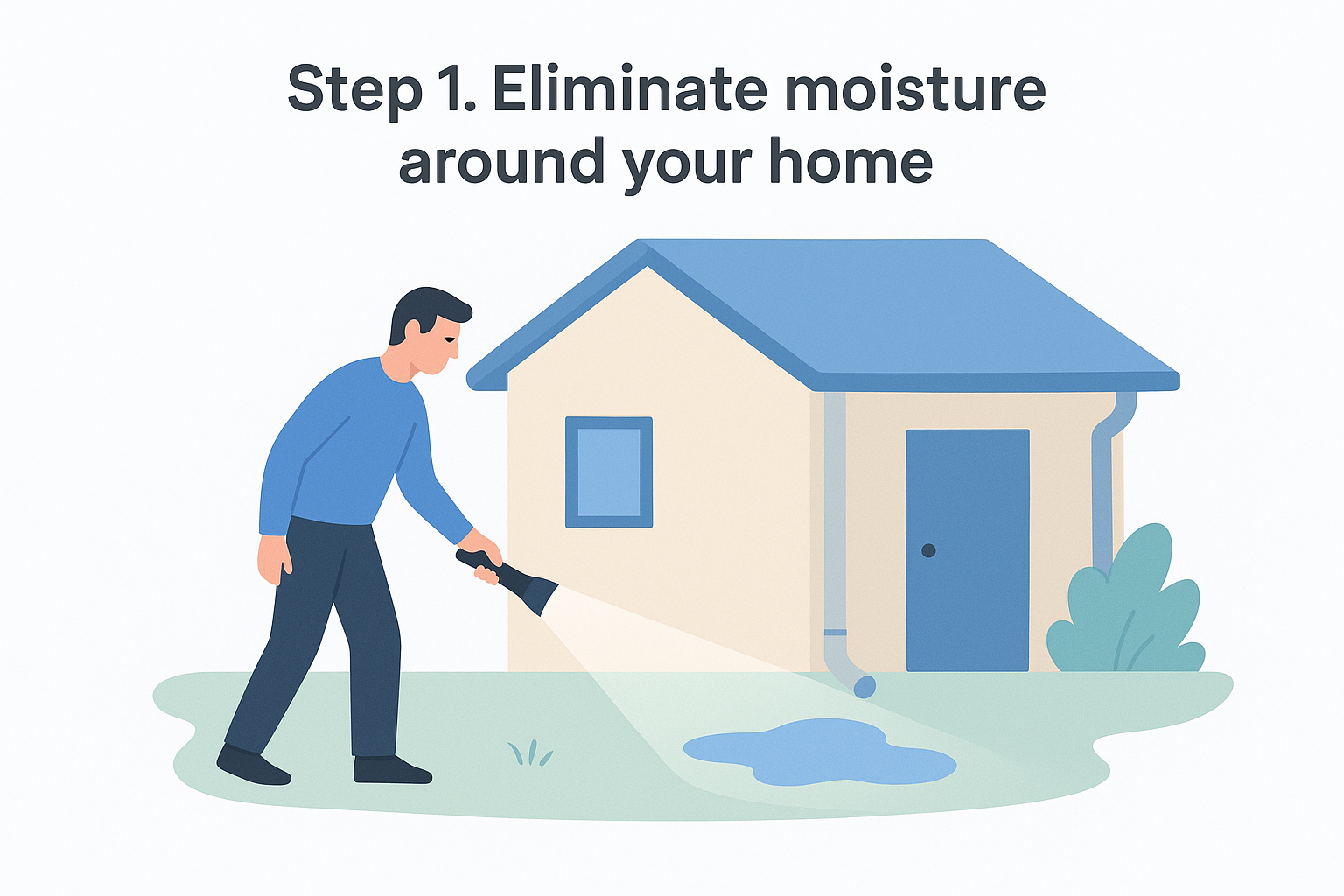
If you take away the moisture, you take away the reason earwigs picked your yard in the first place.
Start with your irrigation schedule and your gutters, since these two sources create most of the humid microclimates earwigs love.
- Water early , not at dusk, so soil and mulch dry out before earwigs come looking for shelter overnight.
- Clean gutters and downspouts twice a year and redirect discharge at least three feet from your foundation.
- Fix leaky spigots and hose connections the same week you notice them dripping.
- Rake mulch back from siding a few inches and let that strip stay bare and dry.
- Check crawl spaces and basements for condensation, and run a dehumidifier if humidity stays above 50%.
The EPA's guidance on controlling indoor humidity backs this up: pests and mold both thrive in the same damp conditions, so drying out your home benefits you well beyond earwig control. Once your property stops holding water, you'll notice fewer bugs of every kind, not just earwigs.
Step 2. Clear debris and seal entry points
Once moisture is under control, turn your attention to the hiding spots earwigs use to get close to your house. Piles of leaves, stacked firewood, cardboard boxes, and dense ground cover all give earwigs cover during the day, and the closer those piles sit to your siding, the shorter their commute indoors becomes. Clearing debris away from your foundation removes the staging ground they need before making a run at your walls.
Sealing the gaps they'd use to get through those walls matters just as much. Grab a caulk gun and a flashlight, then work your way around the exterior looking for anything a quarter-inch or wider.
- Caulk gaps around window frames, door frames, and utility penetrations like pipes and cable lines.
- Replace torn window screens and door sweeps that no longer sit flush against the threshold.
- Seal foundation cracks with masonry caulk or hydraulic cement, depending on the width.
- Cover vents with fine mesh screening if the factory louvers have gaps.
- Move firewood and lumber stacks at least 20 feet from the house and off the ground on a rack.
A sealed foundation does more to stop earwigs than any spray you'll buy.
The CDC's guidance on pest-proofing structures confirms that exclusion work like this outperforms chemical treatment alone for most household insects, earwigs included.
Step 3. Adjust lighting and inspect items you bring inside
Outdoor lighting draws in the moths, beetles, and other insects earwigs feed on, and earwigs follow that food source right up to your walls. Switching your porch and entry lights to yellow "bug" bulbs or motion-activated fixtures cuts down on that nightly buffet. If you can, angle exterior lights away from doors and windows so the glow doesn't spill directly onto the siding earwigs use as a runway.
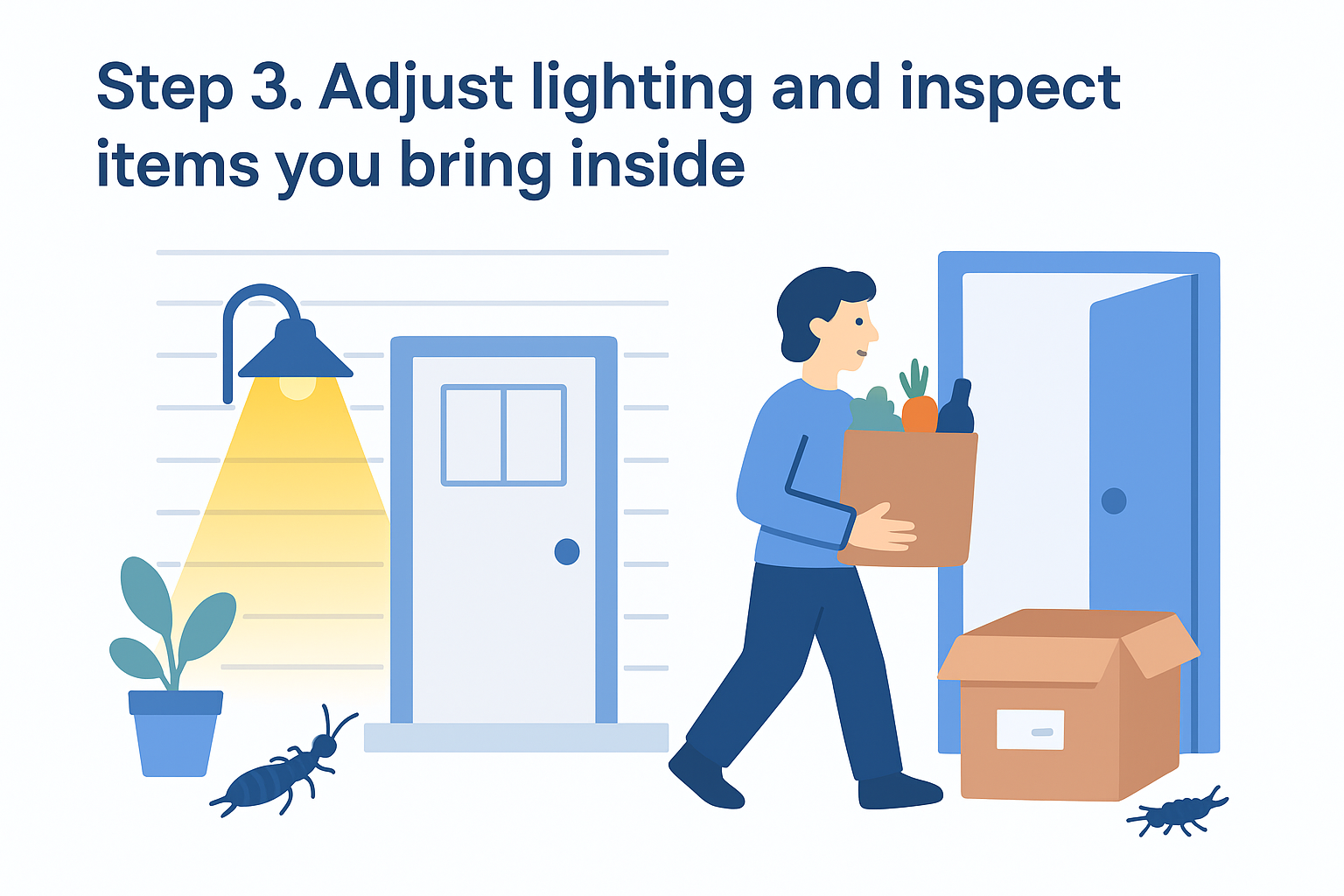
Dim the porch light, and you dim the invitation.
What you carry through the front door matters just as much as what's lit up outside. Earwigs hide in damp cardboard, potted plants, and firewood, then ride inside without anyone noticing.
- Shake out potted plants and check the drainage tray before moving them indoors for winter.
- Inspect grocery bags and cardboard boxes that sat outside or in a damp garage.
- Check produce from your garden for hitchhikers before bringing it into the kitchen.
- Look inside folded lawn furniture and umbrellas before storing them in a shed or basement.
Taking thirty seconds to glance over these items before they cross your threshold closes one of the sneakiest entry paths earwigs use, one that has nothing to do with cracks or caulk.
Step 4. Trap and treat earwigs already indoors
Rolled-up newspaper and damp cardboard make cheap, effective traps once earwigs get inside. Lay a few sheets near baseboards in bathrooms or laundry rooms overnight, then shake them into a bucket of soapy water each morning. Repeat for a week and you'll usually catch whatever slipped past your sealing work.
Set simple traps
- Roll damp newspaper into tubes and place them along baseboards or under sinks overnight.
- Set shallow tuna cans with a splash of vegetable oil near door thresholds; earwigs crawl in and can't climb back out.
- Check traps every morning and dispose of catches in soapy water, not just outside your door.
Targeted treatment options
Diatomaceous earth works well in the cracks and crevices where sprays can't reach, since it dehydrates earwigs on contact without leaving a chemical residue indoors. Dust it lightly under appliances, behind baseboards, and along windowsills where you've spotted activity.
Traps handle the stragglers, but a dry, sealed house is what keeps the population from rebuilding.
Spraying alone rarely solves a real infestation, since it kills what's visible and leaves the hiding spots intact. If you're still finding earwigs indoors after a few weeks of trapping and dusting, that's usually a sign of a moisture or entry point you haven't found yet, and it's worth having a professional check the areas you can't easily inspect yourself.
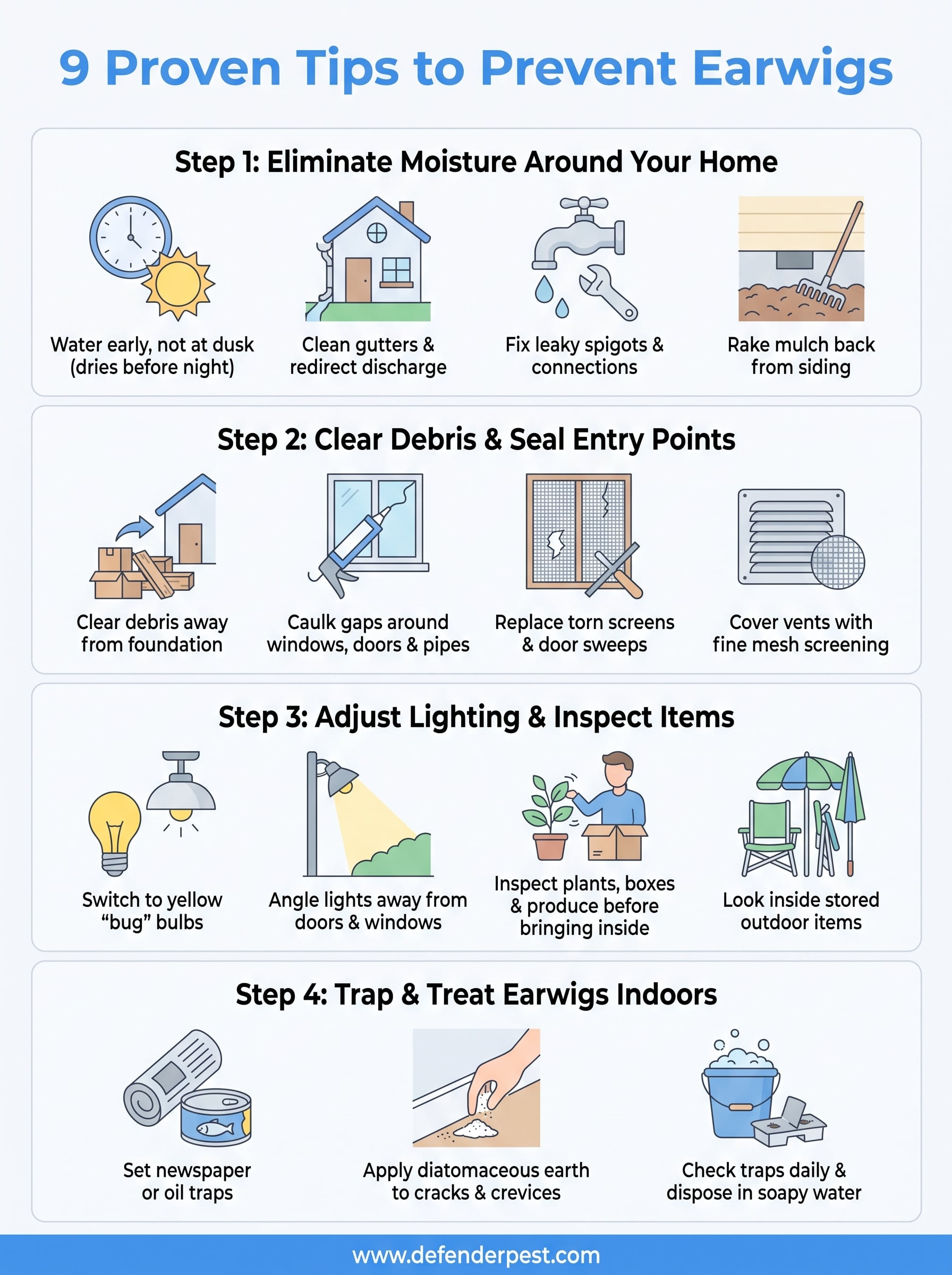
Keeping earwigs from coming back
Prevention isn't a one-time weekend project. Earwigs test your property year-round, so the nine steps above work best as a routine: check gutters each season, keep mulch pulled back from siding, and glance over anything you bring in from the yard or garage. Skip a season of upkeep and the same damp corners that drew earwigs in the first place will do it again.
Going forward, treat moisture and sealing as maintenance, not a fix. A five-minute flashlight walk around your foundation once a month catches new gaps before they become entry points, and it costs nothing but time. That habit, more than any spray or trap, is what actually keeps earwigs out of the house for good.
If you've done all this and still find earwigs indoors, something's still drawing them in that you haven't spotted. Get a free quote from Defender Termite and Pest Management and let us track it down.