How To Get Rid Of Fleas In Carpet Fast (DIY + Pro Tips)
You spot one flea on your ankle, and within days your carpet feels like it's alive. That's because it practically is, a single female flea lays up to 50 eggs per day , and those eggs fall straight into carpet fibers where they hatch, feed, and multiply. If you're searching for how to get rid of fleas in carpet , you're likely already past the "just one flea" stage and dealing with a full-blown infestation underfoot.
The good news: you can fight back with the right combination of DIY methods and professional-grade treatments . The bad news: fleas at different life stages respond to different approaches, so a single pass with a vacuum won't cut it. You need a clear, step-by-step plan , and you need to act fast before the next generation hatches.
At Defender Termite & Pest Management, we've been helping Sacramento-area homeowners eliminate pest infestations since 1999 . Below, we'll walk you through exactly what works, what doesn't, and when it's time to call a pro to get your home back to normal.
Before you start: confirm fleas and prep
Before you buy products or start treating, confirm you're actually dealing with fleas and not a different pest like carpet beetles or bed bugs. Treating for the wrong pest wastes time, costs money, and lets the real infestation grow unchecked. A quick 10-minute inspection will tell you exactly what you're dealing with and help you target your treatment where it counts.
How to spot a flea infestation
Fleas are small, dark brown insects about 1/16 to 1/8 inch long that move fast and jump when disturbed, which sets them apart from carpet beetles or mites. To confirm fleas, try the white sock test: pull on a pair of white knee-high socks and walk slowly across your carpeted rooms. Fleas will hop onto the socks, making them easy to spot against the white fabric.
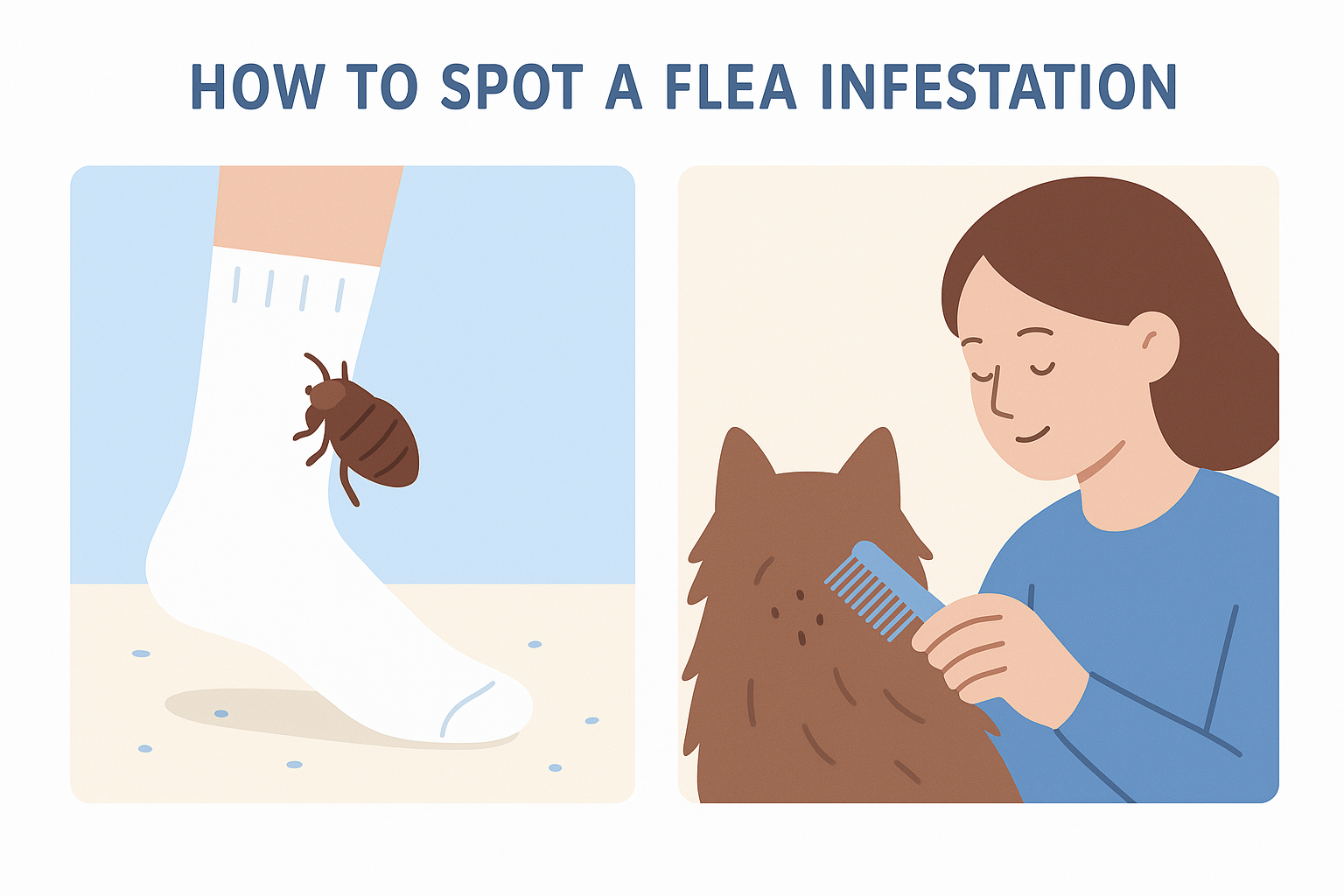
If you see tiny brown specks that jump when disturbed, you have fleas, not just dirt.
You should also check your pet's fur, especially around the neck and the base of the tail , using a fine-tooth flea comb. Look for "flea dirt," which appears as black pepper-like specks in the coat. Place those specks on a damp white paper towel . If they turn red or rust-colored, that's digested blood, and it confirms an active infestation.
What to prep before you treat
Once you confirm fleas, do not apply any product without prepping the space first. Skipping this step is the most common reason people fail to get rid of fleas in carpet on the first try. Treatment products work significantly better when you apply them to a properly prepared surface.
Run through this checklist before you treat:
- Remove floor clutter , including toys, shoes, and pet bedding
- Wash all pet bedding in hot water and dry on high heat for at least 30 minutes
- Vacuum all carpeted areas once before treating to stimulate flea eggs to hatch, making larvae more vulnerable to insecticides
- Move furniture away from walls to expose carpet edges and corners where eggs tend to collect
- Treat your pet with a vet-recommended flea product at the same time as your carpet treatment
Treating your carpet while ignoring your pet accomplishes very little. Your pet is the primary flea host , and a re-infestation can start within days if you don't address both problems at once.
Step 1. Vacuum aggressively and dispose safely
Vacuuming is your first and most critical action when you're figuring out how to get rid of fleas in carpet. Research from the University of California has shown that vacuuming kills up to 96% of adult fleas and removes a large percentage of eggs and larvae from carpet fibers. The physical action of the vacuum also stimulates pupae to hatch, which exposes them to treatments you'll apply in later steps.
How to vacuum for maximum flea removal
Standard light vacuuming won't cut it here. You need to move slowly and deliberately , making multiple overlapping passes across every carpeted surface. Pay extra attention to areas where your pet sleeps, under furniture edges, along baseboards, and in corners, since that's where flea eggs and larvae concentrate most heavily .
Follow this sequence for the best results:
- Vacuum each room in two directions , north-to-south first, then east-to-west
- Use the crevice attachment along all baseboards, under couch cushions, and around furniture legs
- Go over high-traffic pet areas at least three times per session
- Vacuum hardwood and tile floors too, since eggs roll off carpet and land on hard surfaces
Why safe disposal matters
Once you finish vacuuming, seal the bag or empty the canister immediately . Fleas can survive inside the vacuum and crawl back out if you leave the bag or canister sitting. Seal the contents in a plastic bag, tie it tightly , and take it straight to an outdoor trash can. Repeat this entire process every 24 to 48 hours during active treatment.
Skipping proper disposal turns your vacuum into a flea incubator and undoes all your work.
Step 2. Use heat and washing to kill all stages
Vacuuming removes a large percentage of fleas physically, but heat kills them at every life stage , including the hard-to-reach pupae that many products fail to penetrate. Combined with targeted washing, heat is one of the most effective tools in the process of how to get rid of fleas in carpet without relying solely on chemicals.
Wash fabrics at the right temperature
Any fabric your pet contacts regularly is a flea breeding ground. Wash all removable fabric items , including pet bedding, throw rugs, blankets, and couch covers, in hot water set to at least 130°F (54°C) . Follow up with a dryer cycle on high heat for a minimum of 30 minutes. That combination kills adults, larvae, and eggs reliably.
- Wash pet bedding every 3 to 5 days during active treatment
- Dry items on the highest heat setting the fabric label allows
- Bag all washed items in sealed plastic if you cannot dry them immediately
Use a steam cleaner on carpet
A steam cleaner reaches temperatures above 200°F directly into carpet fibers, which kills all flea life stages on contact, including pupae that insecticides often miss. Work the steam cleaner slowly across the entire carpeted area, spending extra time on corners, edges, and pet resting spots where egg density is highest.
Steam cleaning is one of the few methods that kills flea pupae reliably without chemical exposure.
Run the steam cleaner before you apply any spray treatment so the carpet is fully prepared to absorb the product once it dries.
Step 3. Treat carpet with the right products
After vacuuming and steaming, your carpet is ready for a targeted insecticide treatment . This is the step that handles the flea population your vacuum and steam cleaner couldn't reach, particularly pupae embedded deep in carpet fibers and any surviving larvae. Choosing the right product type makes the difference between solving the problem and just slowing it down.
Choose an insecticide with an IGR
The most effective products for how to get rid of fleas in carpet combine two active ingredients: an adulticide to kill live fleas on contact, and an insect growth regulator (IGR) like methoprene or pyriproxyfen that prevents eggs and larvae from developing into adults. Look for sprays that list both on the label. Products containing permethrin or bifenthrin as the adulticide work well on carpets and have proven track records.
An IGR alone won't kill adult fleas, and an adulticide alone won't stop the next generation from hatching, so you need both.
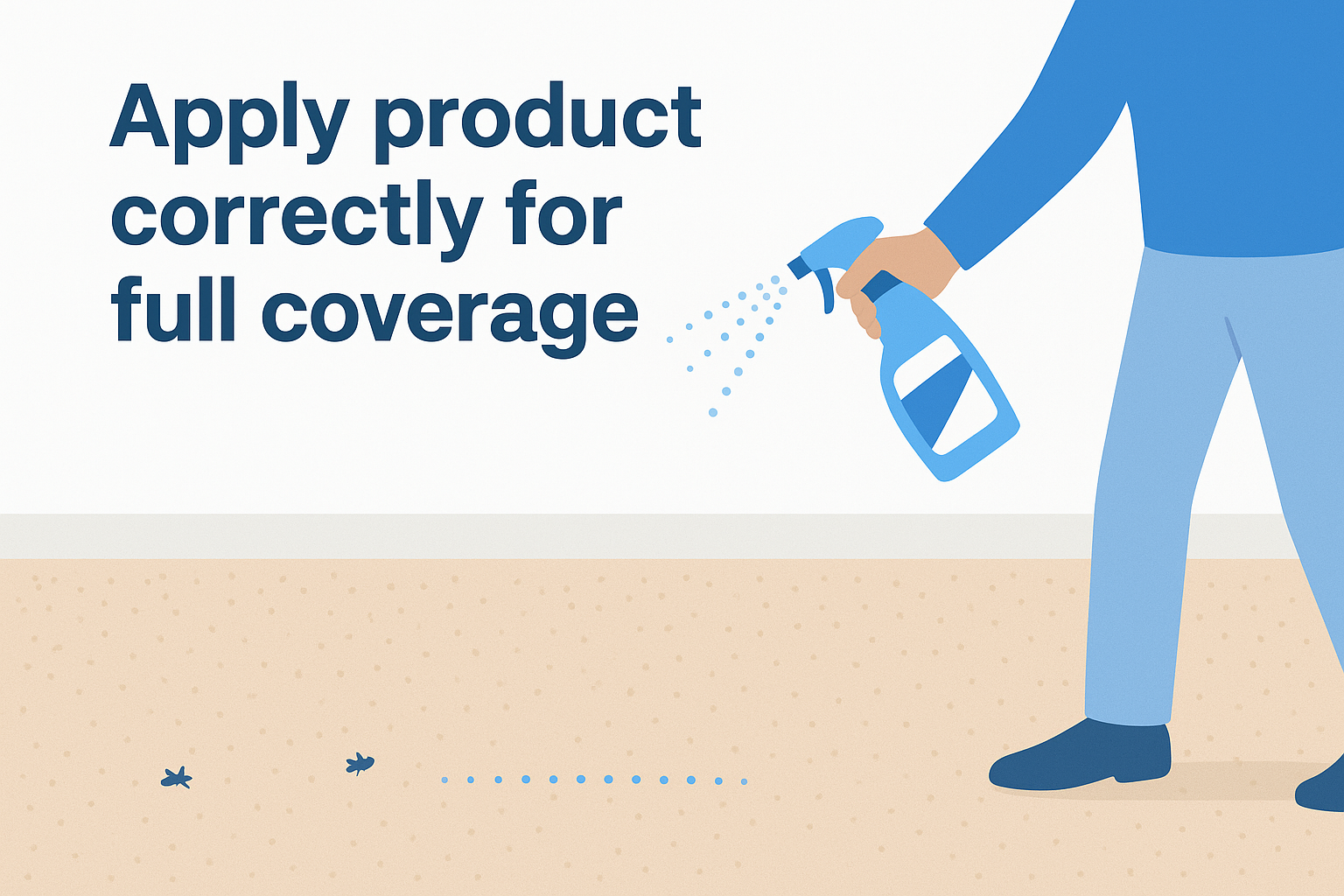
Apply product correctly for full coverage
Application technique matters as much as product choice. Spray in a slow, even pass across the entire carpeted surface, holding the can or sprayer about 12 inches above the carpet. Focus extra product on baseboards, under furniture edges, and pet resting spots where flea density is highest. Let the carpet dry completely before allowing people or pets back into the room.
- Keep pets and children out of treated rooms for at least 2 to 4 hours
- Reapply every 14 days for the first 6 weeks to catch newly hatched adults
- Ventilate the room by opening windows during and after application
Step 4. Stop the source and prevent a comeback
You can treat your carpet perfectly and still face a reinfestation within two weeks if you ignore where the fleas are coming from. Fleas enter your home on pets, on you, on secondhand furniture, and through gaps in your foundation. Stopping the source is the final piece of knowing how to get rid of fleas in carpet for good, not just temporarily.
Keep your pet on a prevention program
Your pet is the main flea transport system in any home, and without ongoing protection, treated fleas simply get replaced by new ones your dog or cat picks up outside. Talk to your vet about a monthly flea prevention product suited to your pet's weight and health status. Options include oral treatments like Bravecto or NexGard, or topical spot-on products like Frontline Plus. Combine the treatment schedule with a monthly flea comb check , focusing on the neck and base of the tail where fleas concentrate.
Skipping even one month of pet treatment resets the flea cycle and puts your carpet back at risk.
Reduce conditions that attract fleas outdoors
Fleas thrive in shaded, moist areas around your yard, particularly in mulch beds, tall grass, and under decks where wildlife and outdoor pets rest. Mow your lawn regularly, clear leaf litter from yard edges, and trim back overgrown shrubs. Apply a yard-safe insecticide concentrate around the perimeter of your home and along fence lines every 4 to 6 weeks during flea season, typically spring through fall in Northern California. Blocking outdoor flea populations from reaching your home dramatically reduces how often you need to retreat your carpets.
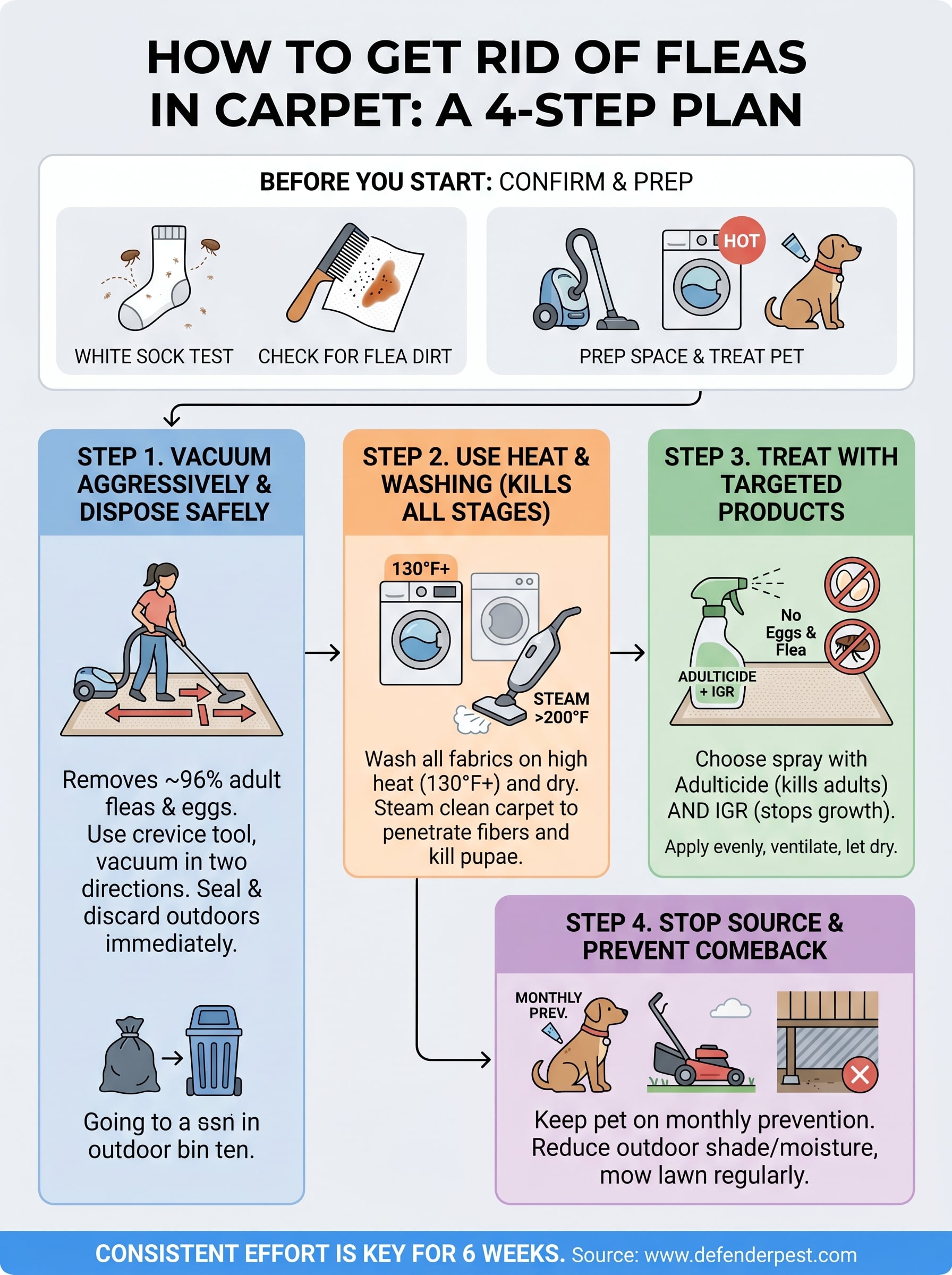
A simple plan to keep fleas out
Getting rid of fleas in carpet takes consistent effort across multiple steps, but once you work through them, you have a clear system you can repeat. Vacuum aggressively every 24 to 48 hours , steam clean before applying product, use a spray that combines an adulticide with an IGR, and keep your pet on a monthly prevention program. That combination handles every stage of the flea life cycle, which is why it works where single-step approaches fail.
Knowing how to get rid of fleas in carpet is half the battle. The other half is staying consistent for six full weeks until the entire flea population cycles out. If you complete every step and still see live fleas after three weeks, the infestation has likely spread beyond your carpet into wall voids, furniture, or your yard. At that point, professional treatment is the faster and more reliable path. Contact Defender Termite & Pest Management and let our team handle the rest.