Flea Bites vs Mosquito Bites: How To Tell the Difference
You wake up with a cluster of itchy red bumps on your ankle and immediately wonder what got you. Knowing the difference between flea bites vs mosquito bites matters more than you might think, because the answer determines whether you're dealing with a one-off outdoor nuisance or a pest problem inside your home that's only going to get worse.
Both bites cause redness, swelling, and relentless itching, but they leave behind distinct clues. The bite pattern, where the marks show up on your body, and how they develop over time all point to the culprit behind your discomfort . Once you can identify the source, you'll know exactly what steps to take, whether that's grabbing some anti-itch cream or calling in professional pest control .
At Defender Termite & Pest Management, we've helped Sacramento-area homeowners track down and eliminate flea infestations since 1999. Below, we break down the key differences between these two common bites so you can figure out what's biting you and decide what to do about it.
Why it matters to identify the right bite
Most people scratch the itch and move on. But correctly identifying the bite you're dealing with gives you critical information about your health risk, your home, and whether you need to take action beyond applying anti-itch cream. When you compare flea bites vs mosquito bites , you're not just satisfying curiosity; you're diagnosing a situation that could require very different responses.
The health risks are different
Both insects can transmit diseases, but the specific risks they carry are distinct. Mosquitoes are well-known vectors for illnesses like West Nile virus, Zika, and dengue fever. If you were bitten outdoors near standing water at dusk and develop symptoms like fever, body aches, or a rash within days, knowing a mosquito bit you should prompt you to contact a healthcare provider quickly.
Fleas carry their own set of health concerns. Flea-borne typhus is a real and reportable disease in California, spread by infected fleas that have fed on rats or other wildlife. Fleas can also transmit tapeworms, particularly to children and pets who accidentally swallow an infected flea. Scratching flea bites repeatedly breaks the skin and creates an entry point for secondary bacterial infection , which can escalate quickly if you leave it untreated.
Misidentifying flea bites as mosquito bites delays the discovery of an active infestation in your home, putting your family and pets at ongoing risk.
The source of the problem tells you where to look
A mosquito bite almost always traces back to an outdoor exposure , whether that's a walk through the neighborhood, time in the yard, or leaving a window open without a screen. Once you treat the bite, the situation is usually resolved because the mosquito isn't living in your carpet or bedding .
Flea bites tell a completely different story. Finding bites on your body, especially around your ankles and lower legs, typically means fleas are already established somewhere inside your home or on a pet. Fleas lay eggs fast, with a single female capable of producing up to 50 eggs per day . What looks like a minor irritation today can turn into a full infestation within weeks if you don't trace and address the source.
Treatment works better when you know the cause
If you treat what you assume are mosquito bites but the bites keep appearing indoors, you've wasted time and money on the wrong problem. Accurate identification lets you direct your energy where it actually counts. Outdoor control measures like eliminating standing water work well for mosquitoes, but for fleas, you need to treat your pet, your home, and potentially your yard at the same time to break the reproduction cycle completely.
Knowing which insect you're dealing with turns a guessing game into a clear action plan . The sections below walk you through the physical clues each bite leaves behind so you can make that call with confidence.
How to tell flea bites from mosquito bites
When you compare flea bites vs mosquito bites side by side, the physical differences are clear once you know what to look for. The size, shape, and development of each bite follow a predictable pattern, and those patterns are your fastest path to an accurate identification without needing a medical appointment.
What flea bites look like
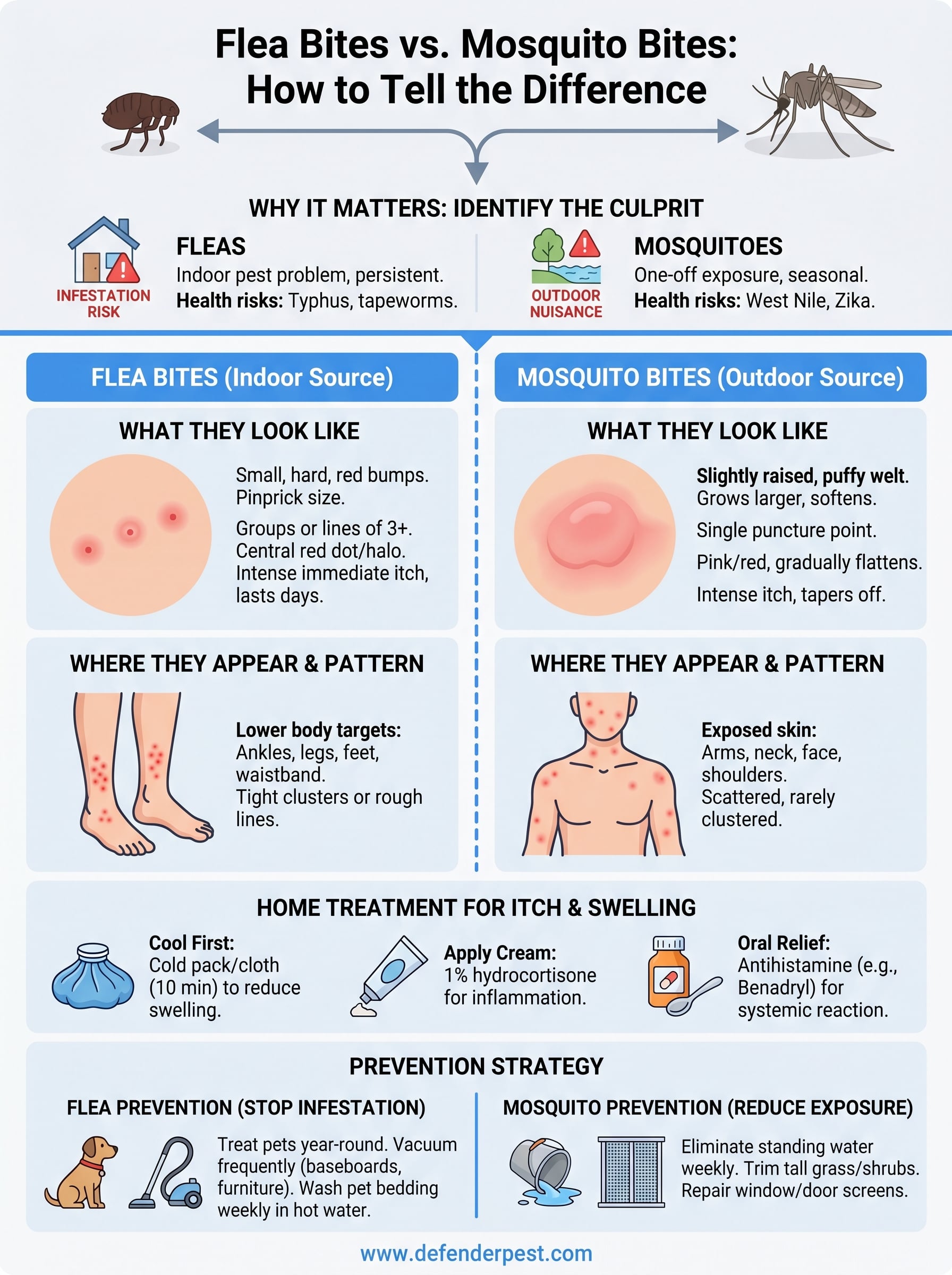
Flea bites appear as small, hard, red bumps that are typically about the size of a pinprick. They almost always show up in groups or lines of three or more, because fleas feed multiple times in the same area before moving on. The bump itself stays relatively flat and doesn't expand much over time. One of the most reliable signs is a tiny red dot or halo at the center of the bite , which marks the puncture point. The itching from a flea bite tends to be intense right away and can last for several days, especially if you have a sensitivity to flea saliva.
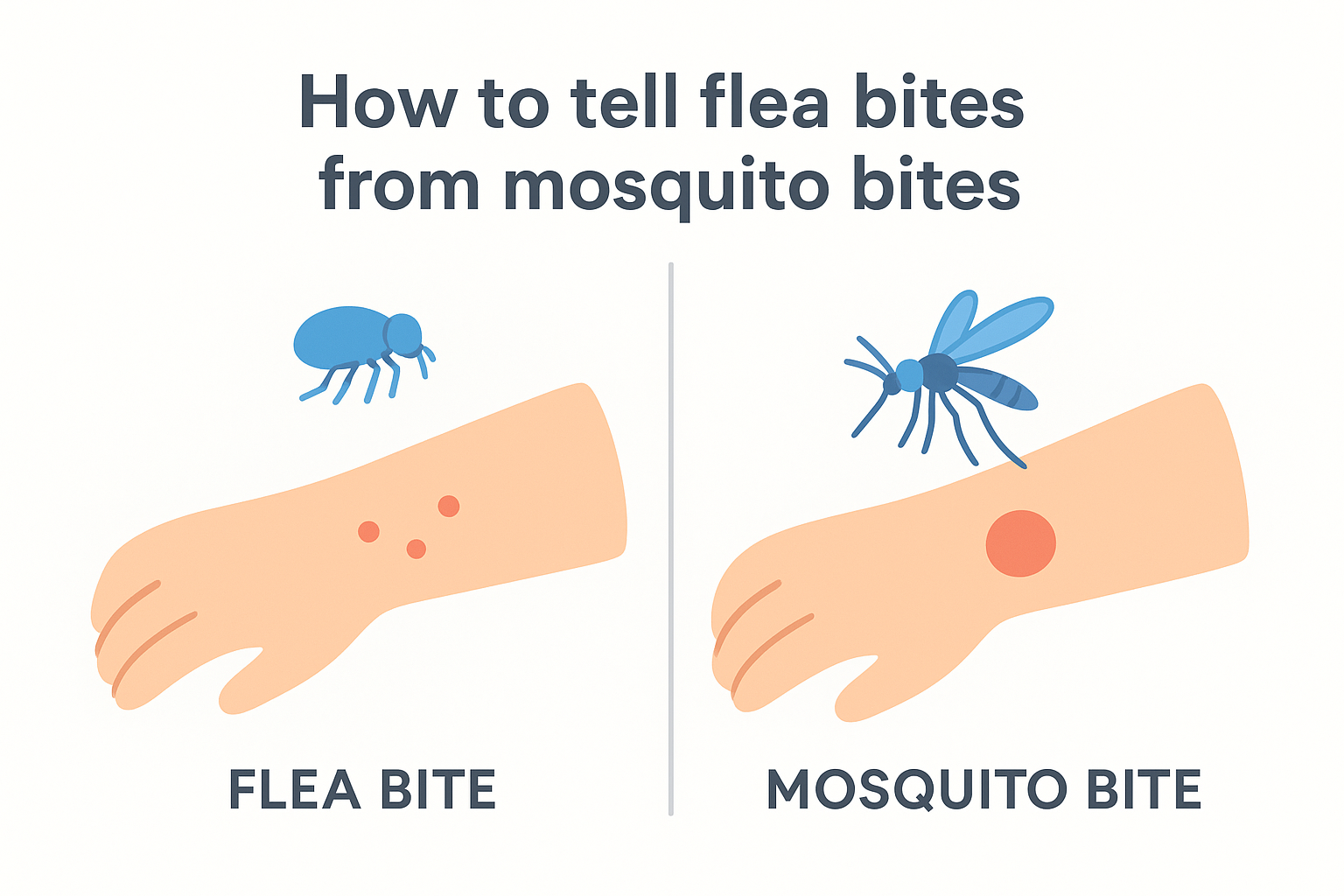
Flea bites itch immediately and stay small, while mosquito bites develop a raised welt that grows larger over the first hour.
What mosquito bites look like
Mosquito bites start as a slightly raised, puffy welt that appears within minutes of the bite and often has a small puncture point in the center. Unlike flea bites, the welt usually grows, softens, and becomes more rounded as your immune system reacts to the mosquito's saliva. The bump gradually flattens and turns pink or red over the next day or two before fading on its own. Mosquito bites tend to itch intensely right after the bite but taper off faster than flea bites typically do. You'll rarely find them clustered in tight groups the way flea bites appear, since mosquitoes usually land, feed once, and leave.
Where bites show up and what the pattern means
Location is one of the most reliable clues when you're comparing flea bites vs mosquito bites . Both insects have feeding preferences that lead to predictable patterns on your body , and reading those patterns correctly can confirm your identification faster than any other method.
Where flea bites tend to appear
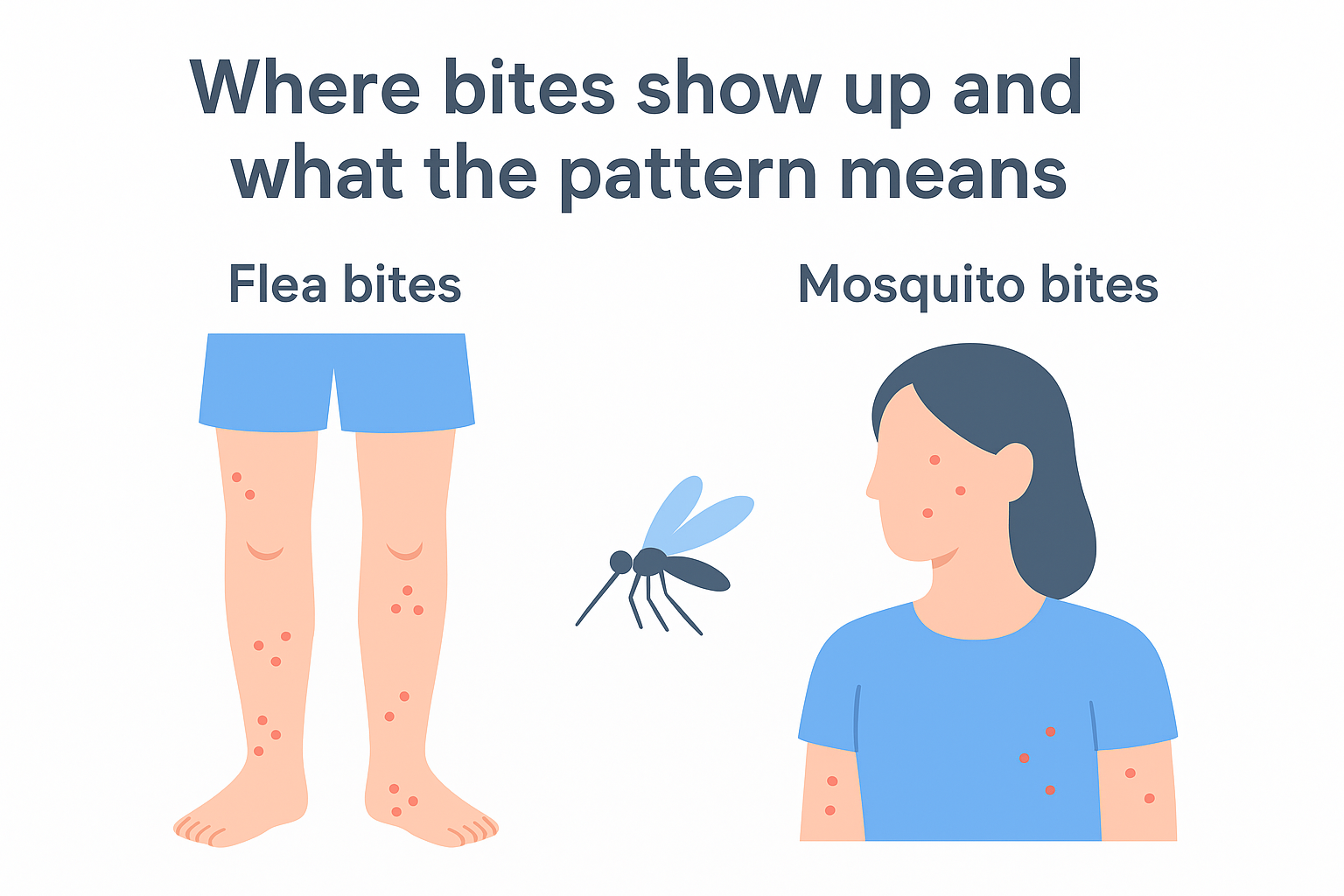
Fleas stay close to the ground and target the lower half of your body because that's where they make contact with you. You'll most often find flea bites clustered around your ankles, lower legs, and feet. If you sit on an infested couch or carpet, bites can also appear on the backs of your knees or the waistband area where clothing fits snugly. The pattern itself is a giveaway: flea bites rarely appear as a single isolated mark. Instead, they form tight clusters or rough lines of three or more bites in the same small zone, reflecting the flea's habit of probing several times before it gets a full blood meal.
If your bites appear consistently below the knee in clusters, assume fleas are present in your home until you can confirm otherwise.
Pets in the household often develop bites around the base of the tail, belly, and inner thighs , which gives you another data point to confirm a flea source.
Where mosquito bites tend to appear
Mosquitoes fly and land on any exposed skin they can reach , which means their bites show up across a much wider range of body locations. Arms, shoulders, the back of the neck, and the face are all common targets, especially during outdoor activity at dawn or dusk. Unlike flea bites, mosquito bites rarely cluster tightly together in the same small area. You might find two or three bites on one arm and one on your calf, spread out in a way that reflects the insect's random landing behavior rather than a ground-level feeding pattern.
How to treat itching and swelling safely at home
Whether you're dealing with flea bites vs mosquito bites , the immediate goal is the same: reduce the itch and prevent yourself from scratching the skin open. Breaking the skin through repeated scratching turns a minor irritation into a potential infection site, so getting ahead of the inflammation quickly makes a real difference in how fast your skin recovers.
Cool the bite first
Applying a cold pack or a clean cloth soaked in cold water directly to the bite site for 10 minutes reduces swelling and blunts the itch signal your nerves are sending to your brain. Cold constricts the blood vessels near the bite, which slows the histamine response responsible for the raised, itchy welt. Do this as soon as you notice the bite, before you reach for anything else in the medicine cabinet.
Scratching flea bites breaks the skin quickly because they itch so intensely; a cold pack gives you immediate relief without that risk.
Use over-the-counter remedies
Once you've cooled the area, a 1% hydrocortisone cream applied directly to the bite reduces inflammation and calms the itch for several hours. For more intense reactions, an oral antihistamine like diphenhydramine (Benadryl) works systemically to reduce the histamine response across all bite sites at once. Calamine lotion is another practical option that dries out minor weeping and leaves a soothing barrier over irritated skin.
Know when to see a doctor
Most bites clear up within a few days with basic home care, but certain symptoms require medical attention rather than self-treatment . If you develop hives, significant swelling beyond the bite area, difficulty breathing, or a fever within days of a mosquito bite, contact a healthcare provider promptly. Signs of infection at a flea bite site, including increasing redness, warmth, or pus , also warrant a medical visit. Catching an escalating reaction early prevents a straightforward bite from turning into a more serious health problem.
How to prevent future bites in your home and yard
Once you've identified whether you're dealing with flea bites vs mosquito bites, prevention becomes your next priority. Treating existing bites is reactive; keeping insects out of your living space and yard is how you stop the cycle from restarting every season.
Protect your home from fleas
The most effective way to stop fleas from establishing themselves indoors is to treat your pets with a veterinarian-recommended flea prevention product year-round , not just during warmer months. Fleas hitch rides on dogs and cats before spreading into carpet, furniture, and bedding, so cutting off that entry route removes the primary source of any indoor infestation before it takes hold.
Vacuum your home frequently, paying extra attention to baseboards, under furniture, and the spots where your pets rest regularly . Dispose of the vacuum bag immediately after each use to prevent trapped eggs from hatching inside. Washing pet bedding weekly in hot water kills any eggs or larvae before they develop into biting adults that restart the cycle.
Consistent pet treatment is the single most effective flea prevention step you can take as a homeowner.
Reduce mosquito exposure in your yard
Mosquitoes breed in standing water, so eliminating every source of pooled water on your property directly cuts down the local population. Dump and refresh birdbaths at least once a week, clear clogged gutters after rain, and check for water collecting in flowerpots, tarps, or children's outdoor toys left in the yard.
Reducing adult mosquito activity also requires managing your yard's vegetation. Tall grass and dense shrubs give mosquitoes a cool, shaded resting spot during the hottest part of the day, so keeping growth trimmed limits the habitat they rely on. Installing or repairing window and door screens seals off the most common entry points mosquitoes use to move inside, which protects your indoor space even when outdoor populations remain high.
A simple plan for what to do next
You now have everything you need to tell flea bites vs mosquito bites apart and take the right action. Start by checking the bite location and pattern. Clustered bites below the knee point strongly to fleas inside your home, while scattered bites on exposed skin suggest a mosquito encounter outdoors . Cool the affected area, apply hydrocortisone cream, and watch for any signs of infection or allergic reaction.
If the bites keep appearing indoors despite your efforts, a flea infestation is almost certainly the cause , and home remedies alone won't eliminate it. Fleas reproduce fast enough to overwhelm even the most diligent vacuuming routine without professional intervention. The Sacramento-area team at Defender Termite & Pest Management can inspect your home, identify the source of the infestation, and treat your property completely so you stop finding new bites every morning.