What Kills Flea Eggs And Larvae? Fast Methods That Work
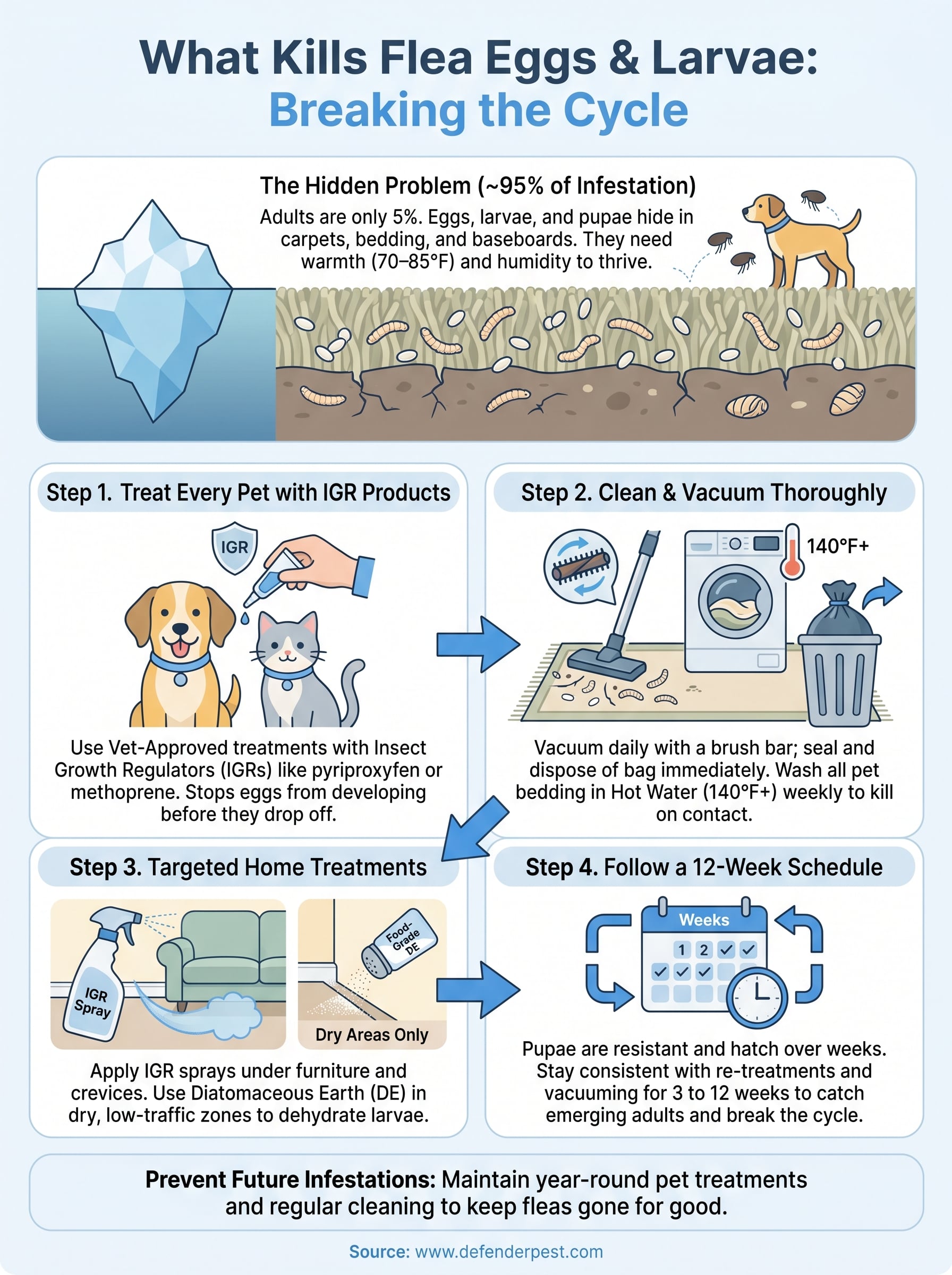
You vacuumed, treated the dog, and washed every blanket in the house, yet the fleas came back within a week. That's because adult fleas only make up about 5% of an infestation . The rest? Eggs, larvae, and pupae hiding in your carpet fibers, pet bedding, and baseboards. If you're searching for what kills flea eggs and larvae , you're already thinking about the problem the right way, targeting the stages that actually sustain the cycle.
Most over-the-counter sprays kill adult fleas on contact but do little against the eggs and larvae developing out of sight. Breaking the flea life cycle requires specific products and methods that reach these earlier stages, from insect growth regulators to targeted environmental treatments. Without that approach, you're fighting the same infestation on repeat .
At Defender Termite & Pest Management, we've helped Sacramento-area homeowners deal with persistent pest problems since 1999, fleas included. Below, we'll walk you through the most effective methods for eliminating flea eggs and larvae in your home and on your pets, so you can stop the cycle for good and get actual, lasting results .
Understand what flea eggs and larvae need to survive
Before you can eliminate flea eggs and larvae, you need to know what keeps them alive. Flea eggs are not sticky , so they fall off your pet within hours of being laid and scatter across every surface your pet touches: carpet, furniture, bedding, and floor gaps. Flea larvae , which hatch within two to ten days depending on temperature and humidity, are light-sensitive and actively burrow deep into carpet fibers and cracks to avoid exposure. That's why surface-level treatments almost always miss them.
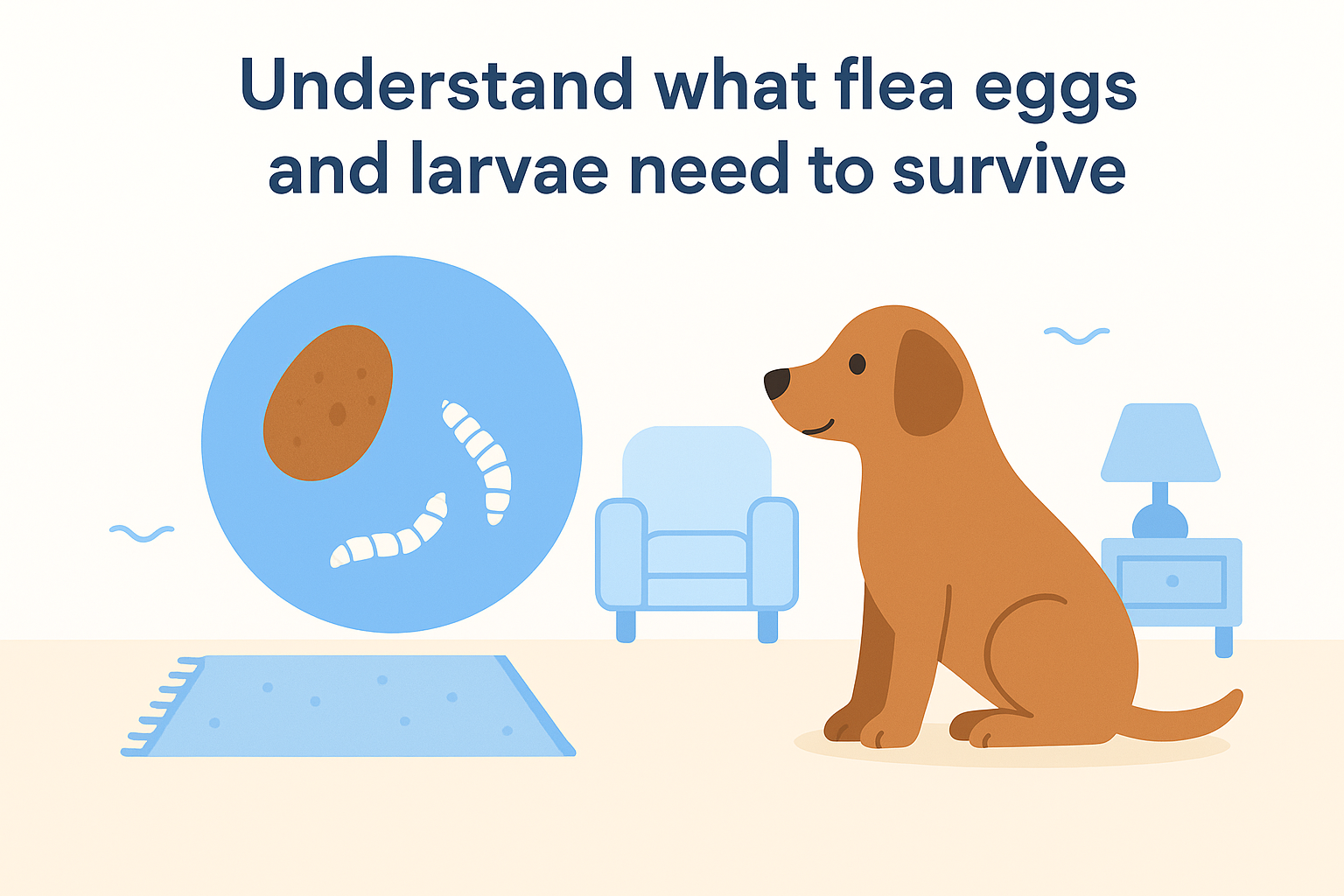
Flea eggs and larvae can survive for weeks in warm, humid indoor environments, which means a single missed area can restart an entire infestation.
The conditions that help flea eggs survive
Warmth and humidity are the two biggest factors that determine how fast flea eggs develop. Eggs thrive in temperatures between 70 and 85 degrees Fahrenheit with humidity above 70%. In dry or cold conditions, eggs may die before hatching, but typical indoor home conditions support year-round survival . This is especially true in carpeted rooms, under furniture, and along baseboards where air circulation stays low and humidity remains consistent.
Here's a breakdown of what flea eggs and larvae need to develop:
| Factor | Ideal Range for Flea Development |
|---|---|
| Temperature | 70-85°F |
| Humidity | 70-85% |
| Light exposure | Low to none (larvae avoid light) |
| Food source for larvae | Flea dirt (adult flea feces) |
Why larvae are harder to target than eggs
Larvae are the stage most people underestimate when figuring out what kills flea eggs and larvae . Once hatched, flea larvae feed on flea dirt , which is the digested blood that adult fleas deposit in the environment. This means larvae concentrate where your pet spends the most time, which is not always obvious. Furniture cushion seams, rug edges, and the space beneath pet crates are all common hotspots that standard vacuuming rarely reaches effectively.
From there, larvae spin a protective cocoon within about five to twenty days, entering the pupal stage. Pupae are nearly impossible to kill with most sprays, which is why targeting larvae before they reach this stage matters so much. Your window to act is short once eggs hatch, making early and targeted treatment critical.
Step 1. Treat every pet with vet-approved products
Treating your pets is the first action you need to take because adult fleas on your pet are constantly laying eggs that drop into your environment. Without stopping the source, any home treatment you apply loses its effectiveness within days. Every pet in the household needs to be treated at the same time, not just the one showing visible symptoms.
Pick a product that targets the full life cycle
Not every flea product works the same way, and choosing the wrong one is one of the most common reasons infestations keep coming back. Products that contain an insect growth regulator (IGR) such as pyriproxyfen or methoprene disrupt flea egg and larval development rather than just killing adult fleas. This is exactly what kills flea eggs and larvae at the source, before they drop off your pet and into your carpet.
Look for products labeled with both an adulticide and an IGR so you're targeting adult fleas and the developing stages at the same time.
Vet-recommended options typically fall into three categories:
- Topical spot-on treatments applied to the skin at the back of the neck: look for active ingredients like fipronil combined with (S)-methoprene
- Oral tablets or chewables that kill adult fleas quickly: your vet can advise on the right formula for your pet's size and health history
- Flea collars with IGR : provide sustained protection, useful between monthly treatments
Apply the product strictly according to the label dosage for your pet's weight , and stick to the schedule your vet recommends. Skipping even one dose gives larvae the time they need to reach the pupal stage, where nothing can touch them.
Step 2. Clean and vacuum to remove eggs and larvae
Vacuuming is not just a prep step; it is an active removal method that physically pulls flea eggs, larvae, and flea dirt out of your carpet and furniture before any chemical treatment touches them. Done correctly and consistently, vacuuming can remove up to 50% of flea eggs from carpeted surfaces in a single pass, which meaningfully reduces the population you're working against.
Vacuum every room your pet enters, not just the areas where you see flea activity, because eggs scatter across floors within hours of being laid.
Vacuum thoroughly and dispose of the bag immediately
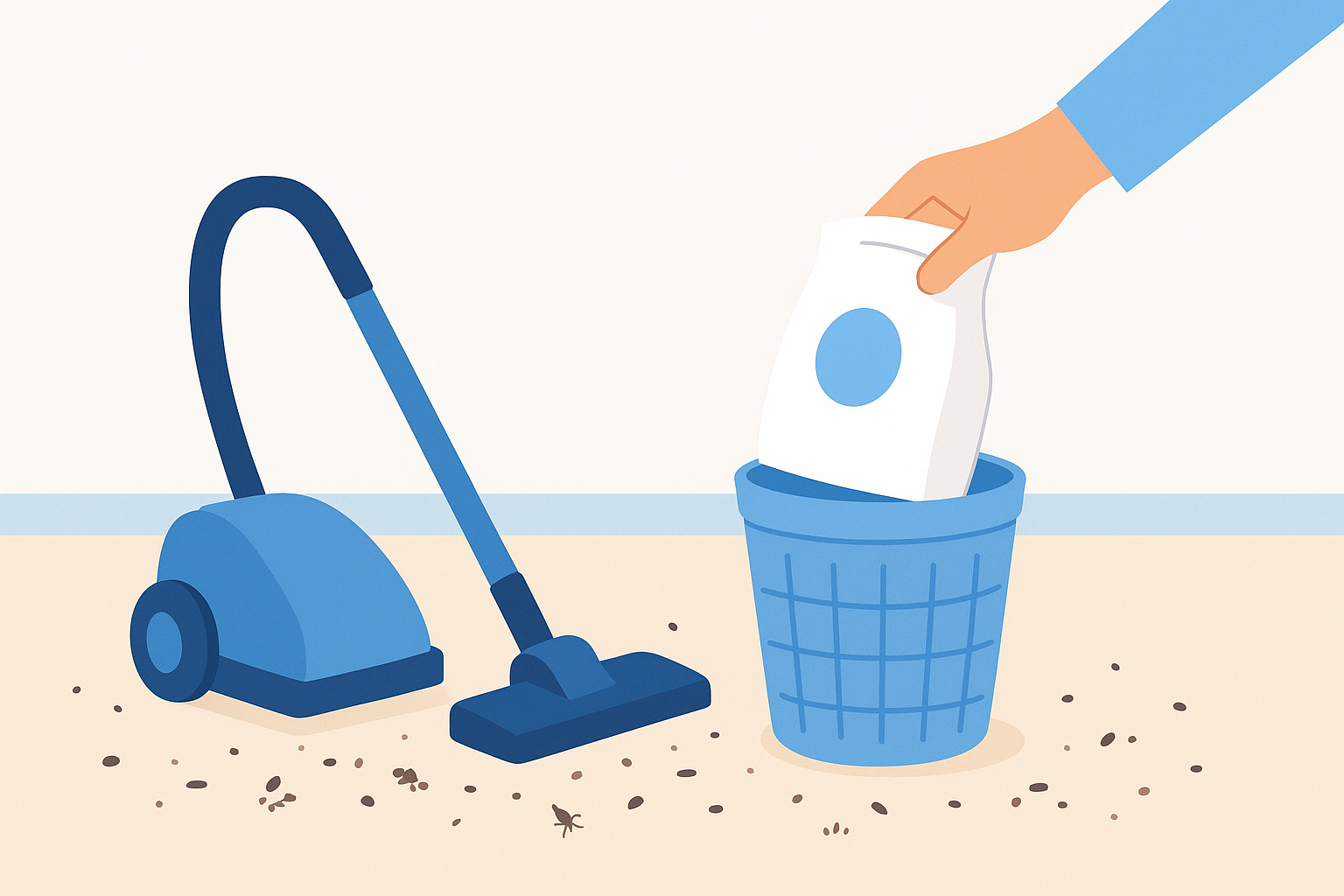
Your technique matters more than the frequency. Use a vacuum with strong suction and a rotating brush attachment to agitate carpet fibers and dislodge larvae that burrow deep into the pile. Move slowly over high-traffic pet areas, paying extra attention to baseboards, furniture edges, and beneath cushions , since those are where larvae concentrate. After each session, seal the vacuum bag in a plastic bag and take it outside to the trash. Leaving it inside lets any surviving eggs continue developing.
Wash all fabric your pet contacts
Washing is the other half of understanding what kills flea eggs and larvae in your home environment. Hot water at 140°F or higher kills eggs and larvae on contact , so run all pet bedding, blankets, throw rugs, and washable furniture covers through a hot wash cycle at least once a week during active treatment. Dry everything on high heat for at least 20 minutes. Replace items that cannot be washed, or seal them in plastic bags for two weeks to cut off the development cycle.
Step 3. Use targeted home treatments that stop hatching
Vacuuming removes what's already there, but targeted home treatments stop the next wave before it starts. The most effective products for this stage are insect growth regulators (IGRs) , which prevent flea eggs from hatching and block larvae from maturing into adults. When you combine IGRs with an adulticide, you cover two stages at once, which is exactly what kills flea eggs and larvae throughout your home.
Apply IGR-based sprays to every room your pet accesses, including areas that look clean, because flea eggs scatter invisibly across floors within hours of being laid.
Choose the right IGR spray for indoor use
Sprays containing methoprene or pyriproxyfen are the two most common IGR formulations available for home use. Spray along baseboards, beneath furniture, inside closets, and under sofa cushions , since those are the low-light zones where larvae concentrate. Look for products that list these active ingredients on the label:
- S-methoprene (also listed as methoprene)
- Pyriproxyfen
- Permethrin combined with either IGR above for simultaneous adult flea coverage
One application of a quality IGR spray typically remains effective for six to seven months, which covers most of the flea life cycle window you need to close.
Apply diatomaceous earth in dry, targeted areas
Food-grade diatomaceous earth (DE) works as a physical larvicide by damaging the outer layer of larvae and causing them to dry out. Sprinkle a thin, even layer along baseboards, under furniture, and in pet resting areas , then leave it undisturbed for 48 to 72 hours before vacuuming it up.
Avoid applying DE in damp or humid rooms since moisture cancels its effectiveness entirely . Stick to dry, low-traffic zones where larvae are most likely to travel.
Step 4. Follow a 3- to 12-week schedule to finish
The flea life cycle is what makes this problem drag on longer than most people expect. Even after you treat your pets and apply IGR sprays throughout the house, pupae already in cocoons before you started are immune to every treatment you used . Those pupae hatch in waves over three to twelve weeks , which is exactly why infestations seem to return after an initial round of treatment that appeared to work.
Staying on schedule through week twelve is the single most important factor in whether you fully eliminate the infestation or end up starting over.
Build a weekly treatment calendar
A structured schedule removes the guesswork from knowing what kills flea eggs and larvae over the full treatment window. Repeat vacuuming every two to three days during the first four weeks to pull out newly hatched larvae before they spin a protective cocoon. Reapply pet treatments on the timeline printed on the product label, typically every 30 days for topical spot-on products.
Use this schedule as your baseline:
| Week | Actions |
|---|---|
| 1-2 | Treat all pets, apply IGR spray throughout home, vacuum every 2-3 days, wash all bedding on hot |
| 3-4 | Continue vacuuming every 2-3 days, confirm pet treatment is current |
| 5-8 | Vacuum weekly, monitor for adult flea activity, spot-treat any new hotspots |
| 9-12 | Vacuum weekly, confirm zero new flea sightings for two consecutive weeks before stopping |
Do not stop treatment early , even when adult flea activity disappears. Pupae emerging in weeks eight or nine will restart the entire cycle if your pet and home are no longer protected when those cocoons open.
Keep fleas from coming back
Eliminating an active infestation is only half the job. Keeping fleas out means staying consistent with monthly pet treatments year-round, not just during summer months when flea activity peaks. Vacuum high-traffic pet areas weekly and wash pet bedding every two weeks to prevent any stray eggs from building into a new population. If your pet spends time outdoors, check for flea activity by running a white sock across the lawn and looking for jumping specks.
You now know what kills flea eggs and larvae : IGRs, targeted sprays, heat washing, diatomaceous earth, and a strict treatment schedule that runs long enough to outlast the pupal stage. Apply each step consistently, and you break the cycle permanently rather than just pushing it back by a few weeks. If the infestation is widespread or keeps returning despite your efforts, contact Defender Termite & Pest Management for professional flea treatment in the Sacramento area.