How To Get Rid Of Fleas In The Yard Fast And Pet-Safe Today
A flea problem rarely stays in the yard. Once these pests establish themselves in your grass, mulch, or shaded garden beds, it's only a matter of time before they hitch a ride on your pets and end up inside your home. Knowing how to get rid of fleas in the yard quickly, and with methods that won't harm your dogs or cats, is the first step toward breaking that cycle before it starts .
At Defender Termite & Pest Management, we've helped Sacramento-area homeowners tackle outdoor pest problems since 1999. Fleas are one of the most common warm-weather calls we get, and we've seen firsthand how fast a minor issue in the backyard can turn into a full-blown infestation indoors . The good news: you have real options, from DIY treatments to professional-grade solutions , that actually work.
This guide walks you through the most effective ways to eliminate fleas from your yard, covers both chemical and natural approaches, and explains what keeps them from coming back . Whether you're dealing with an active infestation or want to protect your pets before flea season peaks , you'll find a clear plan here.
Why fleas end up in your yard in the first place
Fleas don't appear out of nowhere. They need a host animal to survive and reproduce , and your yard is often the first place they land before finding one. Understanding what draws fleas to your outdoor space helps you target the right areas when you're figuring out how to get rid of fleas in the yard for good.
Wildlife and pets carry fleas onto your property
Wild animals are the most common source of flea introduction in residential yards. Squirrels, raccoons, opossums, and feral cats move through neighborhoods constantly, and every one of them can drop flea eggs as they travel. Those eggs fall into your grass and mulch, and within a few weeks, a new flea population establishes itself without any direct contact with your pets.
Even a single passing animal can leave behind hundreds of flea eggs in the time it takes to cross your yard.
Your own pets also play a role. Dogs and cats that go outside can pick up fleas from a neighbor's yard and carry them back, spreading eggs throughout your lawn every time they move around. This is why treating the yard and your pets at the same time is critical, not one without the other.
Yard conditions that make your property a target
Fleas prefer cool, moist, and shaded environments over open sunny areas. Overgrown grass, piles of leaves, dense ground cover, and stacked firewood all create the kind of microhabitats where flea larvae thrive. Moisture from irrigation or poor drainage keeps those areas humid, which helps flea eggs survive long enough to hatch .
Areas under decks, along fence lines, and beneath shrubs are especially high-risk zones because wildlife often rest or travel through them. These spots rarely get direct sunlight, which means fleas can complete their full life cycle there with very little disruption.
Step 1. Confirm you have fleas and find hot spots
Before you treat anything, confirm that fleas are actually the problem. Flea activity in grass can look similar to other pest issues, so you want solid evidence before spending time and money on the wrong treatment. A quick test takes less than five minutes and gives you clear confirmation.
Use the white sock test
Pull on a pair of white knee-high socks and walk slowly through your yard, especially in shaded, moist areas and along fence lines. Fleas will jump onto the socks, making them easy to spot against the white fabric. Walk through different zones of your yard for about five minutes, then stop and check your socks closely.
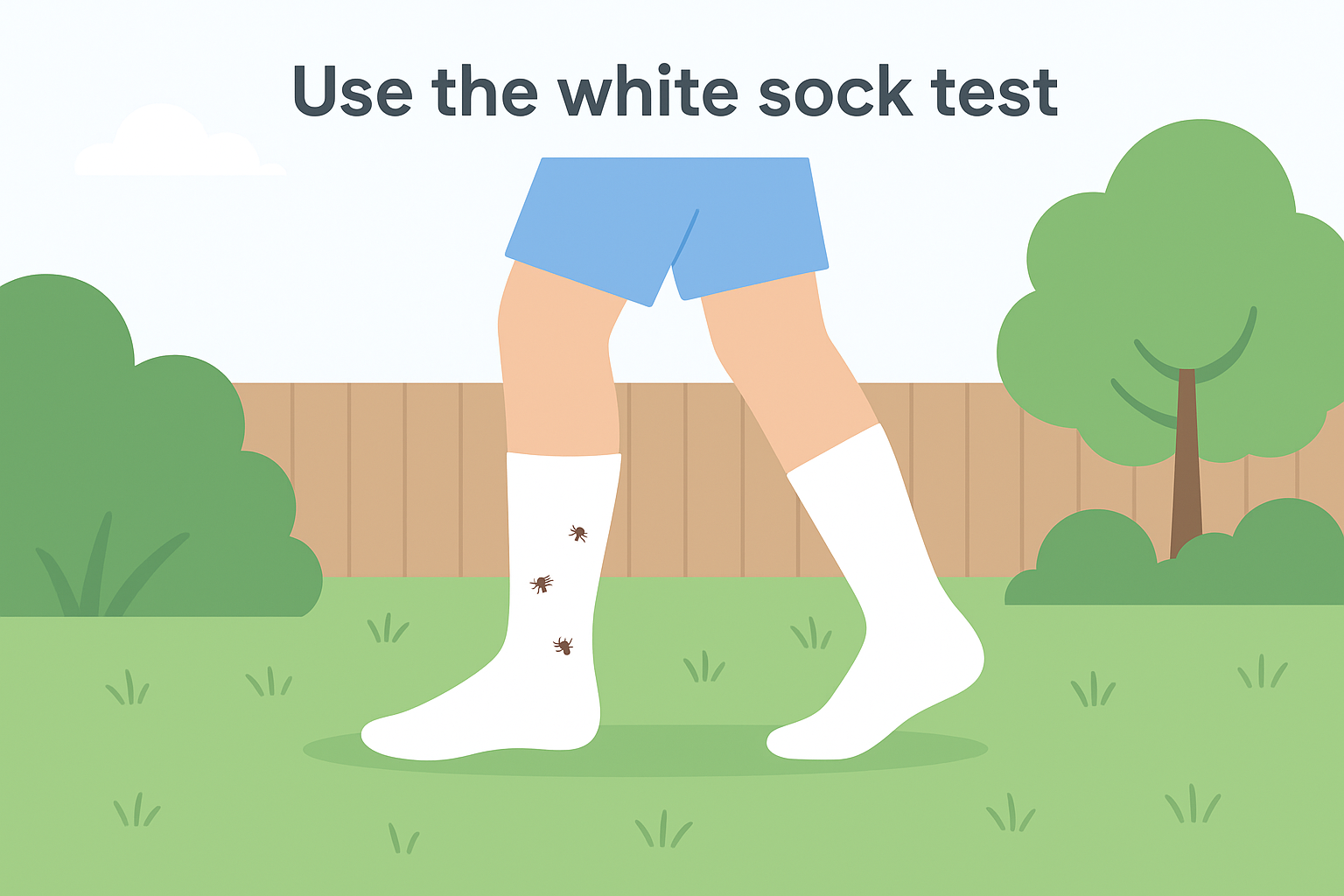
If you count more than five fleas on your socks after one pass, you have an active infestation that needs immediate treatment.
Mark your high-activity zones
Once you confirm fleas are present, map out the hot spots in your yard. These are typically shaded areas under decks, along fence lines, beneath dense shrubs, and anywhere wildlife tends to travel. Knowing exactly where flea populations are concentrated helps you apply treatments precisely, which is the most effective approach when learning how to get rid of fleas in the yard.
Common hot spots to check:
- Under decks and porches
- Along fence lines and walls
- Beneath shrubs and ground cover
- Around pet resting or sleeping areas
Step 2. Make your yard less flea-friendly fast
Before you apply any treatment, reduce the conditions that allow fleas to survive . Skipping this step means fleas can rebound quickly even after a thorough chemical application. Physical yard maintenance is the fastest, lowest-cost action you can take right now.
Cutting your grass and clearing debris before you spray can significantly increase treatment effectiveness by exposing flea larvae to both direct sunlight and product contact.
Cut grass, clear debris, and reduce moisture
Mow your lawn short to expose flea hot spots to direct sunlight, which kills eggs and larvae. Rake up leaf piles, remove stacked wood, and clear away any dense ground cover where fleas tend to shelter. Reduce irrigation frequency in shaded areas to lower the humidity that flea larvae need to survive.
Doing this before any treatment is a core part of knowing how to get rid of fleas in the yard the right way. Focus on these priority tasks first:
- Mow grass to below 3 inches
- Remove leaf litter, brush piles, and debris
- Pull back dense ground cover along fence lines
- Fix drainage issues that cause standing water near shaded zones
Step 3. Treat the yard with pet-safe options
With your yard cleaned up, you're ready to apply treatment. The most effective approach targets your confirmed hot spots rather than blanketing the entire yard . This saves product and limits your pets' exposure to whatever you apply.
Natural options: diatomaceous earth and beneficial nematodes
Food-grade diatomaceous earth (DE) kills fleas by damaging their exoskeletons, and it's safe for pets once it settles into the soil. Spread it in dry, shaded areas like fence lines and under decks. Beneficial nematodes are microscopic organisms you mix with water and spray onto moist soil, where they actively hunt and kill flea larvae before they mature.
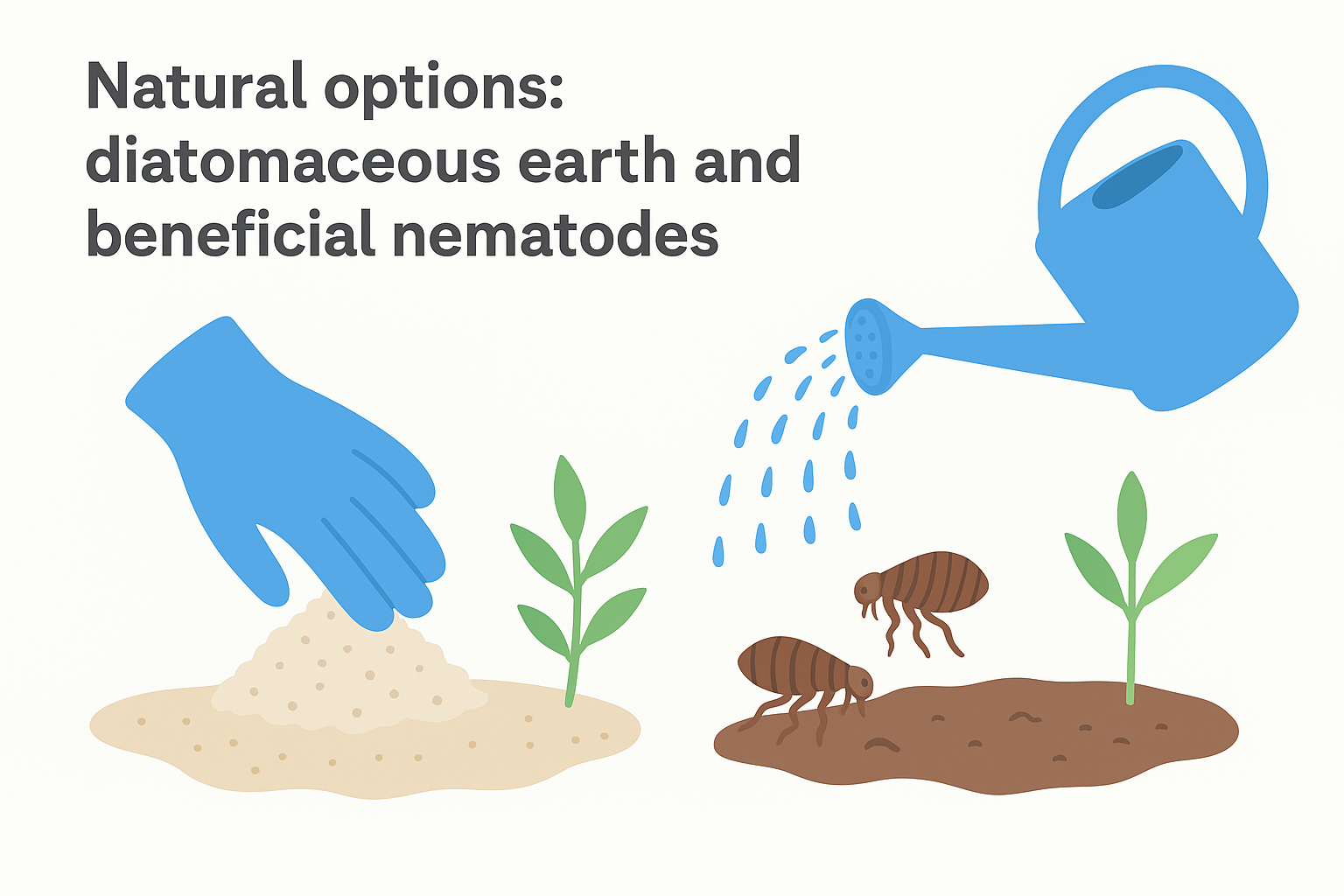
Apply nematodes in the early morning or evening to protect them from direct sunlight, which reduces their effectiveness significantly.
- Diatomaceous earth: apply to dry, shaded zones and reapply after rain
- Beneficial nematodes: mix with water per package instructions and apply to moist soil only
Pet-safe chemical sprays
Insect growth regulators (IGRs) like methoprene or pyriproxyfen stop flea larvae from developing into adults, which breaks the reproduction cycle. Look for yard sprays that combine an IGR with a contact killer such as permethrin. Keep pets off treated areas until the product dries completely, typically 30 to 45 minutes. Layering these two approaches is central to knowing how to get rid of fleas in the yard with lasting results.
Step 4. Stop fleas from coming back year-round
Treating the yard once gets you control, but keeping fleas out requires consistent follow-through across every season. In Sacramento's climate, flea activity can persist well into fall and spike again in spring. Knowing how to get rid of fleas in the yard is only half the equation. Preventing a new population from establishing before you notice the problem is equally important.
A single gap in your prevention schedule during late spring can undo weeks of effective treatment before any signs show up.
Keep wildlife out and your yard maintained
Reducing wildlife access is the most effective long-term prevention step available. Seal gaps under decks and porches with hardware cloth, remove bird feeders that draw rodents, and use motion-activated sprinklers near fence lines to deter raccoons and feral cats. Applying a preventive yard spray every four to six weeks during peak season closes the window before new flea cycles begin.
Follow this monthly maintenance checklist:
- Mow grass below 3 inches and clear leaf litter every two to three weeks
- Reapply nematodes or diatomaceous earth every 4 to 6 weeks from spring through fall
- Inspect under decks and along fence lines for wildlife activity
- Keep all pets on a year-round flea prevention product recommended by your vet
Quick wrap-up
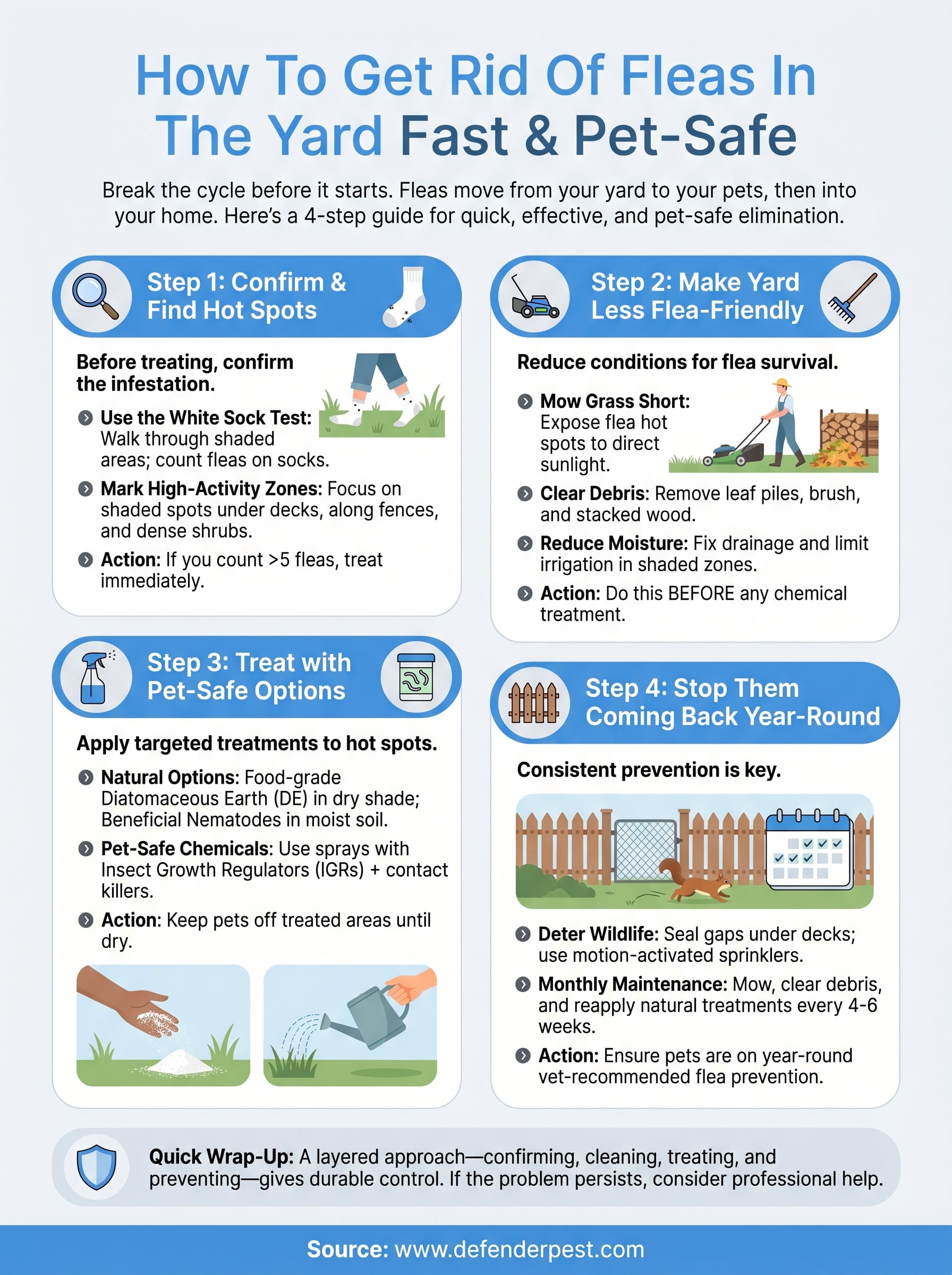
Fleas in your yard are a solvable problem when you approach it in the right order. Confirming the infestation first , reducing the conditions fleas need to survive, and applying a targeted treatment gets you fast results. Keeping them out long-term means staying consistent with yard maintenance and prevention through every season, not just when you notice a problem again.
Knowing how to get rid of fleas in the yard takes more than one product and a single spray session. A layered approach that combines physical cleanup, pet-safe treatments, and wildlife deterrence gives you durable control that holds up across seasons. If your infestation is severe or keeps returning despite your best efforts, bringing in a professional is the smartest next step. The team at Defender Termite & Pest Management has helped Sacramento-area homeowners eliminate outdoor flea problems since 1999 and is ready to help you do the same.