Professional Termite Control: What It Is and What to Expect
You spotted mud tubes on the foundation, or maybe a swarm of winged insects near a window, and now you're wondering if it's time to call in professional termite control . That instinct is right. Termites cause billions of dollars in structural damage across the US every year, and by the time you see visible signs, colonies have often been active for months. Waiting rarely saves money.
Professional termite control means a licensed technician inspects your property, identifies the species, and applies a targeted treatment plan, whether that's liquid termiticide, bait stations, or fumigation, then follows up to confirm the colony is gone. It's different from a DIY spray you grab at the hardware store because it addresses the entire colony structure, not just the termites you can see. Certified inspections and documented treatment plans also matter if you're buying or selling a home in Sacramento or nearby areas.
In this article, we break down exactly what happens during a professional termite service, from the first inspection to post-treatment monitoring , what it typically costs, and how to tell a reliable local company from one cutting corners. We'll also cover why structural repair often gets overlooked, and why that's a mistake worth avoiding.
Why professional termite control matters
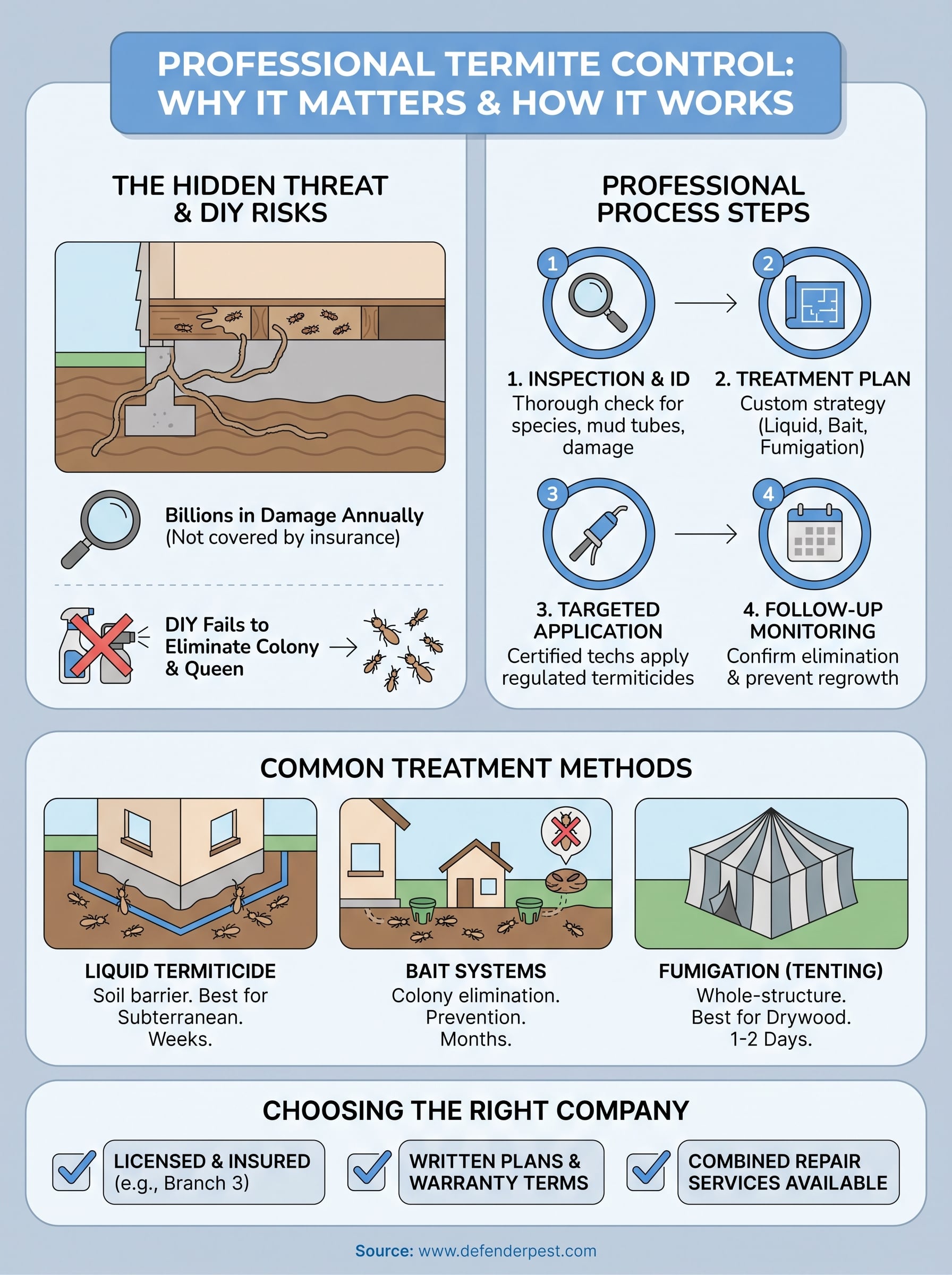
Termites don't announce themselves. A single subterranean colony can house hundreds of thousands of workers, and they'll chew through floor joists, wall studs, and support beams for years before you notice a sagging floor or a hollow-sounding wall. Structural damage from termites isn't covered by most homeowner insurance policies, which means the repair bill lands entirely on you. In Sacramento's older neighborhoods, where wood-frame construction sits close to soil and irrigation keeps the ground moist, conditions favor termite activity almost year-round.
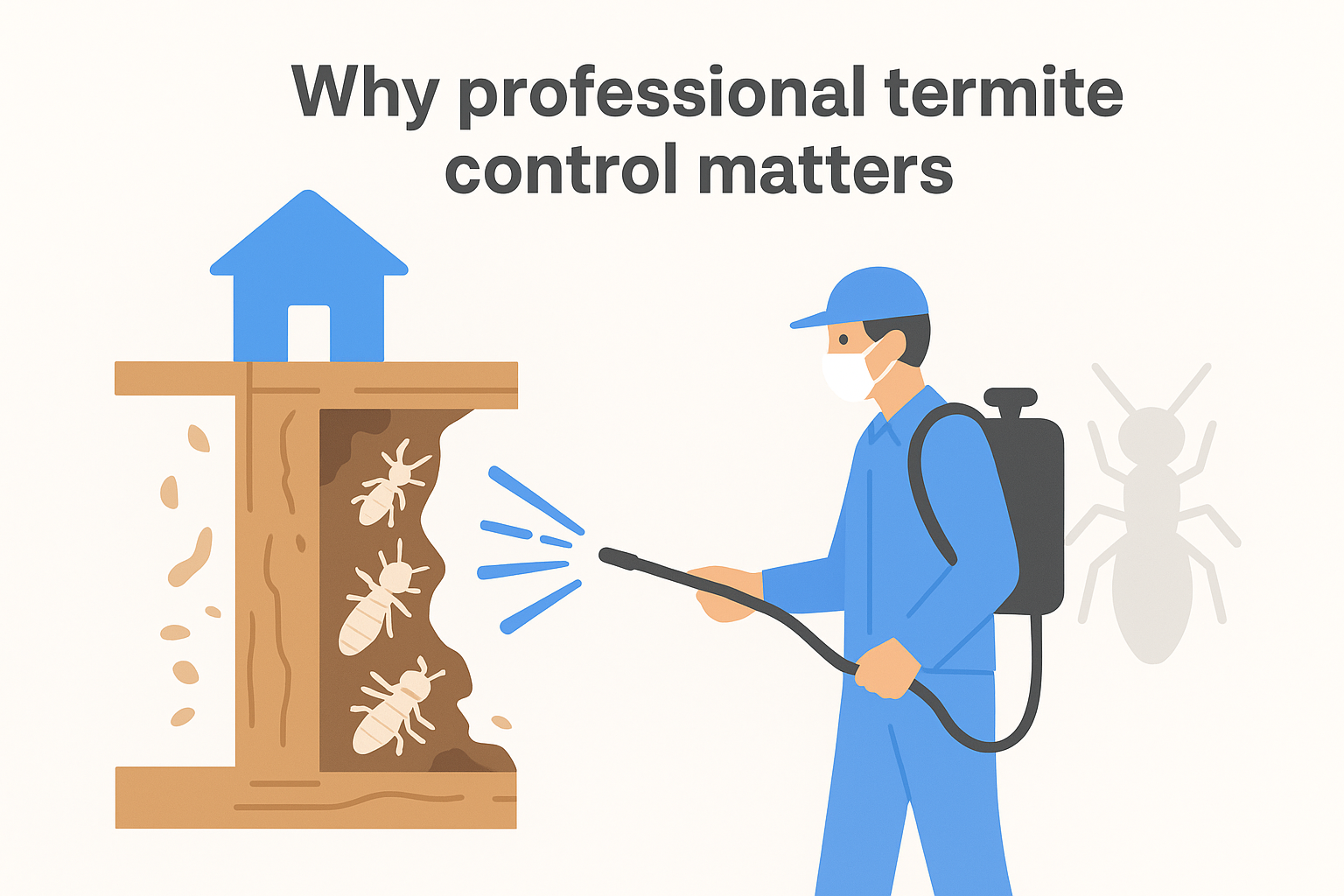
Going the DIY route with store-bought sprays or foggers might kill the termites you can see, but it does nothing for the colony behind your walls, which is why it helps to compare DIY and pro options for controlling a termite infestation before you buy anything. Worse, disturbing a colony without eliminating the queen often just scatters workers to a new location, where they keep feeding undetected. Effective termite treatment requires locating the colony structure, understanding which species you're dealing with (subterranean, drywood, or dampwood termites all behave differently), and applying a method that reaches the whole population. That's a level of diagnostic work that goes beyond what a homeowner can do with a hardware store product.
A termite problem you can see is almost always smaller than the one you can't.
Cost is another reason professional intervention pays off. The National Pest Management Association estimates termites cause more than $5 billion in property damage annually in the United States, and that figure keeps climbing as urban development pushes into termite-prone soil. Compare that to the cost of an annual inspection or a preventative bait system, and the math favors prevention every time.
Real estate transactions add a legal layer to this. Lenders and buyers in California typically require a wood destroying organism (WDO) inspection report before closing, and that report has to come from a licensed inspector, not a homeowner's own assessment. If active termites or damage turn up during that inspection, the sale can stall until treatment is documented and, often, structural repairs are completed. Sellers who get ahead of this with a professional inspection avoid last-minute negotiations that can cost thousands off the sale price.
Finally, professional companies carry the licensing and liability coverage that DIY treatments can't match. Termiticides used by licensed applicators are regulated by the EPA and require specific certification to apply legally, which protects you from misapplication that could contaminate soil or groundwater near your home. When the stakes include your home's structural integrity, your property value, and regulatory compliance during a sale, hiring a trained technician isn't overkill. It's the baseline for solving the problem correctly the first time.
How professional termite control works step by step
A professional termite job follows a predictable sequence, and knowing the steps helps you spot a company that's cutting corners. Reputable providers, including our team at Defender Termite & Pest Management, walk you through each stage before any chemical goes near your home.
Inspection and species identification
Every job starts with a thorough inspection, and it helps to know what a termite inspector checks during a visit: the foundation perimeter, crawl space, attic, and any wood-to-soil contact points for mud tubes, frass, or hollowed wood. They'll identify the termite species on site, since subterranean, drywood, and dampwood termites each behave differently and require a different treatment approach.
You can't treat a termite problem correctly until you know exactly which species and colony structure you're dealing with.
Treatment plan and application
Once the inspector maps out the extent of activity, they present a written treatment plan with the method, chemical or bait system, treatment zones, and expected timeline. Typical steps look like this:
- Confirm entry points and moisture sources feeding the colony
- Choose a treatment method suited to the species and structure type
- Apply liquid termiticide, install bait stations, or schedule fumigation
- Seal or treat secondary entry points around plumbing and foundation cracks
- Document the application with photos and product labels for your records
Follow-up monitoring
Afterward, the company schedules follow-up visits , usually within 30 to 90 days, to confirm the colony has stopped feeding and to check bait stations for continued activity. Ongoing monitoring, often built into an annual service agreement, catches new activity before it turns into repeat structural damage, and it also tells you how long your termite treatment stays effective.
Common termite treatment methods explained
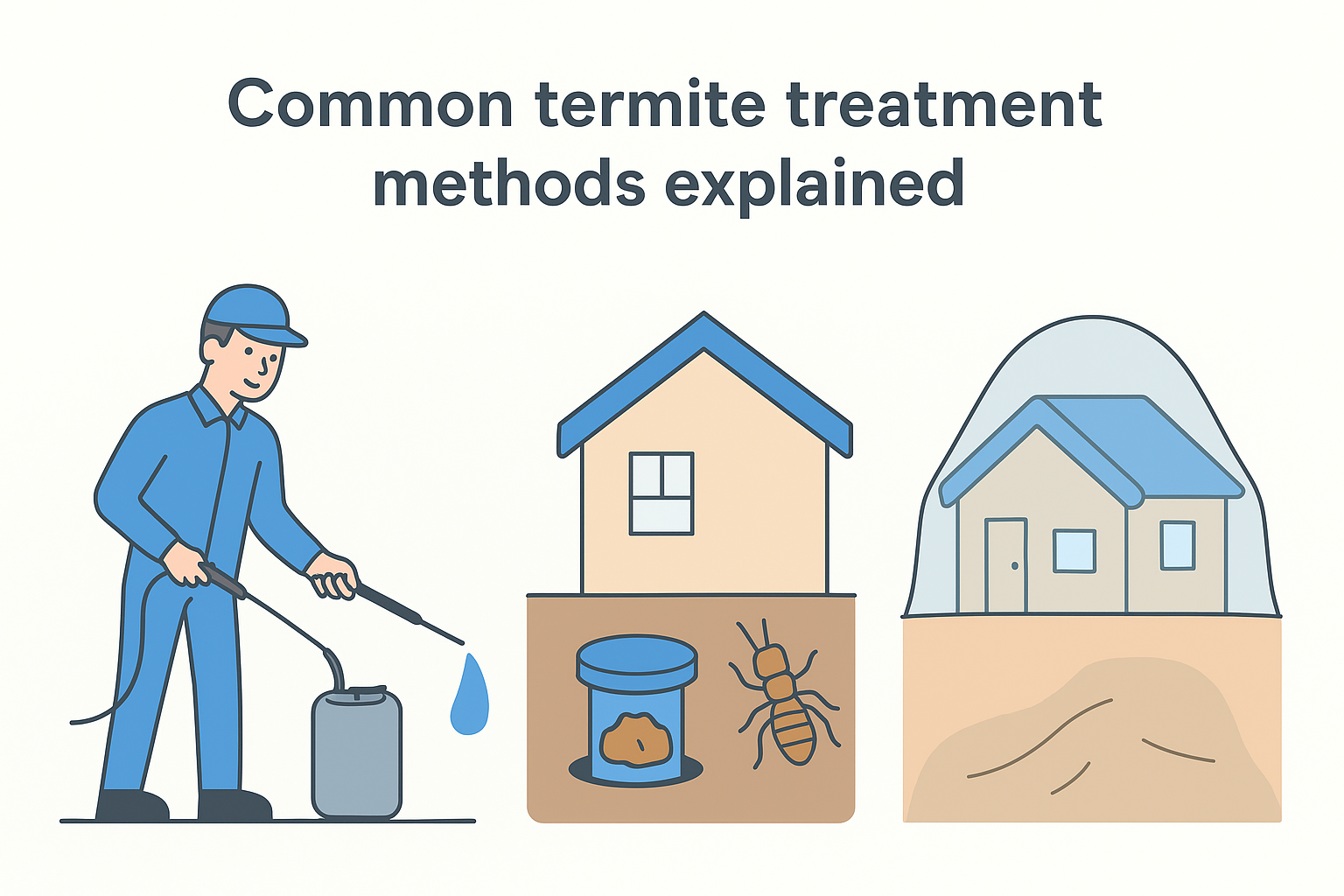
Once your technician identifies the species and colony location, the treatment method they recommend depends on how the termites entered your home and how deep the infestation runs. Liquid termiticide applications remain the most common approach for subterranean termites, since the chemical creates a treated zone in the soil around your foundation that termites can't cross without dying or being carried back to the colony. Products like Termidor use a "transfer effect," where affected termites unknowingly spread the chemical to nestmates before it kills them.
The best termite treatment is the one matched to the species in your walls, not the one that's cheapest to apply.
Bait systems and fumigation
Bait stations work differently. Technicians place them in the soil around your property, and termites feed on the bait instead of your home's wood, carrying a slow-acting insect growth regulator back to the colony. This method takes longer to eliminate an infestation, often several months, but it doubles as long-term termite prevention once the active colony is gone, which is worth weighing when you compare bait station and liquid treatment results. Fumigation, by contrast, targets drywood termites living entirely inside wood framing with no soil connection, requiring your home to be tented and sealed for a full day or more.
Comparing the main methods
| Method | Best For | Timeline | Ongoing Monitoring |
|---|---|---|---|
| Liquid termiticide | Subterranean termites | Weeks | Annual inspection |
| Bait stations | Subterranean, prevention | 3-12 months | Quarterly checks |
| Fumigation | Drywood termites | 1-2 days on-site | Post-treatment inspection |
| Spot/wood treatment | Localized drywood activity | 1 day | 6-12 month follow-up |
Spot treatments, using foam or localized injection, work for isolated drywood termite pockets but won't help you if the infestation has spread through the structure, so it's worth understanding when tenting beats a spot treatment for drywood termites.
What affects the cost of professional termite control
Pricing for termite treatment cost swings widely because no two infestations look the same. A small drywood pocket in a detached garage costs far less to treat than a full subterranean colony wrapped around a foundation. Most Sacramento homeowners pay somewhere between $500 and $2,500 for a standard treatment, with whole-home fumigation running higher, often $1,200 to $2,500 depending on square footage.
Square footage and infestation severity
Square footage drives the base price on almost every quote, since technicians calculate termiticide volume or bait station count per linear foot of foundation. Severity of the infestation matters just as much. A colony caught early might need one perimeter treatment, while a home with years of undetected activity could require multiple treatment zones plus structural repair.
Treatment method and accessibility
Method choice changes the bill too. Bait systems cost less upfront but require recurring monitoring visits billed as an annual contract, often $300 to $500 per year after the initial install. Fumigation costs more because it involves tenting, permits, and temporary relocation. Crawl spaces, multi-story additions, or homes with limited foundation access also add labor time, which shows up on the invoice.
Comparing quotes on price alone, without checking what treatment method and warranty length they include, is how homeowners end up paying twice.
Repair costs and warranty terms
Structural wood repair sits outside the treatment quote entirely, and it can outweigh the treatment cost if joists or sills need replacement. A company that handles both termite elimination and wood replacement after termite damage, like our team at Defender Termite & Pest Management, saves you the hassle of coordinating two separate contractors. Warranty length also affects price: a one-year guarantee costs less than a renewable multi-year plan that covers retreatment at no extra charge.
How to choose the right termite control company
Finding professional termite control you can trust starts with verifying credentials, not just comparing price quotes. California requires termite companies to hold a Branch 3 license from the Structural Pest Control Board, and you can check that license status online before anyone sets foot on your property. Ask for the license number upfront, and walk away from any company that hesitates to provide it.
A company that won't show you its license number isn't one you want inspecting your home.
What to check before you sign a contract
Beyond licensing, a few other factors separate a reliable local provider from a franchise running through a checklist. Look for these before you commit:
- Local experience : companies that have worked in your specific soil and climate conditions for years, not months
- Written treatment plans : a clear scope of work, chemical or method used, and treatment zones mapped out before payment
- Warranty terms : retreatment guarantees that last at least one year, ideally renewable
- Combined services : the ability to handle both termite elimination and structural wood repair under one roof
- Transparent reviews : consistent, verifiable feedback across Google and the Better Business Bureau, not just a handful of five-star testimonials
Ask about their process, not just their price
Getting quotes from three companies gives you a baseline, but the lowest number rarely tells the full story. Request details on how each company inspects, treats, and monitors, since a $600 quote missing follow-up visits can cost more long-term than a $900 quote that includes annual checks, and keep a list of what to ask a Sacramento pest control company before hiring on hand. Providers that answer 24/7, like our team at Defender Termite & Pest Management, also matter if you spot new activity between scheduled visits. Requesting a free estimate before signing anything lets you compare apples to apples instead of guessing based on a phone quote.
Making an informed decision about termite control
Termites don't wait for a convenient time, and neither should you. Professional termite control works because it combines species identification, a targeted treatment method, and follow-up monitoring, something no store-bought spray can replicate. Understanding the steps, from inspection through treatment to warranty terms, puts you in a stronger position to spot a company that's cutting corners versus one that's doing the job right.
Verifying a license, comparing treatment methods, and asking about combined repair services protects both your budget and your home's structural integrity. Don't settle for a quote that skips follow-up visits or leaves wood damage unaddressed. If you've spotted mud tubes, discarded wings, or soft wood anywhere on your property, get an inspection scheduled before the colony spreads further.
Request your free estimate for termite inspection, treatment, and repair services in Sacramento from Defender Termite & Pest Management and get a licensed technician on-site to give you a clear answer, not just a guess.