Rodent Control in My Area: How to Find and Hire a Pro
The fastest way to get rodent control in my area that actually works is to follow four steps. Confirm whether you have rats or mice, set safe snap traps while you wait, get free inspections from two or three licensed local companies, and hire the one that puts removal and sealing of every entry point in writing. A trap-only visit costs less on day one and is usually back in your attic by spring.
The trouble is that most people search late at night with something scratching above the bedroom. The ads all look alike, prices are rarely listed, and every company calls itself the best. It is hard to tell a real fix from a plan that sells you repeat visits.
This guide walks you through each step the way a Sacramento-area homeowner needs it. Defender Termite & Pest Management has served Sacramento since 1999 and handles rodent work for local homes and businesses, so the checklists and quote tips below reflect how this work is actually done.
Why a trap alone will not fix a rodent problem
Good rodent control is a five-part job: inspection, removal, sealing, cleanup, and follow-up . Trapping is only the second part. Skip the rest and the animals return, which is why the cheapest quote often costs the most over a year.
What a complete job includes
Use this list to judge any company you talk to, starting with the first one you call.
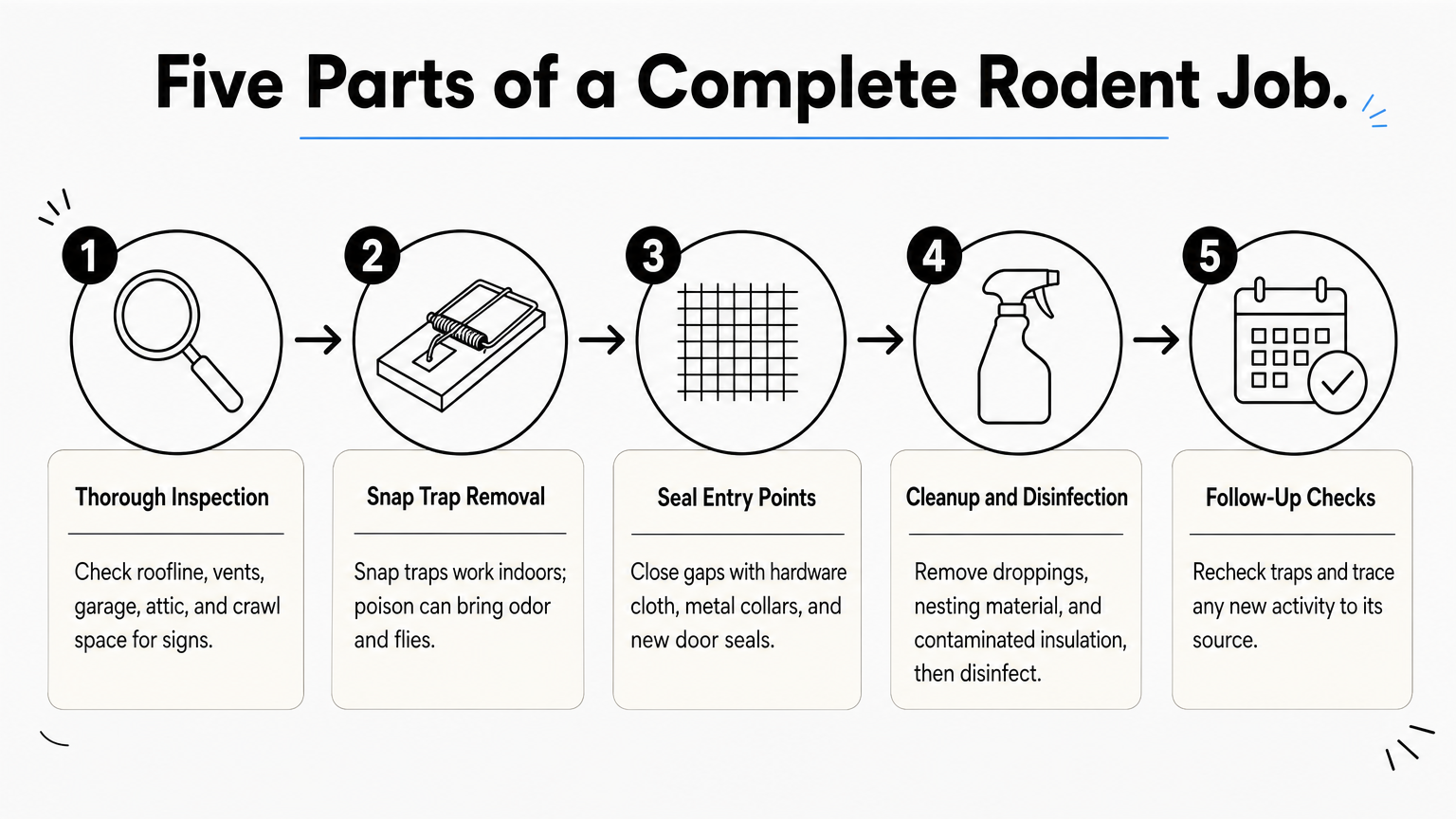
- Inspection. Someone checks the roofline, vents, garage, utility line entries, attic, and crawl space for droppings, rub marks, and gaps.
- Removal. Snap traps are the standard choice indoors, because poison can send a rodent into a wall to die, which brings odor and flies.
- Exclusion. Openings get closed with materials rodents cannot chew, such as hardware cloth, metal collars, and new door seals. Foam or caulk alone does not hold.
- Cleanup. Droppings, nesting material, and contaminated insulation are removed, and the area is disinfected.
- Follow-up. Traps are rechecked, and any new activity is traced to its source.
Rats, mice, and how they get in
Three species cause most problems in Northern California homes. Roof rats climb trees and utility lines and nest in attics, so noise overhead at night points to them. Norway rats burrow and stay low, near foundations and crawl spaces. House mice live in walls and cabinets and fit through a gap about the size of a dime.
A rat needs a hole roughly the size of a quarter. Public health agencies advise closing any opening wider than 1/4 inch , especially where pipes and conduits enter the house, around vents, and under garage doors. Even a new home with a perfect finish can have one missed gap.
When you can handle it yourself
A single mouse in the kitchen is a fair DIY job. Set snap traps along the walls and keep the pantry tidy. Call a professional when you hear activity in the attic or walls , find droppings in insulation, see a rat at all, or catch a few animals and still see fresh signs within two weeks. Those signs mean an open entry point you cannot reach from the ground.
Removing rodents without sealing the entry points only resets the clock.
Step 1. Confirm the problem and contain it
Start by confirming what you have and where, then use snap traps and basic cleanup to hold the line until a professional arrives. Photos and notes taken now make the inspection faster and the quote more accurate.
Read the signs
Walk the house with a flashlight and look for these clues. Note the room and the time of day for each one.
- Droppings: mouse droppings are about the size of a rice grain, while rat droppings are larger, around half an inch.
- Sounds: scratching or running in walls or ceilings, mostly at night. Sounds overhead at dusk usually mean roof rats.
- Gnaw marks: chewed food packaging, wood, or wiring.
- Rub marks: greasy smears along baseboards and pipes.
- Nests: shredded paper, fabric, or insulation in quiet corners.
Contain it safely
Place snap traps against walls where you found droppings, with the trigger end touching the baseboard. Skip poison indoors. A poisoned rodent can die somewhere you cannot reach, and bait is a risk to children and pets. Pick up pet food at night and clear fallen fruit and nuts from the yard.
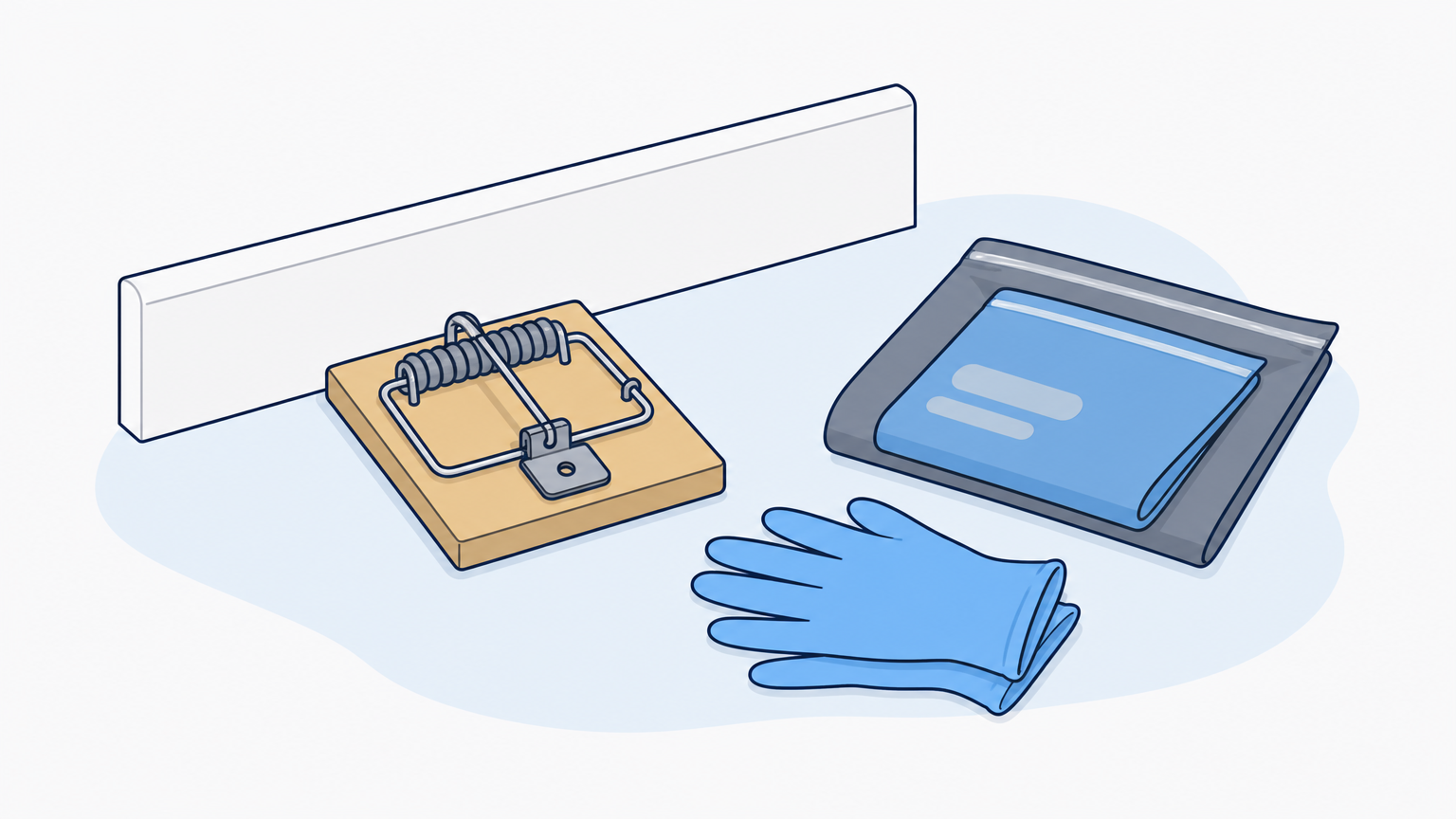
When you clean up, wear rubber or nitrile gloves. Wet droppings and nesting with household disinfectant before you wipe them up. Never sweep or vacuum dry droppings , because the dust can carry hantavirus. Seal the waste in a bag, put that bag inside a second one, and wash your hands with soap and water.
Hold off on plugging big holes yourself. Sealing while animals are still inside can push them deeper into the walls, and a pro will do the sealing in the right order after removal.
Document the signs and set snap traps today, and leave poison and sealing to the professional.
Step 2. Shortlist licensed local providers
Pick two or three licensed, insured companies that really work in your city, and verify each license before anyone climbs into your attic. Local reach matters because rodent jobs need repeat visits.
Where to find candidates
Ask neighbors first, since rodent problems cluster by street and tree line. Then search Google Maps for the company names behind the results for rodent control in your area. Read the reviews for rodent work specifically . Look for mentions of follow-up visits, how the company handled a return of activity, and whether the crew sealed entry points. A star average alone tells you little.
Confirm that the company serves your city, whether that is Sacramento, Roseville, Folsom, Elk Grove, or Vacaville. A local, family-owned company usually answers faster and is easier to hold to a follow-up promise than a national chain with a call center.
Verify the license
In California, pest control businesses are licensed by the Structural Pest Control Board . Ask for the license number on your first call and look up its status on the board's website before you book. Also ask for proof of insurance. Defender, for example, is a licensed Structural Pest Control Operator and carries insurance, and any company you hire should be able to say the same without hesitation.
Questions to ask on the first call
- Do you inspect first, and is the inspection and estimate free?
- Do you seal entry points, or only trap?
- What materials do you use to close gaps?
- Do you handle insulation removal and disinfection, or do I need a second contractor?
- How many follow-up visits come with the job, and what does the guarantee cover?
A company that dodges the second or fifth question is telling you how the job will go.
Verify the license number first, then judge the company on how it answers questions about sealing and follow-up.
Step 3. Compare free inspections and quotes
Book a free inspection with each company, then compare written quotes line by line. Rodent prices swing with the number of entry points, the condition of the attic, and the visits required, so no honest company can give you an exact number by phone.
What happens at a free inspection
Expect the technician to walk the exterior, look in the attic, and check the garage and utility entries. If you have a raised foundation, they will go under the house, so clear the access opening of storage. Be home for the visit, and show your photos and notes. You should leave with a verbal explanation and a written quote that names what will be sealed and cleaned. Defender offers free estimates and 24/7 emergency service, and you can reach it at (833) 878-PEST (7378).

What drives the price
Since there is no standard flat rate, ask each company which of these factors shaped its number.
| Factor | Why it changes the quote |
|---|---|
| Number of animals and species | Rats take more traps and visits than a few mice |
| Entry points | More gaps and harder spots, such as rooflines, mean more labor |
| Roof height and attic access | Tight or tall access slows the work |
| Insulation damage | Contaminated insulation needs removal, disinfection, and replacement |
| Trapping visits | More visits mean more labor and a longer job |
| Repairs | Chewed materials and structural damage add repair work |
Cheapest, free, and insurance questions
The cheapest quote usually leaves something out. Here is a worked comparison. Say two companies inspect a two-story house with rats in the attic. Company A quotes a low flat price for traps and two visits. Company B quotes more, but lists seven sealed entry points, insulation removal, disinfection, and a recheck. If A leaves the vents open, you pay again when new rats arrive, so B is the cheaper job over a year .
Truly free help exists in two forms: free inspections and estimates from private companies, and tenant protections. If you rent, tell your landlord in writing. California's habitability rules generally expect rentals to be kept free of rodents and vermin, and your county environmental health office can take complaints. As for insurance, a standard homeowners policy typically treats rodents as a maintenance issue and does not pay for removal or the damage. Check your own policy or ask your agent before you count on coverage.
Compare what each quote includes before you compare what it costs.
Step 4. Approve the scope and check the follow-through
Hire the company whose written scope covers removal, sealing, cleanup, and rechecks, and whose guarantee is in the paperwork. Then keep the house unattractive to the next rodent.
Get the scope in writing
Before you sign, make sure the document names each of these:
- The number and location of entry points to be sealed
- The materials used for sealing
- The trapping visits and the date of the recheck
- Insulation removal, disinfection, and any replacement
- Repairs to chewed or damaged areas
- Guarantee terms, including what counts as new activity
Read the guarantee closely
A strong guarantee covers re-entry at the points that were sealed, and it is written down. Defender backs its rodent work with a pest free guarantee and a 100% satisfaction guarantee. Its service includes total removal, disinfection, and reinstallation of contaminated insulation, and it repairs structural damage the rodents caused. Whoever you hire, ask what voids the guarantee, such as new gaps from unrelated construction.
Keep rodents from coming back
The job is not finished when the crew drives away. Trim tree branches away from the roofline, because roof rats use them as bridges. Keep pet food and trash in sealed containers, and clear fallen fruit and nuts promptly. Every year, check vent screens, door seals, and the spots where AC and plumbing lines enter the wall. If you hear new noises, call right away, because a recheck inside the guarantee window is the cheapest fix you will get.
The job is finished when the entry points are sealed and the recheck visit finds nothing new.
Your next move
Finding rodent control in your area comes down to a simple order of operations. Confirm what you have, set snap traps, verify licenses, collect free inspections, and compare written scopes instead of bottom-line prices. Choose the company that removes the animals, seals the openings, cleans up, and puts its guarantee on paper.
If you are in the Sacramento area and want a second opinion on a quote or a first inspection, request a free rodent control estimate from Defender. Bring your photos and notes, and ask for the sealing plan in writing.