Home Inspection and Termite Inspection: A Sacramento Guide
A home inspection and termite inspection are two separate checkups that together tell you whether a house is sound and whether insects are eating it. The home inspection reviews the roof, structure, plumbing, electrical and heating systems. The termite inspection, formally a Wood Destroying Pests and Organisms report in California, looks for termites, wood-boring beetles, carpenter ants, carpenter bees and decay fungi, along with the conditions that invite them. If you are buying, you want both finished before your contingency period ends.
This guide explains why each inspection matters, what each one covers, how to book them and choose a local inspector, what drives the price, and what to do when the reports come back with findings. You will also see where the work of a general home inspector ends and where a licensed pest professional takes over.
Defender Termite & Pest Management has worked in Sacramento since 1999 and began in the real estate inspection and construction industry. We are a Structural Pest Control Operator, so we handle the termite side of a purchase, and we repair the wood damage we find. We do not replace your general home inspector, and this article explains why you need both.
Why you need a home and termite inspection together
You need both because each inspection is blind to the other's job. A general home inspector surveys the whole house at a high level and does not issue the state termite report. A termite inspector examines wood in detail but does not test your furnace, panel or roof. Together they cover the two biggest unknowns in a purchase.
Each inspection catches what the other misses
A home inspector may spot stained framing or soft trim and note it. That is not the same as a termite report. In California, the report that lenders and escrow expect comes from a licensed Structural Pest Control Operator. So the answer to "would a home inspector see termites?" is that sometimes they see the damage, but they will refer you to a specialist for the real answer.
The reverse is also true. A termite inspector will tell you whether wood is infested or decayed, but will not tell you the water heater is at the end of its life or the electrical panel is unsafe. Those findings can cost as much as a termite repair.
A home inspector tells you how the house is built and running, and a termite inspector tells you what is eating it.
What skipping one can cost you
Termites work quietly inside framing, subfloors and attic wood, often for years before anything shows. Buying without a termite report means you may inherit an infestation and the repair bill with it. Skipping the general inspection means you may close on a house with a failing roof or a plumbing leak that you cannot negotiate over once escrow closes.
Both inspections also give you negotiating leverage while you still have it. Findings in writing let you ask for repairs, a credit or a price change. After closing, the same findings are simply your expense.
What a home inspection and a termite inspection cover
A home inspection covers the visible, accessible condition of the house's major systems. A termite inspection covers the visible and accessible areas for wood destroying pests, damage and conditions that could lead to an infestation. Neither one opens walls, so both report only what the inspector can reach and see.
What a general home inspection covers
Expect a few hours on site for a typical house. The inspector walks the property and reports on:
- Roof, gutters and drainage
- Foundation, framing and visible structure
- Plumbing, water heater and fixtures
- Electrical panel, wiring and outlets
- Heating and cooling systems
- Attic, insulation and ventilation
- Windows, doors, walls, ceilings and floors
The biggest red flags in a home inspection are usually structural movement, active water intrusion, a roof near the end of its life, and unsafe or outdated electrical work. Cosmetic items matter far less, and a good inspector separates the two clearly.
What a termite inspection covers
A licensed inspector checks the interior and exterior of the home, along with the attic and the subarea if the house has a raised foundation. In our experience, a typical inspection takes about 45 minutes to an hour and a half, depending on the size and condition of the home and property.
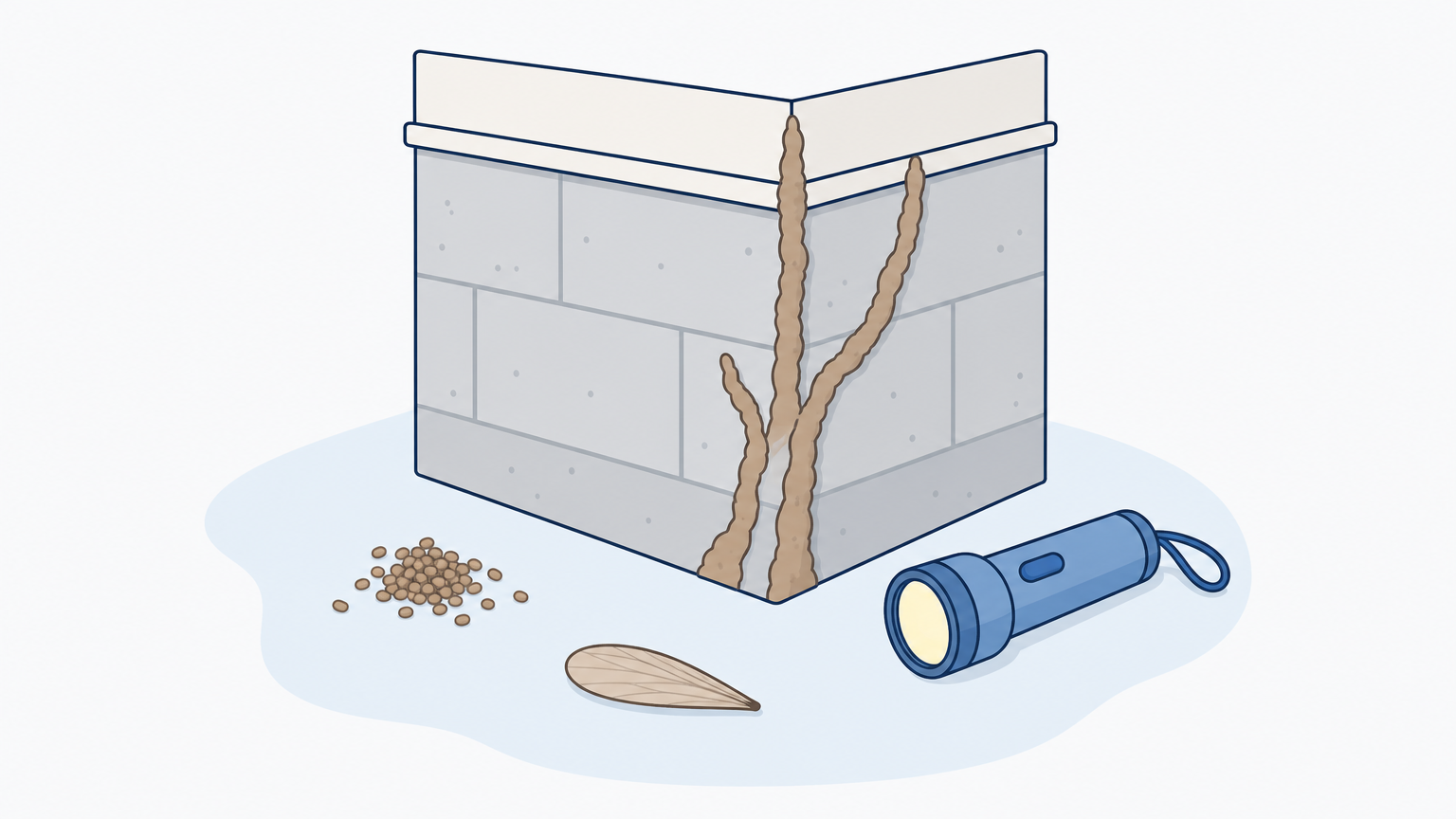
The inspector looks for mud tubes (subterranean termites), frass pellets (drywood termites), discarded wings, hollow-sounding or blistered wood, and decay. These are also the first signs you can watch for yourself. Our report may cover termites, wood destroying beetles, carpenter ants, carpenter bees and wood destroying fungi. It also lists damage and conditions that may lead to problems, such as moisture or wood touching soil.
The two inspections side by side
| Home inspection | Termite inspection | |
|---|---|---|
| Who does it | Licensed or certified home inspector | Licensed Structural Pest Control Operator |
| Main question | What condition are the house and its systems in? | Are wood destroying pests or decay present or likely? |
| Typical time on site | A few hours | About 45 minutes to 1.5 hours |
| Output | General condition report | Written wood destroying pests report, with photos at Defender |
| Who asks for it | You, as a buyer | You, and often the lender or escrow |
Neither inspection opens your walls, so each one reports only what the inspector can see and reach.
How to book both inspections and hire the right inspector
Book the home inspector and the termite inspector for the same day or back to back, within your contingency window. In California they are usually two separate professionals, because the termite report requires a pest control license. Order them as soon as your offer is accepted.
A simple booking timeline
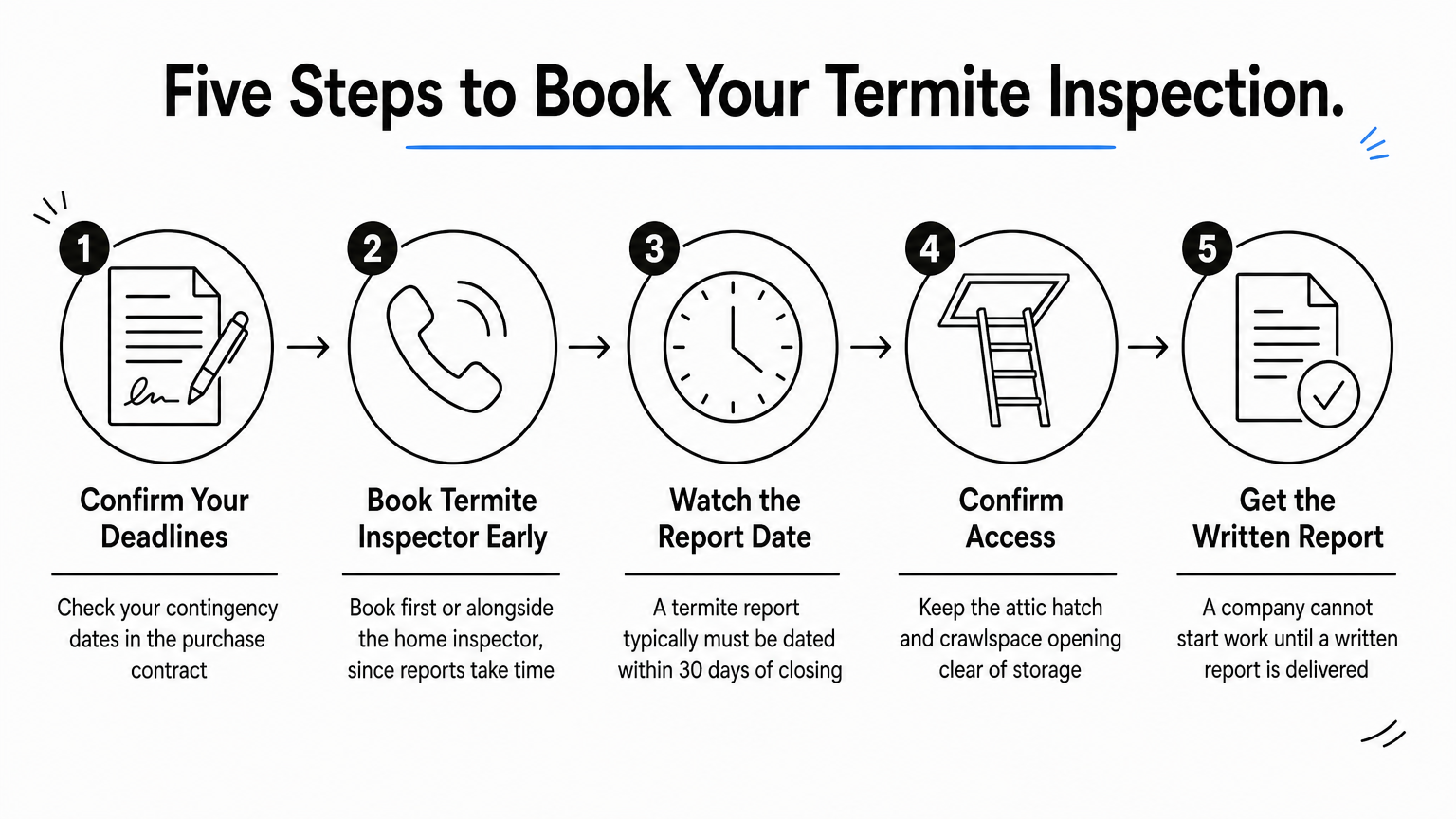
- Confirm your deadlines. Check your contingency dates in the purchase contract.
- Book the termite inspector first or alongside the home inspector. Reports take time, and treatment bids take longer.
- Watch the report date. A termite report typically must be dated within 30 days of closing. If you close on June 30, the report should be dated no earlier than May 31.
- Confirm access. Make sure the attic hatch and the crawlspace opening are not blocked. On a raised foundation home, our inspector goes under the house, so the subarea opening cannot be blocked by storage.
- Get the written report before any work starts. State law says a termite company cannot do work on your property until an inspection is done and a written report is delivered. A written contract is required for the work.
How to choose a local inspector
Look for a current state license, insurance, and a sample report that shows photos and clear findings. Ask how long the visit takes and whether the report separates active infestation from conditions that may lead to problems. Local experience also matters, because Sacramento-area homes see both drywood and subterranean termites.
Here is one fair caution. In pest control, the company that inspects can also bid the treatment, which creates a possible conflict. Protect yourself by asking for the report and the bid separately, and get a second bid on any large job. When we recommend fumigation, you can choose your own fumigation company instead of the one we select.
Get the inspection report first, then compare bids on any work it recommends.
What affects inspection cost and who pays for it
Prices vary by company, home size and what is included, so get quotes in writing instead of trusting a single number. Both inspections scale with the size and complexity of the property, and the fees are small next to the repairs they can uncover.
What drives the price of each inspection
| Factor | Home inspection | Termite inspection |
|---|---|---|
| Home size | Larger homes cost more | Larger homes and extra structures take longer |
| Age and condition | Older homes take more time | Older or wood-heavy homes need closer checking |
| Access | Extra buildings or hard-to-reach areas add time | Raised foundations and blocked areas add time |
| Add-ons | Sewer line, mold, radon or pool checks cost extra | Extra structures like sheds, garages or decks |
Ask each company two questions. First, is the inspection fee separate or credited toward any work? Second, does the quote cover the whole property, including detached structures? At Defender, you can request a free estimate on termite treatment and wood repair through our website.
Who pays for the termite report
You, as the buyer, normally pay for your own home inspection. The termite report is different, because who pays for it is negotiable and spelled out in your purchase contract. In many deals the seller orders the report, and the buyer pays for the home inspection. Check the contract language before you book, and ask your agent which party is responsible.
Costs that matter more than either fee come after the reports. Treatment and wood repair depend on the method and the extent of damage, so ask for a written scope with every bid.
The inspection fee is small, so compare what each report finds and what each company recommends.
What to do with the results of both reports
Read the termite report for what is active, what is damaged and what is only a risk, then use both reports to decide what you need fixed, credited or walked away from. Findings are not automatically deal-breakers, and most are solvable once you know their scope.
How to read the termite report
California reports commonly sort findings into groups. Section 1 items are active infestation or damage. Section 2 items are conditions that may lead to infestation later, such as moisture or wood in soil contact. Some items may be marked for further inspection when an area could not be reached. Ask the inspector to walk you through each one, and ask for photos, which are included in our reports.
Treatment and repair options
The right treatment depends on the termite species and how far the infestation has spread. Based on our service details, here is how common options compare:
| Method | Best for | Key facts |
|---|---|---|
| Fumigation | Widespread drywood termites | About 3 to 5 days total, with about 24 hours of gas exposure. Fumigations arranged through Defender carry a two-year guarantee |
| Localized treatment | Limited drywood activity | We offer a no charge evaluation to see if a building is a good candidate |
| Soil and barrier treatment | Subterranean termites | Lasts around five years |
| Baiting stations | Subterranean termites | Monitored colony control |
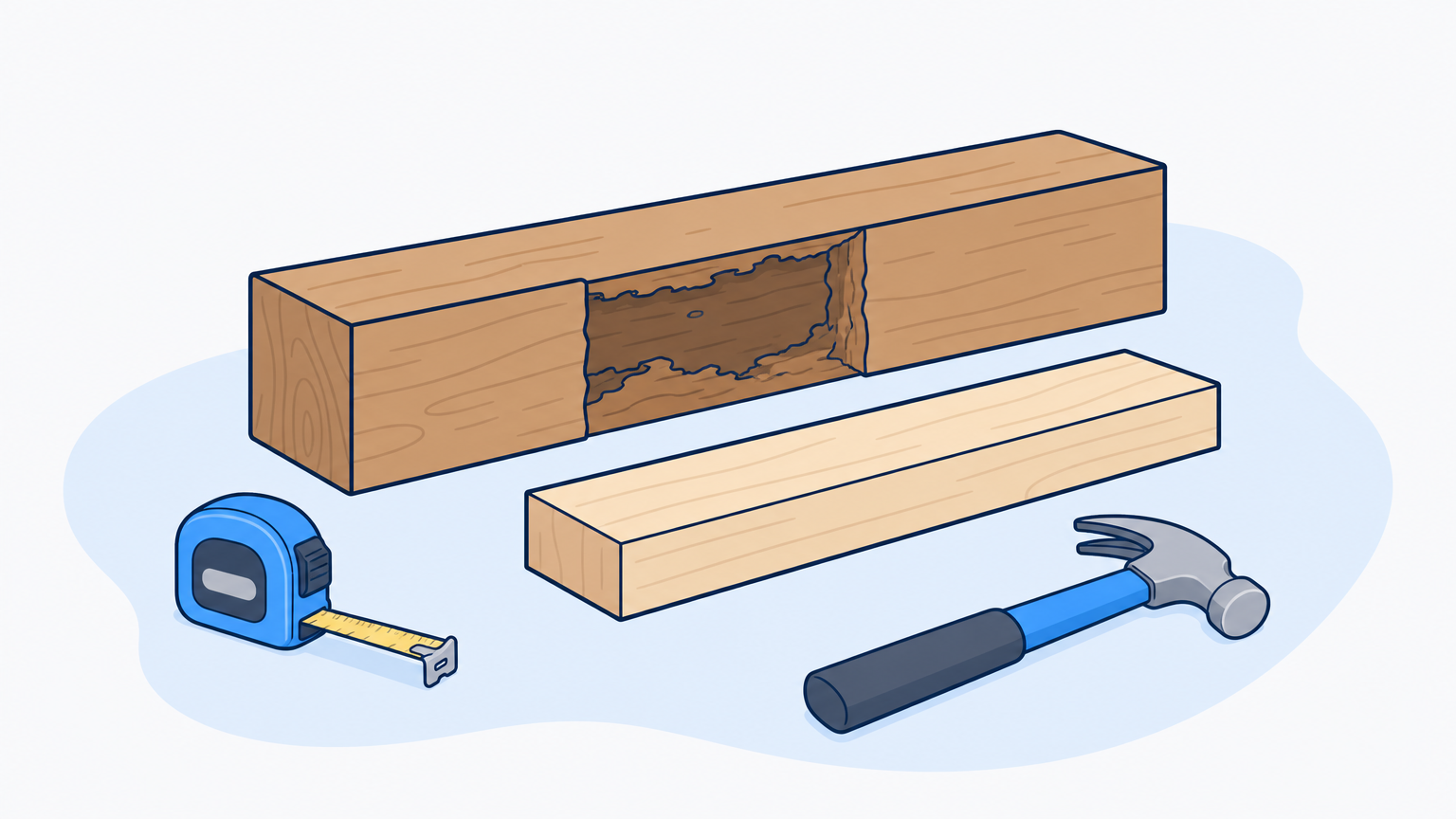
Treatment stops the termites but does not fix the damage they leave. Defender's carpenters repair damaged wood and dry rot, address the conditions behind it, and back the repair with a one year warranty.
Using the reports in negotiation
Bring both reports to your agent. Typical requests include seller-paid treatment, seller-paid repairs, a repair credit at closing or a price reduction. Get bids for the work before you negotiate so your request reflects real numbers. A clear plan from a licensed company, with a follow-up schedule, also gives the lender and escrow what they need to move forward.
Treat the reports as a negotiating document, with real bids attached.
Before you close
A home inspection and termite inspection answer different questions, and you need both answers before you commit. The home inspector tells you how the house performs. The licensed termite inspector tells you whether wood destroying pests or decay are present and what conditions invite them. Book both early, watch the 30-day report window, and compare bids before you act on any finding.
If you are buying in Sacramento, Roseville, Folsom, Elk Grove or Vacaville, our licensed inspectors can handle the termite side and repair any damage we find. Visit Defender Termite & Pest Management to request an inspection or a free estimate.