How to Avoid Bringing Bed Bugs Home After Traveling
You unpack your suitcase after a great trip, and a week later you spot a tiny reddish bug crawling across your sheets. That sinking feeling is exactly why so many Sacramento travelers search for how to avoid bringing bed bugs home . Bed bugs don't care if your hotel was a budget motel or a five-star resort. They hitchhike in luggage, backpacks, and clothing, and once they're inside your house, getting rid of them costs far more time and money than preventing them ever would.
The good news is that a few deliberate habits, done before, during, and after your trip, can keep these pests out of your home entirely. This guide walks through practical inspection steps for hotel rooms, smart packing choices, and the right way to handle luggage the moment you walk through your front door.
We've treated enough Sacramento-area homes to know that catching a problem early saves homeowners thousands in infestation-related repairs . If prevention fails and you spot signs of bed bugs after a trip, Defender Termite and Pest Management offers fast, local inspection and treatment so a travel souvenir doesn't turn into a long-term headache.
Why bed bugs hitchhike home with travelers
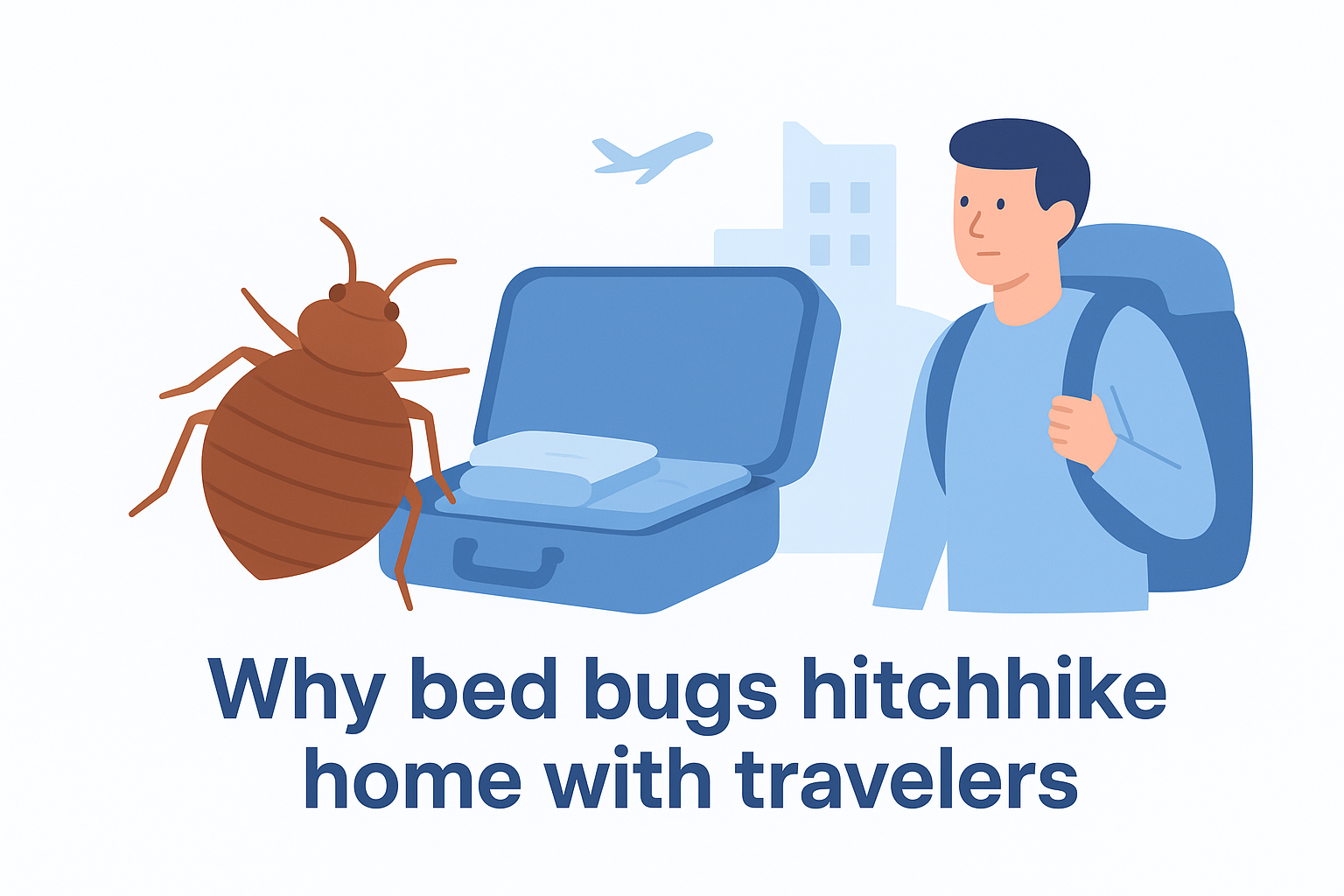
Bed bugs don't fly, jump, or drop from the ceiling like something out of a horror movie. They crawl, and they're patient. A single female can lay 200 to 500 eggs in her lifetime, and all she needs is a dark seam in your suitcase to find her way into your bedroom. Understanding how these pests travel is the first step toward stopping them, because most people assume bed bugs are a sign of a dirty house or a shady hotel. That's simply not true. Bed bugs infest five-star resorts, cruise ships, movie theaters, and clean suburban homes with the same ease.
How they hitch a ride in the first place
Bed bugs are drawn to warmth, carbon dioxide, and the scent of human skin, which is exactly what your luggage smells like after a day of travel. They squeeze into the folds of a suitcase, the seams of a backpack, or the pages of a paperback left on a nightstand. Once you close that bag and drive home, you've become their transportation. Luggage and clothing are the two most common carriers, but they're far from the only ones.
- Suitcases and duffel bags left on hotel floors or beds
- Backpacks and purses set near upholstered furniture
- Coats and jackets hung in shared closets
- Rental car seats and floor mats
- Secondhand furniture or clothing bought while traveling
- Airport lounge chairs and rideshare vehicle interiors
Bed bugs don't infest your home because your hotel was dirty. They infest it because a suitcase gave them a free ride.
Why hotels and rentals aren't the only risk
Most travel advice focuses on hotel rooms, and for good reason. High guest turnover means more opportunities for bed bugs to move from one traveler's belongings to the next. But short-term rentals carry the same risk, and in some cases a higher one, because cleaning standards vary widely between hosts and there's no professional pest inspection built into the process the way there is at many hotel chains. According to the U.S. Environmental Protection Agency, bed bugs can survive for months without feeding, which means an infestation left over from a previous guest can still be active when you check in weeks later.
Airports, trains, and buses deserve just as much attention. You spend hours in close contact with seats and floors that hundreds of other travelers touched that same day. A bed bug doesn't need long to climb aboard, just a few minutes near a warm bag or coat is enough.
The biology that makes them so hard to catch
Adult bed bugs are about the size of an apple seed, reddish brown, and flat enough to hide in a credit card's thickness of space. Nymphs, the juvenile stage, are smaller and nearly translucent, which makes them almost invisible against light-colored fabric. This size and shape let them disappear into luggage zippers, book spines, and electrical outlet covers without leaving obvious signs until a population has already grown.
Here's what makes them particularly frustrating for travelers: a single fertilized female is all it takes to start an infestation. She doesn't need a mate waiting at home. She rides in your suitcase, finds a mattress seam, and within a few weeks you're dealing with dozens of bugs instead of one. That's why prevention during travel matters so much more than trying to catch an infestation after it's already established. The steps in this guide are built around that reality, catching the problem before it ever leaves the hotel room, rather than treating a full-blown infestation months later.
Step 1. Research your destination before you pack
Starting your prevention plan at home, before you even zip your suitcase, gives you the best odds of a bed bug-free trip. Bed bug registries like BedBugRegistry.com and reports on TripAdvisor or Google Reviews often surface complaints months before a hotel's official response, so a five-minute search can flag a property you'd otherwise book blind. Don't stop at the hotel's own website; look at recent guest reviews specifically, since a clean lobby photo tells you nothing about what's hiding in a mattress seam three floors up.
A five-minute search before you book can save you weeks of treatment after you get home.
Search smarter, not longer
Type the hotel or rental name along with "bed bugs" directly into a search engine rather than relying only on star ratings, which rarely capture a single guest's infestation complaint. Recent reviews matter more than average scores, since a property can fix a problem in a week but still carry a lingering one-star review from months ago. Watch for patterns instead of isolated complaints; one review mentioning bites from 2019 means far less than three reviews from the past six months describing the same issue.
Call ahead and ask direct questions
Surveying strategy only gets you so far, so pick up the phone and ask the property directly about their pest management practices. Reputable hotels and short-term rental hosts won't dodge these questions, and hesitation or vague answers are a red flag worth noting.
- Do you have a documented pest control contract, and how often are rooms inspected?
- Has this property had any reported bed bug incidents in the past six months?
- What's your protocol if a guest reports bed bugs during their stay?
- Can rooms be moved immediately if a problem is found?
Questions like these signal to staff that you're an informed traveler, which sometimes prompts extra attention to your room before check-in.
Compare your options before booking
Vacation rentals deserve extra scrutiny since they lack the centralized pest management many hotel chains use across their properties. The table below breaks down where your research time is best spent depending on where you're staying.
| Lodging Type | Where to Check | What to Look For |
|---|---|---|
| Hotel chain | Corporate pest policy, recent reviews | Documented inspection schedule |
| Independent hotel | Local reviews, direct phone call | Staff responsiveness to questions |
| Vacation rental | Host reviews, platform complaint history | Cleaning turnaround between guests |
| Hostel or shared lodging | Recent traveler forums, review sites | Frequency of reported incidents |
With this groundwork done, you'll walk into check-in already knowing what to expect, which sets you up for the packing decisions covered next.
Step 2. Pack smart with protective luggage and sealed bags
Preparing your suitcase before you leave home matters just as much as researching your destination. Hard-shell luggage has fewer seams, pockets, and fabric folds than soft-sided bags, which means fewer hiding spots for bed bugs to tuck into during transit. Light-colored suitcases help too, since reddish-brown droppings and shed skins stand out clearly against pale fabric but disappear against black or navy nylon.
A hard-shell, light-colored suitcase gives bed bugs almost nowhere to hide and makes any hitchhikers easy to spot.
Seal your clothes in bags, not just your suitcase
Zipping your suitcase shut isn't enough on its own, since the case itself can still pick up bugs from a hotel floor or luggage rack. Vacuum-sealed bags or heavy-duty gallon ziplocks create a second barrier around your clothing, so even if something crawls into your suitcase, it can't reach your clothes. Vacuum-sealed bags also compress your packing and free up space, making this one of the few travel habits that solves two problems at once.
- Pack clothing in individual gallon-size ziplock bags, grouped by outfit
- Use vacuum-seal bags for bulkier items like sweaters and jackets
- Keep shoes in a separate plastic bag, since they're often the first thing set on a hotel floor
- Store toiletries in a hard case rather than a fabric pouch
- Leave unnecessary fabric items like extra tote bags at home
Keep a decontamination kit within reach
Thinking ahead about what happens after your trip starts before you even leave the driveway. Pack a small kit with a flashlight, a magnifying glass, and a few extra sealable bags so you're ready to inspect your room the moment you arrive and bag anything suspicious on the spot. A flashlight and magnifying glass cost almost nothing and take up no real space, but they turn a five-minute room check into something you can actually trust.
Carrying these items also changes how you think about your luggage during the trip itself. Instead of tossing your suitcase onto the bed out of habit, you'll already be in the mindset of treating every surface as a potential risk until you've checked it. That shift in habit costs you nothing and sets up the inspection routine covered next, which is where most bed bug prevention either succeeds or falls apart.
Step 3. Inspect your hotel or rental room on arrival
Before you set a single bag down, treat the room like a crime scene rather than a place to relax. The five-minute inspection you do at check-in is the single most effective habit in learning how to avoid bringing bed bugs home, because it catches an infestation before your belongings ever touch a contaminated surface. Leave your luggage in the bathroom or on the tile near the door while you work through the room, since tile and porcelain give bed bugs almost nothing to grip onto compared to carpet or upholstery.
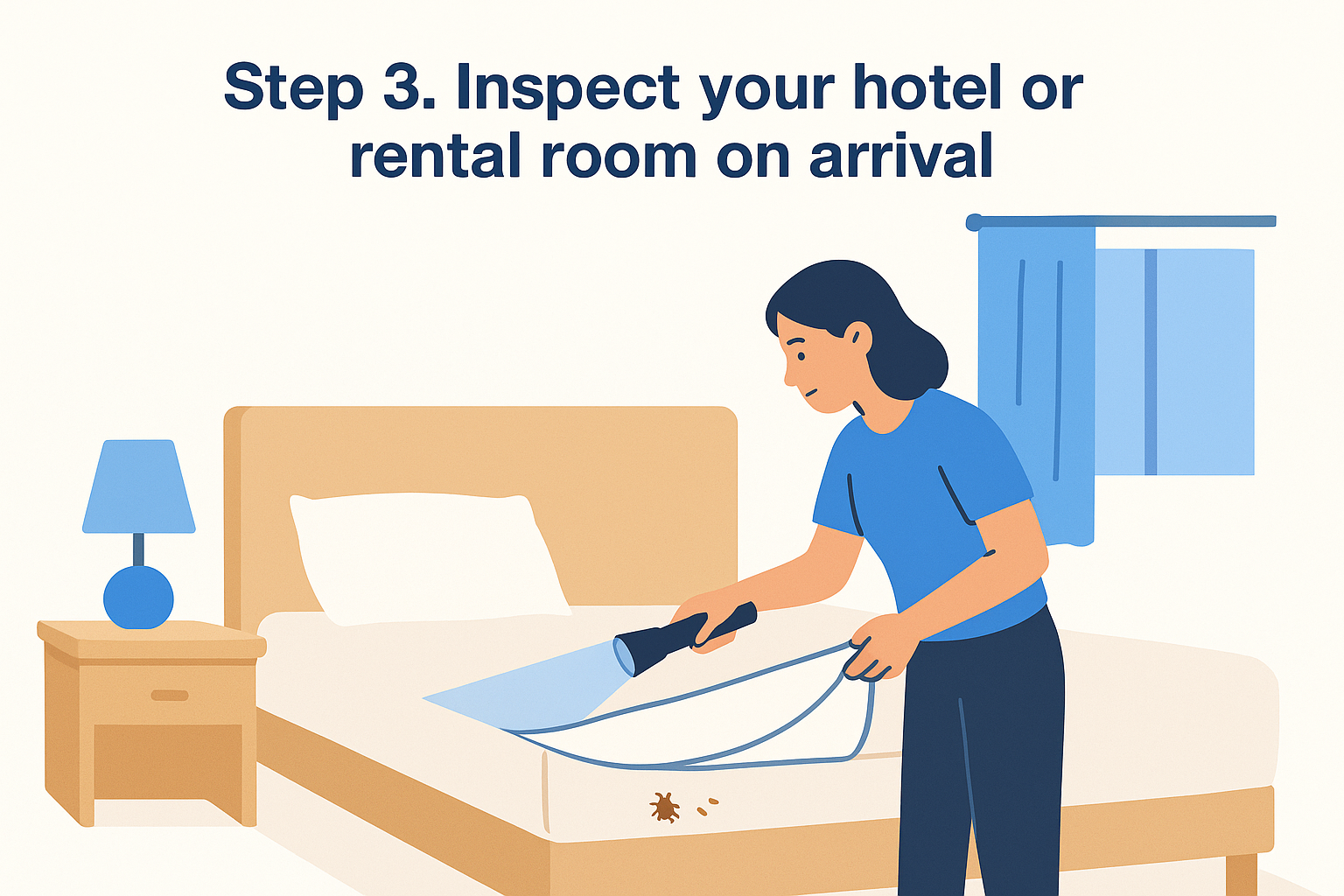
Start with the bed, not the decor
Pull back the sheets and check the mattress seams, the piping along the edges, and the corners of the box spring first, since this is where bed bugs cluster closest to a sleeping human. Look for three telltale signs: live bugs, dark reddish-brown spots the size of a pen tip, and tiny pale eggshells wedged into the fabric. Dark spotting on the mattress seams is often the clearest giveaway, since it's dried bed bug waste left behind after repeated feedings.
If you check one thing in a hotel room, check the mattress seams. That's where the evidence lives.
Work outward from the bed
Once you've cleared the mattress, move to the headboard, which often hangs loose enough for bed bugs to hide behind the bracket. Check these spots in order:
- Headboard attachment points and the wall behind it
- Nightstand drawers and the underside of the nightstand itself
- Upholstered chairs, especially seams and cushion piping
- Curtain folds and the top of the curtain rod
- Baseboards near the bed, using your flashlight at an angle
Use your flashlight at an angle, not straight on
Holding your flashlight flat against a surface and shining it sideways casts shadows that reveal texture changes a direct beam misses entirely. Angled light shows up shed skins and droppings that look almost invisible under a straight overhead beam, especially on light-colored bedding.
If you find something, act immediately
Don't unpack, don't wait for morning, and don't assume it's an isolated case. Ask for a room on a different floor, since bed bugs can travel through wall voids and plumbing between adjacent rooms on the same level. Photograph what you found before you leave, since most hotels and rental platforms will want documentation to process a refund or room change. A quick, calm conversation at the front desk almost always gets results faster than a drawn-out complaint after checkout.
Step 4. Store luggage safely during your stay
Once your inspection comes back clean, you still need somewhere safe to keep your suitcase for the rest of the trip. Luggage storage habits during a hotel stay matter almost as much as the initial room check, since bed bugs can move in from a neighboring room days after you settle in. Bathtubs and hard-surface stands give you the safest options, while beds, carpets, and upholstered furniture stay off-limits for anything you're packing home.
Use the luggage rack or bathtub, never the bed
Getting into the habit of parking your suitcase away from soft surfaces cuts off the easiest path bed bugs have into your belongings. A metal luggage rack works well if you've already checked its joints and webbing straps for hiding spots, and a bathtub works even better since the smooth porcelain gives bugs nothing to grip. Skip the closet floor too, since shared closets in older hotels sometimes connect to adjoining rooms through gaps in the drywall.
Keep your suitcase off the bed and off the carpet. A bathtub or inspected luggage rack is the safest spot in the room.
Keep your sealed bags sealed
Holding onto the ziplock and vacuum-seal habit from your packing routine pays off here too, not just during transit. Leave clothing sealed until the moment you need it instead of unpacking into hotel dressers, since drawer linings are rarely cleaned between guests and give bed bugs a comfortable place to wait. If you do need to unpack for a longer stay, check the drawer interior with your flashlight first and line it with a plastic bag before placing folded clothes inside.
Build a daily check into your routine
Treating your luggage as a one-time inspection misses the risk that builds over a multi-night stay. A thirty-second glance each evening catches problems early, before they spread from the room into your bag.
- Check the outside seams of your suitcase before closing it each night
- Glance at the luggage rack straps for any dark specks
- Keep shoes in their separate plastic bag between wears
- Avoid setting your bag on the bed even briefly to grab something
- Report any new bites or spots to the front desk immediately
Vacation rentals deserve the same treatment, arguably more, since there's no housekeeping staff cycling through with pest reports between guests. Whether you're in a hotel tower or a rented condo, the goal stays the same: keep your suitcase isolated from soft surfaces for the entire trip, not just the first night. That discipline sets you up for a clean final check before you head home, which is where the real risk of bringing something back begins.
Step 5. Recheck your belongings before you leave
Checkout morning is where most travelers drop their guard, rushing to fold clothes and zip bags before a hard deadline. That rush is exactly when a bed bug that crawled into your suitcase overnight goes unnoticed, so the pre-departure check deserves the same five minutes you spent inspecting the room on arrival. Treat this like a second, mirrored version of that first inspection, only now you're checking your own belongings instead of the room.
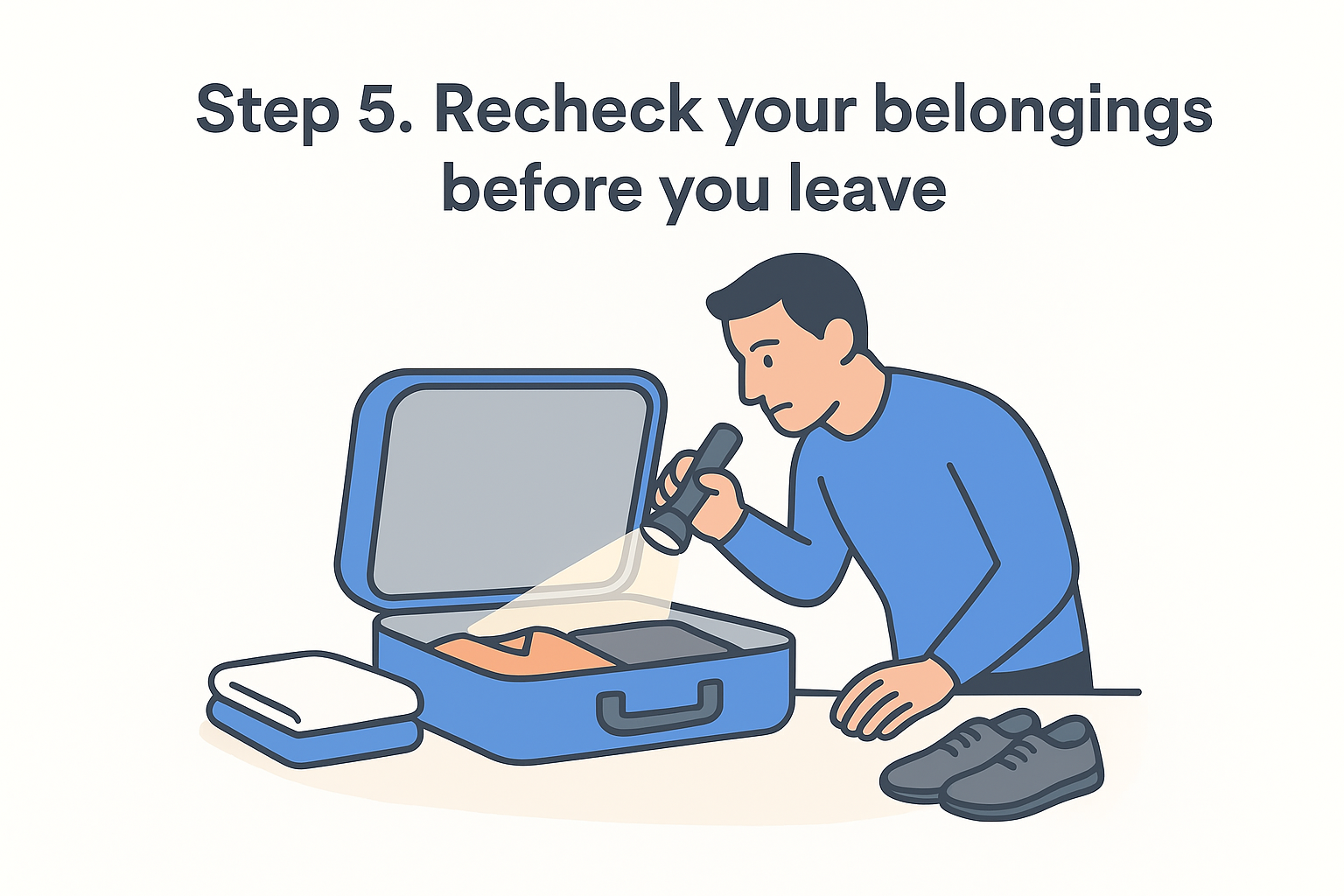
Repeat the flashlight check before packing
Pull everything out of drawers and closets and lay it on a hard surface like the bathroom tile, never the bed or carpet. Run your flashlight at an angle across each item, the same way you checked the mattress seams on day one, looking for the same three signs: live bugs, dark spotting, or pale shed skins. The angled-light technique works just as well on clothing folds and shoe interiors as it does on a mattress, so don't skip it just because you're packing instead of unpacking.
Check your own bag on the way out with the same care you used checking the room on the way in.
Inspect items you set down during your stay
Anything that touched a soft surface during your trip needs a closer look before it goes back in your suitcase. Work through this list before you close a single zipper:
- Shoes worn inside the room, checking the insides and seams
- Books, magazines, or electronics left on the nightstand or bed
- Jackets or bags hung in the closet
- Chargers and cables left plugged in near the headboard
- Any souvenirs or shopping bags set on the floor or furniture
Handle laundry and shoes separately
Worn clothing deserves its own sealed bag, separate from clean items still in their vacuum-sealed pouches. Dirty laundry carries more risk than folded clean clothes, since it's usually been tossed on chairs or floors rather than kept sealed the whole trip. Shoes go in their own bag too, tied off rather than just folded shut, since gaps in a loosely closed bag give a hitchhiker an easy way out.
Once everything passes inspection, pack it the same way you arrived, sealed bags inside a hard-shell case, nothing loose or exposed. Leave the hotel laundry bag or any paper bags provided by housekeeping behind entirely, since those have sat in a supply closet with unknown contact history. This final check takes less time than waiting in the checkout line, and it's the last real chance you have to catch a problem before it travels with you all the way home.
Step 6. Decontaminate everything as soon as you get home
Walking through your front door doesn't mean the risk is over, it means the most important step is about to start. Immediate decontamination turns your garage or driveway into a staging area, so nothing from your trip touches a couch, carpet, or bed until you've confirmed it's clean. Skipping this step, even for one night, is how a single hitchhiker turns into a full infestation inside your own home.
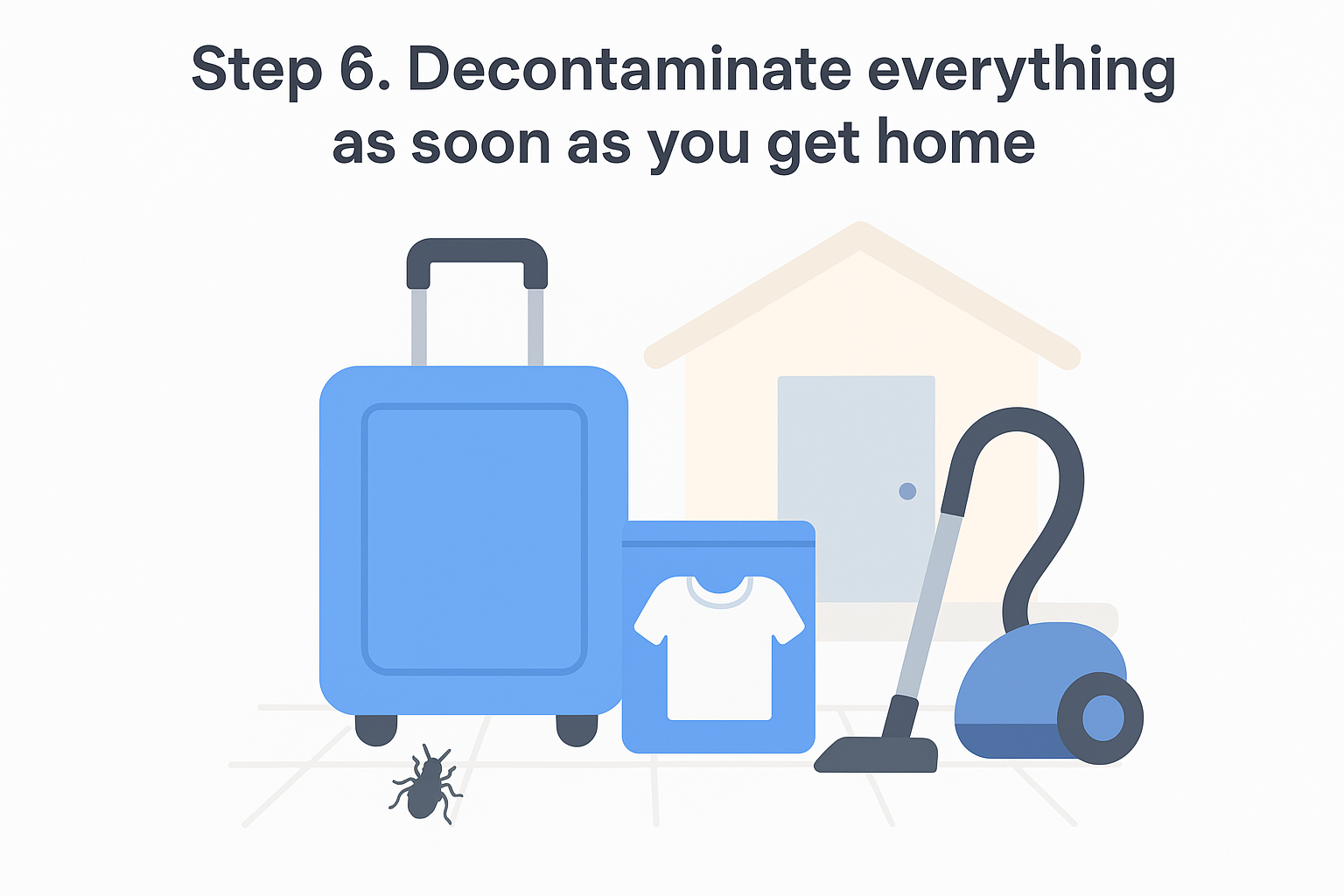
Stage your suitcase outside the living space
Set your suitcase on a hard surface like the garage floor, a driveway, or a bathroom tile rather than carrying it straight to the bedroom. A hard staging surface keeps any bugs riding along from reaching carpet or upholstery, where they can disappear within minutes. Leave it there until every item inside has been washed, dried, or inspected.
Nothing from your suitcase touches your bedroom until it's been washed, dried, or inspected on a hard surface first.
Wash everything on the hottest setting your fabric allows
Bed bugs and their eggs die at temperatures above 120 degrees Fahrenheit, according to the EPA, which makes your washer and dryer your best tool at this stage. Run every piece of clothing, worn or not, through a hot wash and a full dryer cycle before it goes anywhere near a closet.
- Wash all clothing on the highest heat the fabric tolerates, then dry on high for at least 30 minutes
- Skip the wash and dry-only for items that can't be washed, since heat alone kills bed bugs at every life stage
- Bag washed items immediately in a clean bag rather than folding them on the bed
- Run empty toiletry bags and shoe bags through the dryer too, since fabric linings hide eggs easily
Handle items that can't go in the wash
Shoes, books, and electronics need a different approach since they can't tolerate a washer or dryer cycle. Freezing works as a backup method , sealing these items in a plastic bag and leaving them in a deep freezer set below zero degrees for at least four days. A hot car trunk on a Sacramento summer afternoon can work in a pinch too, since interior temperatures regularly climb well past the lethal threshold within a few hours.
Vacuum and inspect the suitcase itself
Run a vacuum along every seam, pocket, and zipper track on the suitcase before you store it, then seal the vacuum bag and toss it outside immediately. Wipe down the hard-shell exterior with a damp cloth and give the whole case one more flashlight check before it goes back into your closet or attic.
Step 7. Monitor your home for signs of bed bugs
Decontamination lowers your risk, but it doesn't guarantee a zero-risk outcome, so the two weeks after a trip deserve real attention. Ongoing monitoring catches the rare hitchhiker that survived your laundry routine before it has a chance to establish a colony behind your headboard. Anyone serious about how to avoid bringing bed bugs home treats this step as mandatory, not optional, since even a careful traveler can miss a single egg tucked into a shoe seam.
Watch your bedroom closely for the first two weeks
Setting a recurring reminder on your phone keeps this habit from slipping once travel fatigue sets in and normal routines take over. A recurring reminder to check your mattress seams every few nights costs you almost nothing and catches an infestation while it's still a single bug instead of a breeding population. Bites are often the first thing people notice, but they can take days to appear or might not show up at all in some people, so don't rely on your skin as the only warning sign.
Two weeks of quick nightly checks is a small price for catching bed bugs before they spread past your bedroom.
Know the specific signs to look for
Checking without knowing what you're looking for wastes the effort, so keep this list nearby during your monitoring window:
- Small reddish-brown bugs about the size of an apple seed crawling near the mattress
- Dark spotting along seams, similar to what you checked for in the hotel room
- Tiny pale, empty eggshells wedged into fabric folds or box spring corners
- A musty, sweet odor that develops with larger populations
- Unexplained bites appearing in a line or cluster after waking up
Running this checklist against your own bed uses the exact same technique you practiced at check-in, just pointed at your home instead of a rental property.
Use monitoring tools if you want extra confidence
Interceptor traps placed under bed legs give you a passive way to catch bugs attempting to climb up, and they cost only a few dollars at most hardware stores. Interceptor traps work around the clock without any effort on your part, which makes them worth the small investment if you travel often or just want peace of mind. Combine that with a monthly deep check of your mattress and box spring, and you'll catch almost anything long before it becomes a problem you can't manage on your own.
Staying vigilant for those first few weeks matters far more than any single step earlier in the trip, since it's your last line of defense if something slipped through.
When to call a pest control professional
Spotting a single bug during your two-week monitoring window doesn't always mean disaster, but certain signs mean it's time to stop relying on DIY methods and bring in a licensed professional . Bed bugs reproduce fast enough that a small, manageable problem on day three can turn into a multi-room infestation by day thirty, and by that point vacuuming and hot washes won't reach the eggs tucked into baseboards, outlet covers, and furniture joints. Professional treatment exists precisely for that gap between what a homeowner can control and what requires equipment and training most people don't have on hand.
Signs DIY treatment won't cut it
Recognizing the line between a minor scare and a real infestation saves you from wasting weeks on treatments that only push bugs deeper into your walls. Call a professional if you notice any of the following:
- Live bugs found in more than one room of your home
- Bites appearing on multiple household members over consecutive nights
- Dark spotting or shed skins found away from the original suitcase or bedroom
- A musty odor developing in a bedroom or living area
- Any sign of bed bugs returning after you've already run a full decontamination cycle
What a professional inspection actually involves
Getting a trained technician into your home changes the entire scope of what's possible, since inspection tools like flashlights and moisture meters reach spaces a homeowner's flashlight check simply can't cover. A thorough inspection checks baseboards, electrical outlets, furniture seams, and wall voids, areas where bed bugs retreat once a light source disturbs them. Defender Termite and Pest Management builds treatment plans around what that inspection actually finds, rather than applying a blanket spray and hoping it holds, which matters because different infestation stages call for different combinations of heat treatment, targeted pesticide application, and follow-up visits.
A single missed nesting spot behind a baseboard is enough to restart an infestation weeks after you thought it was gone.
Why waiting costs more than acting
Hesitating to call because you're hoping the problem resolves itself almost always backfires, since bed bugs spread from room to room while you wait and watch. Every week of delay adds another generation of eggs hatching in places you haven't checked yet, which turns a single-room treatment into a whole-house job. If your own monitoring turns up anything on that warning list above, reach out to a local pest control team promptly rather than running another round of laundry and hoping for the best.
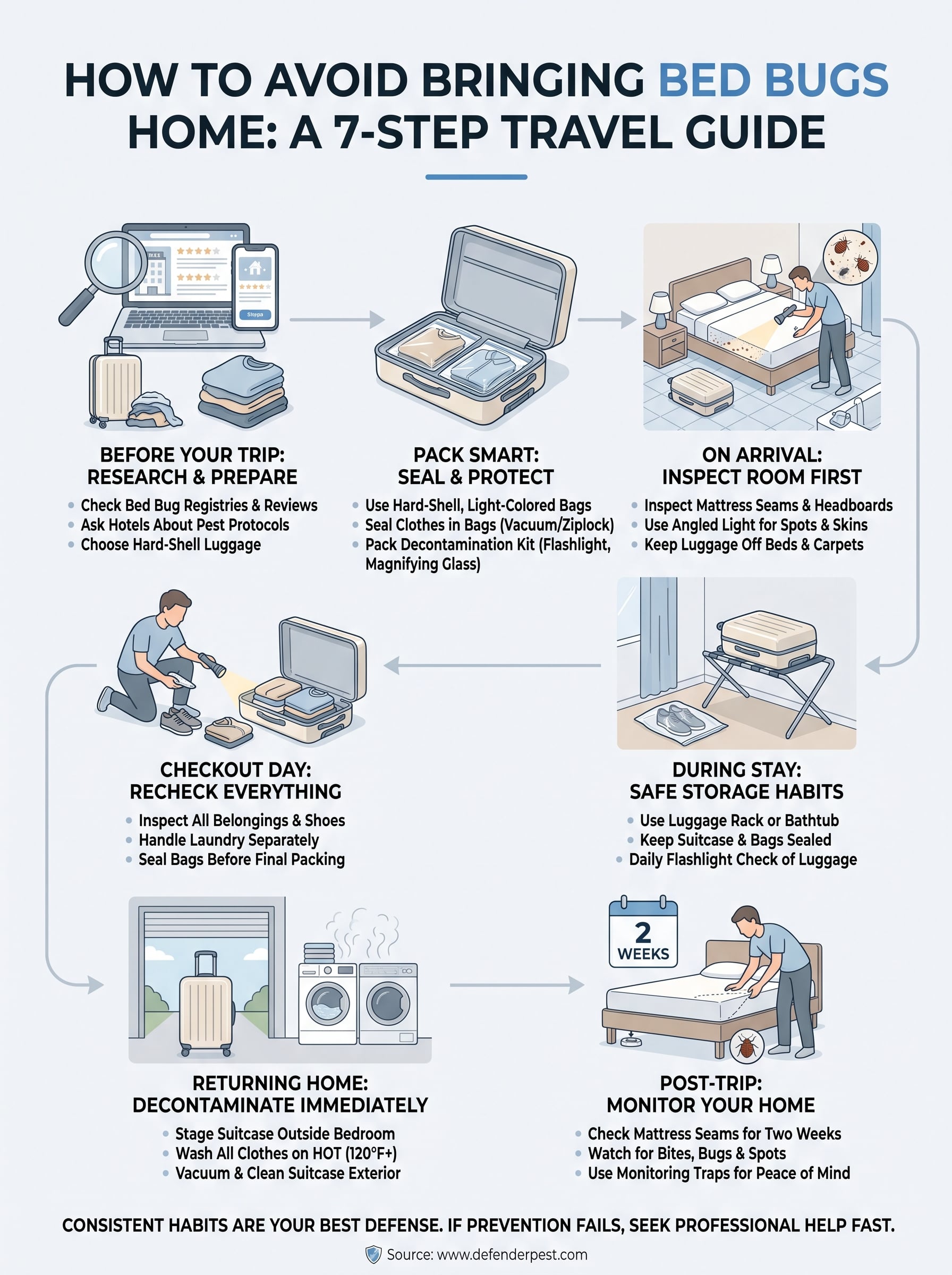
Traveling with confidence, bed bug-free
Every habit in this guide, from checking reviews before you book to washing everything on high heat the moment you're home, works together as one system. Skip a step and you weaken the whole chain, but follow all seven and you've closed off nearly every path bed bugs use to hitch a ride. Consistent prevention habits turn a stressful unknown into a routine you barely think about after a few trips, the same way checking your mirrors before backing out of a driveway becomes automatic.
Travel shouldn't come with the fear of a hidden souvenir crawling home in your suitcase. Knowing how to avoid bringing bed bugs home means you can unpack after your next trip without that sinking feeling from the opening of this guide. And if something still slips through despite your best efforts, don't wait around hoping it resolves on its own. Reach out to Defender Termite and Pest Management for a fast, local inspection before a minor scare becomes a real infestation.