Home Inspection Termite Checks: What Buyers Should Expect
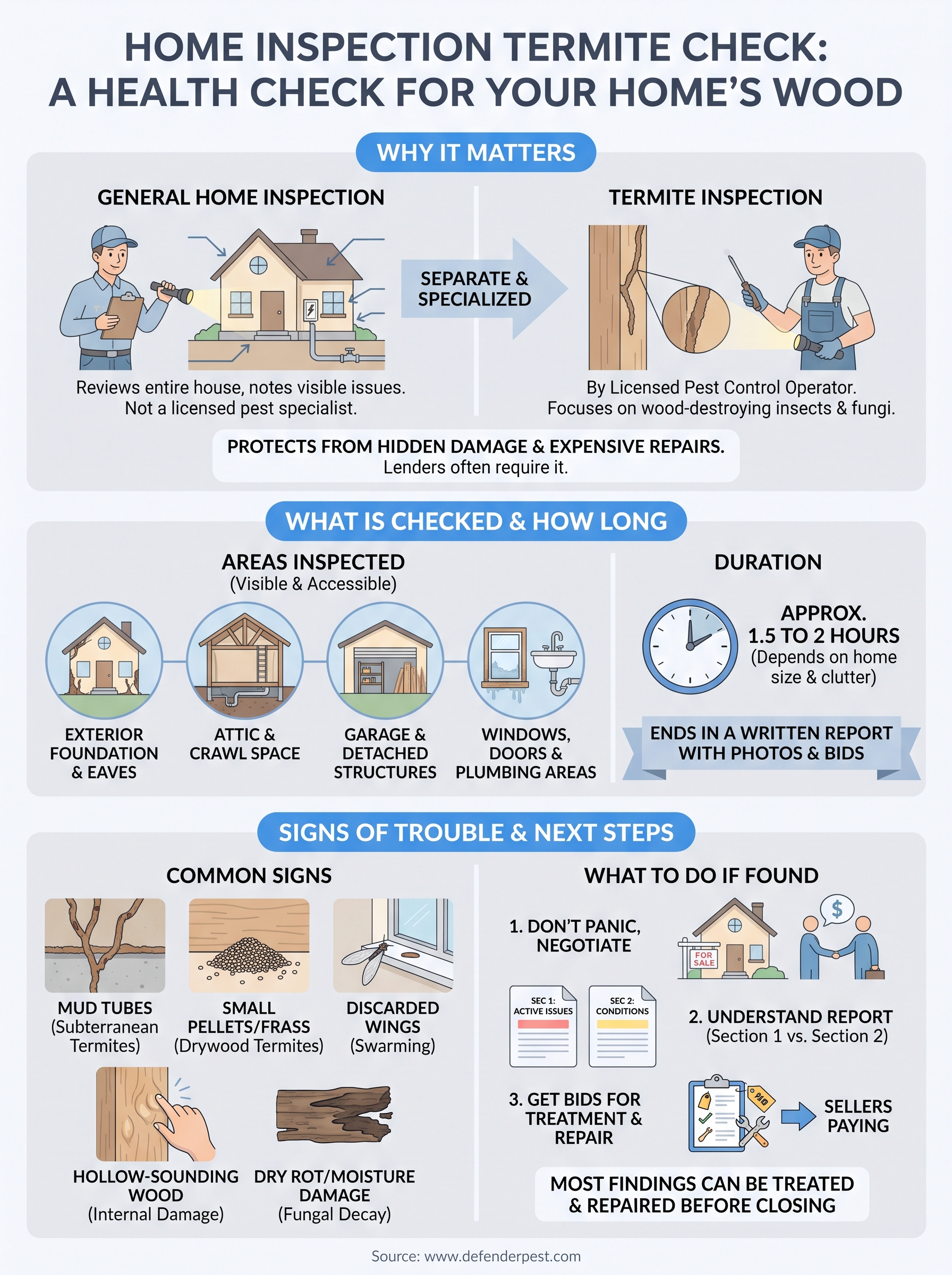
A home inspection termite check is a separate inspection by a licensed pest control specialist. It looks for termites, other wood-destroying insects and wood-rotting fungi in a house you plan to buy. It is usually not part of the general home inspection. It takes about an hour and a half to two hours, and it ends in a written report that tells you what was found, what could turn into a problem and what the fix involves.
Think of it as a health check for the wood that holds the house up. Termites chew through framing, subfloors and eaves, often for years before anything shows on the surface. A termite inspection of your home before closing puts the problem on paper while you can still negotiate.
This guide explains why the inspection matters, what the inspector checks, how to order one and who pays, and what to do if the report finds termites. Defender Termite & Pest Management has inspected and repaired homes around Sacramento since 1999, so the examples follow what buyers here run into.
Why a termite inspection matters when you buy a home
You need one because termite damage is hidden, it is expensive to fix, and a general home inspection will not reliably catch it. The inspection shifts the cost of finding the problem to before you own the house.
Why a general home inspection is not enough
A general home inspector reviews the whole house: roof, plumbing, electrical, heating, foundation. They will mention visible pest evidence if they happen to see it. But they are not there to diagnose wood-destroying organisms, and they do not hold the pest control license that does.
In California, a termite inspection is done by a licensed Structural Pest Control Operator . The result is a Wood Destroying Pests and Organisms Inspection Report. It can cover termites, wood-destroying beetles, carpenter ants, carpenter bees and wood-destroying fungi such as dry rot. Treat the two inspections as a pair, not as substitutes.
A general home inspection tells you how the house is built, and the termite inspection tells you what is eating it.
What it protects you from
Termites feed on wood from the inside. Drywood termites live inside the lumber itself, while subterranean termites travel from the soil through mud tubes. Either kind can weaken framing and subfloors behind finished walls long before you see a sign.
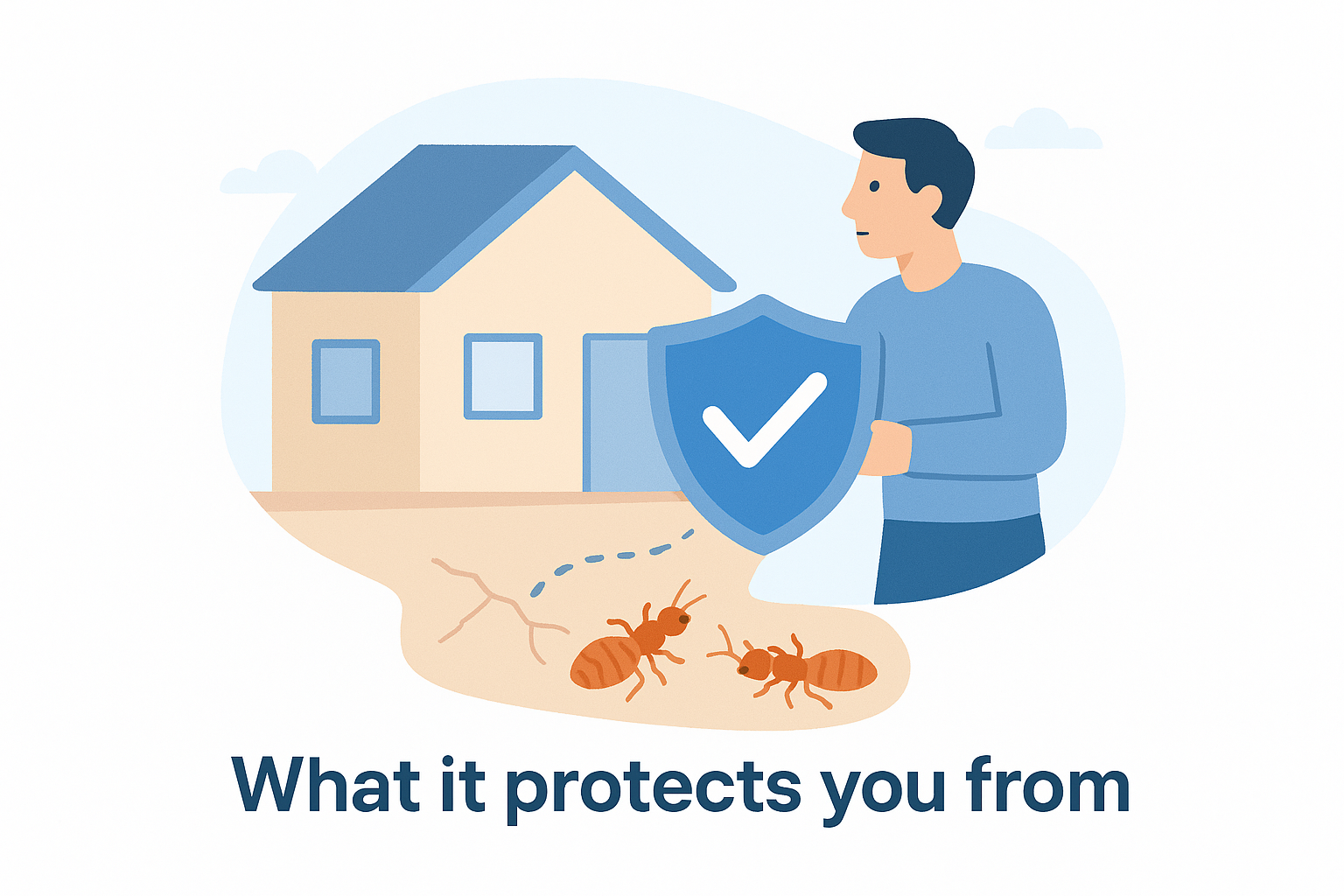
If you skip the inspection, you inherit the treatment and repair bill along with the house. The inspection fee is small next to that. Many lenders also ask for the report, so in practice you will likely need one anyway. For most buyers, the question of whether a termite inspection is worth it has a short answer: yes.
What inspectors check during a termite inspection
The inspector examines every visible and accessible area of the structure for live insects, evidence of past activity, wood damage and conditions that invite termites. Expect them to be on site for about an hour and a half to two hours.
Where the inspector looks
The inspection starts outside, at the foundation, siding, eaves, fascia and any decks, fences or detached structures attached to the property. Inside, the inspector goes into the attic and the crawl space or subarea, and checks the garage, window sills and the areas around plumbing. They tap and probe suspect wood and often use a flashlight and a moisture meter.
Areas the inspector cannot reach, such as finished walls or storage-blocked spaces, get listed as inaccessible on the report. That is a limit of any visual inspection, not a flaw in it.
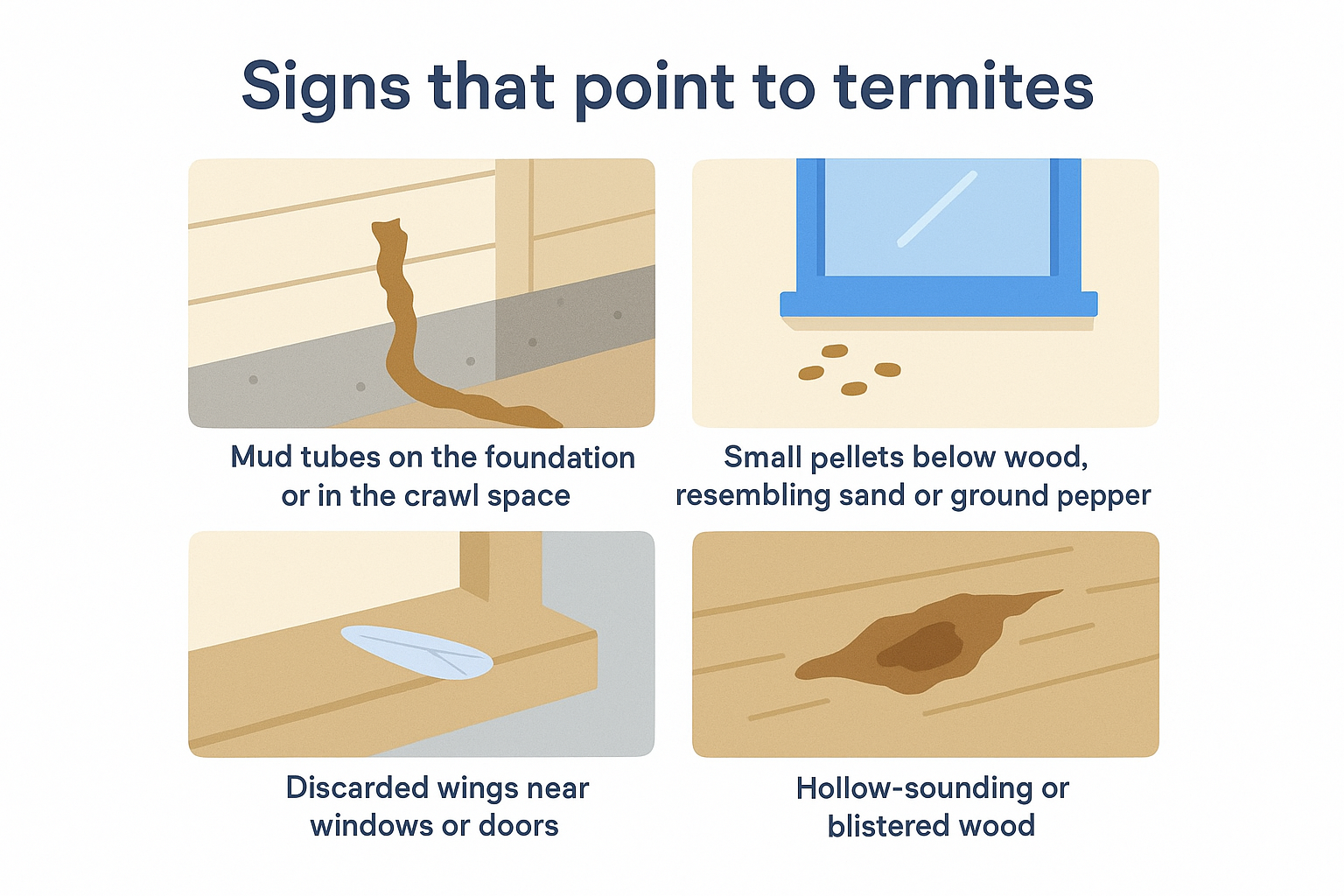
Signs that point to termites
| Sign | What it usually means |
|---|---|
| Mud tubes on the foundation or in the crawl space | Subterranean termites traveling from soil to wood |
| Small pellets (frass) below wood, resembling sand or ground pepper | Drywood termites pushing waste out of their galleries |
| Discarded wings near windows or doors | A swarm happened recently, so a colony is nearby |
| Hollow-sounding or blistered wood | Wood eaten from the inside |
| Soft, crumbling or darkened wood | Dry rot or moisture damage, which can also invite termites |
How long it takes
Plan on about an hour and a half to two hours for a typical home. A larger house, a detached garage or a cluttered attic adds time. Afterward you should get a written report. At Defender, a termite job comes with a report that includes pictures, so you can see exactly what the inspector saw.
How to order a termite inspection when buying a home
Order it as soon as your offer is accepted, so the report arrives while you still have time to negotiate. The sequence below keeps the process simple.
The steps, in order
- Order early. Book during your contingency period, not in the last week.
- Pick a licensed company. Confirm the operator's license with the state before you book.
- Arrange access. Ask the listing agent to unlock the attic hatch, crawl space and garage, and to clear blocked areas.
- Ask what the report covers. You want termites, wood-destroying beetles, ants and fungi, plus a clear list of inaccessible areas.
- Read the report right away. Request bids for every item it lists.
The best time to order a termite inspection is the day your offer is accepted.
What it costs and who pays
Price depends on the size of the home, any extra structures and how easy the spaces are to reach. Because of that, ask for a quote based on your specific property rather than trusting a flat figure from a website.
Who pays is a point in the purchase agreement. In California the seller often orders the pest inspection, but it can be negotiated, and the same goes for any treatment or repair the report calls for. Check your agreement with your agent before you book so you do not pay twice.
What to do if termites are found
Do not panic and do not walk away yet. Termites in a report are a negotiating point , and most findings can be treated, repaired and priced before closing.
How to read the findings
California reports sort findings into two groups. Section 1 items are active infestations, infections or damage that already exists. Section 2 items are conditions likely to lead to infestation, such as moisture problems or wood touching soil. Section 1 usually needs attention first. Section 2 is cheaper prevention.
Your options after the report
| Finding | Typical response |
|---|---|
| Limited drywood activity | Localized treatment |
| Widespread drywood termites | Structural fumigation, usually 3 to 5 days with sulfuryl fluoride gas (Vikane) |
| Subterranean termites | Liquid soil and barrier treatment, which lasts up to about 5 years |
| Termite or dry rot damage | Wood repair, with a one-year warranty at Defender |
| Section 2 conditions | Fix the moisture or wood-to-soil contact |
Get written bids for each item and send them to your agent. You can then ask the seller to pay for treatment and repairs , give you a credit or lower the price. Ask about guarantees too. Defender's fumigation carries a two-year guarantee from the date of completion, and it subcontracts the fumigation itself to a reputable fumigation company. Walk away only when structural damage is extensive and the seller will not negotiate.
Get bids before you negotiate, because a number is harder to argue with than a worry.
Getting your termite inspection booked
A home inspection termite check is the one part of the buying process that finds what a general inspection cannot. Order it as soon as your offer is accepted, read the Section 1 and Section 2 findings, and use written bids to settle who pays for what.
If you are buying in the Sacramento area, you can schedule a termite inspection with Defender online, or call the termite inspections line at (916) 836-8083. Defender is licensed and insured, and if the report finds damage, its in-house repair team can fix it too.