NPMA-33 Termite Inspection Form: What It Is & Who Needs It
If you're buying or selling a home, especially with a VA or HUD loan involved, there's a good chance someone will ask you for an NPMA-33 termite inspection form . It's the standardized report used nationwide to document whether a property has evidence of wood-destroying insects. Despite how common it is in real estate transactions, most people encounter it for the first time at closing and have no idea what it actually covers or why it matters.
At Defender Termite & Pest Management, we've been completing these inspections for homeowners, buyers, and real estate agents across the Greater Sacramento area since 1999 . We fill out NPMA-33 reports regularly, and we've seen firsthand how confusion around the form can slow down or even derail a property sale .
This article breaks down what the NPMA-33 form is, who needs one, how the inspection process works, and what the results mean for your transaction. Whether you need to order an inspection or just understand a report you've already received, you'll walk away with a clear picture of how this form fits into your situation .
What the NPMA-33 form is and why it matters
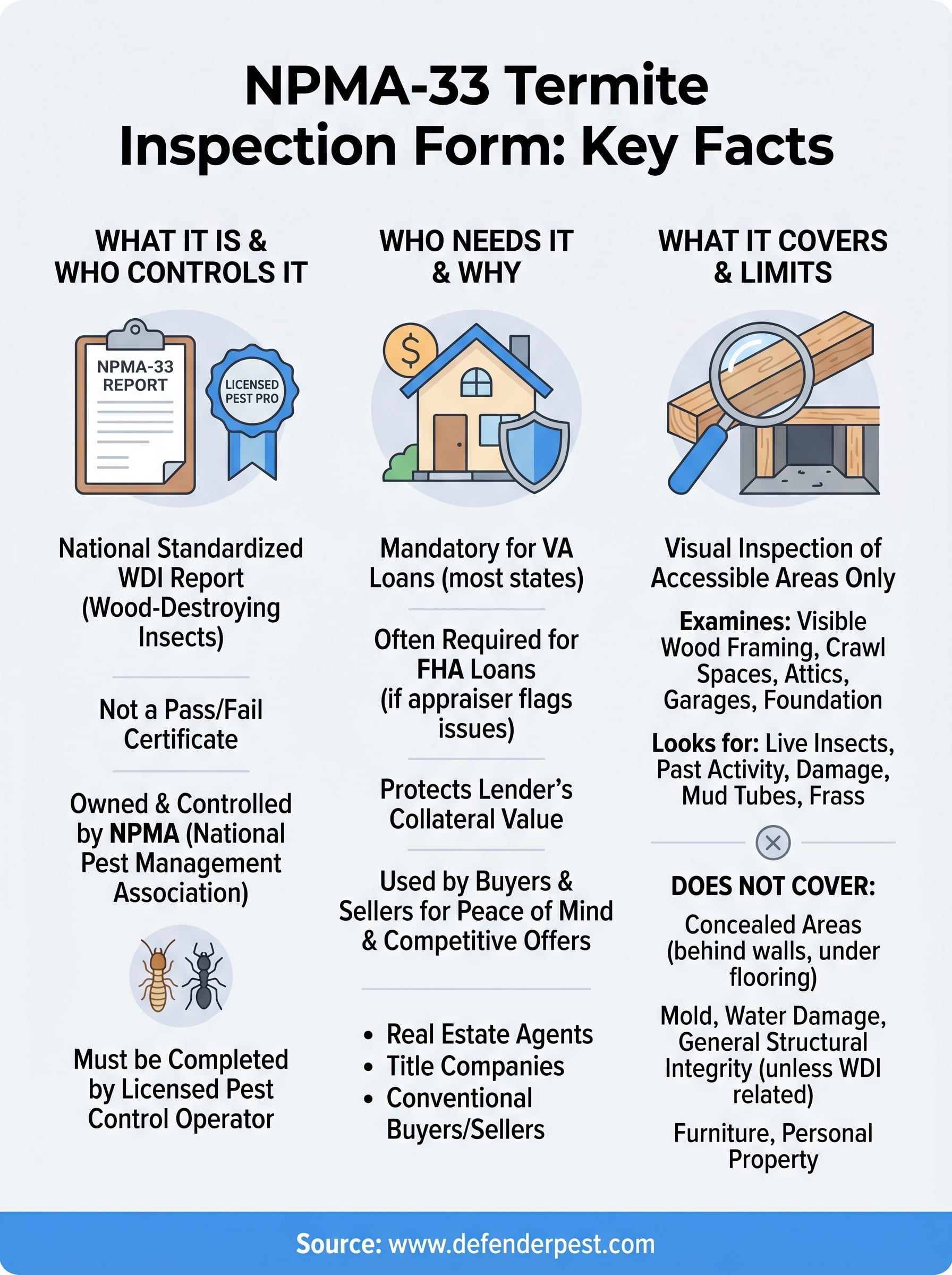
The NPMA-33 termite inspection form is the official, nationally standardized report that licensed pest control professionals use to document their findings after inspecting a property for wood-destroying insects (WDI) . NPMA stands for the National Pest Management Association, and the "33" refers to the form number. When a licensed inspector completes one, they're recording whether they found evidence of termites, wood-boring beetles, carpenter ants , or similar insects in the visible and accessible areas of the property.
The NPMA-33 is not a pass/fail certificate. It's a factual record of what the inspector observed on the day of the inspection.
Where the form comes from and who controls it
The National Pest Management Association developed and owns this form. Only licensed pest control operators are authorized to complete and sign it. You cannot download a blank copy, fill it out yourself, and submit it to a lender. The form requires the inspector's license number, company information, and signature, which makes it a legally accountable document tied to a professional who carries liability for its accuracy.
Some states have their own additional requirements or supplemental forms, but the NPMA-33 remains the baseline standard recognized by lenders across the country, including those handling VA and FHA loans .
Why lenders and real estate transactions require it
Lenders require the NPMA-33 because wood-destroying insects can compromise the structural integrity of a home, which directly affects the collateral value of the loan. A house damaged by termites isn't worth what the purchase price suggests. For VA loans specifically , the Department of Veterans Affairs mandates a WDI inspection in most states as part of the appraisal process, and the NPMA-33 is the accepted format for reporting those results.
Real estate agents and title companies also rely on this form to confirm that a property has been properly inspected and that any required treatments or findings have been disclosed before closing.
Who needs an NPMA-33 for a home sale or loan
Not everyone needs an NPMA-33 termite inspection form for every transaction, but specific loan types and certain states make it mandatory. Understanding whether your situation requires one early can save you from last-minute delays at closing.
VA and FHA loan requirements
If you're using a VA loan , a wood-destroying insect inspection is required in most states, including California. The lender orders it as part of the appraisal process, and the completed NPMA-33 must be on file before the loan closes. FHA loans don't automatically require one, but an FHA appraiser can call for a WDI inspection if they spot signs of infestation or damage during their walkthrough.
If a VA or FHA appraiser flags potential insect damage, the lender will require a completed NPMA-33 before approving the loan.
When sellers and buyers need one too
Even outside government-backed loans , sellers often order an NPMA-33 proactively to strengthen their listing. Providing a clean inspection report upfront reduces the chance of a buyer demanding price reductions or repairs during escrow. If you're a real estate agent or title company , you may also request the form to satisfy disclosure requirements before closing.
Conventional loan buyers can request one as a condition of their purchase offer. In competitive markets like Greater Sacramento , having an NPMA-33 already completed gives sellers a measurable advantage during negotiations and keeps the transaction moving forward without holdups.
What the NPMA-33 inspection covers and limits
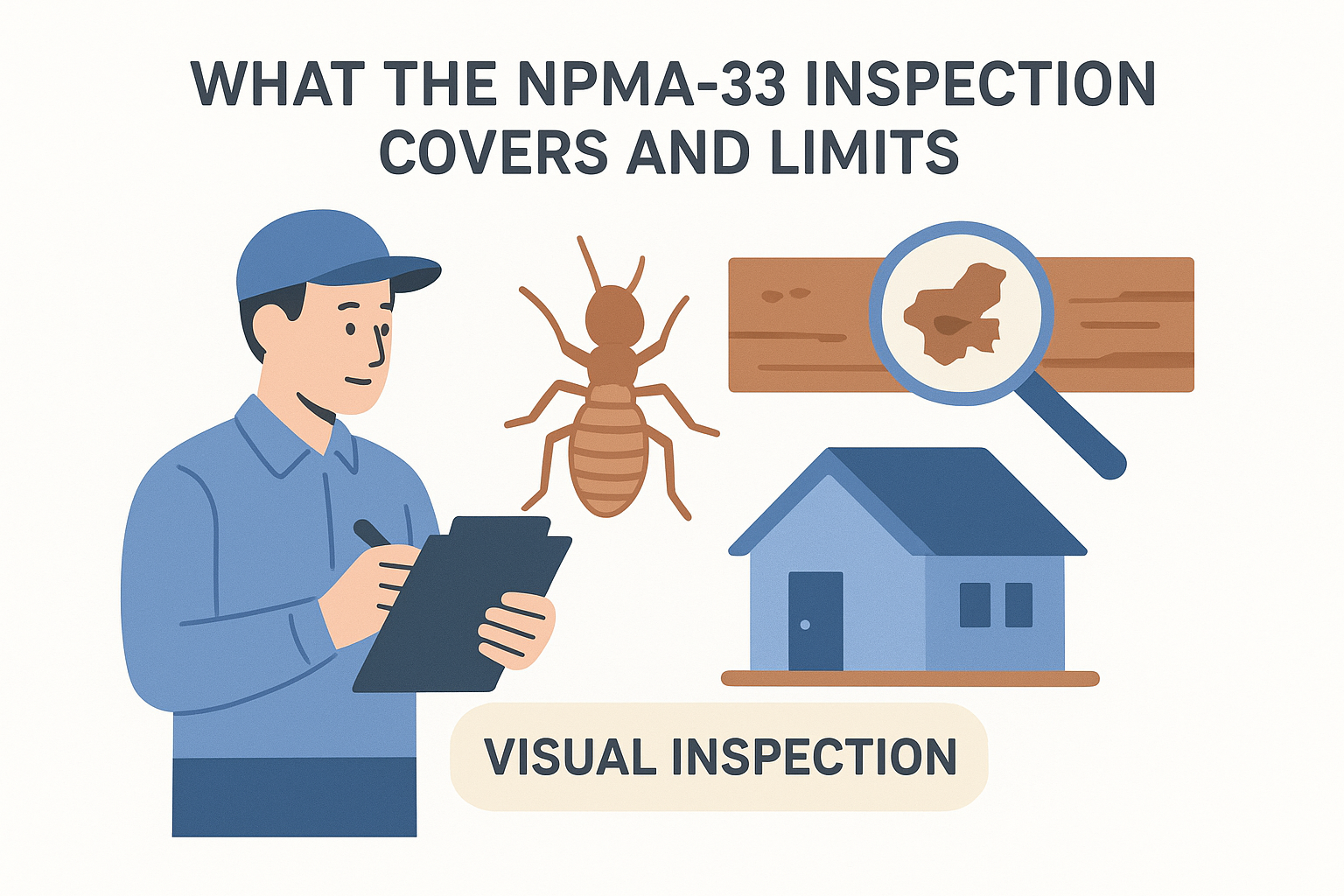
The NPMA-33 termite inspection form documents findings from a visual inspection of accessible areas in the property. The inspector walks through the structure looking for live insects, evidence of past activity, and damage caused by wood-destroying organisms. What gets recorded is limited to what the inspector can physically see and reach on the day of the visit.
What the inspector examines
The inspector checks visible wood framing, crawl spaces, attics, garages, and foundation areas for signs of termites, wood-boring beetles, and carpenter ants. They look for mud tubes, frass, damaged wood, and exit holes. If they find evidence, they note its location and whether the infestation appears active or inactive. The report also records whether any previous treatments or damage repairs are visible on the property.
Inspectors document what they observe on the day of the visit. Concealed areas behind walls, under flooring, or inside insulation are outside the scope of the inspection.
What the form does not cover
The NPMA-33 does not evaluate general structural integrity, mold, water damage, or dry rot unless those conditions directly involve wood-destroying insects. Furniture, personal property, and detached structures are excluded unless specifically requested. Inspectors also cannot report on areas they cannot safely access , such as sealed crawl spaces or rooms blocked by stored items. If access is restricted, the report notes that limitation clearly.
How to get an NPMA-33 form legally and correctly
You cannot download a blank NPMA-33 termite inspection form from a website and submit it to your lender. The form is only valid when completed and signed by a licensed pest control operator , which means your first step is always hiring a qualified professional to conduct the inspection.
Finding a licensed inspector in your area
Your lender, real estate agent, or title company can usually recommend a licensed pest control company in your area. Before you book, confirm the inspector meets a few basic requirements to avoid a rejected report.
- Holds an active state pest control license
- Is authorized to inspect for wood-destroying insects
- Can provide a signed NPMA-33 accepted by your lender
Confirm the inspector is licensed in your state before scheduling, since an unlicensed inspection report will be rejected by your lender.
What to expect during the process
Once you schedule the inspection , the professional visits the property, completes their walkthrough, and fills out the NPMA-33 directly. Most inspections take one to two hours depending on the size and accessibility of the home.
Results are typically delivered within one to two business days . Your lender or escrow officer will need the original signed report, so confirm early whether a digital or physical copy satisfies their requirements. Costs vary by region and property size, but most single-family home inspections fall in the $75 to $150 range.
How to read and complete the NPMA-33 sections
The NPMA-33 termite inspection form is divided into clearly labeled sections that capture property details, inspection findings, and treatment recommendations . When you receive a completed report, start at the top where the inspector records the property address, the inspection date, and their license information. These details confirm the report is tied to a specific property and a licensed professional who carries liability for its accuracy.
Understanding the inspection findings sections
Each section of the report contains checkboxes and coded notations that indicate what the inspector observed. Section I covers evidence of active or inactive wood-destroying insects , while Section II addresses visible damage to wood members. Each finding is tied to a specific location in the structure, so you can identify exactly which areas of the home the notation applies to.
If you see findings in Section I or II, that does not automatically mean the deal is over. It means treatment or further evaluation is required before closing.
What each checkbox and code means
Inspectors use a straightforward system to mark their findings. "Evidence found" checkboxes indicate the inspector observed signs of WDI activity or damage in a specific area. A "No evidence found" result means the accessible areas showed no visible signs on the day of the inspection.
Your report will also note any areas the inspector could not access. If anything is marked inaccessible, contact your inspector directly to understand which areas were excluded and whether a follow-up visit is warranted before closing.
What to do next
Now that you understand what the NPMA-33 termite inspection form covers and how it fits into your transaction, the next step is straightforward: schedule your inspection with a licensed professional before your lender asks for it. Ordering it early gives you time to address any findings without putting your closing date at risk.
If your report comes back with evidence of wood-destroying insects , that's not the end of your deal. It means you need treatment, and in some cases, wood repair to satisfy your lender's requirements. Both steps are manageable when you work with a company that handles the full process.
Defender Termite & Pest Management has been completing licensed termite inspections and structural wood repairs across the Greater Sacramento area since 1999. If you're ready to move forward, request a termite inspection estimate and we'll get your property evaluated quickly and accurately.