How to Get Rid of Lawn Bugs Naturally: 6 Effective Ways
You step outside and your grass looks patchy, chewed up, or just plain sad, and you suspect bugs are the culprit. Before you reach for a jug of pesticide, it's worth knowing that how to get rid of lawn bugs naturally is a real, workable option for most Sacramento-area yards, not just a hopeful internet trend. Chinch bugs, grubs, and armyworms respond well to targeted, chemical-free approaches when you catch them early and apply the right method consistently.
This article gives you six methods that actually work, from beneficial nematodes and diatomaceous earth to smarter watering habits and companion planting that makes your lawn less appealing to pests in the first place. Each one is safe for kids, pets, and the beneficial insects your yard needs, and none require a hazmat suit to apply.
We've handled thousands of lawn and pest calls across Sacramento, Roseville, Folsom, and Elk Grove since 1999, so we know which natural remedies hold up outside a lab and which ones fizzle after the first rain. Read on for practical, step-by-step fixes , and if the infestation is too far gone for DIY, we'll also flag when it's time to call in professional lawn insect control .
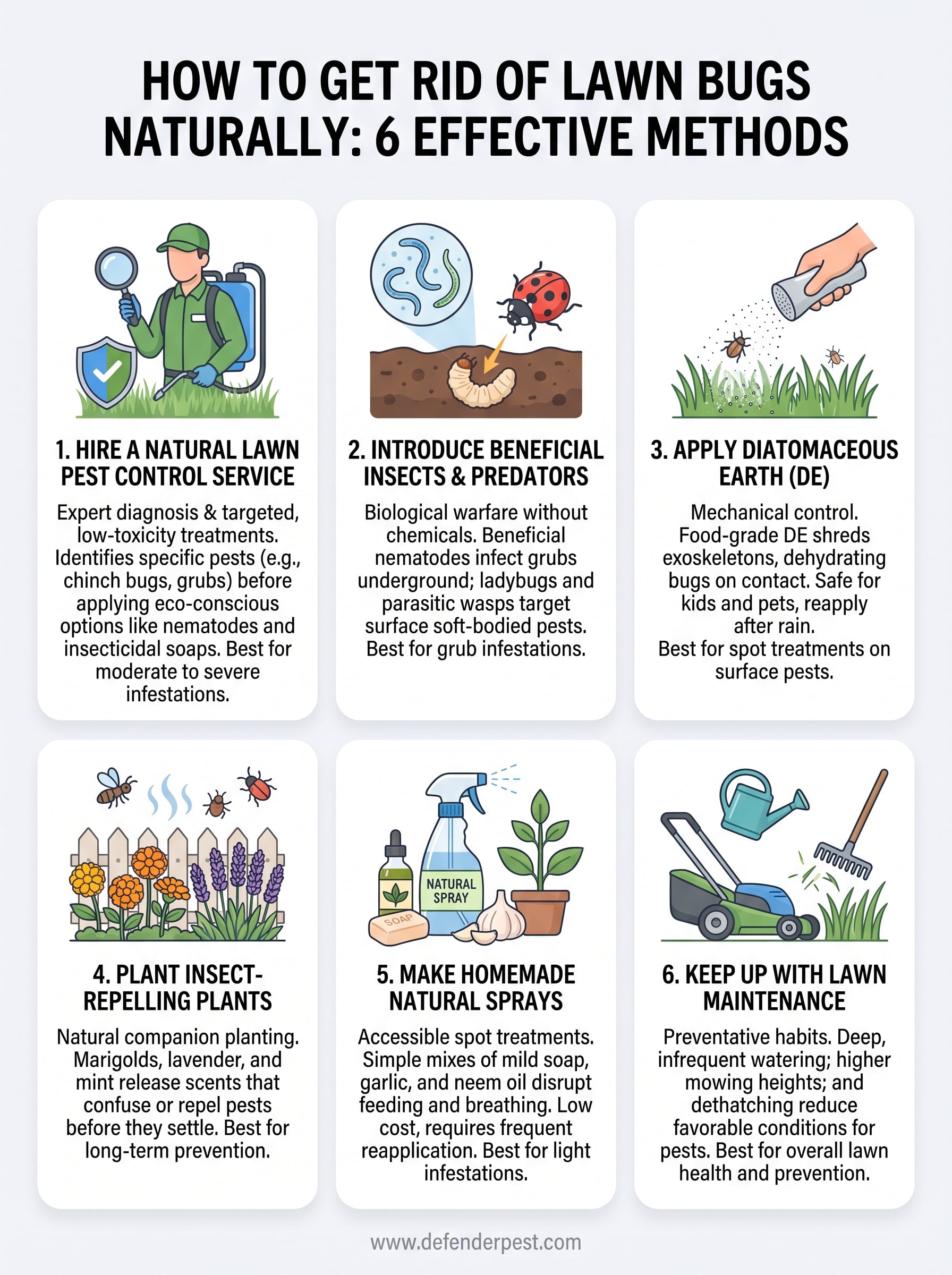
1. Hire a natural lawn pest control service
Sometimes the fastest route to how to get rid of lawn bugs naturally is skipping the trial and error altogether and calling in a company that already knows the playbook. A natural lawn pest control service identifies the exact bug causing your damage, whether it's chinch bugs sucking moisture from your grass blades or grubs chewing through roots underground, then applies targeted, low-toxicity treatments instead of blanket chemical spraying. This matters because misidentifying the pest is the number one reason DIY treatments fail. You might dump beneficial nematodes on a lawn that actually has a fungal problem, or spray for armyworms when chinch bugs are the real issue.
How it works
Technicians inspect your lawn, sample the soil or thatch layer, and confirm which pest and life stage you're dealing with before recommending anything. From there, a company like Defender applies eco-conscious options such as beneficial nematodes, insecticidal soaps, or spot treatments that target the pest without wiping out earthworms, pollinators, or the microbes that keep your soil healthy. Most services also build in a follow-up visit to confirm the population actually dropped rather than just guessing and hoping.
The right diagnosis, not the strongest chemical, is what actually fixes a bug-damaged lawn.
Best for
This route makes the most sense for homeowners with a moderate to severe infestation already visible, dead patches spreading across the yard, or a history of the same bugs coming back every summer. It also suits busy property owners who want a verified natural approach without spending weekends testing home remedies that may or may not work.
Cost and effort needed
Effort on your end is minimal since a technician handles the diagnosis and application. Pricing varies by lawn size and pest severity, but here's a general breakdown:
- Single lawn inspection and treatment: often $75 to $150
- Seasonal or recurring lawn insect programs: typically $30 to $60 per visit
- Severe infestations requiring multiple treatments: costs scale with square footage and revisit frequency
Getting an actual quote from a local provider beats guessing based on national averages, since Sacramento soil and climate conditions affect what treatment plan you'll need.
2. Introduce beneficial insects and natural predators
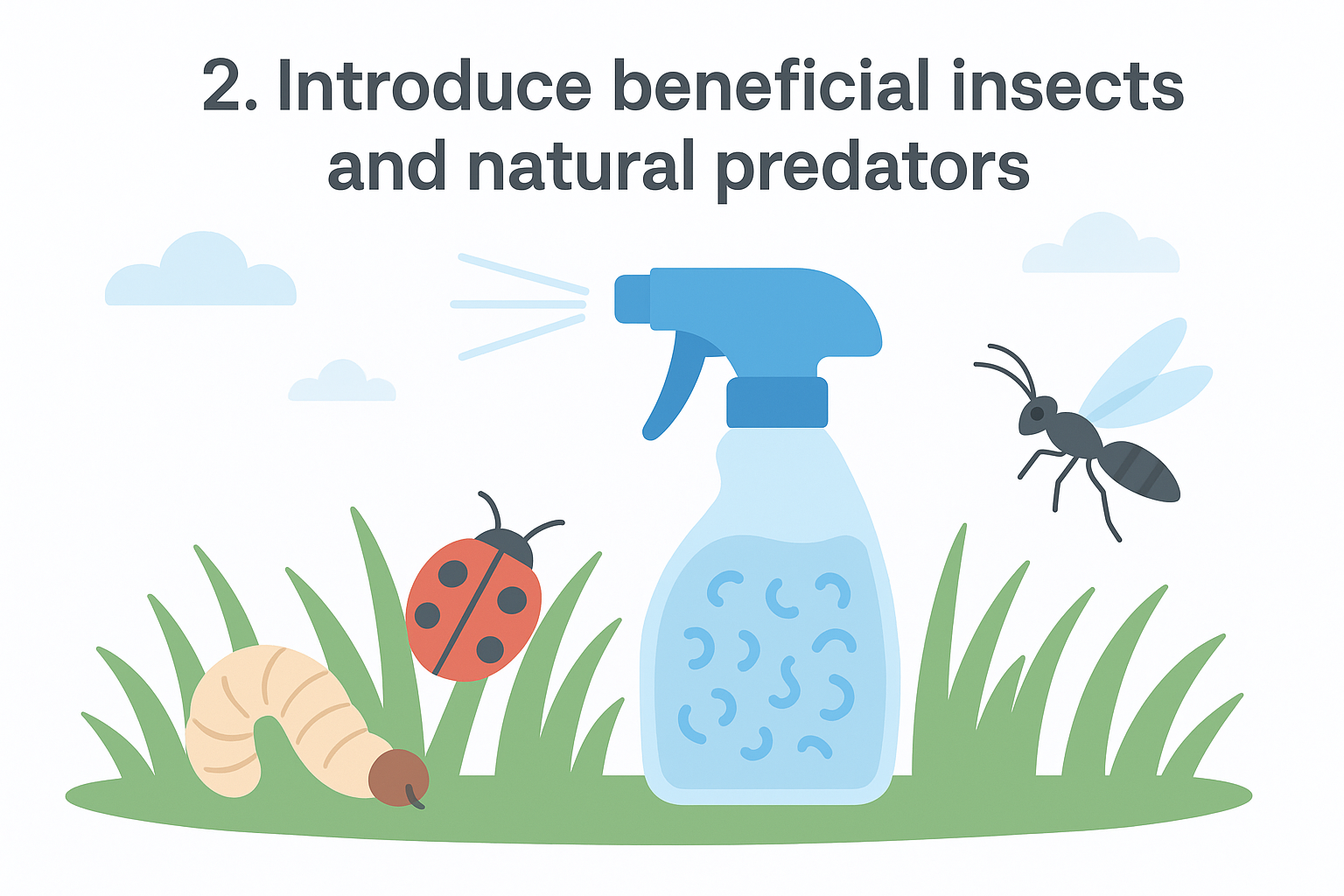
Beneficial nematodes and predator insects turn your lawn into a battlefield where the good guys win without you spraying anything toxic. These microscopic organisms and hungry bugs hunt down grubs, chinch bugs, and armyworm larvae before they can chew through another root system, and they're one of the most reliable answers to how to get rid of lawn bugs naturally when applied at the right time of year.
How it works
You apply beneficial nematodes as a liquid concentrate mixed with water, spraying it across the lawn in early morning or evening when soil moisture is highest. The nematodes burrow down and infect grub larvae within 48 hours. Ladybugs and parasitic wasps work above ground, targeting aphids and other soft-bodied pests that damage grass blades and nearby plants.
Nature already built an army for pest control, you just have to release it at the right time.
Best for
This method suits homeowners dealing with grub infestations specifically, since nematodes target soil-dwelling larvae better than surface sprays ever could. It also works well for anyone wanting a proactive, seasonal approach rather than reacting after damage appears.
Cost and effort needed
Nematode packets run $20 to $40 and cover an average residential lot. Application takes under an hour with a garden hose sprayer, though timing matters since nematodes die in direct sunlight or dry soil.
3. Apply diatomaceous earth to your lawn
Diatomaceous earth (DE) is a powder made from crushed fossilized algae, and it's one of the cheapest tools for how to get rid of lawn bugs naturally without touching a chemical bottle. It works mechanically instead of chemically, which means bugs can't build resistance to it the way they can with pesticides.
How it works
Food-grade DE shreds the exoskeletons of soft-bodied insects like chinch bugs, fleas, and ants on contact, dehydrating them within a day or two. Sprinkle a thin layer across affected patches, ideally with a hand-crank spreader for even coverage, and reapply after rain or heavy irrigation since moisture reduces its effectiveness.
Diatomaceous earth doesn't poison bugs, it dries them out from the inside.
Best for
Spot treatments on small to medium lawns with visible surface pests are where DE shines. It's also a solid pick for pet owners and families who want a method they can apply themselves without worrying about runoff into vegetable beds or nearby ponds.
Cost and effort needed
Expect to pay $10 to $20 for a bag that covers most residential yards. Application takes 15 to 20 minutes, though you'll want to wear a mask since the fine dust irritates lungs during spreading, and reapplication after every significant rainfall adds up over a season.
4. Plant insect-repelling plants around your yard
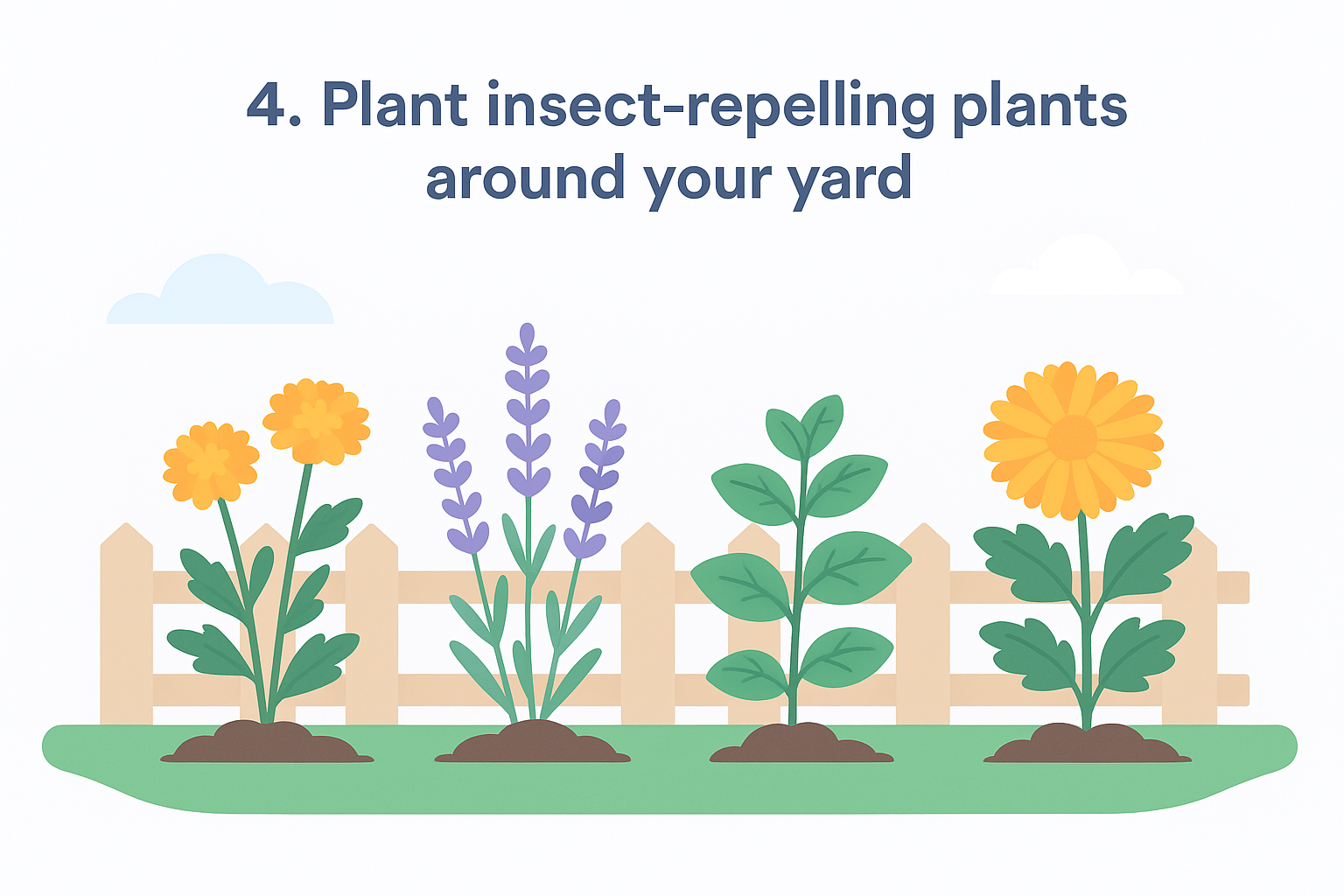
Some of the best pest control doesn't come in a bag at all, it comes from what you plant along your lawn's edges. Certain plants release natural compounds that confuse or repel insects before they ever settle into your grass, making companion planting a low-maintenance answer to how to get rid of lawn bugs naturally that also adds color to your yard.
How it works
Marigolds, lavender, and mint release scent compounds that mask the signals bugs use to find host plants, while chrysanthemums contain pyrethrin, a natural insect deterrent found in many organic sprays. Plant these in borders, along fence lines, or in patches near problem areas where chinch bugs and armyworms tend to cluster. Over a season or two, the reduced bug pressure becomes noticeable, especially paired with other methods on this list.
A well-planted border can do quiet pest control work all season long.
Best for
Homeowners who want long-term prevention rather than a quick fix will get the most from this method. It also suits anyone dealing with mild, recurring issues rather than a full-blown infestation already tearing through the lawn.
Cost and effort needed
Starter plants or seed packets run $3 to $10 each, and a modest border might cost $30 to $60 total. Planting takes an afternoon, and upkeep is limited to normal watering and occasional trimming, no ongoing application needed.
5. Make homemade natural sprays and repellents
Kitchen cabinets hold more pest control power than most homeowners realize. Simple mixtures of soap, garlic, and neem oil disrupt insect feeding and breathing without harming your grass, and they cost pennies compared to bottled pesticides. This is one of the most accessible answers to how to get rid of lawn bugs naturally since you likely already own the ingredients.
How it works
Soap sprays suffocate soft-bodied bugs by breaking down their protective coating, while garlic and neem repel insects through smell and taste rather than killing on contact. Mix a batch and spray directly on affected patches every few days until activity drops.
 Homemade Lawn Bug Spray
- 1 tablespoon mild liquid soap
- 2 tablespoons neem oil
- 1 quart water
Shake well, pour into a spray bottle, apply to damp grass in early morning.
A spray bottle and a few pantry staples can knock back a light lawn bug problem before it spreads.
Best for
Light infestations and spot treatments on small lawn sections respond best to this method. It also suits homeowners who want an immediate, no-cost option while waiting on nematodes or plants to establish.
Cost and effort needed
Expect to spend under $10 if you're buying neem oil separately, and application takes about 10 minutes per session. Consistency matters more than strength here, so plan on reapplying every three to five days until damage stops appearing.
6. Keep up with basic lawn maintenance habits
Sometimes the simplest fix is the one homeowners skip: a well-maintained lawn is naturally harder for bugs to invade. Overwatering, mowing too short, and letting thatch build up all create the damp, sheltered conditions that chinch bugs, grubs, and armyworms need to thrive. Adjusting these habits is one of the most overlooked answers to how to get rid of lawn bugs naturally , and it costs nothing beyond a little routine effort.
How it works
Deep, infrequent watering encourages roots to grow downward and dries out the surface thatch where many pests lay eggs. Mowing at a taller height, around 3 inches for most Sacramento lawns, shades the soil and reduces stress on grass blades, making them less appetizing to feeding insects. Removing thatch buildup once or twice a year also eliminates the hiding spots pests rely on to survive between feedings.
A healthy, well-mowed lawn is naturally more resistant to bug damage than a stressed one.
Best for
Every homeowner benefits from this method, but it's especially useful for those managing mild or early-stage infestations or trying to prevent bugs from returning after treatment. It pairs well with any of the other five methods on this list.
Cost and effort needed
This approach costs little beyond your existing mower and hose. Dethatching tools run $20 to $40, and adjusting your watering schedule takes no extra spending, just a bit of consistency each week to keep conditions unfavorable for pests.
Enjoying a naturally pest-free lawn
Combine two or three of these methods and most Sacramento lawns bounce back within a season, no chemical jugs required. Beneficial nematodes handle grubs underground while companion planting and basic mowing habits keep the surface less inviting for chinch bugs and armyworms. Diatomaceous earth and homemade sprays fill the gaps for spot treatments while your longer-term fixes take hold.
Getting lasting results still depends on catching the right pest early and staying consistent, which is exactly where a lot of DIY efforts stall out. If your lawn damage keeps spreading despite your best natural efforts, that's the signal to bring in professional lawn insect control before the problem outgrows home remedies. Our team has walked thousands of Sacramento yards back from bug damage since 1999, and we're happy to look at yours too. Reach out through Defender Termite & Pest Management and let's get your lawn back to thriving, naturally.