How To Get Rid Of Ants In The Yard Naturally: 6 DIY Ways
Ants are part of a healthy yard ecosystem, until they're not. When mounds start popping up across your lawn, trails take over your patio, and fire ants turn barefoot walks into a minefield, it's time to act. The good news is that learning how to get rid of ants in the yard naturally doesn't require a chemistry degree or a cabinet full of harsh pesticides. There are real, practical methods that work without putting your grass, pets, or garden at risk.
At Defender Termite & Pest Management, we've handled ant problems across the Greater Sacramento area since 1999. We've seen everything from minor pavement ant colonies to aggressive infestations that damage lawns and landscaping . While some situations call for professional treatment, many homeowners can get solid results with DIY natural approaches , especially when they catch the problem early.
Below, we're breaking down six natural methods you can try at home. We'll cover what actually works, what doesn't , and when it might be time to call in a professional crew to handle things for good.
1. Book a local yard ant inspection and treatment
Before you try any natural remedy, knowing what species you're dealing with changes everything. A professional inspection gives you a clear picture of the ant species, nest depth, and infestation size before you invest time and effort in treatments that may not fit your specific situation.
What a pro can do that DIY cannot
A trained technician can identify the exact ant species in your yard, which directly affects which treatment approach will work. Fire ants, carpenter ants, and pavement ants each respond to different control strategies , and misidentifying them leads to wasted effort and ongoing frustration.
What to expect during an outdoor inspection
During an outdoor inspection, a technician walks the full perimeter of your property , checking mounds, trails, soil conditions, and potential nesting sites. You can expect the visit to take 30 to 60 minutes , depending on your yard size and how widespread the ant activity actually is.
Pet-safe and kid-safe treatment options to ask about
Ask your technician specifically about low-toxicity or targeted bait treatments that reduce exposure risk for the whole household. Many professional-grade baits are applied inside enclosed bait stations that keep pets and young children from making direct contact with the product.
If you have pets that dig or young children who play on the lawn, always tell your technician before treatment begins so they can adjust the application plan accordingly.
Typical pricing factors in the Sacramento area
Pricing across the Sacramento region typically depends on your lot size, the ant species present, and whether you need a one-time treatment or a recurring seasonal plan . Most local inspections are free or low-cost, with a full treatment quote provided on-site after the walkthrough.
Clear signs it is time to call right away
Stop relying on DIY methods if you see multiple large mounds appearing within a few days of each other or if ants have moved indoors. Aggressive species like fire ants also warrant an immediate professional call , since they pose a real sting risk to children and pets using your yard daily.
2. Pour boiling water on ant mounds
Boiling water is one of the most direct ways to tackle how to get rid of ants in the yard naturally without spending money or introducing chemicals to your lawn. When applied correctly, it penetrates the tunnel system where the queen and larvae live , hitting the source of the problem rather than just the surface.
Why boiling water works on outdoor colonies
The heat kills ants on contact by breaking down soft tissue and collapses the tunnel network below the mound. Reaching the queen is the critical goal, since worker ants will keep replenishing the population if she survives.
How to find the main mound and satellite openings
Target the largest raised mound as your starting point, then scan within two feet in every direction for smaller exit holes. Treating satellite openings at the same time as the central mound significantly improves your overall success rate .
Step-by-step application without damaging plants
Boil a full kettle and carry it carefully to the mound. Pour slowly and steadily into the center opening so the water drives heat deep rather than spreading sideways across the surface. Keep your pour zone at least 12 inches from any plant stems to prevent root damage from the heat.
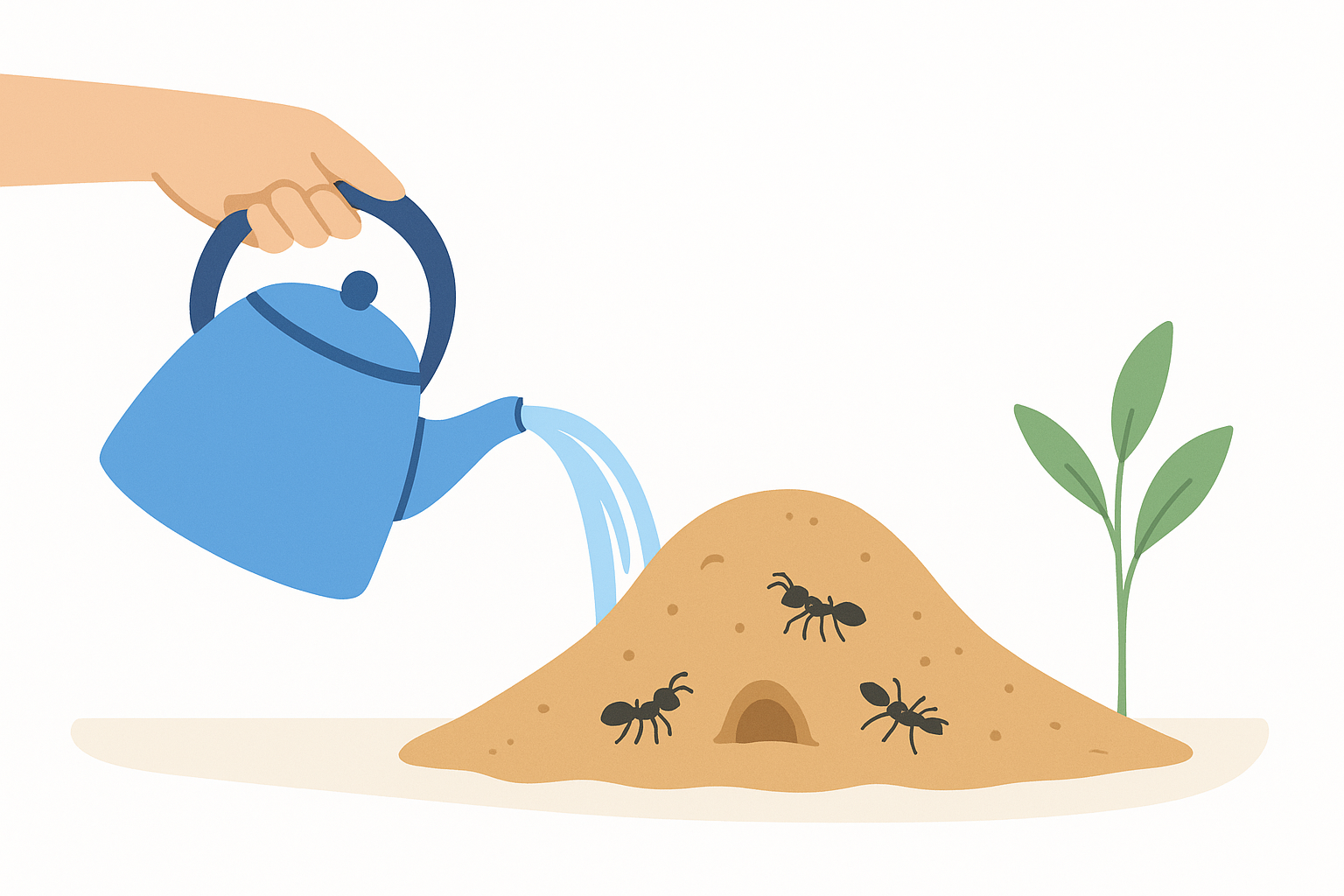
Pouring too fast sends water sideways instead of downward, so a controlled, steady stream is what actually reaches the colony.
When to repeat and how fast results show up
Repeat the treatment every two to three days while you still see live activity. Most small colonies show a clear and noticeable reduction within five to seven days of consistent applications.
Safety tips to avoid burns and yard damage
Wear closed-toe shoes and long pants any time you carry boiling water across uneven ground. Use a heavy pot with a pour spout to maintain a controlled stream and reduce the risk of splashing during application.
3. Use food-grade diatomaceous earth on trails
Food-grade diatomaceous earth (DE) gives you a chemical-free, mechanical solution for how to get rid of ants in the yard naturally. It works by physical action rather than poison, which makes it a practical option when you want to protect your lawn without introducing synthetic compounds into the soil.
How diatomaceous earth kills ants outdoors
DE consists of fossilized algae with microscopic sharp edges that cut through an ant's exoskeleton when they walk through it. Once the exoskeleton is damaged, the ant loses moisture rapidly and dies within 24 to 48 hours of contact.
Where to apply it for the best contact and control
Sprinkle a thin, visible layer directly along active ant trails , around mound openings, and at any point where trails meet a hard surface like a patio edge or sidewalk crack. Spreading it too thick wastes product without improving results.
How to keep it effective in wind and after watering
DE loses all effectiveness once it gets wet , so reapply after every rainfall or irrigation cycle. On windy days, apply it in the early morning when air movement is lowest to keep the powder in place long enough to work.
Always use food-grade DE outdoors, not pool-grade, since pool-grade is chemically treated and harmful to soil life.
What to avoid around pollinators and beneficial insects
Keep DE away from flowers and open blooms where bees and other pollinators land. Apply it only to soil-level trails and mound edges where ants travel rather than broadcasting it across your entire garden bed.
Timeline for results and when to reapply
You should see noticeably reduced trail activity within three to five days of consistent application. Reapply every time rain or irrigation wets the treated area to maintain a working barrier until the colony abandons the site.
4. Set out a borax and sugar bait station
Borax bait stations give you one of the most effective tools for how to get rid of ants in the yard naturally , because they target the entire colony rather than just the workers you can see on the surface. The bait works slowly by design, giving foraging ants time to carry it back to the queen and brood before it takes full effect.
Why baits work better than killing visible ants
Spraying or stepping on visible ants removes only a fraction of the colony . Bait stations exploit the ant's natural behavior of sharing food with nestmates , which means a small amount of product can reach thousands of ants underground that a surface treatment would never contact.
Simple bait recipes and bait station setups
Mix one teaspoon of borax with three tablespoons of sugar and enough water to create a thick syrup. Place it in a shallow container like a small jar lid so ants can access it without drowning.
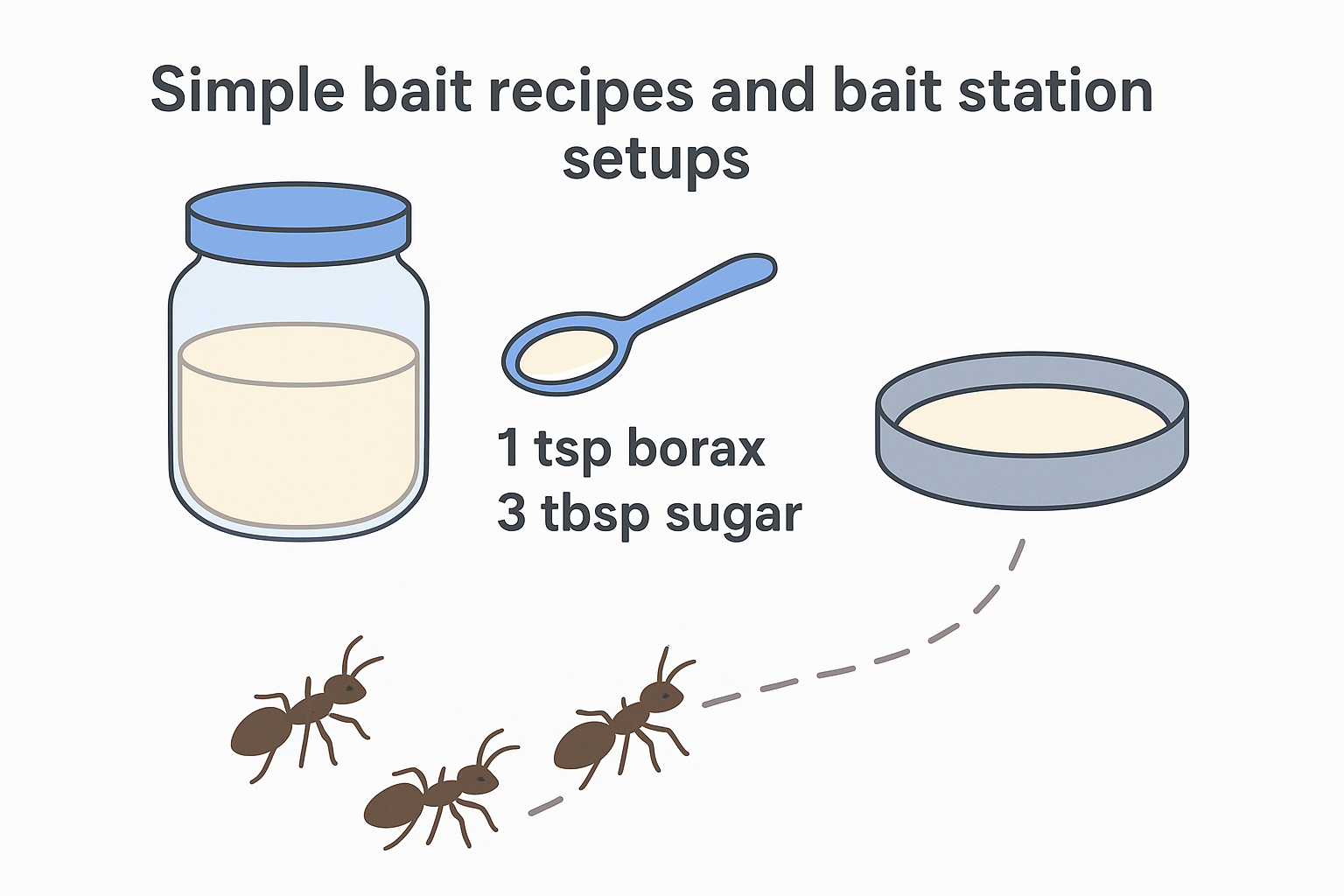
Too much borax kills foragers before they return to the nest, which stops the bait from reaching the queen and makes the whole effort pointless.
Where to place baits in a yard for maximum pickup
Set bait stations directly on active ant trails , not near mounds where guard activity disrupts forager access. Shaded spots preserve moisture in the bait longer than areas exposed to full sun.
Safety rules for pets, kids, and wildlife
Place bait inside small covered containers with entry holes sized only for ants. Always position stations away from areas where pets and young children spend time playing.
What to do if ants ignore the bait
Switch to a protein-based mixture of borax and peanut butter if the sugar bait gets no response. Ant dietary preferences shift by season , so offering both a sugar option and a protein option at the same time increases your pickup rate significantly.
5. Spray vinegar and water to erase ant trails
A simple vinegar and water spray gives you a fast, inexpensive tool for how to get rid of ants in the yard naturally by cutting off the chemical communication ants rely on to organize their activity. The solution costs almost nothing and takes under five minutes to mix and apply .
How vinegar disrupts pheromone trails
Ants navigate using pheromone scent trails left by scout workers to guide the colony toward food sources. Vinegar's acetic acid overwhelms and masks those chemical signals , causing foragers to lose their path and reducing the number of ants actively working the trail within hours.
This method works best as a disruption tool combined with a bait or barrier approach, not as a standalone colony elimination strategy.
Where sprays help in a yard and around the home perimeter
Apply the spray directly along visible trails on patios, sidewalks, and soil paths leading toward your home's foundation. Spraying the perimeter of your house adds a secondary line of disruption that makes it harder for scouts to establish new routes indoors.
How to use it without harming grass and plants
Mix a 50/50 solution of white vinegar and water and avoid saturating plant roots or grass blades with repeated applications. Spray on hard surfaces and soil trails rather than over lawn areas to reduce the risk of discoloring grass or stressing shallow-rooted plants.
How often to reapply and what weather changes
Reapply your spray every one to two days since rain, dew, and foot traffic all break down the vinegar barrier quickly. Check active trail areas after any rain event and reapply immediately to keep the disruption continuous.
When sprays help and when they do not
Vinegar spray works well for surface trail disruption and perimeter control , but it does not penetrate mounds or reach the queen below ground. If you still see heavy forager activity after one week of daily applications, pair the spray with a borax bait station to address the colony at its source.
6. Build natural barriers with peppermint and cinnamon
Peppermint oil and cinnamon are two accessible, low-cost tools you can add to your approach for how to get rid of ants in the yard naturally. Both create scent-based deterrents that discourage ants from crossing treated zones , though they work best as part of a broader control strategy rather than a standalone solution.
What barriers can and cannot do for an ant problem
Natural barriers redirect ant movement rather than eliminate colonies. They act as a perimeter line that pushes ants away from specific areas, but they will not reach the queen or reduce the total colony population underground.
Where to place barriers around patios, beds, and entry points
Focus your barrier applications on transition zones where ant trails cross from soil to hard surfaces. Apply product along patio slab edges, raised garden bed borders , and any foundation gap where trails approach the structure.
Peppermint oil spray basics and how to use it safely
Mix 10 to 15 drops of pure peppermint essential oil with one cup of water in a spray bottle and apply it along active trail zones. Reapply every two to three days since the scent fades quickly outdoors , especially in heat or after rain.
Keep peppermint oil spray away from cats and dogs since concentrated essential oils can irritate their respiratory systems.
Cinnamon and other powders that ants avoid
Sprinkle ground cinnamon directly on ant trails and around mound openings to interrupt movement. Other powders that function as effective contact deterrents include:
- Cedar chips spread along bed borders
- Cayenne pepper applied at foundation edges
- Coffee grounds placed around mound openings
Maintenance plan so ants do not reroute
Ants will find gaps in any barrier within three to five days if you skip reapplication. Walk your treated zones every other day and refresh powder and spray barriers immediately after rain or irrigation to keep the line intact.
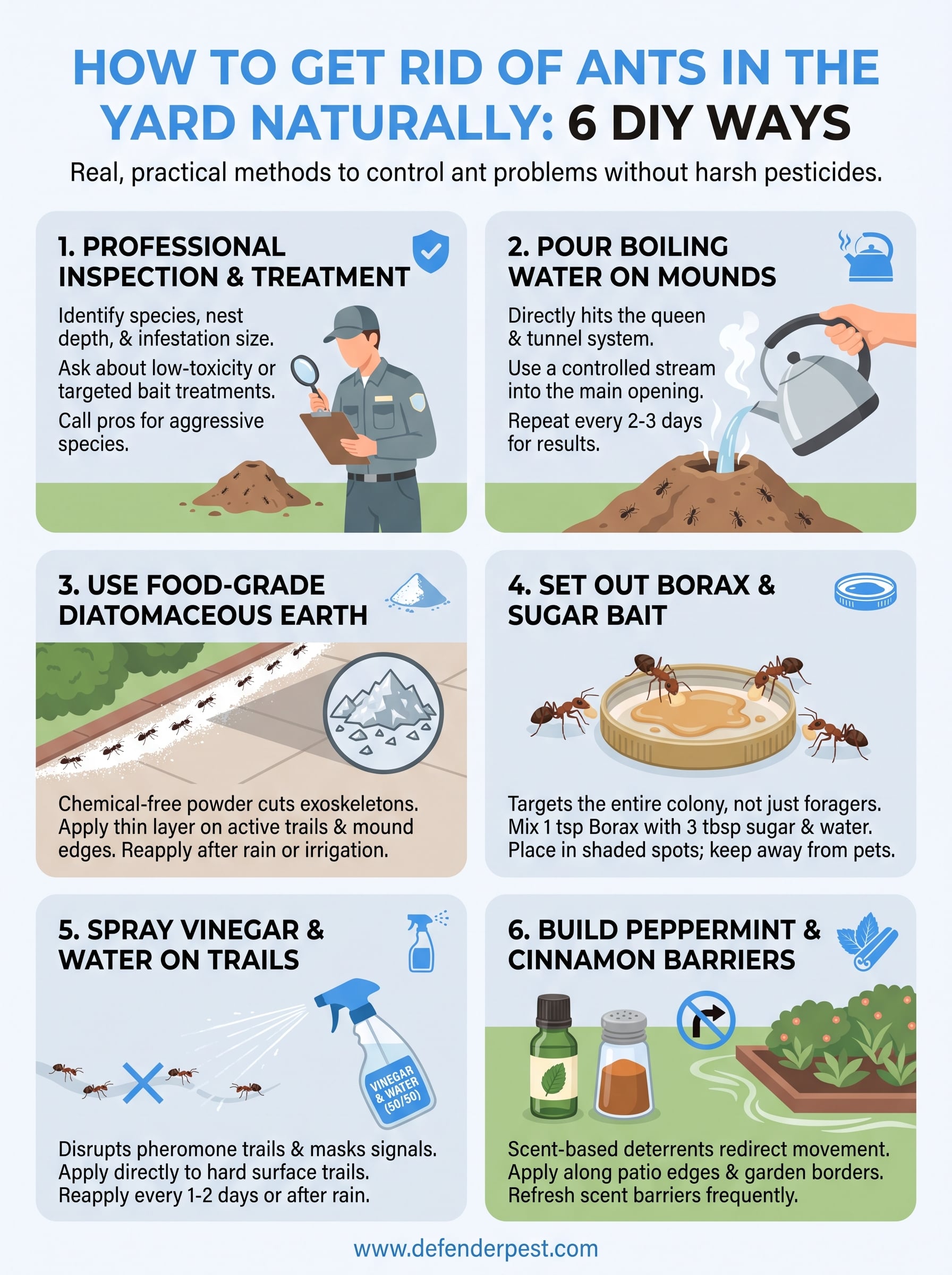
Next steps for an ant-free yard
You now have six practical methods to work through on your own when tackling how to get rid of ants in the yard naturally. Start with the approach that fits your situation best, whether that is a borax bait station for an active colony or a peppermint barrier to protect a specific area. Combining two or three methods at the same time consistently outperforms relying on a single approach alone.
When DIY results stall or ants keep returning after repeated treatments, that is a clear signal the colony is larger or deeper than surface methods can reach . Some species, especially fire ants or well-established carpenter ant nests, need targeted professional treatment to eliminate the problem at the source.
If you are in the Greater Sacramento area and need reliable, local help, contact our team at Defender Termite & Pest Management to schedule an inspection and get the problem handled for good.