5 Proven Ways To Keep Spiders Out of the Garage For Good
If you've ever flipped on your garage light and watched a spider scurry across the floor, you already know the feeling. Garages are prime real estate for spiders, dark, quiet, and full of hiding spots. Figuring out how to keep spiders out of the garage isn't just about comfort; it's about preventing populations from growing and eventually finding their way into your living spaces.
At Defender Termite & Pest Management, we've been solving pest problems across the Greater Sacramento area since 1999. Our technicians deal with spider-infested garages regularly, and we've seen what works, and what doesn't. Most spider issues in garages come down to a handful of fixable conditions that homeowners overlook.
Below, we're sharing five proven methods that actually keep spiders out long-term. These are the same principles we apply on service calls, adapted so you can take action on your own this weekend.
1. Schedule professional spider control and prevention
If you want a long-term solution for how to keep spiders out of the garage, professional treatment is the most reliable starting point. A trained technician can identify the specific spider species present, locate harborage areas you'd miss on your own, and apply targeted treatments that over-the-counter sprays rarely match in strength or longevity.
Why it works
Professional spider control works because it addresses the full picture, not just the spiders you can see. Technicians apply residual perimeter treatments along the base of walls, entry points, and ceiling corners where spiders travel and build webs. These products stay active for weeks, killing spiders on contact and disrupting the pest food chain by eliminating the insects spiders feed on.
Most homeowners treat the obvious spots and miss the real problem. Spiders follow their prey , so a garage with flies, moths, or beetles will always attract them regardless of how many spiders you spray directly.
Cutting off the food source matters just as much as targeting spiders directly. A technician addresses both in a single visit.
Steps to do it
Starting professional spider control is straightforward. Here is what the process typically looks like:
- Schedule an inspection so your technician can assess the severity of the infestation and pinpoint entry points.
- Clear the perimeter of your garage before the visit by moving boxes, bins, and equipment away from walls.
- Ask about recurring service plans , because a single treatment will not hold forever, especially in Sacramento where mild winters let spider populations stay active year-round.
- Follow up on technician recommendations , which often include sealing cracks and adjusting exterior lighting that draws in prey insects.
Cost and upkeep
A one-time professional spider treatment for a standard residential garage typically runs between $100 and $250 , depending on the size of the space and the severity of the infestation. Quarterly service plans cost less per visit and maintain consistent protection across all four seasons.
Upkeep between visits is minimal. Keep the garage floor clear, wipe down webs as soon as you spot them, and notify your pest control provider about any new activity before the next scheduled appointment. Staying on a regular service schedule is what turns a temporary fix into lasting control.
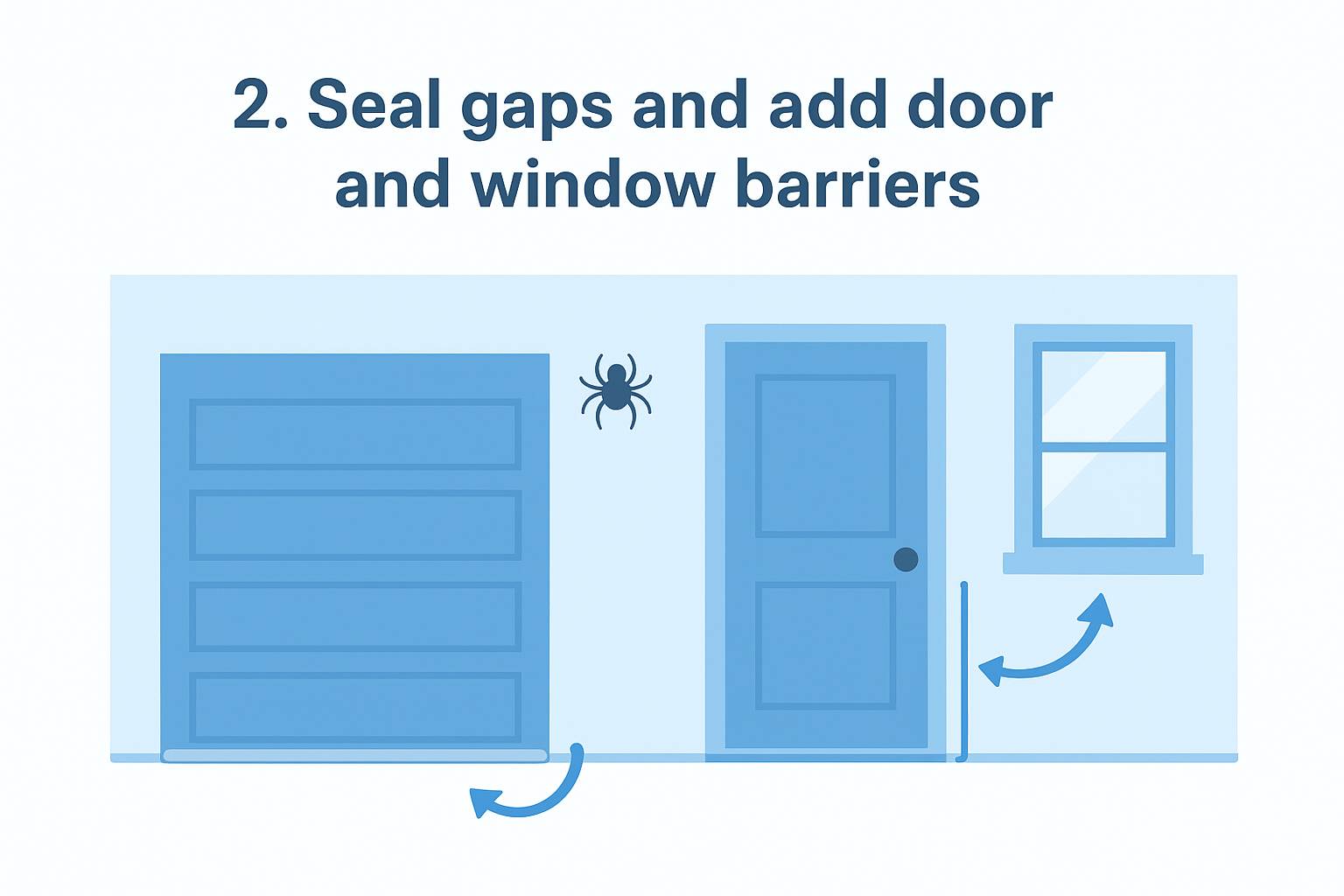
2. Seal gaps and add door and window barriers
Spiders do not need much space to get inside. A gap as small as 1/4 inch around a door frame or utility line is enough for most species to slip through without any trouble. Sealing those entry points is one of the most direct ways to handle how to keep spiders out of the garage before the problem starts.
Why it works
Entry points around doors, windows, and utility lines give spiders a direct path inside. Blocking these openings removes the physical route they use, and fewer prey insects entering through sealed gaps also reduces the food source that draws spiders in the first place.
Steps to do it
Focus your sealing efforts on the most common entry points in a typical garage:
- Garage door bottom seal : Replace worn weatherstripping with a rubber door sweep rated for outdoor use.
- Door frames and side gaps : Apply foam backer rod and paintable caulk along any visible gaps around the frame.
- Windows : Install tight-fitting screens and caulk around the window casing where it meets the wall.
- Utility penetrations : Seal around pipes, conduits, and cables with expandable foam or silicone caulk.
Even a perfectly sealed garage door means nothing if a utility gap behind a shelf goes unaddressed.
Cost and upkeep
Most sealing materials cost between $20 and $60 for a full garage, including caulk, foam, and a door sweep. Check your weatherstripping and caulk lines once a year , typically in late summer before spider activity increases heading into fall.
3. Cut clutter and change how you store items
A cluttered garage is a spider's ideal environment. Cardboard boxes, loose piles of wood, and stacked equipment give spiders dozens of undisturbed spots to build webs, lay eggs, and wait for prey. If you want to know how to keep spiders out of the garage, clearing clutter is one of the fastest changes you can make on your own.
Why it works
Spiders thrive in spots where they go unnoticed for long periods. Clutter creates dark, undisturbed harborage areas that protect spiders and give them stable locations to build webs. Removing those spots forces spiders into the open where they're easier to spot and far less likely to stay.
Switching from cardboard to sealed plastic bins eliminates one of the most common spider hiding spots in residential garages.
Steps to do it
Making your garage less hospitable to spiders takes an afternoon, not a weekend. Focus on these specific changes:
- Replace cardboard boxes with sealed plastic bins that don't absorb moisture or offer hidden gaps inside.
- Move stored firewood at least 20 feet away from the garage exterior.
- Clear floor-level items away from walls and corners where spiders prefer to nest.
- Shake out and inspect rarely used gear, gloves, and bags before bringing them back inside.
Cost and upkeep
Plastic storage bins run between $8 and $25 each, depending on size. Beyond the upfront cost of reorganizing, ongoing upkeep is simply a habit of keeping floors and corners clear and doing a quick sweep whenever you notice new webbing forming.
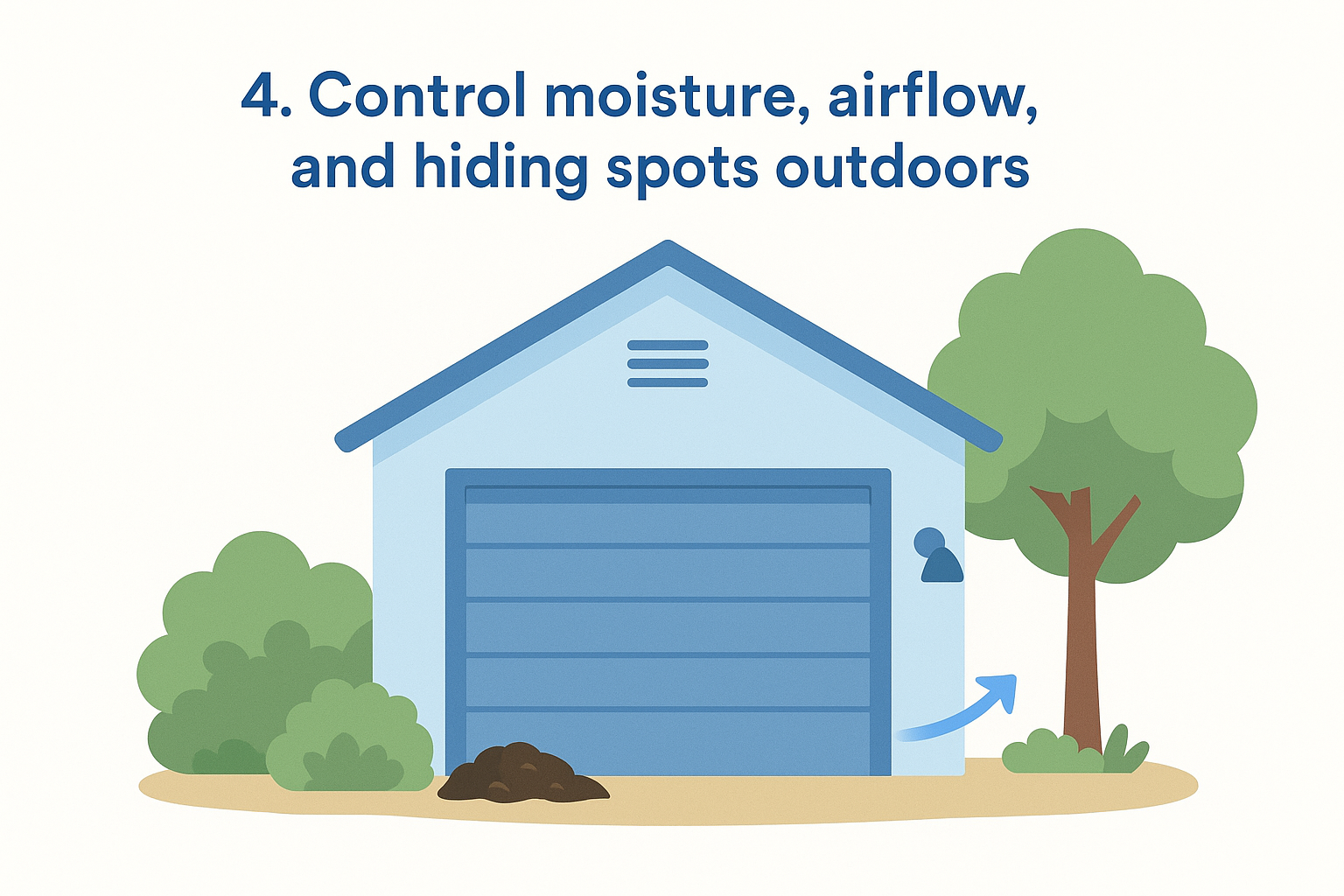
4. Control moisture, airflow, and hiding spots outdoors
The area directly outside your garage matters just as much as what happens inside. Damp soil, dense vegetation, and debris piled against the exterior wall create the exact conditions spiders need to establish themselves before moving indoors. Addressing these outdoor conditions is a step most homeowners skip entirely.
Why it works
Outdoor conditions drive indoor spider problems more than most people realize. Moisture near your foundation attracts the insects spiders feed on, and once the prey is there, spiders follow close behind. Reducing harborage spots along the exterior wall cuts off the staging ground spiders use before they find a gap to slip through.
Fixing the outdoor environment is one of the most overlooked steps when learning how to keep spiders out of the garage long-term.
Steps to do it
A few targeted changes outside make a real difference in how many spiders reach your garage in the first place:
- Trim back shrubs and plants to keep vegetation at least 12 inches away from the exterior wall.
- Move leaf piles, mulch beds, and rock borders away from the base of the garage.
- Fix any drainage issues that cause water to pool near the foundation after rain.
- Switch outdoor lights to yellow sodium vapor or LED bug lights that attract far fewer insects at night.
Cost and upkeep
Most of these changes cost nothing beyond your time , with the exception of replacing light bulbs, which typically runs $10 to $20 per fixture . Check the exterior once each season to confirm that vegetation has not crept back and that no new debris has accumulated against the wall.
5. Use traps and targeted treatments in hotspots
Even after sealing gaps and cutting clutter, some spiders will still find their way in. Sticky traps and targeted residual sprays give you a direct way to catch the ones that make it through, particularly in corners and along walls where spiders travel most. This step completes a full plan for how to keep spiders out of the garage by handling any activity that slips past your other defenses.
Why it works
Spiders travel along walls and corners rather than crossing open floor space. Placing traps along these paths intercepts spiders before they settle and breed. Targeted residual sprays applied directly to hotspots keep working for weeks without requiring you to treat the entire garage.
Glue traps also serve as a monitoring tool, showing you where activity is highest so you can focus your efforts in the right spots.
Steps to do it
Set up traps and apply treatments where spiders actually move:
- Place sticky glue traps flat in corners, along baseboards, and behind stored equipment.
- Apply a residual spider spray along wall bases and door frames, following label directions carefully.
- Check and replace traps every two to four weeks, or sooner if they fill up quickly.
Cost and upkeep
A pack of glue traps runs between $5 and $15 , and a quality residual spray costs $10 to $25 at most hardware stores. These are among the most affordable tools in your pest control setup. Refresh traps monthly and reapply spray every 30 to 60 days to keep protection consistent.
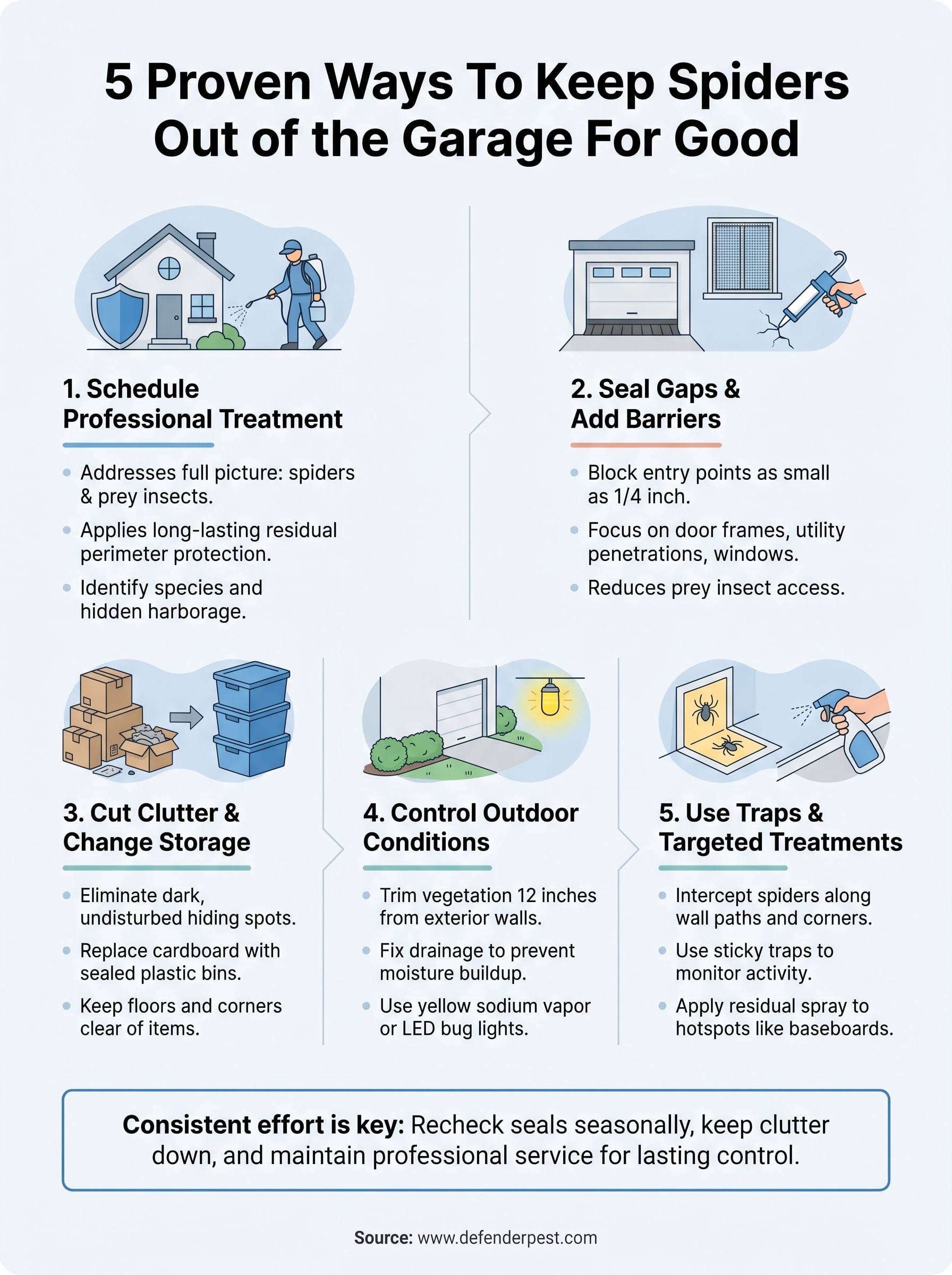
Quick plan to keep spiders out
Now you have a complete picture of how to keep spiders out of the garage . Start with professional treatment to address existing populations and apply residual protection, then seal entry points, cut clutter, manage outdoor conditions, and place traps in active spots. Each step builds on the last, and skipping any one of them leaves a gap spiders will eventually find.
Staying consistent is what separates a short-term fix from lasting results. Check your weatherstripping and exterior once a season , replace glue traps monthly, and keep floors and corners clear year-round. If spider activity picks back up despite your efforts, that's a sign the infestation runs deeper than surface-level DIY can handle on its own.
Defender Termite & Pest Management has served Sacramento homeowners since 1999, and our technicians know exactly where spiders hide in garages like yours. Schedule a spider control inspection today and get a professional plan built for your property.