How To Keep Spiders Out Of The House With Simple Prevention
If you've ever walked face-first into a web in your hallway or spotted a spider crawling across your ceiling at midnight, you've probably wondered how to keep spiders out of the house for good. Most spiders found in Sacramento-area homes are harmless, but that doesn't make them welcome. And while a single spider here or there is normal, frequent sightings usually point to a bigger issue , gaps in your home's exterior, excess moisture, or an existing insect population that's drawing them inside.
The good news is that most spider problems are preventable. With some straightforward adjustments to your home and habits, you can make your living space far less attractive to eight-legged visitors. At Defender Termite & Pest Management, we've been helping Sacramento homeowners deal with pest problems since 1999, and spiders are one of the most common concerns we hear about , especially as the weather shifts in spring and fall.
This guide covers practical, proven steps you can take on your own to reduce spider activity in and around your home . We'll walk through sealing entry points, removing attractants, using natural repellents, and knowing when it's time to call a professional for backup.
What attracts spiders and how they get inside
Before you can figure out how to keep spiders out of the house , you need to understand why they're showing up in the first place. Spiders don't wander inside randomly. They follow food, moisture, and shelter, and if your home offers any of those things, spiders will find it. Knowing what draws them in gives you a clear target for every prevention step that follows.
What spiders are searching for
Spiders are predators, which means insects are their primary motivation for moving into your living space. If your home has a steady supply of flies, gnats, ants, or moths, spiders will follow. Beyond food, they're also drawn to dark, undisturbed areas where they can build webs and lay eggs without being bothered. Basements, closets, garages, and the space behind large furniture are the most common spots you'll find them.
Moisture is another major factor. Many spider species are attracted to damp environments, which is why you often find them near leaky pipes, in bathrooms, or around crawl spaces . Cutting down on excess moisture in your home doesn't just deter spiders; it also removes the conditions that support the insects spiders feed on.
If you have an active insect problem in your home, spiders will almost certainly follow. Solving the insect issue is often the fastest way to reduce spider activity overall.
Here's a quick breakdown of what typically draws spiders toward your home:
- Food sources: flies, gnats, moths, ants, and other small insects
- Shelter: cluttered storage areas, undisturbed corners, behind appliances
- Moisture: bathrooms, basements, crawl spaces, and areas near leaking pipes
- Exterior lighting: lights that attract insects at night, which then attract spiders looking for an easy meal
How spiders find their way inside
Spiders are remarkably good at finding small openings. Gaps around window frames, door sweeps, utility lines, and pipes are among the most common entry points. A spider doesn't need much space to slip through, and homes in the Sacramento region that experience temperature swings between seasons often develop small cracks in caulking and weatherstripping over time as materials expand and contract.
Your own habits can also invite spiders inside without you realizing it. Carrying in firewood, potted plants, or cardboard boxes from the garage can bring spiders or egg sacs directly into your home. Leaving doors and windows open without screens, or keeping screens with small tears in place, gives spiders a clear path inside. Identifying these entry points before they become a problem is exactly what the following steps will help you do.
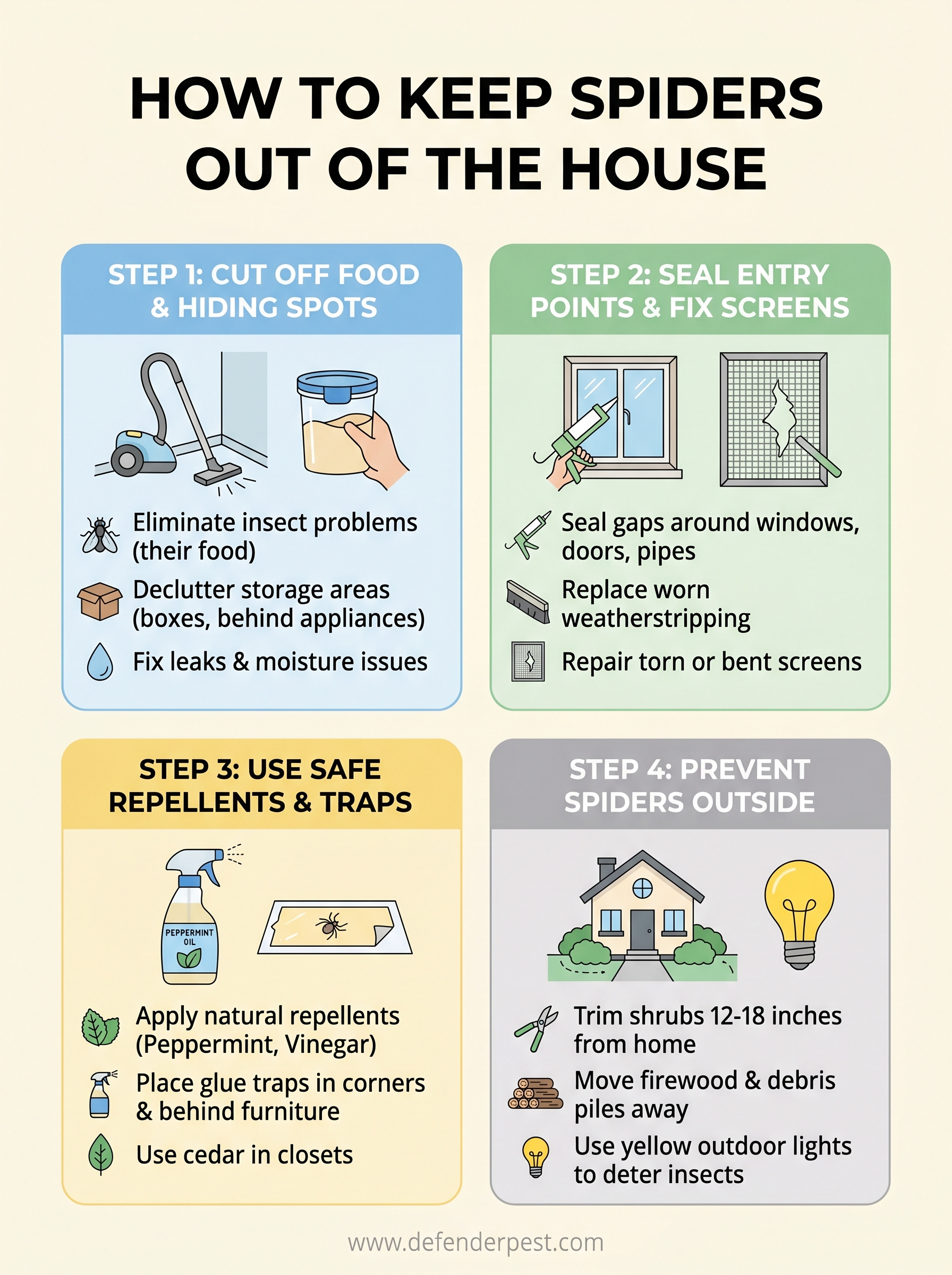
Step 1. Cut off their food and hiding spots
Spiders move in when your home provides what they need to survive. The most direct way to reduce spider activity is to remove those resources before spiders have a reason to settle in. This step doesn't require any products or tools, just some focused attention to conditions inside your home that you can control.
Remove the insect population first
Spiders are opportunists. If your home has flying insects near windows at night or ants trailing through the kitchen, spiders will set up webs exactly where those insects are most active . Start by addressing any existing insect problems. Seal food in airtight containers, fix leaky faucets, and empty trash cans regularly. These small changes reduce the insect population that spiders depend on, which is one of the most effective steps in learning how to keep spiders out of the house long-term.
Reducing your home's insect population is often the single fastest way to cut spider activity, because you're removing the reason they came inside in the first place.
You should also switch outdoor lighting near entry points. Standard white bulbs attract flying insects , while yellow or sodium vapor bulbs draw far fewer. Fewer insects at your doors means fewer spiders hunting near your entryways.
Declutter and clean the spaces spiders love
Spiders thrive in undisturbed areas where they can build webs without interference. Garages, basements, closets, and the space behind large appliances are prime spots. Go through these areas and reduce clutter wherever possible. Move boxes off the floor and store them on shelves. Use plastic bins with lids instead of open cardboard boxes , which spiders often nest inside.
Regular vacuuming does more than most people realize. Running a vacuum along baseboards, in corners, and behind furniture removes existing webs and egg sacs before they become a larger problem. Make it a habit rather than a reaction.
Step 2. Seal entry points and fix screens
Even with fewer insects inside and less clutter to hide in, spiders will still enter your home if there are easy access points they can use. Sealing those gaps is one of the most direct answers to how to keep spiders out of the house permanently. This step takes a few hours and some basic supplies, but the results hold up for a long time.
Find and seal gaps around your home
Walk the exterior of your home and look closely at any place where different materials meet. Gaps around utility lines, pipe penetrations, and window frames are among the most common entry points that get overlooked. Use a flashlight to check where your foundation meets the siding, around garage door frames, and along the bottom of exterior doors.
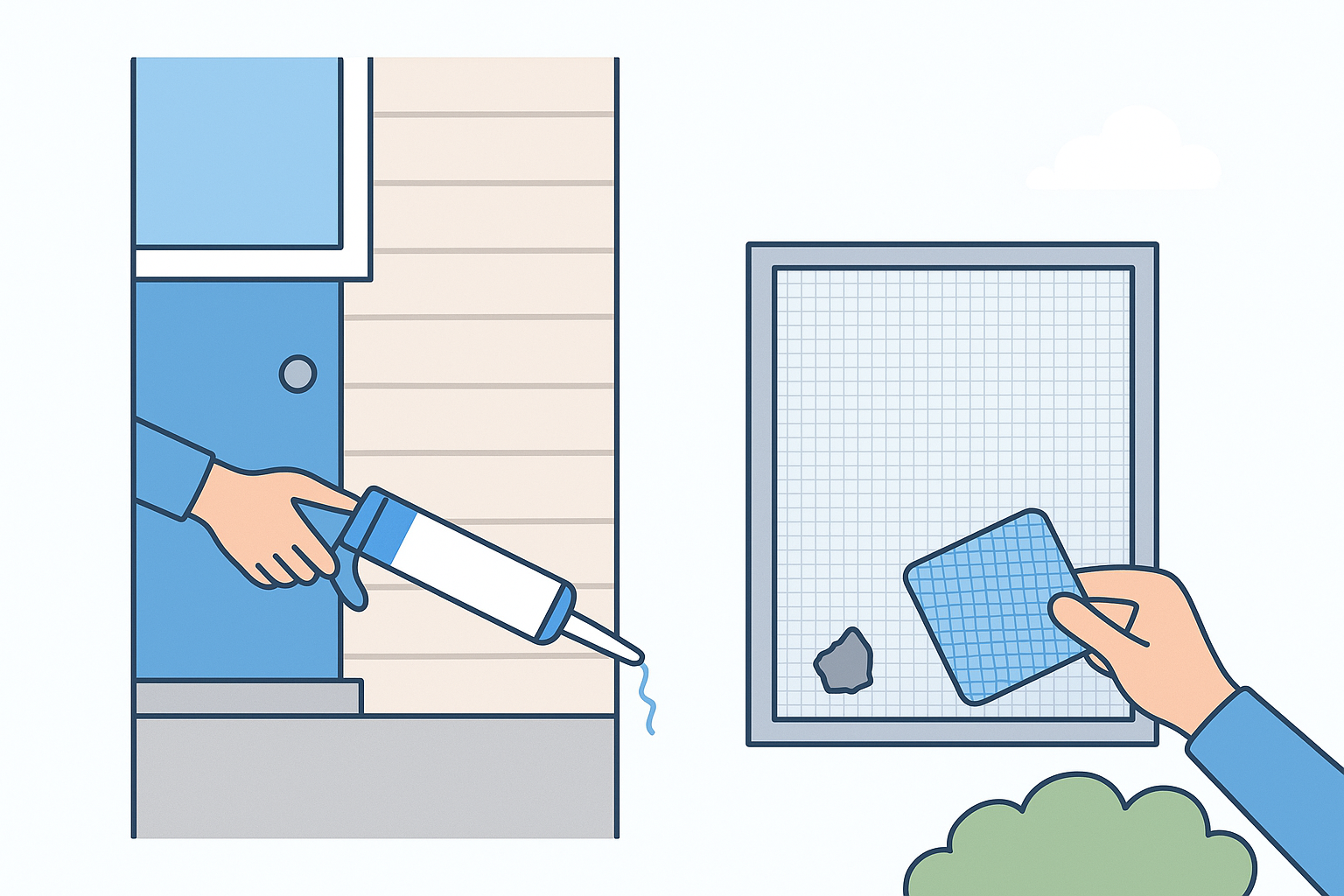
Once you've identified problem areas, the fix is straightforward. Silicone or latex caulk works well around window frames and door edges. For larger gaps around pipes or utility lines, use expandable foam sealant. Pay close attention to these common entry points:
- Door sweeps and thresholds: gaps at the bottom of exterior doors
- Window frames: corners where caulk has cracked or pulled away
- Utility penetrations: where electrical, gas, or water lines enter the wall
- Foundation cracks: even hairline cracks along the base of your home
- Garage door frames: along the sides and top of the door
Replacing worn weatherstripping on exterior doors is one of the easiest upgrades you can make, and it blocks spiders, insects, and outside air all at once.
Fix or replace damaged screens
Torn or bent window screens give spiders and insects a direct path inside, especially during warmer months when windows stay open. Inspect every screen in your home for holes, bent frames, or areas where the mesh has pulled away from the frame.
Replacing a screen is a simple DIY repair. Mesh replacement kits are widely available at hardware stores and take less than 30 minutes per window. If the frame itself is bent or warped, replacing the full screen is the better long-term fix.
Step 3. Use safe repellents and traps
Once you've removed food sources and sealed entry points, adding repellents and traps gives you an extra layer of defense against any spiders that still find their way inside. These methods work best as part of a broader approach to how to keep spiders out of the house , not as a standalone fix.
Natural repellents that actually work
Several natural substances deter spiders without posing a risk to children or pets. Peppermint oil is one of the most effective options and easy to apply. Mix 15 to 20 drops with water in a spray bottle and apply it along baseboards, windowsills, and door frames. Reapply every one to two weeks, since the scent fades.
Peppermint oil works because spiders sense their environment through their legs, and strong scents like peppermint disrupt that process enough to keep them from settling in treated areas.
White vinegar is another practical option. Dilute it 50/50 with water and spray it into corners, along window frames, and in cabinet gaps. Cedar is also worth using in closets and storage areas. You can place cedar blocks or cedar-lined drawer liners anywhere spiders tend to hide.
Here's a quick reference for natural repellents and where to use them:
| Repellent | How to apply | Best locations |
|---|---|---|
| Peppermint oil | Spray (15-20 drops per cup of water) | Baseboards, windowsills, door frames |
| White vinegar | Spray (50/50 with water) | Corners, cabinet gaps, window frames |
| Cedar blocks | Place directly | Closets, storage areas, drawers |
Glue traps and where to place them
Sticky glue traps are one of the most reliable ways to catch spiders that are already inside your home. Place them flat along baseboards, behind appliances, and in garage corners where spiders move at night. Check and replace them every two to four weeks for best results.
Step 4. Prevent spiders outside the home
Most spider prevention focuses on what happens inside, but your yard and exterior perimeter play a larger role than people expect. Spiders build webs and nest outdoors first, then move inside as the season changes or conditions shift. Addressing conditions around your home's exterior is a practical step in how to keep spiders out of the house long-term, because it stops them before they ever reach your walls.
Clear vegetation and debris away from your foundation
Dense shrubs, tall grass, and piles of leaves or wood placed directly against your foundation give spiders ideal nesting conditions right next to your home. Trim shrubs and plants so they sit at least 12 to 18 inches away from the exterior walls. Move firewood stacks away from the house entirely, keeping them at least three feet from any exterior surface and elevated off the ground.
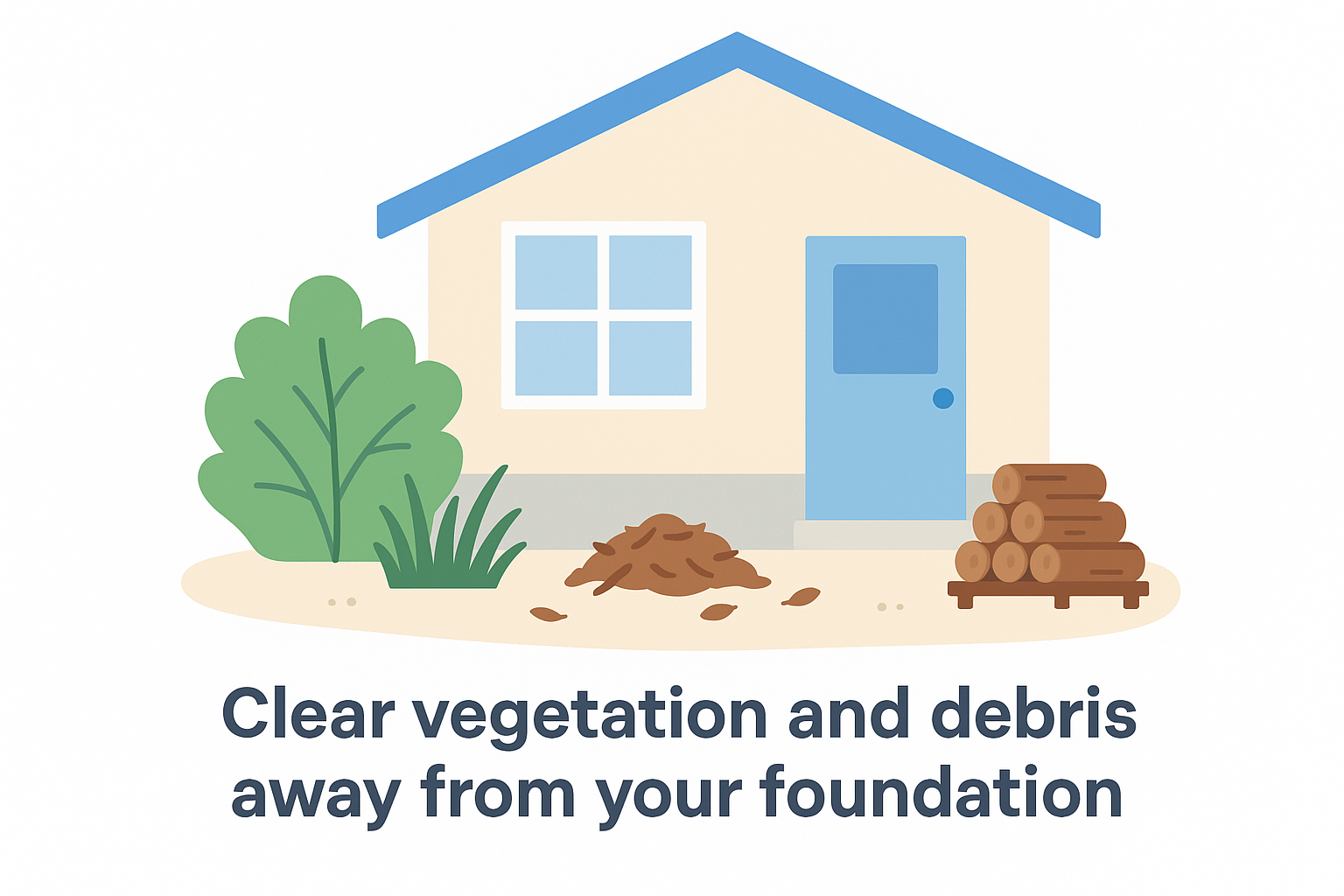
The closer vegetation and debris sit to your home, the shorter the path spiders need to travel to find an entry point.
Clear leaves, debris, and organic matter from window wells, drainage areas, and corners of your porch or deck regularly. Spiders in Sacramento's climate are especially active in spring and fall , which makes seasonal cleanups around your foundation a reliable prevention habit.
Manage outdoor lighting to reduce insect activity
Exterior lights attract moths, gnats, and flies at night , and those insects draw spiders to your doors and windows. Replacing standard white bulbs with yellow or warm-toned LED bulbs near entry points significantly reduces the insect activity that spiders hunt around. Motion-activated lights are another effective option since they limit the total time lights stay on overnight.
Move any decorative or security lighting away from door frames and window edges where possible. Pointing lights outward and away from the structure rather than directly at it draws insects away from your entry points instead of toward them.
Keep spiders from coming back
Knowing how to keep spiders out of the house is one thing, but the real payoff comes from staying consistent. Spiders return when conditions change, so treat the steps in this guide as ongoing habits rather than one-time fixes . Seal any new cracks each fall before temperatures drop, refresh natural repellents every couple of weeks, and stay on top of clutter in storage areas. Regular maintenance is what separates a home that sees occasional spiders from one that sees them constantly.
Even with solid prevention in place, some infestations go beyond what DIY methods can handle . If you're finding large numbers of spiders, discovering egg sacs in multiple rooms, or noticing that your efforts aren't reducing activity, that's a clear sign to bring in a professional. The team at Defender Termite & Pest Management has helped Sacramento homeowners tackle persistent pest problems since 1999 and can put together a plan that fits your specific situation.