DIY Guide: How To Get Rid Of Moles In The Lawn Fast Safely
Those raised dirt ridges zigzagging across your yard aren't just ugly, they're a sign that moles are actively tunneling through your soil and tearing up your grass from below. If you're wondering how to get rid of moles in the lawn , you're not alone. Moles are one of the most common yard pests across the Sacramento region, and their damage can escalate quickly if you don't act.
The good news? Most mole problems can be handled with the right approach and a bit of persistence. From trapping and repellents to habitat modification, there are proven DIY methods that work without putting your family, pets, or lawn at risk. Some you can start today with supplies from your local hardware store .
In this guide, we'll walk you through the most effective and safe ways to reclaim your yard from moles, step by step. We'll cover how to identify active tunnels, which removal methods actually deliver results, and when it's time to call in a professional. At Defender Termite & Pest Management , we've helped Sacramento-area homeowners deal with every kind of yard and structural pest since 1999, and moles are no exception. Whether you handle this yourself or need backup from our team , this guide will point you in the right direction.
Know the signs and the rules before you act
Before you do anything to address a mole problem, you need to confirm you're actually dealing with moles and not voles, gophers, or another burrowing animal. Misidentifying the pest means choosing the wrong removal method and wasting both time and money. Moles leave very specific surface evidence that sets them apart from other yard pests.
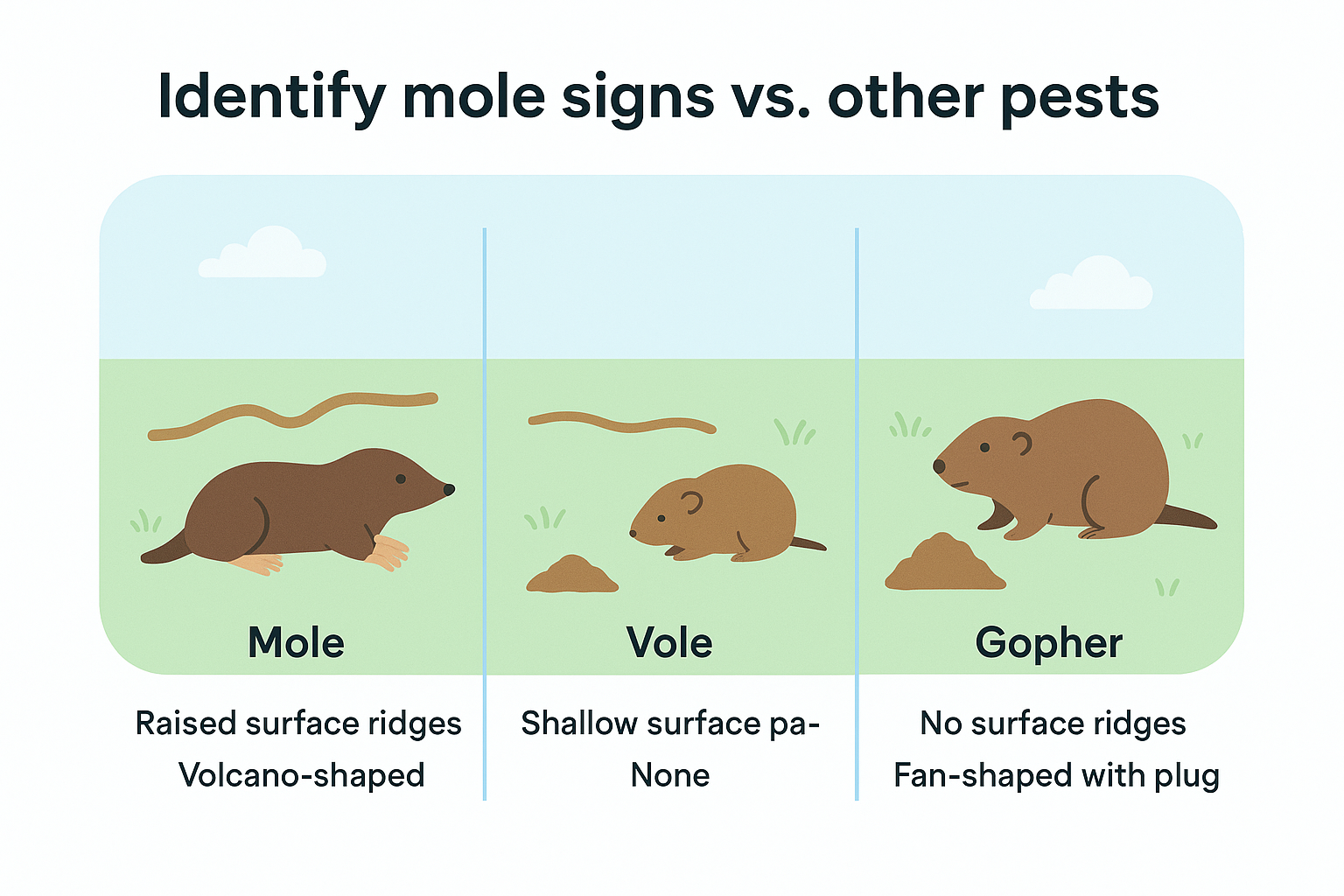
Identify mole signs vs. other pests
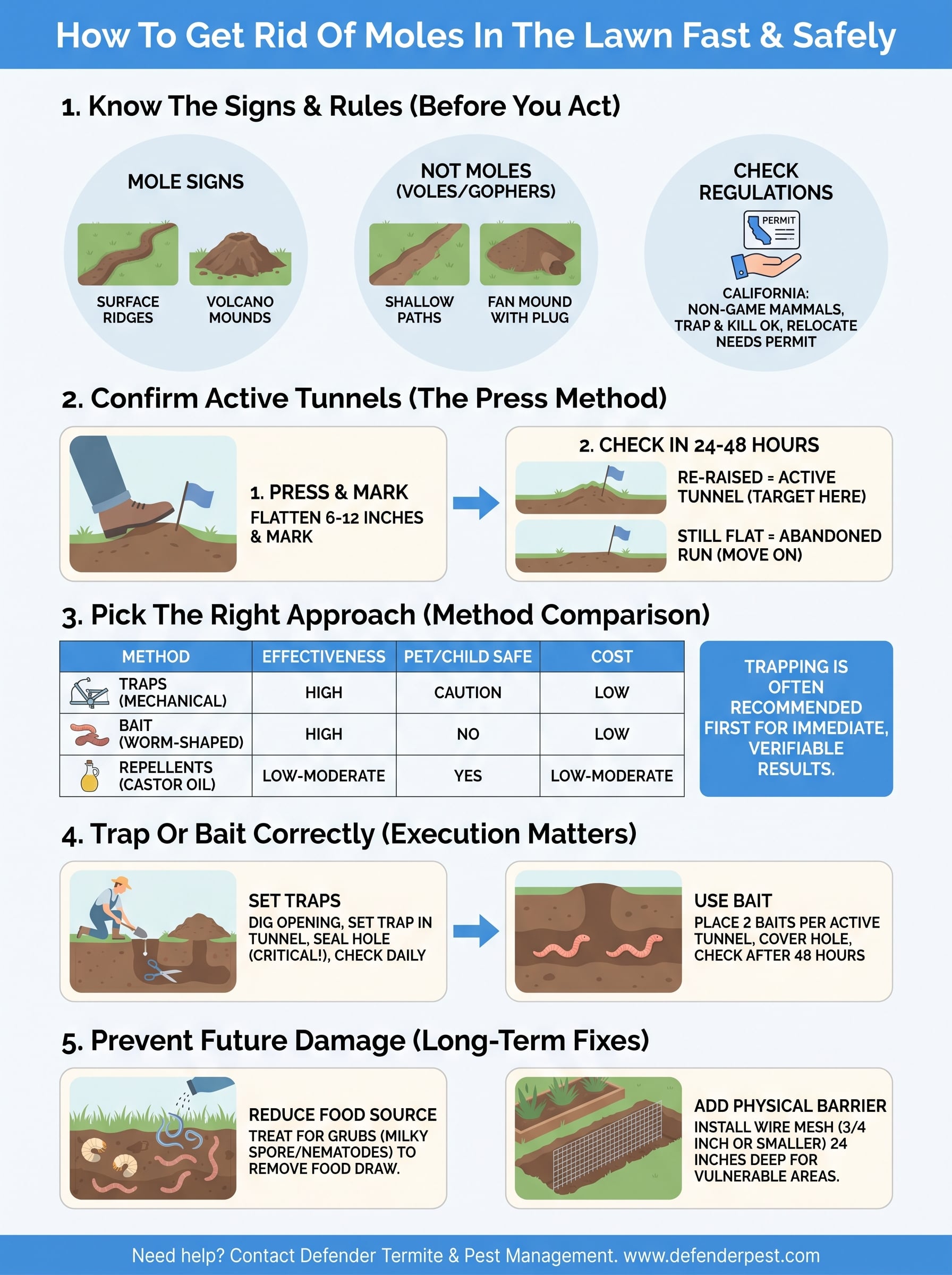
Moles push soil up from below as they tunnel, creating raised, winding ridges called surface runs and volcano-shaped mounds called molehills. Voles leave shallow surface paths and gnaw on plant roots, while gophers create fan-shaped mounds with a plug on one side. If you see soft, raised ridges cutting across your lawn in irregular patterns, moles are almost certainly what you're dealing with.
| Pest | Tunnel sign | Mound shape | Plant damage |
|---|---|---|---|
| Mole | Raised surface ridges | Volcano-shaped | Indirect (root disruption) |
| Vole | Shallow surface paths | None | Direct (root gnawing) |
| Gopher | No surface ridges | Fan-shaped with plug | Direct (root eating) |
Check local regulations before you trap
Many states and counties have rules around trapping and relocating wildlife , including moles. In California, moles are classified as non-game mammals , which means you can legally trap and kill them on your property when they're causing damage, but you cannot relocate them to another location without a permit.
Always verify current rules with your local California Department of Fish and Wildlife office before you set any trap or apply any bait product.
Understanding how to get rid of moles in the lawn legally protects you from fines and wasted effort. Knowing which animal you're targeting and what tools you're allowed to use puts you in the best position to act fast and get results.
Step 1. Confirm active tunnels and travel paths
Not every tunnel is worth targeting. Moles build two types: deep main runs used daily for travel, and shallow surface runs that get abandoned quickly. Chasing the wrong tunnels wastes time, so confirm which ones are active before you start working on how to get rid of moles in the lawn.
Test tunnels with the press method
Press down a short section of a surface ridge with your foot and mark the spot with a small flag or stick. Return in 24 to 48 hours to check whether the tunnel has been pushed back up.
- Flatten 6 to 12 inches of a raised tunnel with your foot
- Mark the location with a stick, flag, or small rock
- Check back in 24 to 48 hours
- Re-raised: active tunnel , worth setting a trap here
- Still flat: abandoned run , move on and test the next section
Map the main travel routes
Main runs typically follow straight paths along fence lines, garden edges, or landscape borders. These are the routes moles use repeatedly. Map every confirmed active tunnel on a quick sketch of your yard before you move to the next step.
Targeting main runs over random surface ridges gives you the best shot at a fast, effective catch.
Step 2. Pick the right approach for your yard
Once you've mapped your active tunnels, you need to choose the right removal method before you touch anything else. The approach that works best depends on how severe the infestation is , how much time you can commit, and whether you have pets or children using the yard.
Compare your main options
There are three main approaches to how to get rid of moles in the lawn: trapping, toxic bait, and repellents . Each one has real trade-offs, and picking the wrong method wastes time you don't have while the tunnels keep spreading.
| Method | Effectiveness | Pet/child safe | Cost |
|---|---|---|---|
| Mechanical traps | High | Use with caution | Low |
| Worm-shaped toxic bait | High | No | Low |
| Castor oil repellents | Low to moderate | Yes | Low to moderate |
Trapping is the method most pest professionals recommend first because it gives you immediate, verifiable results on confirmed active runs.
Match the method to your situation
If you have active tunnels confirmed in Step 1 and no pets that dig, trapping delivers the fastest result. Castor oil granules can redirect moles toward trap zones or away from garden beds, but they won't clear an active infestation alone. Use this quick reference to match your situation to the right starting point:
- Active tunnels, no pets nearby: mechanical traps
- Active tunnels, pets in yard: covered or subsurface traps
- Mild pressure near garden beds: castor oil granules
- Large yard with heavy activity: traps and bait combined
Step 3. Trap or bait moles the right way
Execution matters just as much as the tool you choose. Placement errors account for most DIY trap failures, and setting traps on abandoned tunnels wastes days of effort. Use these steps to solve how to get rid of moles in the lawn quickly and effectively.
Set mechanical traps correctly
Place your trap directly on an active main run , centered over the tunnel. Popular options like the Cinch trap or scissor jaw trap sit inside the tunnel and trigger when the mole pushes through.
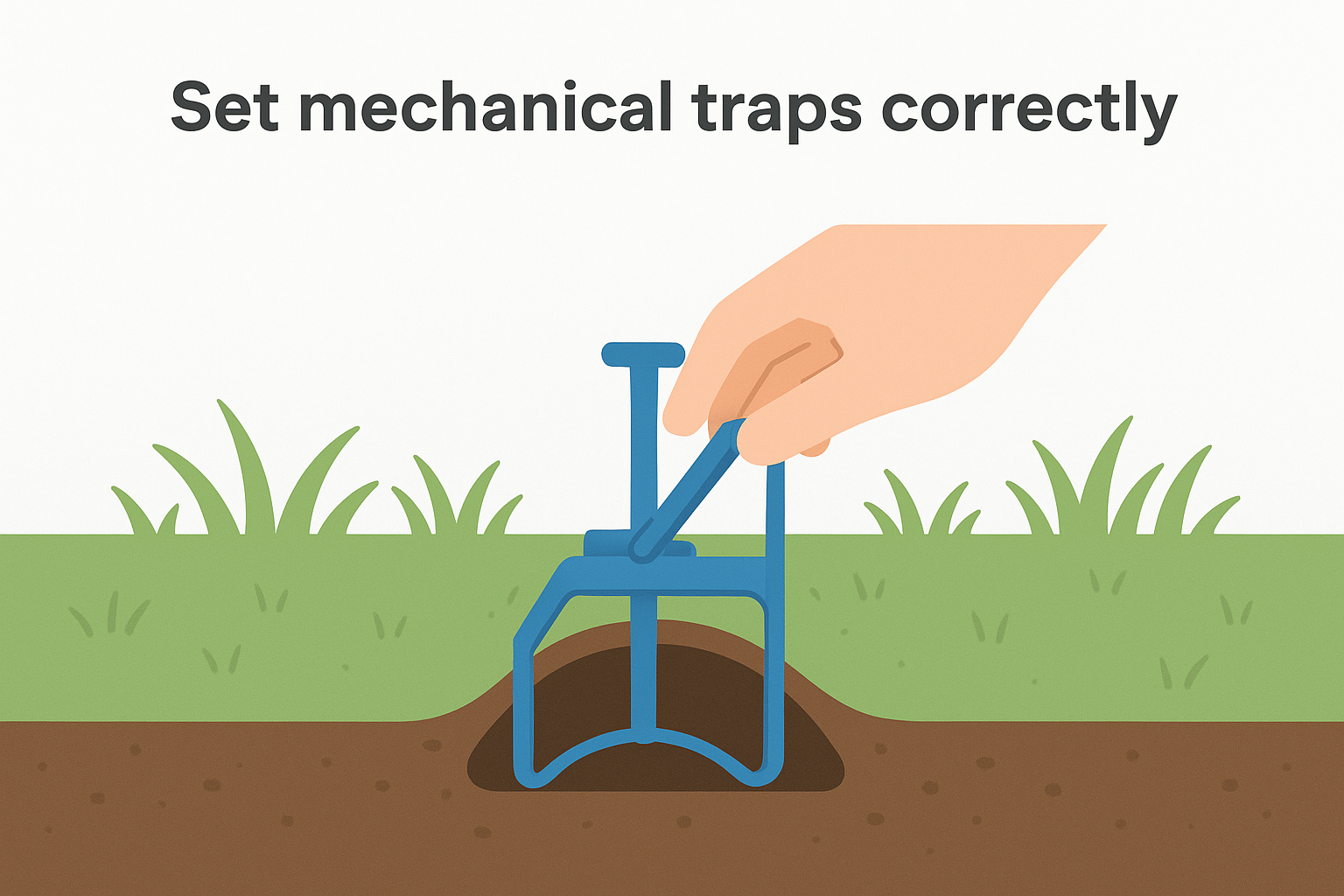
- Dig a small opening along the active run
- Set the trap per manufacturer instructions
- Lower it into the tunnel
- Cover the hole lightly with soil to block light
- Check every 24 hours
Moles avoid light and air movement, so sealing the trap hole after placement is one of the most critical steps you can take.
Use bait as a secondary option
Worm-shaped toxic baits work by mimicking the mole's natural food source. Place two baits per active tunnel , roughly 6 inches apart, then cover with soil. Keep children and pets away from treated areas until baits are fully consumed or removed.
Check bait placements after 48 hours . If the bait hasn't moved, reconfirm the tunnel using the press method from Step 1, then relocate to a freshly confirmed run before continuing.
Step 4. Prevent new mole damage long-term
Removing the moles you have now only solves half the problem . If your yard stays attractive to moles, new ones will move in from neighboring properties within weeks. Long-term prevention is what keeps you from repeating every step in this guide on how to get rid of moles in the lawn all over again.
Reduce the food source
Moles follow grubs and earthworms , so a yard loaded with soil insects is a yard that will keep drawing moles in. Treating your lawn for grubs with a milky spore product or beneficial nematodes removes a core food source without heavy chemical use.
Reducing grub populations by even 50% makes your yard significantly less appealing to foraging moles.
- Apply beneficial nematodes in early spring or early fall when soil is moist
- Target confirmed tunnel zones first, then treat the full lawn perimeter
Add a physical barrier
For garden beds or high-value sections of your yard, install a wire mesh barrier made from hardware cloth with a 3/4-inch or smaller opening . Bury it at least 24 inches deep along the border, then bend the bottom 6 inches outward at a 90-degree angle to stop moles from tunneling underneath it laterally.
Get your lawn back
Moles move fast, but so can you when you work through the right steps in order. Confirming active tunnels first , then matching your removal method to your specific yard situation, is what separates a quick fix from a months-long battle. The steps in this guide on how to get rid of moles in the lawn give you everything you need to stop the damage and keep it from coming back.
Stick with it for at least two to three weeks before you assess results. Mole activity doesn't disappear overnight, and persistence with your traps or bait placements is what gets the job done. Reducing grub populations and installing physical barriers around vulnerable areas keeps new moles from filling the gap after you clear the current ones out.
If the tunnels keep spreading despite your efforts, that's the signal to bring in a professional. Contact Defender Termite & Pest Management and let our Sacramento-area team handle it directly.