How To Get Rid Of Spiders In The House Fast And Naturally
Finding spiders in your living room, bedroom, or bathroom is one of those things that never gets less unsettling. Whether it's a single web in the corner or multiple sightings throughout the week, most people want to know how to get rid of spiders in the house before the problem gets worse. The good news is that you have options, many of them simple, affordable, and completely natural .
At Defender Termite & Pest Management, we've been helping Sacramento-area homeowners deal with unwanted pests since 1999. Spiders are one of the most common calls we get , and while they rarely cause structural damage like termites, they can signal a bigger pest issue in your home. More bugs inside means more food for spiders , and more reason for them to stick around.
This guide walks you through proven methods to remove spiders, keep them out, and figure out when it's time to call a professional . We'll cover natural repellents, DIY prevention strategies, and the specific steps that actually work based on what we see in homes across Northern California every day.
Know the spiders and safety basics
Before you learn how to get rid of spiders in the house, it helps to know what you're dealing with. Most spiders you find indoors are harmless nuisances that wandered in looking for warmth, insects to eat, or a dry place to hide. A small number of species, however, pose real health risks , and telling them apart makes every step in this guide safer and more effective.
Common house spiders in the Sacramento area
The spiders you're most likely to encounter in Northern California homes fall into predictable groups. Common house spiders and cellar spiders build webs in corners and cause no harm to people. Wolf spiders are large and fast but rarely bite unless you handle them directly. The two that require genuine caution are the black widow , identifiable by its red hourglass marking on a shiny black abdomen, and the brown recluse , which is uncommon in California but occasionally arrives in shipped packages or secondhand furniture.
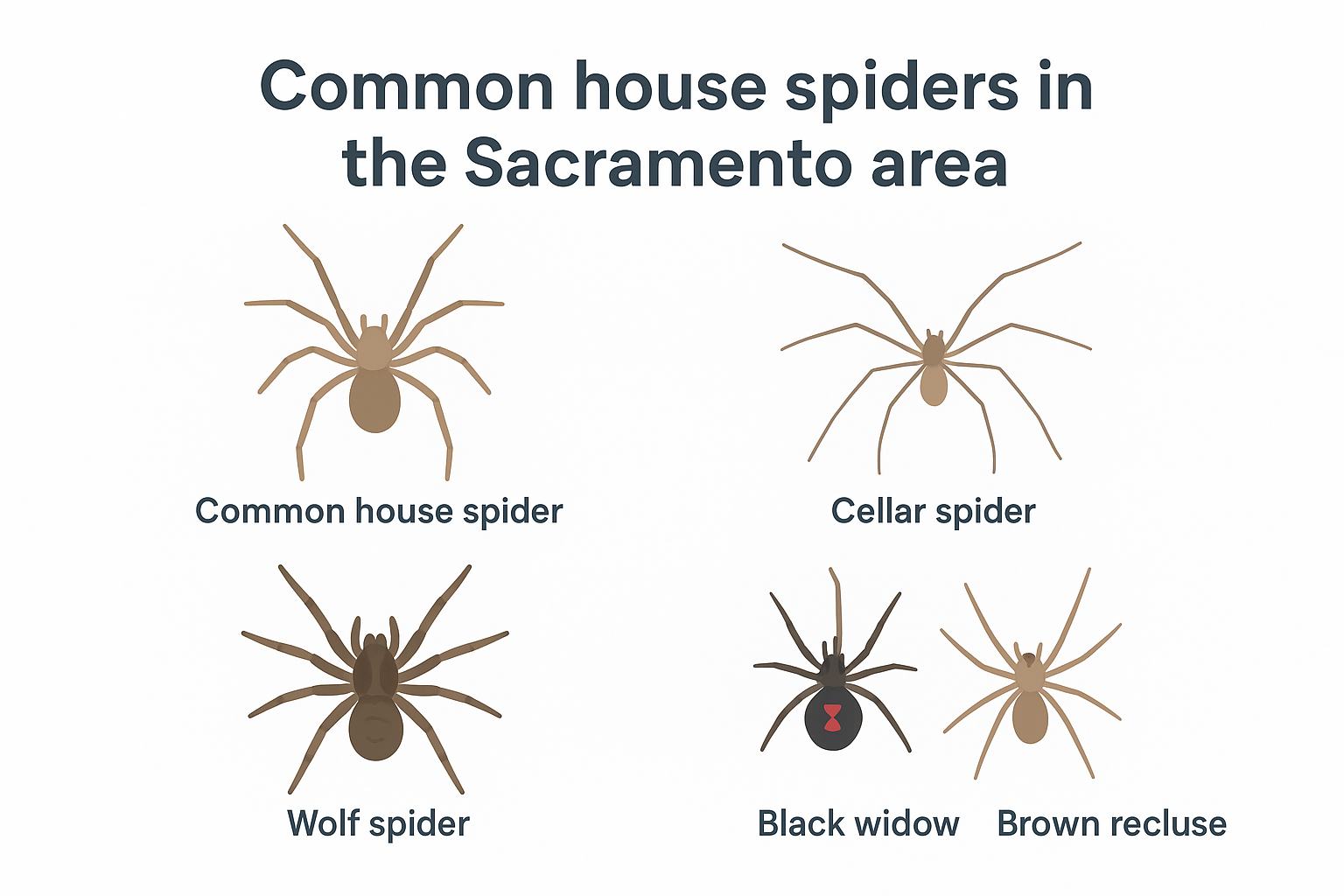
| Spider | Builds webs? | Risk level | Common hiding spots |
|---|---|---|---|
| Common house spider | Yes | None | Corners, window frames |
| Cellar spider | Yes | None | Garages, basements |
| Wolf spider | No | Low | Floors, under furniture |
| Black widow | Yes | High | Wood piles, dark corners |
| Brown recluse | No | High | Boxes, rarely-touched storage |
If you spot a shiny black spider with a red hourglass near a dark corner, do not handle it. Call a pest professional right away.
Safety rules before you start removing spiders
When you physically remove spiders or treat the areas where they hide, thick work gloves are a must. Use a flashlight to check inside shoes, gloves, and storage boxes before reaching in, especially if items have been sitting untouched for months. Keep children and pets out of any area you plan to treat, even with natural repellents, until all surfaces are completely dry.
Knowing your local spider species and following these basics protects you and makes the hands-on steps that follow much more straightforward.
Step 1. Remove spiders, webs, and egg sacs
The first step in how to get rid of spiders in the house is to clear out what's already there. Webs, egg sacs, and live spiders all need to go before any repellent or prevention method can work. Skipping this leaves egg sacs in place that can hatch hundreds of new spiders within weeks.
Clear webs and egg sacs first
Start with a vacuum cleaner fitted with a hose attachment . Run it along every corner, ceiling edge, windowsill, and baseboard in each room. Pay special attention to dark, undisturbed areas like the back of closets, under beds, and behind furniture that rarely moves. A vacuum pulls up webs and egg sacs without scattering them across the floor.
Egg sacs can hold hundreds of spiderlings, so empty the vacuum bag or canister into a sealed plastic bag and take it outside immediately after use.
After vacuuming, wipe down each surface with a damp microfiber cloth to catch any remaining silk threads. Focus on window frames and ceiling corners , where webs reattach quickly if any residue is left behind.
Handle live spiders safely
For live spiders, use a clear glass or jar combined with a stiff piece of cardboard. Place the glass over the spider, slide the cardboard underneath, then carry it outside and release it well away from your home. Never crush a spider against a wall, since the residue can attract other insects over time.
Quick removal checklist:
- Put on thick gloves before approaching the spider
- Cover with a jar and slide cardboard underneath
- Walk at least 10 feet from your home before releasing
- Wash your hands after the task is done
Step 2. Deep clean and reduce their food supply
Spiders don't wander into your home without a reason. Insects are their primary food source , and if your home has plenty of flies, moths, or gnats, spiders will follow. One of the most overlooked steps in how to get rid of spiders in the house is cutting off that food supply , which removes the main reason spiders stick around in the first place.
Eliminate the insects that spiders eat
Start by addressing common attractants for flying insects. Keep food in sealed containers , empty trash cans daily, and fix any leaky faucets since moisture draws insects quickly. Replace standard white bulbs near entry points with yellow or sodium vapor bulbs , which attract far fewer insects and indirectly reduce spider activity throughout your home.
Check your windowsills and floors regularly for dead insects , since spiders gravitate toward spots where prey is already present. Vacuuming these areas removes the food signal that keeps spiders hunting in the same locations.
Clean cluttered areas where insects hide
Piles of paper, cardboard boxes, and stacked items on closet floors give insects places to nest, which then gives spiders a reliable food source nearby. Clear out storage areas, closets, and garages systematically rather than just moving clutter from one spot to another.
A clutter-free space removes the conditions that support an entire food chain, from small insects all the way up to the spiders eating them.
Wipe down baseboards and behind appliances at least once a month, since crumbs and grease attract the small insects that spiders depend on most.
Step 3. Seal entry points and fix outdoor harborage
Spiders don't appear out of nowhere. They enter through gaps, cracks, and openings that many homeowners never notice until they look closely. Sealing these entry points is one of the most reliable parts of learning how to get rid of spiders in the house because it stops new spiders from replacing the ones you've already removed.
Seal gaps around your home's exterior
Walk around the outside of your home with a tube of silicone caulk and inspect every area where two surfaces meet. Focus on gaps around window frames, door frames, utility pipes, and cable entry points . Even a gap the width of a pencil is wide enough for most spiders to squeeze through.
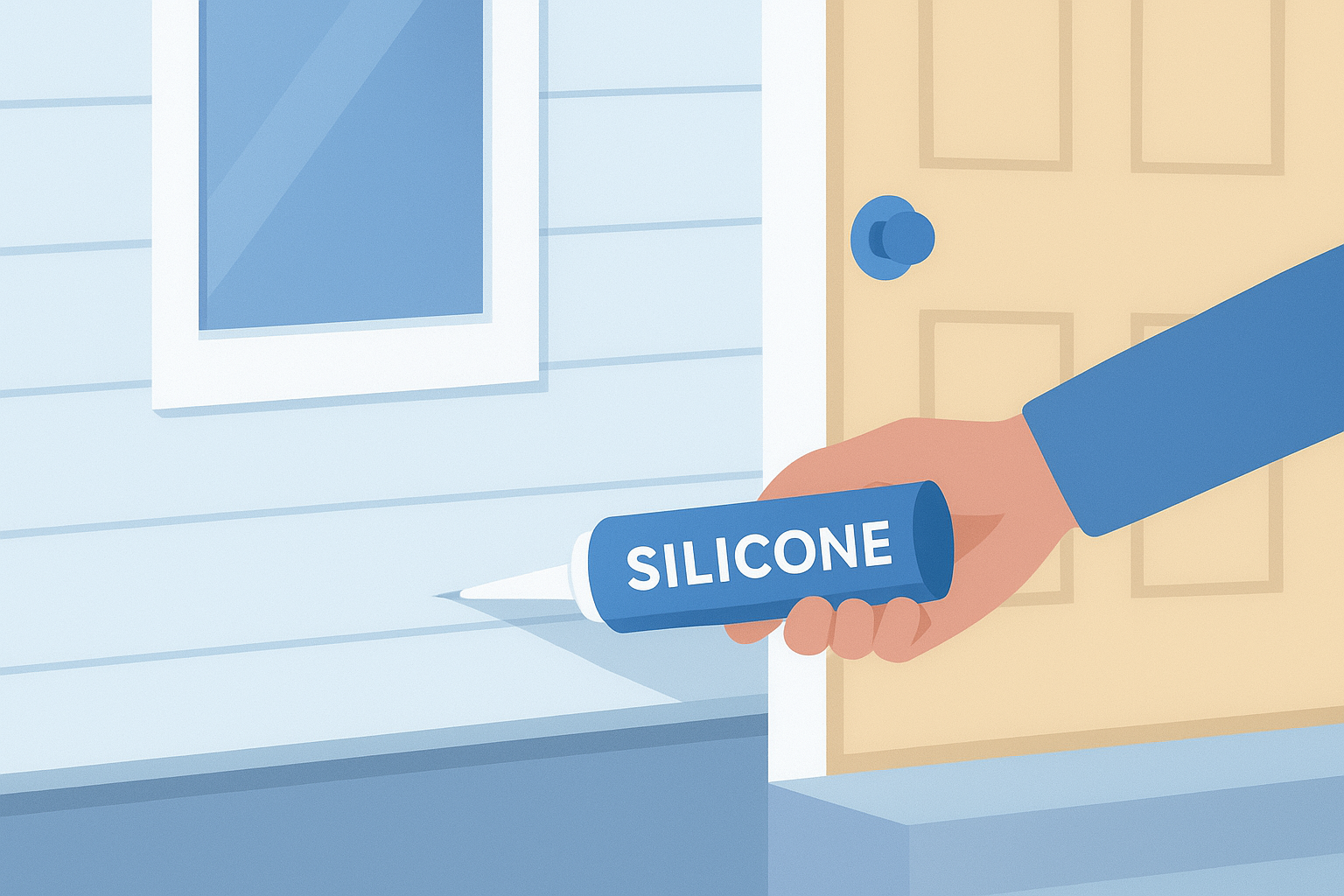
Caulk shrinks over time, so re-inspect and re-apply around windows and doors every fall before temperatures drop.
Common entry points to seal:
- Gaps around water pipes and electrical conduits
- Cracks in foundation walls
- Spaces under exterior doors (install door sweeps)
- Torn or missing window screens
Reduce outdoor harborage near your foundation
Spiders build up populations outdoors first before moving inside. Moving firewood stacks, leaf piles, and dense shrubs at least two feet away from your home's foundation removes the moisture and insects that give spiders everything they need right next to an entry point.
Clear gutters regularly and pull back any mulch or ground cover that sits directly against your foundation walls . Reducing outdoor habitat breaks the cycle at the source before spiders ever reach your interior.
Step 4. Use natural repellents and targeted products
Natural repellents and targeted products are the final active layer in how to get rid of spiders in the house. Once you've removed existing spiders and sealed entry points, applying these treatments creates a chemical barrier that discourages new spiders from settling in areas you've already cleaned.
Natural repellents you can apply today
Peppermint oil is one of the most effective natural spider repellents you can apply at home. Mix 15 to 20 drops of peppermint essential oil with two cups of water in a spray bottle, then apply it along baseboards, window frames, and door thresholds. Reapply every one to two weeks since the scent fades faster in warm rooms.
Reapply natural sprays after mopping or cleaning floors, since water removes the residue and breaks the barrier immediately.
White vinegar works on the same principle. Combine equal parts white vinegar and water , spray it directly onto surfaces spiders frequent, and let it air dry. Avoid applying it to natural stone surfaces like marble or granite since the acidity causes surface damage over time.
Targeted products for faster results
Diatomaceous earth is a food-grade powder that damages the exoskeleton of spiders and insects on contact without any chemical odor. Apply it to these spots for reliable coverage:
- Along interior baseboards and cabinet edges
- In garage corners and under storage shelving
- Around the exterior foundation perimeter
For heavier spider activity, a residual perimeter spray labeled for spider control along your home's exterior foundation line adds a strong second layer that works alongside everything you've already done.
Keep spiders from coming back
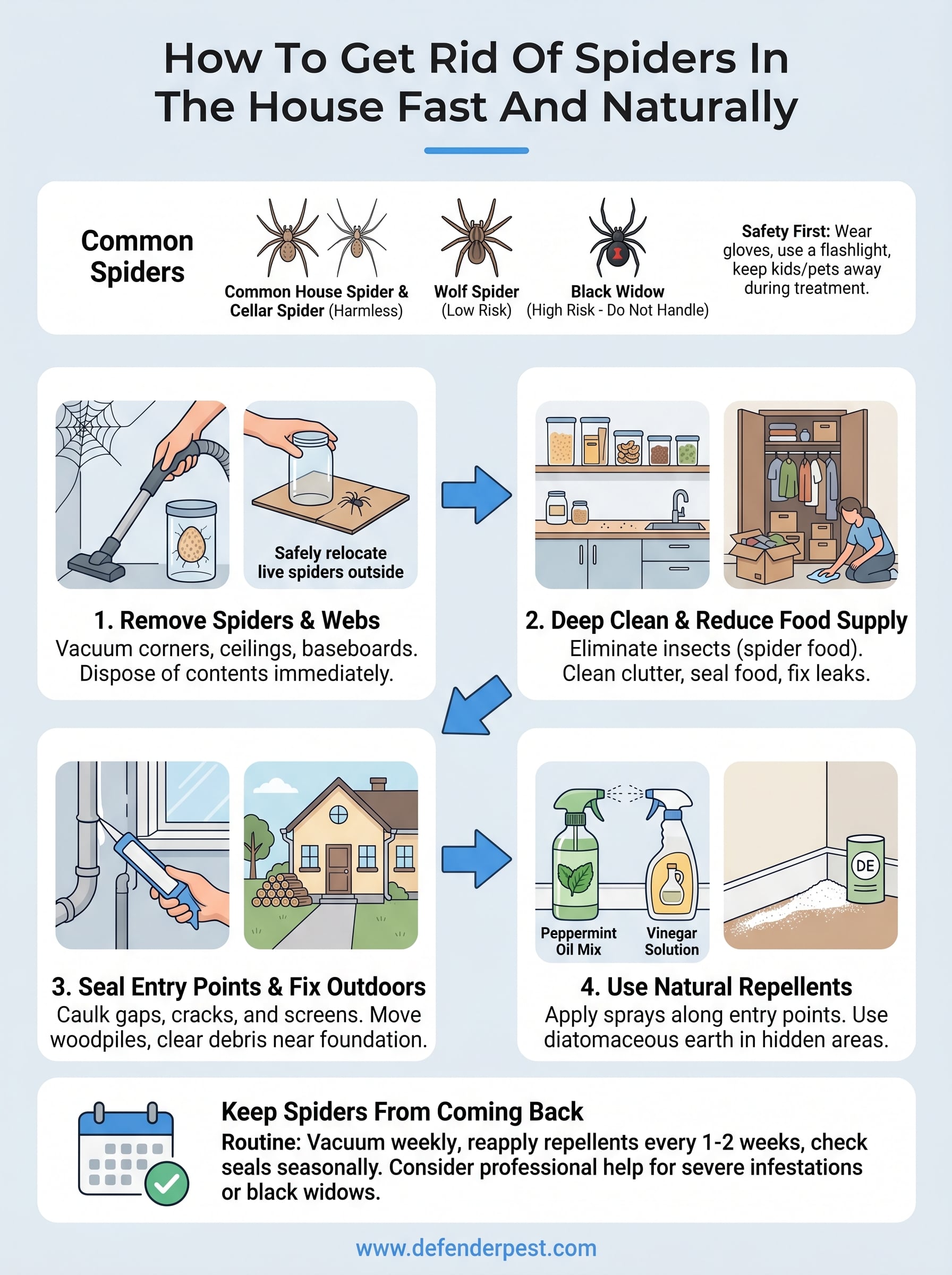
Every step in this guide works best as an ongoing routine, not a one-time fix. Vacuum corners and wipe window frames weekly , reapply your peppermint or vinegar spray every two weeks, and check your caulk lines each fall before cold weather sends spiders searching for warmth inside. Knowing how to get rid of spiders in the house is only half the job. The other half is staying consistent enough that your home never becomes attractive to them again.
Some spider problems run deeper than DIY methods can reach. If you find black widows repeatedly, spot egg sacs in multiple rooms, or notice spider activity increasing despite your efforts, the underlying insect population in your home likely needs professional treatment. Heavy infestations benefit from a targeted perimeter program that eliminates the food source driving spider activity from the outside in. Contact Defender Termite & Pest Management to schedule a pest inspection for your Sacramento-area home.