5 Tips: How To Prevent Wasps From Nesting Around Your Home
Nothing ruins a Sacramento summer afternoon faster than discovering wasps building a nest under your eaves or along your porch. Once they settle in, they become territorial and aggressive, and removing an established nest is far more dangerous and costly than stopping it from forming in the first place. That's why knowing how to prevent wasps from nesting around your home matters before the warm months hit, not after you've already got a problem buzzing overhead.
The good news is that most wasp prevention comes down to a handful of practical steps you can take right now. From sealing entry points to eliminating food sources, small changes around your property make a big difference. At Defender Termite & Pest Management, we've helped Sacramento-area homeowners deal with stinging insects since 1999, and we've seen firsthand what works, and what's a waste of time .
Below, we'll walk you through five proven tips to keep wasps from setting up camp around your home. Some are simple DIY fixes, while others may call for professional pest control support . Either way, you'll have a clear plan to protect your porches, decks, and outdoor spaces this season.
1. Get a pro inspection and prevention plan
If you want to know how to prevent wasps from nesting reliably, a professional inspection is the strongest starting point. A trained technician spots early warning signs before wasps establish a full colony and creates a targeted prevention plan built around your specific property layout rather than guesswork.
What a professional prevention visit covers
During a prevention visit, a technician walks your entire property and checks high-risk zones including eaves, soffits, deck supports, fence posts, and utility boxes. They identify conditions that invite nesting, such as exposed wood, gaps in siding, and dense low-hanging vegetation. You'll typically leave with a written report and a treatment plan that addresses both current activity and the spots most likely to see new nests in the coming weeks.
Common areas a technician documents:
- Rooflines and overhangs
- Outdoor electrical boxes and meter housing
- Gaps around window and door frames
- Under-deck framing and lattice openings
Why pro prevention stops repeat nesting
Wasps return to the same locations year after year, especially when prior nests were removed but the underlying access points were never treated. A professional applies residual deterrents to those locations that discourage queens from scouting them in early spring. Without that barrier, the same eave or porch corner tends to attract a fresh nest every single season.
Removing a nest without treating the site is like patching a leak without fixing the pipe.
When this option makes the most sense
Professional prevention makes the most sense if you've dealt with recurring wasp problems in the same spot for two or more seasons. It's also worth calling a pro if your property has hard-to-reach nesting sites like second-story eaves or large multi-level decks that you can't safely inspect on your own.
Typical cost factors in the Sacramento area
In the Greater Sacramento area, service pricing depends on property size, the number of treatment zones, and whether any active nests need removal first. Most homeowners pay between $75 and $200 for an initial inspection and a targeted prevention treatment.
2. Remove food and water that attracts wasps
Wasps are drawn to protein, sugar, and standing water more than almost any other factor around your yard. Cutting off these attractants is one of the most effective steps in how to prevent wasps from nesting on your property before the season gets away from you.
The biggest food sources to clean up fast
The top culprits are fallen fruit, pet food, and uncovered sweet drinks left sitting outside. Collect dropped fruit daily during summer, and never leave open soda cans or juice cups on outdoor tables. Even a small residue of juice on a patio surface gives scout wasps a reason to return and keep investigating.
Trash, recycling, and compost setups that prevent swarms
Your trash and recycling bins need tight-fitting lids at all times. Rinse cans and bottles before dropping them in recycling, and store compost in a sealed bin positioned away from your home's exterior walls.
The cleaner your trash setup, the fewer scouts you'll pull in during peak nesting months.
Outdoor eating habits that cut wasp traffic
When you eat outside, cover food and drinks whenever you step away from the table. Clear plates and wipe down surfaces immediately after meals rather than leaving scraps to sit.
Quick checklist for patios, porches, and pool areas
Run through these weekly fixes to stay ahead of wasp traffic:
- Dump standing water from planters, buckets, and pool toys
- Wipe down grill grates after every use
- Bring pet food bowls indoors after feeding time
- Clear fallen fruit from lawn and garden beds daily
3. Seal and screen the nesting spots they prefer
One underrated step in how to prevent wasps from nesting around your home is cutting off their access to preferred building sites before scouts ever locate them in spring.
Where wasps nest most often on homes
Wasps look for sheltered cavities and protected overhangs to start their colonies. Check these high-priority locations first when inspecting your property:
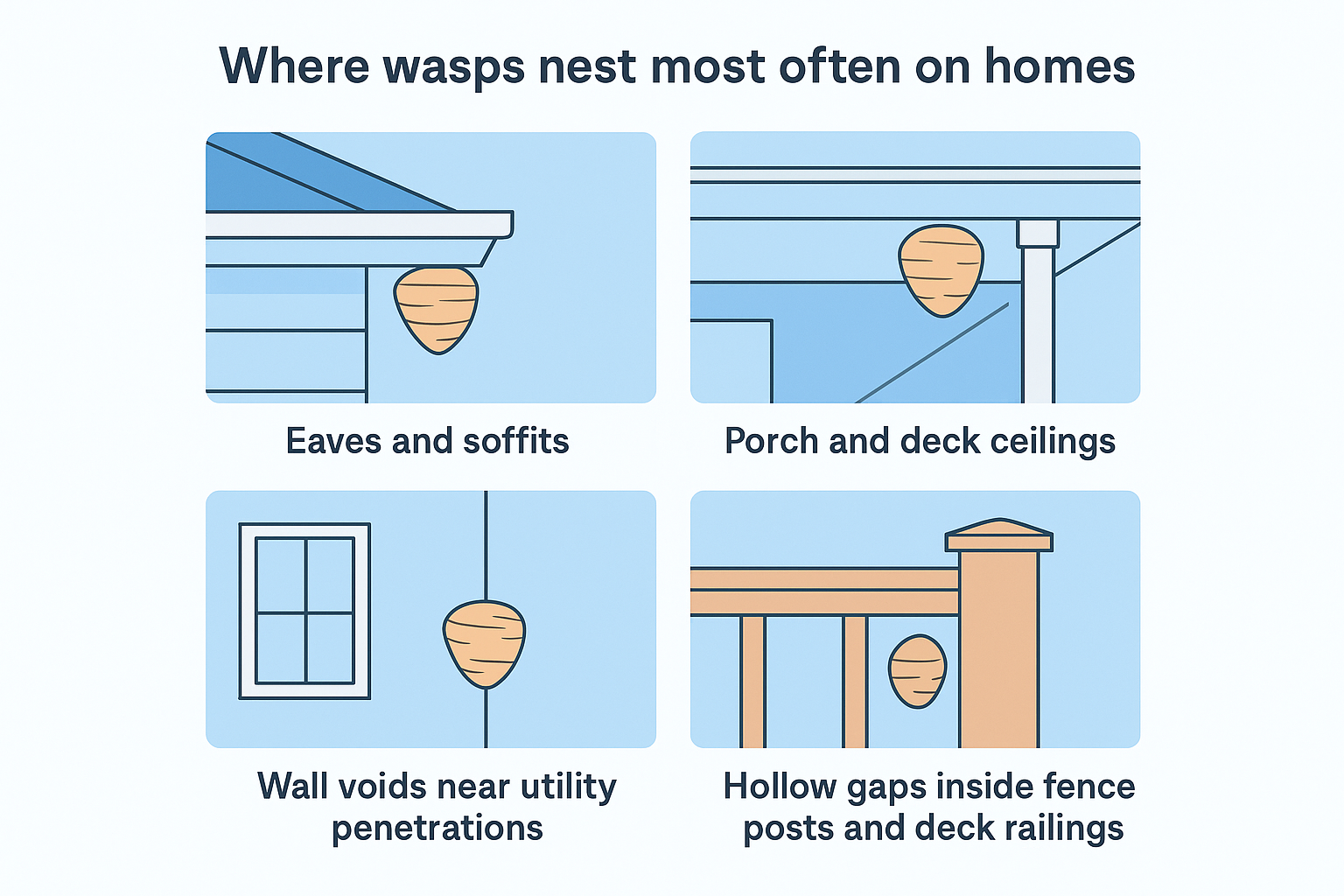
- Eaves and soffits
- Porch and deck ceilings
- Wall voids near utility penetrations
- Hollow gaps inside fence posts and deck railings
How to seal gaps and cracks the right way
Use paintable exterior caulk to close small cracks around window frames, siding seams, and trim boards. For larger gaps around utility pipes or conduit, expanding foam provides a more durable fill that wasps can't easily chew through.
Seal these gaps before late March in the Sacramento area, since queen wasps begin scouting nesting sites as temperatures climb above 50°F.
How to block under-deck and soffit access safely
Staple hardware cloth with openings no larger than 1/4 inch across open soffit vents and under-deck framing gaps. This allows airflow while blocking entry. Make sure existing vent screens are intact and free of tears before wasp season begins.
Common sealing mistakes that invite wasps back
Many homeowners seal only visible gaps and skip spots hidden behind downspouts or inside fence post caps. Wasps find those overlooked openings quickly. Walk your full perimeter and probe suspect areas with a flashlight and a thin stick to confirm you haven't missed anything.
4. Use deterrents the right way
Deterrents give you an extra layer of protection when combined with the sealing and cleanup steps above. Knowing which products actually work and which ones waste your time is a key part of learning how to prevent wasps from nesting season after season.
Decoy nests and when they help
Wasps avoid territories already claimed by another colony, so hanging a paper decoy nest near high-risk spots like eaves and porch corners can discourage scouts from settling in. Put them up in late March before queens start scouting, since decoys lose most of their effectiveness once real nests have already formed nearby.
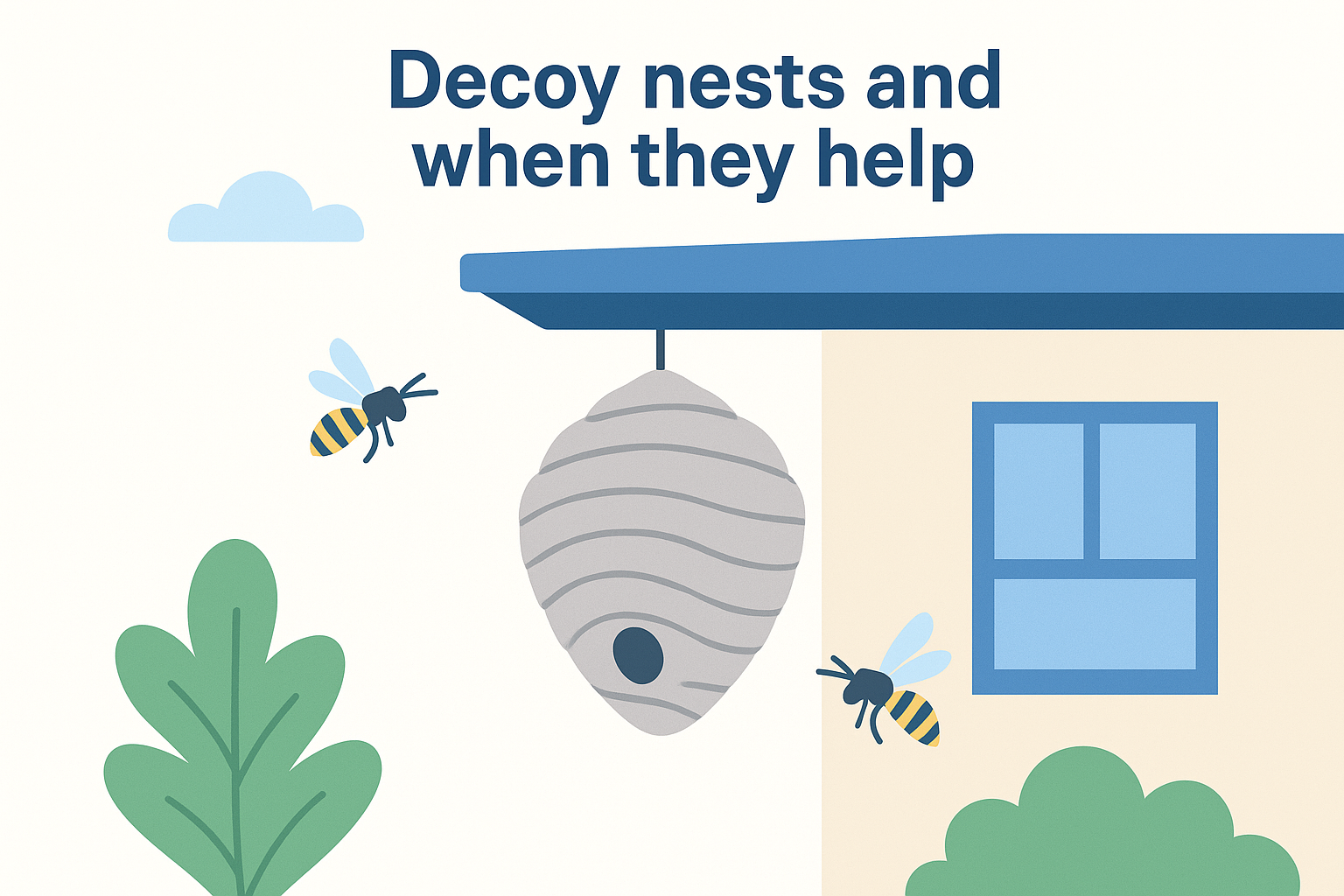
Decoy nests are a first line of defense, not a fix once wasps have already moved in.
Traps and baits that reduce nest building pressure
Protein-based traps catch foraging workers throughout summer and reduce overall activity pressure around your yard. Position traps away from seating areas to pull wasps toward the trap rather than toward you and your guests.
Scents and plants wasps tend to avoid
Wasps dislike peppermint oil and eucalyptus , so applying diluted peppermint oil along door frames and eaves can cut down on scout visits. Planting spearmint or wormwood near entry points adds a natural, low-maintenance barrier that reinforces your other prevention steps.
Myths to skip, including WD-40 and other shortcuts
WD-40 and dryer sheets are popular DIY suggestions online, but neither has reliable evidence behind it. Skip those shortcuts and put your effort into proven physical barriers and food source removal instead.
5. Inspect early and remove starter nests safely
Catching a nest when it's still in its earliest stage is the simplest part of how to prevent wasps from nesting from turning into a full removal job. A starter nest is small, unoccupied most of the day, and much easier to knock down safely than a colony with hundreds of active workers defending it.
Best time of year to look for new nests
Start your inspections in early April across the Sacramento area, when queen wasps begin building their first cells. Walking your property weekly through June gives you the best chance of catching new nests before the colony grows large enough to defend aggressively.
What a starter nest looks like by wasp type
Paper wasps build small, open-celled umbrella shapes hanging from a single stalk, while yellow jackets typically start inside wall voids or underground cavities . Mud daubers leave smooth clay tubes packed against flat surfaces like siding and soffits.
A starter nest is usually no bigger than a golf ball and holds fewer than ten workers.
Safe DIY steps for tiny, exposed nests
Wait until after dark when wasps are least active, then knock the nest down with a long-handled tool while wearing gloves and eye protection. Seal the spot immediately afterward so scouts don't rebuild in the same location.
Signs you should stop and call a pro right away
Call a professional if the nest is larger than a tennis ball or sits inside a wall void or ceiling cavity. Multiple wasps flying in and out of a gap in your siding is a clear sign the situation is past safe DIY territory.
Quick recap and next step
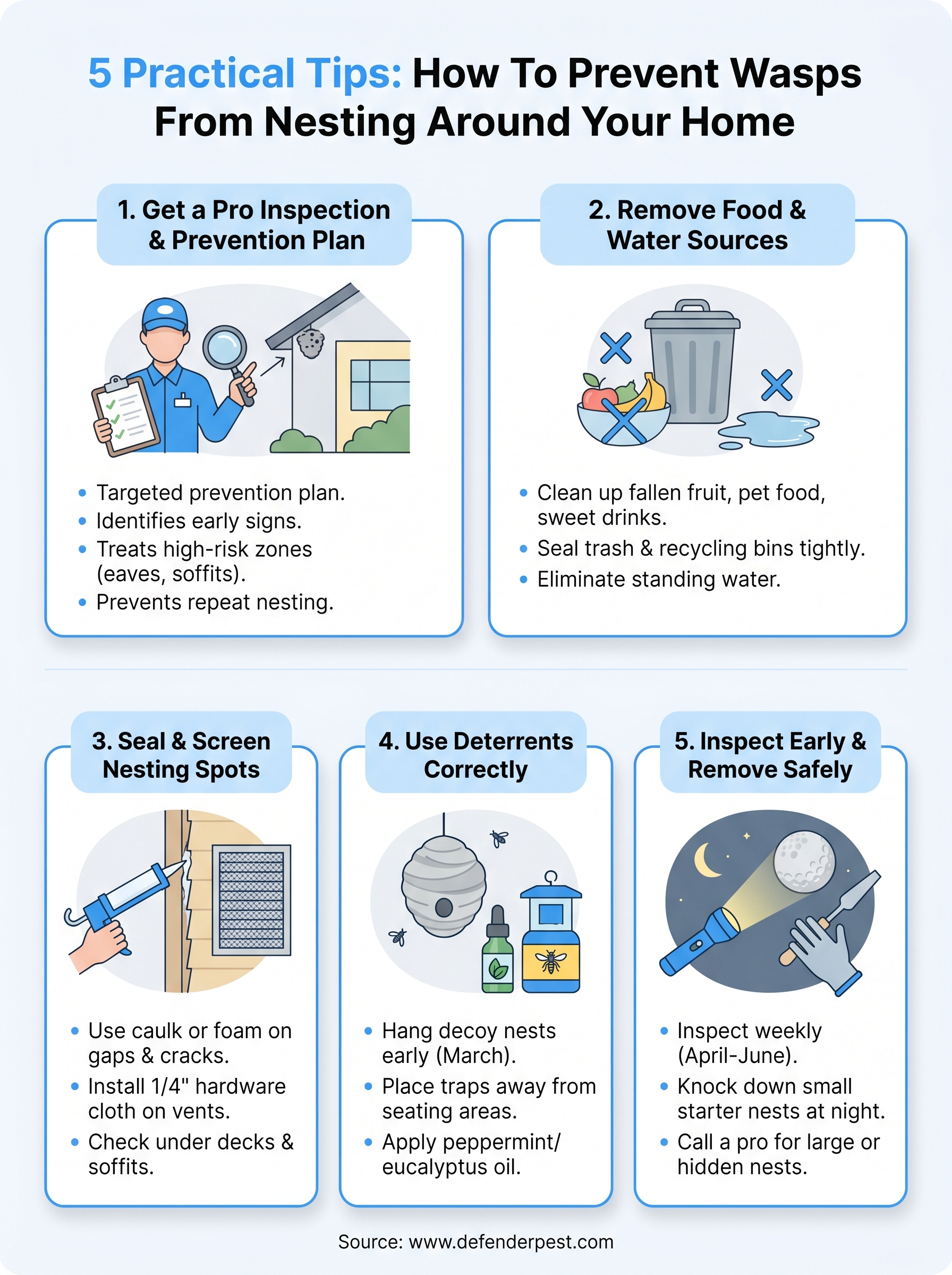
You now have a clear, practical picture of how to prevent wasps from nesting around your home. Start by eliminating food and water sources, seal the gaps and cavities wasps prefer, and put up deterrents before queens begin scouting in early spring. Walk your property weekly from April through June to catch starter nests while they're still small and manageable. If you've dealt with the same nesting spots for multiple seasons, or if nests keep forming in areas you can't safely reach, a professional prevention plan is the most reliable fix.
Defender Termite & Pest Management has served Sacramento-area homeowners since 1999, and our team knows exactly where wasps hide and what stops them from coming back . Don't wait until you have an established colony to take action. Contact Defender Termite & Pest Management today to schedule an inspection and get ahead of wasp season before it starts.