What Are Bed Bugs? Identification, Behavior, and Signs
You found a rusty stain on your sheets or a bite mark you can't explain, and now you're wondering if bed bugs have moved into your bed. That question deserves a straight answer, not a list of vague symptoms that could match a dozen other bugs. Bed bugs are small, flat, reddish-brown insects that feed exclusively on blood, usually while you sleep, and they've been a persistent pest problem in homes across Sacramento and the surrounding valley for years.
This article walks you through exactly what these insects look like at every life stage, how they behave, and the specific signs of an infestation you can check for right now, from shed skins to dark fecal spots along mattress seams. We built this guide around the questions homeowners actually ask us on inspection calls, not textbook definitions.
By the end, you'll know how to tell bed bugs apart from similar pests like carpet beetles or fleas, and you'll understand why they spread so quickly between rooms and even between units in apartment buildings. If what you read here matches what you're seeing, Defender Termite and Pest Management handles bed bug identification and treatment throughout the Sacramento area, and we can confirm what you're dealing with before it spreads further.
Why it matters to know what bed bugs are
Understanding what are bed bugs , specifically, isn't academic. It changes how fast you act, what treatment you choose, and how much the whole ordeal costs you. Homeowners who wait a few weeks to confirm an infestation because they assumed it was a rash or mosquito bites often end up with bugs in three rooms instead of one. Knowing the biology and behavior of this pest up front saves you money and stress later.
They multiply faster than most homeowners expect
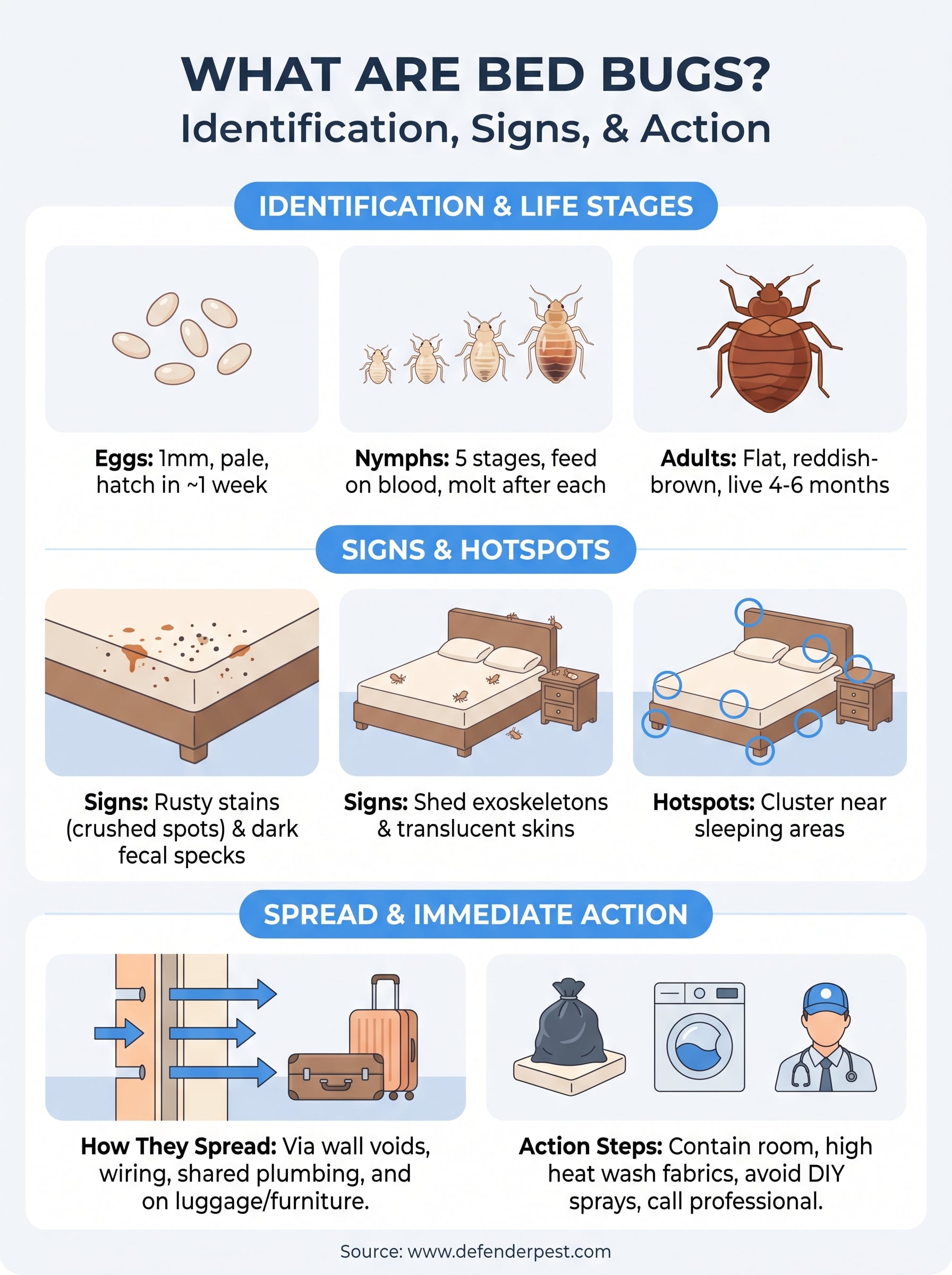
A single fed female bed bug can lay one to five eggs a day and up to 500 in her lifetime. Eggs hatch in about a week, and a bug reaches adulthood through five nymph stages, feeding at each one, in roughly five to six weeks under normal room temperature. That means a handful of bugs riding in on a secondhand chair or a suitcase from a trip can turn into a established infestation within two months if nobody notices.
| Life stage | Size | Time to next stage |
|---|---|---|
| Egg | 1mm, pale | 6-10 days |
| Nymph (1st-5th instar) | 1.5mm-4.5mm | 1 week per stage, with a blood meal each time |
| Adult | 4-5mm, reddish-brown | Lives 4-6 months, longer without feeding |
A few bed bugs left unchecked for two months can become a full-blown infestation across an entire bedroom.
They don't care about cleanliness
One myth we hear constantly on inspection calls is that bed bugs only show up in dirty homes. That's false. Bed bugs feed on blood , not crumbs or clutter, so a spotless house is just as vulnerable as a messy one. What actually predicts risk is exposure: travel, secondhand furniture, shared laundry rooms, and multi-unit buildings where bugs move through wall voids and electrical conduits. Sacramento's rental turnover and steady stream of visitors moving through hotels, Airbnb rentals, and apartment complexes give this pest plenty of chances to hitch a ride into a new home.
Misidentifying them delays real treatment
Delaying identification is where most people lose ground. Bites from bed bugs look similar to mosquito or flea bites, and shed skins can be mistaken for debris. Homeowners frequently spend two or three weeks trying over-the-counter sprays meant for ants or spiders, which do almost nothing against bed bugs hiding deep in mattress seams and box spring frames. By the time a professional gets called in, the infestation has often spread to a second room or a neighboring unit, which multiplies the cost and time of treatment.
The financial and health stakes climb quickly
Beyond the itch and the sleepless nights, bed bugs carry real costs. According to the CDC, bed bugs aren't known to transmit disease directly, but repeated bites can cause allergic reactions, secondary skin infections from scratching, and significant anxiety or insomnia in people dealing with a long-term infestation. Financially, a small, caught-early problem might mean one or two treatment visits. A neglected one can mean:
- Replacing mattresses, box springs, and upholstered furniture that can't be treated
- Multiple rounds of professional treatment across several rooms
- Lost rental income if you manage a property and units sit vacant during treatment
- Legal and reputational headaches for landlords facing tenant complaints
Vacaville, Roseville, and Folsom property managers we work with have seen these costs firsthand when a single unit's infestation spreads through a shared wall before anyone flags it. Recognizing the signs early is the cheapest step in the entire process, and it's the one most people skip.
How to identify a bed bug infestation
Confirming an infestation takes more than spotting a single bug crawling across your pillow. You need a pattern of evidence, because one wandering insect could mean almost anything. Start with the physical signs that professionals look for on every inspection, then check the areas where bed bugs actually cluster before you decide the problem is bigger than a fluke.
Look for physical evidence, not just bites
Bites alone won't confirm bed bugs, since reactions vary and some people don't react at all. Instead, check your sheets and mattress seams for small rust-colored stains , which are crushed blood spots left after a bug feeds. Look next for dark, pepper-like specks along seams and folds, that's fecal matter, and it's one of the clearest markers of an active problem. You should also find shed exoskeletons , pale and translucent, near seams and in nightstand drawers, since nymphs molt five times before reaching adulthood.
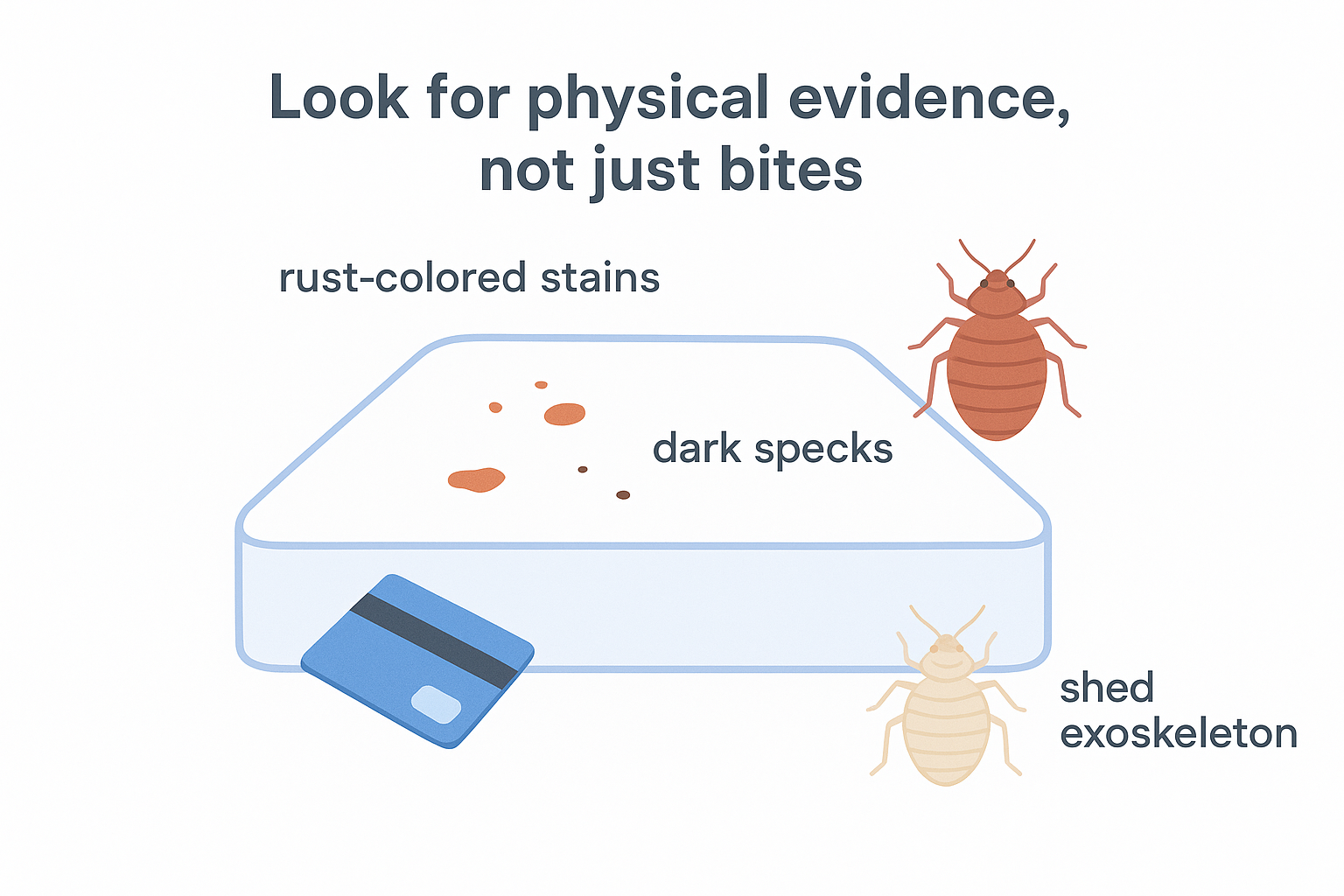
Rust-colored stains and pepper-sized dark specks on your mattress seams are the two most reliable signs of bed bugs, more reliable than bites alone.
Check the usual hotspots first
Most infestations start within eight feet of where you sleep, so focus your search there before checking the rest of the room. Work through these spots in order:
- Mattress seams, tufts, and piping
- Box spring frame and the fabric underside
- Headboard joints and screw holes
- Baseboards and outlet covers near the bed
- Nightstand drawers and seams in upholstered chairs
A flashlight and a credit card edge work well for this. Slide the card along seams and crevices, since bed bugs flatten themselves into gaps as thin as a credit card.
Rule out lookalike pests
Carpet beetles, fleas, and even young cockroaches get mistaken for bed bugs constantly, and misidentifying the pest wastes time and money on the wrong treatment. Here's a quick comparison to help you sort out what you're actually seeing:
| Pest | Shape | Color | Where found |
|---|---|---|---|
| Bed bug | Oval, flat | Reddish-brown | Mattress seams, headboards |
| Carpet beetle larvae | Fuzzy, elongated | Brown/tan with hairs | Closets, carpets, fabric |
| Flea | Narrow, laterally flat | Dark brown | Pet bedding, carpets |
| Cockroach nymph | Elongated, oval | Tan to dark brown | Kitchens, bathrooms |
If you're finding a mix of stains, shed skins, and live insects that match the bed bug description across several of these hotspots, you're past the point of guessing. That combination is what separates a stray insect sighting from a genuine, spreading infestation that needs immediate attention.
Where bed bugs hide and how they spread through a home
Bed bugs don't build nests the way ants or termites do. Instead, they cluster in tight groups called harborages , wedged into any crack narrow enough to press their flat bodies into. Grasping how they move through a house explains why a problem in one bedroom rarely stays contained, and why treating just the mattress almost never solves the whole issue.
Their hiding spots go far beyond the mattress
Cracks and seams anywhere near a sleeping area qualify as a potential harborage. Beyond the mattress and box spring, check these locations, since they're where inspectors find overlooked populations:
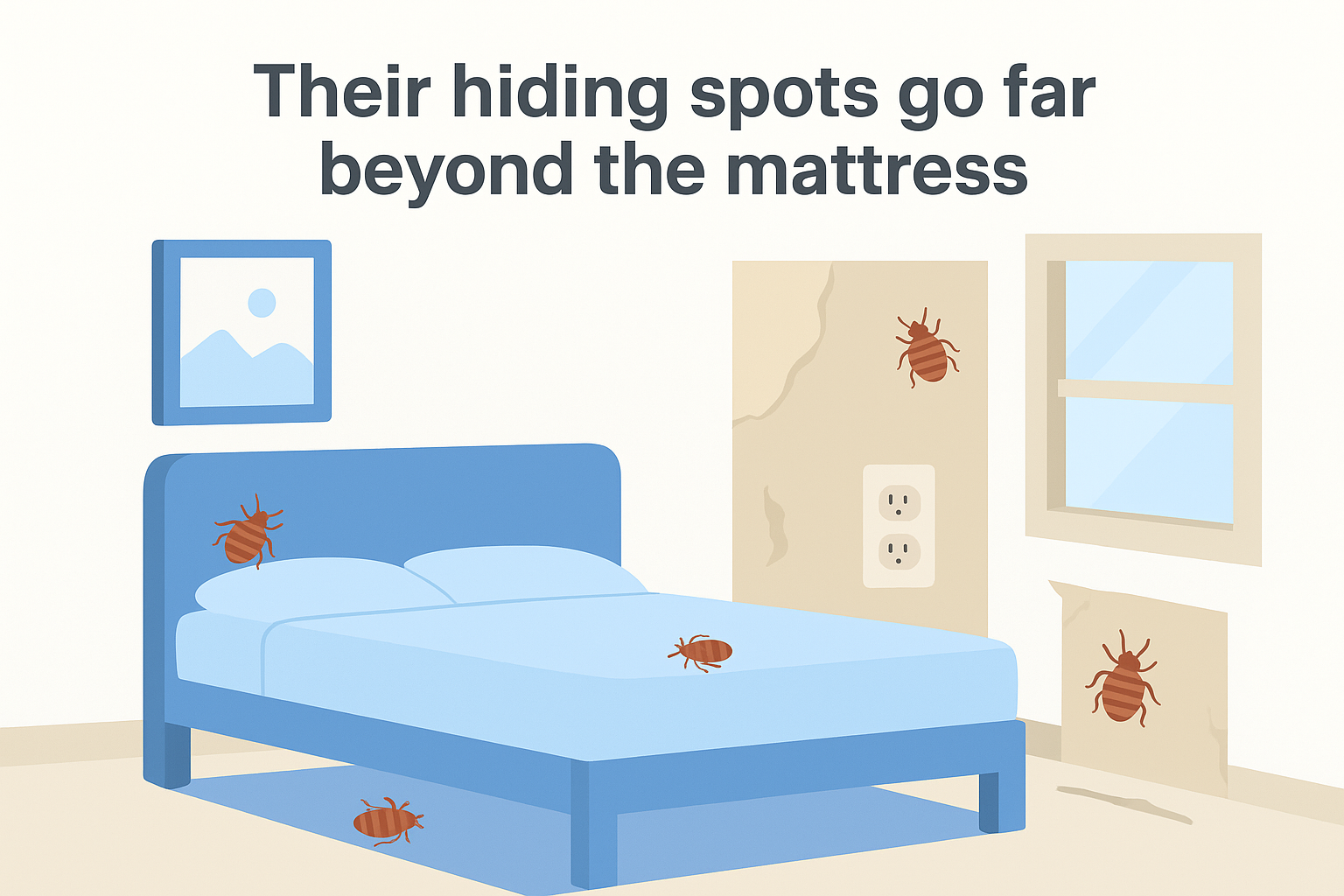
- Behind picture frames and peeling wallpaper
- Inside electrical outlets and light switch plates
- Along baseboard gaps and carpet edges
- Inside cracks in wood furniture joints
- Behind loose wall trim and window casings
Each of these spots gives a bug darkness, a tight fit, and proximity to a blood source, which is all it needs to settle in for months.
They travel through walls, wiring, and shared plumbing
In single-family homes, bed bugs typically spread room to room by crawling along baseboards, through wall voids, or riding along on clothing and bedding carried between rooms. In apartment buildings and duplexes, the spread gets faster and harder to trace. Bugs move through shared wall voids , electrical conduits, and plumbing chases that run between units, which is why one infested apartment in a Sacramento fourplex can seed three neighboring units within a couple of months without a single tenant swapping furniture. This is also why pest control companies always recommend inspecting adjoining units once one confirmed infestation turns up in multi-family housing.
A single infested unit in a shared building can spread bed bugs to neighboring apartments through wall voids and outlets, often before any tenant notices a bite.
Human movement does most of the spreading
Walls and wiring explain spread within a building, but people cause the spread between buildings. Bed bugs latch onto luggage, backpacks, and used furniture , then ride along until they're dropped off somewhere new. Hotel stays, campus dorms, and secondhand couch purchases account for a large share of the new infestations we see across Sacramento, Roseville, and Elk Grove. A few habits lower that risk substantially:
- Inspect hotel mattress seams and headboards before unpacking
- Keep luggage off the bed and floor during travel
- Wash and dry travel clothing on high heat immediately after a trip
- Examine secondhand furniture seams closely before bringing it inside
None of these steps guarantee you'll never encounter a bed bug, but they cut down the odds significantly, and they cost nothing compared to a multi-room treatment later.
What to do if you spot bed bugs in your Sacramento home
Finding a confirmed bed bug infestation in your home calls for a calm, methodical response, not panic-driven purchases at the hardware store. What you do in the first 48 hours determines whether the problem stays in one room or spreads through the whole house.
Contain the area before you do anything else
Before you touch a spray can, isolate the affected room. Bed bugs travel on anything you carry out, so moving boxes, laundry baskets, or furniture between rooms right now is how a one-room problem becomes a whole-house problem. Take these steps first:
- Bag infested bedding and clothing in sealed plastic bags
- Wash and dry anything washable on the highest heat setting the fabric allows
- Vacuum mattress seams, baseboards, and furniture crevices, then seal and discard the bag immediately
- Pull furniture a few inches away from walls to slow crawling access
- Avoid moving mattresses, box springs, or upholstered furniture to other rooms
Sealing off the infested room and washing fabrics on high heat does more to slow the spread than any spray you'll find on a store shelf.
Skip the DIY shortcuts that rarely work
Over-the-counter foggers and bug bombs almost never solve a real infestation. Bed bugs hide deep in seams, wall voids, and furniture joints that aerosol sprays never reach, and fogger use has actually been linked to bugs scattering into new hiding spots instead of dying off. Rubbing alcohol and diatomaceous earth get recommended constantly online, but both take repeated, precise application to matter, and most homeowners underdose or miss hiding spots entirely. Relying on these methods usually buys you a few weeks of false confidence while the population keeps growing behind the walls.
Get a professional inspection before treating anything further
Once you've contained the room, the next move is confirming the scope of the problem with a trained inspector rather than guessing at how many rooms are affected. A thorough inspection checks adjoining rooms, shared walls if you're in a duplex or apartment, and common hiding spots you might have missed on your own walkthrough. This step matters even more if you rent out a property or manage a multi-unit building in Sacramento, Elk Grove, or Folsom, since one missed unit can undo an otherwise successful treatment.
Defender Termite and Pest Management handles exactly this kind of inspection and treatment across the greater Sacramento area. If what you've found matches what you've read here, request a quote and we'll walk your property, confirm the extent of the infestation, and lay out a treatment plan built around what we actually find, not a generic checklist.
Staying ahead of bed bugs
Knowing what are bed bugs and how they behave puts you ahead of most homeowners who only start researching after the bites show up. You now know the physical signs to check, the hotspots where they cluster, and why waiting even a few weeks lets a small problem spread through walls, wiring, and shared spaces. That knowledge is worth more than any spray you'll find on a shelf, because it tells you when to act and when to call in help.
Bed bugs reward speed. The homeowners who catch them early spend a fraction of what the ones who wait spend, in both money and sleepless nights. If you've matched what you read here to stains, shed skins, or live bugs in your own home, don't sit on it. Request a quote from Defender Termite and Pest Management and get a real inspection before the problem spreads any further.