Do Mosquito Traps Work? What the Evidence Really Shows
You've seen the ads promising a mosquito-free backyard in a box. Before you spend $200 to $400 on a trap, you want to know one thing: do mosquito traps work , or is this another product that looks great online and does nothing in your yard? That's a fair question, especially in Sacramento summers when mosquitoes make evening barbecues unbearable.
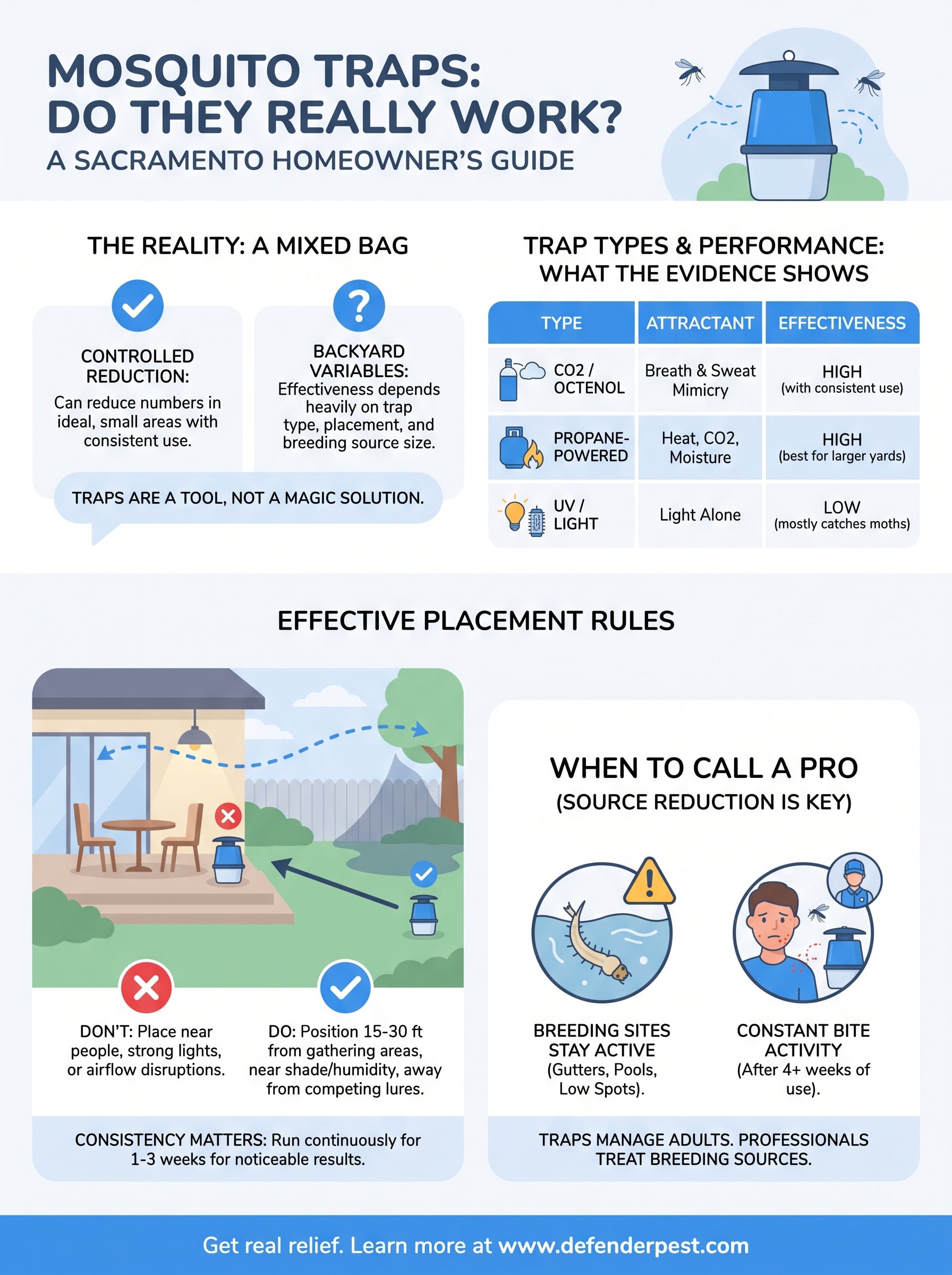
The honest answer is mixed. Traps can reduce mosquito numbers in controlled conditions , but backyard results depend heavily on trap type, placement, and the size of the mosquito population you're already dealing with. Some traps genuinely cut down bites over weeks of consistent use. Others sit in a garage after one disappointing season.
We've inspected enough Sacramento properties to know when a trap will help and when it's masking a bigger breeding problem. This article walks through the actual research behind popular trap technologies, what they can realistically accomplish, and where professional pest control fills the gap traps leave behind.
Why it matters whether mosquito traps really work
Mosquitoes are not just an annoyance in the Sacramento area. They carry real health risks, and that changes how you should think about whether traps actually work versus just look impressive. Sacramento County has documented West Nile virus activity in local mosquito populations for years, and standing water from irrigation, unused pools, and drainage ditches keeps breeding sites active from spring through fall. When you're deciding whether to trust a trap to protect your family, you're not just weighing comfort against cost. You're weighing exposure to a mosquito-borne illness against a product claim.
The gap between catching mosquitoes and reducing bites
Many trap manufacturers show you a bucket full of dead mosquitoes after a week of use and call that proof of effectiveness. But catching mosquitoes isn't the same as reducing your bite count or shrinking the neighborhood population enough to matter. A trap can pull in hundreds of mosquitoes a night and still leave you getting bitten on the patio, especially if your yard borders a canal, wetlands, or a neighbor's neglected pool. The research on this is clear: trap efficacy studies from public health entomologists measure population suppression over large areas, not single backyards, and results vary wildly depending on trap density and surrounding habitat.
Catching mosquitoes in a trap and actually reducing the bites you get are two different outcomes, and most marketing blurs the line between them.
Why guessing costs you money and comfort
Buying the wrong trap, or the right trap placed in the wrong spot, wastes real money and leaves you exposed all season. A single quality trap runs $150 to $400, and most manufacturers recommend running multiple units for full-yard coverage on anything larger than a small patio. If you buy one unit expecting it to clear a half-acre lot with a pond in back, you'll be disappointed no matter how good the technology is. Understanding what traps can and can't do before you buy helps you avoid three common mistakes homeowners make:
- Underestimating breeding sources. A trap fights adult mosquitoes; it does nothing about larvae multiplying in a birdbath or clogged gutter.
- Expecting immediate results. Most traps need one to three weeks of continuous operation before you notice a meaningful drop in activity.
- Ignoring yard size and layout. Dense landscaping, fences, and water features change airflow and scent dispersion, which affects how well a trap lures mosquitoes toward it instead of away.
Getting this right matters because Sacramento's climate gives mosquitoes a long breeding season, roughly March through October in most years according to regional vector control data. That's seven months where an ineffective strategy means seven months of bites, disrupted evenings outdoors, and lingering health risk. Knowing what the evidence actually supports, rather than what the packaging promises, is the difference between a trap that earns its price tag and one that becomes an expensive lawn ornament.
How to choose and use a mosquito trap effectively
Buying a trap without matching it to your yard is the fastest way to waste money. Sacramento properties vary enormously, from small Midtown lots to acreage in Elk Grove with irrigation ditches, and the right trap for one setup can be useless in another. Before you buy, walk your property and note where mosquitoes actually bite you, where shade and moisture linger, and how far that spot sits from any standing water. Trap selection should follow that survey, not a review score.
Placement rules that actually matter
Where you put a trap changes its performance more than almost any other factor. Mosquitoes fly toward carbon dioxide, heat, and moisture, so a trap needs a clear path to intercept them before they reach your porch or patio.
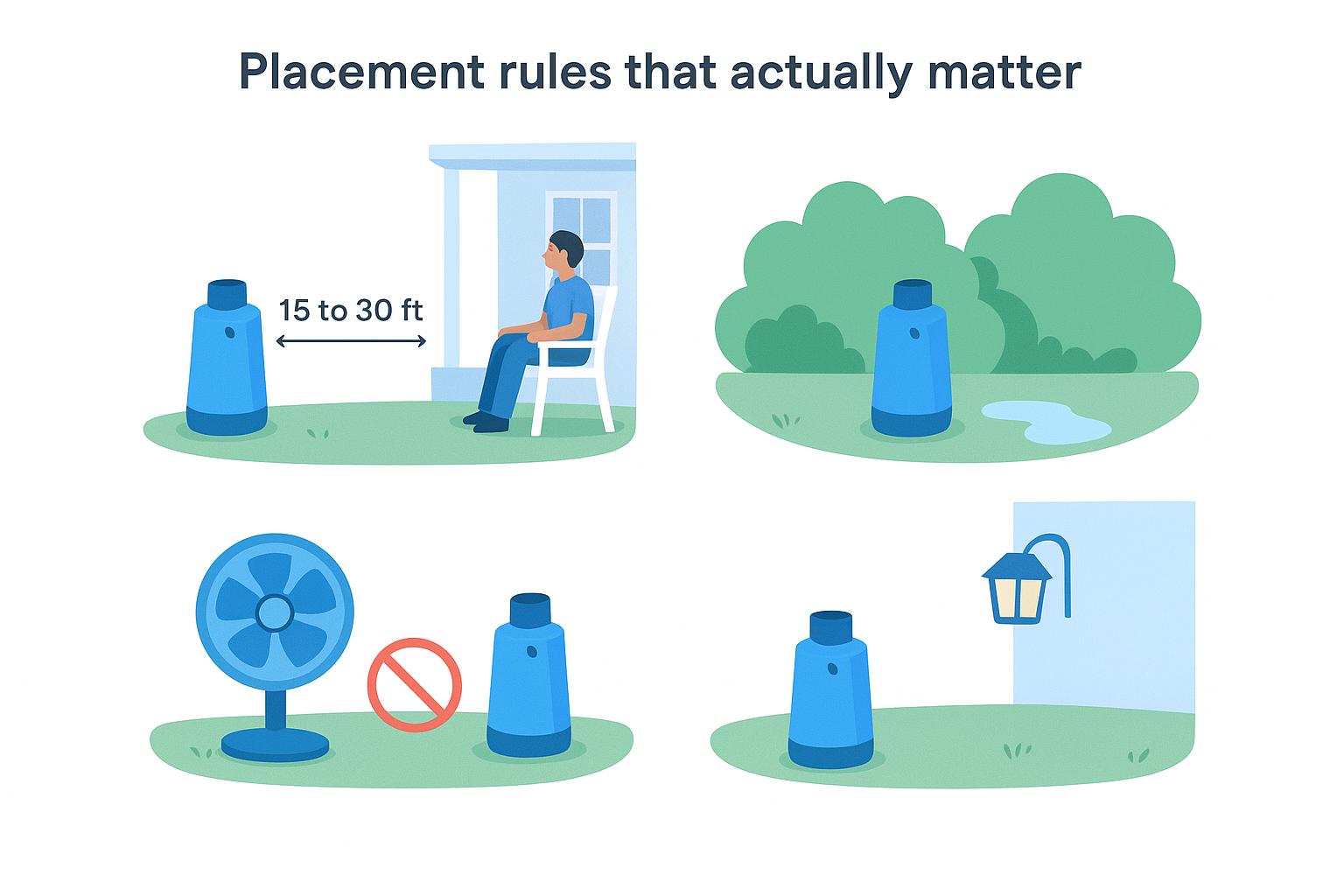
- Place traps 15 to 30 feet from where people gather, pulling mosquitoes away from you rather than through you.
- Position units near shaded, humid areas where mosquitoes rest during the day, not out in direct sun.
- Avoid placing traps near strong outdoor fans, pool equipment, or anything that disrupts airflow and scent trails.
- Keep traps away from bright porch lights, which compete with the trap's attractants.
A trap fighting against your yard's airflow and lighting will never perform the way the box promises.
Running it long enough to see results
One week of use tells you almost nothing. Consistent operation over several weeks is what separates a trap that works from one you'll return. Most CO2 and octenol-based traps need continuous runtime, meaning you can't unplug it during the day and expect full effect at night. Replace attractant cartridges on schedule, since a depleted lure cuts catch rates dramatically even if the trap looks like it's running fine. Clean collection nets or bags weekly, because a clogged trap loses suction and stops pulling mosquitoes in at all. If you're not seeing any change in bite frequency after three to four weeks of proper placement and maintenance, that's a signal the population around your home is larger than a single trap can handle.
Mosquito trap types compared: what the evidence shows
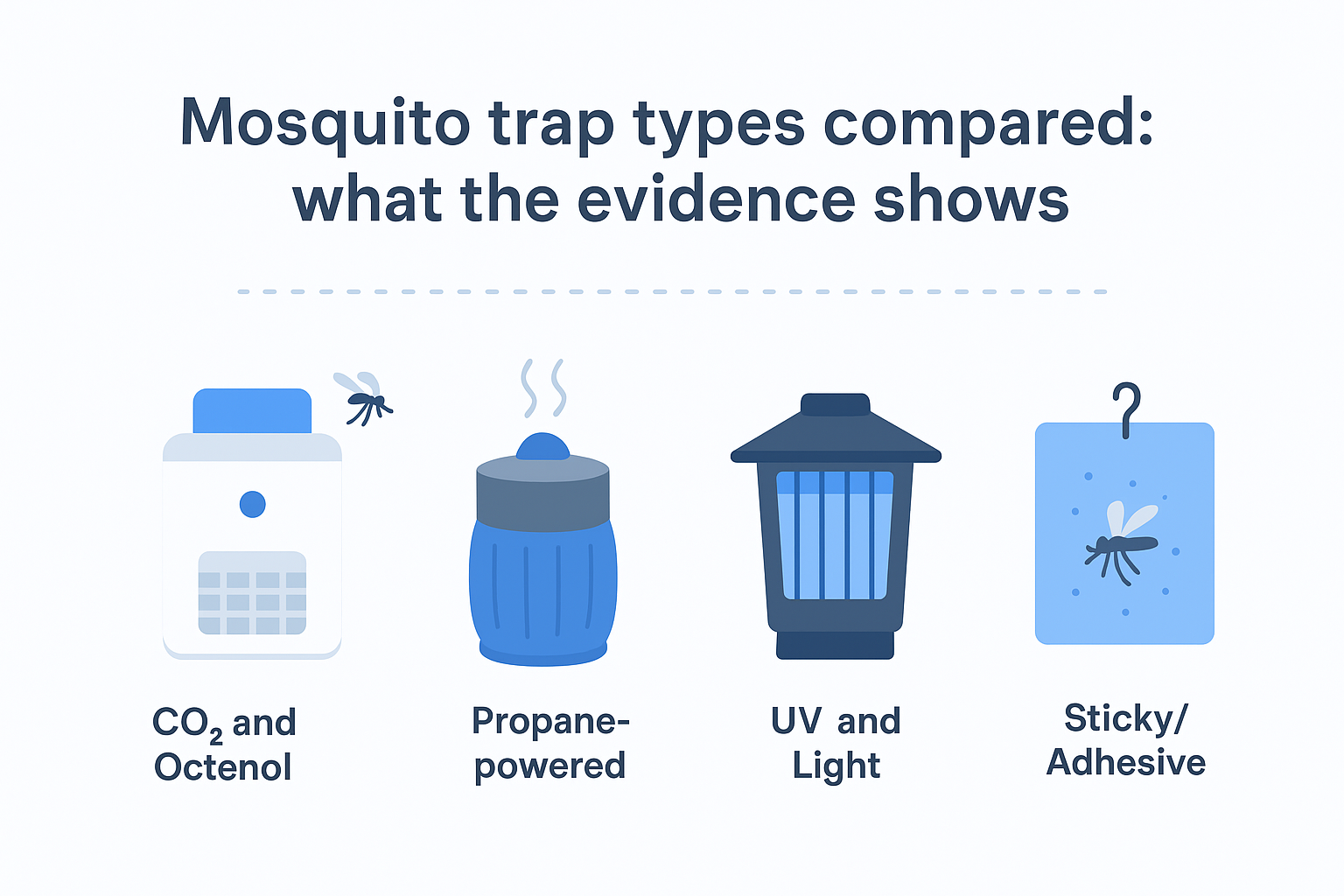
Not every trap works the same way, and lumping them together is where most buying mistakes start. Trap technology falls into a few main categories, each with different research behind it and different real-world performance. Some rely on carbon dioxide to mimic human breath, others use light and heat, and a few combine multiple attractants to compete with a live human target sitting ten feet away. Knowing which category you're buying tells you far more than the brand name on the box.
CO2 and octenol traps lead the research
Studies from public health entomology programs consistently show that traps releasing carbon dioxide alongside octenol, a chemical found in cattle breath and human sweat, catch significantly more mosquitoes than light-only units. These traps mimic the exact cues mosquitoes use to find blood meals, which is why vector control agencies use similar designs for population surveillance. The tradeoff is cost and maintenance. CO2 canisters need regular replacement, and the traps themselves run on the higher end of the price range.
The traps with the strongest research behind them are the ones mimicking human breath and sweat, not the ones simply glowing at night.
UV and light traps underperform outdoors
Bug zappers and UV light traps look effective because they kill visible insects, but research shows most of what they catch are moths and beetles, not mosquitoes. Light alone is a weak mosquito attractant compared to heat, moisture, and CO2.
| Trap Type | Primary Attractant | Backyard Effectiveness | Typical Cost |
|---|---|---|---|
| CO2/Octenol | Breath, sweat mimicry | High with consistent use | $200-$400 |
| Propane-powered | Heat, CO2, moisture | High, best for larger yards | $250-$400 |
| UV/Light | Light | Low for mosquitoes specifically | $30-$80 |
| Sticky/Adhesive | Scent lures | Moderate for monitoring | $40-$100 |
Propane-fueled units score well in field trials because they generate heat and CO2 continuously, closely matching human presence, making them one of the better choices for larger Sacramento lots with persistent activity.
When traps fall short and you need professional help
Even a well-placed, well-maintained trap has limits, and knowing where those limits sit saves you from months of frustration. Traps target adult mosquitoes flying through your yard, but they do nothing about the breeding sources producing new mosquitoes faster than any trap can catch them. If your property backs up to a drainage ditch, has a neglected pool, or holds standing water after every irrigation cycle, a trap is fighting a losing battle against a constant supply of new adults.
Breeding sources a trap can never solve
Standing water is the real driver of mosquito populations in Sacramento neighborhoods, and it takes as little as a bottle cap of water for a female mosquito to lay eggs. Common culprits we find on inspections include clogged rain gutters, unused kiddie pools, tarps that collect rainwater, and low spots in the yard that hold moisture after watering. No trap, regardless of price or technology, reduces the number of eggs hatching in these spots.
A trap manages the symptom. Eliminating breeding sites treats the actual problem.
Signs it's time to call a professional
Certain patterns tell you a trap alone won't solve what you're dealing with. Watch for these signals:
- Bite activity stays constant after four or more weeks of consistent trap use
- You spot larvae wriggling in any standing water around the property
- Neighbors report similar or worsening mosquito pressure, suggesting a shared breeding source
- Your yard backs onto a canal, wetland, or vacant lot with visible standing water
When any of these apply, a professional assessment identifies breeding sites you can't see from the patio and applies larvicide treatments that stop the problem before mosquitoes ever reach adulthood. That combination, source reduction plus targeted treatment, consistently outperforms trap technology alone because it interrupts the population at its origin rather than picking off adults one at a time.
Getting real mosquito relief at home
So, do mosquito traps work? Yes, but only within limits. A quality CO2 or propane trap, placed correctly and run consistently for several weeks, can genuinely cut down bites in a Sacramento backyard. What it can't do is stop new mosquitoes from hatching in your gutters, birdbath, or that low spot that never quite dries out. Trap technology handles adults; it ignores the source producing more of them every week.
If you've placed a trap correctly, maintained it, and you're still getting bitten after a month, the population around your home is bigger than one device can handle. That's not a trap failure, it's a sign you need source elimination and targeted treatment, not another gadget. Sacramento's long mosquito season doesn't leave room for guesswork. If bites keep piling up, request a mosquito control estimate from Defender Termite & Pest Management and get an inspection that finds what's actually breeding in your yard.