Squirrel Rodent Control: How to Get Rid of Them in 4 Steps
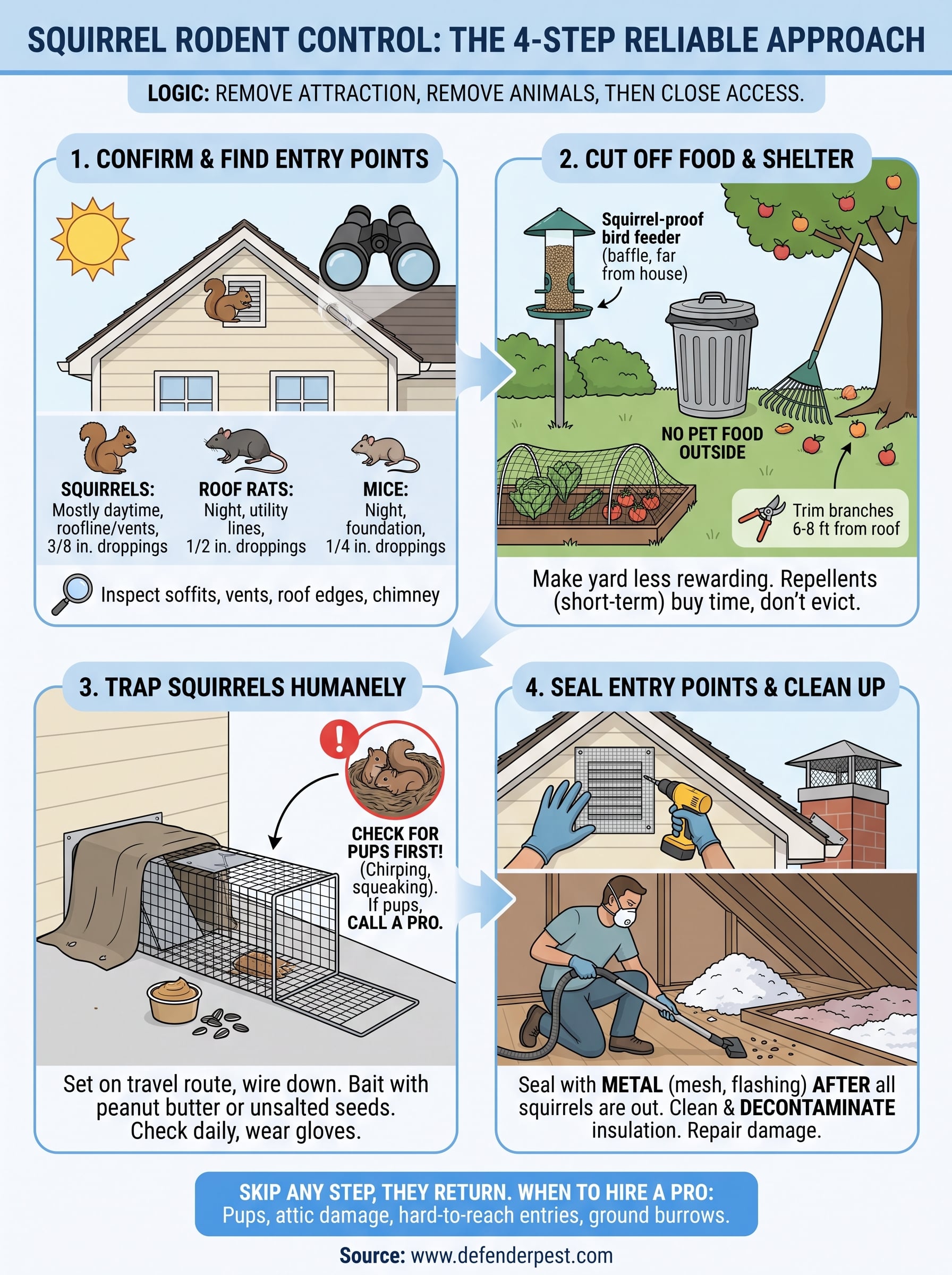
The most reliable approach to squirrel rodent control is a four-step sequence. Confirm that squirrels are the problem and find how they get in. Remove the food and cover that draw them. Trap any squirrels inside with a humane live trap or a one-way door. Then seal every entry point with metal and repair the damage. If squirrels are already nesting in your attic, hire a licensed professional, because the wrong move can trap pups or injure you.
Squirrels look harmless, but they are rodents, and they act like it. They chew wiring, soffits and vent screens, and they soil insulation with droppings and urine. A squirrel that has nested in a house will keep trying to get back in. That is why one-trick fixes such as a spray bottle, a plastic owl or a single trap so often fail within weeks.
This guide walks you through each step in order, with what to buy, what to check and when a DIY job becomes a professional job. Defender Termite & Pest Management has served homes and businesses around Sacramento since 1999, so the advice is written with local attics, yards and rules in mind.
Why squirrels need rodent-style control
Squirrels belong to the rodent order, so squirrel control follows the same logic as the rodent control methods used for rats and mice. Remove what attracts them, remove the animals, then block the way back in. The difference is the animal. Squirrels are larger and stronger than rats, and most species are active in daylight.
Control squirrels the way you control any rodent: remove the attraction, remove the animals, then close the access.
Why squirrels are handled like rodents
Like rats and mice, squirrels have teeth that never stop growing, so they gnaw constantly to keep them short. That is why they chew wiring, wood and vent screens . Their droppings and urine soil insulation, and they can carry fleas and ticks. Rabies in squirrels is very rare, but a cornered squirrel bites, so never handle one bare-handed .
In the Sacramento area you will mostly meet tree squirrels, such as fox and gray squirrels, on roofs and in attics. You will also meet California ground squirrels, which dig burrows in lawns and under slabs. This guide focuses on tree squirrels. Burrow problems follow the same logic but usually need a professional.
What you need before you start
Gather your gear first, so you do not leave an entry hole open while you run to the hardware store. Here is a practical kit:
- Work gloves and an N95 respirator for cleaning droppings
- A flashlight, binoculars and a ladder you trust
- A live cage trap rated for squirrels
- Peanut butter or shelled, unsalted sunflower seeds for bait
- Galvanized hardware cloth (half-inch mesh), sheet metal or aluminum flashing, and screws
- A trail camera, which is optional but very useful
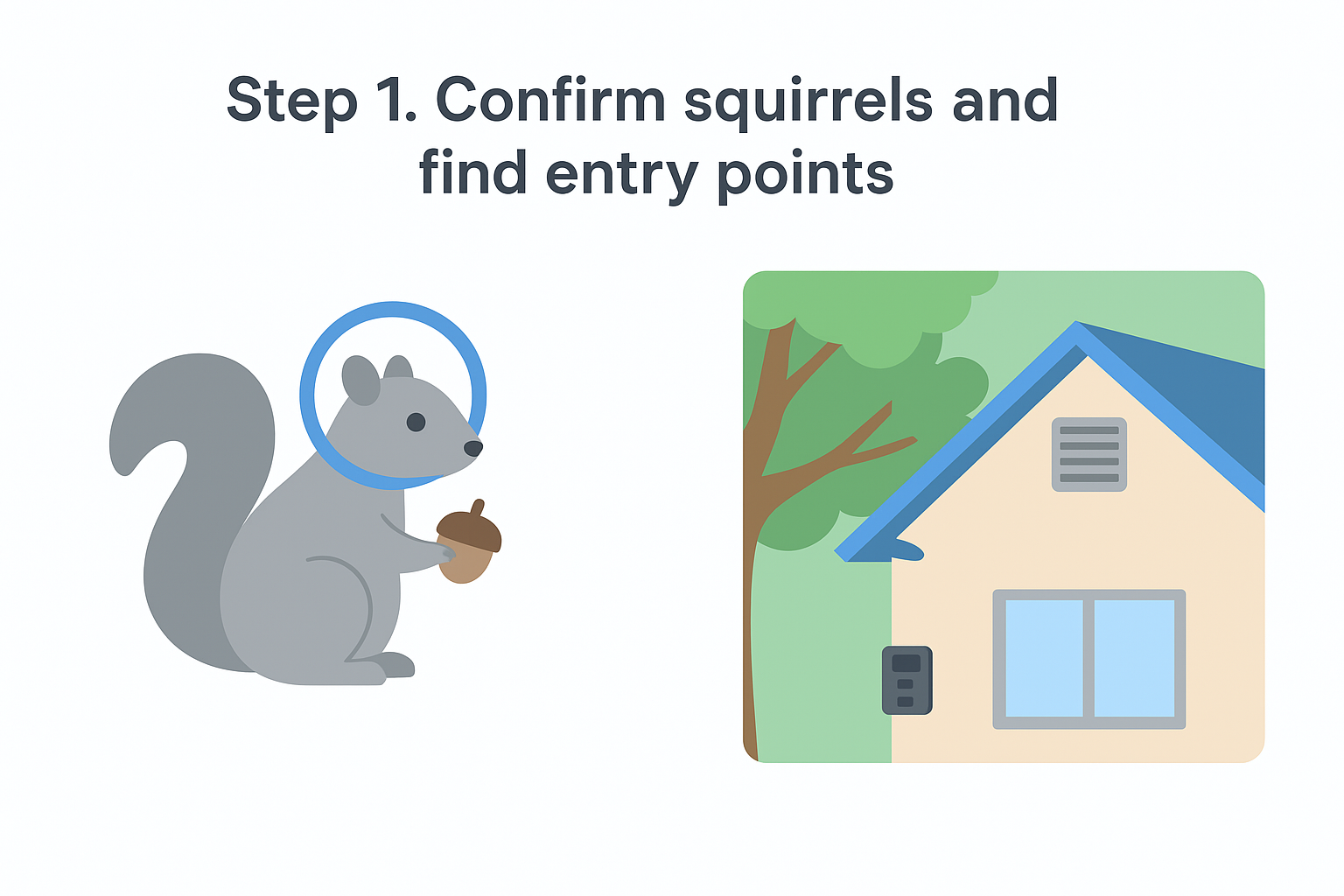
Step 1. Confirm squirrels and find entry points
Start by confirming the animal, because traps, bait and sealing details differ between squirrels and rats. Daytime scampering on the roof points to tree squirrels. Noise after dark may be flying squirrels, roof rats or mice.
Identify the animal
Use this comparison before you spend money on traps. Droppings sizes are approximate.
| Clue | Squirrels | Roof rats | Mice |
|---|---|---|---|
| Active | Mostly daytime | Night | Night |
| Sounds | Thumping, running, chewing, chirping | Scurrying, scratching | Light scratching |
| Droppings | About 3/8 inch, rounded ends | About 1/2 inch, pointed | About 1/4 inch, pointed |
| Typical entry | Roofline, vents, soffits | Roofline, utility lines | Gaps near the foundation |
Flying squirrels are the exception among squirrels. They are active at night and can slip through gaps under an inch wide.
Inspect the roofline
Walk the outside of the house and look at soffits, gable vents, attic vents, roof edges and the chimney . Look for gnawed wood, bent screens, stains and tufts of insulation. Note any branches that overhang the roof, since they act as bridges. Binoculars save you a trip up the ladder.
Then mount a trail camera aimed at the suspected entry for two or three days. It shows you which hole is the main door and when the squirrels use it.
The hole you can see is rarely the only one, so find every gap before you trap anything.
Step 2. Cut off food and shelter
Removing food and cover is the cheapest part of squirrel rodent control. Food is the biggest factor you can control , and squirrels learn quickly where an easy meal comes from. Cutting it off makes your property less attractive and makes later sealing last longer.
Make the yard and garden less rewarding
Work through this list in one afternoon:
- Move bird feeders well away from the house, or take them down for a few weeks
- Rake up fallen fruit, nuts and seed from under trees and feeders
- Use trash cans with tight-fitting lids, and keep pet food indoors
- Cover vegetable beds and fruit trees with netting
- Try a motion-activated sprinkler near gardens
- Trim branches back 6 to 8 feet from the roofline
Use repellents as a short-term tool
Repellents buy time, but they do not evict squirrels that are already inside. Red pepper flakes, capsaicin sprays and a diluted ammonia and water spray can discourage squirrels that are only visiting. They need frequent reapplication, especially after rain . Keep ammonia sprays outdoors and away from vents that feed your living space.
Do not use mothballs. They are unsafe as pest control because they can contaminate soil and water.
Treat repellents as a way to discourage visitors, never as a way to remove squirrels that already live in your attic.
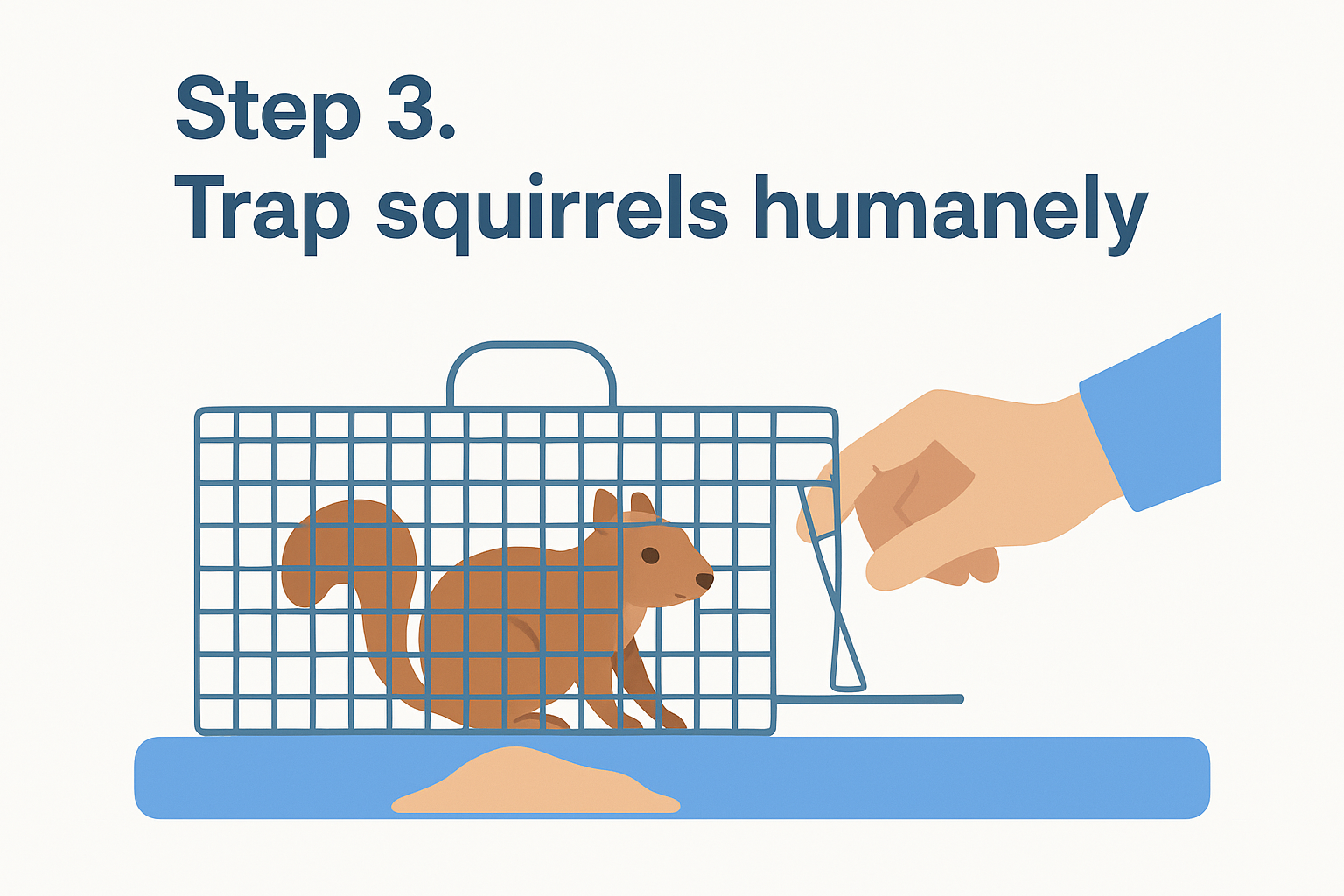
Step 3. Trap squirrels humanely
If squirrels are already inside, live trapping or a one-way exclusion door is the humane fix. Check for babies before you do anything. Female tree squirrels breed about twice a year, and pups are not weaned until about 10 weeks old. If you hear chirping or squeaking, do not trap or seal. A separated mother will chew through wood and screens to reach her young.
Set the trap correctly
Follow these steps:
- Wire the trap open near the entry for a few days with bait inside, so squirrels get used to it.
- Place it on a flat, stable surface along their travel route, wired down so it cannot slide off the roof.
- Keep it out of direct sun, and partly cover it with cardboard or evergreen boughs.
- Bait with peanut butter or shelled, unsalted sunflower seeds. Smear some on the trigger plate so the squirrel cannot steal the bait.
- Check the trap at least once a day, wear thick gloves, and cover the cage with a towel to calm the animal.
California limits what you can do with a trapped animal, including where you may release it. Review the California Department of Fish and Wildlife rules before you trap. Avoid lethal traps, which can also injure pets and non-target wildlife.
Know when to hire a professional
Call a licensed professional if you hear pups, if squirrels are in the attic space and have already damaged wiring or insulation, or if the entry point is on a steep or high roof. Call too if you have ground squirrel burrows or if two weeks of trapping has caught nothing. Squirrels bite when threatened, and removal from an attic is safest in trained hands.
A local company also knows state trapping rules and can handle removal, sealing and cleanup in one visit.
If you hear chirping in the attic, stop and call a pro, because trapping the mother is the one mistake you cannot undo.
Step 4. Seal entry points and clean up
Seal only after every squirrel is out, and use materials they cannot chew through. Sheet metal, aluminum flashing and heavy-gauge wire mesh hold up , while wood, foam and plastic do not. Squirrels that have lived in a structure will test your repairs.
Seal every gap with metal
Work from the highest points down:
- Screen gable and attic vents with hardware cloth, screwed in rather than stapled
- Cover soffit and fascia holes with metal flashing
- Cap the chimney
- Seal roof-edge gaps and any opening larger than 1 inch, and smaller ones if flying squirrels are the culprit
Inspect again after one to two weeks. Fresh gnawing near a repair tells you where they are probing next.
Clean up and repair the damage
Wear gloves and an N95 respirator, then remove droppings and nesting material. Fresh droppings later tell you that squirrels are active again. Contaminated insulation should be removed and replaced , not just covered over, because urine and droppings leave odor and bacteria behind.
Defender's insulation service covers attic insulation removal, cleaning and decontamination, and installation of new energy-efficient insulation, with free estimates for Sacramento-area homeowners. Its rodent control service also covers inspection, exclusion and repair.
Sealing without cleaning leaves the smell that draws the next squirrel, so finish the job with decontamination.
Keep squirrels out for good
Squirrel rodent control works when you do all four steps in order: confirm the animal, remove the food, trap humanely, then seal and repair. Skipping any one of them is how squirrels end up back in the attic a month later. If you are comfortable on a ladder and no pups are present, you can handle most of this yourself.
If you hear chirping, find damage in the attic or are not sure where the squirrels are getting in, get help. Defender Termite & Pest Management can inspect your property, discuss exclusion and insulation repair, and tell you what to do next. Visit Defender Termite & Pest Management to request a rodent control estimate, or call (833) 878-PEST (7378) to book an appointment.