Rat Dropping Removal: Safe Step-by-Step Cleanup at Home
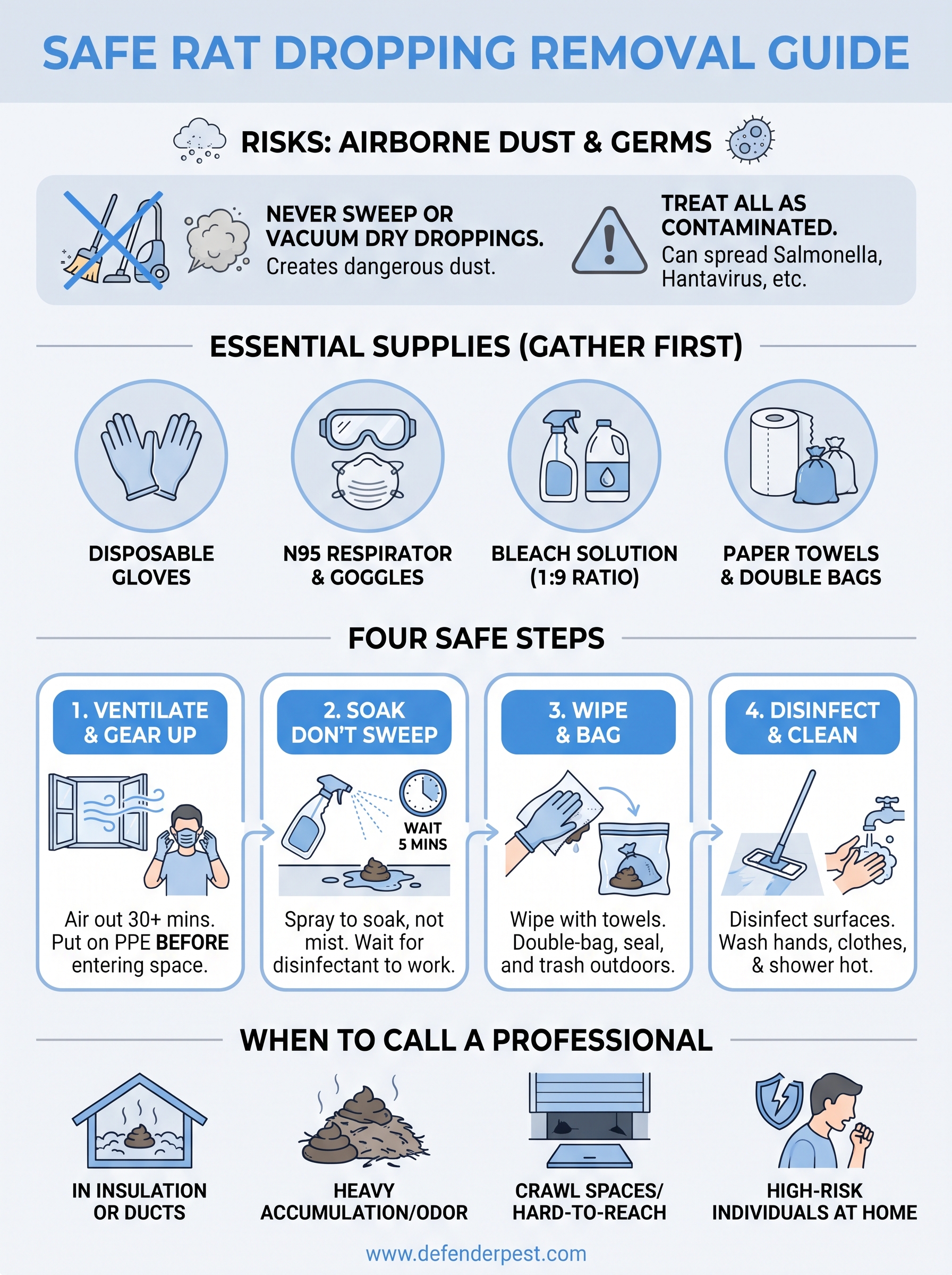
The safest way to handle rat dropping removal is to ventilate the room, put on gloves and a respirator, soak the droppings with disinfectant, wipe them up with damp paper towels, and bag them for the trash. Never sweep or vacuum dry droppings. Then disinfect the surface and wash your hands. If the droppings sit in insulation, an attic, or a crawl space, call a professional.
Most people grab a broom or a shop vac first, and that is the one move that does real harm. Dry droppings crumble into fine dust, and sweeping launches that dust into the air you breathe. You also cannot tell by looking which droppings carry bacteria or virus. Finding rat feces usually means the rats are still around, which makes the cleanup harder.
This guide covers what makes rat poop risky, the supplies you need, four clear steps, and how to tell when the job is too big for DIY. We are Defender Termite & Pest Management, a family-owned Sacramento pest company operating since 1999, so we also explain what professional cleanup involves and what drives its cost.
Why rat droppings need careful handling
Rat droppings carry germs that spread through dust and contact, so the method you use matters more than how hard you scrub. You are protecting your lungs and your hands, not just making a surface look clean.
What makes rat feces dangerous
Rat droppings, urine, and nesting material can spread salmonella, leptospirosis, and hantavirus . Not every dropping carries hantavirus, and in the United States it is mainly linked to deer mice and a few other wild rodents. But a dropping gives no visible clue, so treat every dropping as contaminated .
Age does not make droppings safe. Hantavirus can stay infectious for days indoors, and sunlight shortens that time. Old, dry droppings still turn to dust, so use the same method whether they look fresh or years old.
Treat every dropping as contaminated, however old it looks.
How to identify rat droppings
Size and shape help you tell rats from mice, which tells you how serious the problem is. Larger droppings point to rats , and a trail of them usually means an established nest nearby.
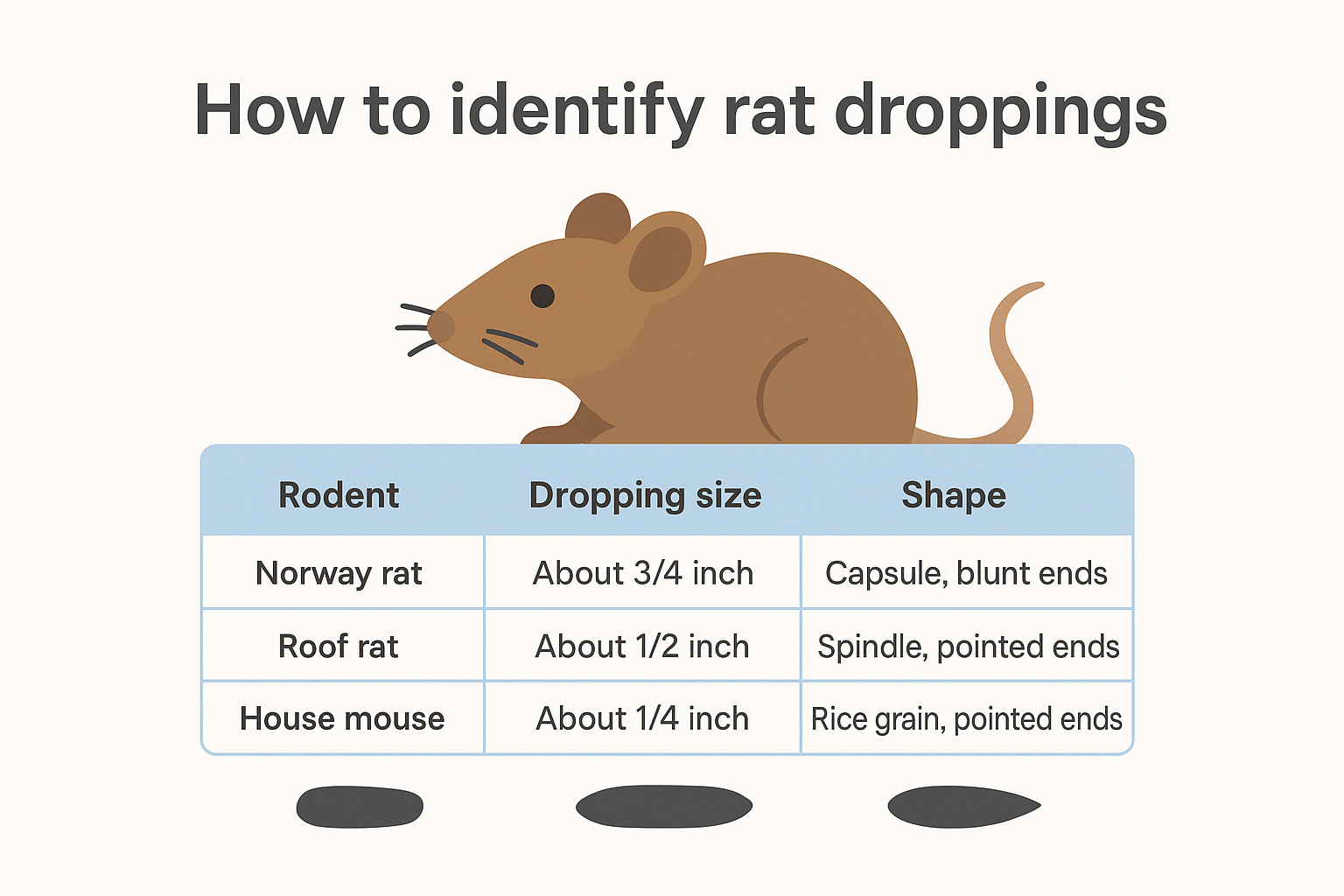
| Rodent | Dropping size | Shape |
|---|---|---|
| Norway rat | About 3/4 inch | Capsule, blunt ends |
| Roof rat | About 1/2 inch | Spindle, pointed ends |
| House mouse | About 1/4 inch | Rice grain, pointed ends |
Gather your supplies
Collect everything before you enter the space, because leaving halfway through to find a bag defeats the purpose. Disposable gloves and a respirator matter most.
- Rubber, nitrile, or vinyl gloves
- N95 or better respirator and goggles
- Spray bottle
- Plain, unscented household bleach, or a household disinfectant
- Paper towels and heavy trash bags
- Mop or sponge, and a bucket
Step 1. Ventilate and put on protection
Open doors and windows, leave the area for at least 30 minutes, and then put on your gear before you touch anything. Fresh air thins out any dust already floating in the room.
Air out the space
Open every door and window you can, and keep people and pets out while it airs. In a garage, shed, or basement, prop the door open as wide as it goes. If the space has no windows, such as a crawl space, open the access hatch and wait the same 30 minutes. Do not stir the area with a fan or broom to speed things up.
Wear the right gear
Wear gloves, goggles, and an N95 or better respirator in any enclosed space, such as an attic or crawl space, or when droppings are heavy. In a small, open area with a few droppings, gloves and a mask are the minimum. Wear old clothes and closed shoes that you can wash hot afterward.
Protect your hands and lungs before you touch a single dropping.
Step 2. Soak and remove the droppings
Spray every dropping, urine stain, and bit of nesting material until it is wet, wait five minutes, then wipe it up with paper towels. Wet droppings stay put instead of becoming airborne dust.
Mix and apply the disinfectant
Mix 1.5 cups of bleach in 1 gallon of water , which is about 1 part bleach to 9 parts water. Mix a fresh batch each day, because bleach loses strength, and never combine it with ammonia. Spray until the droppings are soaked, not misted. If you use a store-bought disinfectant, follow the label for contact time.
Wipe up and bag everything
Work from the outside of the mess toward the middle so you do not spread it.
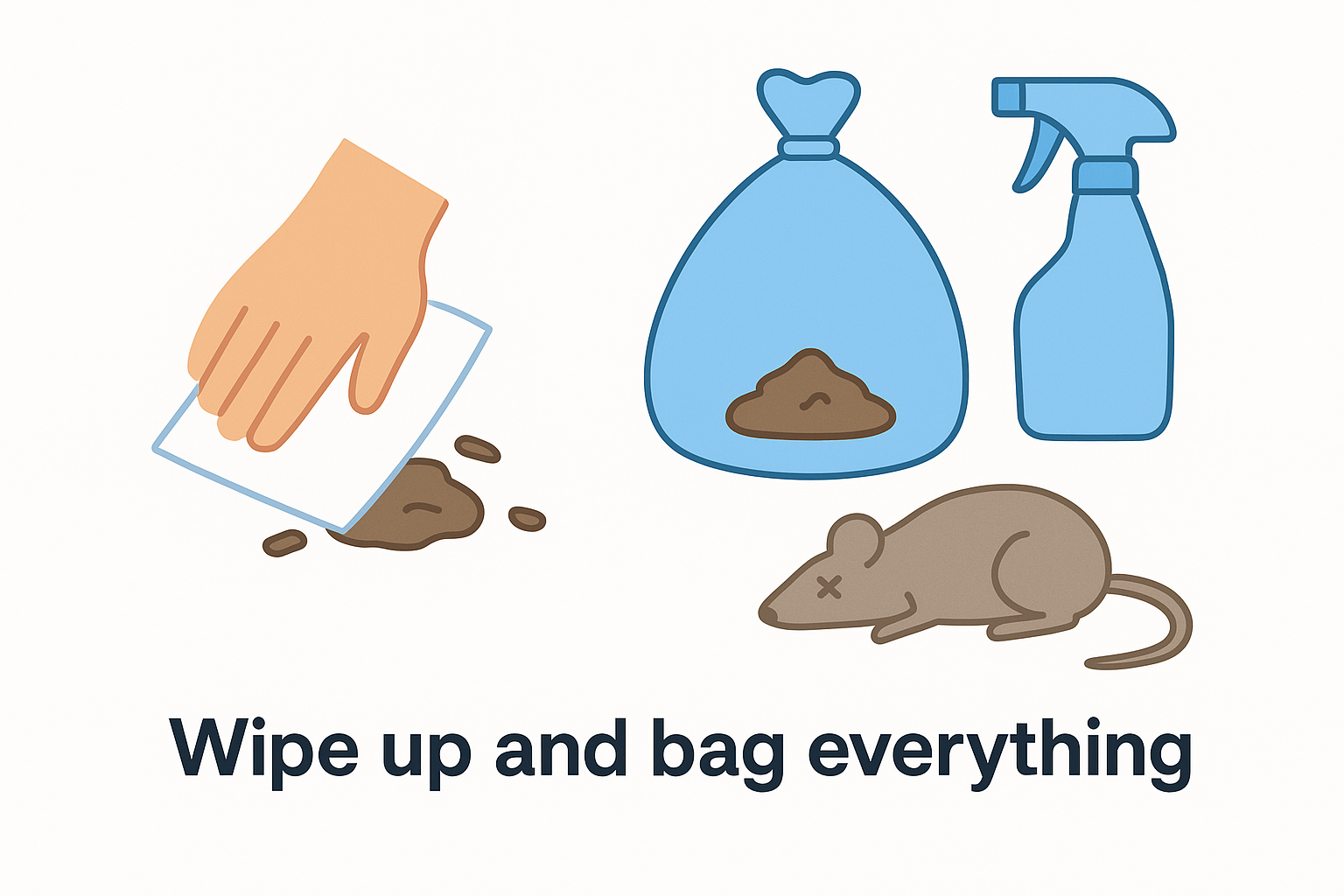
- Lay a paper towel over the soaked droppings and press to pick them up.
- Put the towels straight into a heavy trash bag.
- Spray a dead rodent the same way and bag it whole.
- Seal the bag, place it inside a second bag, and put it in your outdoor trash.
If you already swept or vacuumed
Leave the room, ventilate it for at least 30 minutes , and then clean with the soak method above. Do not run that vacuum indoors again until you wipe it down outside while wearing gloves and throw away the bag or empty the canister carefully. Watch for flu-like symptoms such as fever, muscle aches, fatigue, or cough for up to eight weeks. If they appear, tell your doctor about the exposure.
Wet first, wipe second, and never sweep or vacuum.
Step 3. Disinfect surfaces and clean yourself
After the droppings are gone, disinfect everything they touched, treat soft materials, and decontaminate yourself. Rat poop cleanup is not finished until the surface and your hands are clean.
Disinfect hard and soft surfaces
Mop hard floors and wipe counters, shelves, and walls with the same bleach solution, letting it sit before you wipe it off. Steam clean or shampoo carpets and upholstery , and wash bedding and fabrics on the hottest setting the label allows. Throw away porous items you cannot disinfect, such as cardboard boxes and soiled stored paper.
Finish with yourself
While still wearing gloves, wash them with disinfectant and soap, then peel them off and bag them. Wash your hands with soap and warm water for at least 20 seconds , including under your nails. Launder your work clothes separately and hot, and shower if you spent time in an attic or crawl space.
The job ends when your gloves, tools, and hands are clean too.
Step 4. Know when to call a professional
Call a professional when droppings are in insulation or hard-to-reach spaces, when the amount is heavy, or when anyone at home is at higher risk. Cleanup also will not last if rats can still get in.
Signs the job is too big for DIY
- Droppings in attic insulation, wall voids, ductwork, or a crawl space
- Heavy accumulation or a strong urine smell
- A household member with a weakened immune system or breathing condition
- No idea where the rats are entering
Contaminated insulation cannot be cleaned effectively. It has to be removed and replaced, which is the point where most homeowners need help.
If droppings reach your insulation, the job belongs to a professional.
What professional cleanup includes
Professional rat feces removal covers more than wiping. Our rodent control service includes inspection, removal, exclusion, and insulation removal, disinfection, and reinstallation , so the source is closed off along with the mess. We are licensed and insured, offer 24/7 emergency service, and back rodent control with a 100% satisfaction guarantee.
Cost depends on how large the area is, how much insulation is affected, how hard the space is to reach, and whether rats are still active. Get a written estimate before work starts, and ask any company these questions:
- Do you find and seal the entry points?
- What happens to contaminated insulation?
- Which disinfectant do you use?
- Is the estimate in writing?
To discuss your situation, call our pest control line at (916) 389-2847.
Clean up safely, then stop the rats
Safe rat poop removal comes down to a few habits: air out the space, protect yourself, soak before you wipe, disinfect every surface, and never sweep or vacuum. Droppings in insulation, attics, or crawl spaces call for a professional, because the source needs to be sealed too.
If you would rather not handle it yourself, we can inspect, remove, and disinfect. Request a quote from Defender Termite & Pest Management to get started.