Roach and Pest Control: How to Get Rid of Roaches for Good
You've killed a dozen roaches this month and they keep coming back. That's the frustrating truth about a real infestation: sprays and traps from the hardware store knock down what you can see, but the colony hiding behind your walls and under your fridge keeps breeding. If you're searching for roach and pest control that actually solves the problem instead of masking it for a week, you're dealing with more than a few stray bugs.
Getting rid of roaches for good means combining sanitation, targeted treatment, and follow-up, not just one can of spray. This guide walks through what actually works against cockroaches , why DIY methods often fail on their own, and when it's time to call in a professional pest control service built for Sacramento-area homes and apartments.
We'll cover how to identify the type of roach you're up against, the steps to prep your home for treatment, and the specific methods that break the breeding cycle for good. If you've already tried the store-bought fixes and you're still finding roaches at night, you'll know exactly what to do next, including how Defender Termite & Pest Management handles infestations that DIY approaches can't touch.
Why roaches are so hard to get rid of
Roaches survive because their biology is built for exactly this fight. A single female German cockroach, the most common species in Sacramento kitchens, can produce 30 to 40 eggs per capsule and cycle through several capsules in her lifetime. By the time you spot one roach crossing your counter at night, there's a good chance dozens more are already established behind your walls, under appliances, or inside cabinet voids you'll never see.
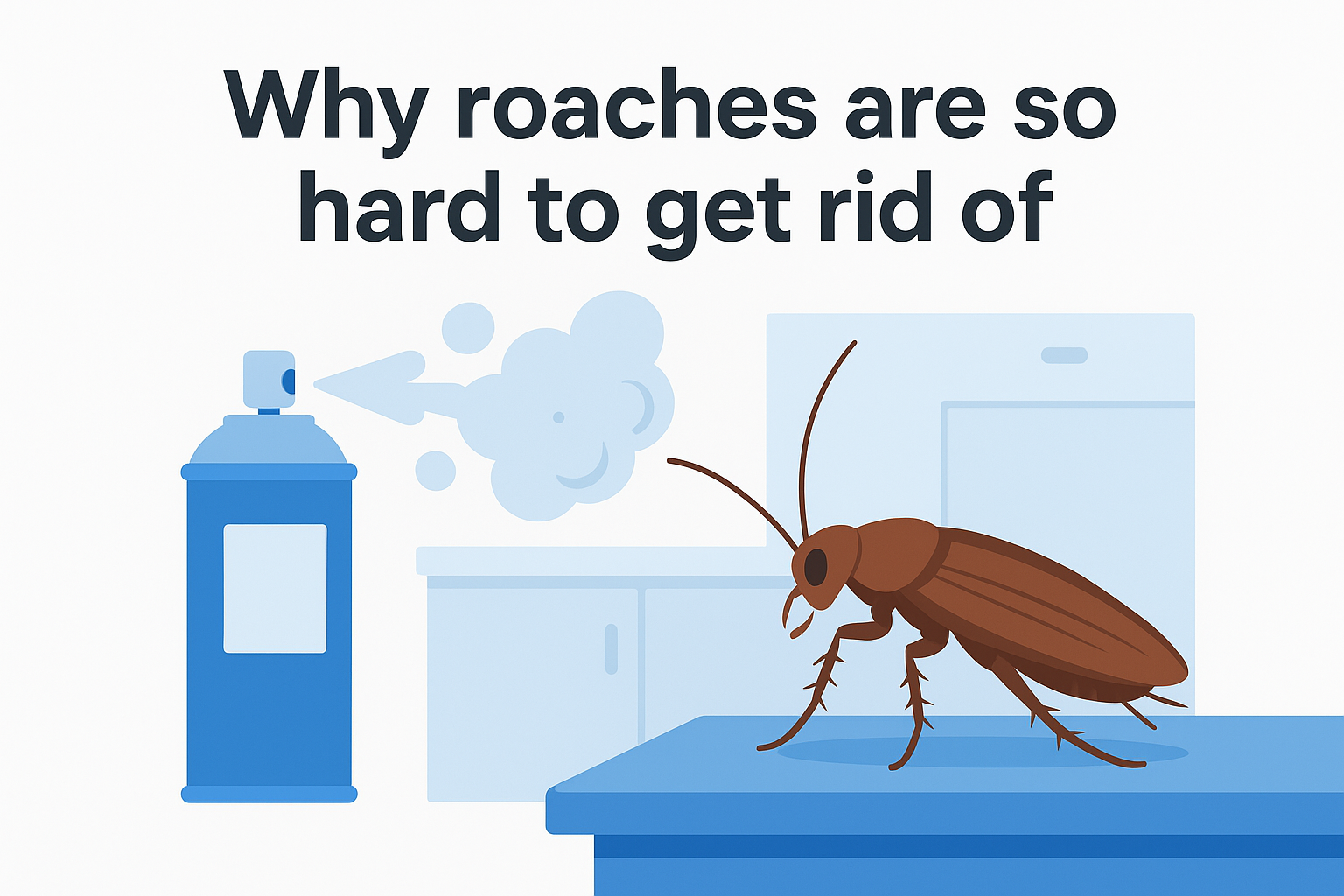
Killing the roaches you see does nothing to the colony you don't.
Cockroaches also adapt fast. Populations exposed repeatedly to the same over-the-counter spray can develop resistance to that active ingredient within a few generations, according to entomology research from the University of California's Statewide Integrated Pest Management Program. That's why the can of pyrethroid spray that worked last year barely slows down this year's infestation. Add in their nocturnal habits and their preference for tight, warm, moist hiding spots, and you've got an insect that's genuinely hard to out-maneuver with a single treatment.
It's rarely just one apartment or unit
Housing density makes the problem worse. In Sacramento's older apartment buildings, duplexes, and attached homes, roaches in an apartment travel through shared plumbing lines and wall voids between units. Treat your unit alone and you might knock the population down for a few weeks, only to have roaches migrate back in from a neighbor's kitchen. This is one reason a proper pest control service for roaches looks at the whole structure, not just the room where you spotted the bug.
DIY treatments often just scatter the problem
Store-bought foggers and sprays can actually make things worse. They repel roaches from the sprayed area, scattering the colony deeper into walls and neighboring rooms instead of eliminating it. Without addressing the food sources, moisture, and entry points feeding the infestation, you're managing symptoms while the underlying colony keeps growing.
Step 1. Identify the roach species and infestation source
Before you buy a single product, figure out which roach you're fighting, and a cockroach species guide for Northern California makes that quick. German cockroaches are the light brown, quarter-inch pests you'll find near kitchen appliances and bathroom sinks, and they're responsible for most indoor infestations in Sacramento homes. American cockroaches , the larger reddish-brown ones sometimes called palmetto bugs, usually come in through sewer lines, crawl spaces, or gaps around foundations rather than breeding indoors in huge numbers.
You can't treat what you can't correctly identify.
Match the species to the right response
This distinction matters because treatment differs by species. A German roach problem needs indoor baiting focused on kitchens and bathrooms, the same approach German roach exterminators in Sacramento use. An American roach sighting often points to an outdoor or plumbing issue that needs sealing and American cockroach extermination on the exterior instead.
| Species | Size | Color | Common location |
|---|---|---|---|
| German cockroach | 0.5-0.6 in | Light brown, two dark stripes | Kitchens, bathrooms, behind appliances |
| American cockroach | 1.5-2 in | Reddish-brown | Basements, drains, crawl spaces |
Trace the source, not just the sightings
Spend a night with a flashlight tracking down where the roaches are coming from, checking behind the refrigerator, under the sink, and along baseboards near water sources. Look for droppings resembling coffee grounds, shed skins, or a musty odor, all signs of an active nest nearby. If you're renting or living in a multi-unit building, check shared walls and utility chases too, since that's often where the real infestation source lives.
Step 2. Clean up food, water, and hiding spots
Sanitation won't erase an established colony on its own, but skipping it guarantees any treatment you apply later fails faster. Roaches need three things to thrive: food, water, and shelter . Cut off two of those and you starve the population down to a size that baits and dust can actually finish off.
A spotless kitchen won't stop roaches on its own, but a dirty one will sabotage every treatment you try.
Target the kitchen first
Wipe down counters and stovetops nightly, and don't leave dirty dishes soaking overnight. Store cereal, pet food, and snacks in sealed containers instead of the original bags. Roaches feed on grease film too, so degrease the stovetop hood and the gap behind the range where crumbs collect.
Dry out the moisture they depend on
German cockroaches cluster near water more than food. Fix dripping faucets, wipe down sink basins before bed, and run the bathroom fan to cut condensation. A dehumidifier in a damp basement or crawl space removes a hiding spot roaches rely on heavily.
Declutter their shelter
Cardboard boxes, stacked newspapers, and paper grocery bags make ideal roach shelters. Clear them out of pantries, garages, and closets. Pull appliances away from the wall occasionally to vacuum crumbs and debris that build up underneath, since that gap is often where an infestation source keeps rebuilding after treatment.
Step 3. Treat with baits, gels, and dust
Once sanitation is underway, it's time to attack the colony itself. Gel baits placed in cracks near appliances and cabinet hinges work because roaches eat the bait, then die and get eaten by nestmates, spreading the active ingredient through the whole population. This chain reaction is what actually collapses a colony, not the roaches you kill on contact.
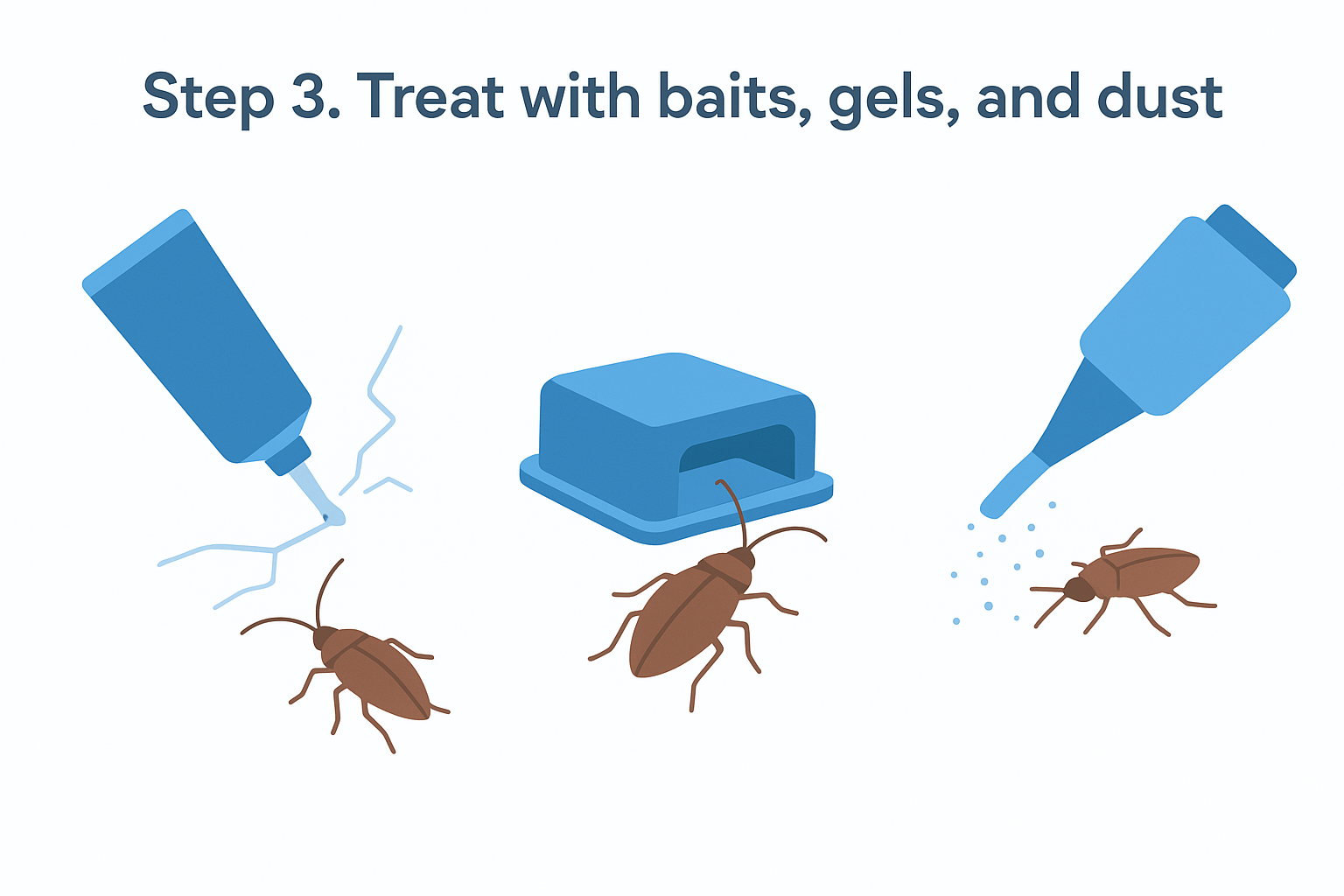
A single bait station can wipe out roaches you never even saw.
Layer your products correctly
Don't mix contact sprays with bait stations. Sprays repel roaches from the area and make them avoid the bait entirely, undoing the chain reaction you're counting on. Instead, layer these tools by location:
- Gel bait : cabinet hinges, under sinks, behind the fridge motor housing
- Boric acid dust : wall voids, behind outlet covers, under baseboards (keep away from pets and kids)
- Bait stations : pantry corners, along baseboards where droppings appear
Boric acid works slowly by damaging the roach's exoskeleton and digestive tract, and the EPA classifies it as a low-toxicity option when applied correctly in inaccessible areas.
Give it time and reapply
Expect a visible die-off in the first one to two weeks, followed by a slower decline as remaining eggs hatch. Reapply gel bait every 30 to 60 days since it dries out and loses potency, especially in warm kitchens. If activity hasn't dropped noticeably after a month, the infestation likely extends beyond what store-bought products can reach.
Step 4. Seal entry points and know when to call a pro
Even after cleanup and treatment, roaches keep finding new ways inside unless you close the gaps they're using. Sealing entry points stops the migration problem that undoes weeks of bait work, especially in older Sacramento homes with settled foundations and gaps around utility lines.
Close the gaps roaches use
Walk the exterior and interior with caulk, copper mesh, and weatherstripping in hand, or compare the cost and process of professional exclusion work if the gaps are beyond DIY. Focus on these common entry points:
- Gaps around pipes under sinks and behind the washer
- Cracks in the foundation or where siding meets the slab
- Unscreened vents, especially dryer and crawl space vents
- Door sweeps and window screens with tears or gaps
If roaches can still get in, no amount of bait will keep them out for good.
When DIY isn't cutting it anymore
If you've sealed entry points, cleaned thoroughly, and applied bait for over a month with no real drop in sightings, you're likely dealing with a colony that's spread into wall voids or a neighboring unit. That's the point where finding a trusted roach exterminator near you makes more sense than buying another round of store products. A licensed technician can inspect voids you can't reach, apply commercial-grade products unavailable to consumers, and treat the whole structure rather than one room. Defender's pest control services are built for exactly this stage of infestation, when DIY has plateaued and the colony needs a coordinated response.
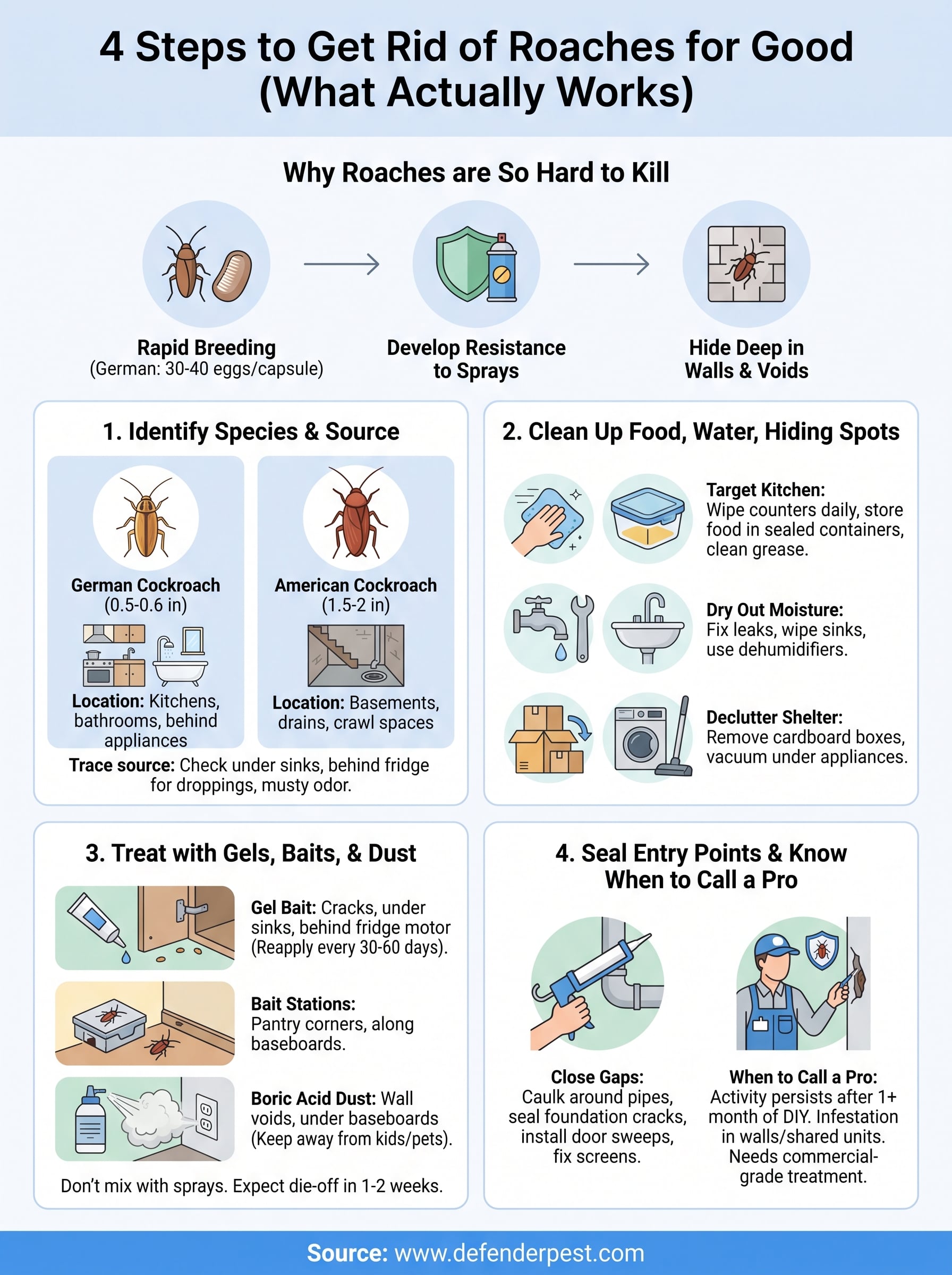
Keeping your home roach-free long term
Getting roaches out of your home takes the four steps above done in order: identify the species, cut off food and water, treat with the right products, then seal the gaps that let new roaches in. Skip a step and you're back to square one within a few weeks. Consistency beats intensity here. A quick monthly check behind the fridge and under the sink catches new activity before it becomes another full infestation.
But some colonies outgrow what any homeowner can reach with store-bought tools, especially once roaches have spread into wall voids or shared plumbing lines. That's when ongoing roach and pest control from a local team pays for itself, since they can treat the whole structure and follow up before problems return. If you're still finding roaches after working through this guide, don't keep guessing with another can of spray. Reach out to Defender Termite & Pest Management for residential pest control in Sacramento and get a technician who knows local homes inspecting yours instead.