Rats Pest Control near Me: How to Find a Trusted Pro
Hearing scratching in the walls at 2 a.m. or finding droppings in your garage is enough to make anyone reach for their phone and search rats pest control near me . But typing that phrase into Google gets you a dozen ads and review sites that all sound the same, and you're left guessing who actually knows how to solve a rat problem instead of just spraying and leaving.
The short answer is you need a licensed local exterminator who inspects the property first, seals entry points, and follows up rather than one who just sets a few traps and calls it done. Rat infestations almost always come back if the root cause, whether it's a gap under your foundation or an attic vent without a screen, never gets addressed.
We've handled rodent jobs across Sacramento, Roseville, Folsom, and Elk Grove since 1999, so we've seen what separates a real fix from a temporary patch. In this guide, you'll learn exactly what to look for when vetting a pest control company , the questions to ask before you sign anything, and the warning signs that tell you a
When it's time to call a professional for rats
Not every rat sighting means you need to call in reinforcements. If you spot a single mouse on your patio or find one dropping near the trash cans, a few snap traps and some cleanup might handle it. But rats behave differently than mice: they breed faster, hide better, and cause more structural damage , so the line between "handle it yourself" and searching for a rat exterminator near me moves quickly once certain signs show up.
DIY methods only go so far
Store-bought traps and bait stations work fine for a lone rat that wandered in from outside, and it helps to know which rat control methods actually work
before you spend money on more.
Once you're dealing with a breeding colony
, though, over-the-counter products
rarely reach the nest, and rats that survive a failed trapping attempt become bait-shy, making every future attempt harder. Homeowners who wait too long often end up with rats chewing through wiring, insulation, and even wood framing before they finally call a professional.
A single rat problem you catch early is a weekend fix; a colony you ignore for months is a structural repair bill.
Signs you need professional rodent control now
Certain warning signs mean it's time to skip the hardware store aisle and search for a licensed rodent control service instead of trying another round of traps:
- You hear scratching or scurrying in walls, ceilings, or attic spaces, especially at night.
- You find grease marks or rub stains along baseboards and beams where rats travel repeatedly.
- Droppings show up in multiple rooms, not just one isolated spot.
- You've already set traps and caught rats, but activity continues after a week or more.
- You notice chewed wiring, insulation, or wood, since termites aren't the only pests that damage structures.
- The infestation is inside a commercial kitchen, warehouse, or rental property where health code violations carry real financial risk.
Any one of these on its own is worth a phone call. Two or more together usually means the colony is established, and DIY methods will only slow it down rather than eliminate it. Professionals bring thermal cameras , exclusion materials, and bait formulations that aren't sold to the public, which is exactly why persistent infestations need more than another trip to the store.
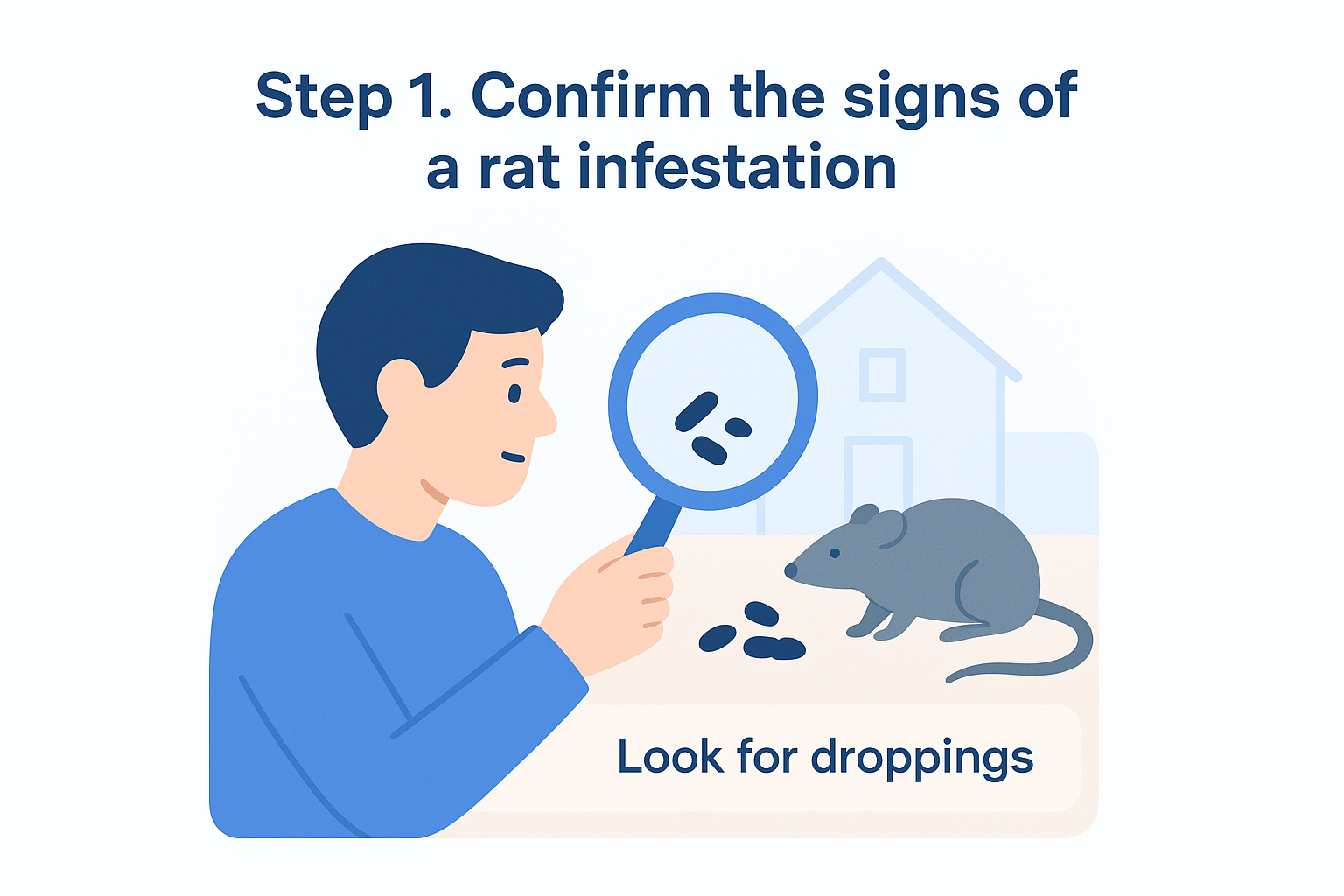
Step 1. Confirm the signs of a rat infestation
Before you call anyone, walk your property and confirm what you're actually dealing with. Rats and mice leave different clues, and knowing which one you have helps a licensed exterminator diagnose the problem faster once you do bring them in. Grab a flashlight, check your attic, garage, and the perimeter of your foundation, and look for the specific markers below rather than assuming every scratching noise means the same thing, especially if you're weighing removing attic rats yourself first.
What to look for during a self-inspection
Droppings are the fastest way to tell rats from mice by their droppings. Rat droppings are about three-quarters of an inch long, shaped like capsules, and usually clustered near food sources or travel paths. Mouse droppings are smaller, closer to a grain of rice. Gnaw marks matter too: rats leave larger, rougher chew marks on wood and plastic, while mice leave finer scratches. Track marks and greasy smudges along baseboards, especially near pipes or wall gaps, point to an established travel route rather than a one-time visitor.
If you find fresh droppings in more than one room, you're not dealing with a stray rat, you're dealing with a colony.
Document what you find
Take photos of droppings, chew marks, and any entry points you spot, such as gaps around utility lines or vents without screens. This documentation speeds up your first conversation with a pest control company , since a technician can compare notes against what you've already found instead of starting from zero. It also gives you a record if you need it for a landlord, insurance claim, or home sale disclosure down the road.
Step 2. Search for licensed rat exterminators near you
Once you've confirmed you're dealing with a real infestation, your next move is narrowing down who actually gets the call. Typing rats pest control near me into Google is a fine starting point, but the goal is filtering that list down to companies licensed to operate in California, not just the ones with the biggest ad budget.
Where to look beyond the first page of results
Don't stop at paid ads. Check these sources to build a shortlist of qualified companies:
- The Structural Pest Control Board licensing database, where you can confirm a company's license number and status.
- Local business directories that show how long a company has operated in your specific city, not just statewide.
- Neighborhood social media groups, where homeowners in Sacramento, Roseville, or Folsom often name names, good and bad.
- Your rodent control provider's service page directly, since a company with a dedicated rodent page usually treats it as a specialty rather than an afterthought.
Confirm licensing before you call
Any company you consider should hold an active Branch 3 pest control license through the state, plus liability insurance that covers your property if something goes wrong during exclusion work. Ask for the license number up front. A legitimate rat exterminator near me will give it to you without hesitation, since it's public record anyway.
A company that dodges the license question isn't one you want setting bait stations inside your attic.
Narrow your list to three or four companies that check these boxes before moving to the next step, where reviews and guarantees separate the reliable ones from the rest.
Step 3. Check reviews, credentials, and guarantees
With your shortlist in hand, dig into what past customers actually experienced instead of trusting a star rating alone. A company can have four and a half stars and still leave gaps in its rodent exclusion work, so read the text of recent reviews, not just the number at the top, and check any credentials they claim, such as National Wildlife Control Operators Association certification.
Read reviews with a critical eye
Search review sites and Google for phrases like "rats came back" or "had to call again," since those comments reveal whether a company treats the root cause or just knocks down activity temporarily. Pay attention to how the business responds to negative reviews too. A company that addresses complaints directly, offering to send a technician back out, tells you more about their customer service than a wall of five-star praise ever will.
A pattern of repeat visits in the reviews is the clearest sign a company treats symptoms instead of the source.
Ask about guarantees before signing
Before you commit, confirm what happens if rats show up again after treatment, and run through the rest of the vetting questions worth asking any exterminator. A solid service guarantee should spell out a specific window, usually 30 to 90 days, during which follow-up visits cost nothing. Ask these questions directly:
- Does the guarantee cover re-treatment, or just a phone consultation?
- Is exclusion work that seals entry points for good included, or billed separately?
- What's excluded from the warranty, such as new entry points that open up later?
- Is the technician who performed the original work the one who returns?
A company confident in its process will answer all four without hesitation. If you get vague answers or a guarantee that's "whatever the manager decides," cross that name off your list and move to the next.
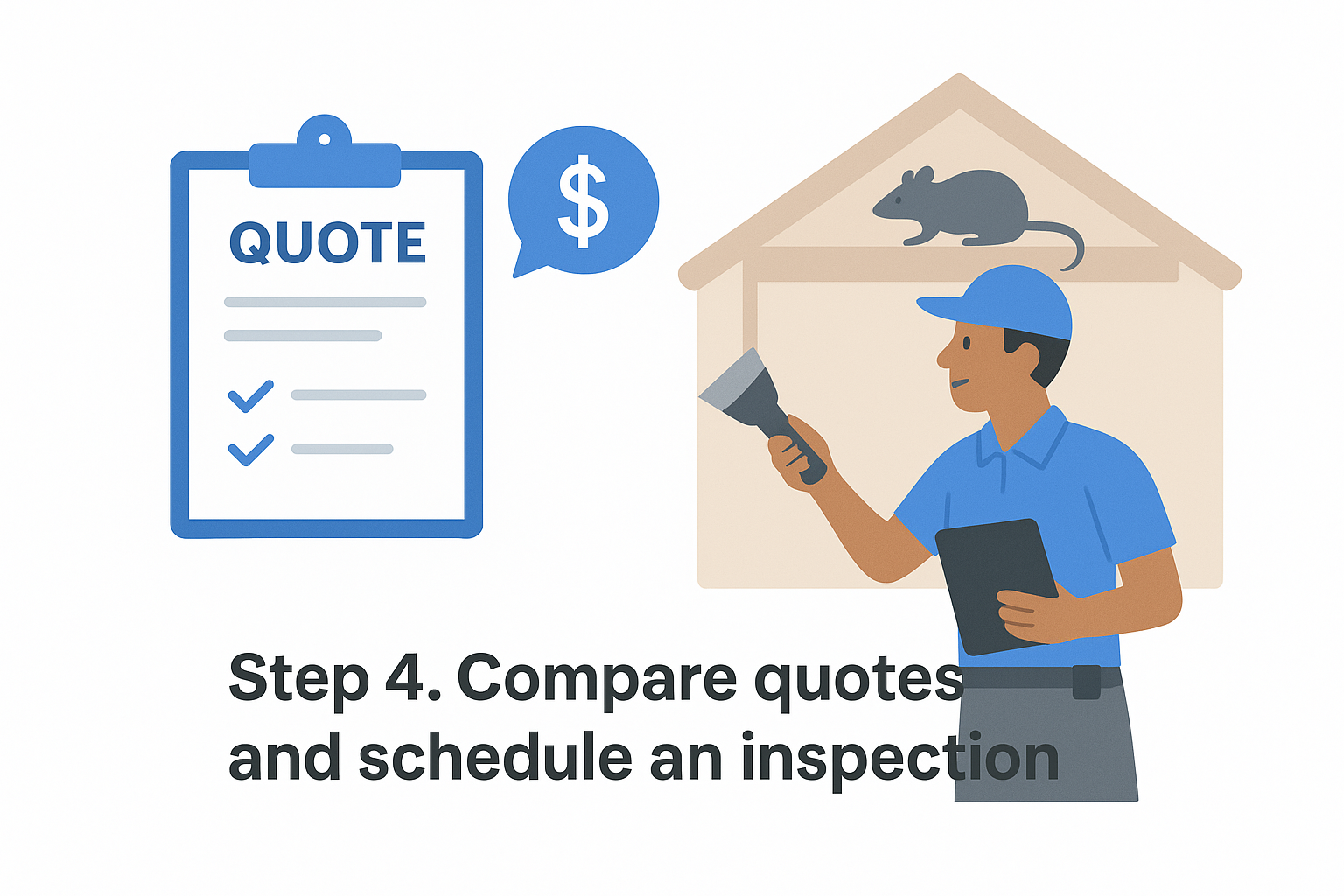
Step 4. Compare quotes and schedule an inspection
With three or four licensed companies vetted, get a written quote from each before you decide, and go in knowing what professional rat removal typically costs. A phone estimate based on your description of "scratching in the attic" isn't the same as a technician walking your property, checking your crawlspace, and pricing the actual scope of work. Most reputable companies offer a free inspection , so there's no reason to commit blind.
What a legitimate quote should include
Compare quotes side by side using the same criteria, not just the bottom-line number:
| What to check | Why it matters |
|---|---|
| Initial treatment cost | Covers trapping, bait stations, and first visit |
| Exclusion/sealing cost | Separate line item for closing entry points |
| Follow-up visits included | Confirms how many return trips are free |
| Guarantee window | 30, 60, or 90 days of no-cost re-treatment |
| Materials used | EPA-registered products vs. unnamed "proprietary" bait |
The cheapest quote rarely wins once you factor in how many follow-up visits it actually includes.
Schedule the inspection and ask for a walkthrough
Once you've picked a company, schedule the inspection at a time you can be home to walk the property with the technician. Ask them to point out every entry point they find, not just tell you the treatment plan afterward, since seeing the gaps yourself helps you spot repeat problems later. Verify the appointment includes both the exterior perimeter and attic or crawlspace access, since a thorough rat inspection that skips either area misses where most colonies actually nest.
Your next step toward a rat-free home
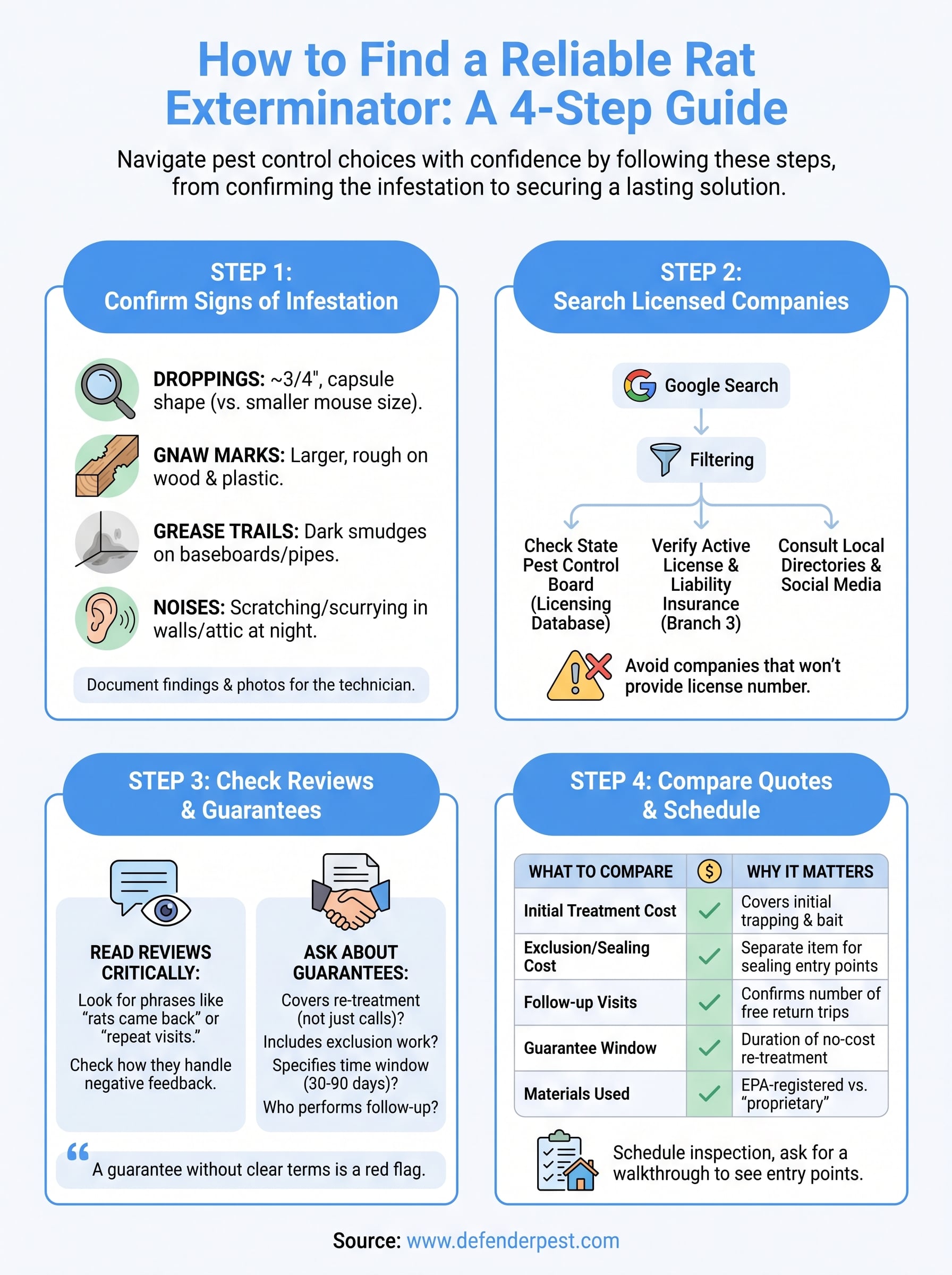
Finding a trustworthy exterminator isn't complicated once you know the sequence: confirm the signs, verify the license, read past the star rating, and compare written quotes side by side. Skip any of those steps and you risk hiring someone who sets a few traps, collects a check, and leaves the actual entry points wide open for the next colony to move in.
Getting rats out of your walls for good comes down to exclusion work paired with a guarantee that actually holds up, not just bait stations refreshed once a month. That's the standard we've held ourselves to in Sacramento, Roseville, Folsom, and Elk Grove since 1999, and it's why homeowners call us back for lawn care and termite work long after the rodent problem is gone.
If scratching in the attic has you searching for help tonight, reach out to Defender Termite & Pest Management about Sacramento rat and rodent control and get a real inspection scheduled, not another sales pitch.