Inspection Pest Control: What It Covers and What It Costs
An inspection pest control visit is a licensed technician's systematic search of your home or business for live pests, damage, and the conditions that invite them. It ends with a written report and a recommendation. A typical pest control inspection takes one to two hours. Many companies do it free when you are weighing a treatment, while formal termite reports for a home sale usually cost money.
Think of it as a diagnosis before a prescription. Without one, treatment is guesswork. You spray for ants while termites work in the subfloor, or you set traps while mice keep entering through a gap you never found.
We have run these inspections across Sacramento, Roseville, Folsom, Elk Grove, and Vacaville since 1999. This guide explains why an inspection matters, how to book one, what happens on the day, what it costs, and how to read the report you get back.
Why a pest control inspection matters
A pest control inspection matters because most infestations stay hidden until they are expensive . Termites, rodents, and carpenter ants all work out of sight, so the problem has often run for months by the time you notice it. Inspection pest control exists to catch it early and to identify the cause , not only the symptom.
It finds what you cannot see
Subterranean termites eat wood from the inside and leave a thin surface that looks fine. Mice nest in attic insulation and wall voids. Hidden damage is the norm, and a technician with a flashlight, a moisture meter, and a probe finds it because they know where each pest hides.
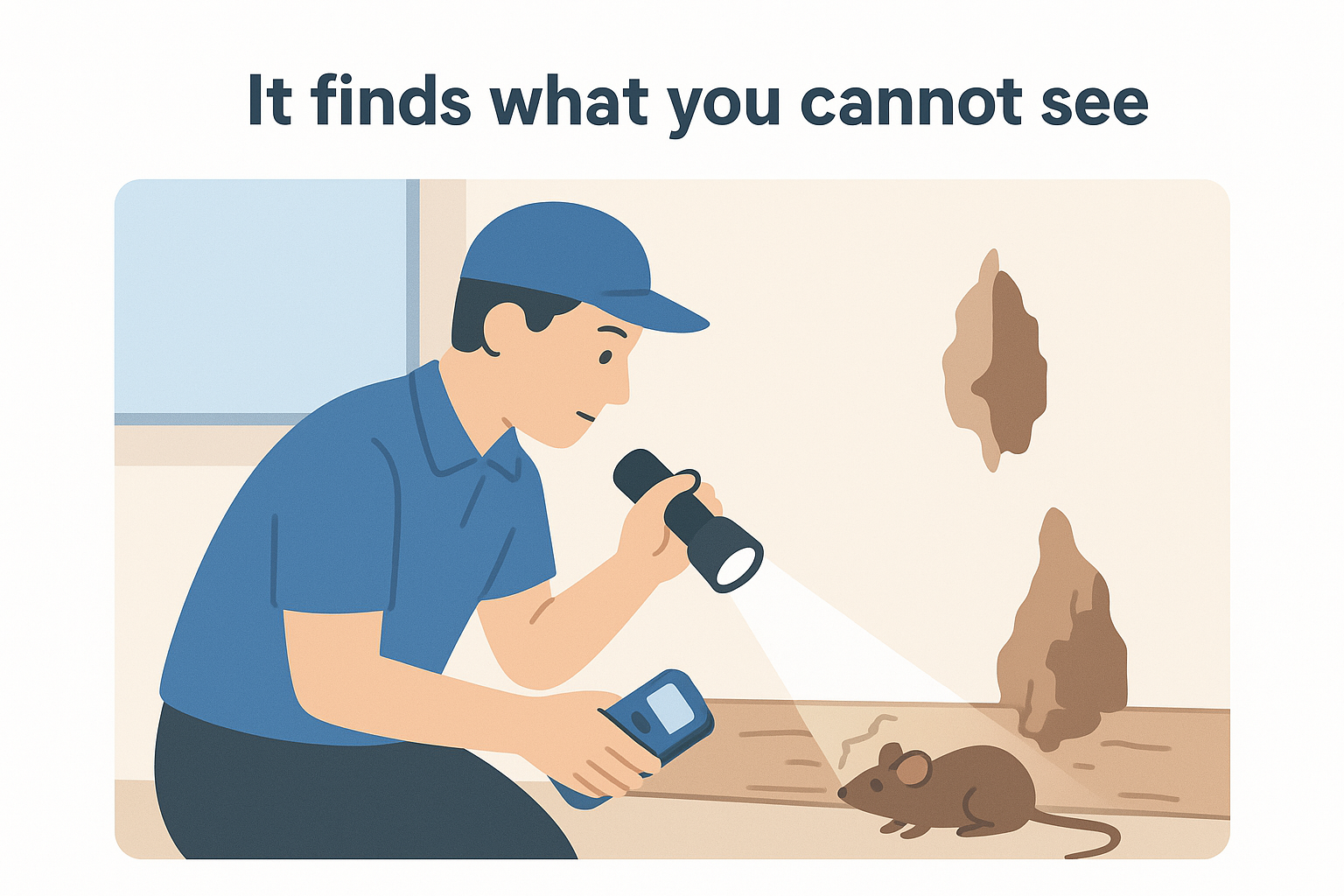
Sacramento's wet winters and dry summers add to the risk. Leaky irrigation, damp crawl spaces, and wood touching soil create the moisture conditions that termites and ants look for.
It decides which treatment you need
Each pest needs a different fix. Argentine ants need bait and trail control, drywood termites may need localized or whole-structure treatment, and rodents need exclusion before trapping. Identifying the species first keeps you from paying for the wrong service.
An inspection is the difference between treating a pest and guessing at one.
It protects a home sale
Buyers and lenders in California commonly ask for a termite report during escrow. An inspection before you list lets you fix problems on your schedule , not under a closing deadline.
How to book a pest control inspection in Sacramento
Pick a licensed local company, request the inspection by phone or online, and choose a time when someone can open the attic, crawl space, and garage. The first step matters most, because California licenses this work through the Structural Pest Control Board. A pest control inspection from an unlicensed operator may not hold up with a lender.
Check the license and ask the right questions
Look up any company on the Structural Pest Control Board website before you book. Then ask direct questions so you know what you are getting:
- Is the inspector licensed, and what is the license number?
- Is the inspection free, and will I receive written findings?
- Will you check the attic and crawl space, not only the exterior?
- Who handles repairs if you find damage?
- How long will the visit take?
Verify the license before you compare anything else.
Prepare the property before the visit
Preparing your home for the inspection makes it faster and more accurate. Technicians can only report what they can reach, so clear access is the biggest factor. Before the visit:
- Clear the space under sinks and in front of the attic hatch.
- Unlock gates, sheds, and crawl space doors.
- Move stored items away from garage walls.
- Write down where you saw droppings, wings, or heard noises.
- Find any previous treatment or inspection records.
What happens during a pest control inspection
A pest control inspection follows a fixed sequence: interview, exterior, interior, attic and crawl space, then report. The technician works from the foundation inward and from the ground up, because pests follow moisture and shelter along that path. Good inspection pest control is methodical, not a quick glance.
The walk-through, step by step
Expect the visit to run in this order, with each step building on the last :
- Interview. You describe what you have seen, where, and what you have already tried.
- Exterior. The technician checks foundation cracks, wood touching soil, gaps around utility lines, vents, siding, decks, and plants against the walls.
- Interior. Kitchens, bathrooms, under sinks, behind appliances, closets, and the garage get a close look.
- Attic and crawl space. These are checked for droppings, mud tubes, disturbed insulation, and damp or damaged framing.
- Report. You receive findings and recommendations, ideally explained in plain language.
What inspectors look for
Each pest leaves its own physical evidence . This table shows the signs technicians use to confirm what you have.
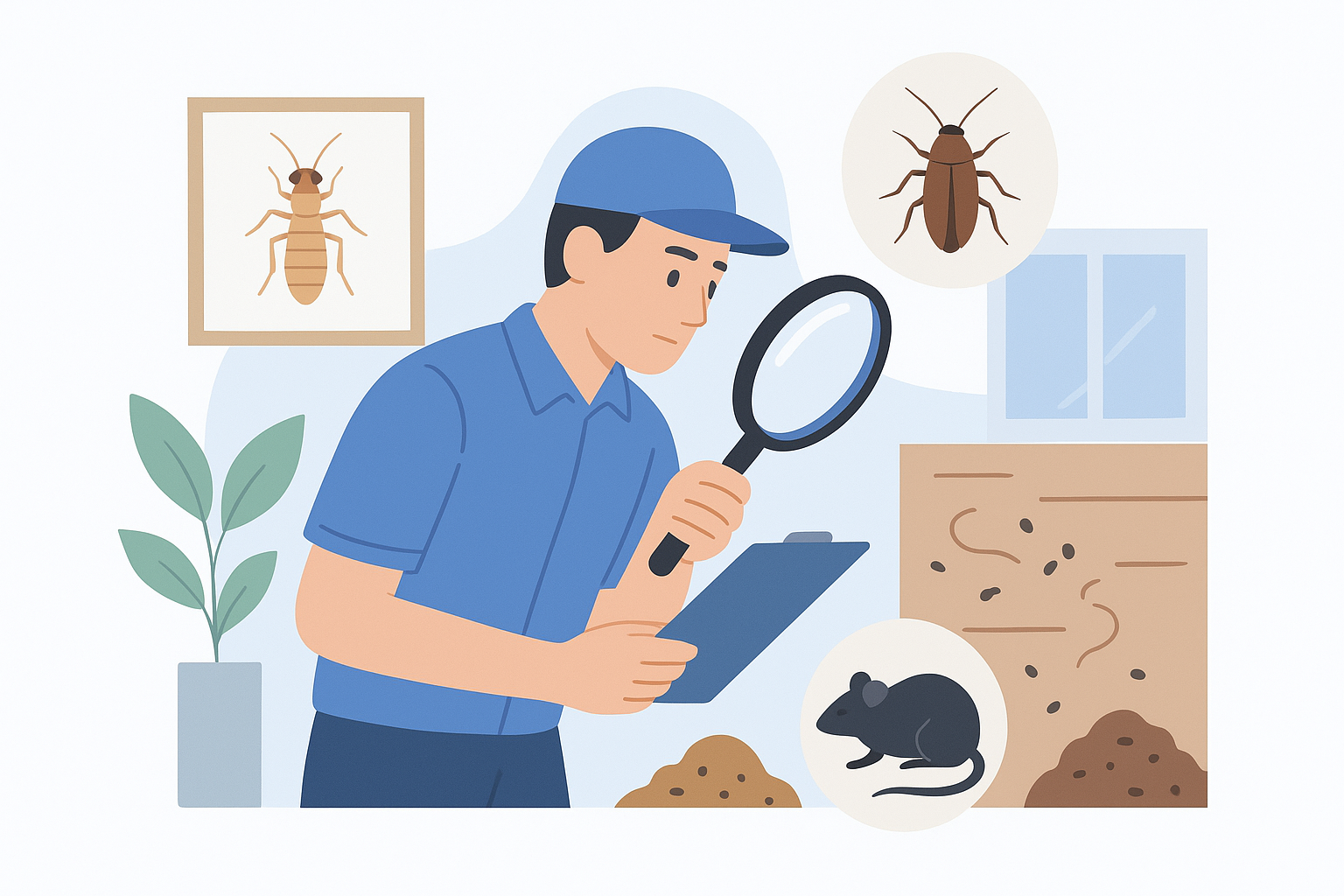
| Pest | Typical signs |
|---|---|
| Subterranean termites | Mud tubes on foundations, hollow-sounding wood, discarded wings |
| Drywood termites | Small hard pellets, tiny kick-out holes, blistered wood |
| Rodents | Droppings, gnaw marks, greasy rub marks, nests in insulation |
| Ants | Trails along foundations and counters, sawdust-like frass near wood |
| Cockroaches | Droppings, egg cases, musty odor near plumbing |
Know the limits too. Inspectors do not cut open walls, and areas they cannot reach are noted as inaccessible in the report. A termite-only report also will not cover rodents or cockroaches unless you ask, and no inspection includes treatment . That is a separate step.
A good inspection tells you what it could not see as clearly as what it found.
Is a pest control inspection free, and what does it cost?
Many pest control inspections are free when they lead to a treatment quote, and paid when you need a formal written report, such as a termite report for a home sale. Price follows the purpose of the inspection , not the time on site. Ask which type you are booking before the technician arrives.
When an inspection is free
A free inspection is how a company scopes a job. You get findings and a quote with no obligation to buy . Free should not mean casual, though. You should still get a licensed technician, a full walk-through, and an explanation in plain terms.
Be wary of any visit that ends with pressure to sign on the spot. Ask for the quote in writing and take time to compare.
When you pay
Paid inspections usually produce a document someone else will rely on.
| Situation | Usually free or paid |
|---|---|
| General pest quote for ants, spiders, roaches | Often free |
| Termite inspection to scope a treatment | Often free |
| Termite report for buying or selling | Paid |
| Standalone report for documentation or a dispute | Paid |
| Follow-up visit after treatment | Depends on your service plan |
Fees rise with square footage , the number of structures, and difficult access such as tight crawl spaces. Rates vary by company, so get the price quoted before the visit.
Free is normal for a quote, and paid is normal for a report someone else will rely on.
How to read your inspection report and act on it
Your report sorts findings into active problems , conditions that invite pests , and areas the inspector could not fully see. Deal with active findings first, then fix the conditions. A pest control inspection report is only useful if you act on it in that order.
What each finding means
California termite reports label items in a standard way:
- Section 1: active infestation or damage that needs treatment or repair.
- Section 2: conditions likely to lead to infestation, such as moisture or wood-to-soil contact.
- Further inspection: areas that were blocked or only partly visible.
What to do next
Start with the active items, then work down the list:
- Get a written termite treatment quote for anything in Section 1.
- Schedule repairs for damaged wood, since treatment stops insects but does not restore strength.
- Fix leaks, redirect irrigation, and lift wood off the soil as part of a termite prevention plan.
- Seal gaps around pipes and vents. Mice can pass through an opening about a quarter inch wide.
- Book a recheck so you know the treatment worked.
Because we repair termite-damaged wood in-house, one company can handle the treatment and the repair together.
Treat what is active, repair what is damaged, and fix what invites pests back.
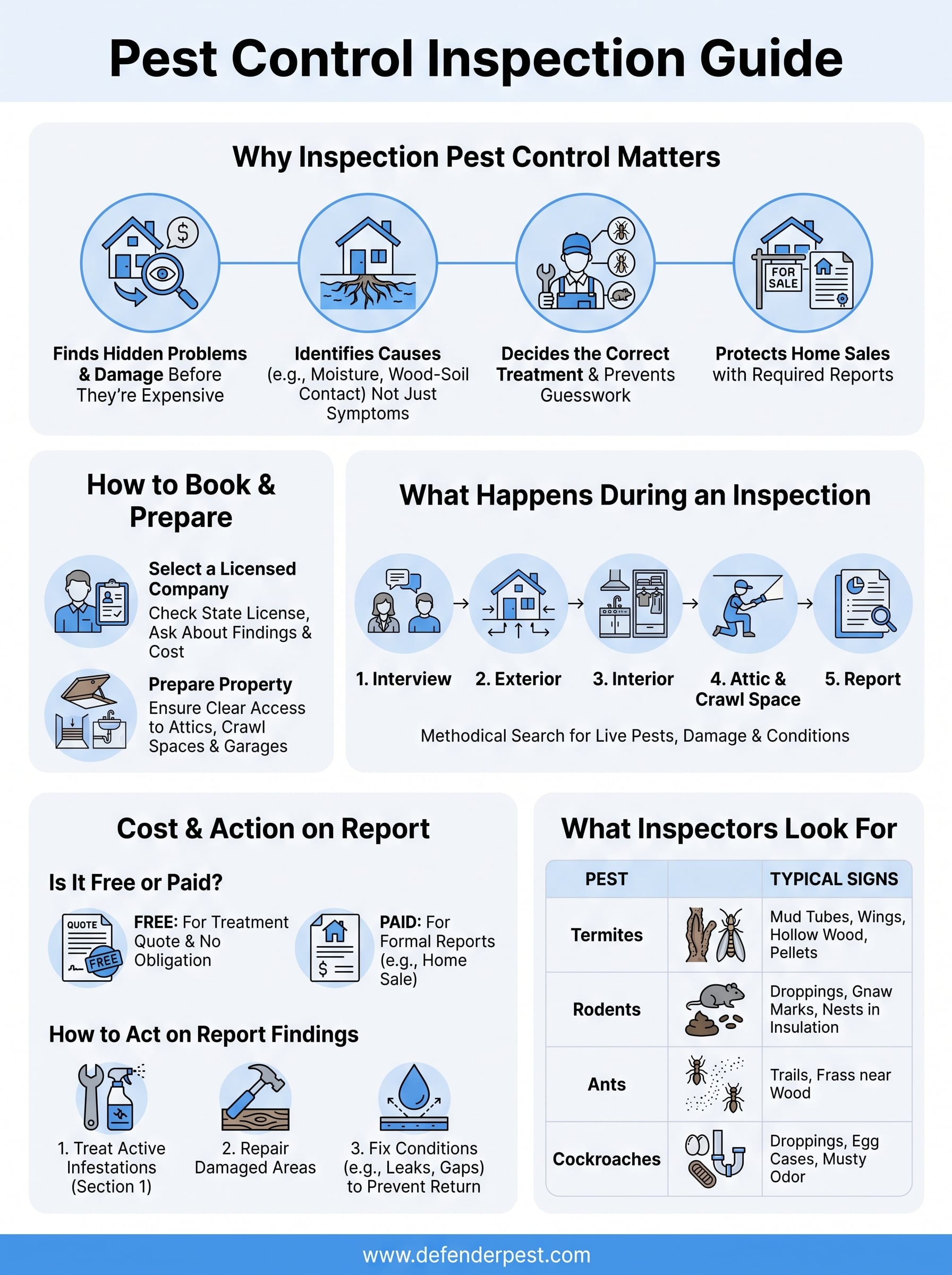
Getting your property inspected
An inspection pest control visit gives you facts before you spend money. You learn what is living in or near your property, how it got in, and what it will take to stop it. Choose a licensed company, prepare access, and ask for written findings.
Whether you are buying, selling, or hearing noises in the attic, the process is the same. A good technician walks the property, shows you the evidence, and gives you options in plain language. Compare any quote against the report, not against a sales pitch.
If you live in the Sacramento area, request a licensed termite and pest inspection from Defender Termite & Pest Management and get findings you can act on.