What Is Pest Control? Definition, Methods, And Benefits
If you've ever spotted ants marching across your kitchen counter or heard scratching inside your walls at night, you've probably asked yourself: what is pest control , and do I actually need it? The short answer is yes, and understanding what it involves can save you a lot of money, stress, and structural damage down the road. Pest control is the practice of managing, preventing, or eliminating unwanted organisms that threaten your health, property, or quality of life .
It covers far more ground than most people realize. We're not just talking about spraying baseboards. Professional pest control includes everything from termite detection and rodent removal to preventative treatments that stop infestations before they start. The methods range from chemical treatments and physical barriers to integrated approaches that combine multiple strategies based on the specific pest and environment.
At Defender Termite & Pest Management, we've been handling exactly these problems for Sacramento-area homeowners and businesses since 1999 . That hands-on experience, across thousands of homes, commercial properties, and real estate transactions, gives us a grounded perspective on what pest control really means in practice, not just on paper. We also handle the structural wood repair that most pest companies can't, which means we see the full picture of what pests leave behind.
This article breaks down the definition of pest control, walks through the most common methods professionals use, and explains why it matters for both your health and your property. Whether you're dealing with an active infestation or just want to stay ahead of one , you'll leave with a clear understanding of how pest control works and when to call in help.
What pest control includes
When most people think about pest control , they picture someone in a uniform spraying chemicals around the perimeter of a house. That picture is far from complete. A full-service pest control program covers dozens of pest categories , from insects and rodents to wood-destroying organisms, and it includes preventative work, active treatment, structural assessments, and ongoing monitoring. Understanding the full scope of what pest control actually covers helps you make smarter, faster decisions when something goes wrong inside your home or business.
The pests a professional program covers
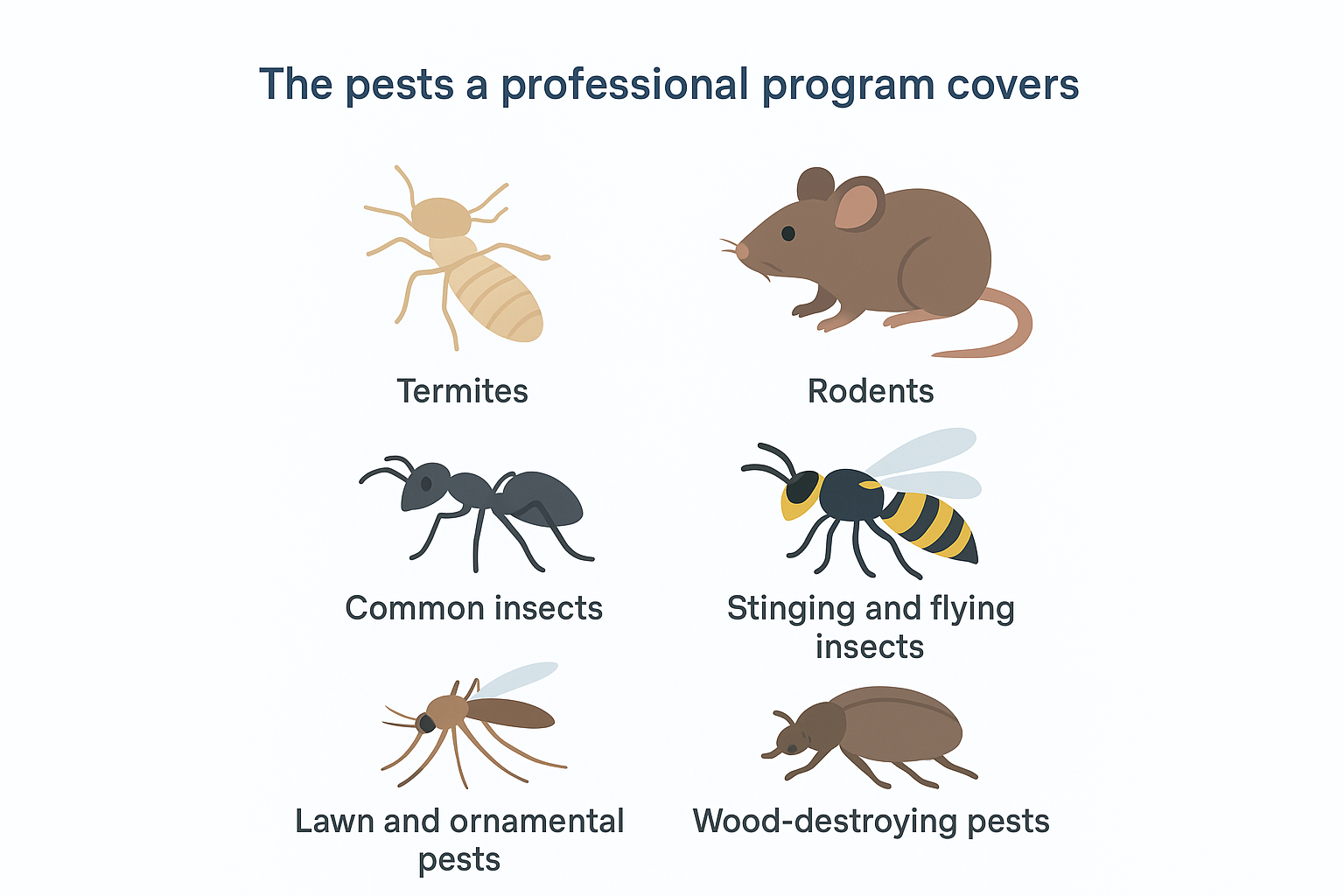
To answer what is pest control in real terms, you need to look at the full range of organisms that trained professionals deal with on a regular basis. Common household insects like ants, cockroaches, spiders, fleas, and bed bugs are the most frequent service calls. But the list extends well beyond what you can see, including termites, rodents, wasps, mosquitoes, and lawn-damaging insects that destroy turf and plant roots from below ground without any visible warning signs on the surface.
Termites alone account for billions of dollars in structural damage across the United States each year, making them one of the most financially damaging pest categories homeowners face.
Here is a breakdown of the main categories a professional service typically covers:
- Wood-destroying pests : Termites (subterranean and drywood), carpenter ants, carpenter bees
- Rodents : Mice, rats, and ground squirrels
- Common insects : Ants, cockroaches, spiders, silverfish, earwigs, fleas, bed bugs
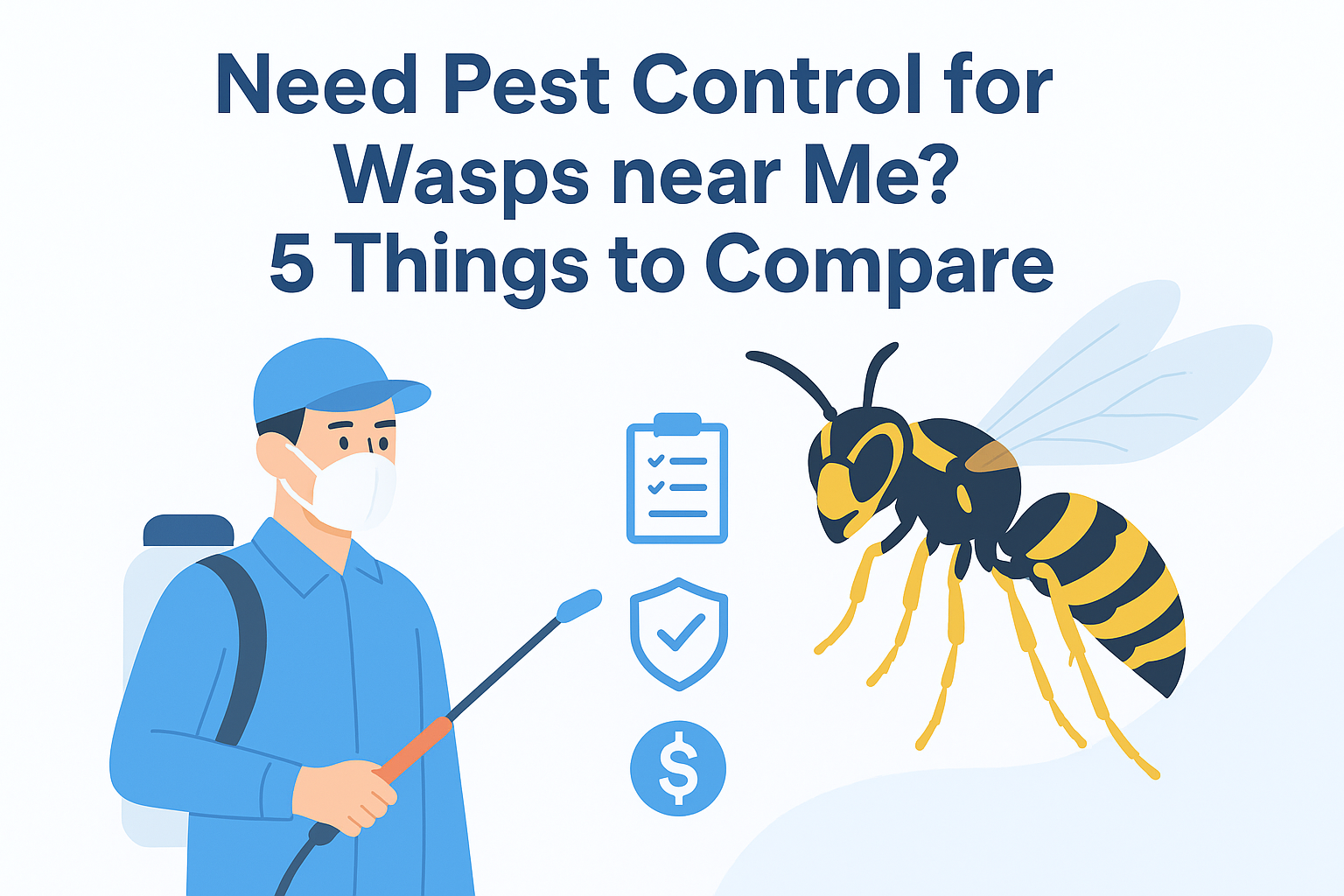
- Stinging and flying insects : Wasps, yellow jackets, hornets, mosquitoes
- Lawn and ornamental pests : Grubs, aphids, chinch bugs, and other turf-damaging insects
Prevention, treatment, and repair
Pest control is not just about reacting to an infestation after it has already taken hold . A well-designed program includes scheduled inspections, exclusion work such as sealing gaps and entry points, and targeted treatments applied before pest populations reach problem levels. Your home or business has specific vulnerabilities based on its age, construction, and surrounding environment , and a trained technician identifies those weak points before pests exploit them.
Some pest problems go beyond treatment and require physical repair to fully resolve. Termites, for example, often leave behind serious structural damage in wood framing, flooring, and support beams that must be addressed before a property is safe or ready for sale. That repair work is a direct extension of pest control, not a separate concern you handle with a different contractor. When you work with a company that covers both the infestation and the resulting structural damage , you get a complete resolution rather than a partial fix that leaves the real problem sitting inside your walls.
Why pest control matters for health and property
Understanding what is pest control goes hand in hand with understanding what happens when you ignore it. Pests are not just an annoyance. They carry disease, contaminate food, damage structures, and create conditions that get significantly worse the longer they go unaddressed. Acting early gives you far more options and costs you far less than waiting until the damage is visible or the infestation has spread.
Health risks tied to common pests
Rodents, cockroaches, and mosquitoes are among the most medically significant pests a household or business can face. Rodents spread diseases like hantavirus and leptospirosis through their urine, droppings, and nesting material, often in areas where food is stored or prepared. Cockroaches trigger asthma attacks and allergic reactions, particularly in children, by releasing proteins from their bodies into indoor air. Mosquitoes transmit West Nile virus , which circulates actively in the Sacramento region each summer, according to the Sacramento-Yolo Mosquito & Vector Control District.
A single rodent inside your home can contaminate far more food than it actually eats, making sanitation and removal equally important parts of any effective control program.
Structural and financial damage
Termites and carpenter ants destroy wood from the inside out, which means by the time you notice swollen floors or hollow-sounding beams, the damage is already significant. A mature termite colony can consume several pounds of wood per year, and untreated infestations accelerate exponentially as colonies split and spread into new areas of a structure. Beyond the physical damage, pest problems also affect property value directly. Home inspections flag active infestations and past structural damage, which can stall or derail real estate transactions at a critical moment.
Common pest control methods and when to use them
When you ask what is pest control , part of the answer comes down to the methods professionals use to manage each specific pest. No single approach works for every situation. A trained technician selects the right method based on the type of pest, the severity of the infestation, the environment, and whether children or pets are present on the property.
Chemical treatments
Liquid pesticides, baits, and fumigation are the most widely used chemical tools in pest control. Liquid treatments work well for perimeter defense against ants, cockroaches, and spiders. Baits are particularly effective for termites and ants because they travel back to the colony and eliminate the source rather than just the individuals you see. Fumigation is typically reserved for severe drywood termite infestations where the entire structure needs treatment at the same time.
Choosing the wrong chemical method for a pest problem can displace the population without eliminating it, which means the infestation moves rather than ends.
Non-chemical and physical methods
Exclusion and trapping are two of the most reliable non-chemical strategies available. Exclusion involves sealing cracks, gaps around pipes, and other entry points that pests use to access your home. This approach works especially well for rodents , where blocking entry routes reduces the population long-term without relying entirely on poisons. Trapping removes active individuals quickly and gives you confirmation that the control effort is working.
Physical methods often work best in combination with chemical treatments rather than as standalone solutions. Integrated Pest Management (IPM) is a framework that combines multiple strategies to reduce pest populations while minimizing unnecessary chemical use, and many professional programs follow this approach as a standard practice because it produces more durable results over time.
How professional pest control works step by step
Knowing what is pest control in theory is useful, but understanding how a professional service actually unfolds from start to finish helps you set realistic expectations and get the most out of the process. A professional program is not a single visit with a spray bottle. It follows a structured sequence of steps that moves from diagnosis to treatment to ongoing prevention.
The initial inspection
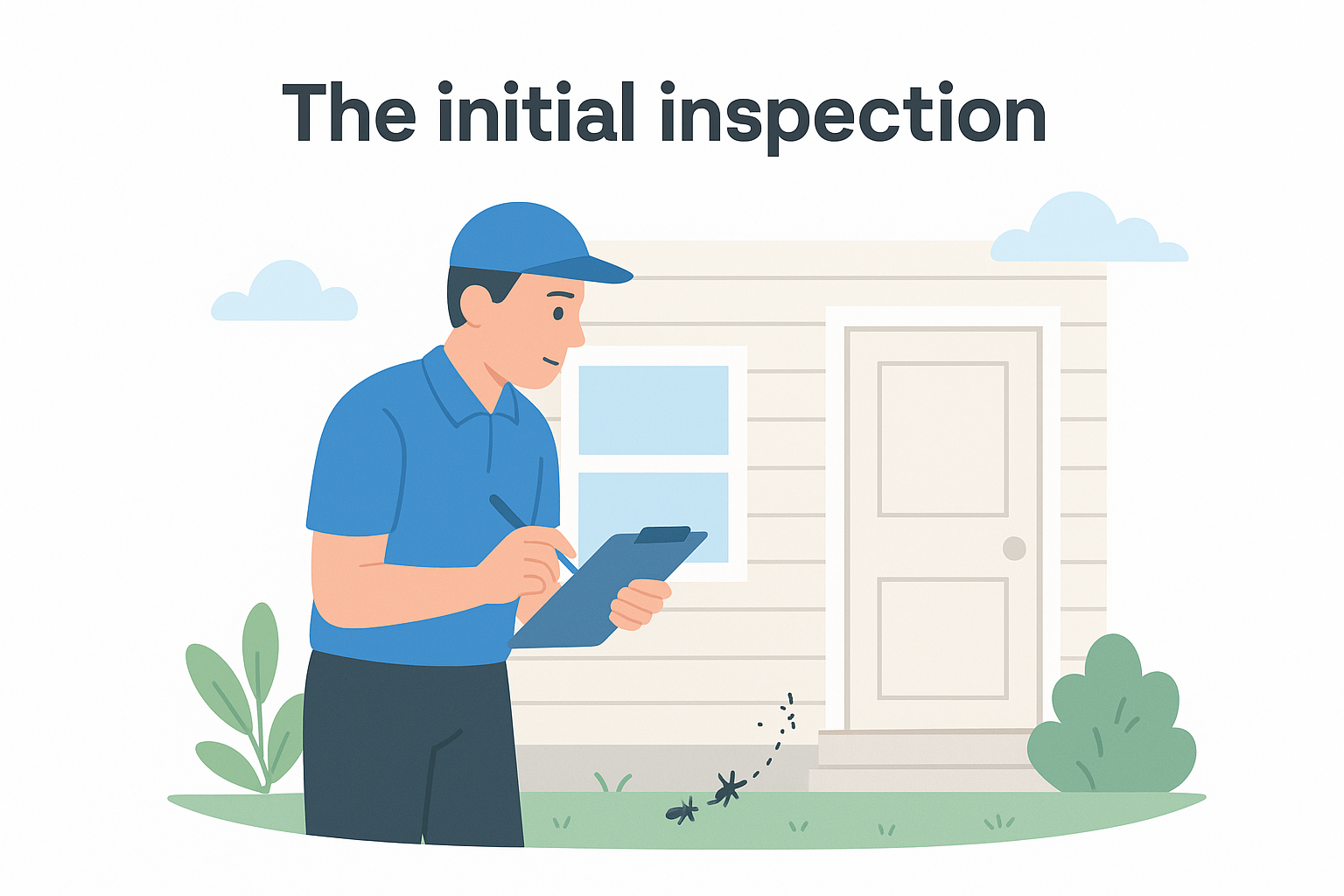
A technician starts by walking your property and identifying the specific pests present, the extent of the infestation, and the conditions contributing to the problem. This means checking entry points, moisture sources, food access, and nesting areas that you might not think to look at on your own. The inspection drives every decision that follows, including which treatment method to use and where to apply it.
Skipping a proper inspection and jumping straight to treatment is one of the most common reasons pest problems return within weeks.
Treatment and follow-up
Once the technician identifies the pest and its source, targeted treatment begins using the method best suited to that specific situation , whether that is bait stations, liquid application, exclusion work, or a combination of approaches. You receive a clear explanation of what was applied, where, and what to expect in the days that follow. Most professional programs include a scheduled follow-up visit to confirm the treatment worked and to address any remaining activity before it rebuilds into a larger problem.
After the initial treatment cycle, ongoing monitoring keeps your property protected long-term. Your technician tracks seasonal pest pressure and any new entry points that develop over time, which means small problems get caught and corrected before they require a full-scale treatment again.
Pest control vs extermination and DIY limits
Part of understanding what is pest control means knowing how it differs from extermination and where store-bought solutions fall short. Extermination focuses narrowly on killing the pests you can see, while pest control addresses the full cycle including the source, the entry points, and the conditions that allowed the infestation to develop. That distinction matters because eliminating visible pests without targeting the source means the problem comes back.
Extermination vs. pest control
Extermination is reactive by definition. A technician responds to an active infestation, applies a treatment, and the job ends there. Pest control takes a broader view, combining inspection, targeted treatment, prevention, and follow-up monitoring into a single program. For most households, that broader approach produces lasting results because it removes the conditions that attract and sustain pest populations in the first place, rather than just reducing the number of pests you see on a given day.
Where DIY pest control falls short
Store shelves carry a wide range of sprays, traps, and bait products that can handle minor surface-level problems, but they have real limits. Most over-the-counter products are not formulated to penetrate nesting sites , reach colony queens, or address the structural vulnerabilities that give pests continuous access to your home. You might reduce what you see on the surface while a larger population continues operating out of reach behind walls or beneath flooring.
DIY products work best as a short-term bridge, not a long-term solution, especially for termites, rodents, or any pest that nests inside walls or below grade.
Professional technicians carry licensed products, specialized equipment, and the training to apply treatments where they actually produce results. When the problem goes beyond what a spray can reaches, calling a professional is the faster and more cost-effective path forward.
Key takeaways
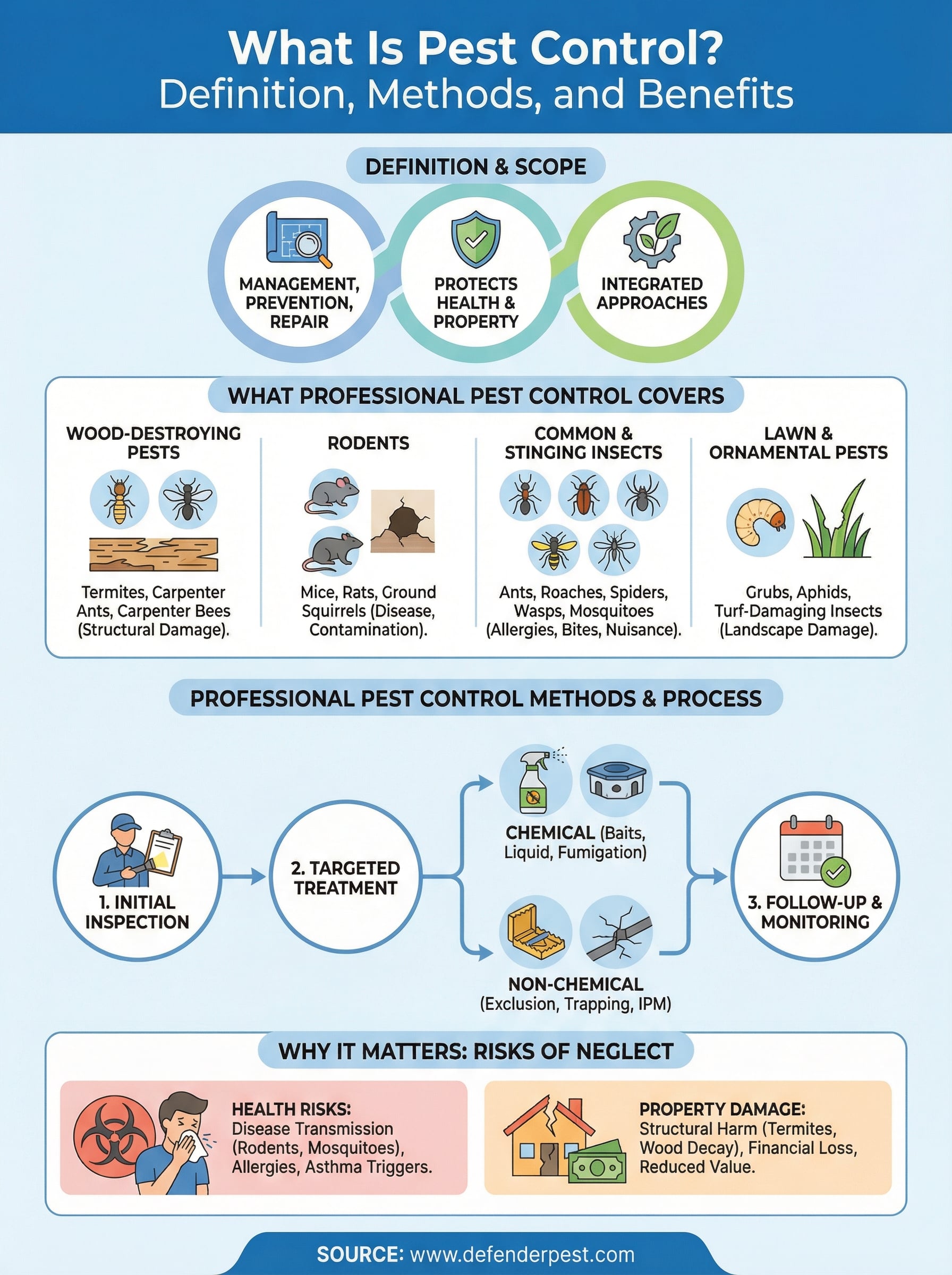
Now that you have a clear answer to what is pest control , you can see it goes far beyond a single spray treatment. It covers dozens of pest types , combines chemical and non-chemical methods, and follows a structured process from inspection through long-term monitoring. Ignoring a pest problem does not make it cheaper or easier to resolve. It gives pests more time to damage your property, contaminate your food, and trigger health problems for the people inside your home or business.
Professional pest control produces more durable results than store-bought products because it targets the source, not just the surface. Whether you are dealing with an active infestation right now or want to stay ahead of one, getting a professional assessment is the most direct path to a lasting solution. If you are in the Sacramento area, contact Defender Termite & Pest Management to get a quote and protect your property before the problem grows.