How to Get Rid of Bed Bugs: Pest Control Treatment Guide
You spotted small reddish stains on your sheets, or you woke up with itchy bites in a line down your arm. Now you're searching for pest control bedbugs solutions because you know DIY sprays from the hardware store rarely finish the job. Bed bugs hide in mattress seams, baseboard cracks, and even electrical outlets, which is exactly why they're one of the toughest pests to eliminate on your own.
The real answer to getting rid of bed bugs involves a combination of thorough inspection, targeted treatment, and follow-up monitoring, not a single spray-and-hope approach. A proper bed bug treatment pest control plan usually includes heat treatments, targeted insecticide application, and steam or vacuum removal for eggs hiding in fabric and furniture joints. Skipping any of these steps often means the infestation comes right back within weeks.
In this guide, we'll walk through how to identify a genuine bed bug problem, what treatment methods actually work, and when it's time to call in a professional. As a Sacramento-based company that's handled pest control and bed bugs cases since 1999, we'll share what separates a lasting fix from a temporary one, so you can stop the infestation for good instead of chasing it room to room.
Why professional treatment beats DIY for bed bugs
Bed bugs survive DIY attempts because of biology, not bad luck. A single female lays 200 to 500 eggs in her lifetime, and those eggs are coated in a protective shell that most store-bought sprays can't penetrate. Over-the-counter foggers actually make things worse in many cases, scattering bugs into wall voids and neighboring rooms instead of killing them. That's why so many homeowners spend hundreds of dollars on retail products only to watch bites return a few weeks later.
A bed bug problem you can't fully see is a bed bug problem you can't fully solve without professional tools.
What separates professional treatment from store-bought products
Professionals bring equipment and knowledge that simply isn't available at the hardware store. Here's how the two approaches stack up:
| Factor | DIY sprays/foggers | Professional treatment |
|---|---|---|
| Kills eggs | Rarely | Yes, with heat or targeted residuals |
| Reaches hidden voids | No | Yes, with inspection tools |
| Risk of scattering infestation | High | Low |
| Follow-up monitoring | None | Included in most plans |
| Typical resolution time | Weeks to months, often incomplete | 1-3 treatment visits |
Trained technicians know where bed bugs actually hide, including box spring corners, headboard joints, and even inside power outlets, so treatment reaches every pocket of activity instead of just the visible ones.
Why licensed pest control matters for your health and your home
Licensed pest control also protects you from the health risks of misapplied chemicals. Overusing consumer-grade insecticides indoors can expose your family to pesticide levels far higher than what's considered safe, a concern the EPA addresses directly in its bed bug guidance. Working with a company that understands pest control and bed bugs together, rather than treating them as separate problems, gets you a plan built around your home's specific layout instead of a generic product label. That's the difference between a treatment that works once and one you have to repeat all summer.
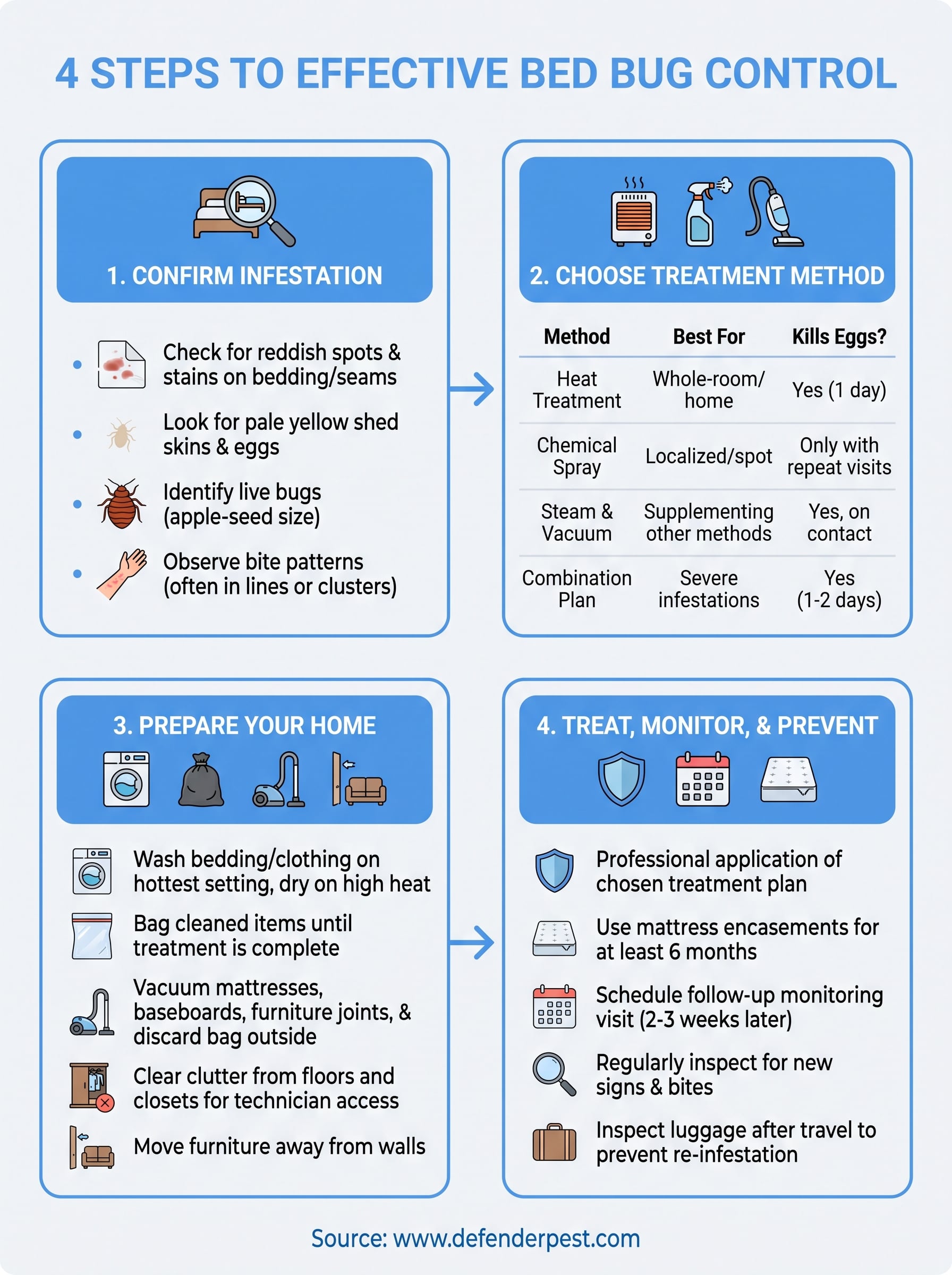
Step 1. Confirm you have a bed bug infestation
Before you spend money on any treatment, verify you're actually dealing with bed bugs and not fleas, carpet beetles, or a skin reaction with no pest cause at all, which starts with comparing bed bug bites to other bites. Misidentifying the pest wastes time and money on the wrong treatment plan, so start with a careful inspection instead of guessing from bite marks alone.
Signs to look for
Check these spots during daylight, since bed bugs hide when the lights are on, and run through the full list of ways to tell if you have bed bugs:
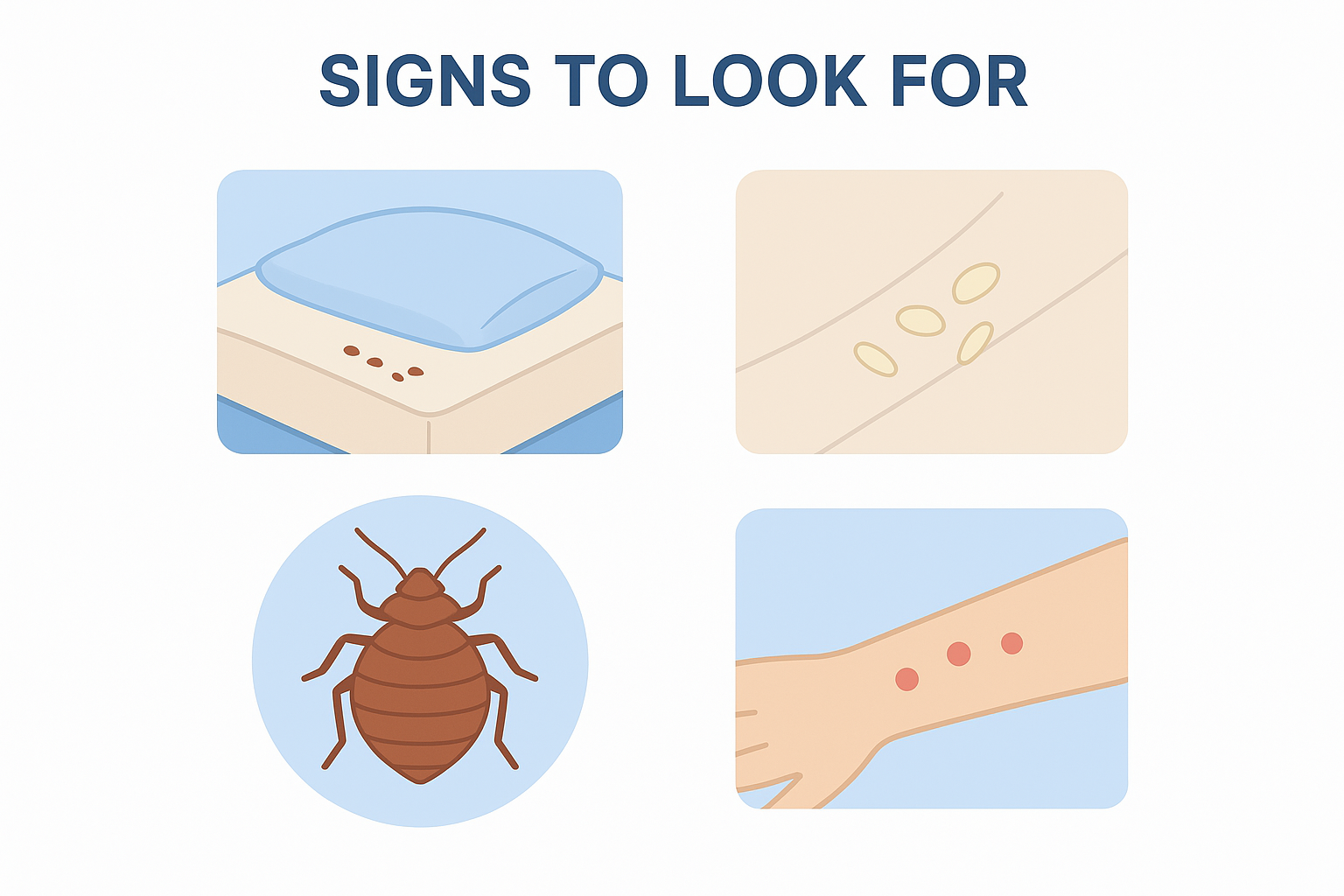
- Small rust-colored or dark spots on sheets and mattress seams (fecal matter)
- Tiny white eggs or pale yellow shed skins in seams and crevices
- Live bugs, flat and reddish-brown, about the size of an apple seed
- A musty, sweetish odor in heavily infested rooms
- Bites in a line or cluster, though some people show no reaction at all
When to call a professional inspector
Spotting one or two signs doesn't always confirm an active infestation, and that's exactly where a professional inspection earns its cost. Technicians use flashlights, mattress encasement checks, and sometimes canine detection to confirm activity in places you'd never think to check, like behind switch plates or inside nightstand drawers.
Confirming the pest before you treat it saves you weeks of wasted effort chasing the wrong problem.
If you're unsure, request an inspection rather than betting your treatment plan on a guess, and know what a bed bug inspection costs before you book.
Step 2. Choose the right bed bug treatment method
Once an inspection confirms activity, the next decision is which treatment fits your situation. Not every infestation needs the same approach, and choosing wrong wastes time while bugs keep breeding. A solid bed bug treatment pest control plan matches the method to the size of the infestation, the type of furniture involved, and how fast you need the problem resolved.
Comparing your treatment options
Here's how the main methods stack up:
| Method | Best for | Kills eggs | Downtime |
|---|---|---|---|
| Heat treatment | Whole-room or whole-home infestations | Yes | 1 day |
| Chemical residual spray | Localized or recurring spot treatment | Only with repeat visits | Several hours |
| Steam and vacuum | Supplementing heat or chemical work | Yes, on contact | Minimal |
| Combination plan | Severe or long-standing infestations | Yes | 1-2 days |
The right treatment method depends on your infestation, not on whichever product happens to be on sale.
Why combination plans work best for severe cases
Most professional companies, including ours, lean toward a step-by-step combination approach for anything beyond a single mattress. Steam kills what's visible, whole-room heat treatment pricing reflects how far that heat has to penetrate into wall voids and furniture joints, and a targeted residual treatment stops stragglers from rebuilding the population. Skipping any one piece leaves an opening for survivors to start the cycle over within a few weeks.
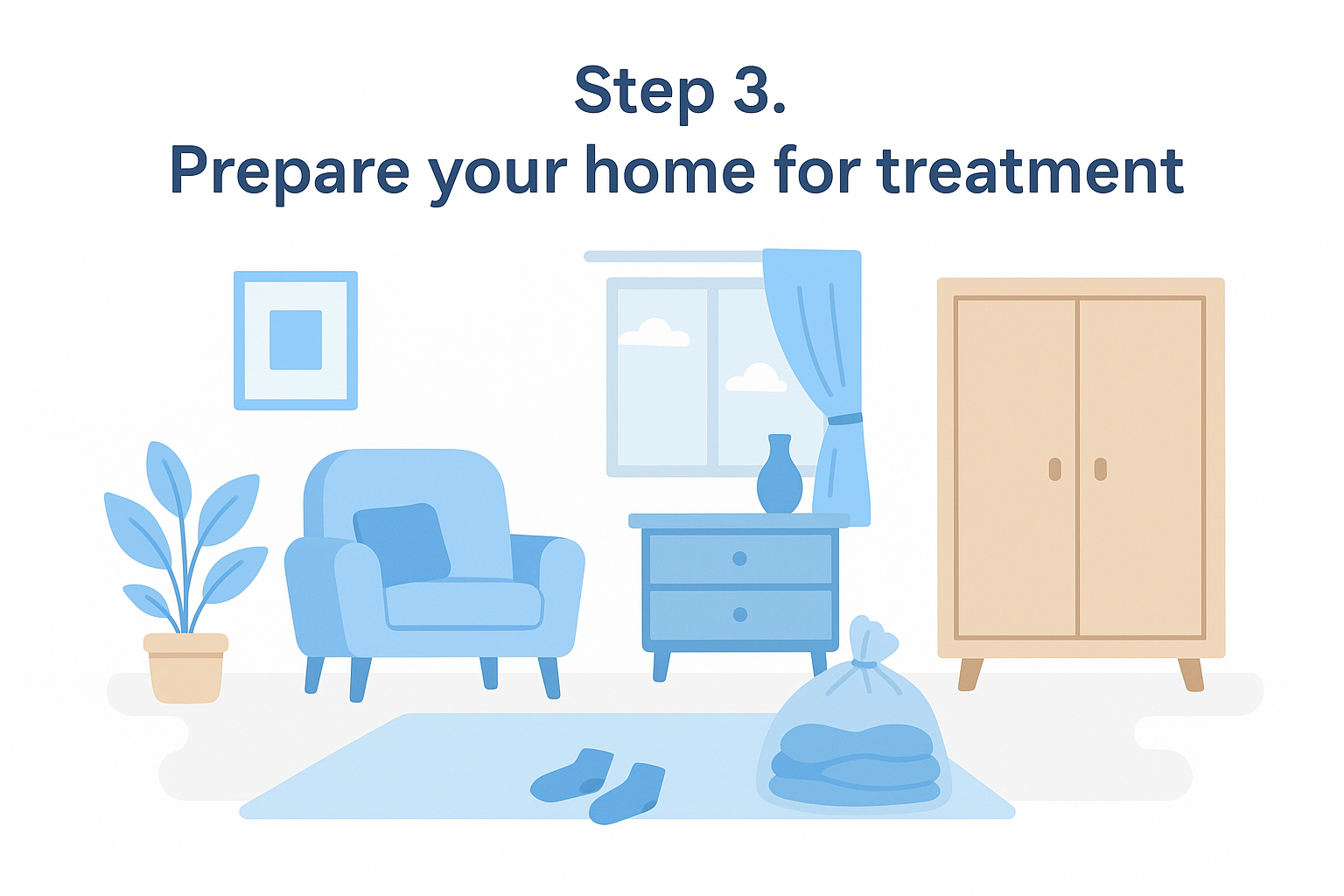
Step 3. Prepare your home for treatment
Proper prep work determines whether your treatment succeeds on the first visit or drags into a second round. Technicians need clear access to baseboards, furniture joints, and closet floors, so the hours before your appointment matter almost as much as the treatment itself. Skipping prep is one of the most common reasons a treatment plan has to be repeated, so it helps to know what bed bug service includes and what it costs before the visit.
Your pre-treatment checklist
Follow these steps the day before your scheduled visit:
- Wash all bedding, curtains, and clothing on the hottest setting the fabric allows, then dry on high heat
- Bag cleaned items in sealed plastic until treatment is complete
- Vacuum mattresses, box springs, baseboards, and carpet edges, then discard the bag outside
- Clear clutter from floors and closets so technicians can reach every hiding spot
- Move furniture away from walls by a few inches
A home that's ready for treatment is a home that only needs to be treated once.
What not to do before treatment
Avoid spraying any leftover store-bought insecticide right before the appointment. Doing so can scatter bugs into new areas and interfere with the professional-grade products your technician applies. Leave severely infested items, like a torn box spring, for the technician to assess rather than dragging them through the house yourself.
Step 4. Treat, monitor, and prevent bed bugs from returning
Once the technician finishes the initial treatment, your job shifts from prep work to follow-through. Post-treatment monitoring catches stragglers before they rebuild a colony, and most professional plans schedule a check-in visit within two to three weeks of the first treatment, which is worth understanding alongside how long bed bug treatment takes start to finish.
What to expect after treatment
Stay alert during the days following your appointment:
- Keep mattress encasements on for at least six months to trap any survivors and cut off their food source
- Watch for new bites or fecal spots, which signal the need for a follow-up visit
- Avoid bringing secondhand furniture or mattresses into the home during this window
- Vacuum weekly around baseboards and furniture legs to catch any remaining activity
Treatment ends the infestation, but monitoring is what keeps it from starting over.
Long-term prevention habits
Prevention matters as much as the treatment itself. Inspect luggage after travel, check secondhand furniture before it enters your home, and use protective encasements on mattresses and box springs going forward. Requesting a follow-up inspection 30 days after treatment gives you documented proof the bed bugs are gone, which matters if you're renting, selling, or simply want peace of mind that your bed bug treatment pest control plan actually held.
Getting your home back to normal
Bed bugs feel overwhelming when you first spot them, but the path out is straightforward once you follow it in order: confirm the infestation, pick the right treatment, prep the space, then monitor until you're certain they're gone. Skipping steps is what turns a one-visit fix into a summer-long battle, and that's the mistake DIY approaches almost always make.
You don't have to handle this alone, and honestly, you shouldn't. A licensed team brings the heat equipment, inspection tools, and follow-up plan that store-bought sprays simply can't match. Professional pest control turns a stressful, recurring problem into a closed case with documented proof it's resolved.
If you're seeing signs of bed bugs in your Sacramento-area home, don't wait for the infestation to spread to another room. Get a free quote for bed bug pest control in Sacramento from Defender Termite & Pest Management and let a local team that's handled this since 1999 get your home back to normal for good.