Bee Pest Control near Me: How to Choose a Local Pro
A bee nest under your eaves or inside a wall void turns into an emergency fast, especially once kids or pets are in the yard. That urgency is exactly why you're typing bee pest control near me into a search bar right now, hoping to find someone who can show up today instead of next week. The problem is that not every company listed nearby actually handles live bee colonies the right way, and picking the wrong one can mean a bigger mess or a repeat visit.
Finding the right local pro comes down to a few specifics: licensing and insurance , experience with live removal versus straight extermination, and honest, upfront pricing before anyone steps on your property, which starts with vetting a bee exterminator's credentials. A good technician also checks for structural damage left behind, since bees and wasps often exploit gaps that other pests use too.
This guide walks through exactly what to look for when comparing top local bee exterminators in the Sacramento area, from reading reviews correctly to spotting red flags in a quote. As a family-owned company that's worked Sacramento, Roseville, Folsom, and Elk Grove properties since 1999, we've seen what separates a rushed job from a lasting fix , and we'll show you how to tell the difference before you hire anyone.
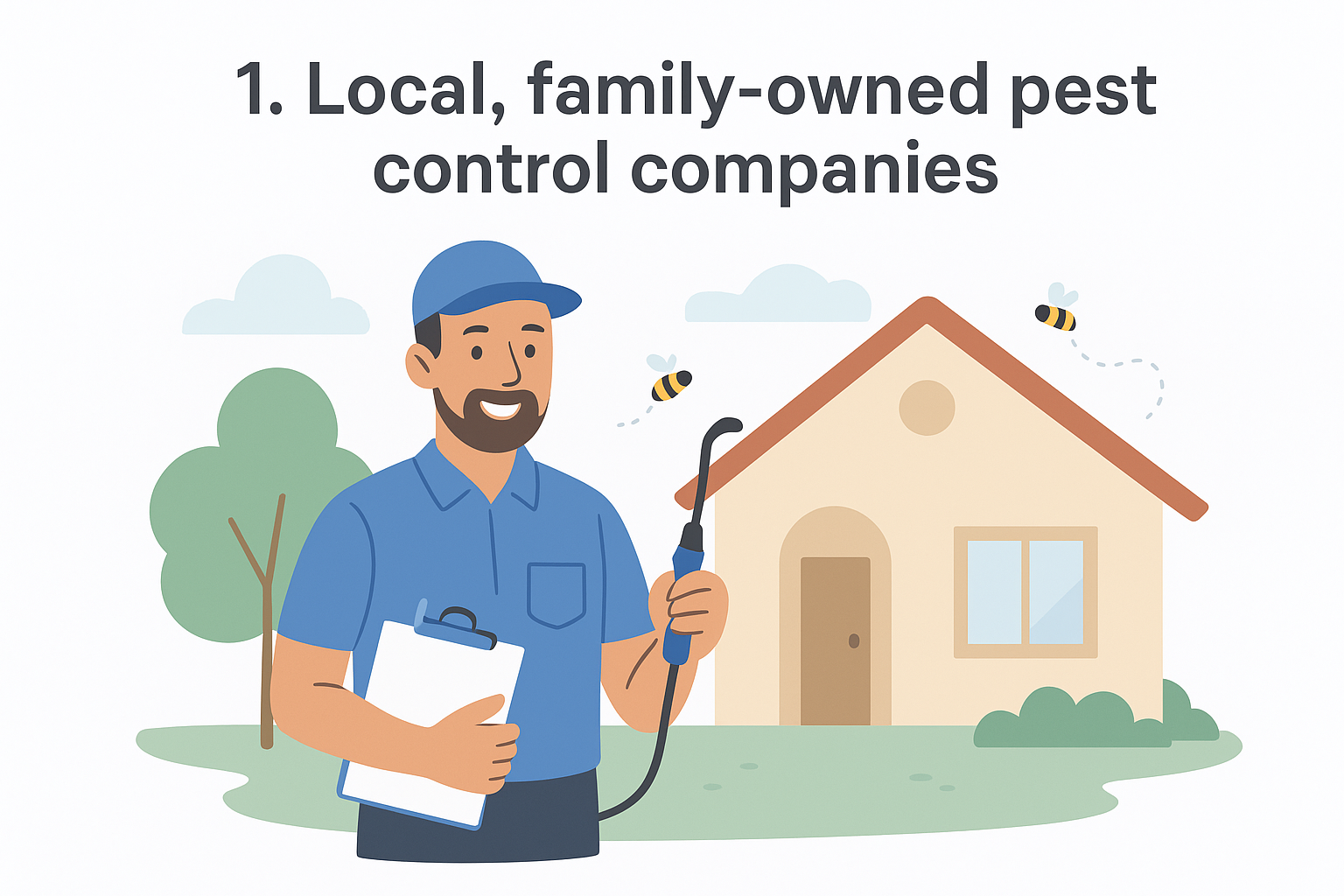
1. Local, family-owned pest control companies
Sacramento has no shortage of small, independently run pest companies, and they're usually your best first call when you search bee pest control near me . These businesses live and work in the same neighborhoods they serve, which means the technician showing up at your door has probably treated a dozen homes on your street already. That local knowledge matters more than it sounds, because bee behavior around Sacramento's stucco homes and older Craftsman-style houses in Elk Grove differs from what you'd see in a cookie-cutter suburb elsewhere.
How they operate
Family-owned operators typically send the same licensed technician for the inspection and the treatment, rather than routing you through a call center and a rotating cast of subcontractors, and you can verify that technician's license with the Structural Pest Control Board before they arrive. They inspect first, identify whether you're dealing with honeybees, yellow jackets, or carpenter bees, and then explain removal options before touching anything. Because these companies also handle general pest control, they're quick to spot related issues, like the rotted fascia board a bee colony chewed through to get inside your attic.
A technician who checks for structural damage while removing a hive is doing two jobs in one visit, and that's the real value of a local company.
Who they're best for
Homeowners who want one point of contact from the first call to the final walkthrough tend to prefer this route. It also suits anyone dealing with a mixed problem, say a bee nest plus a rodent issue in the same attic space, since one company can quote both instead of forcing you to hire two separate outfits.
Typical pricing
Expect a range rather than a flat number, since hive size and location drive the cost:
- Small exterior nest removal: $150 to $250
- Nest inside a wall void or attic: $300 to $600
- Removal plus wood repair for structural damage: $500 and up, depending on materials
Most local companies, including our own team at Defender, offer a free inspection and written estimate before any work begins, so you know what a bee removal visit involves and what you'll pay instead of guessing at the final bill.
2. National pest control franchises
Big-name franchises like the ones you see advertised during football games show up high in search results whenever you look for bee pest control near me , mostly because of marketing budgets rather than local expertise. These companies operate through a central call center that dispatches the nearest branch technician, so you're often talking to someone in another state before anyone in Sacramento even knows you called.
How they operate
Branch technicians for national brands usually work off a standardized script and a set list of treatment packages rather than a custom assessment. The person who answers your call books the appointment, and a separate technician, sometimes a subcontractor, handles the actual hive removal . This structure works fine for routine ant or spider issues, but bee jobs need someone who can identify species on sight and knows the difference between a manageable exterior nest and one buried in your wall.
A national brand's biggest strength is availability, not specialized bee knowledge.
Who they're best for
These franchises suit renters or homeowners who want a recognizable name and don't mind a slower response window. They also make sense if you already have a pest control contract with that company for general service and just need bees added to an existing visit.
Typical pricing
Expect $200 to $400 for standard bee or wasp removal, often bundled into a broader quarterly service plan rather than sold as a one-time job. Contract fees and add-on charges can push the real cost higher than the advertised rate, so ask for a full breakdown and run through the questions worth asking before you sign a contract.
3. Dedicated bee and wasp removal specialists
Some outfits do nothing but stinging insects, and you'll find them if you search anything close to wasp nest removal near me instead of the broader pest control term, so it helps to know the tips for choosing a wasp nest removal pro. These specialists skip the general pest menu entirely, so there's no upsell for spider treatments or quarterly ant service, just bees, wasps, and hornets, full stop.
How they operate
Because stinging insects are the whole business, technicians here tend to carry heavier protective suits , specialized vacuum extraction gear, and more experience reading colony behavior before they start work. They'll often identify whether you're facing aggressive yellow jackets versus docile carpenter bees within minutes, and they know which species can be relocated versus which need full elimination.
A specialist's narrow focus means faster diagnosis, but no help if the same attic also has a rodent problem.
Who they're best for
Homeowners facing an aggressive or unusually large nest, especially removing a yellow jacket nest safely near a doorway or patio, benefit most from this route. Anyone who's already ruled out other pest issues and just wants the fastest, most experienced hands on a single dangerous nest should call a specialist first.
Typical pricing
Specialist pricing runs close to general pest companies but often carries a premium for urgency and equipment, and what wasp nest removal costs by nest type varies just as much:
- Exterior wasp or hornet nest: $175 to $300
- Aggressive yellow jacket ground nest: $250 to $450
- Emergency same-day service: add $50 to $100
Ask upfront whether the quote includes a follow-up visit, since some nests require a second treatment within two weeks.
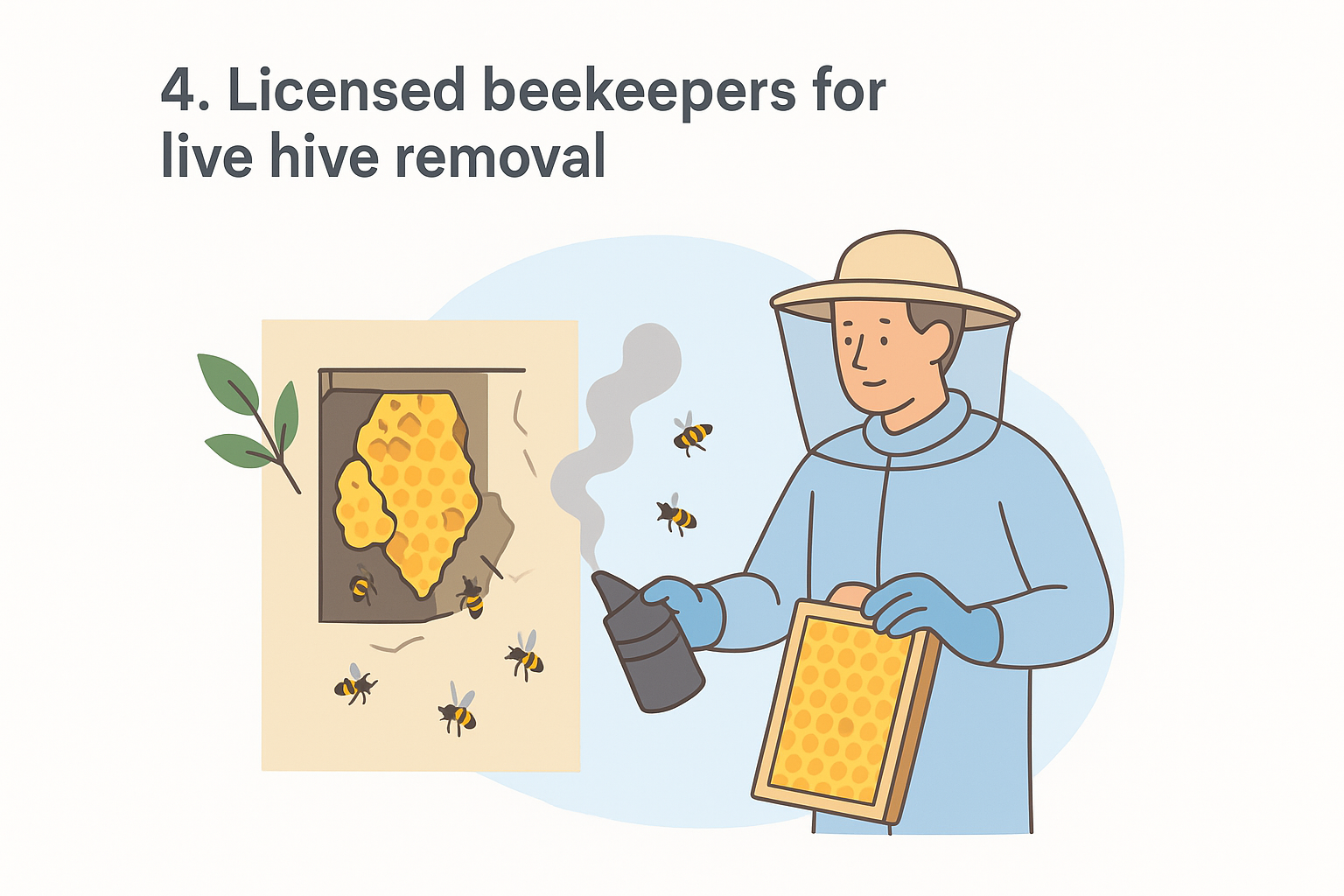
4. Licensed beekeepers for live hive removal
Searching bee pest control near me sometimes turns up something unexpected: a local beekeeper who specializes in relocating honeybee colonies instead of killing them. This matters because honeybees are protected in many ways and increasingly valued for pollination, so a growing number of Sacramento-area homeowners ask specifically for live removal rather than extermination once they realize what species they're dealing with.
How they operate
Beekeepers use smoke, careful comb extraction, and sometimes a cutout method through drywall to remove the entire colony, queen included, then relocate it to a managed hive elsewhere. Unlike a standard exterminator, they won't just spray and leave. They physically remove comb and brood, since leftover honey attracts new pests and can seep through ceilings if left behind.
Killing a honeybee colony is often the wrong call when a beekeeper can relocate it alive for roughly the same price.
Who they're best for
This option suits homeowners who specifically want honeybees saved rather than exterminated, or anyone facing local ordinances that discourage killing established colonies. It's a poor fit for yellow jackets, hornets, or carpenter bees, since beekeepers generally only handle true honeybees and will refer other species elsewhere.
Typical pricing
Expect $300 to $600 for a full wall cutout and relocation , higher than simple extermination because of the labor involved in removing comb by hand. Exterior swarm removal on a tree branch or fence post runs cheaper, often $75 to $150, since there's no cutting or comb extraction required.
5. General wildlife and animal control services
Wildlife control outfits mostly handle raccoons, skunks, and squirrels, but plenty of them list bees on their service menu too, especially in areas where a dedicated apiary specialist isn't easy to find. If your search for bee pest control near me keeps surfacing companies with names like "critter control" or "animal removal," you've stumbled into this category, and it's worth knowing what you're actually getting before you book.
How they operate
These technicians are trained for live trapping and exclusion work, sealing entry points after removing an animal so it can't get back in. Bees aren't their specialty, so treatment often means calling a subcontracted exterminator or simply spraying the nest with the same product they'd use on a wasp problem, without the species identification a bee-focused technician brings.
A wildlife company can seal the hole a raccoon used, but that skill doesn't automatically translate to handling a honeybee colony correctly.
Who they're best for
This route makes sense if bees are a secondary concern behind a bigger wildlife issue, like squirrels in the attic or a raccoon removal service call alongside a small exterior nest. It's a weaker choice if the bee colony itself is the main problem, since you're not getting a specialist's judgment on species or removal method.
Typical pricing
Expect $200 to $350 for a combined visit covering both the wildlife exclusion and a basic bee or wasp treatment, though pricing varies widely by company and often gets bundled into a larger service call rather than itemized separately.
6. DIY bee deterrents and store-bought treatments
Hardware stores stock plenty of aerosol wasp sprays and bee-repellent pouches, and searching bee pest control near me sometimes leads you straight past the professionals to a can of Raid instead. This route appeals to anyone who spots a small nest early and wants to handle it before it grows, but it comes with real limits once a colony establishes itself inside a wall or under siding.
How they work
Most store-bought products rely on pyrethroid sprays that kill on contact, along with decoy pouches that supposedly convince bees a rival colony already claimed the territory. Spraying works only if you can reach the entire nest directly, which rules out anything tucked behind stucco or inside a soffit and calls for professional wasp treatment in Sacramento. Decoy pouches have thin scientific backing , and Sacramento's active bee population often ignores them entirely once summer heat sets in.
A can of spray handles a small exterior nest you can see, but it does nothing for a colony already living inside your walls.
Who they're best for
This approach suits homeowners who catch a tiny nest, three or four wasps building a new start, within the first few days, before the colony grows past a golf-ball size. It's the wrong call for anything involving honeybees, since DIY sprays kill indiscriminately and offer no live removal option, and it's especially risky for anyone with a known allergy nearby.
Typical cost
Sprays and repellent pouches run $8 to $25 per can at most hardware stores, making this the cheapest option on the list by far. That low upfront cost disappears fast if the nest returns or migrates deeper into your home, turning a $15 spray into a $400 wall repair a few weeks later.
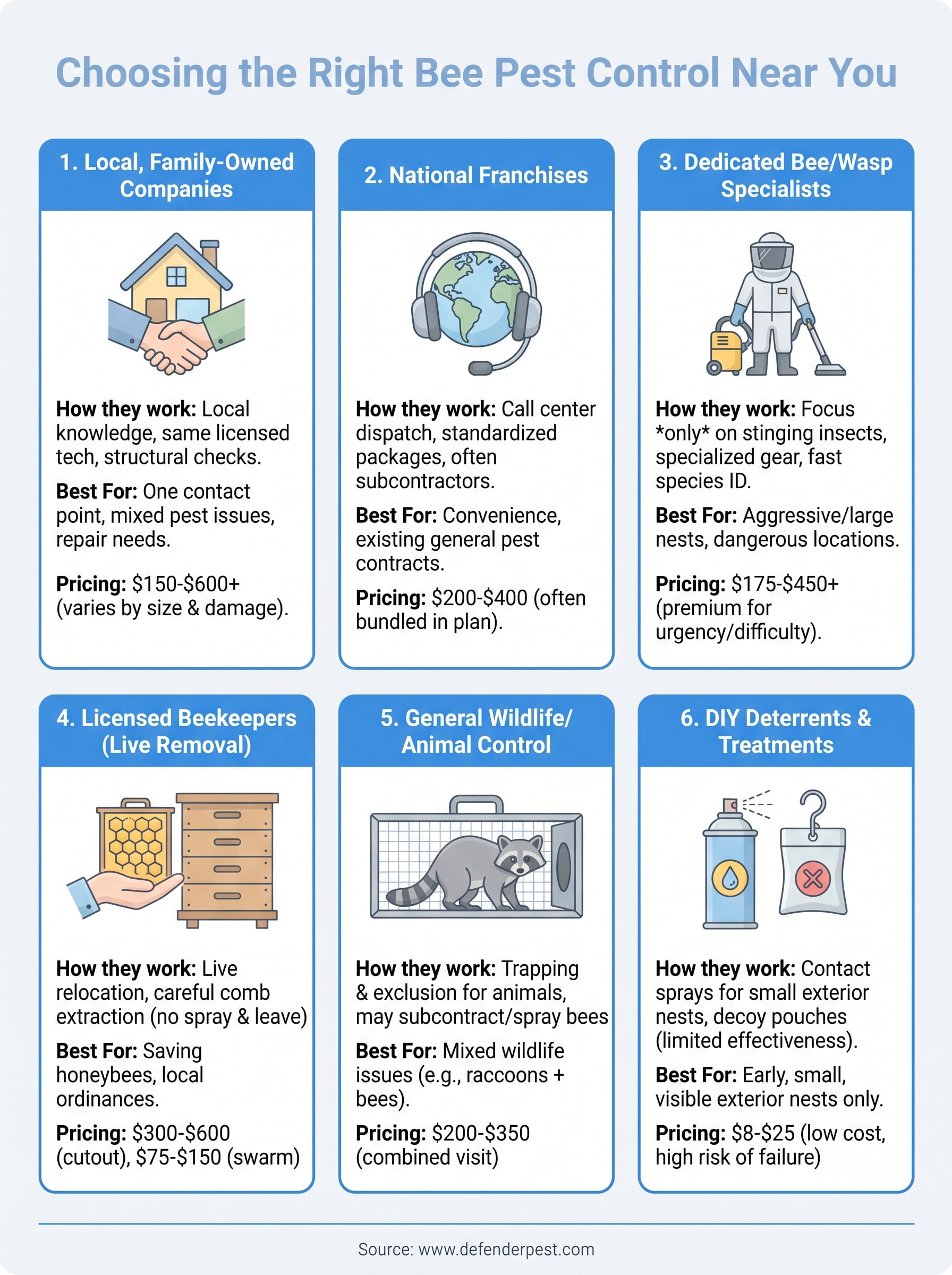
Making the right call for your home
Six options, one decision: match the company to the actual problem in front of you, not the first ad you click. A small visible nest you can reach might only need a $15 spray, but anything inside a wall, near an entry point kids use daily, or involving honeybees you'd rather relocate than kill calls for a licensed technician who's done this hundreds of times. National franchises offer convenience, beekeepers offer live relocation, wildlife companies bundle bees with bigger critter problems, but none of them combine bee removal with the structural repair a colony often leaves behind.
That combination is exactly why Sacramento homeowners keep calling us instead of juggling two separate contractors. We've inspected, removed, and repaired bee damage across this region since 1999, and we'll tell you honestly if a spray would've done the job. Request a free bee removal quote from Defender Termite & Pest Management and get it handled right the first time.