Pest Control for Stink Bugs: How to Get Rid of Them
You've found one stink bug on your curtains, another on the ceiling, and now you're wondering how many more are hiding in your walls. That's how it usually starts. Sacramento homes see a real spike in these pests every fall as they hunt for a warm place to spend the winter, and by the time you notice them, they've often already moved in behind your siding or attic vents. Pest control for stink bugs isn't complicated, but it does require the right combination of steps done in the right order.
Getting rid of stink bugs for good means combining sealing entry points with targeted removal, not just vacuuming up the ones you can see. In this guide, we'll walk through what actually works, from DIY traps and repellents you can set up this weekend to knowing when the infestation calls for a professional.
We'll cover how to identify a stink bug problem early, the home remedies worth trying, and why some infestations need more than a can of spray. If you're in Sacramento, Roseville, Folsom, Elk Grove, or Vacaville and the DIY route hasn't cut it, our team at Defender has handled plenty of these calls and can take it from here.
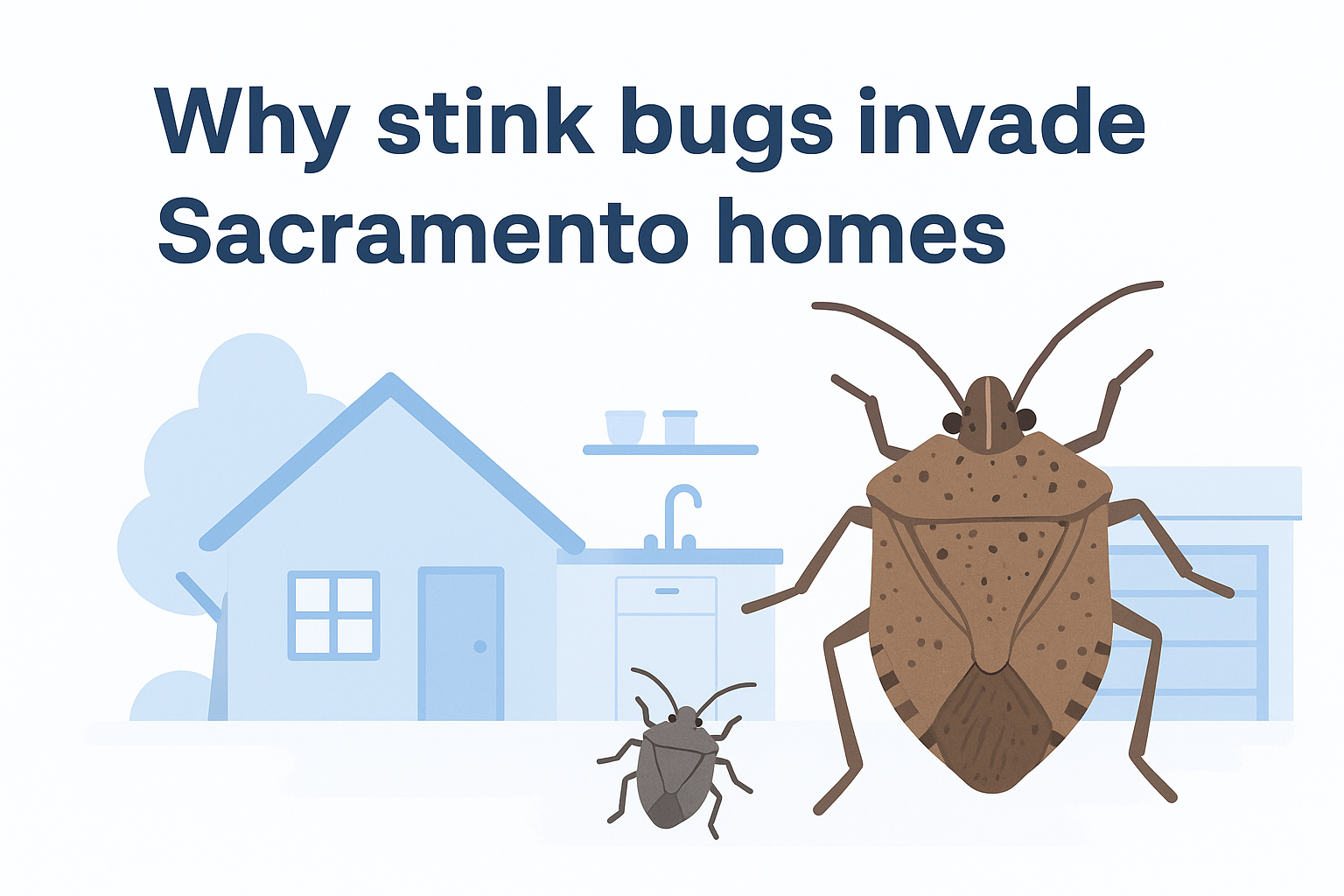
Why stink bugs invade Sacramento homes
Most of what you're seeing in Sacramento kitchens and garages is the brown marmorated stink bug , an invasive species first spotted in California in the early 2000s that has since spread through the Central Valley, and you can compare it against other local pests in our Sacramento insect identification library. Unlike native stink bugs that mostly stick to gardens, this variety actively seeks out houses when the weather cools, treating your attic or wall void the same way it would treat a hollow tree in its native range. According to the USDA, the species has no natural predators here, which is a big part of why populations keep climbing year over year in agricultural regions like ours.
The fall migration into your walls
Sacramento's warm days and cool nights from late September through November trigger what's called an overwintering search, and stink bugs will travel surprising distances to find a gap to squeeze through. They cluster on south and west-facing walls that catch the most afternoon sun, then work their way into any crack, vent, or gap around windows and utility lines. Once inside a wall cavity, they go dormant, but a warm spell in January or a heater kicking on can wake them up and send them wandering into your living room.
What draws them to your property specifically
Gardens and landscaping play a bigger role than most homeowners realize, since stink bugs feed on a wide range of fruits, vegetables, and ornamental plants before ever thinking about your house. Properties near the following tend to see heavier pressure:
- Tomato plants, peppers, and other backyard vegetable gardens
- Fruit trees, especially stone fruit and citrus common in Sacramento yards
- Light-colored exterior paint or siding, which reflects more heat and light
- Homes backing up to orchards, vineyards, or undeveloped land
Stink bugs don't invade because your home is dirty, they invade because it's warm, bright, and easier to reach than you'd think.
Understanding this pattern matters because pest control stink bugs treatments work best when they target the behavior, not just the bugs you can see today. If your yard checks several of those boxes, expect repeat visits every fall until you address both the entry points and the habitat drawing them in.
Step 1. Seal entry points to keep stink bugs out
Before you buy a single trap, walk the perimeter of your house and look for the gaps stink bugs use to get inside. Grab a flashlight and check where siding meets the foundation, around window and door frames, and anywhere a utility line or cable enters the wall. Caulk cracks wider than 1/8 inch with a silicone-based sealant , since it holds up better against Sacramento's temperature swings than cheaper acrylic caulk.
Priority areas to check first
Stink bugs squeeze through openings you'd think are too small to matter, so don't skip the small stuff, and if the list gets long, professional pest exclusion services can handle the sealing for you.
- Gaps around attic and soffit vents (cover with fine mesh screening)
- Torn or missing weatherstripping on exterior doors
- Loose flashing around chimneys and rooflines
- Unsealed openings where AC lines, dryer vents, or wiring pass through walls
- Damaged screens on windows, especially south and west-facing ones
Every gap you seal is one less door stink bugs need to find.
Repair versus replace decisions
Some entry points need more than caulk. If you find soft, crumbling wood around a window frame or door threshold, that's often moisture damage that's given stink bugs, and sometimes termites, an easy way in. Patching over rotted wood just delays the problem, and it won't hold a seal for long anyway. Replacing the damaged section now costs less than dealing with a bigger structural repair later, and termite and dry rot damage repair is exactly the kind of work our team handles alongside pest treatment. Once the exterior is sealed tight, you've cut off future access, but you still need to deal with the stink bugs already inside your walls, which is where trapping and removal come in.
Step 2. Remove and trap stink bugs already inside
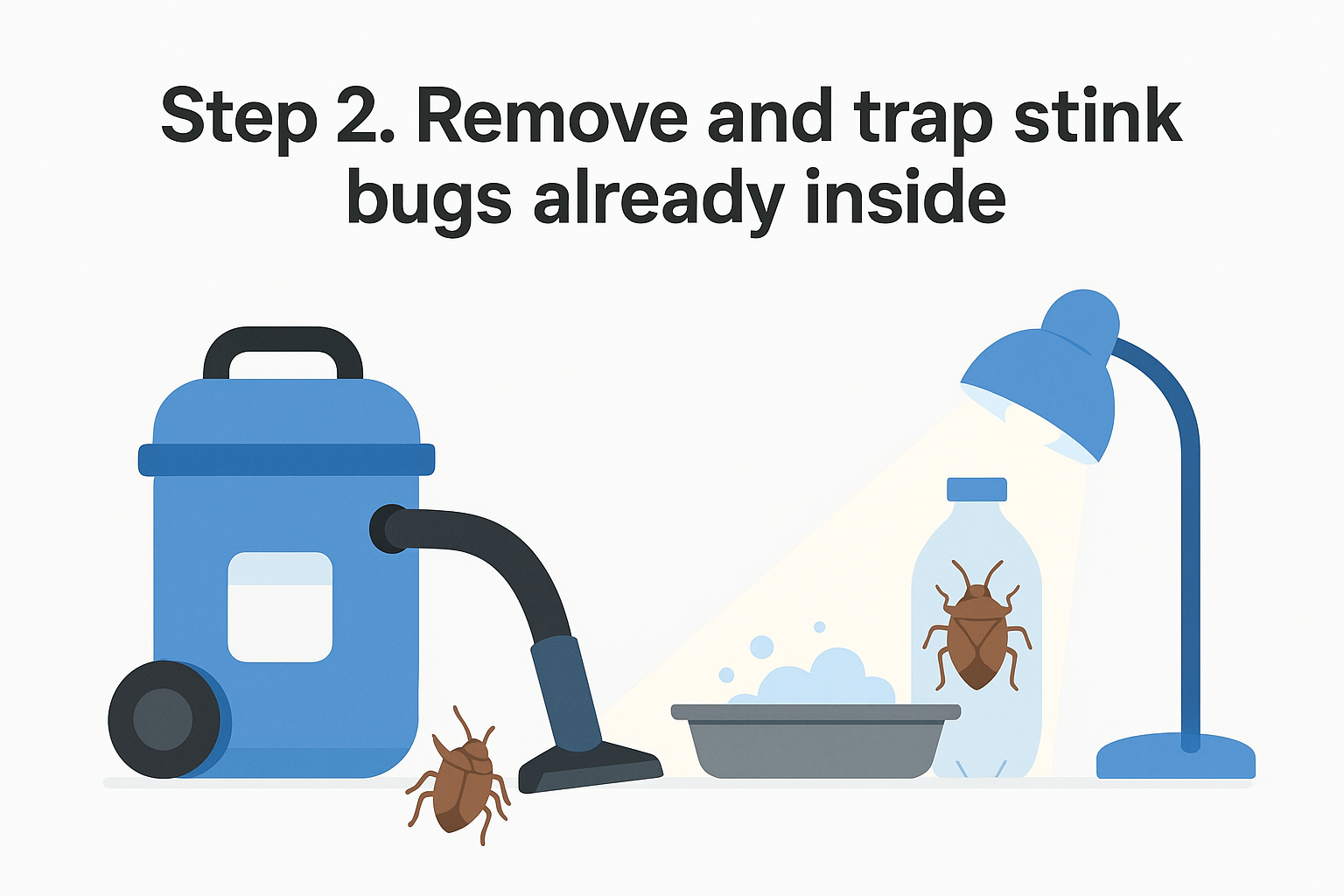
Once the exterior is sealed, focus on the stink bugs already wandering your attic, window sills, or ceiling corners. Never crush them, since their defensive glands release a smell that lingers on carpet, curtains, and skin for hours. A shop vacuum with a disposable bag is your best tool here. Empty the bag outside immediately after each use, or the bugs inside can crawl back out through the exhaust.
Building a DIY light trap
Stink bugs are drawn to light, which makes a simple trap easy to build with items you already own.
- A desk lamp or clip light pointed at a shallow pan of soapy water
- 2-liter soda bottle cut in half, inverted funnel-style into the base, with a light source taped nearby
- Sticky traps placed along window sills and baseboards overnight
Set these up in rooms where you've seen the most activity, usually attics, upstairs bedrooms, and any room with south or west-facing windows. Check and empty them every morning during peak fall migration.
A shop vacuum beats a crushed stink bug every single time.
Where they hide during the day
Stink bugs prefer dark, undisturbed spaces, so check behind curtains, inside closets, under furniture, and along the top of door frames before assuming a room is clear. Pest control for stink bugs at this stage is really a numbers game. Removing ten a day for a week does more than one aggressive cleanout, since it catches the stragglers waking up from wall voids as temperatures shift. Once the visible population thins out, natural repellents can help keep the rest from settling back in.
Step 3. Use natural repellents to deter stink bugs
Natural repellents won't solve an active infestation, but they buy you time while sealing and trapping do the heavier lifting. Essential oil sprays made from peppermint, clove, or neem oil disrupt the scent trails stink bugs use to find their way back to a warm spot, and they're safe to spray directly on window sills, door frames, and screened vents. Mix ten to fifteen drops of oil with a cup of water and a few drops of dish soap in a spray bottle, then reapply every few days since the scent fades fast outdoors.
Plants and household ingredients that work
Gardeners in Sacramento have used a few low-cost tricks for years, many of the same ones that get rid of lawn bugs naturally, and they hold up:
- Crushed garlic and cayenne pepper steeped in water, sprayed along foundation lines
- Mint, marigold, or catnip planted near entry points and garden beds
- Diatomaceous earth dusted in attic corners and crawl spaces (food-grade only, avoid inhaling it)
Natural repellents slow stink bugs down, they don't stop them cold.
Where repellents actually help most
Apply these treatments around the exterior perimeter, not inside living spaces, since the goal is discouraging bugs from landing on your siding in the first place. Focus extra attention on south and west-facing walls, since that's where migration pressure is heaviest during Sacramento's fall months. Reapplying after rain or heavy irrigation keeps the barrier working, and pairing it with the sealing work from Step 1 gives you a much stronger defense than either approach alone. If populations keep growing despite consistent repellent use, that's usually a sign the infestation has moved past what home remedies can manage.
Step 4. Apply pesticides or call a professional exterminator
When sealing, trapping, and repellents haven't kept the population down, it's time to consider a pesticide. Over-the-counter perimeter sprays containing bifenthrin or permethrin can knock back stink bugs on exterior walls, but they only last a few weeks outdoors and won't touch bugs already nesting in a wall void. Spraying indoors is rarely worth it since it doesn't address the source and can leave residue in living spaces you'd rather avoid.
When DIY pesticide use falls short
Store-bought sprays treat the surface, not the structure. If you're finding new clusters weekly, or if the infestation traces back to a wall cavity, attic, or crawl space you can't easily reach, a spray bottle isn't going to solve it.
| Situation | DIY spray | Professional treatment |
|---|---|---|
| A few bugs on siding | Works short-term | Not necessary yet |
| Bugs inside wall voids | Won't reach them | Targets the nest directly |
| Recurring fall invasions | Temporary fix | Addresses habitat and entry points |
| Large property or orchard nearby | Limited coverage | Perimeter-wide application |
Once stink bugs are living inside your walls, no store-bought spray reaches them.
Why a professional treatment lasts longer
A licensed exterminator uses residual barrier treatments applied directly to entry points and exterior walls, products that aren't available over the counter and that keep working for months instead of days. Our team at Defender also inspects for the moisture and wood damage that draws stink bugs and termites alike, so you're not just treating symptoms. If you're in Sacramento, Roseville, Folsom, Elk Grove, or Vacaville and DIY methods haven't held, our Sacramento residential pest control services are built for exactly this kind of recurring seasonal problem.
Keeping stink bugs out for good
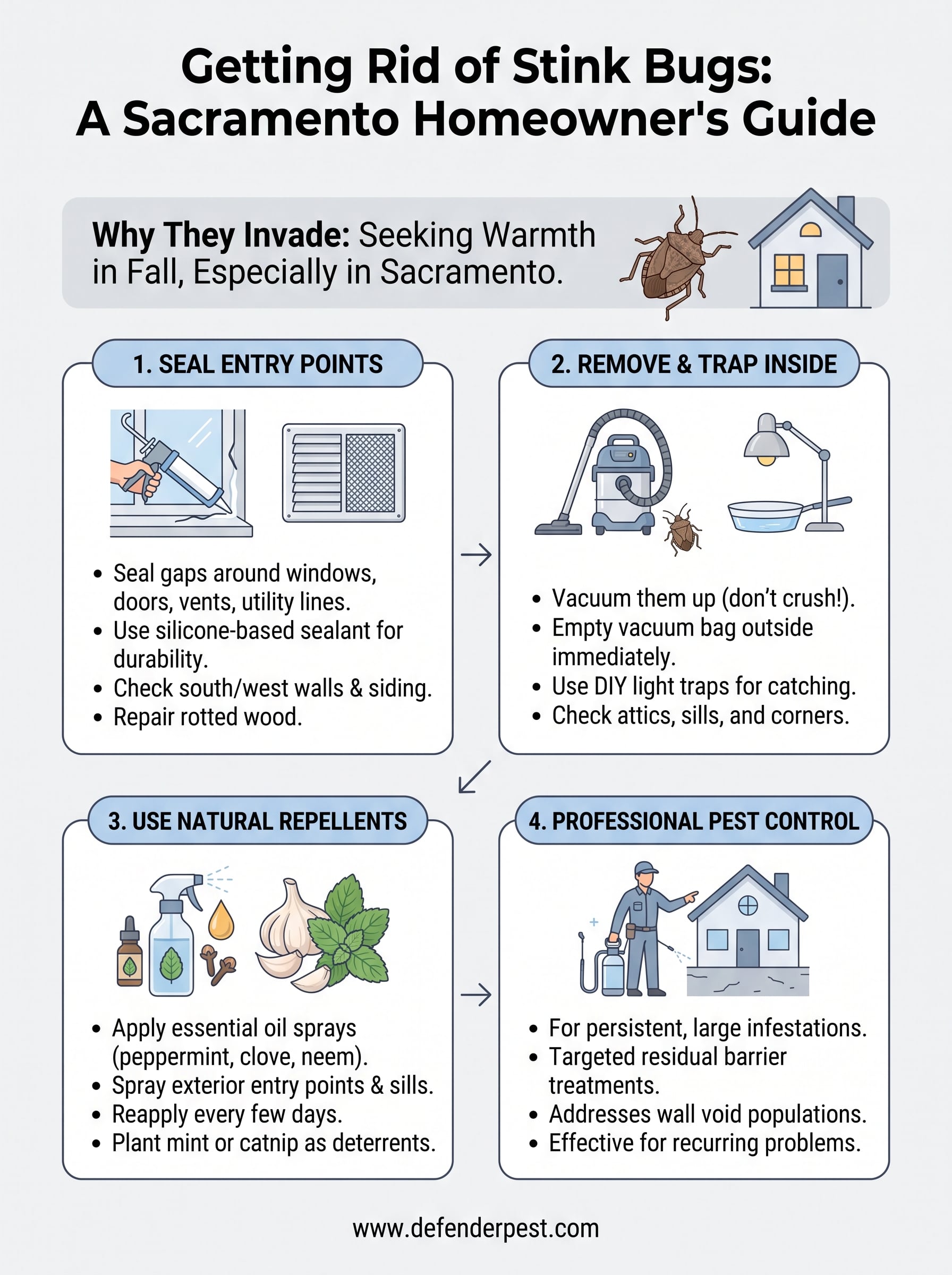
Getting rid of stink bugs isn't about one magic spray, it's about stacking sealing, trapping, repellents, and treatment so each step covers what the last one missed. Skip the sealing and you'll be trapping new arrivals every week. Skip the trapping and repellents just mask a growing population inside your walls. Combine all four and you actually break the fall migration cycle instead of just managing it season after season.
Homeowners who stay ahead of it treat this as yearly maintenance, not a one-time fix. Seal in late summer , before migration starts, and check your traps through November. If you've already worked through these steps and you're still finding clusters in your attic or behind your siding, that's your sign the infestation has moved past what DIY can handle.
Defender has been solving exactly this problem for Sacramento homes since 1999. Request a free pest control quote and let us handle the rest.