Yellow Jacket Nest Removal Near Me: Costs, Timing & Safety
A single yellow jacket sting hurts. A swarm of them defending their nest can send you to the emergency room. If you've spotted yellow jackets flying in and out of a hole in your yard, a wall void, or an eave, your first instinct is probably to search yellow jacket nest removal near me , and that's the right call. These aggressive wasps become increasingly territorial as their colonies grow through summer, and a nest that seemed small in May can house thousands of workers by August .
Here in the Greater Sacramento area, yellow jacket activity peaks between June and October, which means removal becomes both more urgent and more dangerous as the season progresses. At Defender Termite & Pest Management, we've handled yellow jacket calls across Sacramento, Roseville, Folsom, Elk Grove, and surrounding communities since 1999, so we know exactly how these situations escalate when they're left alone. Our 24/7 emergency pest services exist specifically for moments like these, when waiting until Monday isn't an option.
This guide breaks down what yellow jacket nest removal actually costs, when to call a professional versus when a DIY approach might work, and the safety precautions that protect you and your family during the process. Whether you're dealing with an underground nest in your backyard or a colony inside your walls, you'll have the information you need to make the right decision.
Step 1. Identify yellow jackets and find the nest
Before you search yellow jacket nest removal near me and pick up the phone, you need to confirm what you're actually dealing with. Yellow jackets are often mistaken for bees or paper wasps, and the removal approach differs depending on the species. Getting this wrong wastes time and money, and it could put you in danger if you treat the wrong pest.
How to tell yellow jackets apart from other stinging insects
Yellow jackets are smooth-bodied wasps with bright yellow and black banding on their abdomen. Unlike honeybees, they don't have fuzzy bodies, and unlike paper wasps, they're stocky and compact with a narrow waist you can clearly see. They fly fast and hold their legs close to their body in flight rather than dangling them. If you watch closely, you'll also notice they're highly aggressive when disturbed, even minor vibrations near the nest trigger a defensive response.
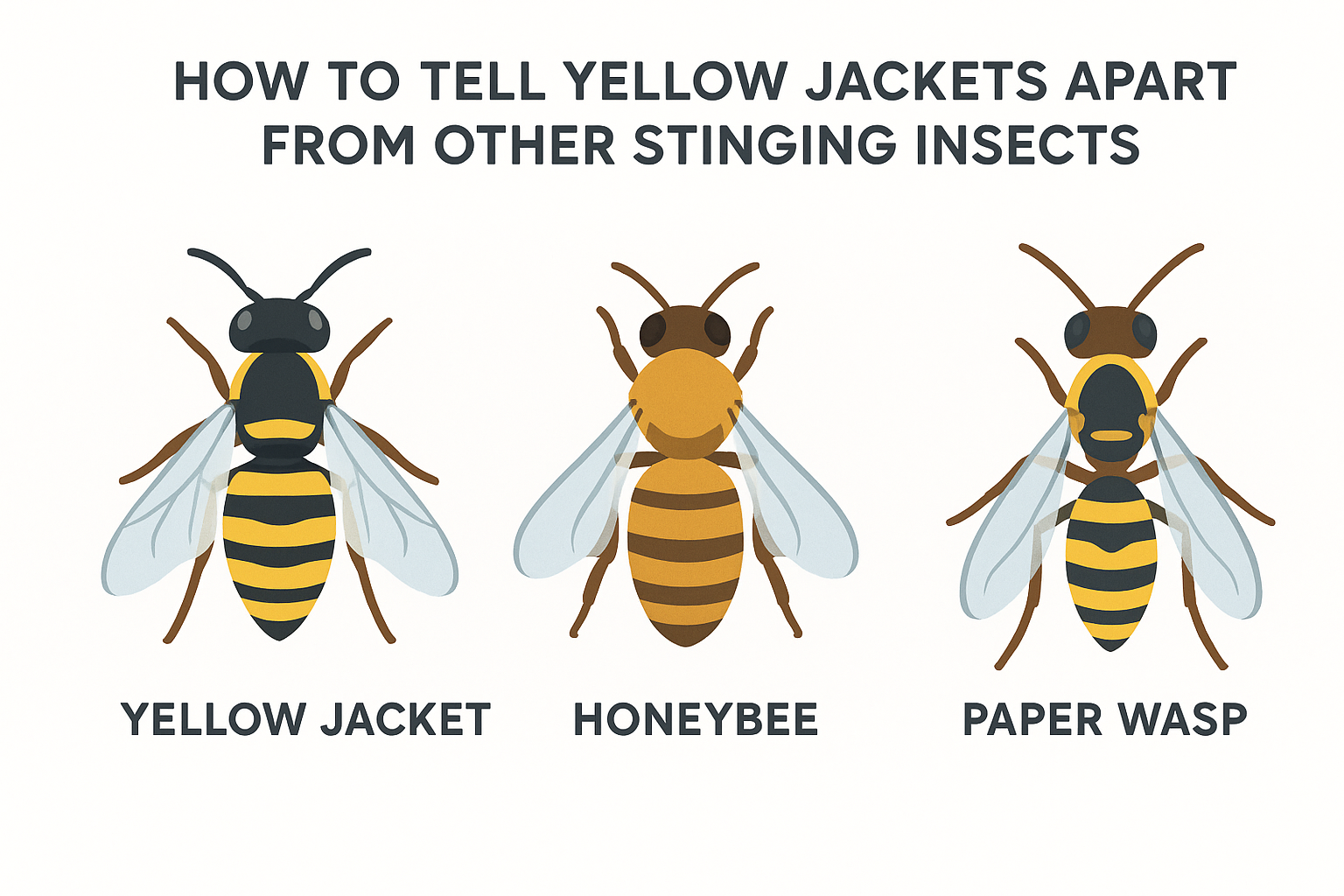
Yellow jackets can sting repeatedly, unlike honeybees, which makes a disturbed colony significantly more dangerous per encounter.
The table below helps you make a quick identification:
| Feature | Yellow Jacket | Honeybee | Paper Wasp |
|---|---|---|---|
| Body texture | Smooth | Fuzzy | Smooth |
| Body shape | Stocky, narrow waist | Rounded | Slender, long legs |
| Color pattern | Bright yellow and black | Amber and black | Yellow/brown and black |
| Aggression level | High | Moderate | Low to moderate |
| Sting type | Repeating | Single (dies after) | Repeating |
How to find where the nest is located
Yellow jackets build nests in four main locations : underground burrows, wall voids, attic spaces, and protected cavities like tree stumps or dense shrubs. To find the nest, watch where the flight path converges . Stand back at a safe distance and observe where multiple wasps are traveling to and from. They typically fly in a straight, purposeful line back to the nest entrance.
For underground nests, look for a small hole in bare soil or turf, often near a foundation, garden bed, or lawn edge. For wall voids, listen for a faint buzzing inside the wall on a quiet day and watch for wasps entering and exiting through gaps in siding, weep holes, or cracks near windows. Mark the nest location clearly before proceeding to step two.
Step 2. Decide if you should DIY or call a pro
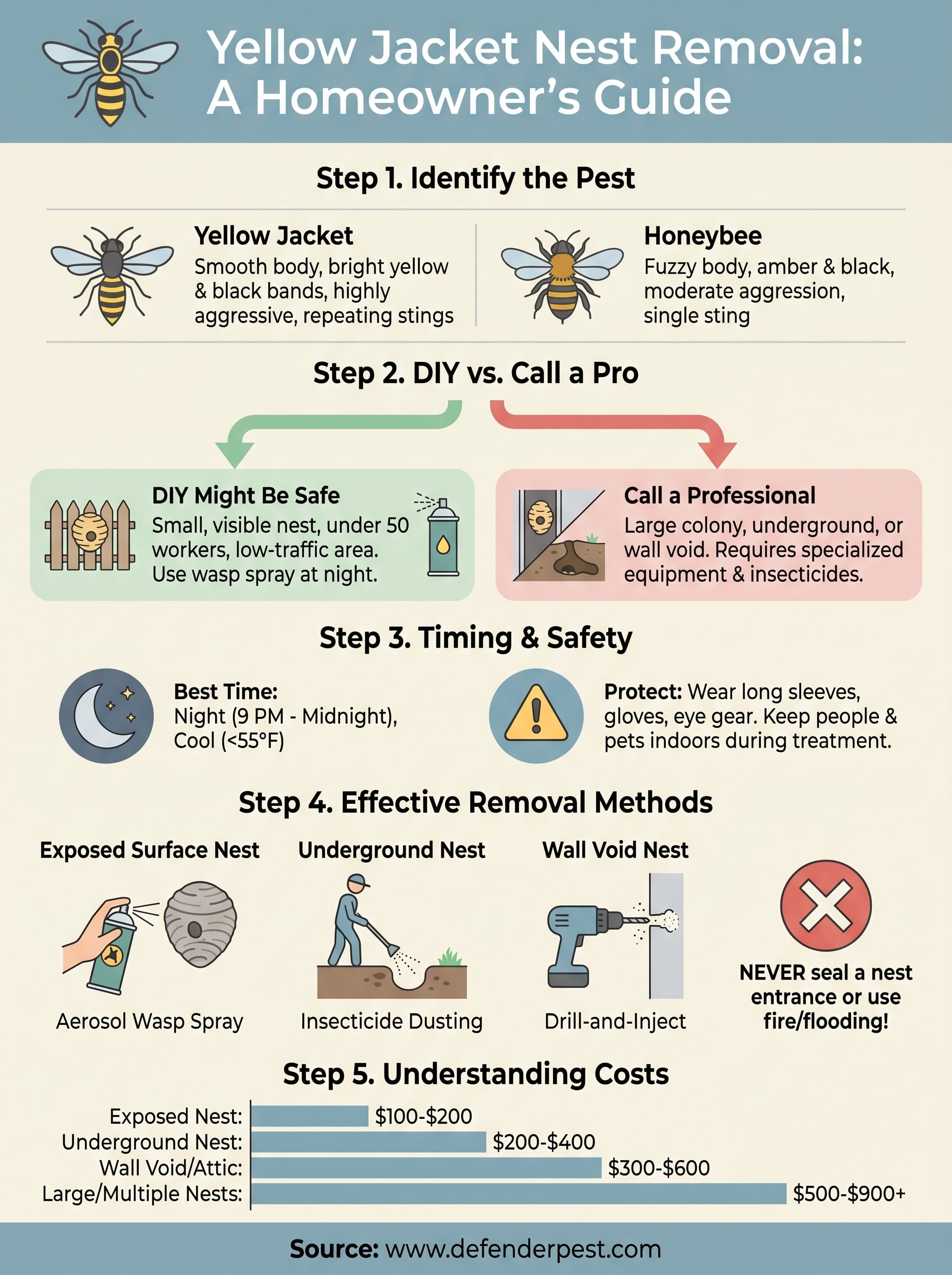
Not every yellow jacket situation requires a professional, but most do. The key factor is nest location and colony size . A small, exposed nest with fewer than 50 workers in a low-traffic area is a different problem than an underground nest near your back door or a colony living inside your wall cavity.
When DIY might be reasonable
DIY removal works best when the nest is small, newly established, and fully visible , such as a paper nest no larger than a golf ball attached to a shed or fence post. In those cases, a store-bought aerosol wasp spray applied at night from at least 10 feet away can eliminate the colony without professional help. Always wear long sleeves, gloves, and eye protection, and plan a clear exit path before you spray.
Never attempt DIY removal on an underground nest, a wall void nest, or any nest larger than a softball. These situations require professional treatment.
When to call a professional
Underground nests, wall void infestations, and large colonies demand professional treatment every time. If you're already searching yellow jacket nest removal near me , the nest is probably large enough, or in a location risky enough, that a professional is the safer choice. Professionals use protective gear and targeted insecticides that penetrate hard-to-reach spaces, eliminating the colony at the source rather than just the workers visible at the entrance.
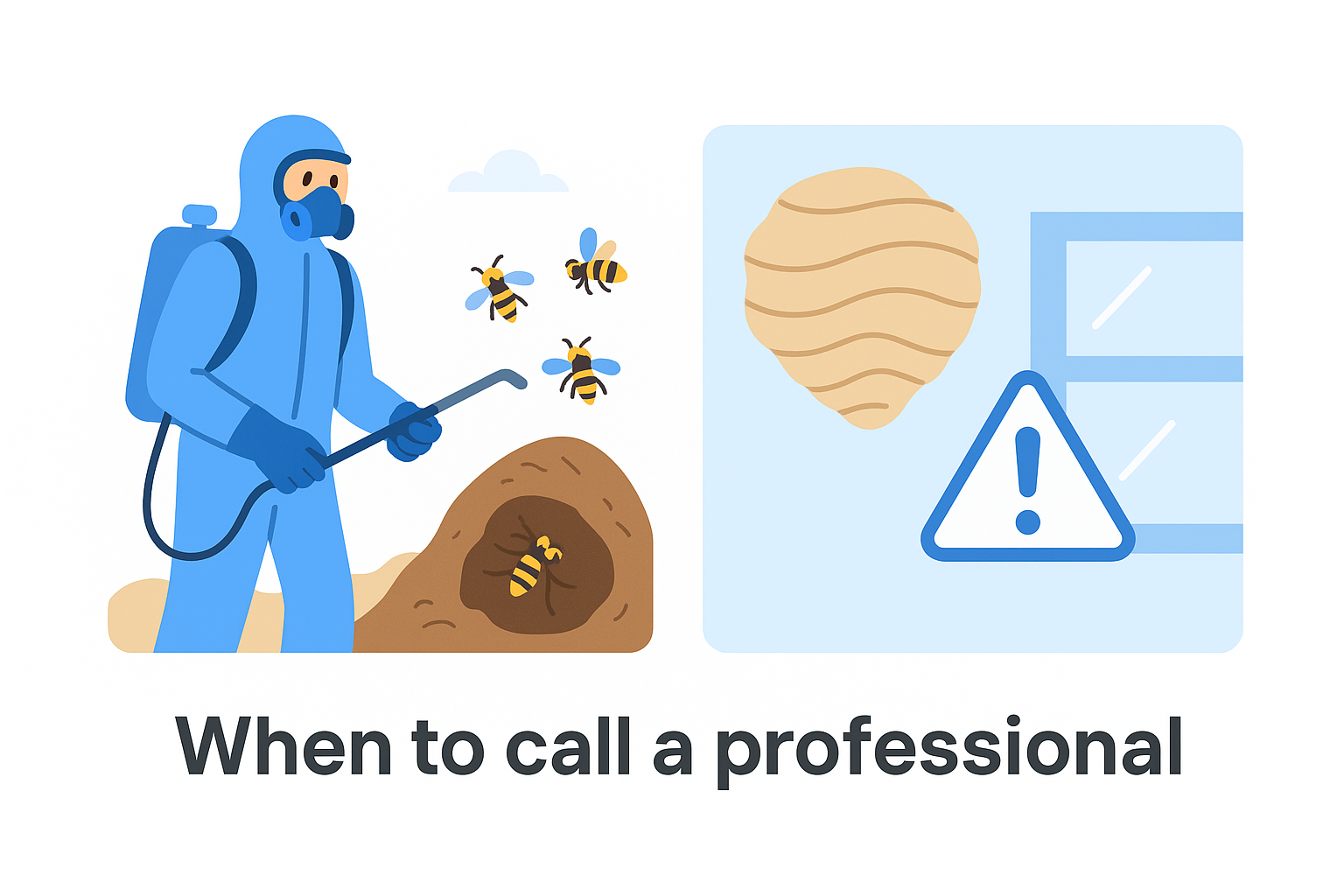
Call a professional immediately if any of these apply:
- The nest is inside a wall, attic, or underground burrow
- The colony is larger than a softball
- Someone nearby has a known venom allergy
- The nest sits within 10 feet of a door, window, or play area
Step 3. Time it right and protect people and pets
Timing matters as much as technique when dealing with yellow jackets. The single most effective treatment window is after dark, between 9 PM and midnight, when foragers have returned to the nest and the colony is at its least active. Attempting removal during daylight hours, especially mid-morning when forager activity peaks, dramatically increases your risk of stings and reduces treatment effectiveness.
Choose the right night conditions
Not every night works for removal. Yellow jackets are most sluggish in cool temperatures , ideally below 55°F, so late-summer nights in the Sacramento area that drop into the 50s give you the best conditions. Avoid nights with rain or heavy wind , since both can affect how treatment products reach the nest and irritate the colony before you're ready.
Treating in cool, calm nighttime conditions gives you the best chance of eliminating the entire colony in one attempt rather than triggering a partial retreat.
Clear the area before you start
Before any treatment begins, remove children, pets, and bystanders from the yard and keep them indoors for at least an hour after treatment. Use these steps to secure the area:
- Mark the nest entrance with a visible flagged stake so no one walks near it in the dark
- Alert all household members about the nest location before nightfall
- Keep indoor lights off near doors and windows to avoid drawing wasps inside
If you're waiting on yellow jacket nest removal near me results from a local professional, relay these same precautions to your household so everyone stays safe until the technician arrives.
Step 4. Understand removal methods and what to avoid
Knowing which treatment method fits your situation separates a successful removal from a dangerous one. Professional-grade insecticide dust is the most effective tool for underground and wall void nests because it coats the entire colony pathway, killing workers over 24 to 72 hours as they move through the nest. Aerosol sprays work for exposed surface nests but rarely penetrate deep enough to eliminate a colony rooted in a burrow.
Treatment methods that actually work
The right method depends entirely on where the nest is located. Here's a breakdown of effective options by nest type:
| Nest Location | Best Treatment Method | Who Should Apply |
|---|---|---|
| Exposed surface nest | Aerosol wasp spray at night | DIY (small nests only) |
| Underground burrow | Insecticide dust applied to entrance | Professional |
| Wall void | Drill-and-inject dust treatment | Professional |
| Attic space | Fogging followed by dust treatment | Professional |
Insecticide dust works by letting returning foragers carry the product deeper into the nest. Applied directly to the entrance at night, it reaches the full colony as activity resumes the next morning.
What to avoid
Never seal the nest entrance before treating it. Blocking the hole traps thousands of wasps inside your wall or attic, forcing them to chew through drywall or siding to find a new exit, often directly into your living space. This mistake is one of the most common errors homeowners make when researching yellow jacket nest removal near me without professional guidance.
Sealing an active nest without treating it first almost always makes the situation worse and more expensive to fix.
Avoid using gasoline, fire, or flooding to treat underground nests. All three methods are ineffective at colony elimination and create serious safety risks for anyone nearby.
Step 5. Know what yellow jacket nest removal costs
Cost is one of the first things you want to know when you search yellow jacket nest removal near me , and the range varies more than most people expect. The nest location is the single biggest factor driving price because underground and wall void nests require more labor, specialized equipment, and sometimes follow-up visits compared to a small exposed surface nest.
What affects your final price
Nest accessibility and colony size push costs up or down significantly. A surface nest on a fence post costs far less to treat than one buried underground near your foundation. Multiple visits , sometimes necessary for large or partially hidden colonies, also add to your total.
Here's a realistic price breakdown by nest type:
| Nest Location | Typical Cost Range |
|---|---|
| Exposed surface nest | $100 - $200 |
| Underground burrow | $200 - $400 |
| Wall void or attic | $300 - $600 |
| Large colony or multiple nests | $500 - $900+ |
Most professionals include a return visit guarantee if the colony survives initial treatment, so ask about this before you book.
What you get for the price
A professional treatment covers more than just applying a product. You're paying for protective equipment, proper insecticide application, and colony elimination at the source rather than only at the surface entrance.
Most companies also provide preventative recommendations after treatment to help you avoid reinfestation. When you factor in the potential cost of a hospital visit from a stinging incident gone wrong, professional removal is almost always the smarter financial decision for your household's safety .
Get it handled and keep them from coming back
Yellow jacket colonies don't disappear on their own, and the longer you wait, the larger and more dangerous the nest becomes. Once a professional eliminates the active colony, your next priority is making your property less attractive to future colonies. Seal gaps in siding and foundation vents, remove rotting wood or tree stumps that provide nesting cavities, and keep trash cans tightly covered since food waste draws scouts looking for a new site.
Prevention also means scheduling an annual inspection each spring before queens establish new nests. Catching a colony early, before it grows past a few dozen workers, gives you the most options at the lowest cost. If yellow jackets return or you're ready to deal with the current nest today, the team at Defender Termite & Pest Management handles yellow jacket nest removal near me for homeowners across Sacramento, Roseville, Folsom, and Elk Grove, with 24/7 availability for urgent situations.