Wasp Nest Removal Cost: 2026 Prices By Location & Type
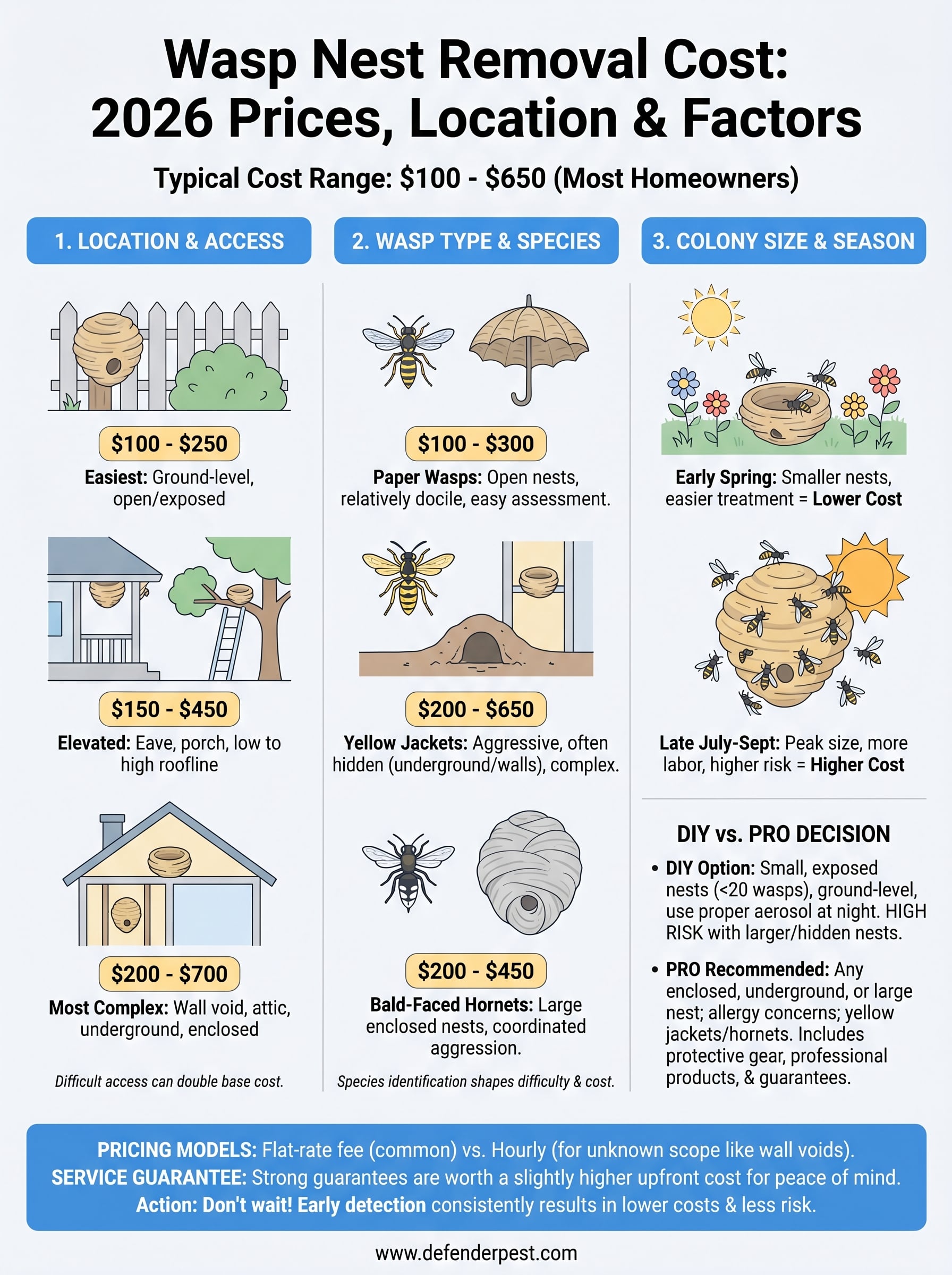
Finding a wasp nest on your property is one of those problems that won't wait. Whether it's tucked under your eaves, buried in the ground, or hanging from a tree branch, that nest is only getting bigger, and more dangerous. The natural first question is: what does wasp nest removal cost? For most homeowners, the answer falls somewhere between $100 and $650 , but the real number depends on several factors specific to your situation.
Nest location, wasp species, accessibility, and the size of the colony all play a role in what you'll actually pay. A small paper wasp nest on a front porch is a very different job than a yellow jacket colony inside a wall void. At Defender Termite & Pest Management , we've handled wasp infestations across the Greater Sacramento area since 1999, and we've seen just about every scenario, from straightforward removals to nests that required opening up structural components to fully resolve.
This guide breaks down 2026 pricing by nest location and wasp type, explains what drives costs up or down, and helps you understand when professional removal is worth every dollar.
Why wasp nest removal costs vary so much
The wasp nest removal cost you'll pay isn't arbitrary. Several concrete factors push the price up or down, and understanding them helps you evaluate quotes and spot what's driving costs before you commit. Most contractors price jobs based on a combination of nest location, colony size, species, and overall job complexity. When those factors stack up unfavorably, the final bill climbs fast.
Nest location and accessibility
Where the nest sits on your property is probably the single biggest driver of price. A ground-level nest on a fence post or low branch takes a technician minutes to access, treat, and remove. Contrast that with a nest inside a wall cavity , deep in an attic, or sitting 30 feet up in a tree, and you're dealing with a job that requires ladders, specialized protective gear, and significantly more time on site.
Difficult access can easily double the base cost compared to an open, ground-level removal in plain sight.
Nests inside structures are particularly expensive because the technician may need to locate the colony first, treat it through a small entry point, and return for a follow-up visit. In some cases, wall or soffit material gets cut away to fully remove the nest and prevent secondary pest attraction from leftover comb. Those labor and repair costs stack on top of the standard removal fee.
Colony size and infestation severity
Larger colonies mean more wasps, more product used, and higher risk for the technician. A nest the size of a softball holds a few dozen workers. A mature yellow jacket nest discovered in late summer can house thousands of aggressive insects . Treating a larger colony takes more time, often requires follow-up visits, and carries higher product costs that get passed directly to you.
The time of year also matters. Nests found in early spring are usually small and straightforward to handle. By late July through September , colonies reach peak size. Removal at peak season is more labor-intensive, and your technician may schedule a return visit to confirm the colony is fully gone before removing the physical structure. Early detection consistently results in lower costs and less overall risk on both sides.
Wasp species on your property
Not all wasps behave the same way, and species directly affects job difficulty. Paper wasps build open, honeycomb-style nests and are relatively docile compared to yellow jackets and bald-faced hornets. Yellow jackets aggressively defend their nests and often build underground or inside wall voids, making treatment more complicated. Bald-faced hornets construct large, enclosed paper nests and respond to threats with coordinated aggression that requires faster, more careful work from the technician.
Species identification matters because it determines which treatment works, how much protective equipment is needed, and whether one visit gets the job done. A misidentified species leads to the wrong product or technique, which can cause incomplete elimination and a second visit you'll pay for again. Accurate identification from the start is part of what you're paying a qualified professional to deliver.
How pros price a wasp nest removal job
Most pest control companies use one of two pricing models: a flat-rate fee for the job or an hourly labor rate with product costs added on top. Knowing which model your contractor uses before you agree to anything helps you compare quotes accurately and avoid surprises on the invoice.
Flat fee vs. hourly pricing
Flat-rate pricing is the most common approach for standard residential jobs. The technician assesses the nest, factors in location and species, and gives you one number that covers the full removal. This works well when the job scope is clear from the start. Hourly pricing , by contrast, becomes more common when the technician cannot fully assess the nest before starting, such as with wall voids or underground colonies where the full extent of the infestation is unknown until work begins.
Always ask your contractor upfront whether the quoted price is fixed or whether additional time and materials could change the final wasp nest removal cost.
What's typically included in the quote
A standard professional quote should cover the initial treatment and physical removal of the nest where feasible. Most reputable companies include one follow-up visit if the colony shows continued activity after the first treatment. What typically sits outside the base quote includes structural repairs to walls or soffits opened during the job, long-distance travel fees for properties outside a contractor's standard service area, and emergency or after-hours surcharges.
Service guarantees and return visits
Paying attention to the guarantee terms in your contract matters as much as the base price. Some companies offer a 30-day guarantee covering reactivation of the treated nest at no additional charge. Others limit coverage to the single visit. A quote with a strong service guarantee is often worth a slightly higher upfront cost because a reactivated yellow jacket colony in late summer is not a situation you want to handle without a promised return visit already in writing.
2026 wasp nest removal cost by location
Location is the most reliable predictor of your final wasp nest removal cost . The table below gives you typical 2026 price ranges based on where the nest sits, moving from the easiest access points to the most complex jobs.
| Nest Location | Typical Cost Range |
|---|---|
| Ground-level or open/exposed | $100 - $250 |
| Eave, porch, or low roofline | $150 - $350 |
| High roofline or elevated tree | $200 - $450 |
| Wall void or soffit | $300 - $650 |
| Attic | $350 - $700 |
| Underground colony | $200 - $500 |
Ground-level and exposed nests
Open, ground-level nests are the least expensive to treat because the technician can see the full scope of the job before starting. Nests hanging from a fence, porch railing, or low branch typically run between $100 and $250 in 2026. Treatment is usually a single visit, and physical removal of the nest structure happens the same day once the colony is fully eliminated.
Elevated and roofline nests
Nests along eaves, overhangs, and upper rooflines require ladders and additional protective equipment, which adds both time and cost to the job. Expect to pay $150 to $450 depending on roof height and how exposed the nest is once the technician is in position. Higher pitches and hard-to-reach corners push you toward the top of that range.
If a technician cannot safely reach your nest from a standard extension ladder, specialty lift equipment may be required, and that rental fee gets added to your total separately.
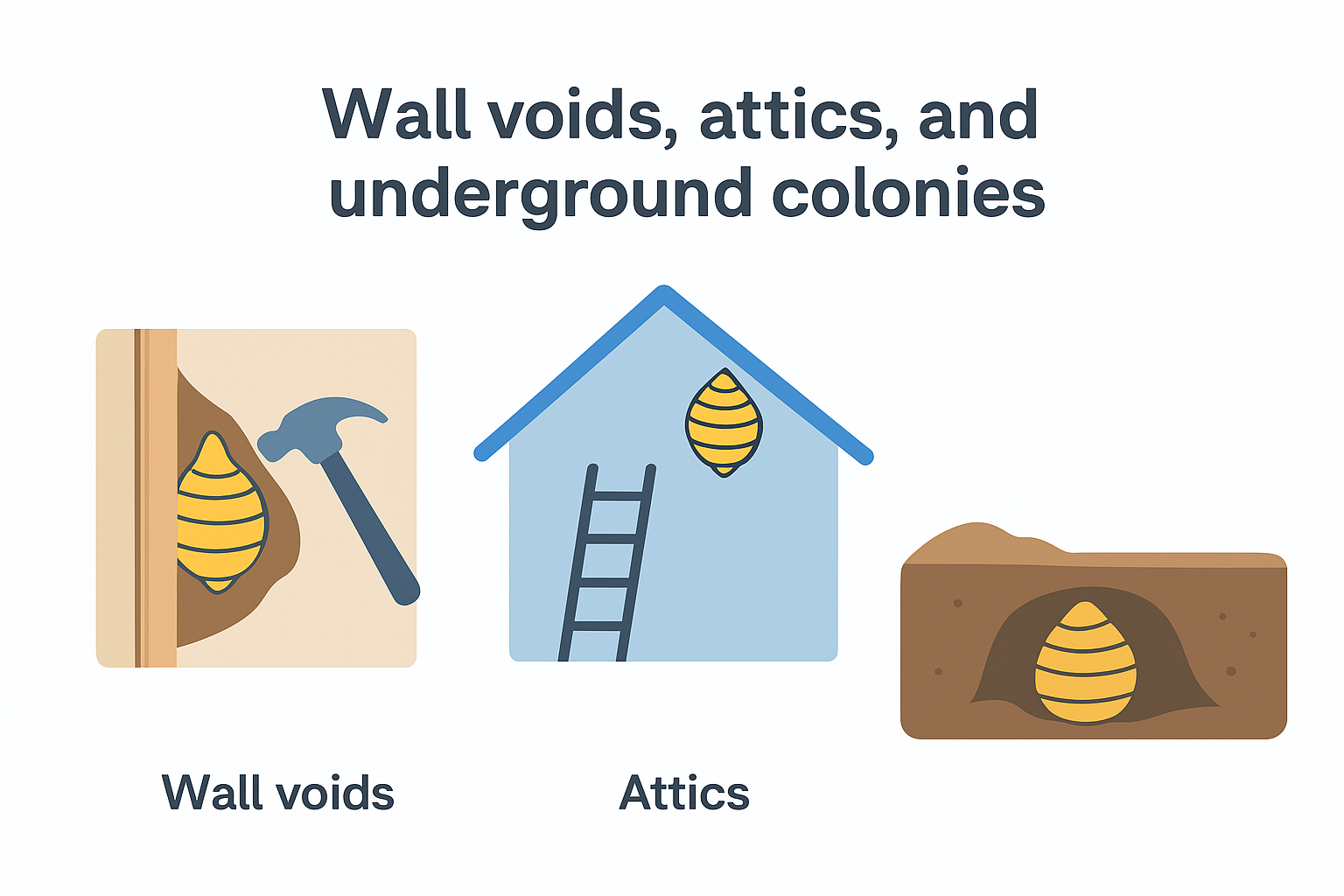
Wall voids, attics, and underground colonies
Enclosed nests inside wall cavities, soffits, or attics are the most expensive category because the technician must locate the colony before treating it, often working through a small entry point. Underground yellow jacket colonies carry similar complexity. These jobs run $200 to $700 depending on depth, colony size, and whether opening structural material is required to fully access and remove the nest.
2026 wasp nest removal cost by wasp type
The species nesting on your property directly shapes what you'll pay. Different wasps build different nest structures, defend their colonies with varying levels of aggression, and respond to different treatment products. Your wasp nest removal cost can swing by several hundred dollars depending on species alone, so knowing what you're dealing with before calling a technician helps you budget accurately.
| Wasp Species | Typical 2026 Cost Range |
|---|---|
| Paper wasps | $100 - $300 |
| Yellow jackets | $200 - $650 |
| Bald-faced hornets | $200 - $450 |
Paper Wasps
Paper wasps build open, umbrella-shaped nests made from chewed wood pulp, and those nests are visible from outside. Your technician can assess the full colony size at a glance before starting work, which keeps the job straightforward. Because paper wasps are less aggressive than yellow jackets or hornets, most removals in 2026 run between $100 and $300.
Location still moves the number. A paper wasp nest on your porch railing sits at the low end, while the same species on a high roofline adds ladder time and pushes the quote higher. Species gets you in the right ballpark, but location closes the gap.
Yellow Jackets
Yellow jackets are the species most likely to drive your costs up fast. They build inside wall voids, underground, and in dense vegetation , which means your technician cannot assess the full colony without starting the job. Their aggressive defensive behavior adds protective equipment needs and often requires a return visit to confirm complete elimination.
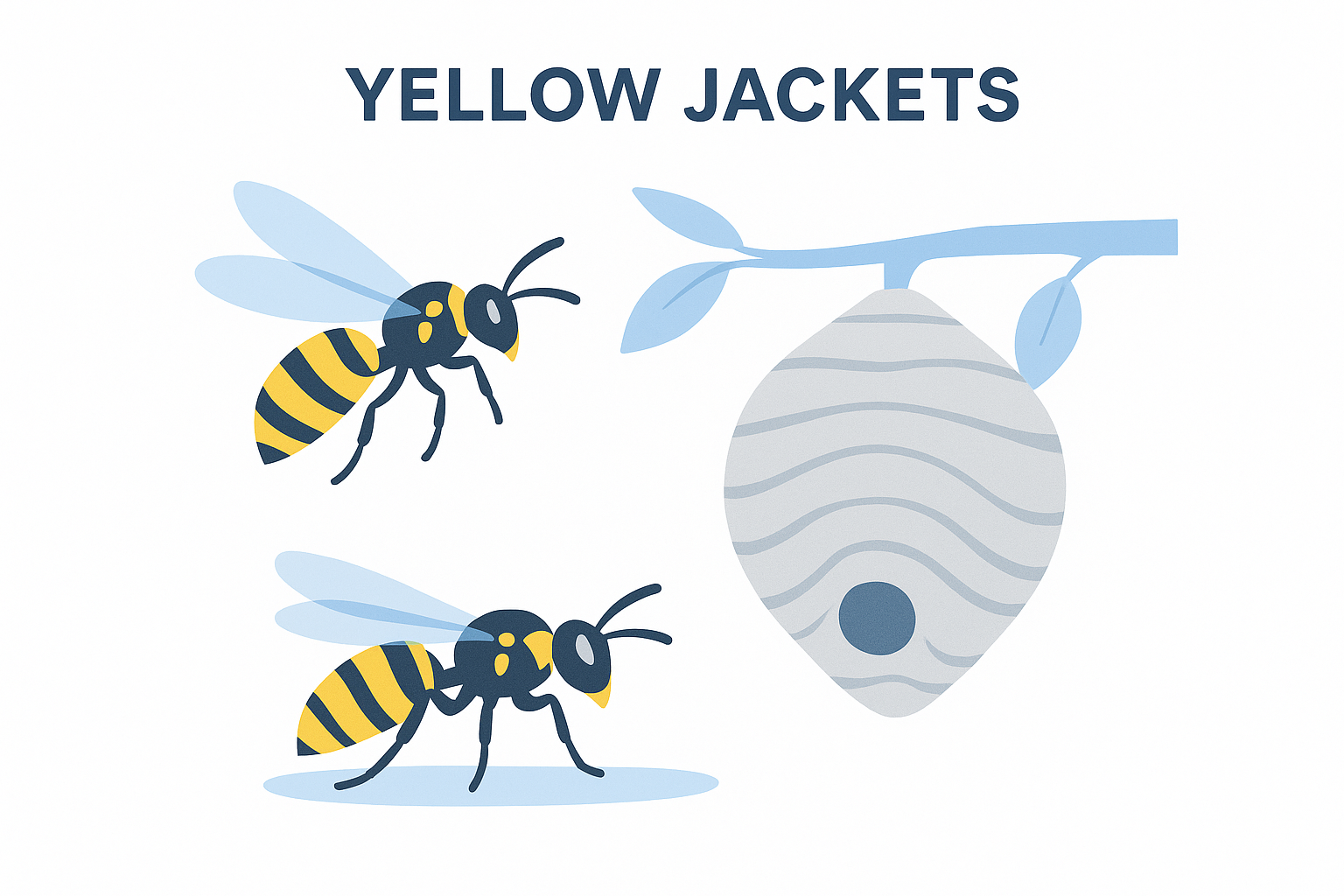
Yellow jacket colonies hit peak population in late summer, which is exactly when they are most defensive and most expensive to treat.
Standard yellow jacket removal runs $200 to $500 in 2026, with wall void and underground jobs pushing toward $650 when structural access or multiple visits are required.
Bald-Faced Hornets
Bald-faced hornets build large, enclosed paper nests that can reach basketball size by late season. These nests are usually visible, but the insects respond to threats faster and more aggressively than paper wasps, which demands more protective equipment and a faster working pace from the technician. Most removals fall between $200 and $450 , with larger mature nests in elevated positions landing at the top of that range.
DIY vs. professional removal and safety limits
Deciding between a DIY attempt and hiring a professional comes down to nest size, species, and location . Spraying a small paper wasp nest on your porch railing with an over-the-counter aerosol can work if the colony is young and you can reach it safely from the ground. But that same approach applied to an underground yellow jacket colony or an enclosed wall void puts you at real risk, and a failed attempt often makes the colony more defensive before a professional ever shows up.
When DIY is a reasonable option
Small, exposed nests with fewer than 20 visible wasps and ground-level access are the clearest candidates for a DIY approach. You'll need a residual wasp aerosol rated for the specific species, full protective clothing including gloves and eye protection, and you should treat at night when the colony is dormant and most workers are inside the nest. Stand at the maximum spray distance listed on the product label and apply directly into the nest entrance.
Attempting DIY removal on a nest you cannot fully see or safely reach from the ground increases your injury risk significantly and often raises your final wasp nest removal cost when a professional has to undo a partial treatment.
When to call a professional
Any nest inside a wall, soffit, attic, or underground burrow falls outside safe DIY territory. You cannot determine the full size of those colonies from the outside, and disturbing them without a complete treatment plan drives workers deeper into the structure or triggers a mass defensive response. Yellow jackets and bald-faced hornets in particular require professional-grade products and protective equipment that standard retail stores do not carry.
You should also call a professional immediately if anyone in your household has a known allergy to wasp venom. The risk of anaphylaxis from multiple stings during a failed removal attempt is not a trade-off worth making to save on the removal fee. A certified technician carries the right equipment, the right products, and the training to shut down a colony in a single visit.
What to do next
You now have a clear picture of what drives wasp nest removal cost in 2026, from nest location and species to colony size and job complexity. The most important takeaway is simple: the longer you wait, the more expensive and dangerous the removal becomes . A small spring nest becomes a peak-season colony by August, and that difference shows up directly on your invoice.
If you have a nest that's enclosed, elevated, or involving yellow jackets or bald-faced hornets, skip the DIY aisle and contact a licensed professional. Your safety and a complete, guaranteed elimination are worth far more than the cost difference. Defender Termite & Pest Management has served the Greater Sacramento area since 1999, handling wasp removals of every size and complexity across residential and commercial properties. Request a wasp nest removal quote from Defender Termite & Pest Management and get a clear, accurate estimate before the colony grows any larger.