Hornet Nest Removal Cost: Average Prices & Factors 2026
Finding a hornet nest on your property isn't something you can ignore. Hornets are aggressive when they feel threatened, and a single nest can house hundreds, sometimes thousands, of stinging insects. Whether it's tucked under your eaves, buried in the ground, or hidden inside a wall void, dealing with it yourself is risky. That's why most homeowners start by searching for the hornet nest removal cost before picking up the phone, and it's a smart move. Knowing what to expect financially helps you avoid overpaying and prepares you for the quotes you'll receive.
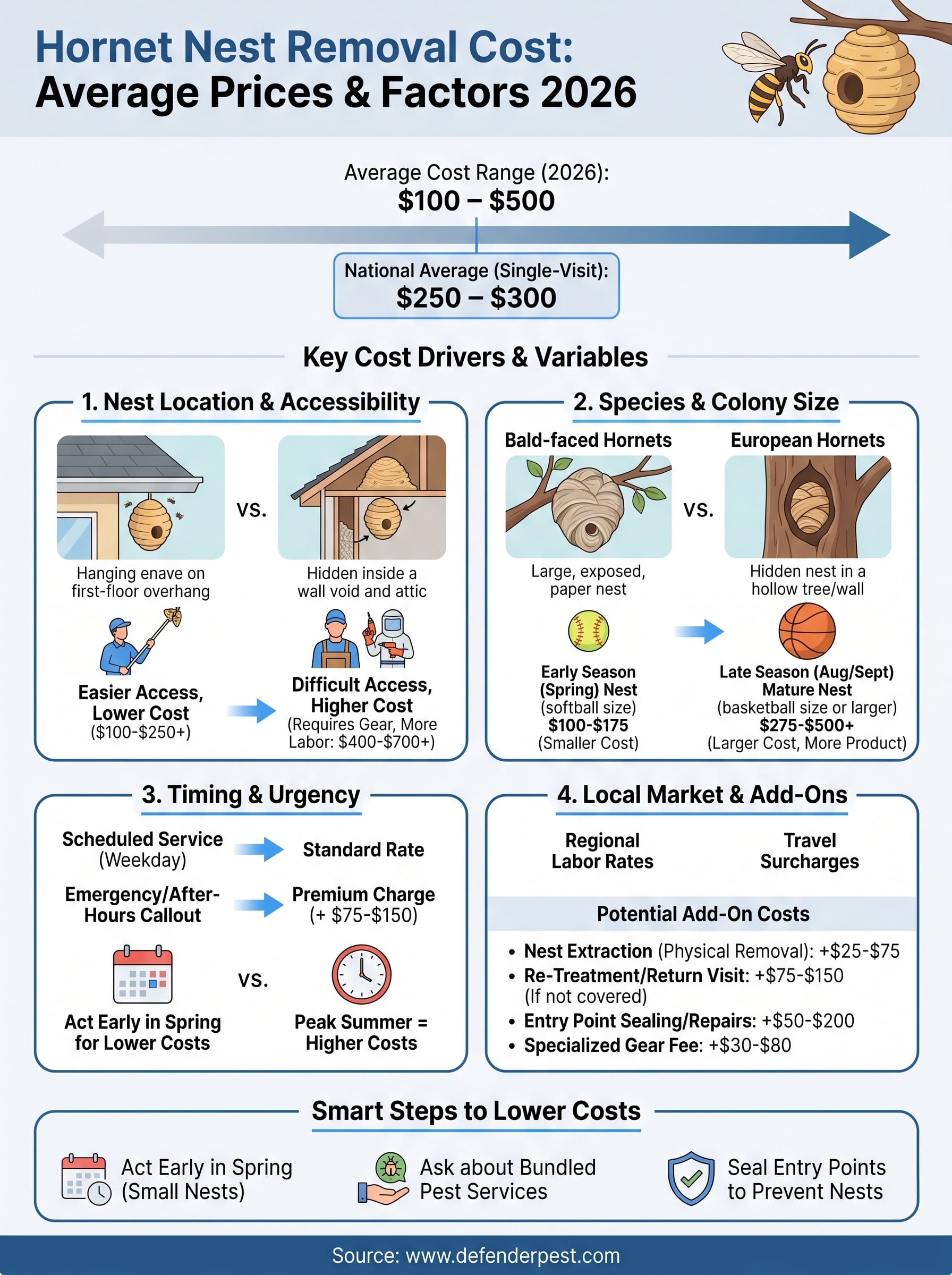
The problem is that pricing varies, a lot. A small, exposed nest on a first-floor overhang costs far less to remove than a large colony nested inside your attic. Nest location, species, size, and timing all play a role in the final bill. Without understanding these factors, it's hard to tell whether a quote is fair or inflated. Average costs in 2026 typically fall between $100 and $500, but certain situations push that number higher.
At Defender Termite & Pest Management, we've been handling pest problems across the Greater Sacramento area since 1999, hornets included. As a family-owned company with 24/7 emergency services , we know that stinging insect situations don't wait for business hours. This guide breaks down exactly what drives removal costs, what you should expect to pay, and how to evaluate quotes so you can make a confident, informed decision.
Why hornet nest removal costs vary so much
The hornet nest removal cost you receive will depend on several real-world variables that shift from job to job. A pest technician isn't guessing when they give you a number. They're assessing how difficult the job will be, what equipment it requires, how dangerous the nest location is, and whether one visit will be enough to solve the problem. Understanding the main cost drivers helps you identify fair pricing and ask the right questions before you agree to any quote.
Nest location and accessibility
Where the nest sits on your property is one of the biggest factors that shapes what you'll pay. A nest hanging from a low overhang or attached to a fence post is straightforward to treat. The technician can see it, approach it safely, and apply treatment without specialized tools or extra setup. Underground nests or nests buried inside wall voids are a different situation entirely. They require more time, more product, and sometimes follow-up visits to confirm the colony is fully gone.
Nests in attics, soffits, or inside structural gaps also demand full protective gear and extra labor hours to reach safely. In some cases, a technician may need to cut into building materials to access the nest cavity. The harder the location is to reach, the more time the job takes, and labor makes up a significant portion of any professional pest control bill.
Accessibility alone can double the price of a removal job when you compare a nest at eye level on an open overhang to one buried in a wall void or underground cavity.
Species and colony size
Not all hornets behave or nest the same way , and the species on your property affects both the difficulty and the price of removal. Bald-faced hornets build the large, paper-style nests you commonly see hanging from trees or eaves, which can grow to the size of a basketball or larger by late summer. European hornets tend to nest inside hollow trees, wall cavities, or beneath bark , which makes them harder to locate and more time-consuming to treat properly.
Colony size also determines how intensive the treatment needs to be. A small nest caught early in spring might require one quick application. A mature colony discovered in August can house several hundred to a few thousand hornets and may need a more aggressive treatment plan plus a return visit. More hornets means more risk for the technician and more product used, both of which raise your total cost.
Timing and urgency
When you call for service directly affects your price. Pest companies charge more for same-day or emergency callouts, especially outside normal business hours. If you find a nest near a doorway or a children's play area late on a weekend evening and need it handled right away, expect a premium on top of the standard service rate. Booking scheduled service during regular weekday hours is almost always the more affordable option.
Seasonality also plays a role. Hornet colonies grow through spring and hit peak size in late summer. A nest you find in May is typically small and easier to treat. Waiting until August means dealing with a larger, more aggressive colony, which can require multiple treatments and more protective measures . Calling early in the season often saves you both money and hassle.
Your local market and service area
Labor rates, licensing requirements, and operational costs differ by region and directly affect what pest companies charge. In higher cost-of-living areas, professional pest services typically run more expensive than in smaller or rural markets. Local competition also shapes pricing. Where multiple providers operate, you generally see more competitive rates because companies are actively vying for your business.
Your specific location within a service area can add charges too. If you live on the outer edge of a company's coverage zone, some providers add a travel or fuel surcharge to cover the extra distance. Always ask upfront whether your address falls within the standard service area or if any additional trip fees apply.
Average hornet nest removal cost in 2026
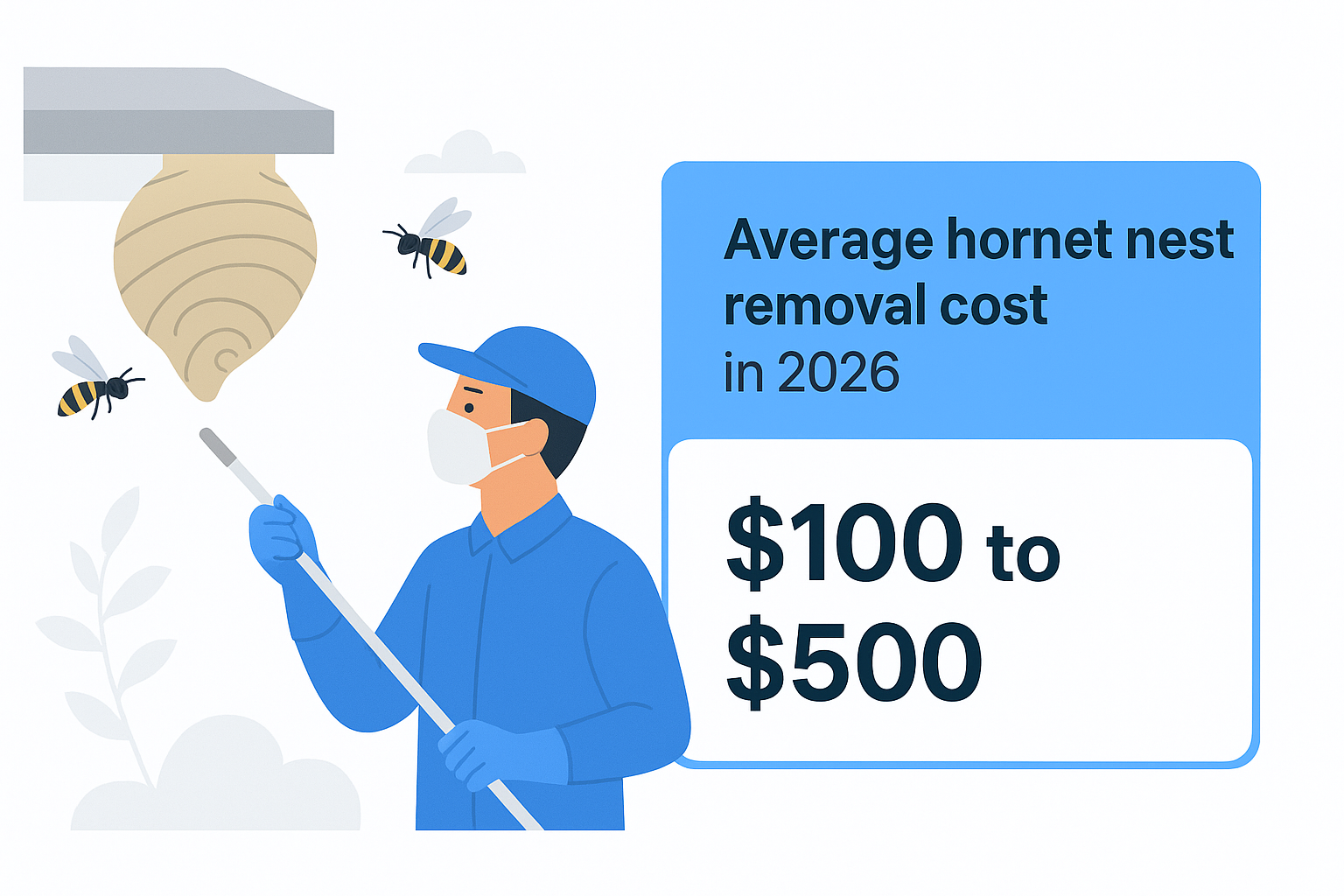
Most homeowners pay between $100 and $500 for professional hornet nest removal in 2026, with the national average landing around $250 to $300 for a single-visit treatment on an accessible nest of moderate size. That range covers the bulk of residential jobs, but it doesn't capture the full picture. Certain situations, like a large nest inside a wall void or an emergency same-day callout, can push your total closer to $700 or more . Knowing where typical jobs fall on that spectrum helps you spot a reasonable quote when you see one.
Typical price ranges by job type
The hornet nest removal cost shifts based on job complexity, and breaking it into tiers makes the pricing easier to understand at a glance.
| Job Type | Estimated Cost Range |
|---|---|
| Small exposed nest, first floor | $100 to $175 |
| Medium nest, standard access | $175 to $300 |
| Large nest, moderate difficulty | $300 to $450 |
| Nest in wall, attic, or underground | $400 to $700+ |
| Emergency or after-hours callout | Add $75 to $150 |
These figures reflect labor, materials, and a standard follow-up guarantee that most reputable companies include. If a provider quotes you significantly below these ranges, ask what's included, because low prices sometimes mean no return visit is covered if the colony survives the first treatment.
What a typical service visit includes
A standard professional removal visit covers an inspection to locate and assess the nest , application of an appropriate insecticide, and physical removal of the nest structure in most cases. Many companies include a 30-day warranty on their work, meaning they'll return at no extra charge if hornets return to the same site within that window.
Always confirm whether nest removal and a return-visit guarantee are included before you agree to a price, since some companies quote treatment only and charge separately for nest extraction.
Some providers bundle a perimeter treatment around the affected area to reduce the chance of a new colony establishing nearby. This add-on typically runs an extra $50 to $100 but can be worth it if you've had recurring nests in the same location. Ask whether the quote you receive covers treatment alone or treatment plus physical removal, since that distinction changes both the scope of the job and the final price you'll pay.
Cost by species and nest size
The species nesting on your property and how large their colony has grown both play a direct role in the hornet nest removal cost you'll face. Different hornet species build different types of nests in different locations, and each comes with its own treatment challenges. Understanding how species and size affect pricing helps you anticipate what a technician will find and why the quote they give you lands where it does.
Bald-faced hornets
Bald-faced hornets are responsible for the large, gray, papery nests many homeowners find hanging from tree branches, eaves, or fence posts. These nests are highly visible and relatively straightforward to access , which keeps labor costs on the lower end when you find them early in the season. However, bald-faced hornets are aggressive defenders of their colony, and a mature nest by mid-to-late summer can house 400 to 700 workers , requiring full protective equipment and careful handling from any technician. Removal of a mature bald-faced hornet nest typically runs between $150 and $350 depending on height and access.
A bald-faced hornet nest left untreated through summer can triple in size before fall, significantly increasing what you'll pay a professional to remove it.
European hornets
European hornets tend to nest in wall voids, hollow trees, attic spaces, and other concealed cavities , which makes them harder to locate and more expensive to treat than bald-faced hornets. Because you often cannot see the full nest without cutting into a surface, technicians spend more time on inspection and treatment , and in some cases need follow-up visits to confirm the colony is fully eliminated. Expect to pay between $250 and $600 or more for European hornet removal when the nest sits inside a structure.
How nest size changes your price
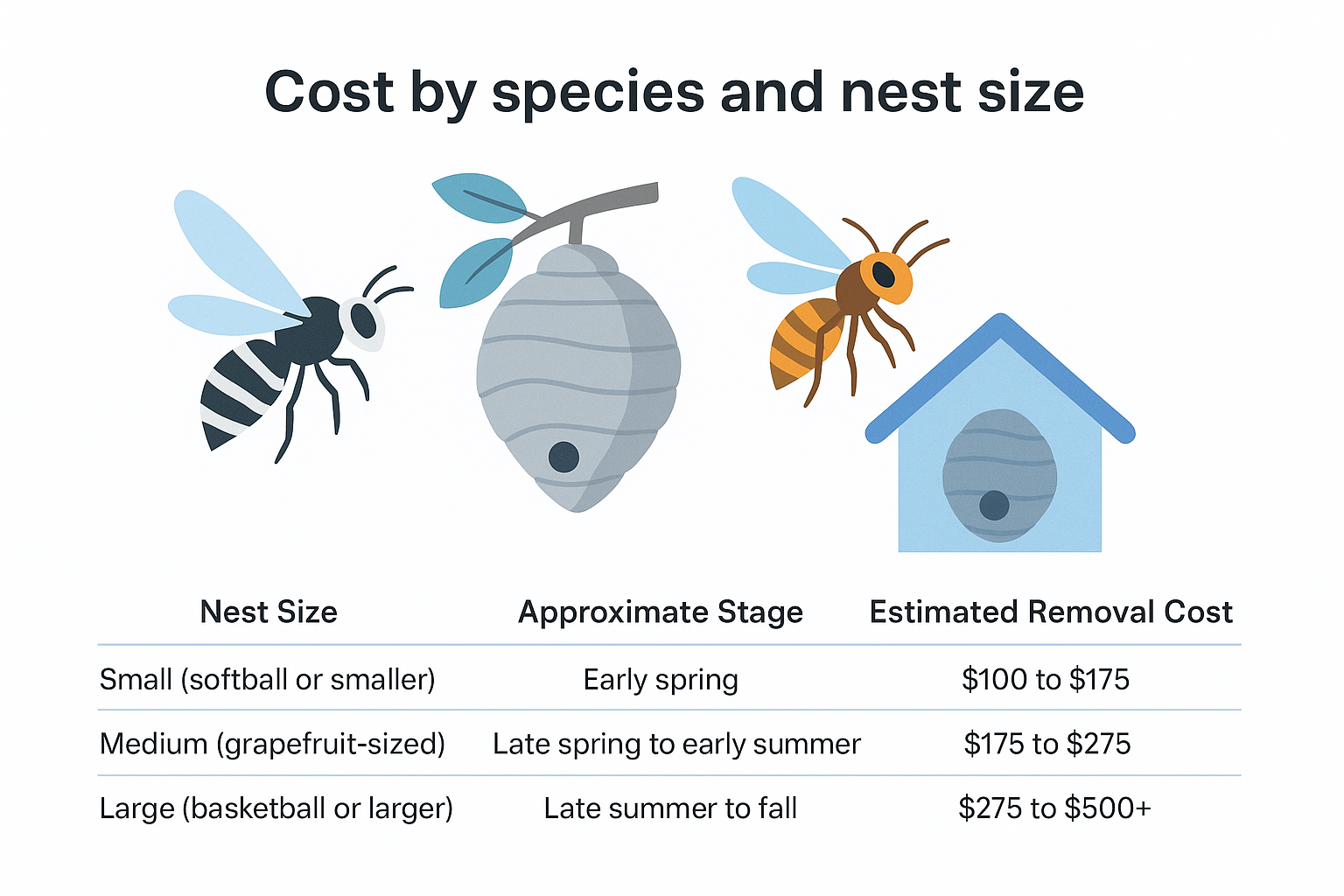
Nest size is closely tied to the time of year you discover the colony. Small nests found in early spring , when colonies are just getting established, cost the least to handle. A nest the size of a softball might run as little as $100 to $150 to remove. By late summer, that same species can produce a nest the size of a basketball or larger, and the labor, product, and risk all increase along with it .
| Nest Size | Approximate Stage | Estimated Removal Cost |
|---|---|---|
| Small (softball or smaller) | Early spring | $100 to $175 |
| Medium (grapefruit-sized) | Late spring to early summer | $175 to $275 |
| Large (basketball or larger) | Late summer to fall | $275 to $500+ |
Catching a nest while it's still small is the most effective way to control your removal costs. If you spot hornet activity near your home in spring , calling a professional quickly prevents the colony from reaching the size that pushes prices into the higher range.
Cost by nest location and accessibility
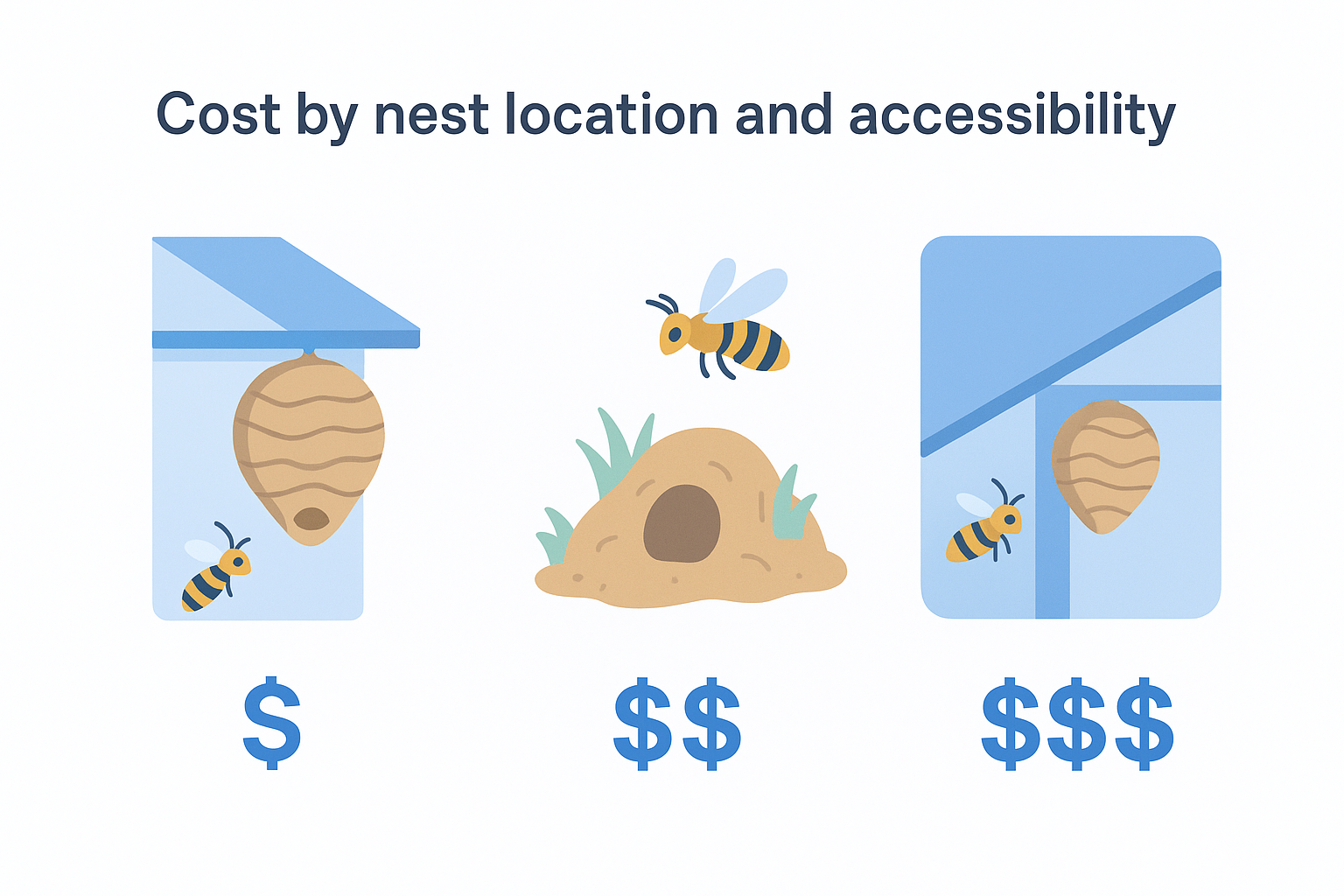
Where hornets build their nest determines how difficult your removal job will be, and difficulty translates directly into labor time and total hornet nest removal cost . A technician assessing your property will immediately factor in how safely they can reach the nest, whether specialized equipment is needed, and how many visits the job is likely to require . Location is often the single biggest variable separating a $150 job from a $600 one.
Exposed nests on eaves, fences, and trees
Nests in plain sight at reachable heights are the easiest and most affordable to remove. An exposed nest hanging from a fence post, a low branch, or a first-floor overhang gives the technician clear access without ladders, scaffolding, or cutting into any surface. Most of these jobs wrap up in a single visit, and treatment plus physical removal typically runs between $100 and $250.
When the nest sits higher up, such as under a second-story roofline or at the top of a tall tree, the price increases because the technician needs additional equipment and more time to work safely. Expect to add $50 to $100 to your base quote for anything above ten to twelve feet off the ground.
Underground nests
Underground hornet nests are consistently among the more expensive removal jobs because they require a different treatment approach entirely. You cannot simply spray and pull a ground-level nest the way you can with an aerial one. Technicians apply insecticide directly into the burrow entrance and may need to return to confirm the colony has been fully eliminated. Follow-up visits for underground nests are common , and many companies price this job at $300 to $500 or higher depending on colony size and the number of treatment rounds needed.
If you notice hornets repeatedly entering and exiting a hole in the ground, do not attempt to block the entrance yourself, since trapping the colony can force them to chew through nearby walls or flooring.
Wall voids, attics, and structural gaps
Nests hidden inside walls, soffits, attic spaces, or other enclosed structural areas represent the highest removal costs on the pricing scale. Accessing the nest often means locating entry points, drilling or cutting into surfaces, and applying treatment in a confined space that requires full protective gear. In some cases, your contractor may also need to seal entry points after treatment to prevent other insects from using the same cavity later.
Jobs involving structural access typically run between $400 and $700 or more , depending on how deeply the nest is embedded and whether any building materials need repair afterward.
Common add-on charges and hidden costs
The base quote you receive covers the core treatment, but several additional charges can appear on your final invoice if you don't ask the right questions upfront. Understanding these add-ons before you book service is the most practical way to keep the total hornet nest removal cost from exceeding your budget. Most reputable companies are transparent about extras if you ask directly, but they don't always volunteer that information during an initial phone estimate.
Return visit and re-treatment fees
Some pest companies include one follow-up visit in their standard price, while others treat it as a separate billable service. If the colony survives the first treatment , which can happen with large or deeply embedded nests, you could receive an additional invoice for $75 to $150 or more. Before you confirm any booking, ask directly whether the quote covers a guaranteed re-treatment if live hornets return to the same site within 30 days.
Confirming the warranty terms in writing before treatment starts protects you from unexpected charges if the first application doesn't fully eliminate the colony.
Nest extraction versus treatment only
Treatment and physical removal are not always the same service. Some companies apply insecticide to kill the colony but leave the empty nest structure in place, since it's inert once the hornets are gone. Removing the physical nest, which prevents other insects from reusing the cavity, often costs an extra $25 to $75 on top of treatment. This distinction matters most when the nest sits in a visible location like a porch ceiling or a fence line where you want it fully cleared.
Protective gear and equipment surcharges
Jobs in difficult locations sometimes require specialized protective suits, extension poles, or pressurized application equipment that standard visits don't need. A few companies itemize these as equipment fees on the invoice, adding $30 to $80 to your total. This charge is more common on jobs involving large mature colonies or nests in confined spaces where extra precaution is required. Ask whether equipment costs are bundled into the labor rate or billed separately.
Entry point sealing and structural repairs
Once a nest inside a wall void or soffit is treated, the access point that hornets used to enter the structure should be sealed to prevent future infestations. Some pest companies offer this service, but many do not, leaving it as a separate job for a contractor. Sealing entry points typically costs $50 to $200 depending on the number of gaps and the material involved, and skipping it often leads to repeat infestations the following season.
DIY vs professional removal cost and risk
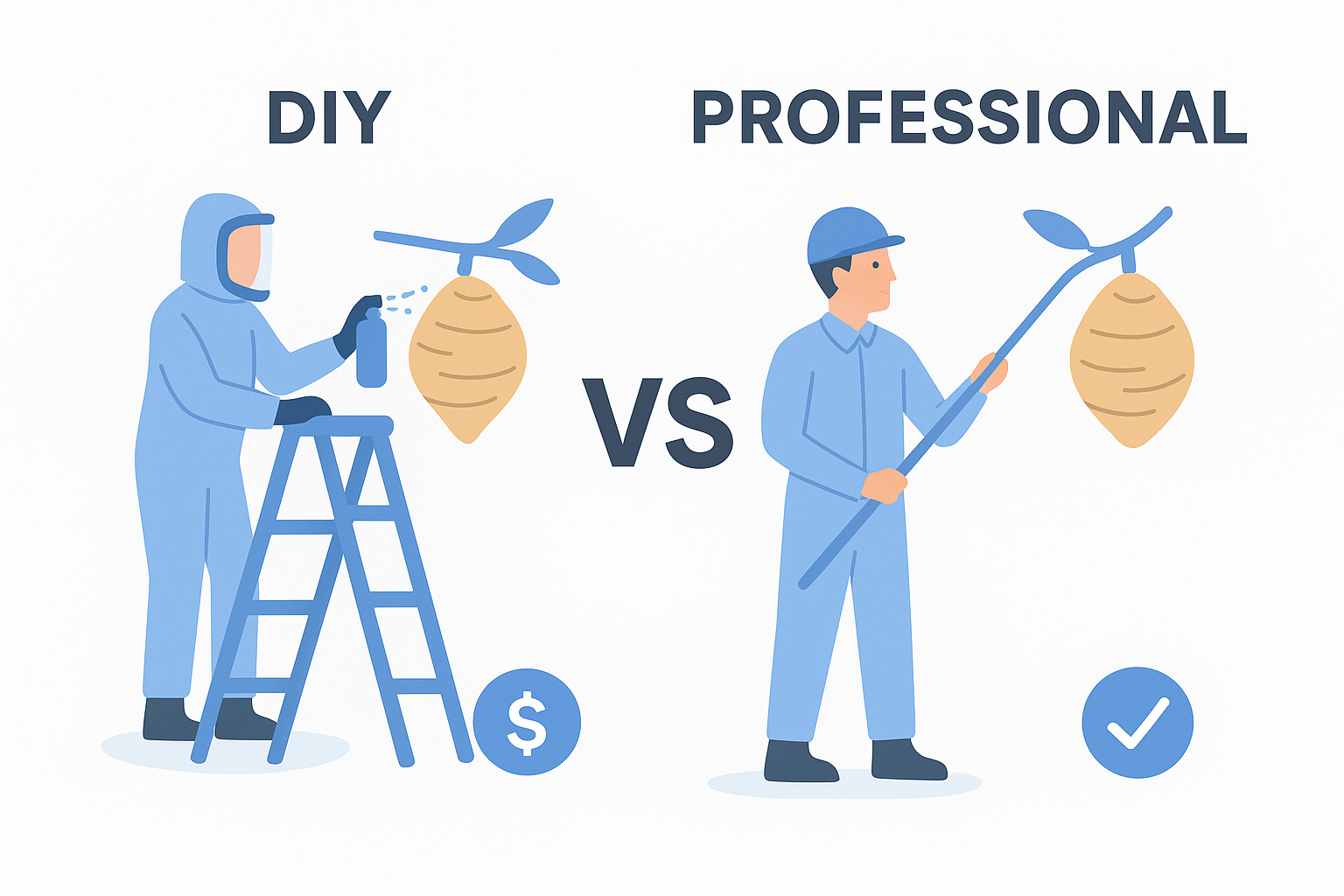
When you find a hornet nest on your property, the first thought many homeowners have is whether they can handle it themselves to avoid a professional bill. The upfront cost of DIY is lower , but the full picture includes product expenses, the risk of incomplete treatment, and the very real chance of multiple stings if things go wrong. Understanding what both options actually cost, in money and risk, gives you a clearer basis for making the right call.
What DIY removal actually costs
A do-it-yourself approach typically involves purchasing a commercial hornet spray, a full protective suit if you want adequate protection, and potentially a ladder for higher nests. A can of aerosol hornet killer runs between $8 and $20, but it's rarely enough product for a large or mature colony. Proper protective gear , including a full bee suit, gloves, and veil, adds another $40 to $100 if you don't already own it. For a single small, exposed nest, your total DIY spend might land around $30 to $60. For anything larger or harder to reach, costs climb and results become less predictable.
DIY treatment on a large or hidden nest frequently fails to reach the queen, leaving the colony intact and the problem unsolved until a professional steps in anyway.
If your first attempt doesn't work, you'll either repeat the process and spend more money on product, or call a professional after the fact, often paying more since the disturbed colony is now on high alert and harder to treat safely.
The real risks of handling it yourself
Hornet stings are painful and potentially dangerous , and the risk increases sharply when you disturb a colony without proper equipment or experience. A single hornet can sting multiple times, and a threatened colony can send dozens of workers at once. People with unknown or known venom allergies face a serious medical risk from an encounter like this, not just discomfort. Nests in confined spaces like attics or wall voids make the risk even higher since there's no quick exit if the colony mobilizes.
Why professional removal is worth the price
A licensed technician brings the right protective equipment, commercial-grade products, and direct experience treating colonies of all sizes and locations. They know how to approach a nest without triggering a mass defensive response, and they back their work with a return-visit guarantee if the treatment doesn't hold. When you weigh the hornet nest removal cost against the risk of a failed DIY attempt, a doctor visit, or a repeat infestation, professional service is the more cost-effective path for anything beyond the smallest accessible nest.
How to get accurate quotes and compare pros
Getting an accurate hornet nest removal cost estimate starts with giving each company the same information so you can compare quotes on equal footing. When you call or submit a request online, describe the nest's location, approximate size, and how long you've noticed activity . Companies that ask follow-up questions, like whether the nest is inside a structure or how high off the ground it sits, are doing proper assessments. Companies that quote you a flat number in the first thirty seconds without any questions are likely giving you a placeholder, not a real price.
What to ask every company before you book
Asking the right questions before you commit filters out low-quality providers quickly. Every company you contact should be able to answer these questions directly without hesitation, and if they can't, that tells you something important about how they operate.
- Is the quote for treatment only, or does it include physical nest removal?
- Does the price cover a return visit if hornets remain active after the first treatment?
- Are there any additional fees for equipment, protective gear, or travel to my address?
- Is your technician licensed to apply pesticides in this state?
- How many visits does this type of job typically require?
A company that can't clearly answer whether a follow-up visit is included in their price is one you should approach with caution before handing over payment.
How to compare quotes fairly
Once you have two or three written estimates , line them up against each other based on what each one actually covers rather than just the bottom-line number. A quote for $175 that includes treatment, physical removal, and a 30-day re-treatment guarantee is a better value than a $140 quote covering treatment only with no return-visit protection.
Check that each company holds a current pest control applicator license in your state. Licensing requirements for pesticide application vary by state, but your state's department of agriculture or department of pesticide regulation typically maintains a public lookup tool where you can verify a company's credentials before you book.
Red flags to watch for
Pressure to book immediately without a written estimate is one of the clearest warning signs that a company isn't operating transparently. Legitimate pest professionals give you time to review the scope of work in writing. Also watch for quotes that don't specify the species or nest location, since a vague estimate almost always leads to add-on charges once the technician arrives and sees what the job actually involves.
Ways to lower your cost and prevent new nests
Reducing the hornet nest removal cost you pay comes down to two things: acting before the problem grows and taking steps that discourage hornets from building on your property in the first place. Neither requires major effort or expense. A few practical habits in spring can prevent the late-summer removal bill that catches most homeowners off guard.
Act early in the season
Spring is when hornet queens emerge and begin building new nests , and the colony at that stage is a fraction of what it will be by August. A nest you spot in April or May is small, the colony is not yet aggressive, and a professional can remove it quickly. Waiting until summer means a larger colony, more defensive behavior, and a higher quote from every company you contact .
Booking a removal appointment in spring rather than late summer is one of the most reliable ways to cut your total removal cost in half.
If you notice hornet activity near your eaves, fence line, or tree canopy in early spring, that's your window. Calling a pest professional while the nest is still developing keeps the job simple and affordable.
Ask about bundling and seasonal deals
Many pest companies offer bundled service packages that combine hornet or stinging insect treatment with general perimeter pest control. If you're already dealing with other insects around your home, bundling both services into a single visit typically costs less than booking each one separately. Ask your provider directly whether a combined treatment package is available and what the price difference is compared to standalone removal.
Some companies also run early-season pricing or maintenance agreements that include annual inspection visits. These programs usually cost less per visit than one-off callouts and often include free return treatments if a new nest appears during the coverage period.
Seal entry points and remove attractants
Preventing hornets from nesting on your property requires removing the conditions that make it attractive to them. Seal gaps around soffits, vents, rooflines, and window frames before spring arrives, since these cavities are prime nesting spots for European hornets. Caulk and weatherstripping are inexpensive fixes that close off the entry points technicians spend the most time dealing with.
Hornets are also drawn to outdoor food sources like open garbage bins, fallen fruit, and uncovered pet food . Keeping lids secure, cleaning up food debris regularly, and removing rotting wood or debris piles from your yard reduces the likelihood that a queen will choose your property as a nesting site in the first place.
Hornet nest removal cost FAQs
These are the questions homeowners ask most often before booking a removal service. The answers below give you the straightforward information you need without having to dig through multiple sources.
How much does hornet nest removal cost on average?
Most homeowners pay between $150 and $400 for a standard professional removal in 2026. The exact hornet nest removal cost depends on the nest location, species, colony size, and whether your job requires follow-up visits. A small, accessible nest caught early in spring sits at the lower end of that range, while a large colony inside a wall void or attic can push the total past $600.
Does homeowners insurance cover hornet nest removal?
Standard homeowners insurance policies do not cover pest removal , including hornets. Insurance providers treat infestations as a maintenance issue rather than sudden accidental damage, which puts the full cost on you. Some policies cover structural repairs if a pest infestation causes documented property damage, but coverage for the removal itself is almost never included . Check your specific policy documents or contact your insurer directly if you're unsure what your plan covers.
Assuming your insurance will cover removal before verifying your policy terms can leave you with an unexpected out-of-pocket bill after the work is already done.
How long does a professional removal take?
Most single-visit jobs take between 30 minutes and two hours , depending on where the nest is located and how large the colony has grown. An exposed nest on a first-floor overhang is typically the fastest job. Nests inside structural voids take longer because accessing the treatment area and sealing entry points afterward adds time to the visit. Your technician should give you a realistic time estimate after assessing the nest location on-site.
Can I remove a hornet nest myself at night?
Hornets are less active after dark , which makes nighttime the safest window for any removal attempt. However, less active does not mean inactive, and disturbing the nest without the right protective equipment still puts you at serious risk. Professional technicians often prefer nighttime removal for exactly this reason, and if you're planning a DIY approach, taking that precaution is the bare minimum you should do. That said, a large or hidden nest is still better handled by a licensed professional regardless of the time of day.
What happens if you leave a hornet nest alone?
The colony will continue growing throughout the summer , reaching peak size by late August or early September. Hornets become more defensive as the colony grows, increasing the risk of stings for anyone who comes near the nest accidentally. Once cold weather arrives, the colony dies off naturally , but the empty nest can attract other insects and the same location may draw a new queen the following spring.
Quick recap and what to do next
The hornet nest removal cost you'll pay in 2026 depends on where the nest sits, how large the colony has grown, and whether the job requires follow-up treatment. Most homeowners pay between $150 and $400 for a standard removal, but nests inside walls, attics, or underground can push that number higher. Acting early in the season, asking the right questions before you book, and confirming what your quote actually covers are the three habits that keep costs predictable and manageable.
If you're seeing hornet activity around your Sacramento-area home or business right now, the best move is to get a professional assessment before the colony grows any larger. The sooner you call, the simpler and more affordable the job tends to be. Reach out to Defender Termite & Pest Management to request a quote and get the problem handled by an experienced local team.