What Is Integrated Pest Management? Steps & Principles
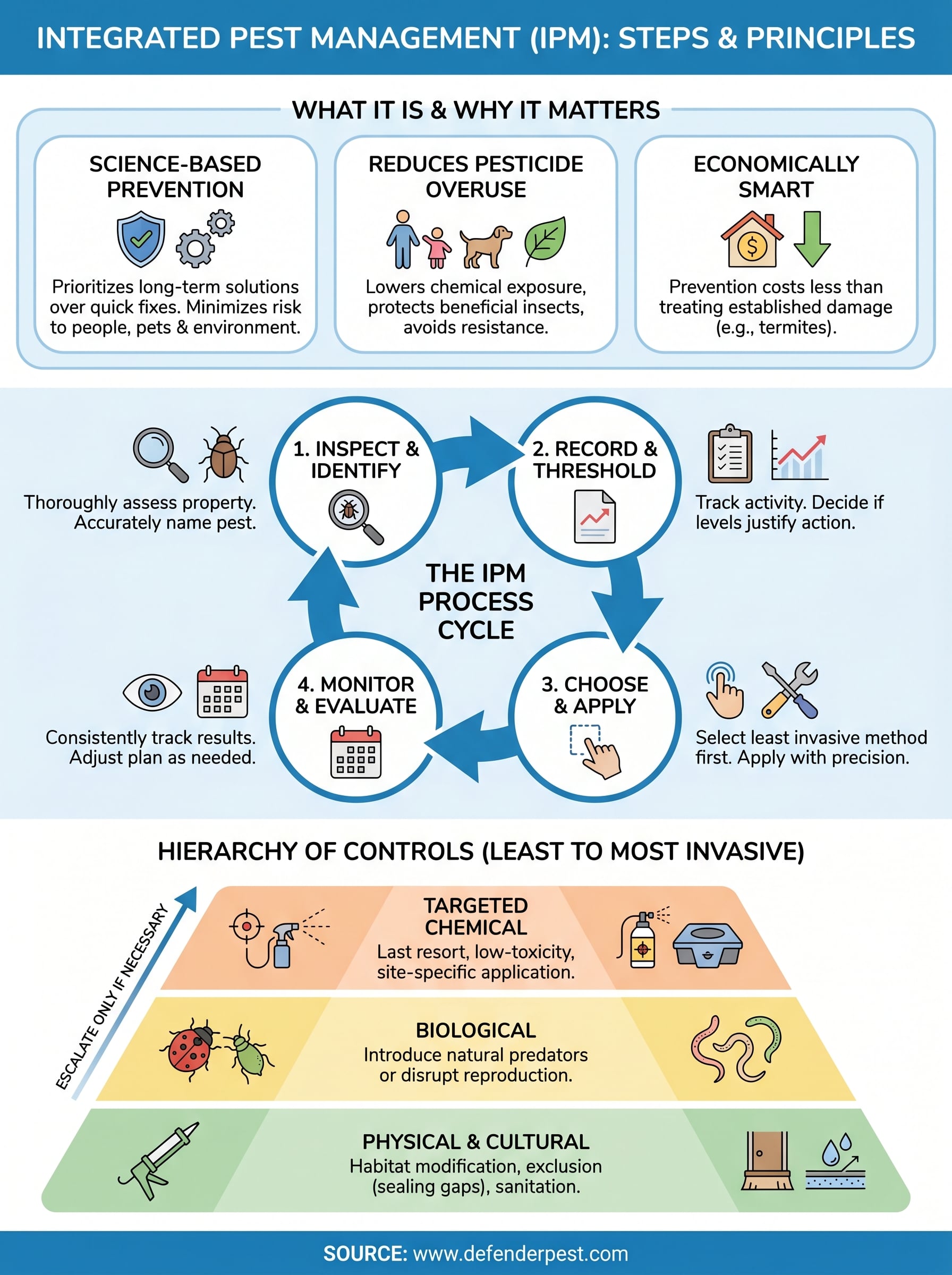
Most people call a pest control company when they already have a problem, ants in the kitchen, termites in the walls, rodents in the attic. But what is integrated pest management , and why does it matter before things get that bad? IPM is a structured, science-based approach that prioritizes long-term prevention over quick chemical fixes . It combines inspection, monitoring, habitat modification, and targeted treatments to control pests while minimizing risks to people, pets, and the environment.
At Defender Termite & Pest Management, we've applied IPM principles across Sacramento-area homes and businesses since 1999 . It's the framework behind how we assess every property, whether we're treating an active termite colony or setting up a recurring commercial pest program . Understanding IPM helps you make smarter decisions about protecting your property, so let's break down exactly how it works.
This guide covers the core principles of IPM, walks through each step in the process, and explains how this approach balances effective pest control with environmental responsibility . Whether you're a homeowner dealing with a current infestation or a property manager looking to stay ahead of problems, you'll walk away with a clear understanding of how IPM works , and why it's the standard we build every treatment plan around.
Why IPM matters for people and the environment
Standard pest control often means a technician sprays a chemical and leaves. That works short-term, but repeated, broad-spectrum pesticide applications create bigger problems over time. Pests develop chemical resistance , treatments become less effective, and your home gets soaked in products that weren't actually necessary. IPM changes that equation by asking why pests are present in the first place, and fixing the root cause instead of just treating the symptom.
The health case for reducing pesticide use
When chemicals get applied at full strength as the first response, the people most at risk are often the ones inside your building. Children, elderly adults, and pets are especially vulnerable to pesticide exposure because of their size and how much time they spend near treated surfaces. IPM reduces that risk by reserving chemical treatments for situations where other control methods have been evaluated first , and by using the lowest effective concentration when chemicals are genuinely needed.
The goal of IPM is not to eliminate pesticide use entirely, but to ensure that every chemical application is justified, targeted, and as low-risk as possible.
The environmental and economic argument
Beyond your household, broad pesticide overuse affects soil health, local water sources, and beneficial insects like bees and ground beetles that your yard actually depends on. Overuse also wipes out natural predators that keep smaller pest populations in check, which can make future infestations worse, not better.
From a cost standpoint, preventing an infestation costs significantly less than treating an established one. A termite colony that goes undetected for two years causes far more structural damage than one caught during a routine inspection, and the repair costs reflect that gap . IPM-based prevention keeps your long-term spending lower by addressing the conditions that attract pests before they settle in.
Core principles of integrated pest management
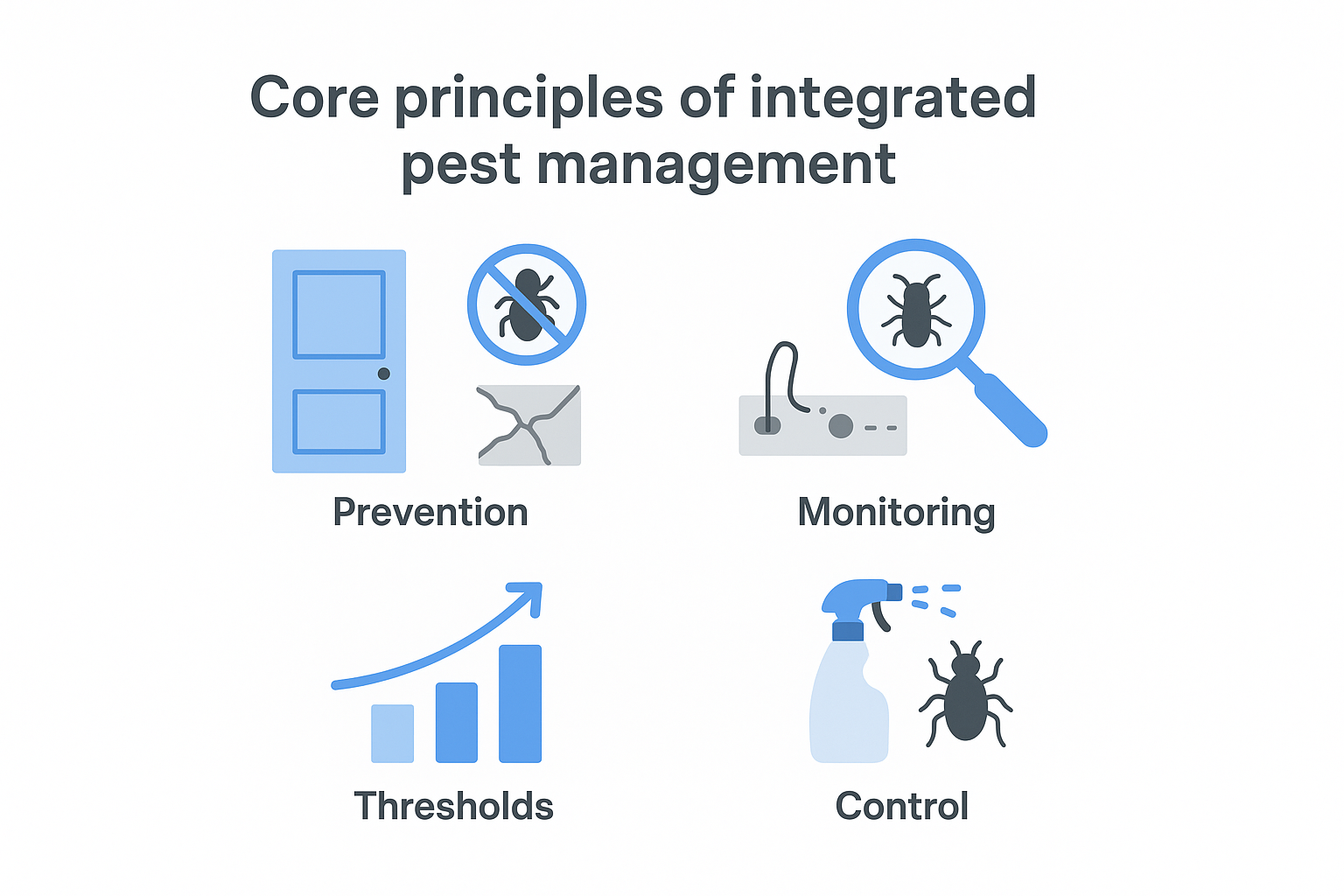
When you ask what is integrated pest management , the answer starts with four foundational principles: prevention, monitoring, thresholds, and control . These principles guide every decision a pest management professional makes, from whether to treat at all to which method fits the situation. Understanding them helps you see why IPM produces better long-term outcomes than blanket spraying on a fixed schedule.
Prevention and monitoring come first
IPM treats prevention as the primary line of defense , not an afterthought. That means sealing entry points, removing food and water sources, and eliminating harborage areas before pests establish a foothold. Consistent monitoring backs that up by tracking pest activity through traps, inspections, and observation so that any changes get caught early.
Correctly identifying a pest before taking action prevents wasted treatments and reduces unnecessary chemical exposure.
Action thresholds guide treatment decisions
Not every pest sighting requires a chemical response. IPM uses action thresholds to determine when a pest population has reached a level that actually causes harm. Below that threshold, non-chemical controls like physical barriers or habitat modifications handle the problem. Above it, targeted treatments get applied with precision rather than broadly across your entire property.
How to follow the IPM steps
IPM follows a repeatable sequence that you apply consistently across every visit , not just when something goes wrong. Understanding what is integrated pest management at a process level means knowing that each step feeds the next, and skipping one weakens the whole system.
Inspect, identify, and record
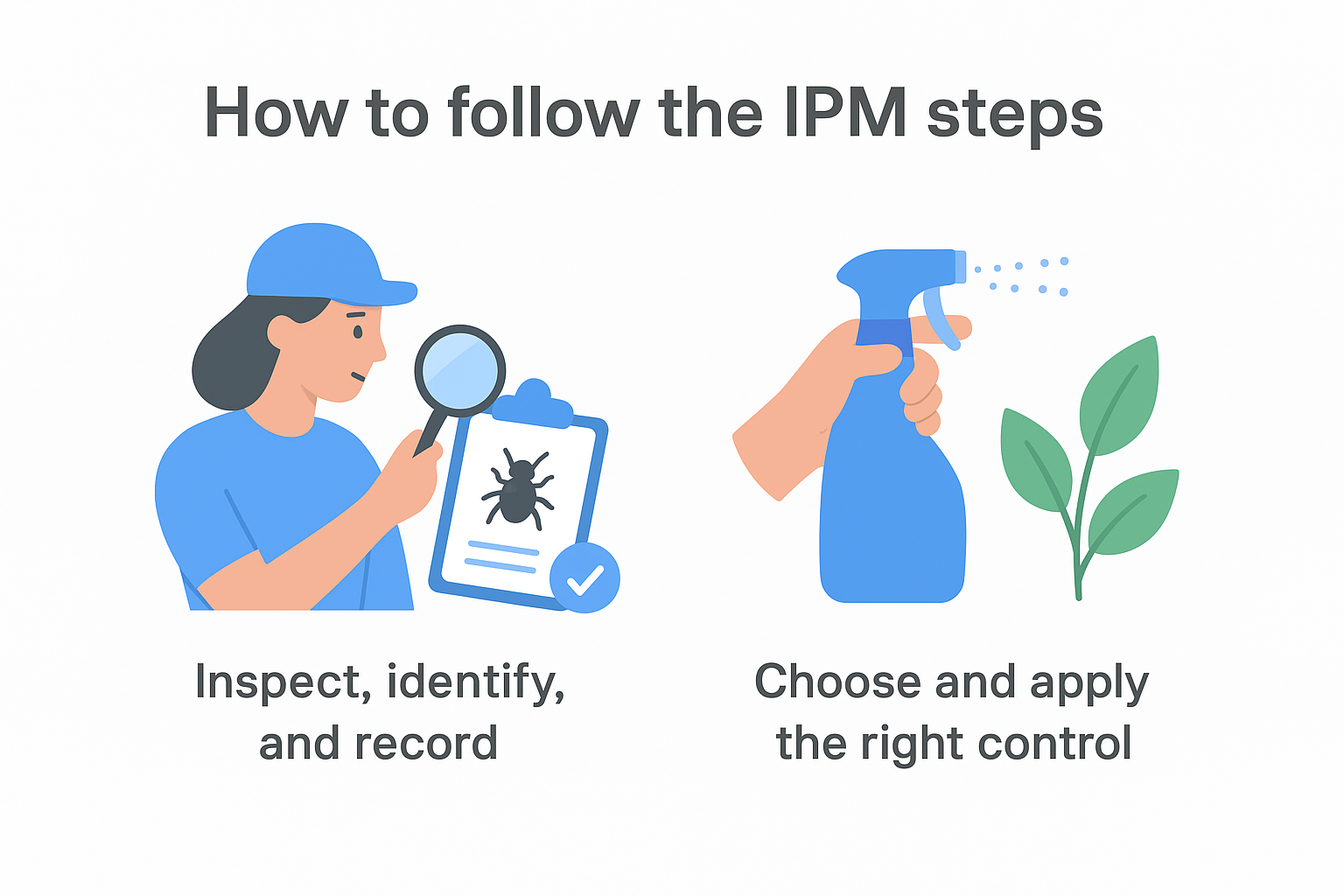
Your first step is a thorough inspection of the property, inside and out. You're looking for pest activity, entry points, moisture problems, and food sources. Once you identify the pest correctly, you compare your findings against the established action threshold for that species. That threshold tells you whether conditions justify intervention or whether monitoring alone is enough for now.
Accurate identification at this stage prevents wasted treatments and keeps your response proportionate to the actual problem.
Choose and apply the right control
With inspection data in hand, you select a control method that fits the situation, starting with the least disruptive option. Physical barriers, habitat changes, and biological controls come before chemical treatments. If a chemical is necessary, you apply it in a targeted, site-specific way rather than broadcasting it across the entire property. After treatment, you return to monitoring so the cycle continues.
IPM control methods and tools
One of the clearest ways to understand what is integrated pest management is to look at the tools it uses and the order in which it deploys them . IPM organizes control methods into a hierarchy , starting with the least invasive options and escalating only when those fall short. That sequence protects your property without defaulting to chemicals every time a pest appears.
Physical and biological controls
Physical controls include door sweeps, wire mesh, caulking, and moisture barriers, anything that blocks pest access or removes the conditions they need to survive. Biological controls work by introducing natural predators or disrupting pest reproduction, such as applying beneficial nematodes in a yard to target soil-dwelling insects or grubs.
These non-chemical methods often solve the problem entirely when combined with consistent habitat modification.
Chemical controls as a last step
When physical and biological methods are not enough, targeted pesticide applications move into the plan. IPM favors low-toxicity, site-specific products applied directly to affected zones rather than broadcast treatments across your whole property. Your technician selects the right formulation for the pest, the location, and the level of activity, which reduces unnecessary chemical exposure and slows pesticide resistance from developing in local pest populations over time.
IPM examples for homes, yards, and businesses
Understanding what is integrated pest management becomes clearer when you look at how it applies in real situations. The core principles stay consistent , but the specific tools and thresholds shift depending on whether you're protecting a kitchen, a lawn, or a commercial facility.
Inside your home
A standard residential IPM approach starts with sealing gaps around pipes, windows, and door frames to cut off entry points, then placing monitoring traps to track activity levels over time. If trap counts cross the action threshold for that pest, your technician applies a targeted treatment in affected zones only , not across the entire structure.
Fixing the entry point alongside any active infestation is what separates IPM from a standard spray-and-leave visit.
Yards and commercial properties
In a yard, IPM might mean adjusting irrigation schedules to reduce soil moisture that attracts grubs, then applying beneficial nematodes only if monitoring confirms a population above threshold. Your technician matches the response to what the data actually shows, rather than treating on a fixed calendar.
For a commercial property like a restaurant or warehouse , IPM combines scheduled inspections, door seals, waste management protocols, and documented treatment records to satisfy health and compliance requirements. Each environment uses the same structured process, adapted to its specific pests and conditions.
Final thoughts
Knowing what is integrated pest management gives you a practical framework for protecting your property without defaulting to unnecessary chemical treatments. IPM works because it addresses root causes , not just visible symptoms, and every step in the process builds on the last. Whether you're dealing with termites, rodents, or recurring household insects, a structured prevention-and-monitoring approach consistently outperforms reactive, one-size-fits-all spraying over the long term.
Putting these principles into practice takes the right knowledge and consistent follow-through. That's where working with an experienced local team makes a real difference. Since 1999, Defender Termite & Pest Management has built every treatment plan around science-based inspection and targeted controls that fit the specific conditions of your property. Your home or business deserves a pest management strategy that solves problems at the source , not just at the surface. Reach out to Defender Termite & Pest Management to schedule a professional assessment and get a plan built around your property's actual needs.