Ant Control: How To Get Rid Of Ants In The Lawn Fast
Ants are one of the most persistent yard invaders in the Sacramento area, and once they establish colonies in your turf, they multiply fast. You'll notice mounds popping up across your lawn , root systems getting disrupted, and bare patches forming where healthy grass used to be. If you're searching for how to get rid of ants in the lawn , you're not alone, it's one of the most common warm-season problems we hear about from homeowners throughout Northern California.
At Defender Termite & Pest Management, we've been helping Sacramento-area homeowners tackle pest problems since 1999. Our team handles ant infestations of all sizes , from a handful of mounds near the patio to full-blown colonies overtaking an entire yard. We know what works in our local climate and soil conditions because we've seen it firsthand, thousands of times over .
This guide walks you through proven DIY methods, natural solutions, and chemical treatments that actually eliminate ants from your lawn without destroying your grass. We'll cover when each approach makes sense , how to apply treatments safely, and how to tell when it's time to call a professional for backup.
Why ants show up in lawns and when to act
Ants don't invade lawns randomly. They show up because your yard offers food, moisture, and loose soil that makes it easy for them to build and expand colonies. In Sacramento's warm, dry summers, ant activity peaks between April and October , when soil temperatures rise and colonies push outward aggressively in search of resources. A single colony can house hundreds of thousands of workers, which means what looks like a minor mound issue can become a large infestation in a matter of weeks.
What draws ants to your yard
Your lawn becomes a target when certain conditions line up. Overwatering creates consistently moist soil that several ant species prefer for nesting, including pavement ants and odorous house ants. Aphid colonies on nearby plants are another major draw because ants actively farm aphids for the honeydew they produce, so a garden aphid problem often turns into a lawn ant problem fast.
If you spot ants trailing between your lawn and your home's foundation, treat both areas, not just one.
Thatch buildup, compacted soil, and patches of dying or stressed grass also attract ants because these spots are easier to excavate. Mounds push up and displace root systems, creating uneven ground that becomes a real hazard when you mow.
Signs you need to act now
Timing matters when you're figuring out how to get rid of ants in the lawn . Small, isolated mounds respond well to targeted treatment, but waiting gives colonies time to expand underground and branch outward. Act immediately if you notice any of these warning signs:
- More than three or four visible mounds within a 10-foot area
- Ant trails running between lawn soil and your home's foundation
- Dead grass rings or bare patches forming around mound sites
- Soil that feels soft and hollow underfoot in multiple spots
These signs point to an established, spreading colony , not a temporary or passing ant presence.
Step 1. Confirm the ant problem and find the nest
Knowing how to get rid of ants in the lawn effectively starts here, before you buy a single product. You need to confirm an active colony exists rather than a few foraging scouts passing through, because the right treatment depends entirely on locating where the nest actually sits.
How to locate the colony
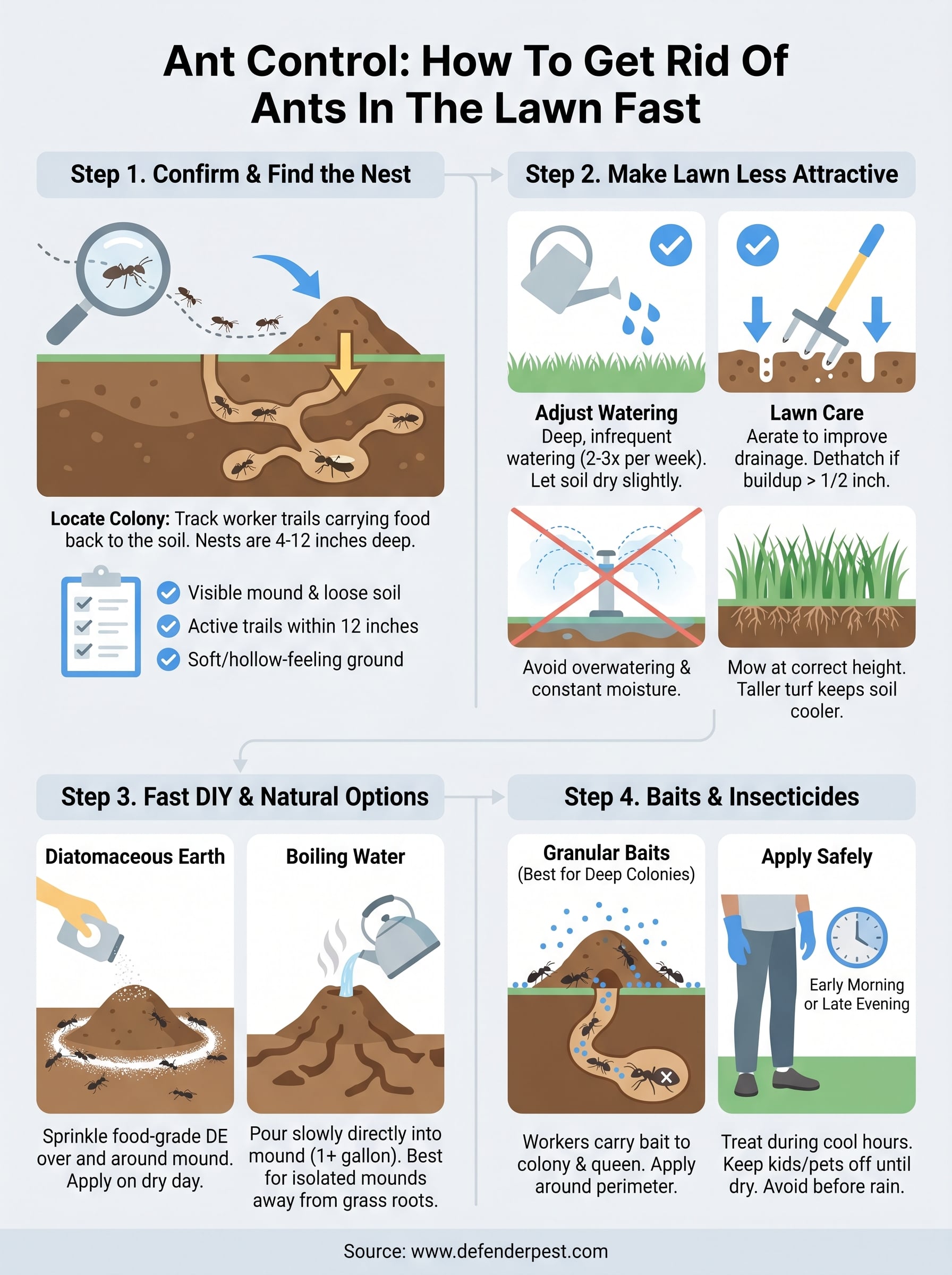
Track ant trails by watching where worker ants carry food back into the soil. Follow the trail slowly and mark the endpoint with a flag or stick. Most nests sit 4 to 12 inches below the surface , with the entrance mound as the only visible sign above ground. Press gently around mound edges with a stick; if the soil crumbles inward easily, the colony is active and ready to treat.
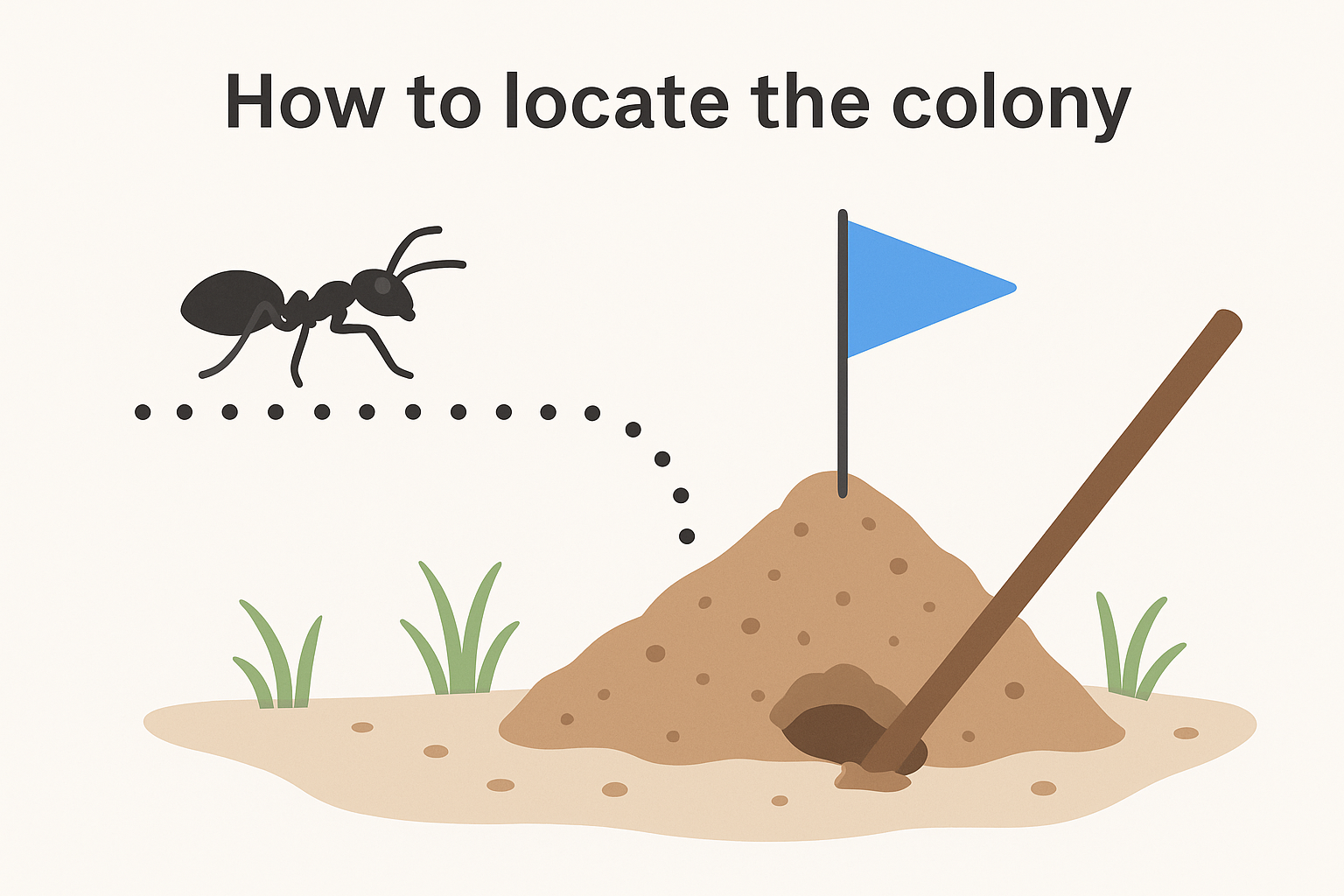
If you find multiple mounds close together, they may share one underground colony with several entry points, so treat all of them as one connected nest.
Use this quick checklist before you move to treatment:
- Visible mound with loose, disturbed soil
- Active ant trails within 12 inches of the mound
- Soft or hollow-feeling ground near the mound base
- Ants present during early morning or late afternoon, their peak foraging hours
Step 2. Make your lawn less attractive to ants
Killing existing ants only solves part of the problem. If you don't fix the conditions that drew them in, new colonies will settle in the same spots within weeks . Prevention is a core part of figuring out how to get rid of ants in the lawn for good, and the steps below take less time than you'd expect.
Adjust your watering and lawn care routine
Overwatering is the single most common reason ants nest in Sacramento-area lawns. Switch to deep, infrequent watering instead of light, daily irrigation. Water your lawn two to three times per week and let the soil dry slightly between sessions . This discourages moisture-dependent ant species without stressing your grass.
Mow at the correct height for your grass type; taller turf shades the soil, keeps it cooler, and reduces the loose, dry patches ants prefer for nesting.
Dethatching and aerating compacted soil removes the easy excavation sites colonies rely on. If your lawn has significant thatch buildup (more than half an inch), remove it in early spring or fall. Aerate once a year to firm up soft spots and improve drainage across the entire yard , both of which make it significantly harder for ants to establish new nests.
Step 3. Try fast, lawn-safe DIY and natural options
Once you've located the nest, several natural and DIY treatments can knock down active colonies quickly without harming your turf or nearby plants. These options are a smart first step when figuring out how to get rid of ants in the lawn , and most use materials available at any hardware or grocery store.
Natural treatments that work on active mounds
Diatomaceous earth (food-grade) is one of the most effective lawn-safe options available. Sprinkle a generous layer directly over the mound and in a 6-inch ring around it. The particles damage ant exoskeletons on contact, killing workers within 24 to 48 hours. Apply it on a dry day , since moisture reduces its effectiveness significantly.
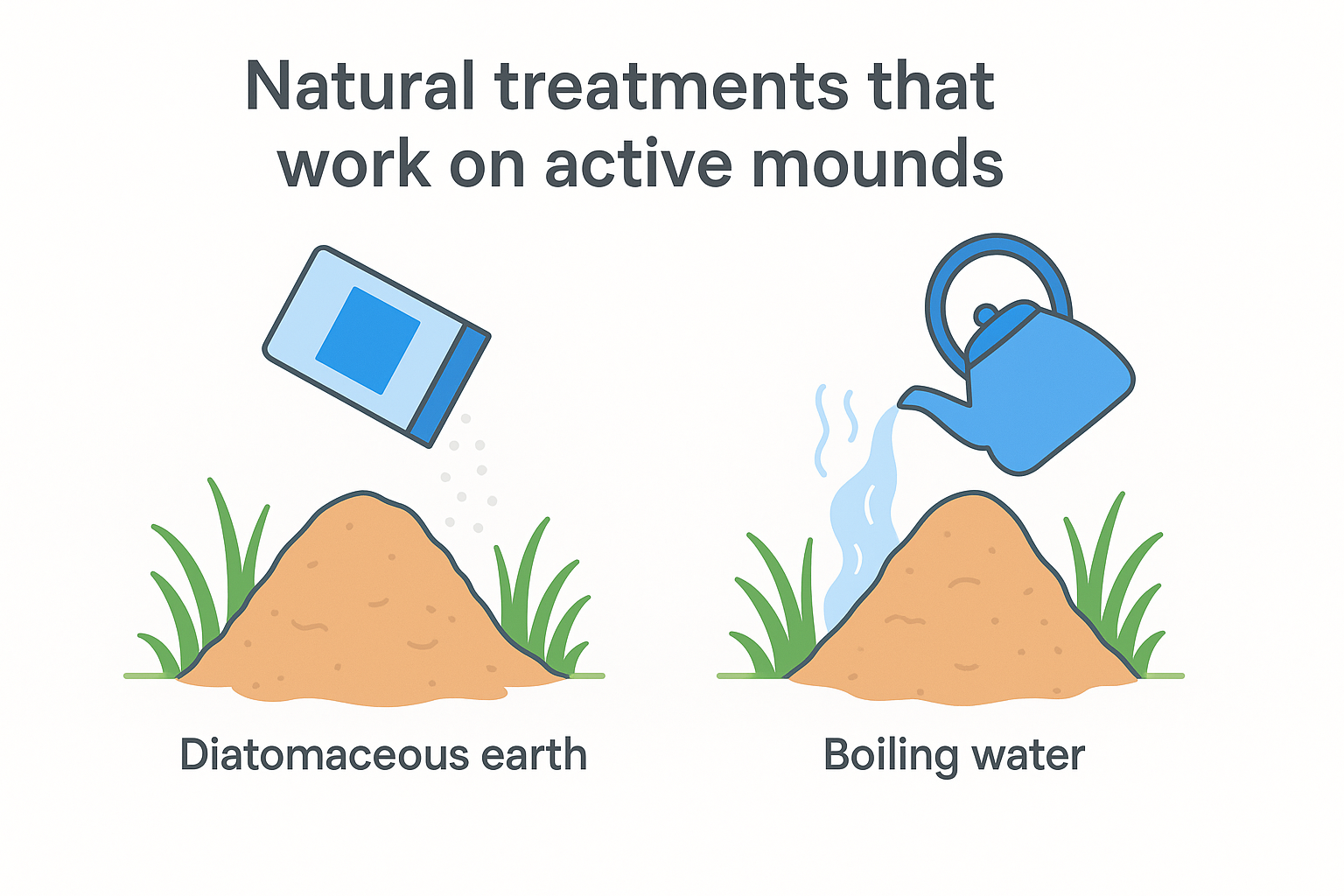
Reapply diatomaceous earth after any rainfall or irrigation to maintain consistent coverage over the mound.
Boiling water poured directly into the mound entrance kills ants on contact and collapses tunnel networks near the surface. Use at least one gallon per mound and pour slowly so it penetrates deep. This method works best for isolated mounds away from grass roots , since repeated applications can stress nearby turf.
Step 4. Use baits and insecticides the right way
When natural methods aren't enough, chemical baits and granular insecticides give you stronger control over active colonies. Learning how to get rid of ants in the lawn with chemicals works best when you target the right location rather than broadcasting treatment across the entire yard.
Choose the right product for the job
Granular baits work differently than contact sprays. Worker ants carry bait particles back to the colony , where the active ingredient spreads through the population and reaches the queen. This makes baits more effective for deep-rooted colonies that surface treatments can't fully penetrate. Contact insecticides kill on-contact but won't eliminate the queen, so colonies often rebuild within days.
Apply granular bait around the mound perimeter, not directly on top, so foraging workers pick it up and carry it underground naturally.
Use this quick reference to match product type to situation:
| Situation | Best Product Type |
|---|---|
| Active colony, queen unknown | Granular bait |
| Mound fully visible and shallow | Contact insecticide drench |
| Multiple spread-out mounds | Broadcast granular treatment |
Apply treatments safely
Timing your application matters. Treat mounds in early morning or late evening when most workers are inside the nest. Always wear gloves and closed-toe shoes during application, and follow these basic safety steps every time:
- Keep children and pets off treated areas until the product dries fully
- Avoid applying within 24 hours of expected rain
- Read the product label before mixing or spreading
If Ants Keep Coming Back
Repeated ant infestations usually point to an underlying condition that treatments alone can't fix . If you've treated the mounds, adjusted your watering schedule, and still see new colonies forming within a few weeks , the problem likely runs deeper than the surface. Large underground networks, nearby nesting sites outside your property, or a persistent aphid infestation can all keep resupplying your lawn with new ant activity regardless of what you apply.
At that point, knowing how to get rid of ants in the lawn on your own has real limits. Professional treatment reaches colony depths and spread patterns that store-bought products rarely touch. A trained technician can identify the specific ant species, map the colony network, and apply targeted treatments that cut off the infestation at its source rather than just the visible mounds.
If ants keep returning to your Sacramento-area lawn, contact Defender Termite & Pest Management for a professional assessment before the problem spreads further.