What Do Gopher Mounds Look Like? Shape, Plug, Vs Moles
You've noticed fresh mounds of dirt scattered across your yard, but you're not sure what's causing them. Knowing what do gopher mounds look like is the first step toward identifying the problem and protecting your lawn and landscaping. Gopher mounds have a distinct crescent or fan shape with a visible dirt plug on one side, details that separate them clearly from the mounds moles leave behind.
At Defender Termite & Pest Management, we've helped Sacramento-area homeowners deal with gopher damage since 1999. Misidentifying the pest behind those dirt piles leads to wasted time and the wrong treatment approach , which is why accurate identification matters before you take any action. Below, we'll walk you through the specific characteristics of gopher mounds , their shape, size, plug location, and how they compare to mole mounds, so you can figure out exactly what's digging up your property.
Why identifying gopher mounds matters
Before you spend money on traps, repellents, or professional services, you need to confirm which animal is actually living under your yard . Pocket gophers, moles, and voles all leave different signs above ground, and the treatment for each one is completely different . Starting with the wrong fix means the problem keeps growing while you lose both time and money.
Wrong identification leads to wasted treatments
Mole repellents do nothing to deter gophers, and gopher traps placed in mole runs will never catch the right animal. Treatment methods are pest-specific, so misidentifying what you're dealing with sends you down the wrong path from the start. Many homeowners apply store-bought products for weeks before realizing they've been targeting the wrong pest entirely.
If you aren't sure what do gopher mounds look like compared to mole mounds, you risk applying the wrong product while the real problem spreads further across your yard.
Accurate identification saves you money and gets you to a working solution faster, whether you handle it yourself or bring in a professional.
Gopher activity damages more than your lawn
Gophers don't just leave ugly dirt piles on the surface. Their tunnel systems can undermine irrigation lines, chew through buried cables, and destroy the root systems of trees, shrubs, and vegetable gardens. A single gopher can move dozens of pounds of soil per day, and their tunnels expand quickly once they've established a territory on your property.
Your landscaping and garden investments are at direct risk. Structural damage to underground irrigation and plant roots adds up faster than most homeowners expect. Catching the problem early, starting with accurate mound identification, gives you the best chance of limiting that damage before repairs become a serious expense.
What gopher mounds look like up close
A fresh gopher mound stands out clearly once you know what to look for. The soil is loose and granular , pushed up from below in an asymmetrical pattern that looks nothing like a natural dirt pile. Fresh mounds appear overnight , which is why homeowners are often surprised to find several new ones after a single evening of gopher activity.
Shape and size
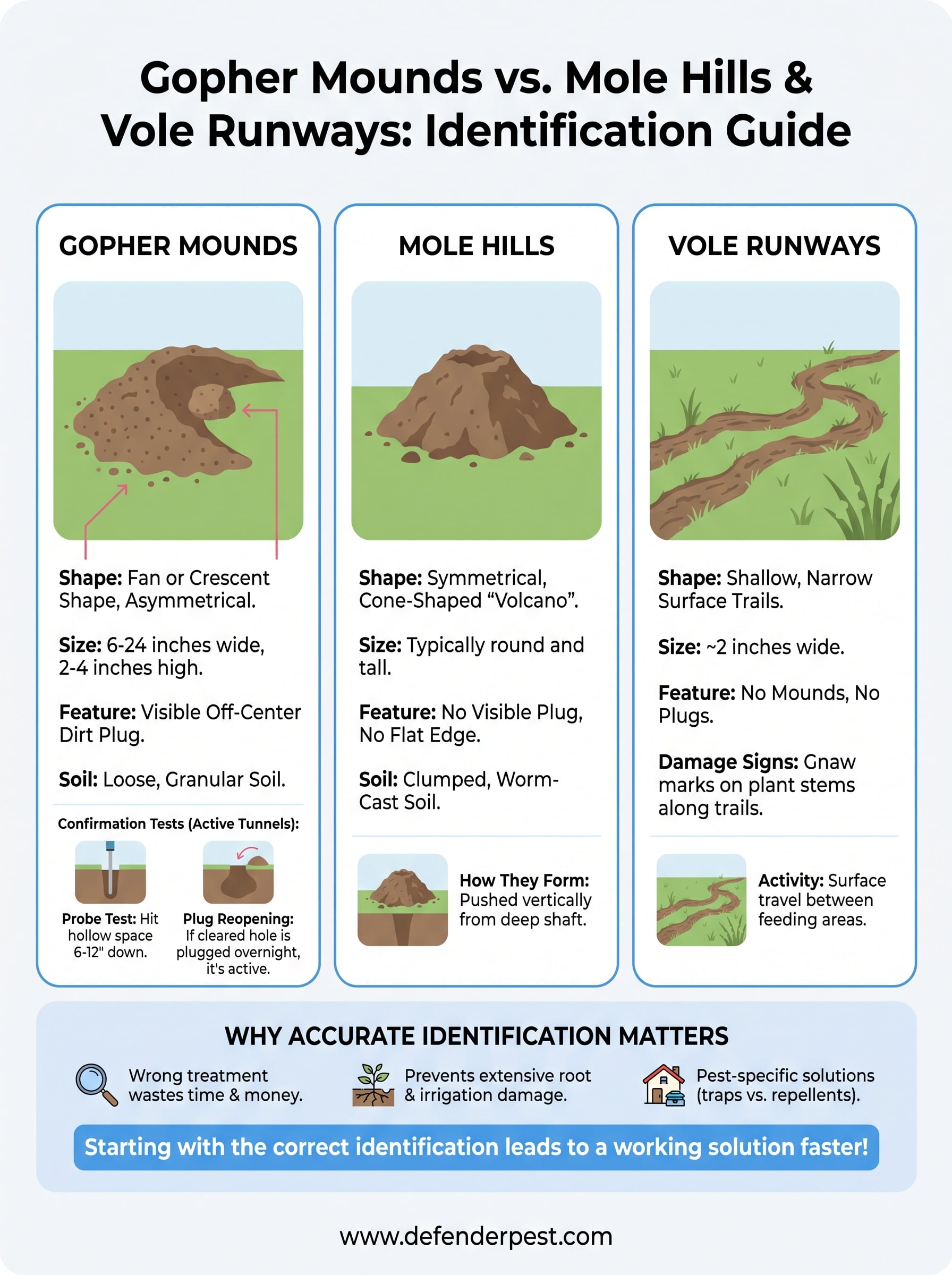
Gopher mounds are fan-shaped or crescent-shaped , never round or symmetrical like a small volcano. They typically range 6 to 24 inches in diameter and sit 2 to 4 inches high. The flat edge of the crescent faces the direction of the tunnel opening, while the rounded portion fans outward from there. Multiple mounds spaced a few feet apart in a rough line across your yard signal an active tunnel system running just below the surface.
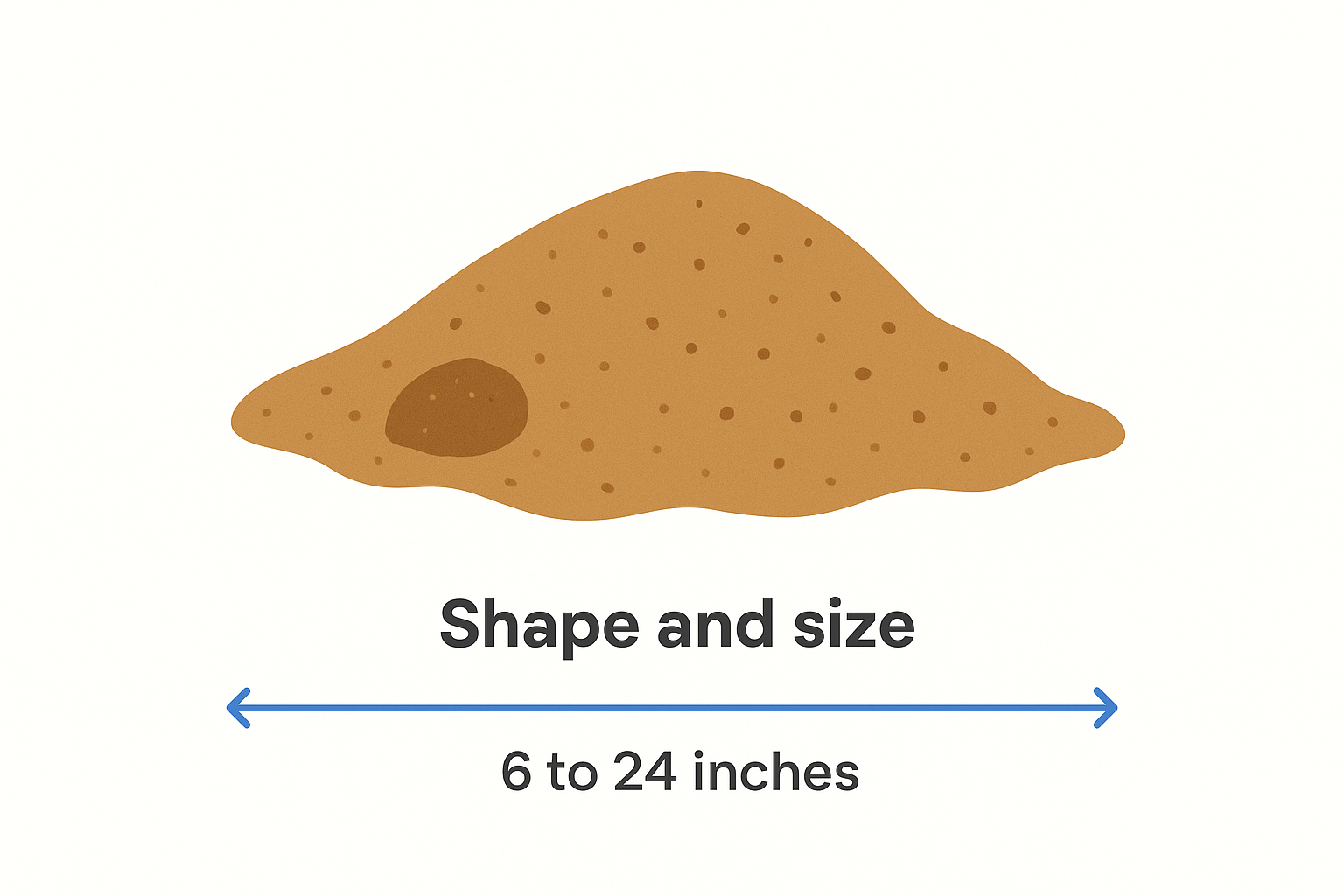
When asking what do gopher mounds look like, the asymmetric fan shape is the single most reliable visual feature that separates them from any other yard pest.
The dirt plug
Every gopher mound contains a small, compacted dirt plug that seals the lateral entrance hole. Gophers push loose soil out through a side tunnel, then backfill that opening to block predators from getting in.
The plug sits off-center on the flat side of the mound and feels noticeably firmer than the surrounding loose soil. Pressing the area gently with your foot immediately reveals this difference in density, confirming you are looking at a gopher mound and not a random dirt disturbance.
Gopher mounds vs mole hills and vole runways
Understanding what do gopher mounds look like is easier once you compare them to the signs moles and voles leave behind. Each pest produces a distinct surface pattern , and spotting those differences immediately points you toward the right treatment.
Mole hills look like volcanoes
Mole hills are nearly symmetrical and cone-shaped , pushed straight up through a vertical shaft rather than sideways through a lateral tunnel. Unlike a gopher mound, mole hills have no visible plug and no flat edge showing a tunnel exit.
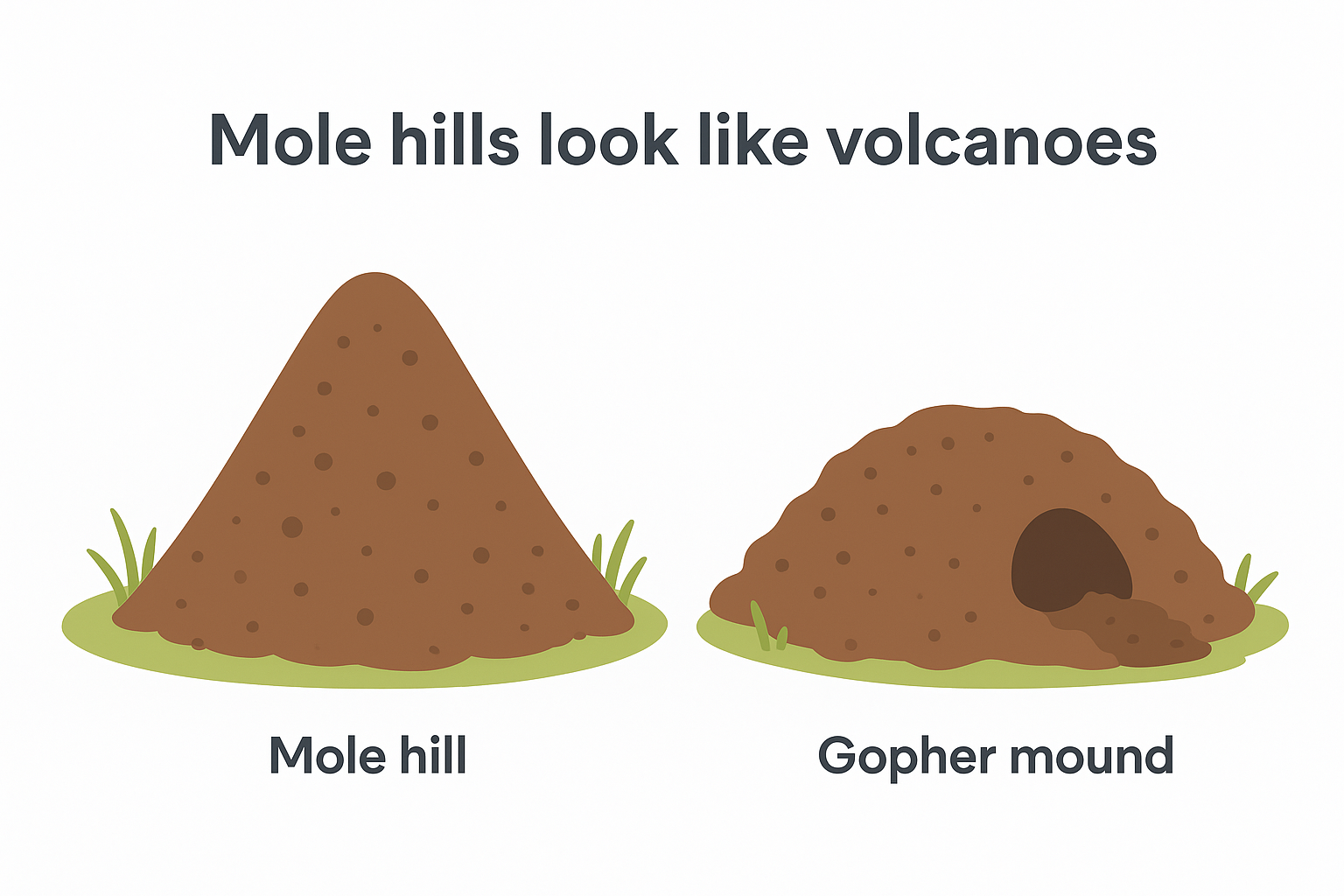
The cone shape of a mole hill versus the crescent shape of a gopher mound is the fastest visual test you can run before choosing any treatment.
Their soil texture also differs: mole hills contain clumped, worm-cast soil rather than the granular, loose dirt gophers deposit. That textural difference is easy to feel when you press the mound with your foot.
Vole runways stay on the surface
Voles leave shallow, narrow trails through grass at the soil surface rather than raised dirt mounds. These runways run roughly 2 inches wide and look like matted paths weaving between feeding areas.
You won't find any mounds, plugs, or crescent shapes with vole activity. Instead, gnaw marks on plant stems along those trails confirm voles are the pest you're dealing with.
How to confirm an active gopher tunnel
Spotting what do gopher mounds look like is step one, but you also need to verify the tunnel beneath is currently active before wasting time setting traps in an abandoned system. Fresh mounds that appeared within the last 24 to 48 hours are a strong signal, but two quick field tests will confirm whether a gopher is still working the area.
The probe test
Push a thin metal rod or screwdriver 6 to 12 inches into the ground about a foot from the mound's flat edge. Active tunnels create a sudden drop in resistance when you hit the hollow space below.
Mark that spot and probe in a straight line toward the mound to trace the tunnel's direction. Knowing the tunnel path before placing traps significantly improves your catch rate compared to guessing.
The plug reopening test
Dig out the dirt plug on the flat side of the mound and open the tunnel entrance by about an inch. Cover the hole loosely with a small board or flat rock to block light from entering, then check back within 24 hours . An active gopher will plug the opening again overnight.
If the hole stays open after 24 hours, the gopher has moved on and you should probe for newer mounds elsewhere on your property.
What to do after you find gopher mounds
Once you confirm what do gopher mounds look like and verify the tunnel is active, you have two practical paths forward: handle removal yourself or contact a pest management professional . Acting quickly limits how far the gopher expands its tunnel system before it causes more root damage across your yard.
Protect your plants and garden first
Your first priority is limiting ongoing root damage while you work on removal. Wire mesh or hardware cloth barriers around the base of trees, shrubs, and garden beds block gophers from chewing through roots before you eliminate the infestation. A few physical barriers worth installing right away:
- Line garden bed floors with 1/2-inch hardware cloth
- Wrap tree root zones with underground wire baskets
- Build raised beds with a solid wire bottom layer
Decide between DIY and professional removal
Trapping is the most reliable DIY method , using pincer-style traps placed directly inside the main tunnel near the dirt plug. Set two traps facing opposite directions and check them every 24 hours for activity.
If you find multiple active mounds spread across a large area, professional removal is significantly more effective than DIY trapping alone.
Professional pest control eliminates the guesswork around tunnel location, trap placement, and follow-up monitoring. A licensed technician can clear an active infestation faster and confirm the tunnel system is fully inactive before closing it off permanently.
Wrap-up and next steps
Knowing what do gopher mounds look like gives you a clear starting point before you invest any time or money in removal. The fan or crescent shape , the off-center dirt plug, and the granular loose soil are the three features that confirm a gopher is working beneath your yard rather than a mole or vole. Catching the problem early, verifying the tunnel is active, and acting quickly all reduce the root damage and landscaping costs that build up when gophers go unaddressed.
Your next step depends on the size of the infestation. Small, isolated mounds respond well to DIY trapping if you follow the placement steps covered above. Larger infestations with multiple active tunnels benefit from professional removal to make sure the entire system gets cleared. If you're dealing with a persistent gopher problem in the Sacramento area, contact Defender Termite & Pest Management to get a fast, accurate assessment.