How To Get Rid Of Chinch Bugs In Lawn And Prevent Damage
Chinch bugs are small, but the damage they leave behind is anything but. These tiny lawn pests feed by piercing grass blades and sucking out the moisture, leaving behind brown, dead patches that spread fast during hot Sacramento summers. If you've noticed irregular dry spots that don't recover with watering, you may already be dealing with an infestation, and figuring out how to get rid of chinch bugs in lawn areas before they destroy your turf becomes urgent.
The tricky part is that chinch bug damage often looks like drought stress or fungal disease, which means many homeowners waste time and money treating the wrong problem . By the time the real culprit is identified, significant sections of the lawn can already be gone. Acting quickly, and accurately, makes all the difference between a recoverable lawn and a full replacement .
In this guide, we'll walk you through how to identify chinch bugs, eliminate an active infestation using both chemical and natural methods, and prevent them from coming back. At Defender Termite & Pest Management, we've helped homeowners across the Greater Sacramento area protect their properties from destructive pests since 1999 , and lawn-damaging insects are no exception. Whether you handle this yourself or need professional backup , you'll have a clear plan by the end of this article.
What chinch bugs are and what damage looks like
Chinch bugs ( Blissus leucopterus ) are tiny lawn-feeding insects that measure roughly 1/6 of an inch as adults. Despite their size, they can destroy large sections of turf in a matter of weeks during hot, dry weather. In the Sacramento area, they're most active between late spring and early fall, when temperatures climb and your lawn is already dealing with heat stress.
What chinch bugs look like up close
Adult chinch bugs have black bodies with white wing patches , which makes them visible against soil if you look closely. Nymphs start out reddish-orange with a white band across their back and darken as they mature. Both stages feed by piercing grass blades and injecting a toxin that blocks the plant's ability to move water and nutrients, which is what causes the dead, dry appearance across your turf.
| Life Stage | Color | Approximate Size |
|---|---|---|
| Egg | White/cream | ~0.9 mm |
| Early nymph | Reddish-orange with white band | 1-2 mm |
| Late nymph | Dark brown | 3-4 mm |
| Adult | Black with white wings | 4-5 mm |
What the damage looks like in your lawn
Chinch bug damage appears as irregular yellow or brown patches that spread outward from a central point. These patches show up first in sunny, dry areas, especially along sidewalks, driveways, and slopes where heat builds up. Understanding how to get rid of chinch bugs in lawn areas starts with recognizing one key sign: these patches will not green up after watering, which tells you the problem is a pest, not drought.
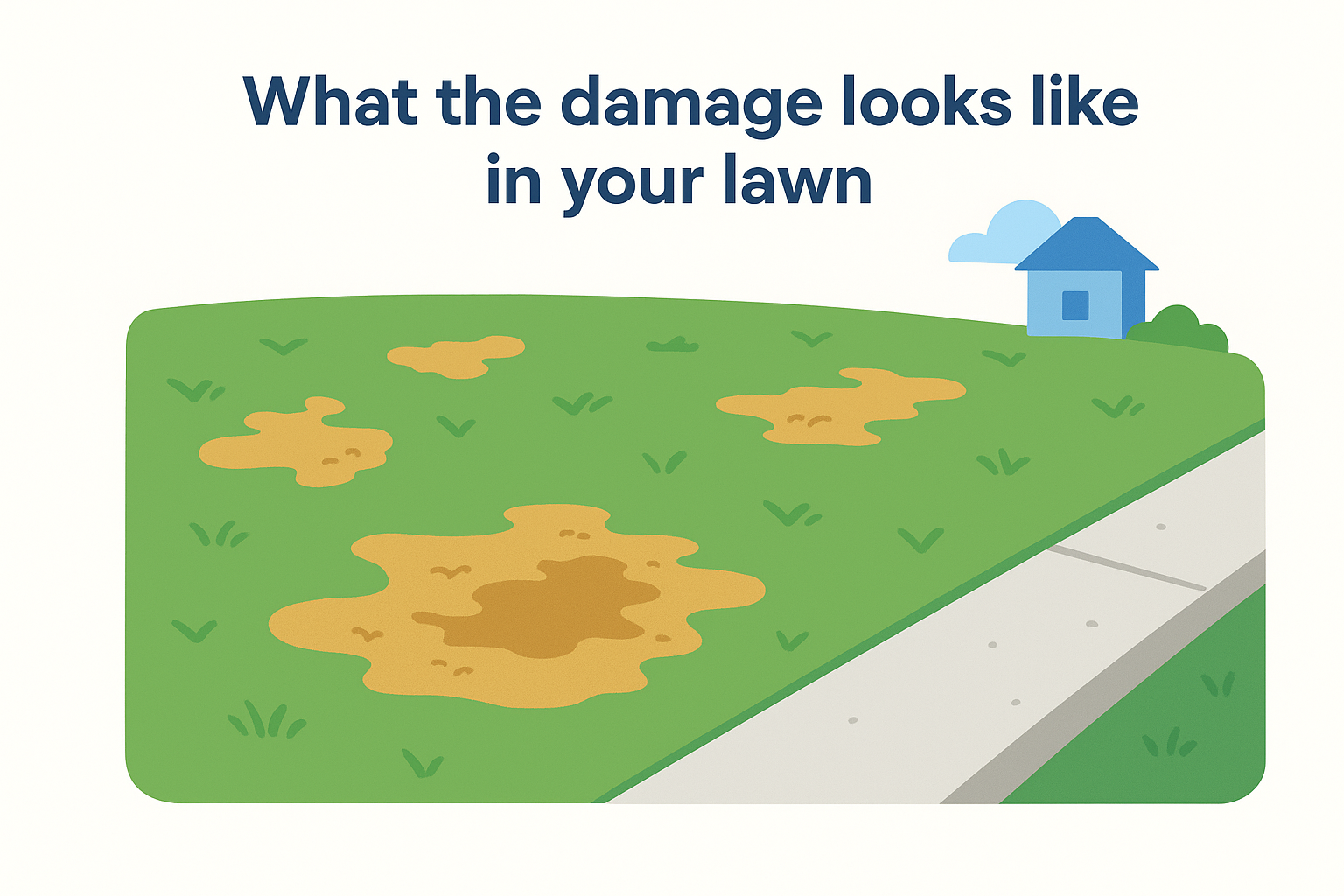
If your brown patches keep expanding despite regular irrigation, stop adding more water and start looking for insects at the soil level.
Homeowners frequently confuse this damage with grub activity or fungal disease , both of which need completely different treatments. Grub-damaged turf pulls up like loose carpet because the roots are eaten away, while chinch bug-damaged grass stays rooted but feels dry and brittle underfoot. Catching that difference early lets you act before the infestation spreads into your healthy grass.
Step 1. Confirm chinch bugs with quick tests
Before you spend money on treatments, you need to verify that chinch bugs are actually the problem . Two quick field tests let you confirm an infestation in under 15 minutes, giving you the confidence to move forward with the right fix for how to get rid of chinch bugs in lawn areas without wasting effort on the wrong solution.
The float test
Cut both ends off a large metal can, such as a standard coffee can, and press it several inches into the soil at the edge of a damaged patch. Fill the can with water and keep topping it off for about five minutes. Chinch bugs float, so if you have them, you'll see small black-and-white insects rising to the surface within a few minutes. Finding more than 20 bugs per square foot confirms an active infestation large enough to treat.
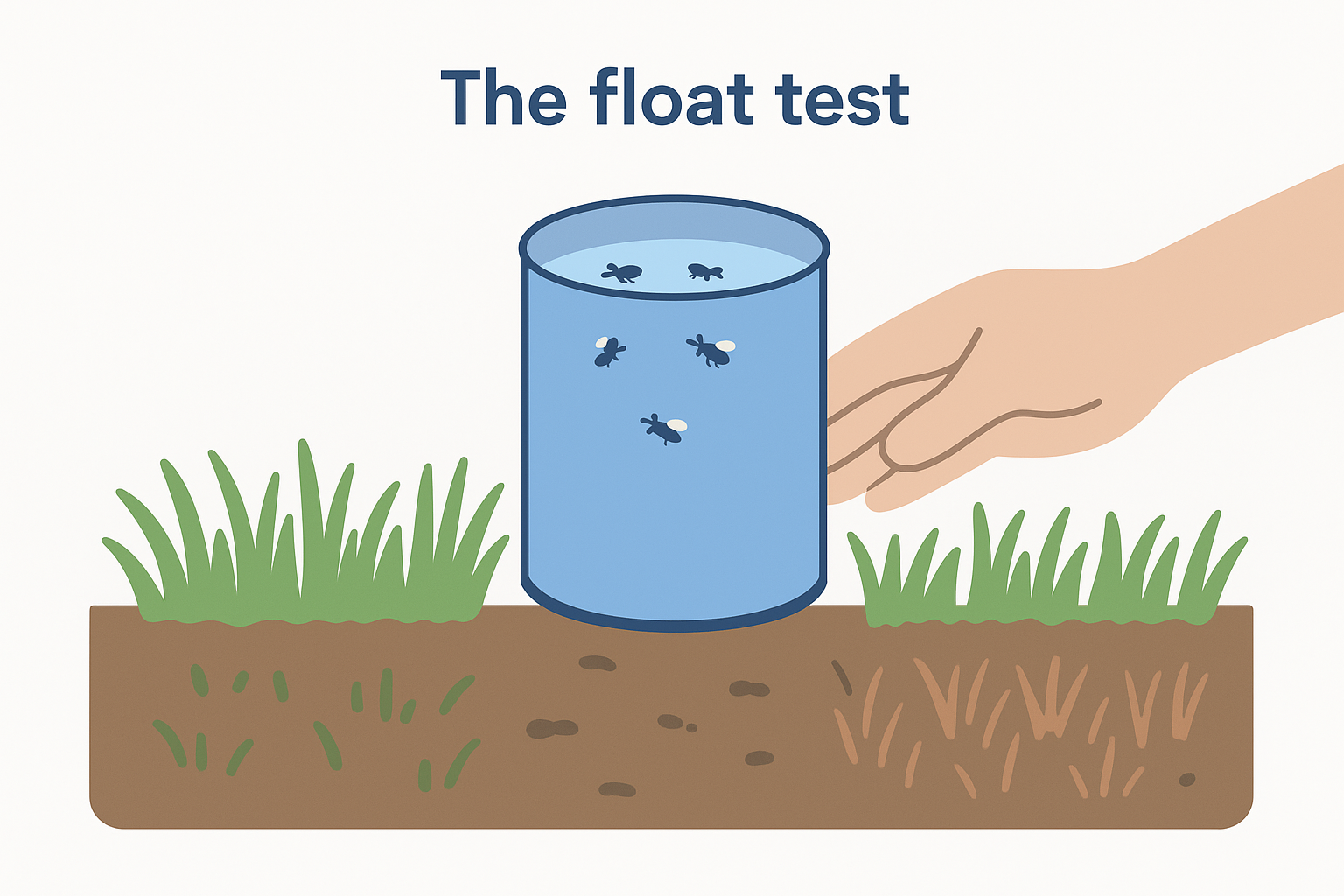
If two float tests in separate spots turn up nothing, shift your attention to grub damage or drought stress as the likely cause.
The part-the-grass test
Crouch down at the border between healthy green turf and the brown damaged zone , which is exactly where chinch bugs are actively feeding. Pull the grass blades apart near the soil surface and watch for movement. You're looking for tiny dark insects scurrying away from the light , along with smaller reddish-orange nymphs. This test requires no tools, just a bright day and a few minutes of close observation.
Step 2. Fix lawn conditions that help chinch bugs
Chinch bugs thrive in stressed, neglected lawns , so eliminating an active infestation takes more than just spraying. If you don't address the conditions that attract them, new populations will return quickly. Correcting these issues also makes your overall plan for how to get rid of chinch bugs in lawn areas more effective and longer lasting.
Remove thatch buildup
Thatch is the layer of dead stems and organic debris that builds up between the soil surface and your green turf. When it exceeds half an inch, it creates a warm, sheltered zone where chinch bugs hide and reproduce. Use a dethatching rake or a power dethatcher to break up and remove this layer, focusing on areas where brown patches appeared. Bag the debris and remove it from your lawn entirely rather than letting it decompose in place.
A thatch layer thicker than half an inch is one of the clearest signs your lawn is set up for a reinfestation.
Adjust your watering and mowing habits
Your watering schedule directly affects how attractive your lawn surface is to chinch bugs. Deep, infrequent watering pushes moisture to the root zone and reduces the surface heat stress these pests exploit. Apply these three habit changes starting this week:
- Water deeply two to three times per week instead of lightly every day
- Mow at the highest blade setting your grass type allows to shade the soil surface
- Avoid high-nitrogen fertilizer during an active infestation, which drives soft growth that chinch bugs prefer
Step 3. Use low-tox options for small infestations
For small infestations caught early, low-toxicity treatments can reduce chinch bug populations without reaching for heavy pesticides. If your float test turned up fewer than 20 bugs per square foot , these methods are a reasonable first step before escalating to chemical controls.
Dish soap drench
One of the simplest ways to address how to get rid of chinch bugs in lawn areas on a small scale is a soap drench . Mix two tablespoons of plain dish soap per gallon of water and apply it evenly over the affected area using a watering can or hose-end sprayer. The soap breaks down the insects' protective coating and causes them to surface, where you can remove them manually or let them dry out. Treat in the early morning or evening to reduce evaporation and avoid burning your grass.
Avoid dish soaps with added degreasers or antibacterial agents, as these can stress your turf further.
Diatomaceous earth
Food-grade diatomaceous earth (DE) is a natural powder made from fossilized algae that damages chinch bugs' exoskeletons on contact. Dust a thin, even layer over the infested zone and the surrounding transition area between dead and healthy grass. Reapply after rain or heavy irrigation, since moisture reduces its effectiveness significantly. DE works slowly, so give it five to seven days before evaluating results and deciding whether you need a stronger approach.
Step 4. Treat, prevent, and call a pro if needed
When low-tox methods aren't enough, chemical insecticides give you a faster, more reliable result for moderate to severe chinch bug populations. Knowing how to get rid of chinch bugs in lawn areas at this stage means choosing the right product and applying it correctly so you don't waste effort or create resistance.
Choose the right insecticide
Bifenthrin and carbaryl are two widely available active ingredients that work well against chinch bugs. Apply a granular or liquid formulation directly to the infested zone and a 5-foot buffer around it. Water the lawn lightly after a granular application to activate the product and push it to the soil surface where chinch bugs live. Follow the label exactly, since applying too little won't clear the infestation and applying too much can damage your turf and harm beneficial insects.
Always treat in the early morning or evening to reduce evaporation and protect pollinators from direct contact.
When to call a professional
Some infestations grow too large or too fast for DIY methods to handle effectively. Call a licensed pest control professional if damage continues spreading after two full treatment cycles or if more than 30 percent of your lawn is affected. A professional applies targeted, appropriately dosed treatments and can also identify whether a secondary pest is compounding the problem, which saves you time and protects what's left of your lawn.
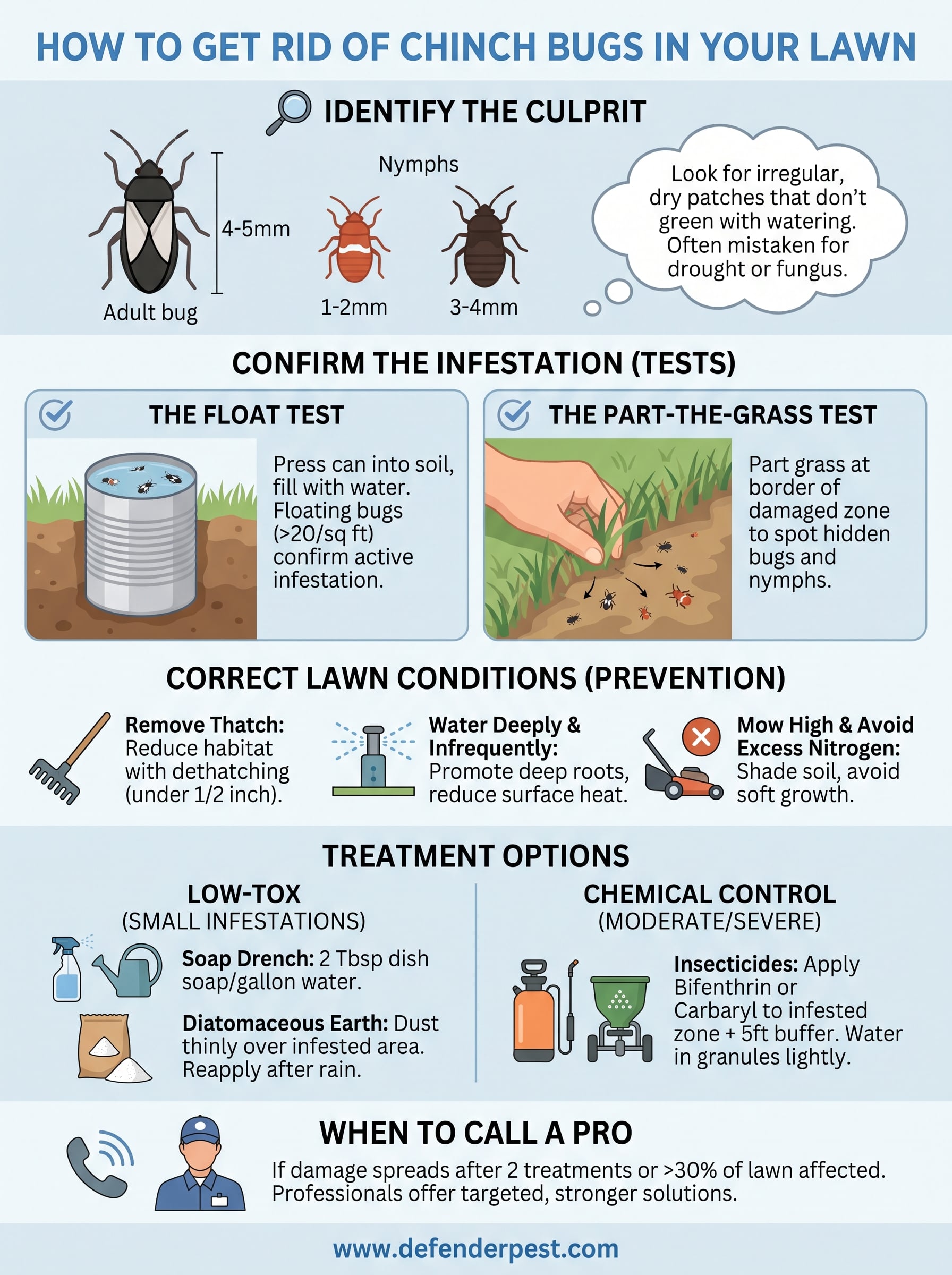
A simple plan to stop chinch bug damage
Stopping chinch bug damage comes down to four steps applied in the right order : confirm the pest, correct your lawn conditions, treat with the least aggressive method that works, and escalate to chemical controls or professional help if the problem persists. Every step in this guide for how to get rid of chinch bugs in lawn areas builds on the one before it , so skipping ahead typically costs you more time and money than working through the process.
Your lawn can recover from chinch bug damage if you act before the infestation spreads beyond 30 percent of your turf . Start with the float test this week , address thatch and watering habits alongside any treatment you apply, and monitor the transition zone between dead and healthy grass every few days to track your progress. If the damage keeps spreading despite two full treatment cycles, contact Defender Termite & Pest Management for targeted, professional lawn pest control before more turf is lost.