How To Get Rid Of Gophers In Your Yard Fast & Humanely Today
Gophers can destroy a yard in a matter of days. Those crescent-shaped mounds popping up across your lawn aren't just ugly, they signal an active network of tunnels that's tearing through root systems, irrigation lines, and garden beds underground. If you're trying to figure out how to get rid of gophers in your yard , you need a plan that actually works, not a list of old wives' tales that'll waste your time while the damage keeps spreading .
At Defender Termite & Pest Management, we've helped Sacramento-area homeowners deal with destructive yard pests since 1999. Gophers rank among the most persistent offenders we see, and we know firsthand which methods deliver results and which ones don't. As a locally owned pest management company , we built this guide to give you the same practical knowledge our technicians rely on in the field .
Below, you'll find step-by-step methods for trapping, baiting, and repelling gophers, including humane options. We'll cover how to identify active tunnels , choose the right approach for your situation, and know when it's time to call in a professional. Whether you're protecting a vegetable garden or trying to save your front lawn, this guide will help you take back your yard .
Know what you're dealing with
Pocket gophers are burrowing rodents that live almost entirely underground. In California's Sacramento Valley, the most common culprit is the Botta's pocket gopher ( Thomomys bottae ), a stout, brown rodent roughly 6 to 8 inches long with strong claws built for digging. One gopher can create a tunnel network stretching more than 200 feet, and because they're solitary and territorial, each mound you see typically points to a single active animal working that zone.
Correctly identifying your pest before you act saves you from wasting time and money on the wrong solution.
Gopher vs. mole: spot the difference
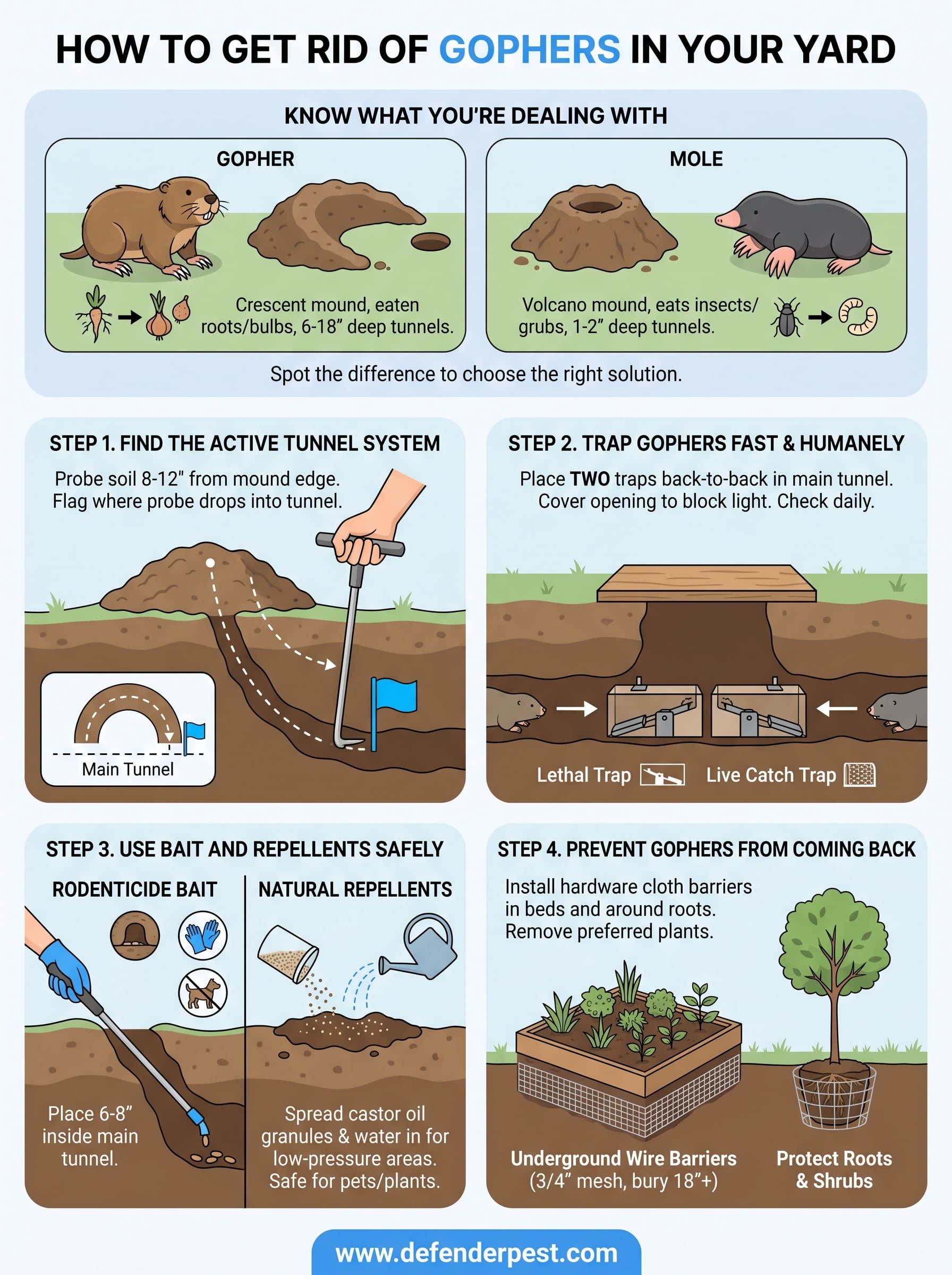
Many homeowners confuse gophers with moles, and that confusion leads to the wrong traps and wasted effort. Gopher mounds are crescent or horseshoe-shaped , with a plugged exit hole pushed off to one side. Mole mounds look like small volcanoes with a raised center. Gophers eat plant roots, bulbs, and underground vegetation , so dying plants and disappearing garden beds are a strong indicator. Moles eat insects and grubs, meaning your plants usually stay intact even with mole activity present.
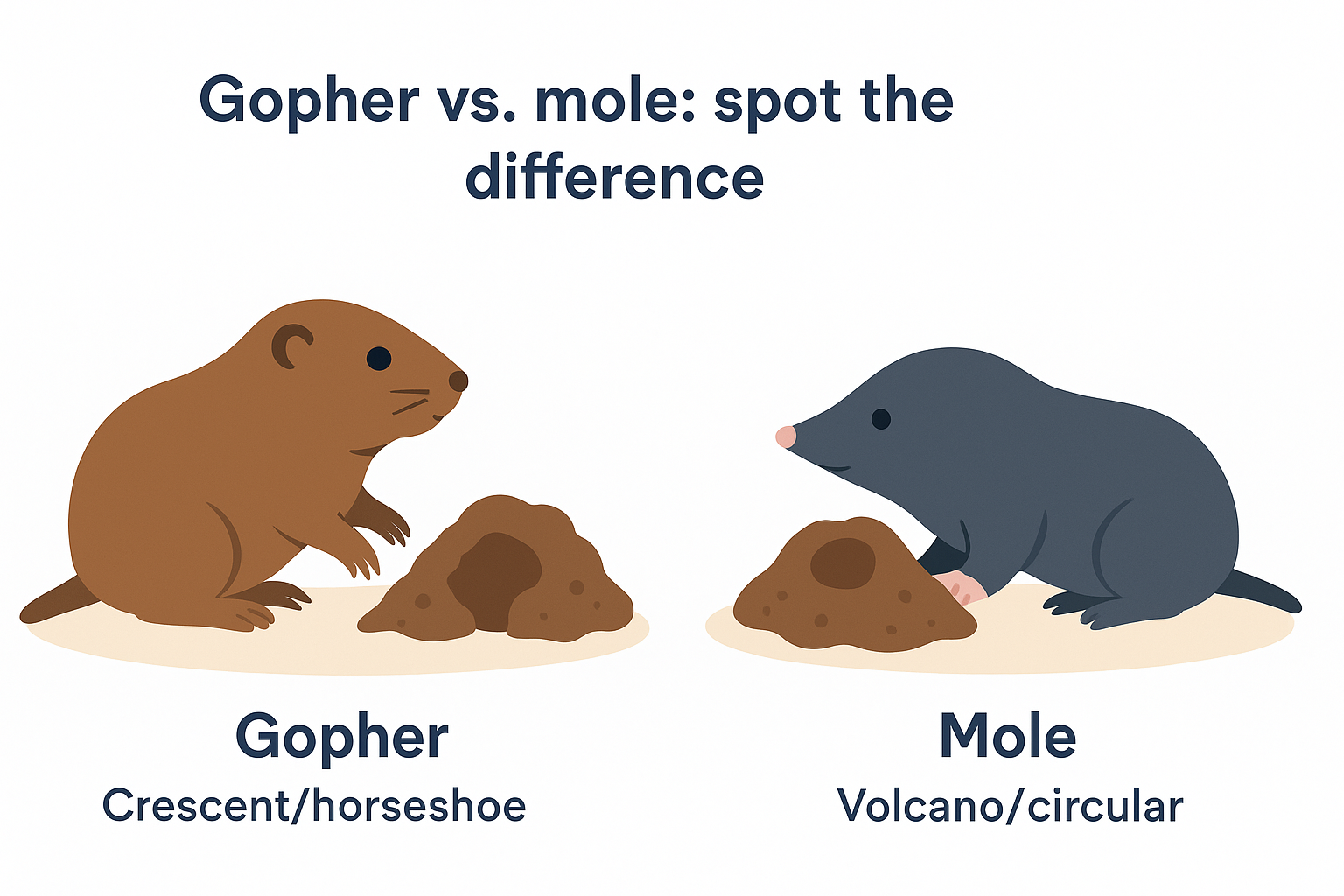
| Feature | Gopher | Mole |
|---|---|---|
| Mound shape | Crescent/horseshoe | Volcano/circular |
| Diet | Roots, bulbs, vegetation | Insects, grubs |
| Plant damage | Yes, significant | Rare |
| Tunnel depth | 6 to 18 inches | 1 to 2 inches |
Signs of an active infestation
Fresh, loose mounds of soil appearing overnight are your strongest indicator. New dirt pushed to the surface means the gopher is actively digging in that section of your yard right now. You should also watch for plants that wilt suddenly, sink at the base, or pull out of the ground with no resistance because their root systems have been chewed through. Recognizing these signs accurately is the foundation for figuring out how to get rid of gophers in your yard, since every method targets the tunnel system directly.
Common signs to look for before taking action:
- Crescent-shaped mounds appearing overnight
- Plants wilting or collapsing with no visible above-ground damage
- Severed roots when you pull up a dying plant
- Irrigation lines with unexpected puncture holes or leaks
Step 1. Find the active tunnel system
Finding active tunnels is the most important first step in how to get rid of gophers in your yard. Gophers build a main lateral tunnel running 6 to 12 inches below the surface, with shorter side tunnels branching up toward each mound. Every crescent-shaped mound connects to a side tunnel, not the main run. Targeting side tunnels wastes your time and materials. Your goal is to locate the main run, because that is where every effective method lands its best results.
Probe the soil to pinpoint the main run
A gopher probe (a metal rod with a T-handle, available at most garden centers) gives you a fast, accurate way to find the tunnel without digging up your entire yard. Push the probe into the ground about 8 to 12 inches from the flat, open edge of the mound, working in a semicircle toward the plugged hole. When the probe suddenly drops an inch or more, you've hit an open tunnel below.
Mark every confirmed tunnel location with a small flag before you move on, so you can place traps without searching again.
Follow these steps to map the main tunnel quickly:
- Start at the flat, open side of the crescent mound.
- Probe every 4 to 6 inches in an arc toward the plugged side.
- Stop and flag the spot where the probe drops.
- Confirm by probing 6 inches in both directions along that same line to trace the tunnel path.
Step 2. Trap gophers fast and humanely
Trapping is the most reliable method when you're figuring out how to get rid of gophers in your yard . Place two traps back-to-back in the main tunnel you found in Step 1, facing in opposite directions to catch the gopher regardless of which way it travels. Cover the tunnel opening with a piece of wood or loose soil to block out light, since gophers move toward darkness and will push directly into the trap when investigating.
Two traps placed in opposing directions inside the main run dramatically increases your catch rate compared to using a single trap.
Choose the right trap type
Your two main options are lethal box traps (like the Macabee or Cinch trap) and live catch traps for humane relocation. Lethal traps work faster and require less daily maintenance, making them the practical choice for active infestations. Live traps take more monitoring but let you release the gopher well away from your property if that matters to you.
Check and reset traps daily
Check every trap within 24 hours of setting it. A gopher left in a trap too long attracts other pests and creates a secondary problem you don't need. Reset and reposition each trap 6 inches in either direction if nothing has been caught after two days, since the gopher may have shifted its route slightly.
Step 3. Use bait and repellents safely
When trapping alone isn't clearing the problem fast enough, bait stations and repellents give you additional tools for how to get rid of gophers in your yard. Use these methods alongside trapping rather than as a replacement, since they work best when the infestation is still manageable.
Bait is most effective when placed directly inside the main tunnel rather than scattered near the mound entrance.
Rodenticide bait for persistent problems
Underground bait stations loaded with zinc phosphide or diphacinone are registered for gopher control in California and available at farm supply stores. Place bait 6 to 8 inches inside the main tunnel using a long-handled applicator, then close the tunnel opening to preserve darkness and reduce risk to other wildlife. Keep bait away from children and pets at all times.
Safe application checklist:
- Wear gloves when handling bait
- Place bait only inside confirmed active tunnels
- Close tunnel openings immediately after placement
- Remove any above-ground bait within 24 hours
Natural repellents for low-pressure situations
Castor oil-based granules work by making the soil and nearby plant roots taste unpleasant to gophers. Spread them around active mound areas and water them in thoroughly. Results take longer than trapping, but natural repellents pose no risk to pets, birds, or surrounding vegetation, making them a solid choice for garden beds near edible plants.
Step 4. Prevent gophers from coming back
After you've cleared an active infestation, physical barriers and habitat modifications are your best tools for keeping gophers out long-term. Knowing how to get rid of gophers in your yard is only half the job; preventing reinfestation protects the work you've already done and saves you from repeating the whole process next season.
Prevention is far cheaper and less disruptive than dealing with a new infestation after gophers have already reestablished tunnels.
Install underground wire barriers
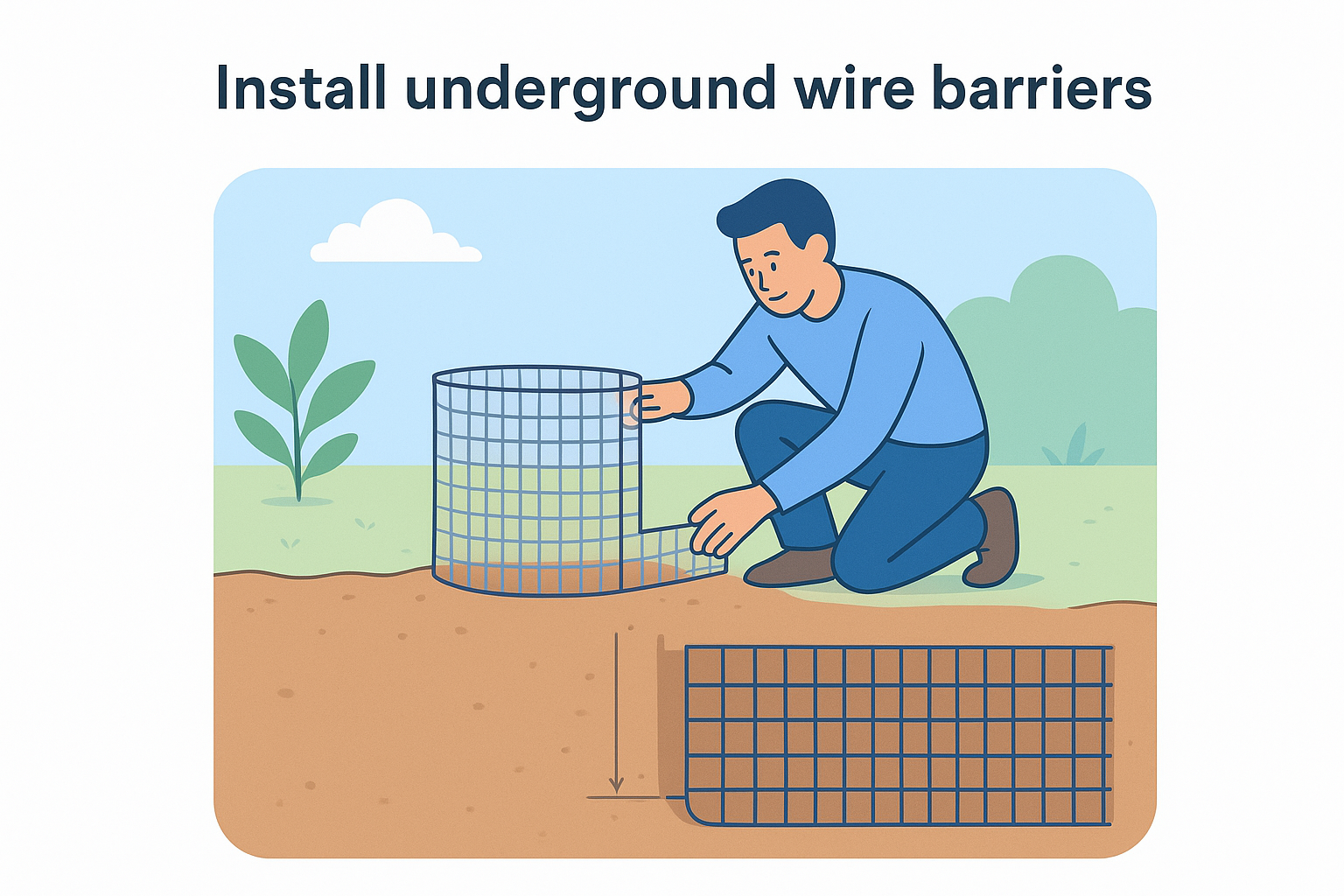
Hardware cloth with a 3/4-inch mesh buried at least 18 inches deep creates a physical barrier that gophers cannot dig through. Line the bottom and sides of raised garden beds before filling them with soil. For tree roots and shrubs , wrap a wire basket around the root ball before planting to protect it from underground attack.
Barrier installation guide:
- Use galvanized hardware cloth (3/4-inch mesh or smaller)
- Bury the cloth at least 18 inches deep with 6 inches curved outward at the base
- Overlap seams by at least 3 inches and secure with wire staples
Reduce food sources and soil conditions
Gophers target yards with loose, loamy soil and abundant root systems . Removing their preferred plants, like alfalfa and sweet potatoes, from border areas makes your yard a less appealing target. Compact heavily tunneled zones by watering and rolling the soil, since gophers prefer softer ground that's easy to excavate quickly.
Next steps for a gopher-free yard
You now have a complete, field-tested approach to how to get rid of gophers in your yard : locate active tunnels, set traps correctly, apply bait or repellents when needed, and lock down the perimeter with physical barriers . Each step builds on the last, and following the full sequence matters more than relying on any single method in isolation. Skipping steps, especially tunnel mapping, is the most common reason DIY attempts fall short.
If you've worked through these steps and gophers keep returning, the infestation may be larger than standard DIY methods can handle on their own. Persistent mound activity across multiple yard zones often signals a population that needs professional-grade treatment to eliminate completely. For Sacramento-area homeowners ready to stop the damage for good, contact Defender Termite & Pest Management to get a professional assessment and a clear plan for long-term control.