Rodent Control Steel Wool: How to Block Mice and Rats
You found a gap under your sink or a gnawed hole near a pipe, and someone told you to stuff it with steel wool. That advice is solid, but only if you do it right. Rodent control steel wool works because mice and rats can't chew through the fine metal fibers without shredding their teeth and gums, which makes it one of the few DIY materials that actually stops them cold instead of just slowing them down for a night.
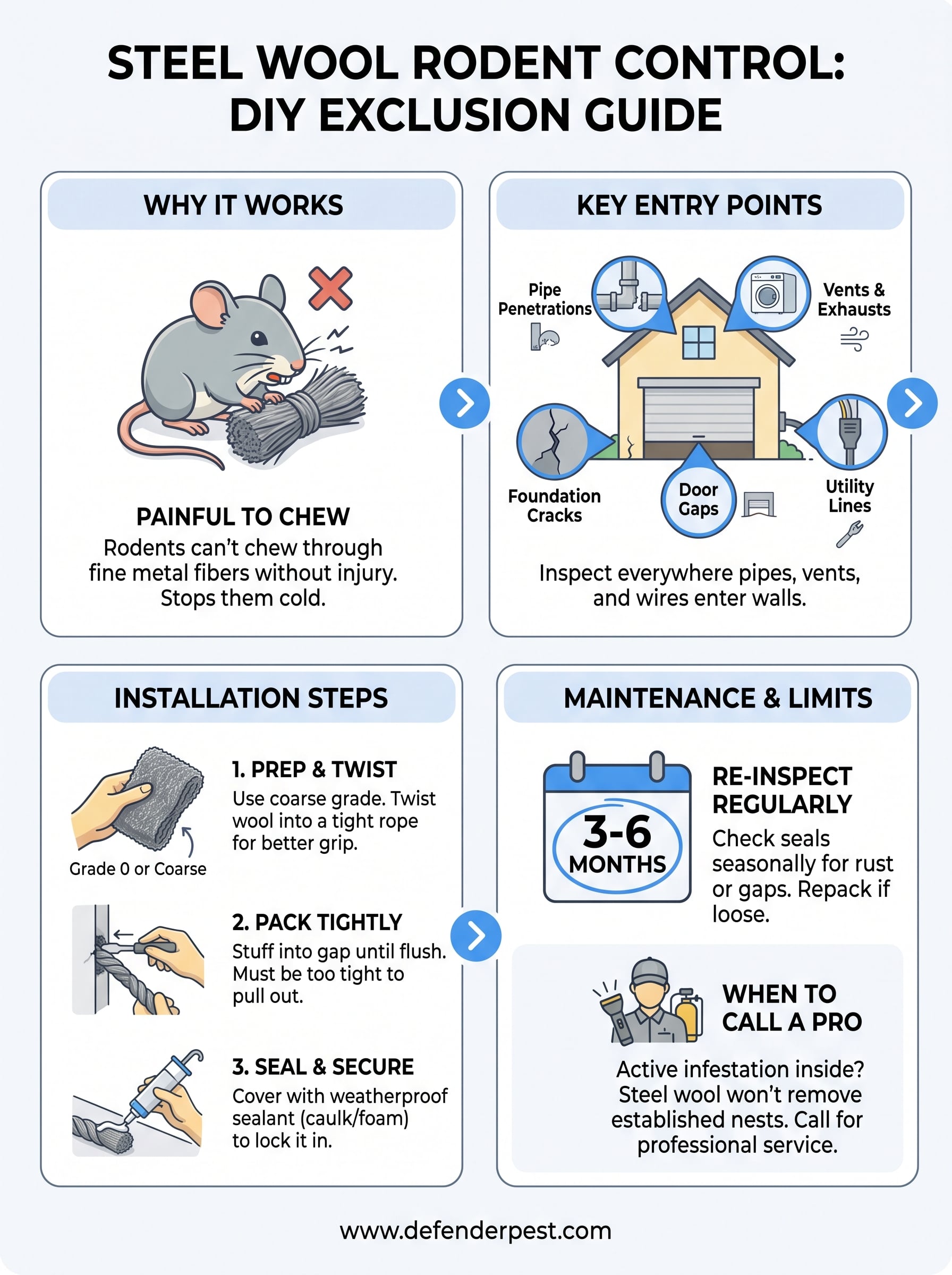
Used correctly, steel wool rodent control blocks entry points fast and buys you time before pests establish a nest inside your walls. The key is packing it tightly into every gap larger than a quarter inch, pairing it with caulk or expanding foam so it stays put, and checking areas rodents favor most: utility penetrations, vents, foundation cracks, and gaps around doors.
In this guide, we'll walk through exactly where to install steel wool, how to prep the material, and which mistakes let determined rodents work their way back in. We've sealed hundreds of Sacramento-area homes at Defender Termite and Pest Management, and we'll share what actually holds up against real infestations, not just internet advice.
Why steel wool works against mice and rats
Mice can squeeze through a gap the size of a dime, and rats need only a quarter inch, but neither can gnaw through tightly packed steel fibers without tearing up their mouths in the process. Rodent control steel wool exploits a simple biological limit: rodent teeth grow constantly, so they're built to chew through wood, drywall, and plastic, but the abrasive, jagged edges of steel fibers cause enough pain and bleeding that most rodents give up and look elsewhere. That's the whole mechanism, and it's why pest control companies have relied on it for decades instead of switching to something fancier.
Steel wool doesn't repel rodents, it makes chewing through the barrier physically painful enough that they quit trying.
Compare that to the other materials homeowners reach for first. Plain caulk or expanding foam feels solid once it cures, but a determined rat will chew straight through either one in a single night. Steel wool alone eventually rusts and can lose density over time, which is why pairing it with a sealant matters more than picking one material and calling it done.
| Material | Blocks entry alone? | Rodents can chew through it? | Best use |
|---|---|---|---|
| Steel wool | Yes, short term | No (with proper packing) | Gaps and holes under 2 inches |
| Expanding foam | No | Yes, easily | Filling space after steel wool is packed in |
| Caulk | No | Yes | Sealing hairline cracks, not open holes |
| Copper mesh | Yes | No | Alternative to steel wool in damp areas |
Understanding this also explains why placement matters as much as the material. Steel wool works best stuffed into a defined opening, like a pipe penetration or a gap around a utility line, where the rodent has to bite directly into the fibers to get through. It does nothing if you leave it loose on a surface or use too little to fill the gap completely. Once you know why it works, the next step is finding every place in your home where it needs to go.
Step 1. Find every rodent entry point
Grab a flashlight and walk the entire perimeter of your house before you buy a single pad of steel wool. Rodent entry points cluster around anything that pierces your exterior walls or foundation: dryer vents, gas lines, cable and phone lines, AC line sets, and the gaps around pipes under sinks, so it helps to know how to find entry points for mice before you start. Rats and mice also exploit foundation cracks, gaps where siding meets the roofline, and the space around garage doors that never quite sealed right from the factory.
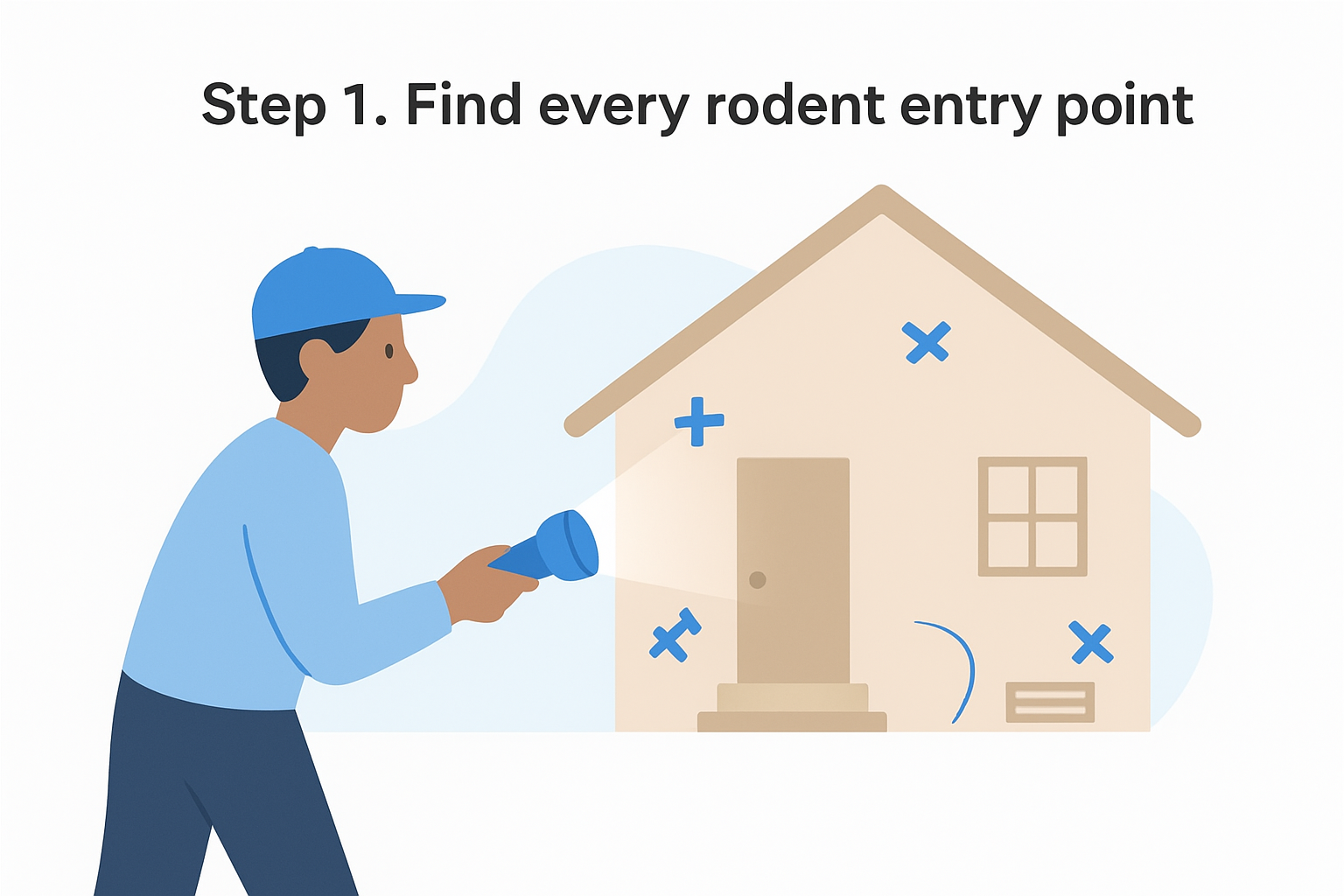
Work room by room on the inside too. Check behind appliances, under cabinets, and along baseboards for gnaw marks, dark greasy smudges, or small piles of droppings, all signs of rats or mice in your house and proof you've found an active route rather than just a cosmetic gap.
If you can slide a pencil into a gap, a mouse can probably follow it inside.
Use this checklist as you move around the house:
- Dryer vents and exhaust fan openings
- Gaps around water, gas, and electrical line penetrations
- Foundation cracks wider than a quarter inch
- Gaps under garage doors and exterior doors
- Roofline gaps where soffits meet the wall
- Crawlspace vents missing their screens
Mark each spot with tape or chalk as you go. Counting every gap before you start sealing keeps you from running out of steel wool halfway through the job, which just means another trip to the hardware store.
Step 2. Choose the right steel wool grade
Not all steel wool works the same way, and grabbing the wrong grade off the shelf can undo your prep work. Steel wool rodent control depends on picking a coarse enough grade that fibers stay rigid when packed tight, since finer grades compress and leave gaps a mouse can still squeeze past. Look for grade 0 or coarser at the hardware store, sold in bulk rolls rather than the fine-grade pads meant for cleaning cast iron pans.
Fine steel wool cleans pans, coarse steel wool blocks rodents. Don't confuse the two.
Matching grade to gap size
Use the table below to match what you find on your walkthrough to the right product:
| Gap size | Recommended grade | Notes |
|---|---|---|
| Under 1 inch | Grade 0 or 1 | Standard coarse wool, easy to pack by hand |
| 1 to 2 inches | Grade 2 or 3, doubled up | Combine with foam backer rod for bulk |
| Over 2 inches | Steel wool plus hardware cloth | Wool alone won't hold shape in large openings |
| Damp or outdoor areas | Copper mesh instead | Steel wool rusts fast near irrigation or crawlspace moisture |
Buy more than you think you need. A single gap around a dryer vent can eat an entire pad once you pack it properly, and running out mid-project means an unsealed hole overnight, which is plenty of time for a rat to move back in.
Step 3. Pack and seal the openings
Tear off a piece of steel wool roughly twice the size of the gap you're filling, then twist it into a loose rope before pushing it in. Cramming a flat pad into a hole leaves air pockets a mouse can still wiggle past, so twisting first forces the fibers to expand and grip the edges of the opening as you pack it. Rodent control steel wool only works when it's stuffed tight enough that you can't pull it back out with your fingers.
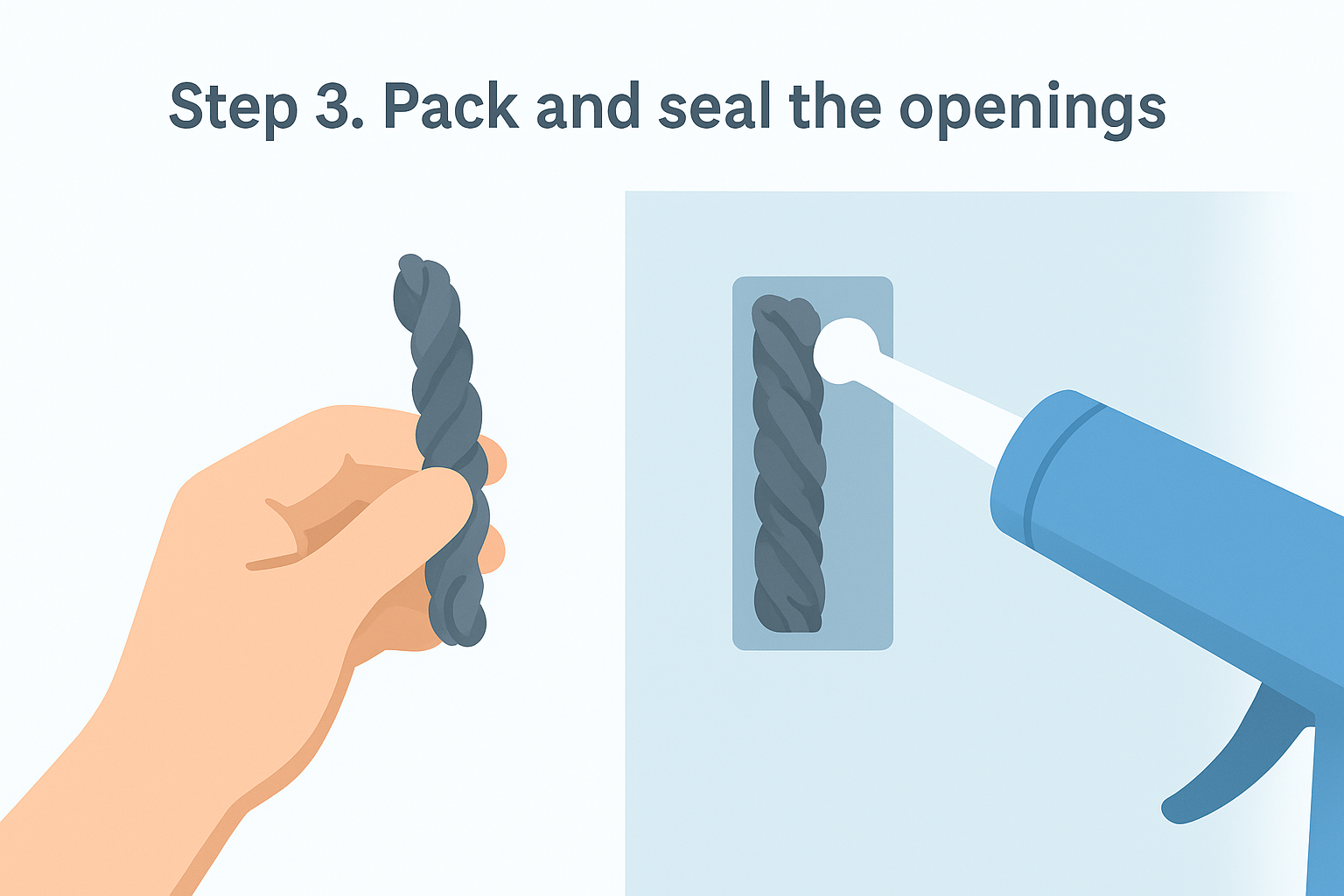
Once the wool is packed, seal over it with caulk or expanding foam so weather and vibration don't work it loose, the same approach behind any permanent seal on a mouse-sized gap. Follow this order for a barrier that actually holds:
- Twist steel wool into a dense rope.
- Push it into the gap until it's flush with the surface.
- Add a thin foam or caulk layer over the top.
- Smooth the seal so it matches the surrounding surface.
Outdoor gaps need weatherproof caulk since regular indoor caulk cracks in Sacramento's summer heat within a season. Copper mesh works as a substitute wherever moisture sits against the metal, since steel wool rusts and thins out over time in damp crawlspaces or near irrigation lines.
A loose plug of steel wool is just a chew toy. Pack it tight, then seal it, or don't bother at all.
Skipping the sealant step is the single biggest reason homeowners find the same hole reopened within weeks.
Step 4. Inspect and maintain your barrier
Walk the same perimeter every three to six months, especially before winter when rodents push hardest for a way indoors, since stopping mice before they move in is far cheaper than removing them later. Steel wool rodent control isn't a one-and-done fix, since fibers rust and compress over time, and a gap that was airtight in spring can loosen enough for a mouse to squeeze through by fall. Pull gently on each patch you installed; if it gives at all, repack it before you move on to the next spot.
Look closely for rust stains bleeding through the caulk, gnaw marks around the edges, or fresh droppings nearby, all signs a rodent tested the barrier and either broke through or is still trying. Seasonal temperature swings in the Sacramento area also make caulk crack faster than most homeowners expect, so treat that sealant layer as the weak point in your system, not the steel wool itself.
A barrier you install once and never check again isn't a barrier, it's a temporary delay.
Keep a simple maintenance routine going:
- Recheck every sealed gap twice a year, minimum
- Replace any steel wool that's rusted through or compressed flat
- Reapply caulk wherever it's cracked or pulled away from the edge
- Note new gaps that open up as the house settles
Catching a failed patch early costs you five minutes. Missing one costs you a nest behind the drywall.
When it's time to call a professional
Steel wool handles small gaps well, but it can't fix a rodent problem that's already established itself in your attic or walls. If you're still hearing scratching after sealing every entry point, finding fresh droppings weekly, or noticing gnaw marks reappear on patches you just repacked, you're past the DIY stage. Rodent control steel wool stops new entry, it doesn't remove rodents already living inside your structure, and packing more wool into visible gaps won't touch a nest tucked behind insulation or rodents nesting inside your walls.
A thorough professional exclusion inspection catches entry points homeowners miss, like gaps behind stucco or inside soffit vents that aren't visible from ground level. It also identifies whether wood damage from chewing has weakened framing that needs repair, not just sealing.
If your home needs that level of inspection, get a free quote for rodent removal in Sacramento from Defender Termite and Pest Management and let a trained technician find what you can't.