Electronic Rodent Control: 4 Device Types and What Works
The honest answer on electronic rodent control is that these devices are cheap to try and unreliable as a stand-alone fix. A good pick is quiet to your ears, matched to the space it protects, and powered in a way that suits where it sits. Plug-in units suit a single room, battery-powered units suit a parked car, and solar stakes suit a yard. None of them replaces sealing gaps and trapping when mice or rats are already inside.
You probably heard scratching in a wall or found droppings in a cabinet, and now every search result promises a silent fix. This guide cuts through the claims. It starts with what the evidence says, then walks through four device types, who each one suits, and where each one falls short.
Defender Termite & Pest Management has handled rodent problems across the Sacramento area since 1999. That gives us a practical view of where gadgets help and where a trained technician is the faster route.
Do electronic rodent repellers work?
Mostly no, at least not as a cure for an existing infestation. Electronic repellers emit sound above 20 kHz, beyond human hearing, on the theory that rodents find it irritating enough to leave. In practice, that theory breaks down in three places.
What the evidence says
The first problem is habituation . Mice and rats may notice the sound at first, but they typically get used to it within days or weeks. The second is physics. Ultrasonic sound does not pass through walls, furniture, or insulation, so a unit in the hallway does nothing for the attic.
The third is the track record. In 2001 the Federal Trade Commission warned more than 60 manufacturers that efficacy claims for ultrasonic pest devices need scientific support .
That does not make every device useless. Some owners report fewer sightings in small, enclosed spaces where rodents were visiting rather than nesting. Treat a repeller as a minor deterrent layered over exclusion work.
A repeller can nudge a rodent, but it cannot evict one.
How the four types compare
Match the device type to the location first. Everything else, from brand to feature list, matters less.
| Type | Power | Best location | Main weakness |
|---|---|---|---|
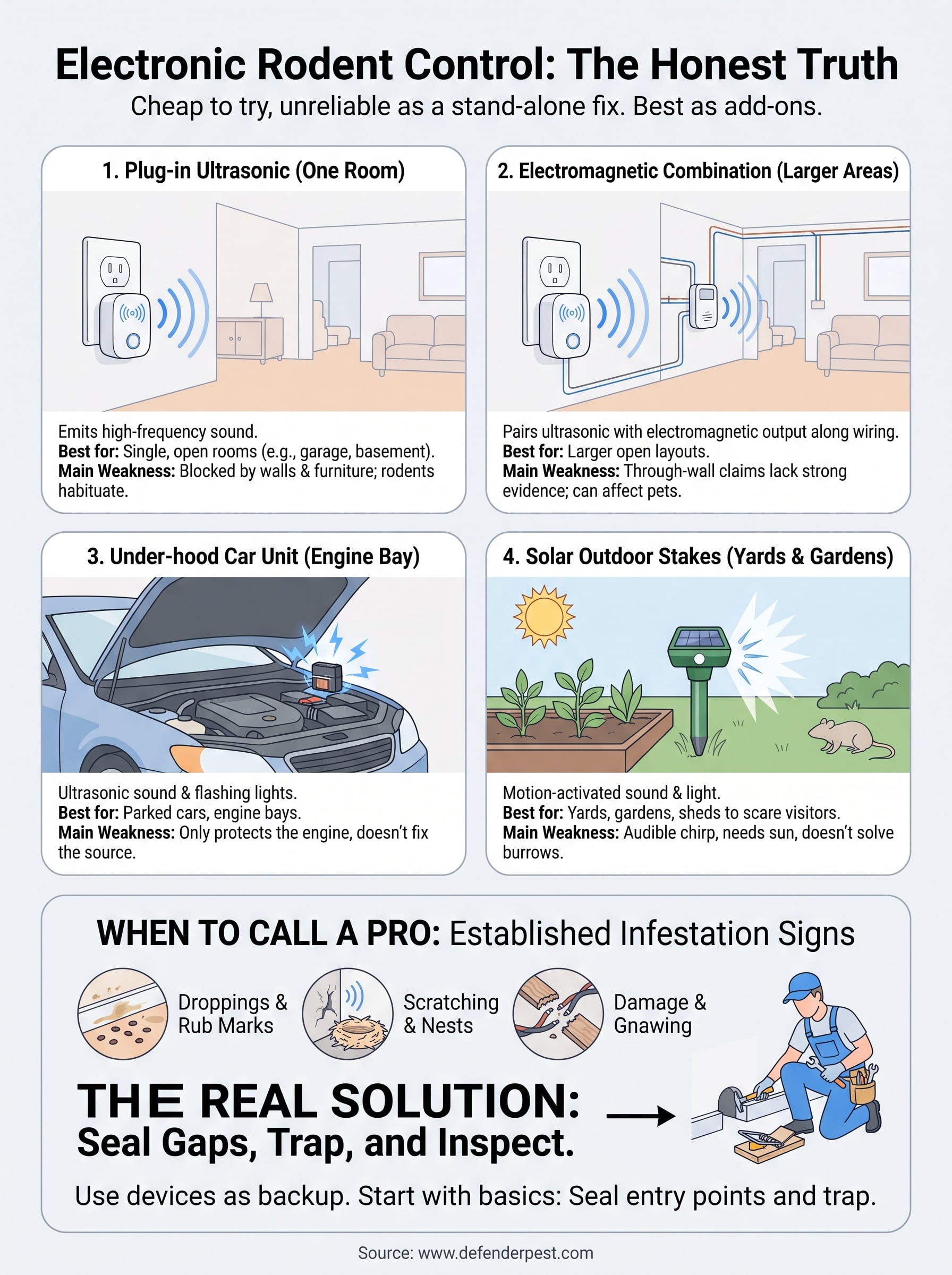
| Plug-in ultrasonic | Wall outlet | One room, garage, basement | Blocked by walls and furniture |
| Electromagnetic combination | Wall outlet | Larger open layouts | Through-wall claims are weak |
| Under-hood car unit | AA batteries | Engine bay | Does not fix the source |
| Solar motion-activated | Sunlight, sometimes USB | Yard, garden, shed | Audible chirp, needs sun |
1. Plug-in ultrasonic repellers
Plug-in ultrasonic units are the most common form of electronic rodent control and the simplest to try.
How it works and who it suits
You plug the unit into an outlet and it emits high-frequency sound continuously. Many models vary the frequency to slow habituation, and some add a night light or a pass-through outlet. Put it at outlet height with a clear line of sound , away from curtains and furniture.
Choose this type for one open room, such as a garage, basement, or workshop, after you have sealed entry points. It also fits renters who cannot make repairs. Skip it if you keep rabbits, hamsters, or guinea pigs, which can be stressed by ultrasound. Dogs hear up to roughly 47 to 65 kHz and cats up to about 85 kHz, so pets may notice it too.
Limits to know before you buy
Plug-in units work best as a supplement, and these are the trade-offs:
- Walls and furniture block the sound, so you need about one unit per room.
- Rodents often adapt within days or weeks.
- Birds and insects show little response, so ignore multi-pest claims.
Buy a plug-in unit for one room, not for the whole house.
2. Electromagnetic combination units
Electromagnetic combination units are the plug-in repellers that promise broader coverage than sound alone, which makes them the most heavily marketed form of electronic rodent control.
How it works and who it suits
These units pair an ultrasonic emitter with an electromagnetic output. The pitch is that the signal travels along your home's wiring, so one unit reaches inside walls. Coverage ratings are listed in square feet, but they are manufacturer figures , not independent test results.
This type suits you if you have a larger open layout and want fewer units to manage. Accept that you are buying a long shot. Keep it in pet-free areas , because pets often react to the ultrasonic part even when you hear nothing.
Limits to know before you buy
The through-wall claim is the weakest part of the pitch, since it lacks solid independent support. Keep these points in mind:
- Some models offer several modes, and the highest setting can be audible and irritating to people.
- A bigger coverage number does not mean better results.
- Multi-packs cost more but still cannot cover rooms separated by walls.
Treat a square-foot rating as marketing, not a measurement.
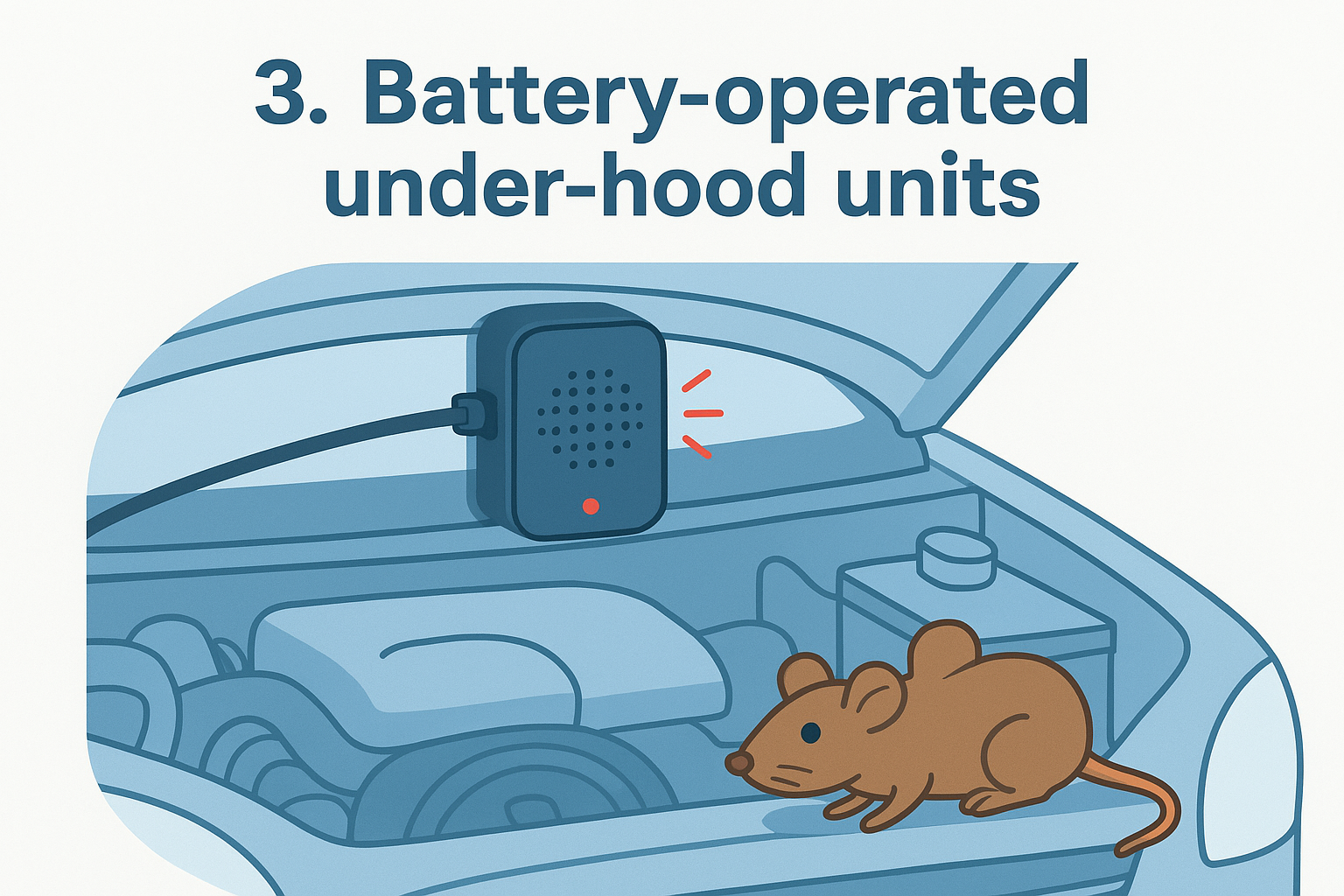
3. Battery-operated under-hood units
Under-hood repellers are the one spot where electronic rodent control makes real sense, because an engine bay is small and enclosed.
How it works and who it suits
These compact boxes run on batteries, commonly AA cells, and attach with zip ties near the engine. They combine ultrasonic sound with flashing LED lights meant to unsettle rodents that nest in warm engine compartments and chew wiring. Installation takes minutes.
They suit cars parked outside, stored vehicles, and trucks parked near fields or woodpiles. Chewed wiring can be expensive to repair, so a low-cost deterrent has a good cost-to-risk ratio . Still, treat it as one layer, not a guarantee.
Limits to know before you buy
A car unit only protects the engine bay, so pair it with these habits:
- Replace batteries on schedule, because a dead unit protects nothing.
- Remove food wrappers and clutter from the cabin and garage.
- Check under the hood regularly for nesting material, droppings, or chewed insulation.
- If you find a nest, rodents live nearby, so look for the source in your garage or yard.
A car repeller guards the engine bay, not the reason rodents showed up.
4. Solar and motion-activated outdoor stakes
Solar stakes extend electronic rodent control to yards, gardens, and sheds, where plug-in units are not an option.
How it works and who it suits
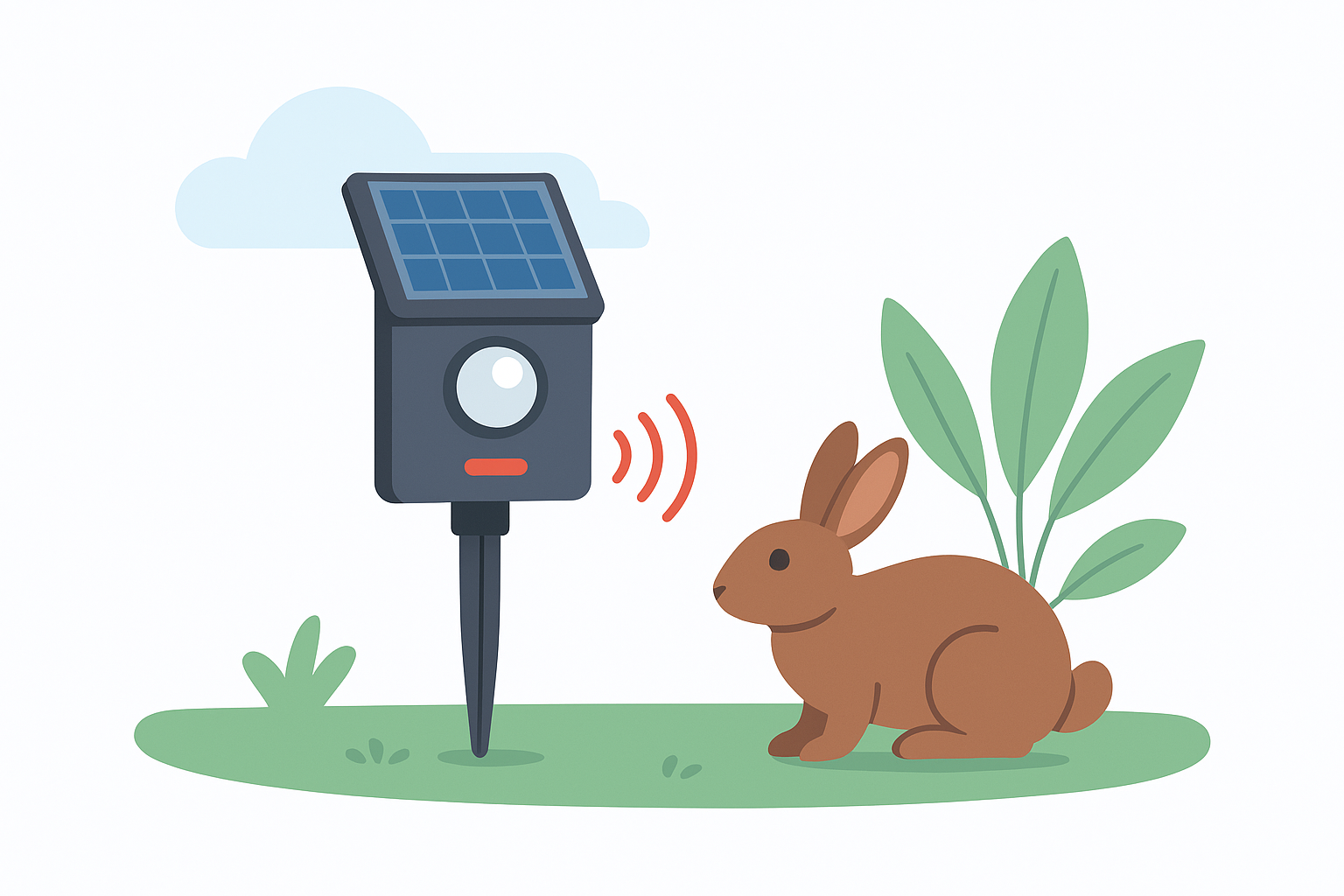
You push the stake into the ground. A solar panel charges the battery, and some models also accept USB power. A motion sensor triggers an ultrasonic burst and a flashing light when an animal approaches. They are designed mainly for yard animals such as squirrels and rabbits.
This type suits garden beds, shed perimeters, and spots near compost. It suits rats poorly, especially ones burrowing under a deck or foundation, because the sensor only covers a narrow area in front of the stake.
Limits to know before you buy
Expect to tune and move these units. The common drawbacks:
- Many models chirp audibly when triggered, which can annoy you and your neighbors.
- Pets, wind, and passing foot traffic can set off the sensor.
- Shade and winter days reduce charging.
An outdoor stake scares visitors, but it will not solve a burrow.
When to skip the gadget and call a pro
Call a professional when you can see, hear, or smell signs that rodents already live in the structure. At that point, electronic rodent control only buys time.
Signs a device will not be enough
Look for these indicators of an established problem:
- Droppings near food or under sinks.
- Scratching in walls or the attic at night.
- Gnawed wiring, packaging, or wood.
- Greasy rub marks along baseboards.
- Nests of shredded paper or insulation.
Rodents also spread disease and chewed wiring is a fire hazard, so waiting costs more than it saves.
What actually removes rodents
Exclusion works. Seal gaps about a quarter inch or larger, since a mouse can fit through a space that small, using steel wool and caulk. Store food in airtight containers, move firewood away from the house, and trim vegetation near the foundation. Put snap traps along walls where you see activity.
A professional adds an inspection that finds entry points you cannot see, a treatment plan, and follow-up. Our rodent control and removal services cover homes and businesses around Sacramento, with 24/7 emergency help for urgent cases.
Seal, trap, and inspect first, then add a device if you still want one.
Use devices as backup, not the plan
Electronic repellers are low-risk, low-cost add-ons, and they work best in small, enclosed spaces like an engine bay. For a room, a plug-in unit is a reasonable extra. For a yard, a solar stake can scare off passing animals. For anything already living in your walls or attic, they are not enough.
Start with the basics. Seal entry points, remove food and shelter, and set traps where you see activity. If the signs keep appearing, or you would rather not guess, get a real inspection.
If you live in the Sacramento area, you can request a rodent control quote from Defender Termite & Pest Management and get a local, family-owned team to find the source and fix it.