
Tick Season in California: Monthly Activity by Life Stage
Most people assume ticks are only a problem in summer, but tick season in California doesn't follow the neat schedule you might expect. Because of the state's mild winters and varied microclimates, ticks can be active nearly year-round in many parts of Northern California, including the Greater Sacramento region.
What makes tick activity especially tricky to predict is that different life stages peak at different times . Larvae, nymphs, and adult ticks each have their own seasonal windows, and each presents a distinct level of risk for transmitting diseases like Lyme disease and anaplasmosis.
At Defender Termite & Pest Management, we've been helping Sacramento-area homeowners deal with pest problems since 1999, and tick-related calls spike every spring without fail. That firsthand experience tracking pest activity across Northern California gives us a practical understanding of when and where ticks show up, and what you can actually do about it. This article breaks down tick activity month by month and life stage , so you can take the right precautions at the right time rather than guessing your way through the season.
Why tick season matters in California
California has one of the highest rates of Lyme disease in the western United States, and that's not a coincidence. The state's combination of dense woodland, grassy hillsides, and mild coastal temperatures creates near-perfect conditions for ticks to survive and reproduce throughout much of the year. Understanding tick season in California isn't just useful background knowledge; it's the kind of information that can directly protect your health and your family's.
California's tick-borne disease burden
Ticks in California carry several serious illnesses, and Lyme disease gets the most attention for good reason. The California Department of Public Health tracks hundreds of confirmed Lyme disease cases in the state each year, with a large percentage traced back to the Western black-legged tick ( Ixodes pacificus ). But Lyme disease isn't the only concern. Anaplasmosis, ehrlichiosis, and tick-borne relapsing fever are also present in California, and each one can cause serious complications if you don't catch it early.
The nymph stage of the Western black-legged tick is responsible for the majority of Lyme disease transmissions in California, because nymphs are small enough to feed on you for days without being noticed.
What makes these diseases particularly dangerous is the delay between a bite and noticeable symptoms . Many people don't realize they were bitten at all, especially by nymphs, which are roughly the size of a poppy seed. By the time fever, fatigue, or a rash appears, the bacteria may have already spread beyond the initial bite site, making treatment more complicated and recovery longer.
The species you're most likely to encounter
Not all ticks in California carry the same diseases, and knowing which species live in your area helps you understand your actual risk level. Three species account for the majority of human encounters across the state.
| Tick Species | Common Name | Primary Disease Risk |
|---|---|---|
| Ixodes pacificus | Western black-legged tick | Lyme disease, anaplasmosis |
| Dermacentor occidentalis | Pacific Coast tick | Rocky Mountain spotted fever, tularemia |
| Dermacentor variabilis | American dog tick | Rocky Mountain spotted fever, tularemia |
The Western black-legged tick is the species Sacramento-area residents encounter most often , particularly in foothill and woodland settings. You're most likely to pick one up while hiking, gardening near vegetation edges, or spending time in areas with tall grass or thick leaf litter. The Pacific Coast tick is also widespread throughout Northern California and tends to actively seek out a host, which means it can attach to you even during short outdoor activity.
Knowing which species is active in your area and during which months is one of the most practical steps you can take to lower your exposure risk. Regional habitat and elevation both influence which tick species you'll encounter , so your risk profile in suburban Sacramento looks meaningfully different from someone hiking in the Sierra Nevada foothills, even though both areas fall within the same general region.
What tick season means in California
In most northern states, tick season has a clear beginning and end. California doesn't work that way. Tick season in California is better understood as a year-round concern that shifts in intensity depending on the month, the life stage of the tick, and where you live in the state. That distinction matters because it changes how you think about protection. Treating it like a short summer window leaves you exposed during months that actually carry real risk.
No true off-season
Mild winters across much of California mean ticks never fully disappear the way they do in colder climates. In the Sacramento Valley and surrounding foothills, winter temperatures rarely drop low enough to kill off tick populations or push them into full dormancy. You might expect late December or January to give you a break, but adult Western black-legged ticks are actually at peak activity during the cooler months , roughly October through March.
Adult Western black-legged ticks seek hosts most aggressively in fall and winter, which catches most people off guard precisely because they've stopped thinking about tick prevention.
That means the months when you're least expecting tick exposure can carry meaningful risk if you spend time outdoors near brush, leaf litter, or overgrown vegetation.
How California's climate shapes tick activity
Temperature and moisture together drive tick activity more than any single calendar date. Ticks need humidity to survive, which is why you're more likely to encounter them in shaded, wooded areas than in dry, open sun. During California's hot, dry summers, tick activity dips in the Central Valley, but it stays elevated in coastal zones and higher elevations where conditions remain wetter and cooler throughout the season.
Nymphs, the life stage responsible for most disease transmission, tend to peak in late spring and early summer , roughly April through July in Northern California. That overlap between warm outdoor weather and nymph activity is exactly why spring gets so much attention, even though adult ticks have been quietly feeding for months before that point.
Monthly tick activity by life stage
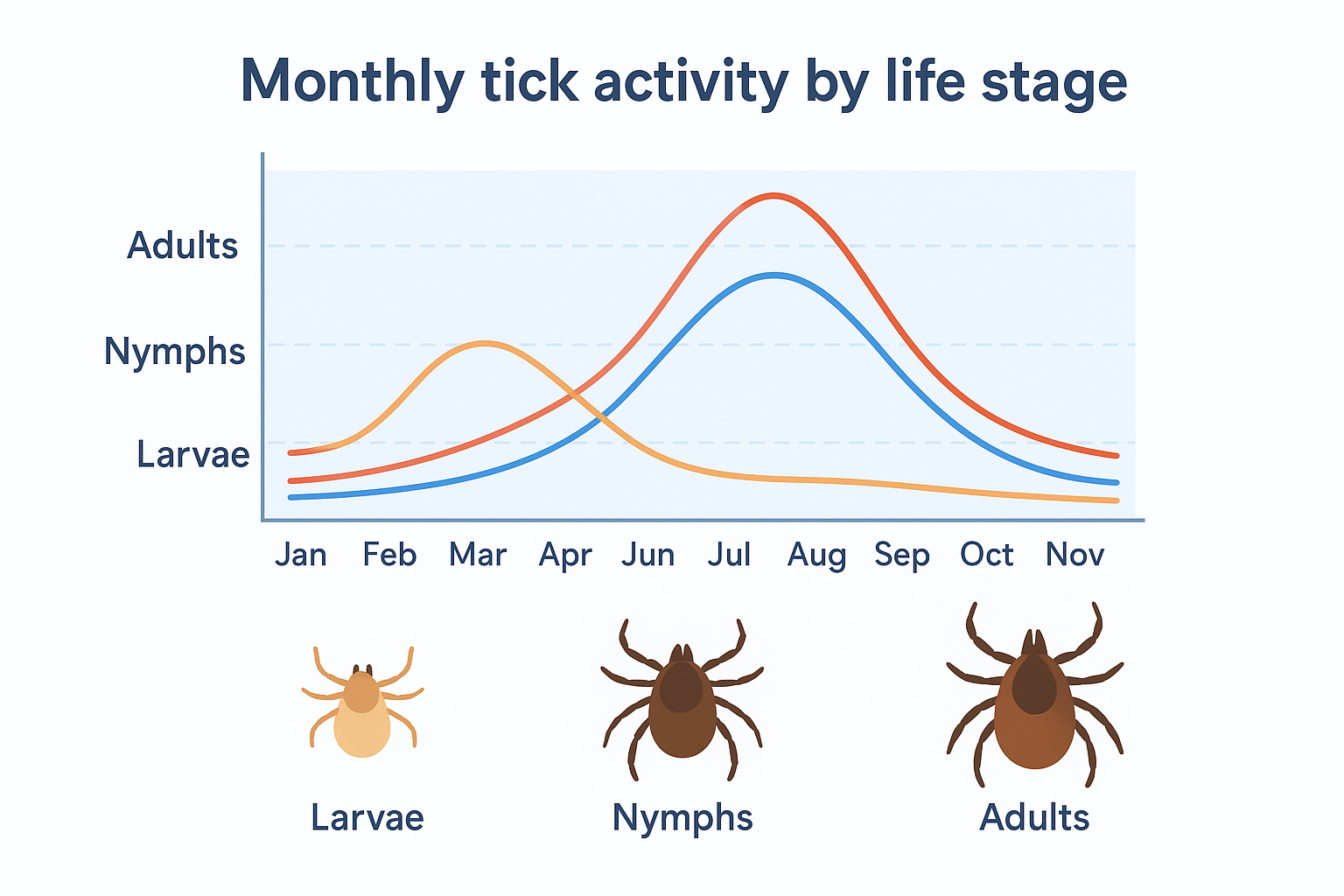
Understanding when each life stage peaks helps you time your prevention efforts more precisely. All three stages, larvae, nymphs, and adults, follow different seasonal patterns and don't overlap evenly across the calendar. The table below gives you a quick reference for when each stage is most active in Northern California.
| Life Stage | Peak Activity | Disease Risk |
|---|---|---|
| Larvae | July - October | Low (rarely infected) |
| Nymphs | April - July | High |
| Adults | October - March | Moderate to high |
Larvae: summer into fall
Tick larvae hatch from eggs in late summer, typically July through September, and begin searching for a host almost immediately. Because they haven't yet fed on an infected animal, larvae carry a relatively low disease risk compared to the other life stages. You can still encounter them in large numbers during late summer outdoor activity, particularly in areas with dense ground cover or moist leaf litter.
Most larvae feed on small animals like lizards and mice rather than people, but accidental contact with humans does happen , especially in areas where wildlife activity is high. Keeping your grass trimmed and clearing debris from yard edges lowers the chance of a close encounter.
Nymphs: the highest-risk window
Nymphs become active from roughly April through July across most of Northern California , which makes this the most critical period during tick season in California for disease risk. Their small size, roughly that of a poppy seed, means you can go days without noticing one attached to you , which gives the tick enough time to transmit bacteria like those responsible for Lyme disease.
Nymphs cause the majority of Lyme disease cases in California precisely because they feed undetected long enough for bacterial transmission to occur, which typically requires 24 to 48 hours of attachment.
Adults: fall and winter feeding
Adult Western black-legged ticks are most active from October through March, which surprises most people because cooler weather feels like a break from pest activity. Adults are larger and easier to spot than nymphs, but they actively seek hosts well into winter , especially on mild days when temperatures stay above freezing. Your risk during fall hikes, yard cleanups, or dog walks stays real until late spring arrives and adult activity finally subsides.
Regional differences across California
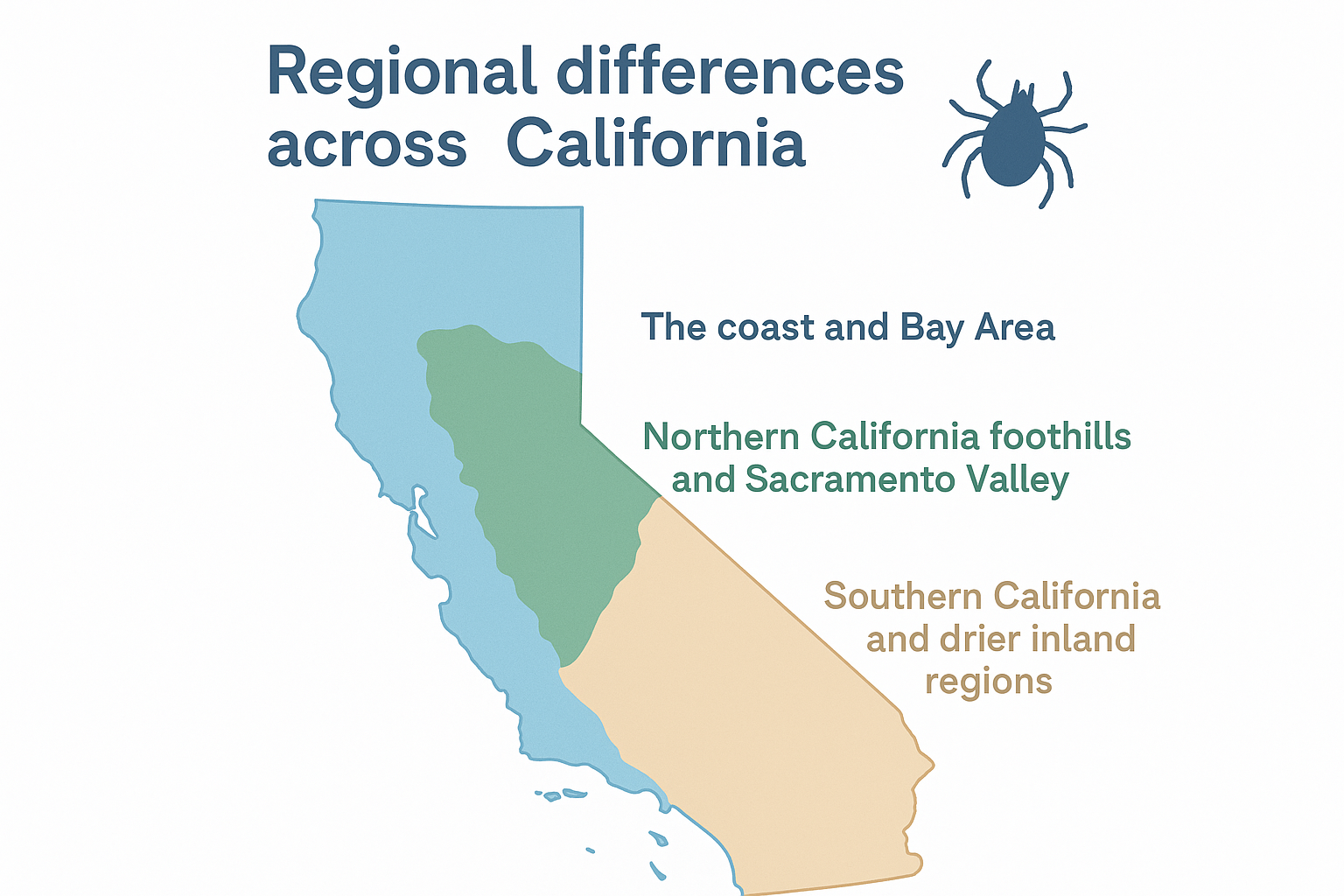
California spans such a wide range of elevations, climates, and ecosystems that tick season in California looks meaningfully different depending on where you live or spend time outdoors. The risk you face in suburban Sacramento differs from what a hiker faces in the coastal range or the Sierra Nevada foothills, even within the same month. Understanding these regional differences helps you stay calibrated about your actual exposure level rather than applying a one-size-fits-all approach.
The coast and Bay Area
Coastal areas and the Bay Area see some of the highest tick activity in the state, and it runs longer than most residents expect. The combination of cool, moist conditions year-round and dense chaparral or woodland habitat creates ideal conditions for the Western black-legged tick to thrive throughout the fall, winter, and spring. Nymph activity in these areas can extend later into summer than in the hotter interior valley, giving you a longer window of elevated disease risk.
In coastal and Bay Area counties, tick-borne disease transmission risks stay elevated for most of the year, with only the driest weeks of late summer offering any meaningful reduction in nymph activity.
Northern California foothills and Sacramento Valley
The Sacramento Valley and surrounding foothill zones sit at the heart of Western black-legged tick territory. Adult tick activity is well documented throughout fall and winter in oak woodland and grassland habitats, which cover large portions of the foothills east and west of Sacramento. If you hike, garden, or walk dogs near brushy vegetation in Placer, El Dorado, or Sacramento counties, your exposure risk remains real from October through June.
Southern California and drier inland regions
Southern California and the Central Valley's driest areas support tick populations as well, but the species mix shifts. The Pacific Coast tick and American dog tick are more common in these zones than the Western black-legged tick. Hot, dry summers suppress tick activity more dramatically in these regions compared to Northern California, meaning late spring and early fall carry the highest risk windows rather than the cooler months that drive activity further north.
How to prevent tick bites and reduce ticks
Knowing when ticks are active during tick season in California gives you a real advantage when it comes to prevention. The steps that make the biggest difference aren't complicated, but they require consistency across the months when tick activity is highest , which in Northern California means staying alert from October through July rather than just a few weeks in summer.
Protecting yourself outdoors
When you spend time in areas with tall grass, leaf litter, or brushy vegetation, your clothing and body positioning matter more than most people realize . Wearing long sleeves and tucking your pants into your socks removes easy access points that ticks use to reach your skin. Apply an EPA-registered repellent containing at least 20% DEET to exposed skin and clothing before heading out, and reapply according to the product label if you stay outside for an extended period.
The single most effective habit you can build is doing a thorough tick check on yourself, your children, and your pets within two hours of coming inside from any outdoor activity in a tick-prone area.
Stick to the center of trails when hiking and avoid sitting directly on logs or ground cover near vegetation edges. Showering within two hours of outdoor exposure reduces the risk of tick attachment and gives you a practical chance to spot any ticks before they've fed long enough to transmit disease. Doing a systematic check of high-risk body areas like behind the knees, underarms, and along the hairline is the most reliable way to catch a tick early.
- Wear light-colored clothing so ticks are easier to see
- Treat clothing with permethrin for extended outdoor trips
- Check behind knees, underarms, ears, and along the hairline
- Keep pets on tick prevention year-round
Reducing ticks in your yard
Your yard can harbor ticks even if you never leave your property, particularly if you have pets, live near open space, or have wildlife passing through regularly. Keeping grass mowed short, removing leaf litter from yard edges, and creating a dry gravel or wood chip barrier between your lawn and surrounding vegetation cuts down significantly on the moist, shaded habitat ticks need to survive.
Professional perimeter treatments applied by a licensed pest control provider add another layer of defense, especially through spring and fall when tick populations peak in Northern California.
What to do after a tick bite
Finding a tick attached to your skin is unsettling, but how you respond in the first few minutes and weeks matters far more than the initial panic. During tick season in California , knowing exactly what steps to take keeps you from making mistakes that increase your risk of infection or delay a diagnosis.
Remove the tick safely
Use fine-tipped tweezers to grip the tick as close to the skin's surface as possible, then pull upward with steady, even pressure. Avoid twisting or jerking the tick, which can cause the mouthparts to break off and stay embedded in your skin. Never apply petroleum jelly, nail polish, or heat to force the tick to detach, as those methods don't work and can cause the tick to release fluids that raise your infection risk.
Pulling a tick out correctly within 24 to 48 hours of attachment significantly reduces the chance of disease transmission, because most pathogens require an extended feeding period before they pass into your bloodstream.
After removal, clean the bite area thoroughly with rubbing alcohol or soap and water. Dispose of the tick by placing it in a sealed bag or flushing it. If possible, save the tick in a bag with the date noted, since your doctor may want to identify the species if symptoms develop later.
Watch for symptoms and when to see a doctor
After a tick bite, monitor yourself closely for 30 days . Early symptoms of tick-borne illness include fever, fatigue, muscle aches, and headache. A bulls-eye rash expanding from the bite site is a strong indicator of Lyme disease and requires prompt medical attention, though not every Lyme infection produces a visible rash.
Contact a healthcare provider immediately if you develop any of these symptoms, even if they seem mild at first. Tell your doctor where the bite occurred, how long the tick may have been attached, and whether you identified the species. Early antibiotic treatment is highly effective for most tick-borne diseases, and acting quickly after symptoms appear gives you the best chance of a straightforward recovery .
Key takeaways
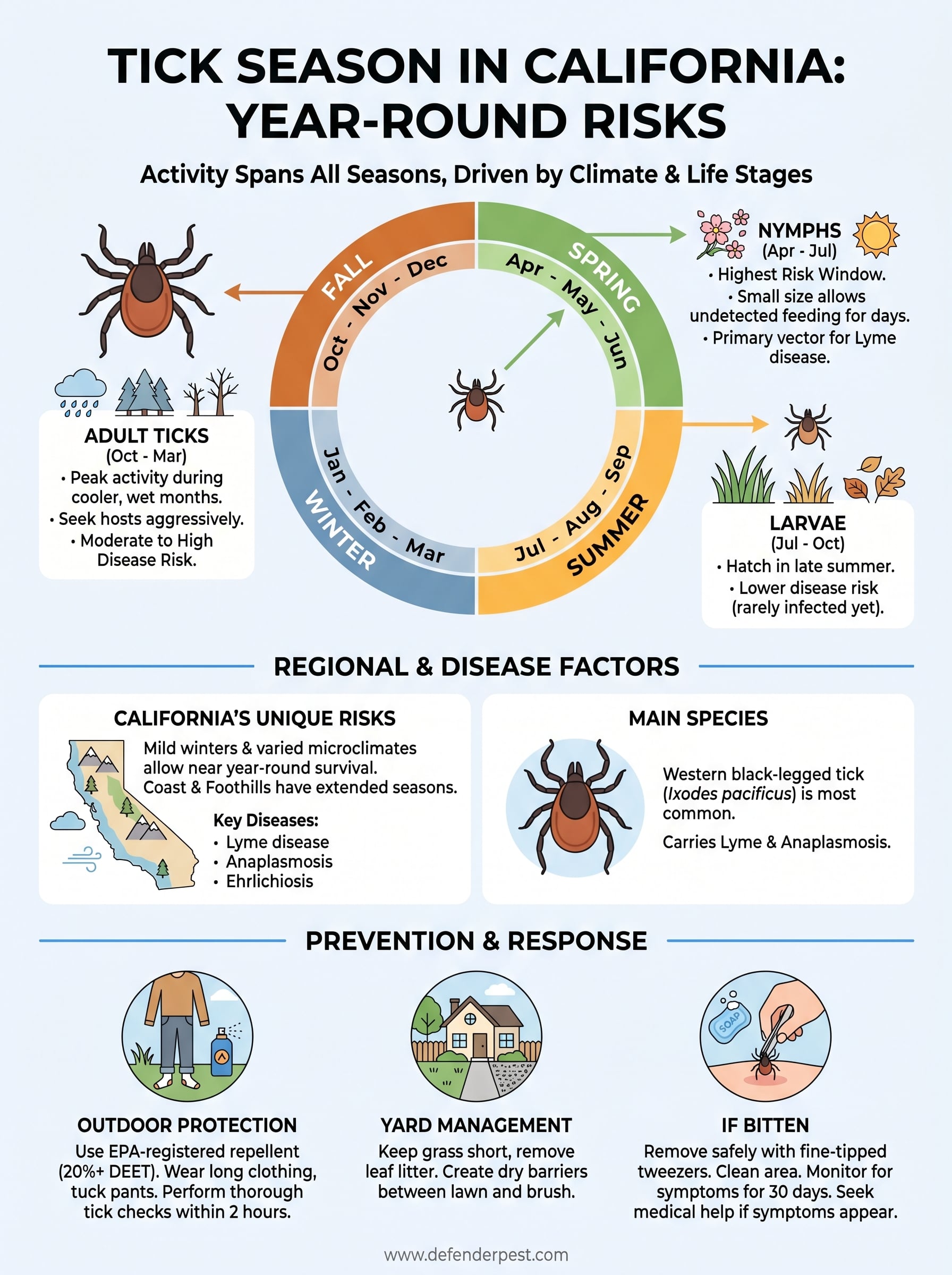
Tick season in California runs far longer than most people expect. Adult Western black-legged ticks are most active from October through March, nymphs peak from April through July, and larvae emerge in late summer. Each stage carries a different disease risk, and nymphs pose the greatest danger because their small size lets them feed undetected long enough to transmit Lyme disease. Regional factors also matter: the Sacramento foothills and Northern California coast see extended activity compared to hotter inland zones.
Staying protected means treating tick prevention as a year-round habit , not just a summer task. Check yourself and your pets after any outdoor time near brush or vegetation, use EPA-registered repellents, and keep your yard trimmed to reduce tick habitat. If you find a tick attached, remove it promptly and watch for symptoms over the following month. If you need professional perimeter treatments to protect your property, contact Defender Termite & Pest Management for experienced local help.