Termite Control Pesticide: 5 Best Termiticides Compared
If you found termites in your home, you want to know which termite control pesticide actually works and whether you can apply it yourself. The wrong product, or the right one applied badly, leaves gaps in the barrier. Termites find those gaps fast.
Here is the short answer. Non-repellent liquid termiticides such as fipronil-based Termidor SC and Taurus SC are the strongest options for DIY use. Termites cannot detect them, so they walk through treated soil, carry the chemical back to the colony, and spread it to nestmates. Repellent pyrethroids and bait systems have a place, but they work differently and suit different jobs.
Below, we compare five of the best termiticides on active ingredient, how they work, cost, and ease of application. We are a family-owned Sacramento company that has treated termite infestations since 1999, so we also flag where DIY stops making sense. Trenching and drilling along a foundation takes real skill, and hidden damage often needs a professional inspection and wood repair.
1. Termidor SC (fipronil) liquid termiticide
How it works
Termidor SC contains fipronil at 9.1% , a non-repellent active ingredient. Termites cannot detect it in treated soil, so they tunnel through, pick up a lethal dose, and carry it back to the nest.
Nestmates are exposed through contact, grooming, and feeding. This transfer effect can collapse a subterranean colony within weeks. It is why most other termiticides get measured against Termidor.
Best for
Choose Termidor when you have an active subterranean termite infestation and can reach the soil around your foundation. It also works well as a preventive barrier before an addition or remodel. Typical signs it fits:
- Mud tubes on foundation walls or piers
- Swarmers or shed wings near windows
- Soil contact between wood and ground
Application and DIY difficulty
You dilute the concentrate in water, then trench and rod the soil along the foundation, and drill and treat slabs or patios where needed. Label rates are strict, so measure carefully. A termiticide only works as a continuous barrier, and every gap you skip is an entry point.
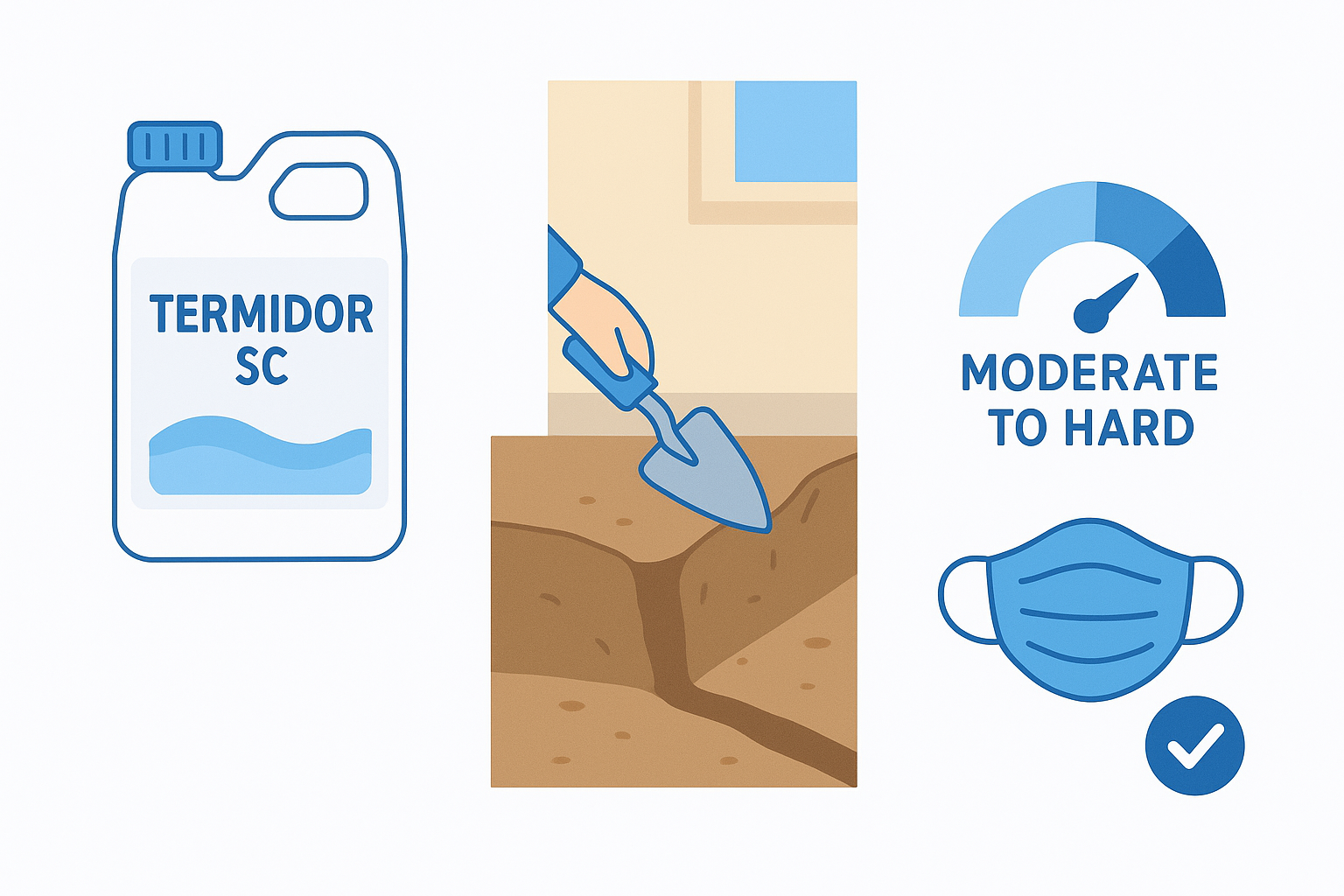
Termidor kills the colony only when the treated soil forms an unbroken line around the structure.
| Detail | Termidor SC |
|---|---|
| Active ingredient | Fipronil 9.1% |
| Typical mix | About 0.8 oz per gallon (0.06%) |
| Trench rate | 4 gallons per 10 linear feet, per foot of depth |
| DIY difficulty | Moderate to hard |
Limitations
Price is the first hurdle. A 20 oz bottle often costs well over $100 and covers only about 60 linear feet of trench at the standard rate. Gaps in coverage from porches, slabs, and plumbing penetrations are the most common DIY failure.
Termidor also does nothing for damaged wood and does not control drywood termites living above ground. Wear the label-required protective gear, and check your state's rules before you buy, since availability varies.
2. Taurus SC (fipronil) liquid termiticide
How it works
Taurus SC contains the same 9.1% fipronil as Termidor SC, so it works the same way. Termites cannot detect it, which makes it a non-repellent barrier.
Workers that cross treated soil carry the chemical back and share it with nestmates. Expect colony decline over several weeks .
Best for
Budget-minded homeowners get the most from Taurus. It delivers Termidor-level results at a lower price per gallon of finished solution.
Use it for the same jobs: active subterranean infestations and preventive barriers around a foundation or addition.
Application and DIY difficulty
Mixing and trenching follow the Termidor routine, with a 0.8 oz per gallon dilution and 4 gallons per 10 linear feet . Cheaper chemistry does not make the work easier.
Taurus SC gives you Termidor's chemistry for less money, not an easier job.
Drilling slabs and rodding around porches stays moderate to hard , and a continuous barrier takes careful planning.
Limitations
Taurus shares Termidor's blind spots. It cannot repair damaged wood and does not control drywood termites living above ground.
Availability varies by state , so confirm registration where you live before you order. Buy only from a reputable supplier and read the label first.
3. Demon Max (cypermethrin) repellent termiticide
How it works
Demon Max contains 25.3% cypermethrin , a pyrethroid. Termites sense it and avoid treated soil, so it acts as a repellent barrier instead of a colony killer.
Contact kills some workers, but little chemical moves back to the nest . The colony usually survives and simply looks for another way in .
A repellent barrier only protects you where it has no gaps.
Best for
Choose it for preventive treatment or a tight budget . A bottle costs far less than fipronil, which helps on a small foundation.
- New additions with fresh, undisturbed soil
- Spot treatment next to a known entry point
Application and DIY difficulty
You mix it with water and trench and rod the soil, just like the fipronil products. Difficulty is moderate to hard , and the barrier must be continuous , because termites probe every break. Follow the label rate exactly.
Limitations
Demon Max will not eliminate an active colony , so it is a poor pick for an existing infestation. Pyrethroids are also toxic to fish , and California limits where you can apply them outdoors. Keep runoff away from drains and check local rules first.
4. Termite bait systems (hexaflumuron, noviflumuron)
How it works
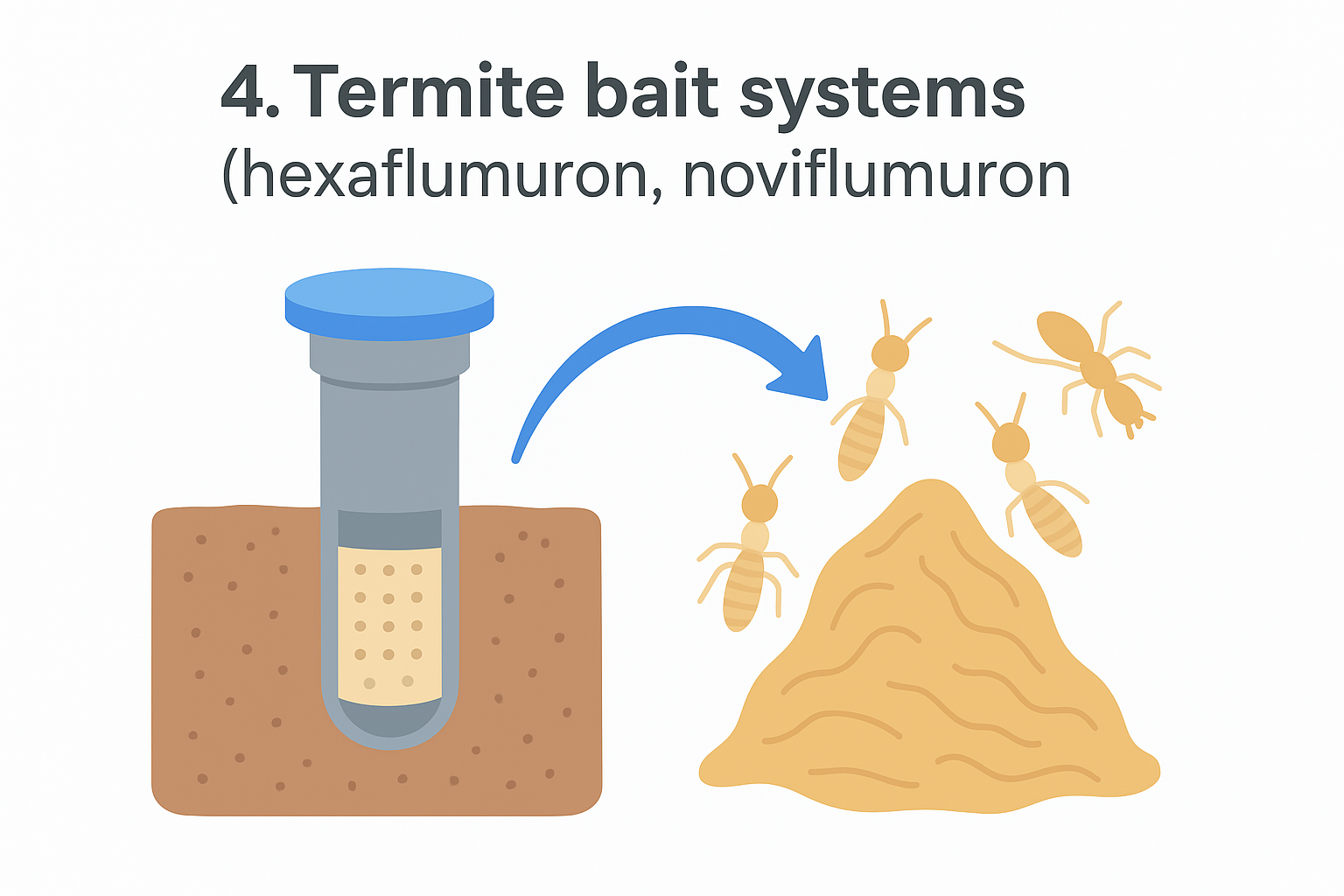
Bait stations hold a cellulose matrix laced with a chitin synthesis inhibitor , either hexaflumuron or noviflumuron. Foraging workers eat it and share it with nestmates.
The chemical blocks molting, so the colony dies off slowly , usually over three to six months . Nothing repels the termites, so they keep feeding.
Best for
With baits rather than a liquid treatment, you skip the trenching and the soil chemicals. That suits sites where liquid barriers are hard or restricted:
- Slab homes with heavy landscaping against the walls
- Properties near wells, ponds, or other sensitive areas
- Owners who want ongoing monitoring after the colony is gone
Application and DIY difficulty
Installers place stations about every 10 feet around the structure, then inspect and refill them on a schedule. The strongest noviflumuron systems are sold through licensed professionals , so DIY options are mostly weaker stakes.
Baits eliminate a colony only if termites find the stations and keep feeding.
DIY difficulty is easy to moderate , but consistent monitoring is the real work.
Limitations
Baits are slow and give no instant protection , so active damage can continue for months. Termites that never find a station are never exposed.
Professional systems also add recurring monitoring fees , which raise the total cost over several years. Drywood termites ignore ground baits entirely.
5. Borate wood treatments for prevention and spot control
How it works
Borate products such as Tim-Bor and Bora-Care use disodium octaborate tetrahydrate . It soaks into bare lumber, and termites that chew the treated wood ingest it and die. Think of it as a wood preservative more than a classic termite control pesticide , because it protects the board instead of the soil.
Best for
Use borates to protect new framing during construction or a remodel, and to spot treat exposed wood in attics, crawl spaces, and subfloors. They also guard against decay fungi and wood-boring beetles.
- Unpainted joists, sill plates, and rafters
- Drywood termite damage you can see and reach
- Lumber before you close up a wall
Application and DIY difficulty
Mix the powder with water, or use a ready-to-apply gel, then brush or spray bare wood until it is saturated . Difficulty is easy to moderate . Crawl spaces are the hard part, so wear a respirator and coveralls.
Borate protects only the wood it can soak into.
Limitations
Borate washes out when wet , so it fails on lumber exposed to rain or soil contact. Paint and sealant block it, and it will not reach termites deep inside thick timbers.
It also will not eliminate a subterranean colony. Pair it with a fipronil barrier or baits for active infestations.
DIY termiticide or professional treatment?
Most homeowners can handle a termite control pesticide job on a small, accessible area. The trouble starts when the job is bigger than it looks. Here is where we draw the line after more than 25 years of treating Sacramento homes.
When DIY makes sense
DIY termite treatment works for preventive barriers and spot treatment when you can reach the soil or wood yourself. You also need to be comfortable measuring label rates and wearing full protective gear. You are likely a good fit if:
- Termites are confined to one reachable area
- Bare soil runs along every side of the foundation
- You can finish the trench in one continuous pass
When to call a professional
Call a licensed pro if you see hidden or widespread damage , if slabs and patios cover the foundation, or if you are selling. Buyers and lenders usually want a certified inspection and documented treatment, which a DIY job cannot provide.
A cheaper treatment with gaps costs more than a professional one done right.
Product savings disappear fast when a missed section lets termites back in. A professional also repairs what termites destroyed. At Defender, we handle treatment and termite damage repair in one visit.
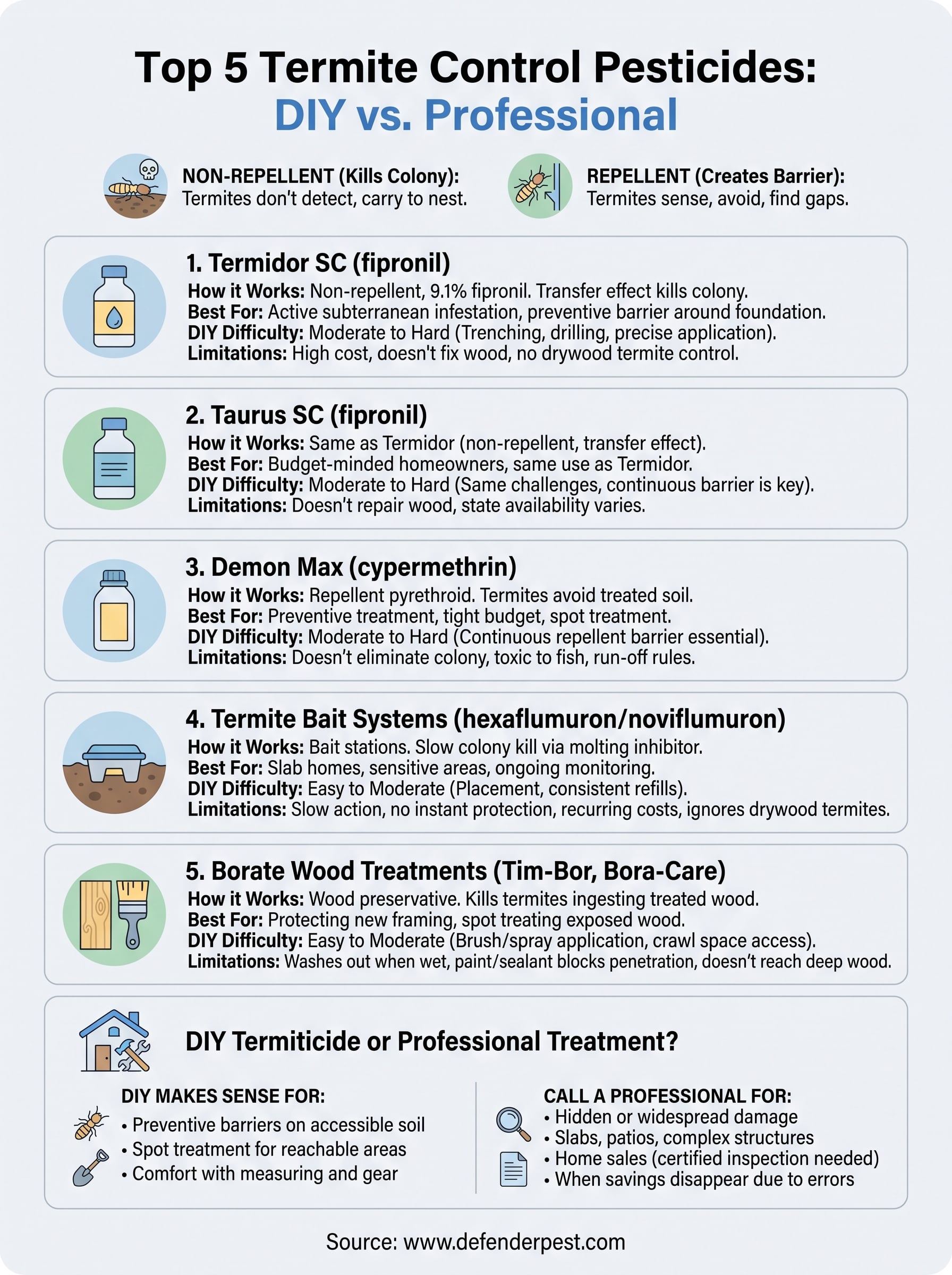
Choosing the right termite treatment
The best termite control pesticide depends on what you are dealing with. For an active subterranean colony, fipronil products like Termidor SC and Taurus SC are the strongest DIY choice, and Taurus costs less. Demon Max suits prevention, baits suit sites where trenching is impractical, and borates protect exposed wood.
No product fixes sloppy application. A continuous barrier matters more than the brand on the bottle, and hidden damage needs a trained eye. If the job involves slabs, widespread activity, or a home sale, professional help usually costs less in the end.
If you live in the Sacramento area and want a straight answer, request a quote for termite treatment in Sacramento from Defender Termite & Pest Management. We can treat the termites and repair the damage in one visit.