Rodent Control Commercial: What It Is and How It Works
A single rat sighting in your break room can trigger a health department complaint, a bad Yelp review, or a failed inspection that shuts your business down for the day. Rodent control commercial work isn't the same as setting a few traps under the sink at home. It's a structured, ongoing program built around your building, your foot traffic, and the specific pests already exploiting the gaps in your defenses.
If you're searching for answers, you probably want to know what a real commercial program actually includes and whether it will solve the problem for good. The short answer: it combines inspection and exclusion work with monitoring stations, targeted baiting or trapping, and sanitation recommendations, all documented for compliance purposes. Done right, it stops rodents before they show up on a customer's receipt or a health inspector's clipboard.
In this article, we break down what commercial rodent control actually covers, how the process works from first inspection to ongoing service, and why recurring treatment plans matter more for businesses than one-time fixes. We'll also cover what to look for in a provider, since Sacramento businesses face different pressure points than a house in the suburbs.
Why commercial rodent control matters for your business
A home with a mouse problem is a private headache. A restaurant, warehouse, or medical office with the same problem is a public liability. Commercial rodent control exists because businesses face consequences that homeowners never see: health department citations, canceled contracts, and customers who post photos before you even know there's a problem. The stakes change the moment rodents cross from your house into your storefront.
Regulatory and inspection risk
Sacramento County health inspectors don't give warnings for droppings near a food prep line. Rodent evidence during a routine inspection can mean an immediate demerit, a follow-up visit within days, or a temporary closure depending on severity. Health code violations tied to pest activity are among the fastest ways a restaurant or grocery store loses its rating, which is why pest control built for restaurant kitchens matters, and repeat citations invite more frequent, more aggressive inspections going forward. A documented commercial pest control program gives you a paper trail showing you took the problem seriously before an inspector ever found it.
Reputation and revenue exposure
One customer photo of a rat near a dumpster can outlast any marketing campaign you run. Reviews mentioning rodents get shared, screenshotted, and remembered longer than almost any other complaint category, and they rarely get taken down even after you fix the issue. Retailers, hotels, and offices lose foot traffic the same way restaurants do, just more quietly, through canceled leases, lost clients, or employees who simply stop wanting to work late.
A single rodent sighting can cost a business more in reputation than months of pest control service ever would.
Structural and inventory damage
Beyond appearances, rodents chew through wiring, insulation, drywall, and stored inventory. Warehouses and distribution centers lose product to contamination and gnaw damage every year, which is why warehouse pest control services focus on storage areas, and electrical damage from rat activity has been linked to building fires in commercial structures. Property managers also face liability exposure if a tenant's goods are damaged or a customer is bitten on-site, which turns a pest issue into a legal one.
Why ongoing programs beat one-time visits
Businesses generate more food waste, more storage clutter, and more entry points than the average home, simply through daily operations. That's why recurring commercial rodent control built on a properly sequenced rodent management program outperforms a single treatment: it accounts for new deliveries, seasonal pressure, and staff turnover that can undo one-time exclusion work within weeks.
| Risk factor | One-time treatment | Ongoing commercial program |
|---|---|---|
| Health inspection readiness | Limited, gaps between visits | Documented, audit-ready |
| Reputation protection | Reactive | Proactive monitoring |
| Structural damage prevention | Minimal | Continuous exclusion checks |
Businesses that treat rodent control as a recurring line item, not an emergency call, spend less overall and face far fewer surprises.
How commercial rodent control works
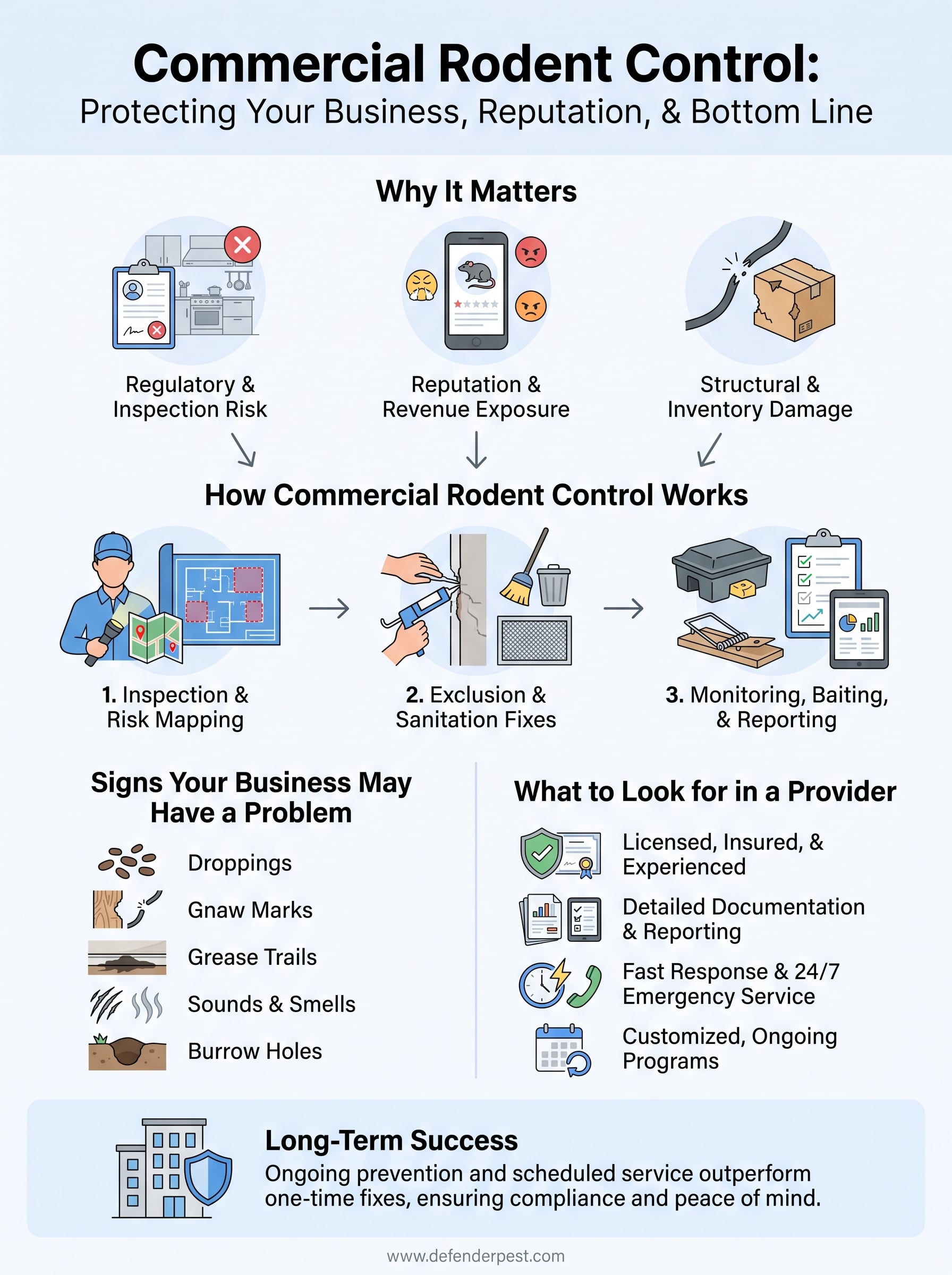
Effective commercial rodent control follows a sequence, not a single visit. A technician inspects the property, seals entry points, installs monitoring devices, and returns on a schedule to check activity and adjust the plan. Each step builds on the last, which is why skipping straight to bait stations without an inspection rarely solves a recurring problem.
Inspection and risk mapping
First, a technician walks the entire property, inside and out, looking for droppings, gnaw marks, grease trails, and gaps around doors, loading docks, and utility penetrations. Commercial properties often have multiple tenants, shared walls, and dumpster corrals that create unique risk zones a home inspection would never encounter. This step produces a map of vulnerable points specific to your building, not a generic checklist.
Exclusion and sanitation fixes
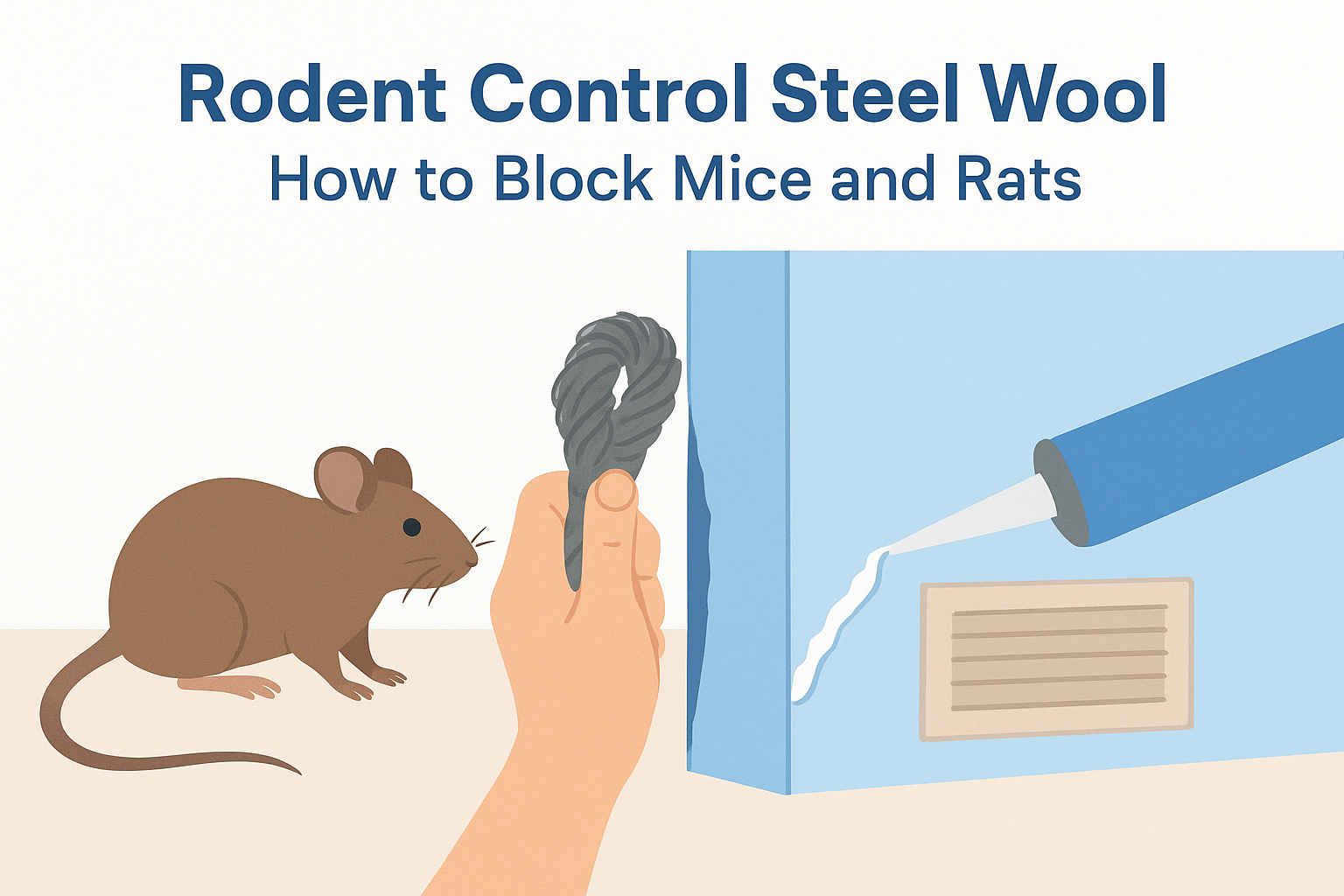
Next comes exclusion work: sealing gaps, repairing door sweeps, and screening vents so rodents can't get back in once they're removed. Exclusion work matters more than bait in the long run, and it helps to know what the sealing process involves and what it costs, since a building that keeps letting rodents in will keep needing treatment no matter how much bait you use.
Sealing entry points stops more rodents than any trap or bait station ever will.
Monitoring, baiting, and reporting
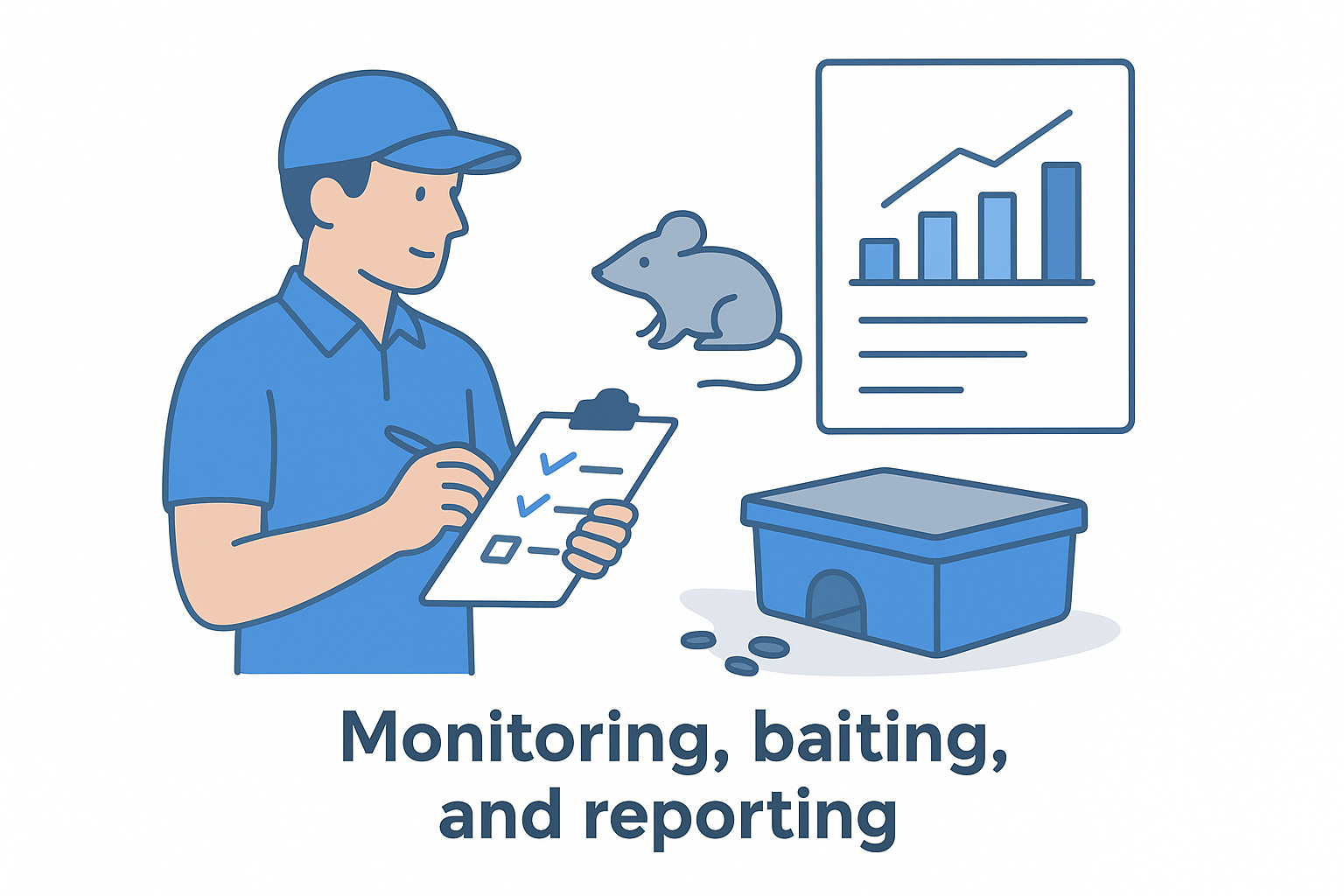
After exclusion, technicians place tamper-resistant bait stations and mechanical traps at strategic points, then log activity at every visit. Reports typically include station-by-station findings, which double as documentation for health inspections. Ongoing visits, usually monthly or quarterly depending on risk level, let a provider adjust bait placement, tighten new gaps, and catch pressure changes before they become a full infestation. Sacramento businesses near green belts or waterways often need tighter schedules from their rodent control program in Sacramento, since rodent pressure from outside the building never fully lets up.
Signs your business may have a rodent problem
Most businesses don't catch a rodent problem until it's already established. Rats and mice are nocturnal and cautious, so early warning signs show up in quiet corners long before anyone spots a live animal, and it helps to compare droppings, gnaw marks, and sounds to know which species you're dealing with. Knowing what to check for during your own daily walkthrough can catch a problem weeks before a health inspector does.
Visual and physical evidence
Look for these signs during closing shifts, deliveries, or storage checks, since rodents are most active when a building is quiet:
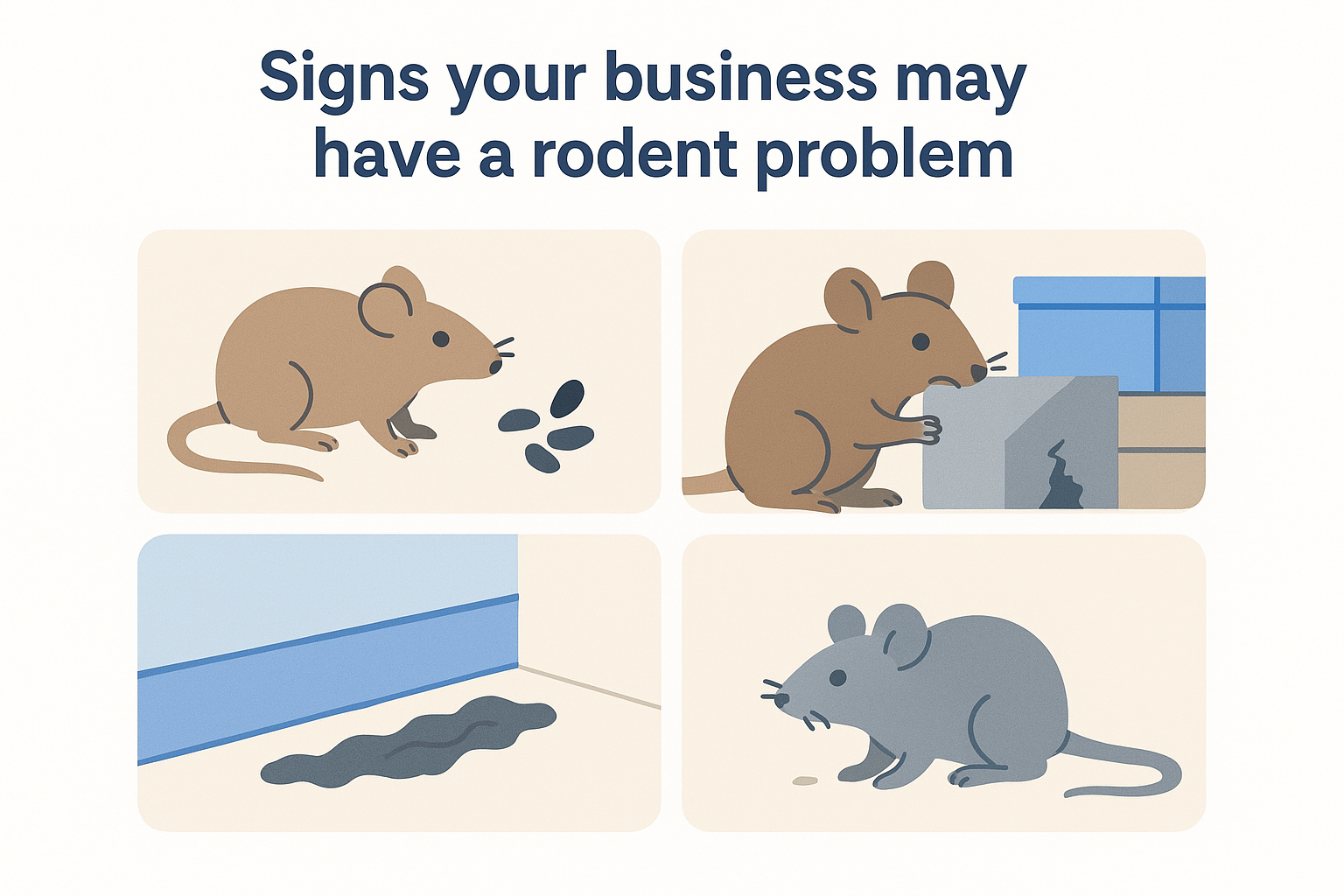
- Droppings near baseboards, storage boxes, or behind equipment, usually clustered along a wall
- Gnaw marks on cardboard, wiring, wood trim, or food packaging
- Grease trails or dark smudges along baseboards where rodents repeatedly brush against surfaces
- Shredded material , insulation, or paper used as nesting inside wall voids or storage rooms
- Burrow holes near foundations, dumpster corrals, or landscaping close to exterior walls
If you're finding droppings during business hours, the infestation is already larger than it looks.
Sounds, smells, and behavioral clues
Scratching in walls or ceilings after closing, especially near kitchens or storage areas, is one of the clearest signs of an active rodent infestation . A persistent musky odor in enclosed spaces, particularly stockrooms or drop ceilings, often points to a nest rather than a single animal passing through. Staff reports matter too, since employees usually notice signs before management does, whether it's chewed packaging in a stockroom or a pet suddenly fixated on a specific wall or cabinet.
Taken together, these signs tell you whether you're dealing with an isolated incident or an established colony. Waiting for a customer sighting to confirm the problem almost always means the infestation has had weeks, sometimes months, to spread through your walls, ceilings, and storage areas.
What to look for in a commercial rodent control provider
Choosing the wrong provider often costs more than the rodents themselves, since a technician who skips exclusion work or shows up once a quarter without a real inspection just delays the same problem. Commercial rodent control providers vary widely in training, equipment, and follow-through, so learning how to choose a rodent control provider pays off the same way vetting any vendor tied to your health inspection score does.
Licensing, documentation, and industry experience
Ask for proof of state licensing and insurance before signing anything, since an uninsured technician working near your electrical panels or food prep areas is a liability you don't need. Documented service reports matter just as much as the treatment itself, because health inspectors want to see dated logs, not a verbal promise that someone "took care of it." Providers who already service restaurants, warehouses, or medical offices understand the specific pressure points those industries face, from loading dock gaps to shared-wall issues in strip malls.
A provider who can't produce inspection reports on request isn't running a real commercial program.
Response time and treatment approach
Rodent problems don't wait for a convenient appointment slot, so ask how fast a provider can get someone on-site after you report an active sighting. Look for a company offering 24/7 emergency pest services , since a rat spotted by a customer at 9 p.m. needs a same-day response, not a callback next week. Questions worth asking upfront:
- How often will technicians visit, and what does each visit include?
- Do they handle both exclusion and baiting, or just one?
- Can they provide references from similar commercial properties?
- What happens if activity returns between scheduled visits?
Defender Termite & Pest Management has worked with Sacramento-area businesses since 1999, and our commercial pest control programs are built around exactly these standards, documentation, exclusion, and response time included.
Keeping your business rodent-free long term
Rodent control commercial work isn't a box you check once and forget. It's a standing part of running a building where people eat, shop, or work, the same way you'd budget for HVAC maintenance or fire inspections. Ongoing prevention costs less than emergency cleanup, and it keeps you off the health inspector's radar in the first place. Sealed entry points, scheduled monitoring, and documented reports work together so small pressure never turns into a full infestation.
Every business owner reading this already knows what one bad review or one failed inspection can do. Consistent commercial pest management is the cheapest insurance you'll buy this year, and it's far less disruptive than closing your doors for a corrective visit. If you're ready to put a real program in place instead of waiting for the next sighting, reach out to Defender Termite & Pest Management about commercial pest control for Sacramento businesses and let's build one around your building.