7 Best Mosquito Control For Backyard Options That Work (2026)
Sacramento summers hit hard, long days, warm evenings, and mosquitoes that turn your patio into a no-go zone by dusk. If you've been searching for the best mosquito control for backyard use, you already know that a single citronella candle isn't going to cut it. Effective mosquito management takes a combination of the right methods, products, and sometimes professional help.
At Defender Termite & Pest Management, we've been solving pest problems across the Greater Sacramento area since 1999. That includes helping homeowners reclaim their outdoor spaces from mosquitoes that breed in our region's irrigation runoff, standing water, and shaded yards. We've seen what works, and what's a waste of money, across thousands of residential properties .
This guide breaks down seven mosquito control options that actually deliver results, from DIY fixes you can set up this weekend to professional-grade treatments for yards where the problem runs deeper. Each option includes what it does well, where it falls short, and who it's best suited for .
1. Professional mosquito control service from Defender
When you want the best mosquito control for backyard performance, professional treatment gives you a faster, more thorough result than any single product off the shelf. Defender Termite & Pest Management serves homeowners across Sacramento, Roseville, Folsom, Elk Grove, and surrounding areas with targeted mosquito control programs built for Northern California's specific breeding seasons and landscape conditions.
How professional backyard mosquito control works
A professional service combines source identification, larval treatment, and adult knockdown into a single visit, then builds a schedule around your yard's re-infestation risk. Technicians apply residual barrier sprays to vegetation, treat standing water sources with larvicides, and identify structural or landscaping conditions that keep pulling mosquitoes back. This layered approach outperforms anything you'd apply once and forget.
What a good technician targets on your property
Your technician walks the full property before spraying anything. Dense shrubs, tree canopies, and shaded fence lines are primary resting zones for adult mosquitoes during daylight hours. Secondary targets include irrigation overflow areas, clogged gutters, ornamental ponds, and low spots in the lawn where water pools after each watering cycle. A thorough technician treats all of these, not just the perimeter.
Skipping a single breeding site can sustain an entire mosquito population for weeks, which is why a full property walkthrough matters more than the product used.
What results to expect and how long it takes
Most homeowners notice a significant drop in adult mosquito activity within 24 to 48 hours of the first treatment. Full population reduction builds over two to three visits as larval cycles are interrupted. Seasonal programs typically run on a three to four week schedule from late spring through early fall, which aligns with Northern California's peak mosquito window.
Safety and environmental considerations to ask about
Ask your technician specifically about product selection near vegetable gardens, pollinator plants, and water features with fish or frogs. Responsible applicators use targeted products and apply them during early morning or evening hours to minimize contact with beneficial insects. Defender uses EPA-registered products and adjusts application methods based on what's present on your specific property.
What it costs in 2026
Professional mosquito control programs in the Sacramento region typically run $75 to $150 per treatment visit , depending on yard size and treatment complexity. Seasonal programs bundled across multiple visits usually offer a better per-visit rate. Contact Defender for a property-specific estimate based on your square footage and current mosquito pressure.
2. Standing water removal and yard prep
Before you buy any product, eliminate the breeding sites that fuel your mosquito population. Standing water removal is the single most effective step you can take, and it costs almost nothing compared to ongoing chemical treatments.
Why source reduction beats most quick fixes
A female mosquito only needs a bottle cap's worth of still water to lay up to 300 eggs. Products kill adult mosquitoes, but new adults keep hatching every few days if breeding sites remain untouched. Removing standing water breaks the reproductive cycle at its source , which no spray or trap can accomplish on its own.
Source reduction combined with any other method in this list produces noticeably better results than either approach used alone.
Where mosquitoes breed in typical backyards
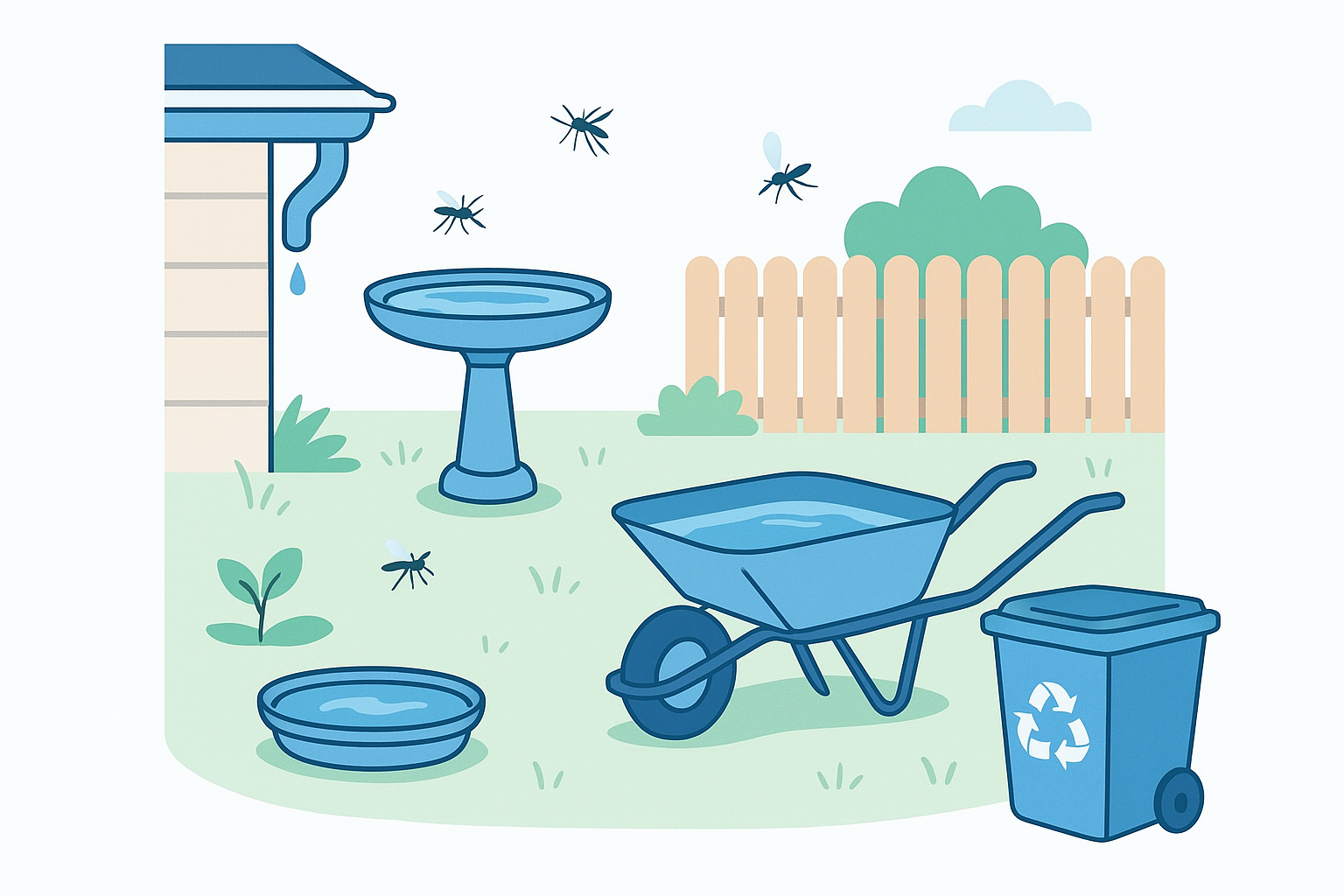
Mosquitoes exploit dozens of water sources that homeowners overlook. Common breeding sites include clogged gutters, bird baths, pot saucers, low lawn spots, tarps, and toys left outside. Even wheelbarrows and recycling bins collect enough water after one irrigation cycle to produce hundreds of mosquitoes within a week.
Weekly 15-minute checklist that actually works
Walk your yard once a week and complete these steps to cut down on mosquito breeding sites fast:
- Empty and scrub bird baths and pet water dishes
- Tip over or store containers that collect rainwater
- Clear gutters and check downspout extensions for pooling
- Rake up leaf piles where moisture collects
What to do when you cannot remove water
Some water features, like retention ponds or drainage areas you do not control , cannot be drained. In those cases, larvicide treatments applied directly to the water are your next best option, which the following section covers in detail.
What it costs in 2026
Source reduction costs you nothing beyond your time. Standard household tools like a gutter scoop handle the job. This makes it the most cost-effective step in any plan for the best mosquito control for backyard spaces, whether you go DIY or professional.
3. Larval control with Bti dunks and granules
Bti (Bacillus thuringiensis israelensis) larvicides target mosquitoes before they develop into flying adults. These products are one of the most practical tools for the best mosquito control for backyard situations where standing water cannot be eliminated through yard prep alone.
How Bti larvicides work and what they do not do
Bti is a naturally occurring soil bacterium that produces proteins toxic to mosquito larvae when ingested. It does not kill adult mosquitoes , so treat it as a targeted breeding-site intervention rather than a standalone solution for your yard.
Best places to use Bti around homes
Dunks work well in ornamental ponds, rain barrels, and drainage areas where they can float and slowly dissolve. Granules are better for shallow or irregular water like clogged gutters, tire ruts, and ground-level puddles where anchoring a dunk is impractical.
Bti granules disperse faster in shallow water than dunks, which makes them the better choice for temporary puddles that appear after each irrigation cycle.
How often to reapply and how to time it
Most Bti dunks stay effective for up to 30 days . Granules need reapplication every 7 to 14 days . Start treatments in early spring before the first hatch and continue through your final irrigation cycle in fall.
Safety notes for pets, kids, and wildlife
Bti is safe for humans, pets, fish, birds, and beneficial insects including bees. It specifically targets mosquito larvae, leaving other organisms unharmed. You can apply it to water sources that wildlife and pets access without concern.
What it costs in 2026
A pack of 10 Bti dunks typically costs $10 to $15 , and granules covering around 1,000 square feet run $20 to $30 . Both are cost-effective additions to any broader mosquito treatment plan.
4. Residual barrier sprays and growth regulators
Residual barrier sprays target adult mosquitoes resting in your yard's vegetation during the day. When applied correctly, they provide weeks of knockdown protection and are one of the strongest tools available for the best mosquito control for backyard results.
How barrier treatments reduce adult mosquitoes
Barrier sprays coat leaf surfaces, shrubs, and ground cover where adult mosquitoes rest between feeding cycles. Mosquitoes pick up the active ingredient on contact, which kills them within hours. Insect growth regulators (IGRs) work differently by disrupting larval development in any water the spray reaches, adding a second layer of control.
Active ingredient types and what they mean for you
The most common active ingredients are permethrin and bifenthrin , which are synthetic pyrethroids that kill on contact and leave a short-term residue. Lambda-cyhalothrin is another option with slightly longer residual activity. IGRs like pyriproxyfen prevent larvae from maturing, which extends control beyond what a knockdown spray alone delivers.
Where to apply for the best coverage
Focus your application on dense shrubs, tall grass edges, shaded fence lines, and the undersides of large leaves where mosquitoes spend daylight hours resting. These shaded areas hold residue longer than exposed surfaces baked by direct sun.
Skipping the undersides of leaves cuts your effective coverage in half, since that is where most resting mosquitoes actually sit.
Common mistakes that make sprays fail
Applying in midday heat breaks down pyrethroid residues faster and reduces your treatment window significantly. Many homeowners also over-spray open lawn areas while ignoring dense perimeter vegetation , which is where mosquitoes actually concentrate.
What it costs in 2026
DIY barrier spray concentrates run $20 to $50 per bottle , covering roughly 5,000 square feet per mix. Professional application ranges from $80 to $150 per visit, which includes proper mixing ratios and full vegetation coverage.
5. Spatial repellent devices for patios and decks
Spatial repellent devices create a chemical barrier in the air around your seating area, making conditions uncomfortable for mosquitoes without requiring direct contact with surfaces. These battery-powered or plug-in units have improved significantly in recent years, and they now offer a practical option for outdoor spaces where you spend concentrated time in a defined area . For the best mosquito control for backyard patios, they work best as a supplement to other methods rather than a standalone fix.
How spatial repellents work in outdoor living areas
Most spatial repellent devices use metofluthrin or d-allethrin , synthetic pyrethroids that volatilize into the surrounding air when heated or fan-dispersed. Mosquitoes detect these compounds and avoid the treated zone rather than dying on contact. This makes spatial repellents a behavior-modifying tool rather than a knockdown treatment, which is an important distinction when setting expectations.
How to place units for better coverage
Position your device upwind of your seating area so the active ingredient drifts across the space where people sit. Placing a unit on the edge of a table or low post at about waist height gives the best dispersion across the zone you occupy.
A unit placed directly behind a solid barrier like a wall or tall planter loses most of its effective range within a few feet.
When these devices work well and when they struggle
These devices perform well in calm, sheltered patio settings with limited airflow. In wide-open yards with consistent wind, the repellent disperses too quickly to maintain useful concentrations, reducing its effectiveness considerably.
Safety notes and label rules
Always follow label directions for placement distance from food prep areas. Keep units away from open flames or grills , and store cartridges out of reach of children and pets between uses.
What it costs in 2026
Starter units run $25 to $50 , and replacement cartridges cost $8 to $15 each, lasting roughly 12 hours of use per cartridge.
6. CO2 mosquito traps for population reduction
CO2 traps offer a different approach to achieving the best mosquito control for backyard spaces by targeting the mosquito's own navigation system. Instead of repelling or spraying, these devices lure and capture mosquitoes continuously, gradually reducing the local population over several weeks of consistent operation.
How CO2 traps attract mosquitoes and what they capture
Mosquitoes locate hosts by detecting carbon dioxide, heat, and moisture . CO2 traps mimic these signals using propane-powered CO2 emitters or chemical lure systems, drawing mosquitoes away from you and into a capture net or vacuum mechanism. Most traps also use octenol or other attractant lures to enhance their pull on local mosquito species.
CO2 traps reduce the breeding population in your yard over time, but they work best when combined with larval control methods that cut off new mosquitoes from hatching.
Placement rules that make or break results
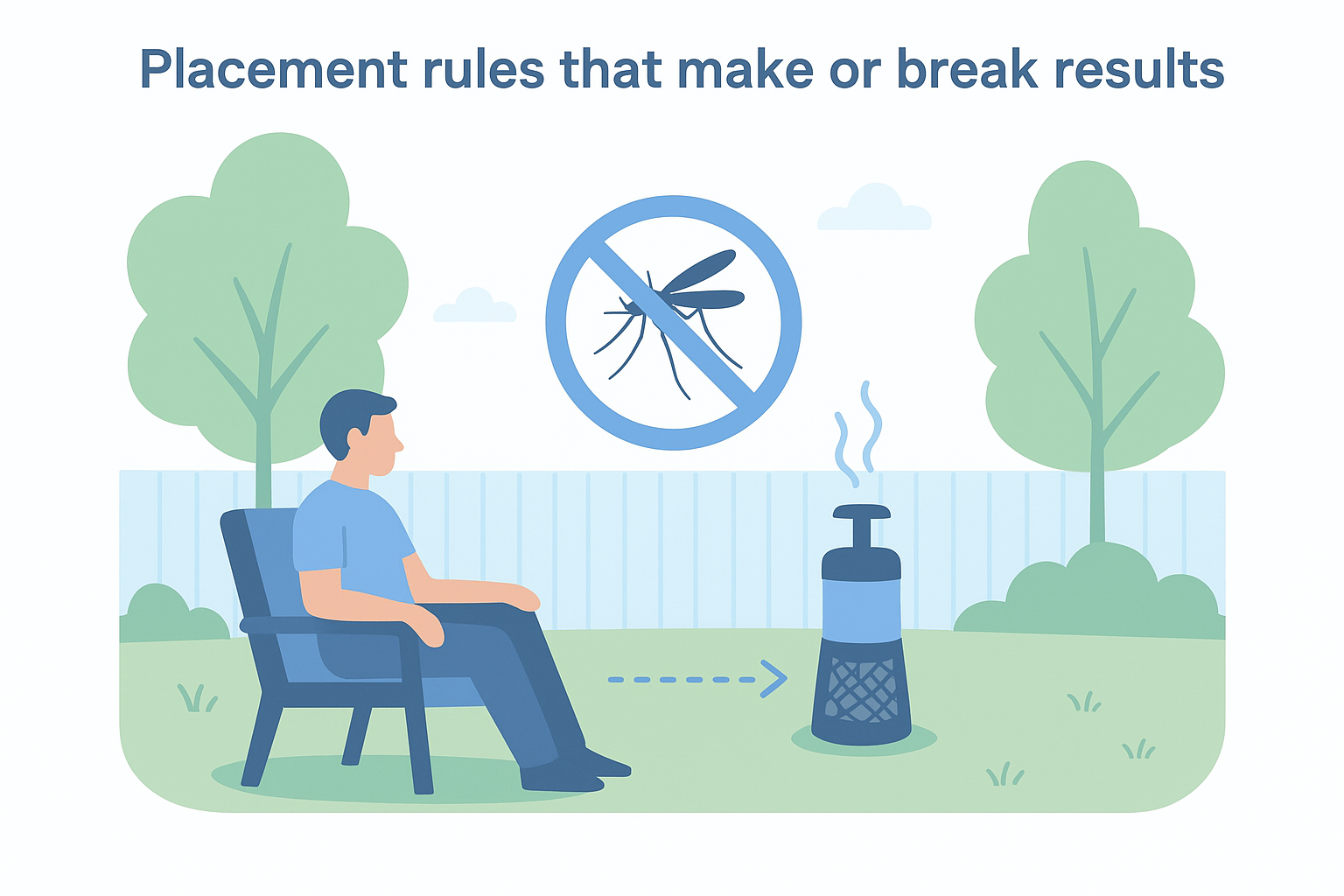
Place your trap between the mosquito source and your primary activity area , not directly in your seating zone. A spot near the edge of your yard, upwind of dense vegetation or water sources , intercepts mosquitoes before they reach you rather than competing with the scent of actual humans nearby.
Maintenance requirements and ongoing supplies
Traps require regular emptying of the catch container and periodic replacement of attractant lures every 21 to 30 days. Propane models need tank refills every one to two weeks depending on runtime.
Realistic expectations and timelines
Expect meaningful population reduction after two to four weeks of continuous operation. These traps do not provide same-day relief.
What it costs in 2026
Quality CO2 traps run $200 to $600 upfront , with ongoing lure and propane costs adding $20 to $40 per month through the season.
7. Physical barriers and airflow strategies
Physical barriers and strategic airflow give you passive, chemical-free protection that works alongside any spray or trap you already use. For the best mosquito control for backyard seating areas, these methods reduce exposure without adding any chemicals to your outdoor space.
Why mosquitoes struggle with wind and barriers
Mosquitoes are weak fliers that cannot navigate consistently in airflow above 1 mph. Dense screening, fencing, and solid plantings create zones they avoid because the energy cost of pushing through disrupted air is simply too high.
Best backyard fan setups for seating areas
A box fan or outdoor oscillating fan placed at seating level keeps mosquitoes off your immediate area effectively. Position fans at the perimeter of your seating zone aimed inward to push steady airflow across the space where people gather.
A single 20-inch box fan pointed toward your seating area can cut mosquito landings significantly during outdoor meals or gatherings.
Screened zones, netting, and pergola solutions
Screened pergolas and fine-mesh netting over dining areas provide full physical exclusion when installed correctly. Look for 18x18 mesh or finer to block mosquitoes without obstructing airflow in calm conditions.
Entry-point fixes that reduce indoor mosquitoes too
Check door screens and window screens for tears or poor-fitting frames that let mosquitoes move inside freely. Replacing worn door sweeps and threshold seals prevents outdoor populations from becoming a recurring indoor problem as well.
What it costs in 2026
- Outdoor fans: $30 to $80 for standard models
- Pergola screen enclosures: $500 to $3,000 depending on size and materials
- Screen patch kits: under $10 for minor repairs
Next steps for a mosquito-free backyard
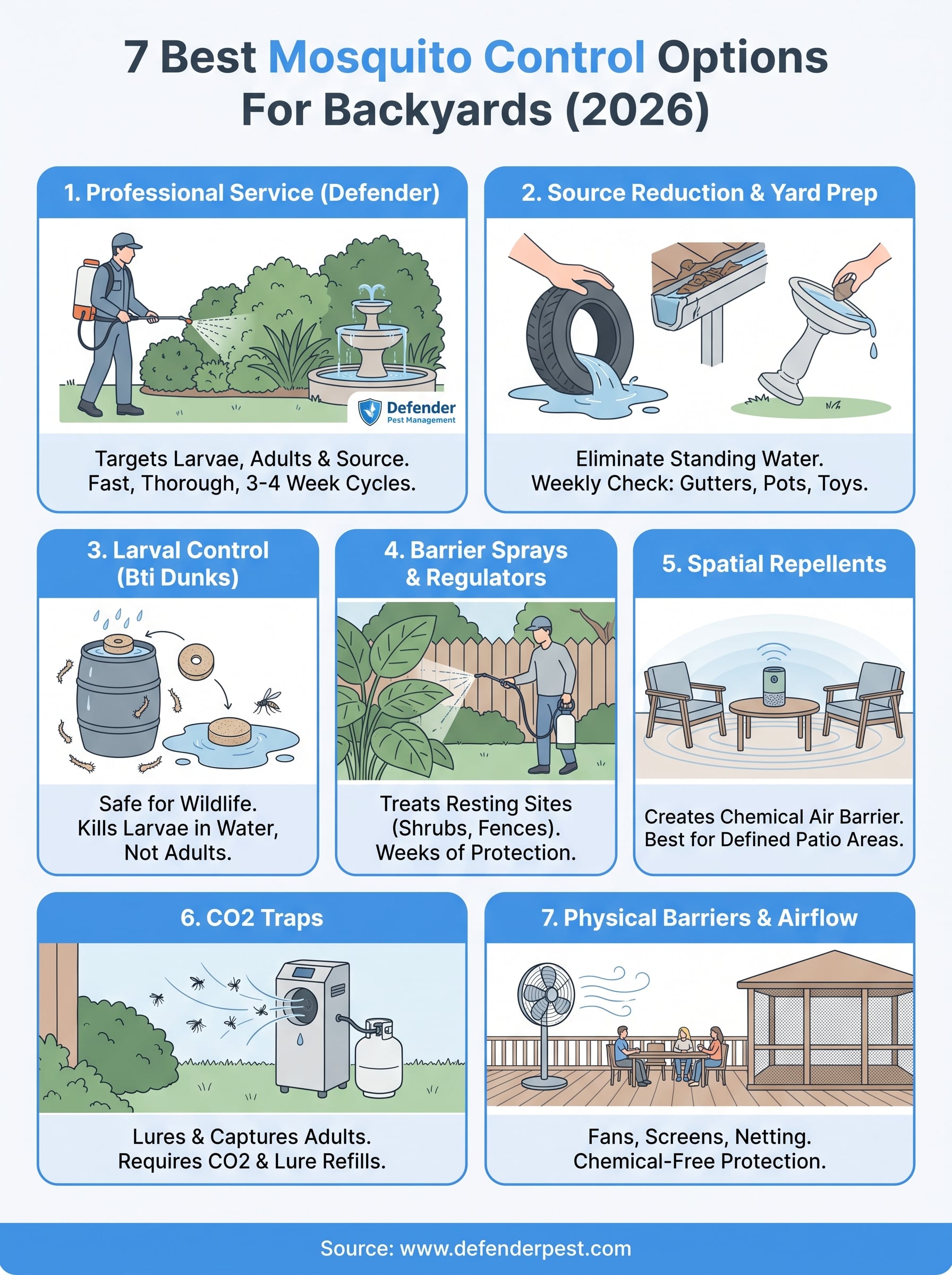
The best mosquito control for backyard spaces rarely comes from a single product or method. Combining source reduction, larvicides, and a barrier treatment gives you overlapping protection that handles mosquitoes at every stage of their life cycle. Start with the free steps first: remove standing water, clear clogged gutters, fix screen gaps, and set up a fan near your seating area.
From there, add Bti dunks to any water you cannot drain, then layer in a barrier spray or spatial repellent for immediate adult knockdown. If your yard has persistent pressure or you want faster results, professional treatment gives you the most complete coverage with the least effort on your part.
Contact Defender Termite & Pest Management to get a property-specific mosquito control estimate for your Sacramento-area home. Our team has served local homeowners since 1999 and can build a program that fits your yard's specific conditions and budget.